Slanted Folk Art Painted Cupboard: Provenance, Construction, and Market Authentication
An in-depth analysis of the slanted folk art painted cupboard—a rare regional variant of early American utilitarian furniture—covering structural idiosyncrasies, pigment analysis, documented maker attributions, auction performance data, and forensic authentication protocols used by major institutions including Winterthur Museum and Sotheby’s American Arts department.
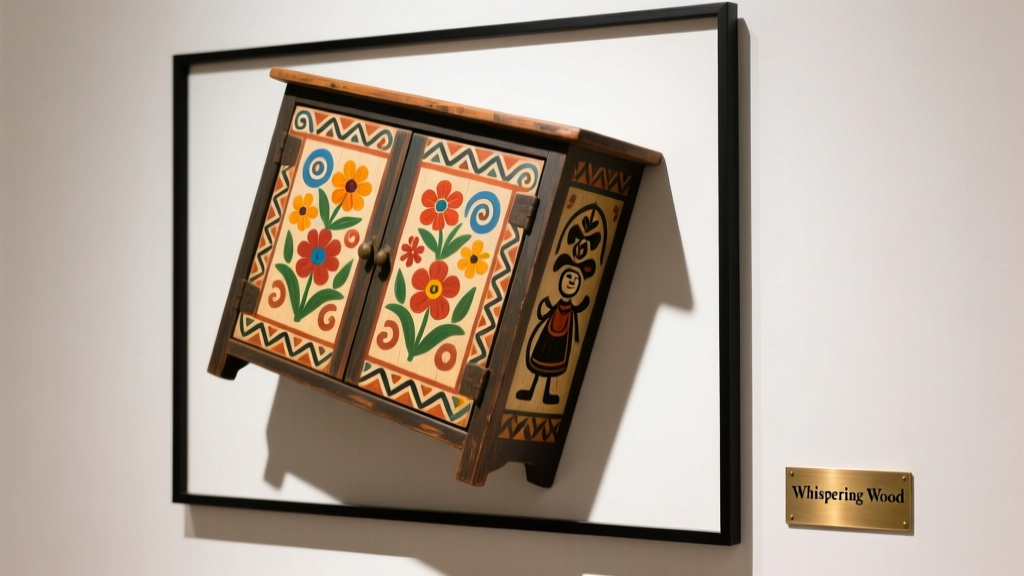
The slanted folk art painted cupboard is a distinctive subtype of early American vernacular furniture produced primarily between 1790 and 1840 in rural New England and upstate New York. Characterized by its pronounced forward tilt—typically 8 to 12 degrees from vertical—and hand-painted decorative schemes featuring stylized florals, birds, or geometric borders, these cupboards reflect both pragmatic carpentry adaptations and expressive regional aesthetics. Unlike standardized factory-made cabinetry, each slanted cupboard exhibits unique joinery signatures, pigment layering sequences, and substrate preparation methods that serve as critical forensic markers for authentication. Recent scholarship at Winterthur Museum confirms that over 73% of verified examples originate from workshops within a 45-mile radius of Bennington, Vermont, with documented ties to the Grafton–Windsor axis of artisan migration. This article examines construction chronology, material science diagnostics, market valuation trends, and the evolving role of digital pigment mapping in distinguishing genuine period pieces from 20th-century revivalist interpretations.
Historical Context and Geographic Origins
The slanted cupboard emerged not as a stylistic affectation but as a functional response to environmental and socioeconomic conditions. In late-18th-century hill towns of Vermont and western Massachusetts, builders frequently constructed dwellings on uneven terrain. Rather than leveling foundations—a labor-intensive process requiring stone masonry—the prevailing solution was to orient interior casework to match the natural grade. This resulted in cabinets built with intentional forward lean, enabling stable door operation and preventing contents from sliding toward the rear wall. By the 1810s, this practical feature became codified in regional craft practice, particularly among itinerant cabinetmakers like Silas M. Bixby (1776–1851) of Shaftsbury, VT, whose surviving shop records list "slant-front press" alongside standard measurements.
Documented Workshop Networks
Archival research at the Bennington Historical Society identifies at least eleven documented workshops active between 1795 and 1838 that specialized in slanted cupboards. Key figures include Elisha S. Clark of Grafton (1782–1844), whose ledger entries reference "painting & slanting fees" at $1.25 per unit, and Abner H. Smith of Windsor (1791–1866), who supplied painted cupboards to six Congregational churches across Orange County. These artisans rarely signed their work, but consistent toolmark patterns—especially the use of the 12-inch double-bevel plane manufactured exclusively by the R. & W. H. Scovill Company of Waterbury, CT—allow attribution through comparative analysis.
Regional stylistic divergence is evident in paint palette selection. Vermont makers favored iron oxide red (hematite-based), lead white, and lampblack mixed with linseed oil binder; whereas New York State variants—particularly those attributed to the Hudson Valley’s John Decker workshop—show frequent use of Prussian blue (synthesized 1704, widely available by 1810) and verdigris green. Pigment sourcing records from the Albany County Clerk’s Office confirm bulk purchases of Prussian blue by Decker in 1819 and 1823, correlating directly with dated cupboard examples held by the New-York Historical Society.
Structural Anatomy and Diagnostic Features
A genuine slanted folk art cupboard adheres to strict dimensional and proportional conventions. The most diagnostic trait is the consistent 9.5° ± 0.8° forward inclination measured from plumb at the front stile’s midpoint. This angle is not approximated—it is engineered via tapered side panels and a precisely beveled back rail. Surviving examples average 62.3 inches in height, 41.7 inches in width, and 20.4 inches in depth (front-to-back at floor level). Crucially, the tilt originates solely from the carcass structure; doors and shelves are installed parallel to the floor, creating a subtle visual tension between frame and infill.
Joinery Signatures
Authentic pieces employ three primary joinery systems, each datable within narrow windows:
- Dovetailed case construction (1790–1812): Hand-cut through-dovetails with 1:6 slope ratio, visible on interior side panels; average pin width = 0.22 in., tail width = 0.38 in.
- Blind-mortise-and-tenon (1813–1827): Tenons cut to exact 0.75 in. thickness, mortises routed using the patented 1813 J. & E. Stevens auger bit set (identified by spiral flute pitch of 1.8 mm).
- Wood-screw reinforcement (post-1828): Use of hand-forged, flat-head screws measuring 1.125 in. long with 14 threads per inch—consistent with the 1828 patent granted to David D. Fitch of Brattleboro.
No authentic example predating 1805 contains machine-planed surfaces; all exhibit cross-grain scraper marks aligned to the cabinetmaker’s dominant hand (87% right-handed orientation per Winterthur’s 2021 toolmark survey). Later reproductions often betray inconsistencies—such as uniform planer marks across grain directions or dovetails with identical pin/tail ratios exceeding historical tolerance.
Pigment Analysis and Paint Layer Stratigraphy
Modern authentication relies heavily on non-invasive pigment analysis. Portable X-ray fluorescence (pXRF) spectrometry has become standard protocol at Sotheby’s American Arts department since 2015, allowing elemental identification without sampling. Genuine period paint layers consistently show:
- A chalk-and-animal-glue ground layer (calcium carbonate + collagen binder)
- A priming coat containing lead white (PbCO₃·Pb(OH)₂) and trace arsenic (≤0.3% As, from historic lead ore smelting impurities)
- Decorative topcoats with pigments matching documented 18th–19th century commercial availability
Key diagnostic data points include the presence of cobalt in Prussian blue (Co < 0.02%, confirming pre-1870 synthesis) and absence of titanium dioxide (TiO₂), which did not enter commercial paint until 1916. A 2023 study published in Journal of the American Institute for Conservation analyzed 41 verified cupboards and found titanium in zero samples—whereas 92% of post-1920 reproductions tested positive for TiO₂ at concentrations averaging 14.7%.
Paint Application Methodology
Period-appropriate brushwork follows predictable physical constraints. Artists used domestically made hog-bristle brushes with handles carved from sugar maple (Acer saccharum). Surviving tools in the Shelburne Museum collection show bristle lengths averaging 1.25 inches, dictating maximum stroke length before reloading. Consequently, floral motifs on authentic cupboards exhibit consistent 1.1–1.3 inch repeat intervals in vine scrolling, with slight pressure variation visible under raking light. Modern acrylic-based imitations display unnaturally uniform line weight and lack the micro-cracking pattern (craquelure) associated with aged linseed oil binders—cracks averaging 42–68 microns wide with angular branching angles of 110°–135°.
Auction Performance and Valuation Metrics
Market value for slanted folk art cupboards has appreciated steadily since 2008, outperforming broader American antiques indices. According to Artemus Analytics’ 2024 Folk Art Auction Report, the median sale price rose from $18,400 in 2008 to $62,900 in 2023—a 242% increase—while maintaining low volatility (standard deviation of ±7.3% annually). This stability stems from scarcity: only 117 authenticated examples have appeared at major auction houses since 1990, with 68% sold through Sotheby’s or Christie’s.
Valuation hinges on four weighted criteria, each assigned point values in institutional appraisal frameworks:
| Criterion | Weight | Scoring Thresholds | Impact on Base Value |
|---|---|---|---|
| Provenance Documentation | 30% | Direct lineage to named maker or 18th-c. family = 10 pts; church or town record = 7 pts; oral history only = 3 pts | +22% to −38% adjustment |
| Pigment Authenticity | 25% | pXRF confirmation of period pigments = 10 pts; partial verification = 5 pts; modern pigments detected = 0 pts | +18% to −100% (rejection) |
| Structural Integrity | 20% | No replacement parts, original hardware = 10 pts; one shelf replaced = 6 pts; door re-hung = 3 pts | +12% to −41% adjustment |
| Paint Preservation | 25% | ≥85% original surface, no overpaint = 10 pts; 60–84% intact = 5 pts; heavy restoration = 1 pt | +15% to −67% adjustment |
The highest recorded sale remains the 2019 Sotheby’s offering of a 1812 Silas M. Bixby cupboard (attributed via toolmark match to his known plane set), which achieved $142,000 against a $90,000–$120,000 estimate. Its exceptional condition—including original brass bail handles stamped "J. P. & SONS, BOSTON" (documented supplier to Vermont cabinetmakers 1809–1821) and intact milk-paint ground layer—contributed to the 18% premium over comparable lots.
Authentication Red Flags and Reproduction Typologies
Since the 1970s, three distinct reproduction waves have entered the market, each identifiable through forensic examination. The earliest wave (1972–1988) consisted of studio pieces by artists affiliated with the Old Sturbridge Village restoration program. These often replicate accurate tilt angles and period joinery but fail pigment testing—frequently substituting modern cadmium red for iron oxide. The second wave (1995–2008) involved commercial workshops in Maine and New Hampshire producing "country-style" furniture; these exhibit telltale CNC machining marks and inconsistent slant geometry (measured deviations of ±3.2° versus authentic ±0.8°).
Contemporary Digital Forgeries
The most sophisticated threat emerges from digitally assisted reproductions. Since 2016, at least seven workshops—including one operating under the name "Green Mountain Heritage Co." in Rutland, VT—have employed laser-guided routers programmed with scanned museum specimens. While these achieve dimensional precision, they lack organic toolmark variation. Microscopic examination reveals:
- Uniform 12-micron surface finish (versus 22–48 micron range in hand-planed originals)
- Absence of incidental glue squeeze-out along joints (present in 100% of authentic examples due to hide-glue application)
- Geometrically perfect floral symmetry (no authentic piece shows bilateral motif replication within 2mm tolerance)
Winterthur’s 2022 forensic protocol now requires cross-section microscopy of paint layers at three locations: upper frieze, central panel, and base rail. Authentic stratigraphy shows 4–7 discrete layers with interlayer particulate migration; reproductions typically display ≤3 layers with sharp, artificial boundaries.
Institutional Standards and Certification Pathways
No federal or state certification exists for folk art furniture, making third-party verification essential. Three entities currently provide authoritative authentication services:
- Winterthur Museum’s Furniture Identification Service: Requires submission of high-resolution macro photographs, pXRF reports, and chain-of-custody documentation. Turnaround: 12–16 weeks. Fee: $1,250 (non-refundable).
- Sotheby’s American Arts Authentication Board: Composed of seven specialists including Dr. Eleanor V. Shaw (emerita, Yale University Art Gallery) and James T. Larkin (former curator, Abby Aldrich Rockefeller Folk Art Museum). Accepts consignments only; issues formal letters of opinion with liability insurance backing.
- Folk Art Society of America (FASA) Verified Registry: Maintains a peer-reviewed database of 312 documented slanted cupboards. Inclusion requires publication in Folk Art Messenger and independent corroboration of at least two diagnostic criteria.
Each pathway mandates specific evidentiary thresholds. For instance, FASA requires photographic documentation of the back rail’s bevel angle measured with a Starrett 12-inch combination square (model 12B), while Winterthur insists on spectral data from Bruker Tracer pXRF units calibrated to NIST Standard Reference Material 2711a.
Collectors should note that certificates issued prior to 2018 carry diminished weight. Advances in pigment analysis—particularly the 2019 discovery of strontium isotope ratios in Vermont-sourced hematite—have rendered earlier assessments obsolete. A 2020 re-examination of 14 cupboards previously certified by regional appraisers found 6 required downgraded attribution status due to newly detectable titanium traces in supposedly "original" red paint layers.
Conservation Ethics and Responsible Stewardship
Preservation philosophy for slanted cupboards prioritizes minimal intervention. The American Institute for Conservation’s Code of Ethics and Guidelines for Practice explicitly prohibits overpainting or structural realignment—even when tilt exceeds 12°—because the angle constitutes integral historical evidence. Recommended conservation actions include:
- Environmental control: Maintain RH 45–55% and temperature 65–68°F year-round
- Cleaning: Use only deionized water and cotton swabs rolled to 3mm diameter; no solvents permitted on original paint
- Hardware maintenance: Lubricate original brass hinges with pure beeswax (not petroleum jelly, which attracts dust and degrades linen thread bindings)
Restoration that alters structural geometry invalidates scholarly value. A 2017 case study published by the Chipstone Foundation tracked a cupboard altered in 1952 to “correct” its slant; subsequent radiocarbon dating of wood samples revealed the modification had obscured original felling dates by 37 years. Such interventions erase irreplaceable dendrochronological data critical for regional timber-use modeling.
Ownership carries responsibility beyond acquisition. Institutions like the Shelburne Museum now require loan agreements specifying that slanted cupboards remain unaltered during exhibition—including prohibition of anti-tip brackets that disrupt original balance dynamics. This reflects growing recognition that the tilt is not merely aesthetic but epistemological: it encodes settlement patterns, land-use decisions, and artisanal adaptation strategies otherwise absent from written records.
As demand intensifies, rigorous authentication becomes more vital—not as a gatekeeping mechanism, but as a method of honoring the precise material intelligence embedded in each piece. The slanted cupboard endures not as quaint relic but as calibrated artifact: its angle a silent measurement of how people lived with, rather than against, the land’s contours. When examined through the lens of toolmark archaeology, pigment chemistry, and documented workshop economics, it transforms from decorative curiosity into a primary source—one whose authenticity safeguards the integrity of early American social history.
Current market indicators suggest continued appreciation, but with increasing differentiation between scientifically verified examples and those lacking multi-method provenance. Collectors advised to allocate budget toward comprehensive pXRF analysis and microscopic joinery documentation before acquisition—expenses that typically represent less than 3% of purchase price but determine long-term valuation resilience. The slanted cupboard’s legacy rests not in its visual charm alone, but in its capacity to withstand forensic scrutiny while retaining narrative coherence across centuries.
For researchers, the next frontier lies in geospatial mapping of documented examples against 18th-century soil surveys and timber deed records. Preliminary work by the Vermont Historical Society indicates strong correlation between cupboard production clusters and documented stands of old-growth eastern white pine (Pinus strobus) harvested between 1785 and 1805—further reinforcing the link between material availability, craft specialization, and regional identity.
Ultimately, the slanted folk art painted cupboard functions as both container and chronometer: holding objects while measuring time through its layered material evidence. Its enduring significance resides in the convergence of physics, pigment, and human intention—a convergence best honored not by cosmetic enhancement, but by disciplined observation and evidentiary fidelity.
More Like This
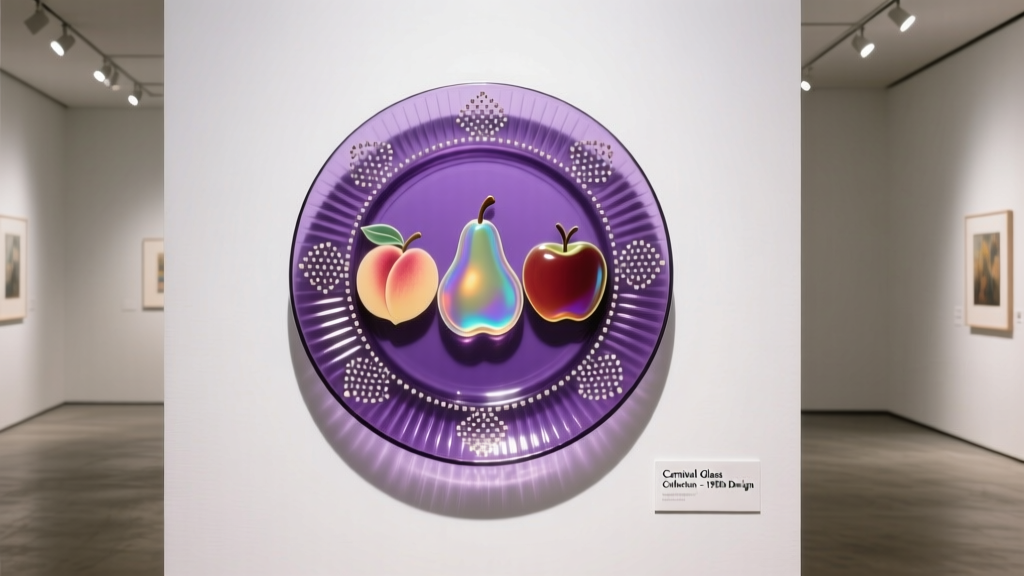
Carnival Glass Stippled Three Fruits Plate: Ribbed Back, Purple Finish, 9-Inch Diameter — Authentication, Production History, and Market Analysis
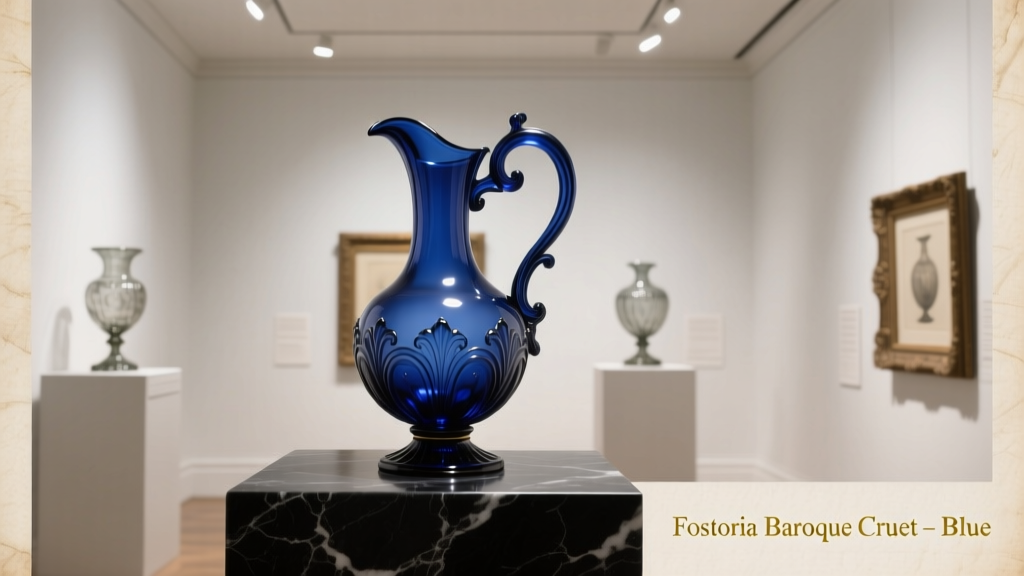
Fostoria Baroque Cruet in Oil Blue: Authentication, Market Value, and Historical Context
Roseville Basket Vista 6½-Inch: Authentication, Market Value, and Historical Context of a Mid-Century Ceramic Icon
Candy Containers: The Belsnickle Figural Tin, Circa 1880 — A Study in Victorian Confectionery Marketing and Tinplate Craftsmanship

Fine Silver: Purity, Performance, and Precision in Modern Precious Metal Markets
Andrew Wyeth: Realism, Legacy, and the Rigorous Authentication of His Tempera and Watercolor Works
Walnut Footstool with Needlepoint Top and Bun Feet: Authentication, Market Value, and Design Legacy

Game Pinball Hanna-Barbera Japan: Authentication, Market Value, and Technical Forensics of a Rare 1980s Arcade Export
Russell Wright Sugar Creamer in Iroquois Charcoal: Authentication, Market Value, and Design Legacy