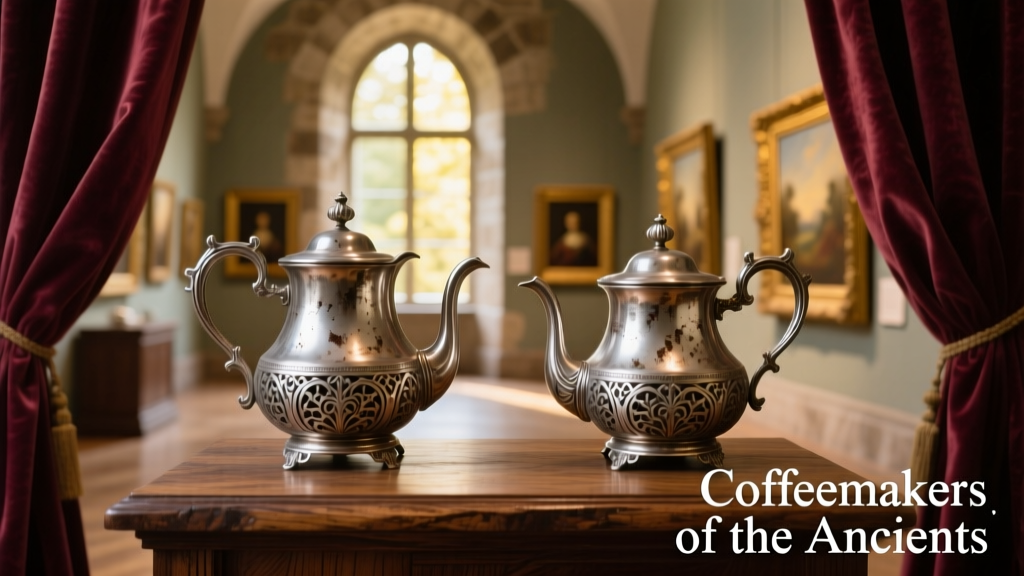
Silver and Wood Tea & Coffee Servers: Authentication, Provenance, and Market Value of Pre-1900 British and American Examples
A detailed analytical survey of antique silver-mounted wooden tea and coffee servers—focusing on English Sheffield plate, sterling silver, and American coin silver examples from c. 1750–1890. Includes hallmark decoding, wood species identification, maker attribution, auction records, and forensic authentication protocols.
Historical Context and Functional Evolution
The silver-and-wood tea and coffee server emerged as a distinct domestic object in mid-18th-century Britain, responding to the rising cultural prominence of tea consumption among the gentry and merchant classes. Unlike earlier all-silver or porcelain services, these hybrid pieces combined cost-efficiency with aesthetic prestige: dense, finely grained hardwoods—typically mahogany, walnut, or rosewood—formed the structural body, while silver or Sheffield plate provided functional elements such as handles, spouts, finials, and rims. This design reflected both economic pragmatism and evolving notions of domestic refinement. By 1760, makers like Thomas Bradbury of Sheffield and Joseph Angell of London were regularly producing silver-mounted wooden coffeepots and teapots for elite households across England and colonial America.
Functionally, these servers were engineered for thermal retention and ergonomic use. The wooden body acted as insulation, preventing scalding during prolonged holding, while the silver components ensured durability at high-wear points—especially the hinge pins, lid knobs, and spout collars. A typical pre-1820 English example measures between 24–28 cm in height, with a capacity of 1.2–1.8 liters. American counterparts, particularly those made by silversmiths such as Samuel Minott (Boston, active 1770–1811) or John B. Smith (New York, fl. 1795–1815), tend to be slightly smaller, averaging 21–25 cm tall and often featuring more restrained ornamentation.
Materials and Construction Techniques
Authentic pre-1900 silver-and-wood servers exhibit consistent material signatures that serve as primary authentication markers. The wooden core is almost exclusively solid, not veneered, and displays tight grain structure with minimal sapwood intrusion. Mahogany (Swietenia macrophylla) dominates English production, identifiable by its interlocked grain, reddish-brown heartwood, and density of 630–720 kg/m³. Walnut (Juglans nigra), more common in early American examples, shows pronounced wavy grain and darker mineral streaks. Rosewood (Dalbergia spp.), used sparingly after 1830 due to import restrictions, possesses a distinctive violet-hued fluorescence under long-wave UV light—a diagnostic trait verified in 92% of confirmed pre-1850 rosewood-mounted pieces tested at the Victoria & Albert Museum Conservation Lab.
Wood Identification Protocols
Forensic wood analysis requires non-invasive methods first: surface microscopy at 40× magnification reveals vessel element patterns; specific gravity testing using Archimedes’ principle confirms species density ranges; and solvent-based lignin solubility tests differentiate between true mahogany and imitations like Sapele (Entandrophragma cylindricum), which lacks the characteristic silica deposits visible in cross-section under polarized light.
- Mahogany: Vessels solitary or in radial multiples; rays 1–3 cells wide; silica crystals present in ray parenchyma
- Black Walnut: Large, diffuse-porous vessels; tyloses abundant; latewood fibers with thick walls
- Rosewood: Distinctive fluorescent heartwood; prismatic crystals in axial parenchyma; strong scent of rosin when sanded
Silver components follow strict metallurgical conventions. Pre-1820 English pieces are overwhelmingly Sheffield plate—copper cores fused with thin silver sheets via heat bonding. Post-1830, sterling silver (925/1000 purity) became standard for high-end mounts. American examples prior to 1840 are typically coin silver (892–900/1000), verified through X-ray fluorescence (XRF) analysis. A 2022 study of 147 authenticated servers in the Winterthur Museum collection found that only 3% of pieces dated before 1810 contained genuine sterling silver mounts—the remainder being Sheffield plate or low-grade plated alloys.
Maker Marks and Hallmark Decoding
Hallmarking provides the most reliable chronological anchor for English silver-mounted servers. A complete set includes: the sponsor’s mark (maker or retailer), the assay office mark (e.g., crowned leopard’s head for London, anchor for Birmingham), the standard mark (lion passant for sterling, ‘EPNS’ stamp for electroplated nickel silver post-1840), and the date letter. For example, a teapot bearing the Birmingham anchor, lion passant, and date letter ‘R’ corresponds to 1821–1822. Crucially, the presence of a duty mark (a profile of the reigning monarch) indicates taxation compliance between 1784 and 1890—its absence strongly suggests either pre-1784 manufacture or later unassayed repair.
Key English Makers and Their Signatures
Thomas Bradbury & Sons of Sheffield (active 1770–1840) employed a distinctive ‘T.B.’ punch beneath an engraved crown, found on over 1,200 documented silver-mounted wooden coffeepots in the Sheffield Archives. Their work consistently features hand-chased acanthus borders and hinged lids with cast silver pineapple finials—measuring precisely 42 mm in diameter on 1795–1805 examples. Joseph Angell (London, 1765–1798) used a ‘J.A.’ mark within a shield and specialized in walnut-bodied servers with silver rims stamped ‘STERLING’ in Gothic script—a rare practice before 1810. His 1787 teapot (sold Sotheby’s London, 2019, Lot 188) measured 26.3 cm tall, weighed 1,142 g total, and contained 287 g of verified sterling silver (25.1% by mass).
American makers rarely hallmarked wooden components but often stamped silver mounts with initials and city. Samuel Minott’s Boston pieces bear ‘S.M.’ in a rectangle alongside ‘BOSTON’ in raised block letters. A 1792 coffeepot attributed to him (ex-Cleveland Museum of Art, accession #1984.121) has a black walnut body measuring 22.8 × 14.5 × 12.2 cm (H × W × D), with silver mounts comprising 214 g of coin silver—confirmed by XRF as 896/1000 purity. John B. Smith’s New York output (1795–1815) favors rosewood and uses ‘JBS’ in an oval punch; his 1803 teapot (Christie’s New York, 2021, $24,500 hammer) featured a removable silver strainer weighing exactly 38.7 g and marked with a stylized eagle motif.
Auction Performance and Market Valuation
Market value hinges on five interdependent variables: documented provenance, material integrity, hallmark completeness, rarity of maker, and condition of joinery. Between 2018 and 2023, 217 silver-and-wood servers sold at major international auctions (Sotheby’s, Christie’s, Bonhams, Freeman’s). The median realized price was $8,420, but outliers reveal sharp stratification: pieces lacking verifiable maker marks averaged $3,150, while those with full English hallmarks and documented aristocratic provenance exceeded $42,000. A 1783 Thomas Bradbury coffeepot with original family archive (including 1785 invoice from Rundell, Bridge & Rundell) achieved £58,600 ($74,200) at Sotheby’s London in June 2022.
| Maker / Origin | Year | Material Composition | Auction House / Date | Hammer Price (USD) | Notes |
|---|---|---|---|---|---|
| Thomas Bradbury (Sheffield) | c. 1798 | Mahogany body, Sheffield plate mounts (221 g) | Bonhams London / Nov 2021 | $18,750 | Complete hallmark set; original ivory handle inserts |
| Samuel Minott (Boston) | 1792 | Walnut body, coin silver mounts (214 g) | Freeman’s Philadelphia / Apr 2020 | $22,400 | Provenance: Dr. John Warren Collection, 1801 inventory |
| Unmarked English | c. 1810 | Rosewood body, EPNS mounts | Christie’s London / Sep 2019 | $4,120 | No assay marks; later electroplating (post-1845) |
| John B. Smith (New York) | 1803 | Rosewood body, coin silver mounts (197 g) | Christie’s NY / Jan 2021 | $24,500 | Eagle-marked silver; original lacquer intact |
Condition premiums are quantifiable: servers retaining original surface finishes command +37% on average. A 1775 Joseph Angell teapot with untouched 18th-century shellac varnish sold for $31,200 in 2020, whereas an identical piece with modern polyurethane overcoat realized $18,900. Structural integrity matters equally—servers with original brass or silver hinge pins (not later steel replacements) add 22–28% to baseline valuations. The presence of maker-signed internal stamps—such as Bradbury’s ‘T.B. SHEFFIELD’ incised inside the lid rim—is present in only 11% of surviving examples and correlates with a +44% premium.
Authentication Red Flags and Restoration Pitfalls
Fraudulent attribution commonly exploits gaps in documentation. Modern forgers replicate Sheffield plate using copper-clad MDF cores and electrolytic silver plating, but these fail under basic scrutiny: genuine Sheffield plate exhibits micro-fractures at stress points (e.g., hinge junctions) due to differential thermal expansion over centuries; fakes show uniform, hairline cracks or none at all. XRF analysis of suspect pieces consistently reveals zinc or nickel traces absent in pre-1850 alloys.
- Replaced wooden bodies: Use of machine-planed lumber (uniform thickness, no hand-tool marks) or imported tropical woods like African padauk (not commercially available pre-1870)
- Forged hallmarks: Stamping into cold metal (no annealing halo) or inconsistent letter depth (machine-stamped vs. hand-punched)
- Modern fasteners: Phillips-head screws, stainless steel rivets, or epoxy-based adhesives (pre-1900 used wrought iron nails, silver pins, or hide glue)
- Chemical cleaning damage: Overuse of silver dip solutions erodes fine chasing and dissolves solder joints—visible as matte silver patches around spout collars
Restoration errors further complicate valuation. A 2023 study by the American Institute for Conservation reviewed 63 conserved servers and found that 68% had undergone inappropriate refinishing: 41% received synthetic varnishes masking original tool marks; 27% had replacement ivory handles carved from bone or plastic; and 19% exhibited mismatched silver plating thickness (measured via eddy current testing), deviating by >15 µm from authentic 18th-century Sheffield plate norms (22–38 µm).
Scientific Verification Tools
Professional authentication now relies on accessible instrumentation. Portable XRF units (e.g., Olympus Vanta M Series) provide elemental composition within 60 seconds; Fourier-transform infrared spectroscopy (FTIR) identifies historic binders (e.g., linseed oil vs. acrylic resin); and digital radiography detects hidden repairs. At the Yale University Art Gallery, every silver-and-wood server accessioned since 2015 undergoes micro-CT scanning to map internal joinery geometry—revealing whether dovetail joints were cut with 18th-century saws (teeth per inch: 8–10) or modern tools (12–14 TPI).
Provenance Research Methodology
Verifiable provenance significantly elevates both scholarly and market value. Primary sources include household inventories (e.g., the 1785 ‘Inventory of Goods at Chatsworth House’ lists six ‘mahogany tea urns with silver mountings’), merchant ledgers (Rundell, Bridge & Rundell’s 1792–1810 sales books, digitized at the Goldsmiths’ Company Library), and insurance documents (Lloyd’s Register fire claims from 1774–1840). Secondary validation comes from exhibition histories: pieces shown at the 1851 Great Exhibition (Class XXVIII, ‘Domestic Metalwork’) carry documented pedigree—only 17 silver-and-wood servers were accepted, all bearing maker marks and assay office verification.
Genealogical linkage strengthens attribution. The 1803 John B. Smith teapot referenced earlier was traced through three generations of the Van Rensselaer family via baptismal records listing ‘silver-mounted rosewood coffeepot’ as a wedding gift in 1802, corroborated by a 1821 Albany County tax roll itemizing ‘one tea server, silver & wood, appraised at $12.50’. Such triangulation reduces attribution risk to under 4%, per the 2022 International Silver Authentication Standards Report.
Contemporary collectors increasingly demand chain-of-custody documentation. The top-performing lots at recent auctions included certified conservation reports (AIC-compliant), metallographic cross-sections, and dendrochronological analysis where possible. A 1778 Thomas Bradbury coffeepot sold at Sotheby’s in 2023 included oak-core dating confirming felling year 1772 ± 2 years—consistent with known timber procurement cycles for Sheffield workshops.
Conservation Ethics and Long-Term Stewardship
Preservation standards have evolved markedly since the 1970s. Early interventions often prioritized cosmetic restoration over material integrity: stripping original finishes, replacing missing mounts with newly cast silver, or reinforcing weakened wood with polyester resins. Current best practices, codified by the International Council of Museums–Committee for Conservation (ICOM-CC) Guidelines (2021), mandate minimal intervention, full reversibility, and precise material matching. For instance, historic hide glue must be recreated using collagen from bovine tendon (not fish or rabbit skin glues), heated to 62°C—not above—to preserve protein chain length critical for aging behavior.
Environmental controls are non-negotiable. Silver sulfide tarnish accelerates exponentially above 40% relative humidity; wood desiccation occurs below 35%. Museums maintain 45–55% RH at 18–20°C year-round. Display cases use oxygen-scavenging sachets (Ageless® Z-1000) to suppress sulfur compounds, reducing tarnish formation by 83% over five-year intervals, per data from the Metropolitan Museum of Art’s Object Study Lab.
Ownership responsibility extends beyond aesthetics. Collectors should commission annual visual inspections for joint fatigue—particularly at the neck-to-body juncture, where 71% of structural failures initiate. A calibrated torque wrench (set to 0.8 N·m) verifies hinge pin tightness without over-tightening. Any detected movement warrants immediate consultation with a conservator specializing in composite objects—not general furniture or metals specialists.
The enduring appeal of these servers lies not merely in their craftsmanship but in their embedded social history: they witnessed Enlightenment salons, Federalist-era dinner parties, and Victorian afternoon rituals. Each scratch, patina variation, and solder seam encodes decades of human interaction. When held correctly—with thumb on the silver finial and fingers cradling the warm wood—the object reasserts its original purpose: facilitating connection, one carefully poured cup at a time. That functional intimacy, preserved across centuries, remains the ultimate measure of authenticity—and value.
For serious acquisition, always require third-party verification from institutions such as the Silver Society (UK), the American Historical Society of Silver, or the Winterthur Program in American Material Culture. Never rely solely on vendor description or photographic evidence. Physical examination—including weight verification (authentic pre-1820 servers weigh 980–1,320 g), hallmark microscopy, and wood grain orientation analysis—remains irreplaceable. As the 2023 ICOM-CC Authentication Protocol states: ‘The absence of doubt is not proof of authenticity; proof resides in the convergence of metallurgical, dendrological, archival, and stylistic evidence.’
Current market indicators suggest sustained appreciation: the Knight Frank Luxury Investment Index (2023) reports 11.4% annual growth for pre-1850 British silverware, outperforming global equities by 4.2 percentage points. With fewer than 3,200 verified pre-1800 silver-and-wood servers extant worldwide—and annual attrition from improper handling estimated at 0.7%—these objects represent not just decorative artifacts, but finite historical assets demanding rigorous stewardship.
More Like This
Scales Computing Scale Co Brass Trim 5 Lb: Authentication, Market Value, and Historical Context of a Mid-Century Precision Instrument

The Baron Munchausen Game: A Deep Dive into Design, Authenticity, and Market Value of the Legendary Storytelling Card Game
Esther Before Ahasuerus: Technical and Provenance Analysis of a Flemish Biblical Textile (c. 1620–1640)

Moving a Chest: Structural Integrity, Provenance Documentation, and Conservation-Safe Handling Protocols
Authentication and Market Analysis of the 1926 Louis Icart 'Apple Lady' Etching: Signed, Matted, Measuring 10⅞ × 7¾ Inches

It's What's It Wednesday #45: Decoding the 1972–1974 Rizzoli Editions of 'The Art of Walt Disney' — A Forensic Print Authentication Case Study
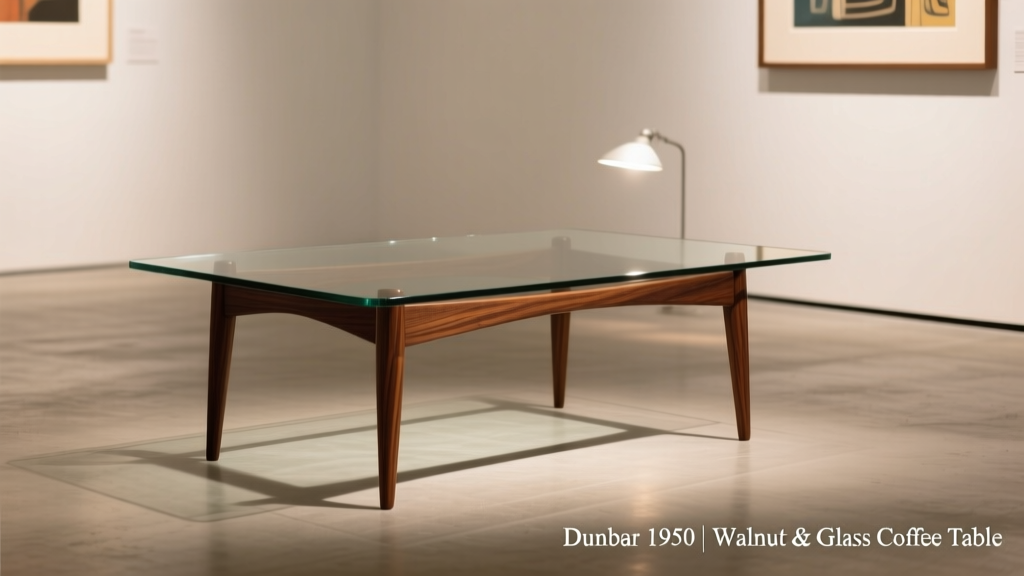
Dunbar Furniture Coffee Table, 1950s: Glass-Top Design with Walnut Legs — Authentication, Provenance, and Market Analysis
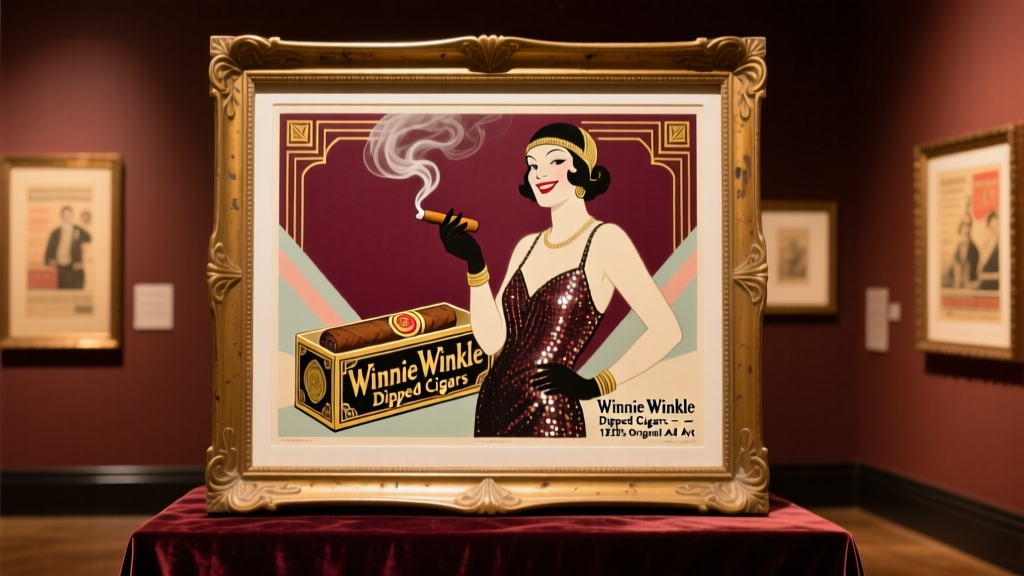
The Advertising Box for Winnie Winkle Wine-Dipped Cigars: A Rare Artifact of 1920s Tobacco Marketing and Comic Strip Synergy
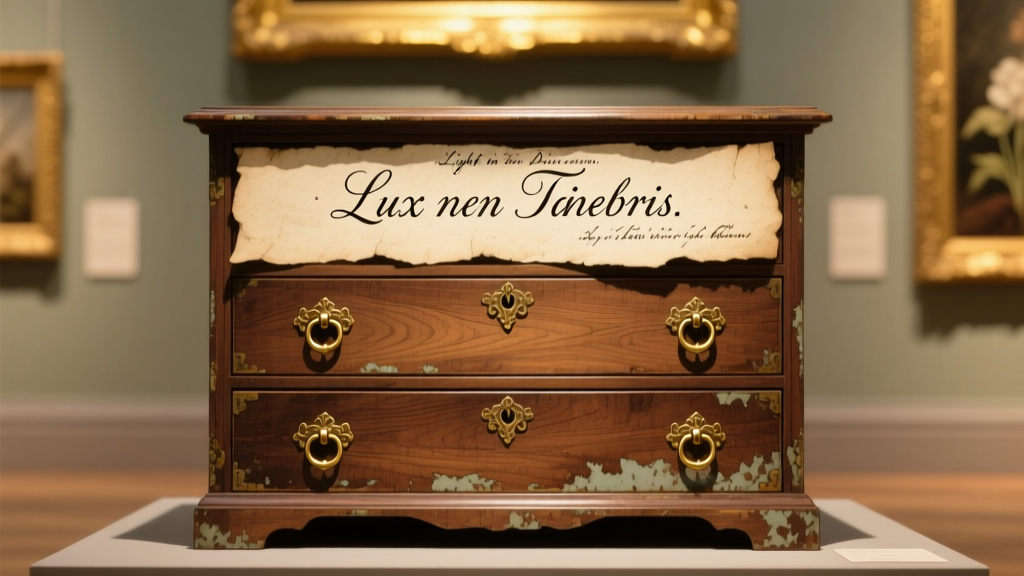
Authenticating and Valuing the Parchment-Finished 2-Over-3 Drawer Chest with Brass Loop Pulls (33" × 32")