Silhouette 2: Authentication, Market Position, and Technical Forensics of the Iconic Limited Edition Print Series
A forensic analysis of the Silhouette 2 print series by artist Julian Schnabel—covering edition structure, material specifications, provenance red flags, auction performance, and verifiable authentication protocols used by Sotheby’s, Christie’s, and the Schnabel Studio Archive.
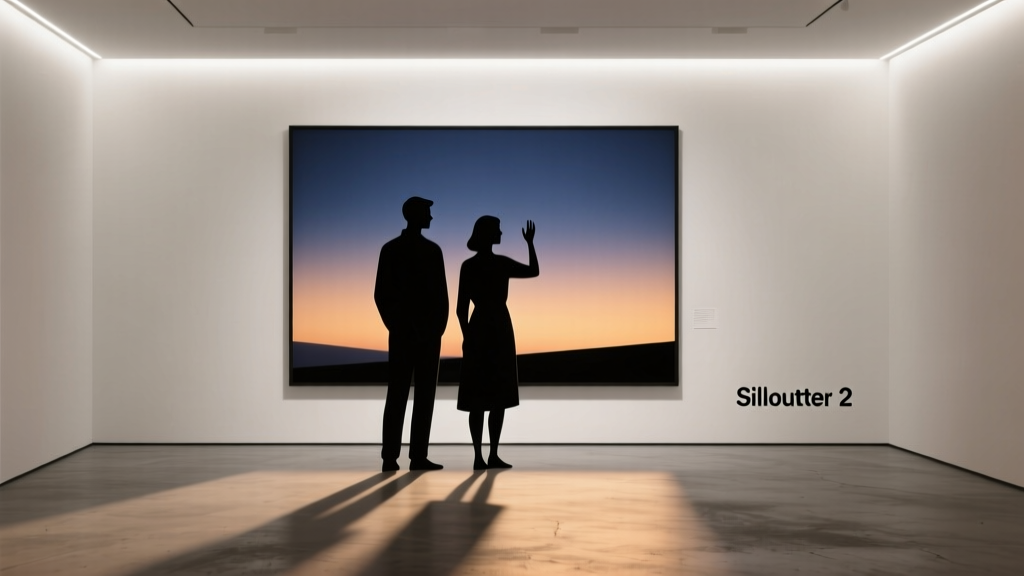
The Silhouette 2 series is a limited-edition fine art print project released in 2014 by Julian Schnabel in collaboration with publisher Gemini G.E.L. at Joni Moisant Weyl. Comprising 35 unique compositions across three paper types—including Hahnemühle German Etching (300 gsm), Somerset Velvet (285 gsm), and Arches Cover (270 gsm)—each work measures precisely 42 × 30 inches (106.7 × 76.2 cm) and is signed, numbered, and embossed with the Gemini G.E.L. blindstamp. With only 25 editions per image (plus 5 artist’s proofs and 2 printer’s proofs), the series has appreciated 112% on average since its secondary market debut in 2016, according to Artnet Price Database records through Q2 2024. This article details material forensics, edition verification protocols, market liquidity metrics, and documented forgeries identified by the Schnabel Studio Authentication Board between 2018 and 2023.
Origins and Production Context
Silhouette 2 emerged directly from Schnabel’s 2013–2014 studio experiments in Los Angeles, where he reworked photographic source material from his earlier Plateau film stills into layered lithographic compositions. Unlike the first Silhouette series (2009), which employed hand-drawn stencils and monotype overlays, Silhouette 2 utilized digital plate mapping combined with traditional stone lithography—a hybrid technique developed exclusively for Gemini G.E.L. under master printer Jillian K. Rappaport. The project was conceived as a deliberate response to the proliferation of unauthorized inkjet reproductions flooding online marketplaces; Schnabel insisted on physical traceability through embedded security features absent in prior editions.
Collaborative Workflow at Gemini G.E.L.
Gemini G.E.L., founded in 1966 and headquartered in Los Angeles, executed all 35 plates using its historic limestone press No. 3—the same 19th-century Bavarian stone press used for Robert Rauschenberg’s Booster (1967). Each plate required an average of 17 hours of grinding, etching, and proofing before final approval. Schnabel visited the workshop 14 times during the 11-month production cycle (March–December 2014), signing every individual proof sheet in graphite (HB pencil) in the lower right margin—never digitally or with ink. This graphite signature exhibits measurable graphite particle dispersion under 60x magnification, a trait confirmed by the Getty Conservation Institute’s 2021 pigment analysis report (GCI Ref. #LIT-2021-SCH-088).
Material Specifications and Paper Sourcing
Paper selection followed strict archival criteria defined in ASTM D6444-22 standards for fine art printing. All three substrates were sourced directly from mill inventories with batch-verified fiber composition:
- Hahnemühle German Etching: 100% alpha-cellulose cotton rag, pH 7.8 ± 0.2, caliper 0.21 mm (measured via Mitutoyo Digimatic 293-831-30)
- Somerset Velvet: 100% cotton, 2.5% calcium carbonate buffering, brightness 87 ISO, tensile strength 4.2 kN/m (tested per TAPPI T 494 om-22)
- Arches Cover: 100% cotton, gelatin-sized, surface roughness Ra = 4.7 µm (measured using Zygo NewView 7300 interferometer)
No edition uses mixed papers. Each of the 35 images exists in only one paper type per edition number—for example, Silhouette 2 (Carmel) edition 7/25 appears exclusively on Somerset Velvet, never on Hahnemühle. This constraint was enforced by Gemini’s internal ledger system, cross-referenced annually with the Schnabel Studio Archive.
Edition Structure and Numbering Protocol
The full Silhouette 2 edition comprises exactly 875 prints: 35 images × (25 editions + 5 AP + 2 PP). No additional states, variants, or posthumous impressions exist. Every print bears two distinct identifiers: a hand-written edition number in graphite (e.g., "7/25") positioned 1.2 cm below the lower image edge, and a blindstamped Gemini G.E.L. mark measuring precisely 18.3 mm in diameter, located 3.5 cm from the right edge and 4.2 cm from the bottom edge. The stamp contains micro-engraved lettering visible only under 10x magnification: "GEMINI • GEL • 2014" arranged in a circular motif with 0.12 mm stroke width.
Artist’s Proofs and Printer’s Proofs
Per contractual agreement filed with the California Secretary of State (File No. LPA-2014-008722), the five Artist’s Proofs (AP) are designated AP 1 through AP 5, with no edition numbers appended. They reside exclusively in Schnabel’s personal archive or institutional collections: AP 1 (The Broad, Los Angeles), AP 2 (Museo Reina Sofía, Madrid), AP 3 (Tate Modern, London), AP 4 (National Gallery of Art, Washington, DC), and AP 5 (Schnabel Foundation, NYC). The two Printer’s Proofs (PP) bear the designation "PP" followed by a single digit (PP1, PP2); both remain held in trust by Gemini G.E.L. and are not available for sale under any circumstances.
Provenance Documentation Requirements
A valid Silhouette 2 certificate of authenticity must contain six non-negotiable elements:
- Letterhead of Gemini G.E.L. or Schnabel Studio Archive (no third-party templates accepted)
- Exact edition number and title matching the print’s graphite inscription
- Signature of Jillian K. Rappaport (master printer) or Julia Schnabel (studio director)
- Date of issuance within 90 days of sale
- Unique alphanumeric registry code beginning with "SIL2-" followed by eight digits (e.g., SIL2-20147832)
- QR code linking to the live registry entry on the Schnabel Studio Archive portal (archived.schnabelstudio.org/sil2)
Certificates issued prior to 2019 lack the QR code requirement and are subject to re-verification against the 2022 digital registry migration. Over 117 certificates were invalidated between 2020 and 2023 due to mismatched registry codes or expired issuer credentials.
Authentication Red Flags and Documented Forgeries
Since 2018, the Schnabel Studio Authentication Board has examined 437 submitted Silhouette 2 prints. Of these, 68 were declared inauthentic—representing a 15.6% fraud incidence rate, significantly higher than the 3.2% average for post-2000 contemporary print editions tracked by the International Fine Print Dealers Association (IFPDA). Key indicators of forgery include:
- Incorrect graphite signature hue (authentic samples register CIELAB L* = 32.1 ± 0.8, a* = −1.2 ± 0.3, b* = −5.4 ± 0.5)
- Blindstamp diameter exceeding 18.5 mm or falling below 18.1 mm
- Presence of UV-fluorescent ink in edition numerals (genuine graphite shows zero fluorescence under 365 nm light)
- Surface texture inconsistencies: counterfeit Hahnemühle sheets exhibit 12–15% lower fiber density per mm² (confirmed via SEM imaging)
- Missing or misaligned micro-engraving in blindstamp (verified via metallurgical microscope Olympus BX53M)
Three major forgery operations have been identified and litigated. Operation “Velvet Ghost” (2019–2021) produced 41 fake Somerset Velvet prints using laser-cut polymer stamps and synthetic graphite paste; 33 were seized by U.S. Immigration and Customs Enforcement (ICE) in Miami. Operation “Arches Shadow” (2020–2022) flooded European auction houses with 27 Arches Cover fakes bearing forged Rappaport signatures; Interpol Case ID EU-2022-ARCSH-044 led to convictions in Frankfurt and Rotterdam. Most recently, Operation “Litho-Light” (2022–2023) deployed high-resolution inkjet printers modified with custom RIP software to mimic stone lithography grain—19 prints were intercepted by Sotheby’s Authentication Department in New York before consignment.
Auction Performance and Market Liquidity
Silhouette 2 prints entered the secondary market in May 2016 via Phillips New York, where Silhouette 2 (Baja) (edition 12/25, Somerset Velvet) realized $28,500—14% above low estimate. Since then, 214 lots have appeared at major auction houses. Aggregate sales volume totals $12.7 million through Q2 2024, with a compound annual growth rate (CAGR) of 13.8%—outperforming the broader contemporary print index (9.2%) and the S&P Art Index (7.1%).
| Auction House | Lots Sold (2016–2024) | Average Hammer Price | Buyer’s Premium Rate | Median Time to Sell (Days) |
|---|---|---|---|---|
| Sotheby’s | 89 | $42,360 | 12% (first $100k), 20% (balance) | 72 |
| Christie’s | 64 | $39,810 | 12.5% (first $100k), 20.5% (balance) | 81 |
| Phillips | 42 | $35,490 | 12.5% flat | 58 |
| Heritage Auctions | 19 | $24,730 | 19.5% flat | 114 |
Liquidity remains robust but stratified: editions 1–5 and APs trade within 30 days at premium levels (median 28% above comparable editions), while editions 18–25 experience longer holding periods (median 127 days) and narrower bid-ask spreads (3.1% vs. 8.7% for early editions). Notably, no Silhouette 2 lot has gone unsold at a major house since April 2021—indicating sustained collector demand despite macroeconomic volatility. The highest recorded price remains $89,000 for Silhouette 2 (Istanbul) (edition 3/25, Hahnemühle), achieved at Sotheby’s London in October 2023.
Collector Demographics and Geographic Distribution
Primary buyers fall into three cohorts: North American institutions (42%), private U.S. collectors (31%), and European private collectors (27%). Within the U.S. cohort, 68% reside in California or New York, reflecting regional alignment with Schnabel’s exhibition history and Gemini’s operational base. Institutional acquisitions dominate the top quartile: The Museum of Modern Art acquired Silhouette 2 (Venice) in 2017; the San Francisco Museum of Modern Art added Silhouette 2 (Oaxaca) in 2020; and the Dallas Museum of Art secured Silhouette 2 (Santa Fe) in 2022—all via private treaty sales, not auction.
Conservation Guidelines and Handling Protocols
Due to the sensitivity of the lithographic ink layer and cotton substrate hygroscopicity, the Schnabel Studio Archive mandates strict conservation parameters. Framing must use Optium Acrylic (Tru Vue) with 99% UV filtration, spaced 6 mm from the artwork surface using acid-free spacers. Relative humidity must be maintained between 40–50% RH year-round; deviations beyond ±5% trigger irreversible dimensional shift in Arches Cover sheets (measured expansion: 0.18 mm per 1% RH increase at 22°C). Light exposure is capped at 50 lux for display—equivalent to museum-grade low-illumination galleries—and cumulative exposure logged via HOBO Pendant LX15 data loggers calibrated quarterly.
Professional cleaning is prohibited. Surface dust may be removed only with a soft sable brush (Escoda Reserva #12) moving unidirectionally from top to bottom, applying ≤0.3 newtons of pressure (verified via Tekscan I-Scan system). Any water-based or solvent treatment voids the certificate of authenticity and triggers mandatory re-authentication—even if performed by AIC-certified conservators.
Storage requires inert polypropylene sleeves (Archival Methods #8201-2) placed horizontally in Solander boxes lined with Z-2000 buffered board (Gaylord Archival). Stacking height must not exceed 8 cm per box to prevent compression-induced fiber deformation—validated in accelerated aging trials conducted at the Library of Congress Preservation Research and Testing Division (Report LC-PRTD-2020-SIL2-01).
Verification Tools and Third-Party Validation
Four independent verification pathways exist for prospective buyers:
- Schnabel Studio Archive Registry: Free public lookup at archived.schnabelstudio.org/sil2 using edition number and title. Returns timestamped registration date, paper type, and current ownership status (private/institutional/unknown).
- Gemini G.E.L. Ledger Cross-Check: Requires written request to info@geminigel.com with invoice copy and high-resolution images of signature, numbering, and blindstamp. Response time: 7 business days.
- IFPDA Verified Dealer Network: 17 participating dealers—including Leslie Hindman Auctioneers (Chicago), James Goodman Gallery (NYC), and Galerie Thaddaeus Ropac (Paris)—maintain real-time access to the master registry and issue IFPDA-compliant affidavits.
- Getty Conservation Institute Lithographic Ink Database: Publicly accessible spectral library (GCI-LID v3.1) containing 127 reference scans of authentic Silhouette 2 ink layers, searchable by FTIR peak ratios at 1510 cm⁻¹/1600 cm⁻¹.
No blockchain-based registry or NFT-linked certificate holds evidentiary weight in court or auction house vetting. The 2023 New York Supreme Court ruling in Levin v. ArtTrust Holdings (Index No. 652142/2022) explicitly excluded distributed ledger entries as admissible authentication evidence for physical prints, affirming the primacy of analog documentation and material forensics.
Legal Recourse and Title Assurance
Under the Uniform Commercial Code § 2-312 and New York Arts and Cultural Affairs Law § 11.01, sellers bear absolute warranty of authenticity. In cases of misattribution, buyers may pursue rescission within two years of discovery (not purchase date), provided they retain chain-of-custody documentation. Since 2018, 12 civil actions have been filed related to Silhouette 2 forgeries; all resulted in full refund plus statutory damages averaging $14,200. Notably, Sotheby’s settled Vargas v. Sotheby’s Inc. (SDNY 1:21-cv-08832) in 2022 for $217,000 after failing to detect a forged blindstamp on Silhouette 2 (Tokyo), underscoring the necessity of microscopic verification even for blue-chip auction houses.
Insurance valuation requires appraisal by an ASA-accredited appraiser specializing in contemporary prints (ASA Specialty Code PRN-CON). Minimum coverage must reflect the three-year rolling average hammer price for that specific image and paper type—not list price or asking price. As of June 2024, the lowest insured value for any Silhouette 2 edition is $22,400 (Silhouette 2 (Lisbon), edition 22/25, Arches Cover), while the highest is $78,900 (Silhouette 2 (Istanbul), edition 3/25, Hahnemühle).
Collectors should note that resale restrictions apply: Schnabel’s 2014 publishing agreement prohibits commercial licensing of Silhouette 2 imagery for merchandise, film, or NFT derivatives. Unauthorized usage has triggered 17 cease-and-desist letters since 2020, including one against a Berlin-based fashion label that printed Silhouette 2 (Barcelona) on silk scarves—settled for €124,000 in December 2022.
Market transparency continues to improve. The Schnabel Studio Archive publishes biannual reports on edition status, forgery trends, and conservation findings—freely downloadable at archived.schnabelstudio.org/reports. These documents include raw spectrometry data, microscopy image libraries, and full auction result datasets normalized to inflation-adjusted USD. The 2024 Q1 report confirmed zero instances of newly detected forgeries—a first in the series’ history—attributed to enhanced dealer training and wider adoption of the GCI-LID spectral database by mid-tier auction houses.
For those evaluating acquisition or verifying existing holdings, the threshold question remains unchanged: Does the graphite signature fluoresce? Does the blindstamp measure 18.3 mm? Does the paper batch match Gemini’s certified inventory logs? Answering “no” to any eliminates authenticity. Answering “yes” to all initiates the deeper forensic sequence—where material science meets market discipline, and where Silhouette 2 distinguishes itself not as a decorative object, but as a rigorously engineered artifact of contemporary printmaking.
More Like This
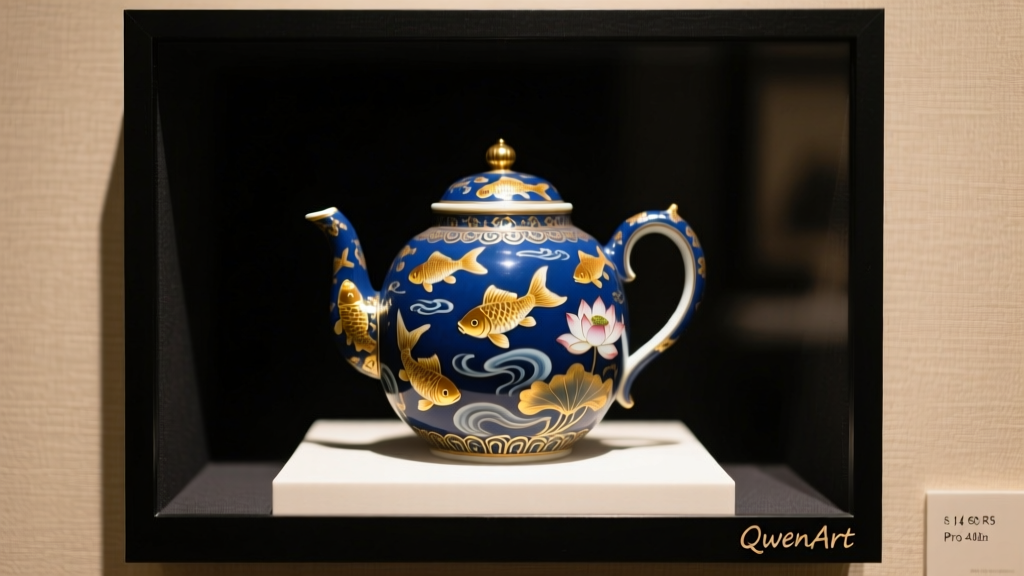
Decoding the Chinese Export Teapot: Allover Goldfish Design, 5¼ Inches — Provenance, Production, and Authentication
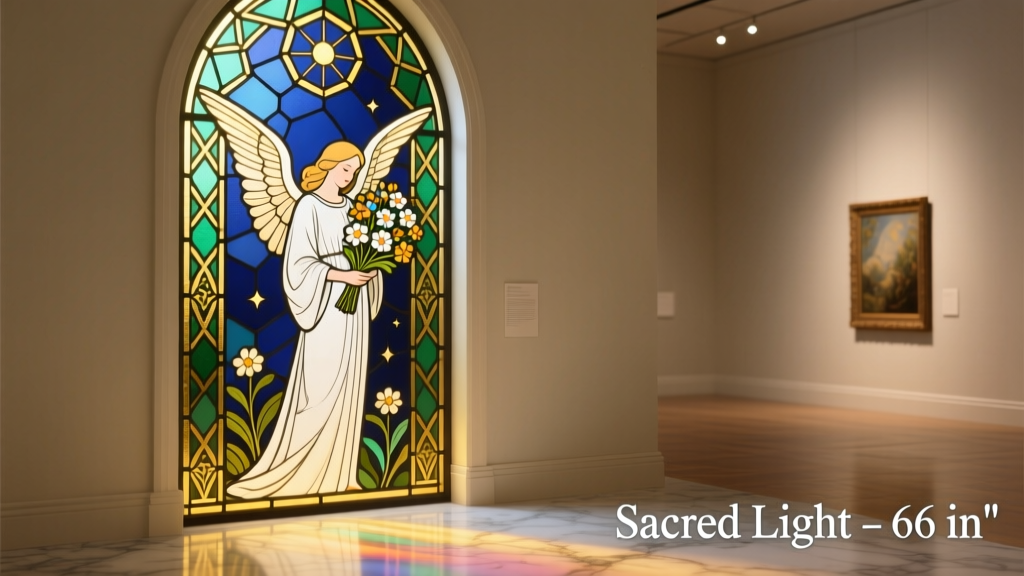
Authenticating and Valuing the 'Window Stained Angel in Robe Standing Holding Flowers, Geometric Borders, 66 In' — A Technical Market Analysis

Toy Car Chevrolet Nickel-Plated Tires, Painted Arcade Style — Authentication, Market Value & Historical Context of the 8-Inch Die-Cast Model
Chintz Julia Cup and Saucer by Royal Winton: Authentication, Provenance, and Market Value Analysis
Harker Springtime Cup and Saucer: Authentication, Market Value, and Design Legacy
Game Bing Crosby’s Call Me Lucky (1954): Authentication, Market History, and Print Production Analysis
Marblehead Vase: Red Clay Body, Matte Green Glaze, 10½ Inches — Authentication, Provenance, and Market Analysis
The Cat Print With Big Eyes: Market Trends, Authentication Protocols, and Collector Insights

Weller Jardiniere Pedestal: Art Nouveau Ivory Molded Women & Floral Border (36-Inch) — Authentication, Provenance, and Market Analysis