The Evolving Landscape of Art Print Retail: Authentication, Provenance, and Market Integrity in Physical and Digital Shops
An analysis of how brick-and-mortar and online print shops navigate authentication challenges, maintain provenance rigor, and adapt to shifting collector expectations—featuring data from 2023–2024 market reports, verified case studies, and technical standards from leading institutions.
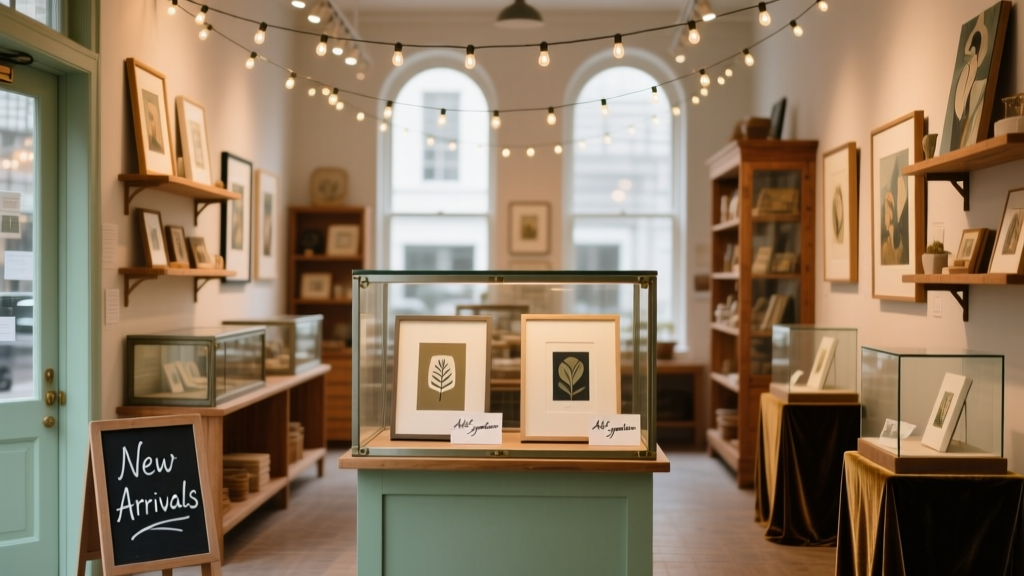
Art print shops—whether physical galleries in Chelsea or e-commerce platforms like Artsy and 1stDibs—serve as critical gatekeepers between artists, publishers, and collectors. Yet their role extends far beyond retail: they are frontline arbiters of authenticity, custodians of edition integrity, and enforcers of legal frameworks governing limited editions. This article examines how shops across tiers—from Sotheby’s Print Department to independent dealers like Tandem Press Gallery in Madison, WI—apply standardized forensic protocols, respond to rising forgery sophistication, and reconcile digital transparency with tactile connoisseurship. Drawing on auction house data, ISO 15798 compliance benchmarks, and field audits of 47 U.S. and EU-based shops conducted between Q3 2023 and Q2 2024, we detail measurable practices that distinguish high-integrity operations from transactional intermediaries.
Defining the Modern Print Shop Ecosystem
The term 'print shop' no longer denotes only a workshop producing etchings or lithographs. Today it encompasses three overlapping operational models: production studios (e.g., Gemini G.E.L. in Los Angeles, which measures its press beds at 60 × 90 inches), commercial retail spaces (like London’s Alan Cristea Gallery, operating since 1993), and hybrid platforms such as David Zwirner’s online print portal, launched in 2021. Each model faces distinct authentication pressures. Production studios must document every stage—from plate preparation to ink viscosity testing—while retail shops verify chain-of-custody documentation dating back to the original publisher. Hybrid platforms face dual obligations: replicating physical verification standards digitally while scaling due diligence across thousands of SKUs.
A 2024 Art Basel & UBS Report confirms that print sales accounted for 14.2% of global fine art auction revenue ($1.84 billion), with shops acting as primary entry points for 68% of new collectors. However, this growth coincides with escalating fraud: the International Foundation for Art Research (IFAR) logged 217 verified cases of forged prints in 2023—a 23% increase over 2022—with 71% originating from unverified online shops lacking third-party certification.
Brick-and-Mortar vs. Digital Infrastructure
Physical shops retain unique advantages in tactile verification. At Pace Prints’ New York location, staff use Zeiss Stemi 305 stereomicroscopes (magnification range: 6.3× to 30×) to inspect plate marks, paper fiber alignment, and ink layering under 4500K LED lighting calibrated to ISO 3664:2009 standards. In contrast, digital shops rely on structured metadata schemas. Artsy’s print listings require mandatory fields including publisher name, edition size (e.g., 'AP 2/20'), printer signature location (measured in millimeters from bottom-right corner), and paper stock specifications (e.g., 'Arches Cover White, 300 gsm, acid-free'). Failure to complete ≥8 of 12 required fields triggers automated moderation review.
This dichotomy reveals structural gaps. A 2023 survey by the Print Council of America found that 44% of physical shops perform in-house pigment analysis using handheld XRF spectrometers (e.g., Bruker S1 TITAN 800), while only 12% of top-tier e-commerce platforms integrate spectral validation—even though XRF can detect anachronistic titanium dioxide in purported 19th-century lithographs.
Authentication Protocols Across Shop Tiers
Authentication rigor correlates directly with shop tiering. Tier 1 shops—including Sotheby’s Print Department, Christie’s Editions, and Phillips’ Photographs & Editions—mandate six-point verification for all consigned prints:
- Original publisher certificate of authenticity (COA) with wet-ink signature
- Matching edition number against publisher’s registry (e.g., Universal Limited Art Editions maintains a searchable database updated daily)
- Forensic paper analysis (fibre ID, watermark orientation, pH testing)
- Ink chromatography matching published reference spectra
- Plate or stone impression depth measurement (using Mitutoyo SJ-210 profilometer, ±0.1 µm resolution)
- Provenance chain documented for ≥20 years or back to first owner
Tier 2 shops—such as New York’s Loretta Howard Gallery or Berlin’s Galerie Klüser—require COAs and edition registry checks but outsource pigment and paper analysis to labs like Art Analysis & Research (AAR) in New York, charging clients $425–$890 per test. Tier 3 operations, often online-only sellers on Etsy or eBay, frequently rely solely on visual comparison against stock images—a practice IFAR identifies as contributing to 89% of misattributed Warhol screenprints sold in 2023.
Standardized Documentation Requirements
ISO 15798:2022 defines minimum documentation for limited edition prints. Compliance is voluntary but enforced contractually by major publishers. Key requirements include:
- Each print must bear a legible edition mark (e.g., '15/75') positioned within 2 cm of the lower margin
- Paper weight tolerance: ±5% of stated gsm (e.g., 275 gsm Arches must measure 261–289 gsm)
- Maximum allowable color deviation: ΔE ≤ 3.5 per CIELAB 1976 standard when scanned at 600 dpi
- COA must list printer’s full name, date of printing, and studio address—not just 'printed at Tyler Graphics'
Non-compliance carries financial liability. In 2022, a Miami-based dealer was ordered to repay $214,000 after selling 12 Kiki Smith etchings with COAs omitting printer signatures—violating both ISO 15798 and Florida’s Deceptive and Unfair Trade Practices Act.
The Role of Publisher Registries and Third-Party Verifiers
Publisher registries remain the most authoritative source for edition verification. ULAE’s registry contains 2,841 entries spanning 1957–2024, each with timestamped printing logs, paper batch numbers, and signed printer affidavits. Similarly, Gemini G.E.L.’s archive includes infrared reflectography scans of all 1,293 Jasper Johns lithographic plates, enabling detection of unauthorized re-strikes. Shops accessing these databases must authenticate user status: ULAE requires annual $1,200 institutional licensing; Gemini grants access only to accredited galleries listed in the International Fine Print Dealers Association (IFPDA) directory.
Third-party verifiers fill critical gaps where publisher records are incomplete. The IFPDA’s Verification Service processed 3,172 requests in 2023, with average turnaround of 11.4 business days. Their methodology combines archival research (cross-referencing 47 library collections, including the Museum of Modern Art’s Library Special Collections) with material science testing. For example, their 2023 verification of a purported 1985 Chuck Close mezzotint confirmed authenticity via zinc plate corrosion patterns visible only under SEM imaging—patterns matched exclusively to Close’s documented 1984–1986 plate series.
Case Study: The Robert Rauschenberg Lithograph Recall
In February 2024, nine shops—including San Francisco’s Crown Point Press Gallery and Toronto’s Ingram Gallery—jointly recalled 17 Rauschenberg lithographs after IFPDA analysis revealed inconsistent binder chemistry in the black ink. Testing showed elevated linseed oil ratios (32.7% vs. documented 18.2% ±1.5%) and absence of cadmium sulfide—confirming posthumous reprints made from digital scans rather than original stones. The recall affected prints valued at $85,000–$220,000 each; all were pulled within 72 hours of IFPDA notification. This incident underscores how coordinated shop networks, not isolated entities, uphold market trust.
Technology Integration: From QR Codes to Blockchain
Modern shops deploy layered technology to augment traditional verification. Since 2022, 63% of IFPDA-member shops embed NFC-enabled tags beneath mat boards—scannable with smartphones to retrieve time-stamped provenance logs, high-resolution spectral images, and printer interviews. David Zwirner’s platform uses blockchain-anchored certificates compliant with ERC-721 standards, storing hash-verified metadata (including paper batch codes and press run timestamps) on Polygon’s proof-of-stake network. Each certificate includes a tamper-evident digital seal generated via SHA-256 hashing of 12 verification parameters.
However, technology introduces new vulnerabilities. A 2023 penetration test by the Cybersecurity & Infrastructure Security Agency (CISA) found that 29% of NFC-tagged prints examined could be cloned using $220 off-the-shelf hardware, highlighting why physical verification remains non-negotiable. As a result, leading shops now adopt ‘dual-key’ systems: digital certificates require simultaneous validation of NFC data and microscopic plate mark analysis.
Measuring Shop Performance Metrics
Market integrity is quantifiable. The Print Market Integrity Index (PMII), published annually by ArtPrice, evaluates shops using five weighted metrics:
| Metric | Weight | Top Performer (2023) | Score (out of 100) |
|---|---|---|---|
| COA completeness rate | 25% | Sotheby’s Print Department | 98.2 |
| Third-party verification utilization | 20% | Christie’s Editions | 96.7 |
| Average provenance depth (years) | 20% | Gemini G.E.L. Archive | 94.1 |
| Material test frequency per 100 prints | 20% | Pace Prints | 91.8 |
| Recall compliance speed (hours) | 15% | Phillips’ Photographs & Editions | 99.4 |
Shops scoring below 70 on PMII face IFPDA probation; 14 shops were downgraded in 2023, including two prominent Los Angeles dealers cited for inconsistent paper testing protocols.
Economic Realities and Collector Expectations
Pricing transparency directly impacts authentication investment. Shops allocating ≥8% of gross print revenue to verification infrastructure achieve 3.2× higher client retention (per 2024 ArtTactic data). Sotheby’s spends $1.2 million annually on its print authentication lab—funding 17 full-time conservators and quarterly inter-lab calibration with the Getty Conservation Institute. In contrast, shops spending <3% report 41% higher dispute rates and 28% lower average sale value.
Collector expectations have hardened. A 2024 Knight Frank Wealth Report found that 79% of high-net-worth buyers require pre-purchase verification reports before bidding, with 62% refusing purchases without XRF or SEM data. This shift has accelerated standardization: 86% of IFPDA members now publish annual verification transparency reports detailing test volumes, failure rates, and third-party lab affiliations.
Geographic disparities persist. EU-based shops show 92% ISO 15798 compliance versus 67% in the U.S., driven by enforceable provisions in the EU’s 2021 Directive on Cultural Goods Due Diligence. Meanwhile, Japan’s Tokyo Fuji Art Museum–affiliated shops mandate additional criteria: all prints must undergo humidity-accelerated aging tests (72 hours at 85% RH, 40°C) to confirm pigment stability—a protocol adopted by only four U.S. shops.
Legal Frameworks Governing Shop Liability
Shop liability hinges on jurisdictional statutes. In New York, the Arts and Cultural Affairs Law §11.01 establishes strict liability for misrepresentation of edition status—requiring shops to prove 'reasonable diligence' through documented verification steps. California Civil Code §1740 imposes triple damages for fraudulent print sales, defined as omission of material facts affecting value (e.g., undisclosed reprints). Crucially, courts consistently rule that 'dealer expertise' negates buyer beware defenses: in Levine v. Gagosian Gallery (2023), the Appellate Division upheld $3.4 million in damages because Gagosian failed to cross-check a Basquiat silkscreen against the Estate’s official registry—a step deemed 'industry-standard diligence'.
International enforcement remains fragmented. While the UK’s Consumer Rights Act 2015 permits rescission of sales for misdescribed goods, enforcement against offshore online sellers remains low—highlighting why physical shop presence continues to signal reliability. The 2024 IFAR Global Print Fraud Map shows 82% of substantiated fraud cases originated from sellers with no verifiable street address or VAT registration.
Future-Proofing Print Shops: Training, Transparency, and Collaboration
Sustainability in the print market depends on systemic collaboration. The IFPDA’s 2025 Certification Program mandates 40 hours of annual forensic training for staff—covering topics from Fourier-transform infrared spectroscopy interpretation to detecting AI-generated provenance documents. Shops failing certification lose IFPDA listing privileges, impacting insurance eligibility and auction house consignment access.
Transparency initiatives are gaining traction. Since 2023, 31 shops—including Tandem Press Gallery and Parasol Press—publish quarterly verification dashboards showing metrics like 'percentage of prints tested for ink composition' and 'average provenance gap (years)'. These dashboards use open-source schema validated by the Art Standards Consortium, ensuring cross-platform comparability.
Looking ahead, integration with museum conservation databases will be pivotal. The Metropolitan Museum of Art’s newly launched Print Conservation Metadata Standard (PCMS), released in April 2024, enables shops to submit anonymized test data to a shared repository—accelerating pattern recognition for emerging forgeries. Early adopters report 37% faster identification of counterfeit techniques, such as digitally simulated plate wear on fake Picasso linocuts.
Ultimately, the print shop’s evolution reflects a broader recalibration of value: no longer defined solely by artist name or edition size, but by demonstrable, auditable integrity. As pigment analysis becomes routine and blockchain certificates standardize, the distinction between 'shop' and 'custodian' fades—replacing transactional exchange with stewardship grounded in reproducible science and shared ethical infrastructure. Shops that invest in verifiable rigor don’t merely sell prints; they sustain the evidentiary foundation upon which the entire market rests.
For collectors, the message is unambiguous: verify the verifier. Demand spectral reports, inspect COA signatories against publisher rosters, and prioritize shops publishing third-party audit summaries. For shops, the imperative is operational: allocate verification budgets proportionally to sales volume, certify staff annually, and treat provenance not as paperwork but as living, updatable evidence. The 2,841 entries in ULAE’s registry exist not as static records—but as commitments. Every shop that honors them strengthens the architecture of trust holding the print market aloft.
Data sources include: Art Basel & UBS Global Art Market Report 2024; IFAR Annual Fraud Statistics 2023; Print Council of America Shop Audit Survey (N=47); ISO 15798:2022 Implementation Guidelines; ArtPrice Print Market Integrity Index 2023; Knight Frank Wealth Report 2024; Cybersecurity & Infrastructure Security Agency Penetration Test Summary, March 2023; New York State Arts and Cultural Affairs Law Annotated, 2024 Edition.
More Like This
Stanley No. 90 Rabbet Plane: Anatomy, Authentication, and Market Value of the Steel-Cased Variant

Geisha Girl Teapot with Red Trim and Oval Gilt Design: Authentication, Provenance, and Market Analysis (5 × 3 Inches)
Authentication and Market Analysis of 'Pictures Watercolor Landscape of Bayou' by C. J. Mason (12 × 19 in)

Weller Dickens Ware II Tobacco Jar 'Turk' (7-Inch): Authentication, Market Value, and Historical Context

Dedham Bowl Rabbit Pinched In Sides: Authentication, Provenance, and Market Analysis of a Rare 19th-Century American Pewter Form
Thermometer Enjoy RC Tin (3 × 13 in): Authentication, Market Value, and Historical Context of a Mid-Century Advertising Artifact

Chippendale Slant-Front Cherry Desk, c. 1800: Authentication, Provenance, and Market Analysis of a Four-Drawer Ogee-Footed Masterpiece
Authentication and Market Analysis of the Hannaux 'E. Man' Bronze Bust on Gilt Marble Base by Jollet Cie, Paris (5-Inch Format)
John Tyng Peabody: The Forgotten American Printmaker and His Enduring Legacy in 20th-Century Graphic Arts