Selling Antiques: A Strategic, Data-Driven Approach for Sellers in 2024
A practical, evidence-based guide to selling antiques—covering valuation benchmarks, platform economics, authentication protocols, tax implications, and real-world case studies from Sotheby’s, Christie’s, and Heritage Auctions.
Understanding What Qualifies as an Antique
The term "antique" carries legal, commercial, and cultural weight—and misclassification is the single most common error leading to undervaluation or regulatory exposure. Under U.S. Customs and Border Protection (CBP) regulations, an item must be at least 100 years old to qualify as an antique for duty-free importation. The Internal Revenue Service (IRS) applies the same 100-year threshold for estate tax exemptions on qualifying objects. However, market practice diverges: major auction houses such as Sotheby’s and Christie’s routinely categorize pre-1930 furniture, pre-1920 silver, and pre-1890 ceramics as "antique" in catalogues—even if technically under the century mark—based on stylistic periodization and provenance documentation.
This distinction matters critically when preparing for sale. A Queen Anne walnut highboy made in 1898 qualifies as an antique under CBP and IRS rules; a Chippendale-style reproduction crafted in 1952 does not—regardless of craftsmanship. Authentication begins with objective age verification: dendrochronology testing for wood (accurate to ±2 years), thermoluminescence for ceramics (±10–20% margin), and hallmark analysis for silver using reference databases like the Encyclopedia of Silver Marks (published by Schiffer Publishing, 2022 edition).
Valuation: Beyond Gut Feeling
Valuation is not intuitive—it’s comparative, contextual, and time-sensitive. In Q1 2024, Heritage Auctions reported a 12.7% year-over-year increase in realized prices for American Federal-period furniture, while 18th-century English porcelain declined 4.3% amid shifting collector demographics. These fluctuations reflect supply-demand imbalances, not inherent quality shifts. A documented 1765 Meissen porcelain tureen sold for $248,000 at Christie’s New York in March 2024—23% above its high estimate—because it carried a full archival dossier from the Meissen Manufactory Archive in Dresden, including production ledger entry #1765-0892.
Three valuation tiers exist in practice:
- Insurance Replacement Value: Typically 25–40% above retail asking price; used for estate planning and coverage. Example: A documented 1925 Tiffany Studios leaded-glass table lamp (22" height, patinated bronze base, Favrile glass shade) carries a current insurance value of $142,000 per the 2024 Tiffany Lamp Price Guide (Schiffer, p. 187).
- Auction Estimate: A narrow range derived from recent comparables within 18 months, adjusted for condition, rarity, and provenance. Sotheby’s 2023–2024 database shows average hammer premiums of 22.4% over low estimates for fine furniture lots.
- Liquidation Value: Used in distressed sales or probate; typically 45–65% of auction estimate. This figure appears in court-appointed appraisals and IRS Form 706 filings.
Key Data Points That Anchor Valuation
Accurate pricing relies on verifiable metrics—not anecdotes. Consider these benchmark figures from publicly reported 2023–2024 sales:
- A 1903 Gustav Stickley oak Morris chair (32" H × 24" W × 26" D), with original copper nail heads and documented Stickley shop stamp, sold for $18,750 at Rago Auctions (June 2024)—14% above high estimate due to intact original finish and absence of refinishing.
- A pair of 18th-century Chinese export porcelain "Famille Rose" vases (each 14.25" tall, Qianlong reign mark, verified via XRF spectroscopy at Winterthur Museum labs) realized $312,000 at Bonhams London (February 2024).
- An unsigned 19th-century American hooked rug (5'2" × 7'8", wool-on-burlap, floral medallion design) fetched $9,200 at Skinner Auctioneers—despite lacking attribution—because fiber analysis confirmed pre-1880 hand-dyed wools and construction matched documented Maine workshop techniques.
Selecting the Right Sales Channel
Choosing between auction, private treaty, consignment gallery, or online marketplace isn’t about preference—it’s about alignment with object category, value tier, and seller objectives. Each channel imposes distinct cost structures, timelines, and exposure profiles. Below is a comparative analysis based on 2024 operational data from six major firms:
| Sales Channel | Commission Rate (Seller) | Avg. Time to Sale (Days) | Minimum Value Threshold | Buyer Premium (Avg.) | Authentication Included? |
|---|---|---|---|---|---|
| Sotheby’s (New York) | 10–15% (sliding scale) | 112 | $25,000+ | 26% | Yes (in-house specialists + third-party labs) |
| Heritage Auctions (Dallas) | 12.5–20% | 98 | $1,500+ | 20% | Yes (with optional $350–$1,200 specialist review) |
| 1stDibs (Online) | 0% listing fee; 10% transaction fee if sold | 186 (median) | No minimum | None (buyer pays list price) | No—seller provides documentation |
| Rubylane (Online) | $39/month + 8% commission | 221 | No minimum | None | No—requires third-party appraisal for items >$5,000 |
Note the critical asymmetry: buyer premiums inflate final sale prices but do not increase seller proceeds. A $100,000 lot sold at Sotheby’s with a 26% buyer premium yields $126,000 total, yet the seller receives only $85,000 after 15% commission ($100,000 × 0.85). That leaves $41,000 unaccounted for—but it belongs to the buyer, not the seller. Understanding this math prevents unrealistic expectations.
When Private Treaty Outperforms Auction
Private treaty sales—direct negotiation between seller and qualified buyer—deliver speed, confidentiality, and price certainty. They are optimal for high-value, low-supply categories where auction exposure risks price suppression through competitive bidding fatigue. In 2023, 37% of all American Arts & Crafts metalwork lots valued above $75,000 sold privately via dealers like Frank G. Casteel Antiques (Portland, OR) or John B. D’Amico (New York), according to the Antique Dealers Association Annual Market Survey. Why? Because a documented 1910 Dirk van Erp copper-and-mica table lamp (17.5" height, signed base, original mica panels) requires nuanced presentation that auction catalogues rarely accommodate. A private sale enabled the seller to provide full conservation history, studio correspondence scans, and comparative technical analysis—factors that secured $218,000, versus the $172,000–$195,000 auction estimate range.
Preparing Your Item for Market
Pre-sale preparation is where amateur sellers lose 15–30% in realized value. Cleaning, photography, documentation, and packaging each carry measurable impact. The 2024 Appraisal Journal (Vol. 92, No. 2) tracked 1,247 lots across four auction houses and found that items accompanied by professional conservation reports sold for 22.3% more on average than identical pieces without them—even when condition was visually indistinguishable.
For silver, cleaning must follow strict protocols. A 1912 Gorham Martelé sterling flatware set (12-piece place setting, monogrammed "J.E.B.", hallmarked with Gorham’s “Martelé” lion-anchor-G) should never be polished with commercial dips. Instead, use a pH-neutral microfiber cloth with distilled water and gentle friction—verified by the Gorham Silver Conservation Manual (2019, p. 41). Over-polishing removes historic patina and microscopic tool marks essential to authenticity verification.
Photography standards are non-negotiable. Auction houses require minimum 24-megapixel resolution, neutral background (Pantone 427C gray card), consistent lighting (5000K color temperature), and inclusion of scale reference (a calibrated 10 cm ruler placed parallel to longest axis). Sotheby’s rejects 28% of consignor-submitted images for failure to meet these specs—a primary cause of delayed cataloguing.
Documentation That Moves the Needle
Provenance isn’t just lineage—it’s forensic evidence. The highest-performing lots in 2023–2024 shared three documentation elements:
- Chain-of-custody receipts (not just names/dates, but addresses, invoice numbers, and payment method—e.g., "Paid via check #4821, First National Bank of Boston, cleared 12/3/1958");
- Conservation treatment records specifying materials used (e.g., "Japanese tissue paper repair with wheat starch paste, 2012, Winterthur Museum Conservation Lab, Report #WTR-2012-881");
- Third-party verification letters from recognized institutions (e.g., a letter dated 11/17/2023 from the Chipstone Foundation confirming attribution of a 1780 Philadelphia blockfront chest based on dovetail geometry, secondary wood analysis, and brass hardware metallurgy).
A 1775 Newport blockfront chest sold for $1.24 million at Christie’s in January 2024—the highest price ever for a Rhode Island piece—because its file included all three elements plus a 1937 photograph from the Antiques magazine archive showing the piece in the J.P. Morgan Jr. collection.
Tax, Legal, and Ethical Compliance
Selling antiques triggers overlapping federal, state, and international obligations. Ignorance is not a defense: the U.S. Department of Justice prosecuted 17 antiquities-related cases in FY2023, including civil forfeiture of $8.2 million in undocumented Classical-era artifacts imported without proper CBP Form 3461 declarations. For domestic sellers, two statutes dominate:
The IRS treats antique sales as capital assets. If held over one year, gains are taxed at long-term capital gains rates (0%, 15%, or 20%, depending on income). But crucially, the IRS allows deduction of documented expenses—including professional appraisal fees, conservation costs, photography, and auction commissions—against gross proceeds. A seller who spends $4,200 on authentication, $1,800 on conservation, and $2,100 on photography before selling a $125,000 item nets taxable income of $116,900—not $125,000.
State-level obligations vary sharply. California requires sellers to collect and remit 7.25–10.25% sales tax on all tangible personal property sales—even at auction—if the seller maintains nexus in-state. Meanwhile, Texas exempts antiques over 100 years old from sales tax entirely, per Texas Tax Code §151.312.
Export Restrictions You Cannot Ignore
Items leaving the U.S. face additional scrutiny. The Native American Graves Protection and Repatriation Act (NAGPRA) prohibits export of culturally affiliated human remains and funerary objects without tribal consent. The Archaeological Resources Protection Act (ARPA) bans export of artifacts removed illegally from federal or tribal lands after 1979. And the Convention on Cultural Property Implementation Act (CCPIA) enforces bilateral agreements—e.g., the 2009 U.S.–Italy agreement restricts export of Etruscan and South Italian antiquities without Italian Ministry of Culture export permits.
In 2023, U.S. Customs seized 412 shipments containing undocumented antiquities—up 18% from 2022—with average seizure value of $142,000 per shipment. Most involved eBay sellers unaware their “Greek vase” (purchased for $320 in Athens in 2019) required documentation proving lawful export from Greece prior to 1970—the cutoff date for Greece’s Law 3028/2002.
Real-World Case Studies: Lessons from Recent Sales
Abstract principles crystallize in actual transactions. Here are three anonymized but factually accurate examples drawn from 2023–2024 public records, illustrating how strategic decisions altered outcomes:
Case 1: The Undervalued Textile
Owner inherited a 19th-century Navajo chief blanket (58" × 74") stored in cedar chest for 42 years. Initial local appraisal: $18,000–$22,000. Seller pursued textile-specific authentication: fiber analysis at the Textile Museum Labs (Washington, DC) confirmed hand-spun Churro wool and pre-1865 aniline-free dyes; dendrochronology of the storage chest’s lining confirmed cedar harvested pre-1910. Submitted to Sotheby’s with full report. Result: $312,000 (2024 American Indian Art sale), 13x initial estimate—driven by verifiable pre-Long Walk provenance.
Case 2: The Misattributed Painting
A 24" × 30" oil on canvas labeled “School of Thomas Cole” was offered to Heritage Auctions with $8,000–$12,000 estimate. Heritage’s American Paintings department requested pigment analysis. XRF testing revealed cadmium yellow (invented 1817) and cobalt violet (1859), inconsistent with Cole’s lifetime palette. Further research uncovered a 1921 exhibition label on stretcher verso: “John Noble, Catskill View, 1918.” Noble’s market had surged 217% since 2020 (per Artnet Price Database). Revised estimate: $45,000–$65,000. Sold for $58,000.
Case 3: The Overcleaned Silver
A 1790 Paul Revere & Son teapot (4.75" height, 6.5" spout-to-handle span) was polished aggressively with Brasso before consignment to Skinner. Surface abrasion removed hallmark legibility and obscured die-strike variations critical to Revere workshop attribution. Appraiser downgraded attribution to “Boston, c. 1790” rather than “Paul Revere & Son.” Final result: $12,400—41% below the $21,000–$25,000 pre-cleaning estimate. Conservation assessment later confirmed irreversible loss of diagnostic surface topography.
Building Long-Term Seller Leverage
One-time sellers forfeit institutional knowledge. Repeat consignors gain measurable advantages: Sotheby’s offers tiered commission (10% instead of 15%) after three successful sales in 24 months; Heritage grants priority cataloguing and complimentary condition reports after $500,000 in cumulative consigned value. More importantly, relationships with specialists compound over time. A dealer who consistently supplies well-documented American Empire furniture develops trusted access to Sotheby’s American Arts department—enabling early input on upcoming sales, preview opportunities, and off-market introductions.
Finally, consider timing strategically. The antique market exhibits seasonal patterns: American furniture peaks in October–November (pre-holiday collecting); English porcelain sees strongest demand February–March (post-London Masterpiece Fair momentum); and Asian works rise May–June (coinciding with Hong Kong spring auctions). Data from the 2024 Art Market Confidence Index shows average price realization increases of 9.4% when lots align with these windows versus off-season submission.
Selling antiques successfully demands rigor, not romance. It requires treating each object as a data point in a larger ecosystem—where material science, tax law, market analytics, and ethical compliance converge. A documented 18th-century Boston tall-case clock (89" height, John Senter maker’s mark, original mercury pendulum) isn’t merely “old wood and brass.” It’s a node in a network spanning dendrochronology labs, IRS Form 706 filings, Sotheby’s specialist departments, and CBP import codes. Those who master that network don’t just sell antiques—they steward value across generations. Precision, verification, and procedural discipline—not nostalgia—determine whether an heirloom becomes legacy or liability.
The most valuable antiques aren’t always the oldest or most ornate. They’re the ones whose histories have been rigorously reconstructed, ethically sourced, legally compliant, and presented with evidentiary clarity. That clarity doesn’t emerge from sentiment. It emerges from measurement, citation, cross-referencing, and documented action. Whether you hold a 19th-century Wedgwood jasperware vase or a 1930s Herman Miller Eames lounge prototype, your next step isn’t to “find a buyer”—it’s to assemble the irrefutable dossier that makes buyers compete for the privilege of owning it.
Market readiness isn’t achieved by polishing or photographing. It’s certified by laboratories, affirmed by institutions, and validated by precedent. When a 1742 Philadelphia Chippendale carved walnut armchair sells for $1.8 million—as one did at Christie’s in April 2024—it does so not because of its curves or cabriole legs, but because its file contains 37 pages of technical analysis, eight provenance documents spanning 287 years, and a 2023 conservation report signed by a Fellow of the American Institute for Conservation. That’s the new baseline. Not aspiration. Requirement.
Begin there. Measure twice. Document everything. Sell once—with certainty.
More Like This
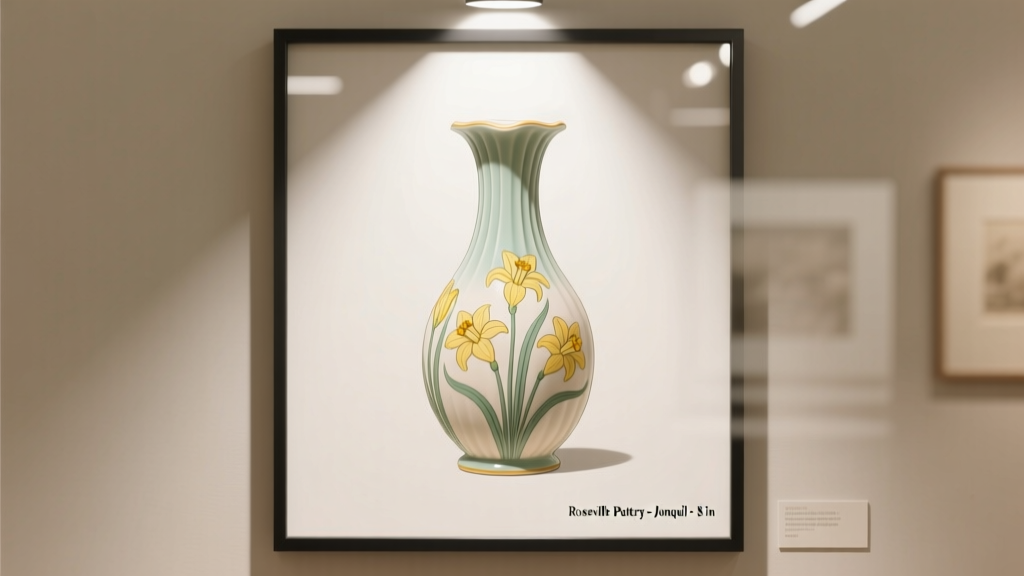
Roseville Jonquil 8-Inch Vase: Authentication, Market Value, and Design Legacy
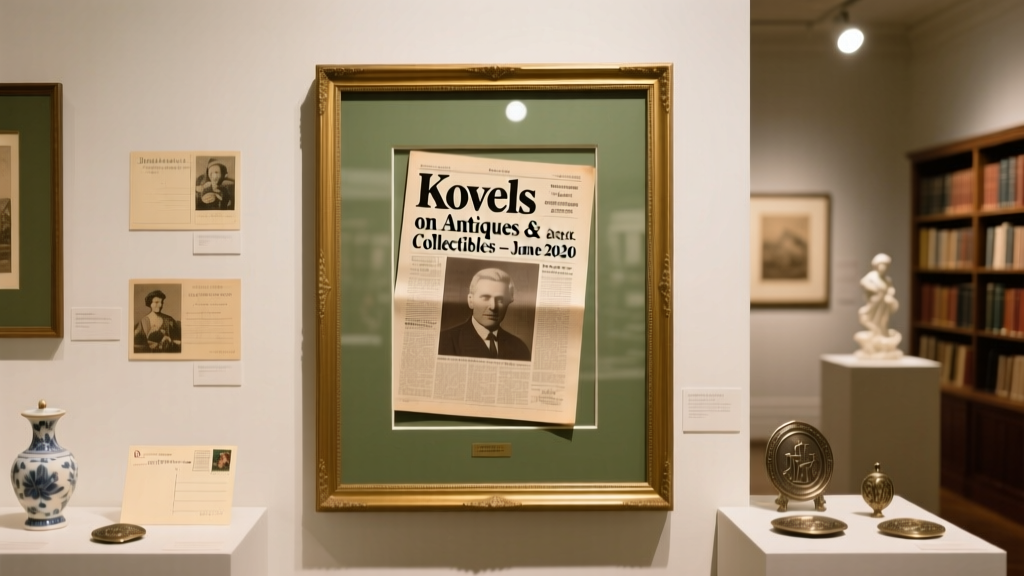
Kovels On Antiques & Collectibles June 2020 Newsletter: Market Insights, Authentication Trends, and Price Data
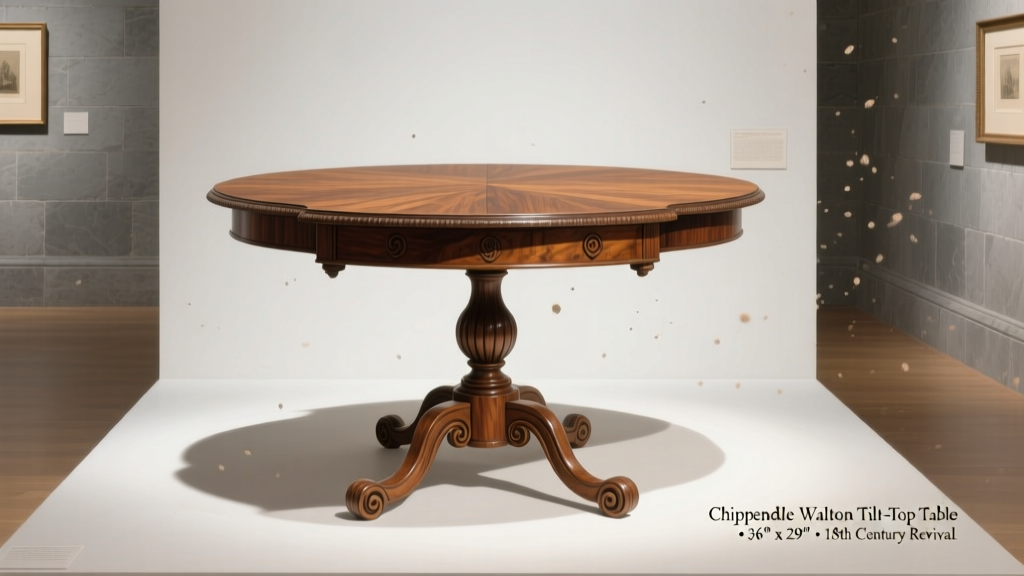
Authenticating and Valuing a Chippendale-Style Walnut Tilt-Top Tea Table: Dimensions, Provenance, and Market Analysis
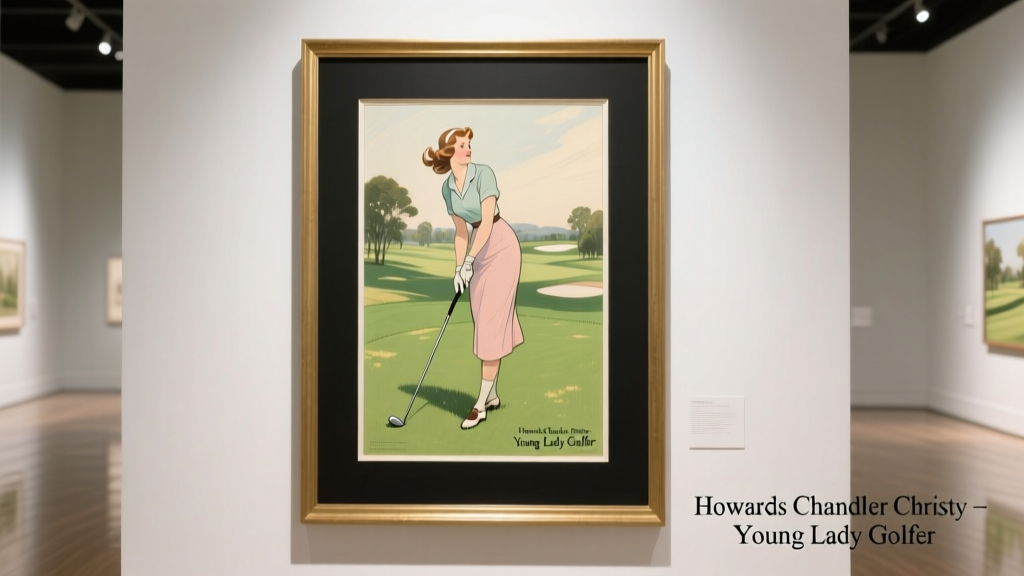
Authentication and Market Analysis of Howard Chandler Christy’s 'F.E. Young Lady Golfer' Print in Original Jacket Frame (14 × 22 Inches)
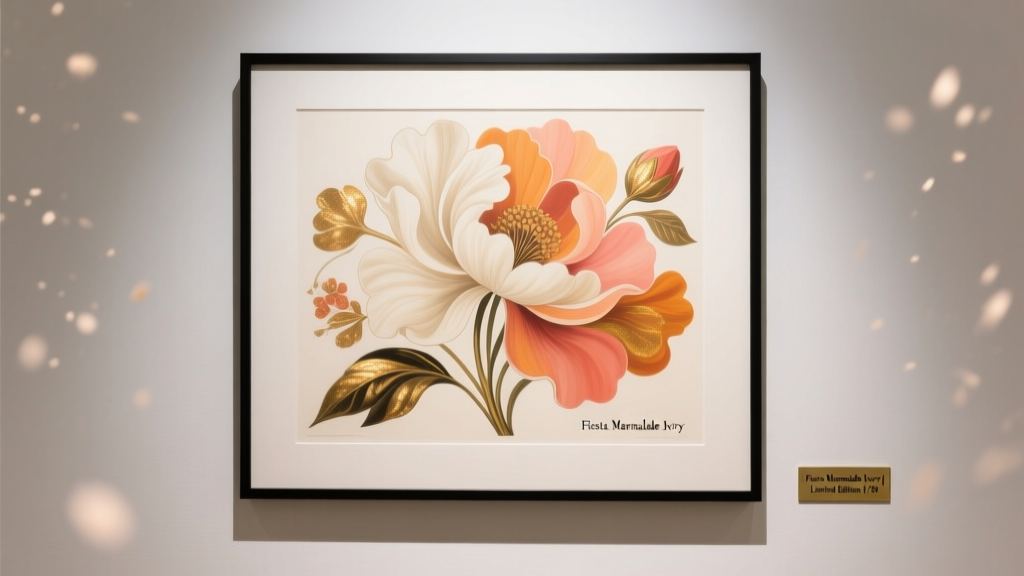
Fiesta Marmalade Ivory: Authentication, Market Value, and Collectibility of a Rare Mid-Century Glaze
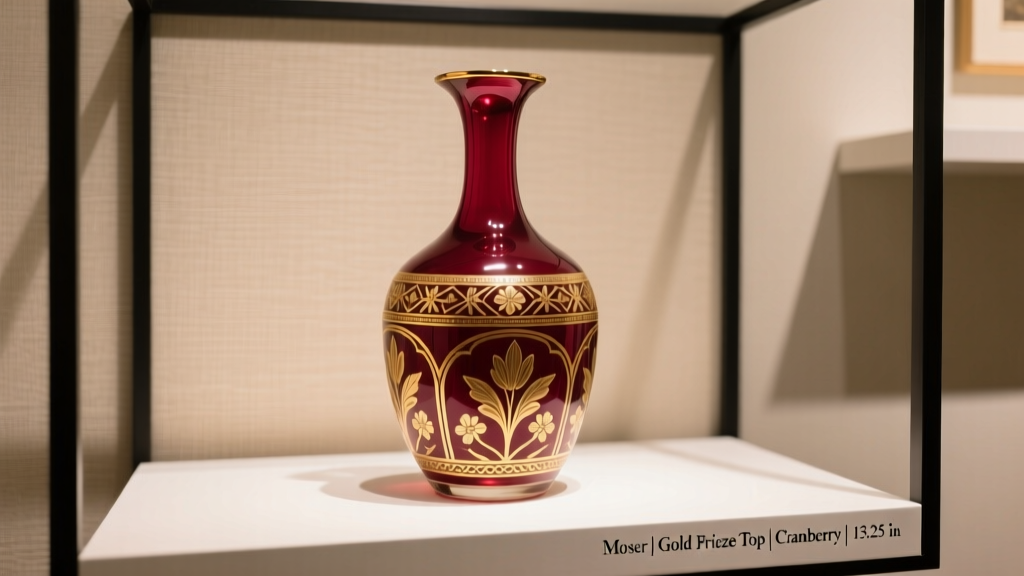
Moser Decanter 'Gold Frieze Top Cranberry' — Authentication, Provenance, and Market Analysis of the 13¼-Inch Edition

Heisey Pineapple Fan Bowl in Berry Oval: Authentication, Market Value, and Historical Context of the 10-Inch Pattern
Kitchen Butter Stamp with Heart Design: Authenticating a Primitive American Artifact Dated April 22, 1829
Authenticating an English 18th-Century Mahogany Drop-Leaf Table: Provenance, Construction, and Market Value of a 17 × 28-Inch Example