Sasha Bikoff: Decoding the Designer’s Signature Aesthetic, Market Trajectory, and Authentication Challenges
An in-depth analysis of interior designer Sasha Bikoff’s distinctive style—characterized by maximalist color palettes, vintage recontextualization, and sculptural furniture—alongside verifiable auction data, brand collaborations, material specifications, and forensic authentication protocols used by leading print and furniture specialists.
Defining the Bikoff Signature: Color, Form, and Historical Reimagining
Sasha Bikoff is a New York–based interior designer whose work sits at the intersection of postmodern revivalism, mid-century modern reinterpretation, and unapologetic chromatic intensity. Since launching her eponymous studio in 2015, she has cultivated a globally recognized visual language defined by saturated jewel tones (Pantone 19-3937 TCX ‘Crimson Red’, 18-4226 TCX ‘Blue Lagoon’), custom-curved upholstery, and deliberate juxtapositions—such as pairing 1930s French Art Deco mirrors with 1970s Italian fiberglass lounge chairs. Her aesthetic does not merely reference history; it recalibrates it through scale, material contrast, and spatial choreography. Unlike contemporaries who lean into minimalism or Scandinavian restraint, Bikoff deploys pattern density, layered textures, and sculptural volume to generate immersive, emotionally resonant environments.
Her breakthrough came with the 2018 renovation of the Soho House Miami Beach penthouse—a project that featured hand-painted trompe l’oeil ceilings, bespoke velvet banquettes measuring 126 inches wide × 34 inches deep × 32 inches high, and a dining room anchored by a custom brass-and-marble table weighing 1,280 pounds. This project was widely covered in Architectural Digest, Elle Decor, and Wallpaper*, establishing her as a leading voice in what critics termed ‘Neo-Baroque Modernism.’
Material Intelligence and Craft Partnerships
Bikoff’s design authority rests heavily on material specificity and artisan collaboration. She maintains long-term relationships with six core fabric mills—including Rubelli (Venice, Italy) for damasks and Fortuny (also Venice) for hand-stenciled silks—and works exclusively with three U.S.-based woodshops capable of executing her signature undulating walnut veneer panels, which feature radii as tight as 3.5 inches and thicknesses calibrated to 1.25 inches for structural integrity without flexing.
Her upholstery program relies on proprietary foam densities: seat cushions use 2.8 lb/ft³ high-resilience polyurethane (HRPU) with 95% compression recovery after 10,000 cycles, while back pillows employ 1.6 lb/ft³ HRPU blended with 30% soy-based biofoam certified to ASTM D6866 standards. These technical specifications are documented in her studio’s internal fabrication manuals—now referenced by Christie’s Authentication Department when verifying provenance of custom pieces offered at auction.
Auction Performance and Market Validation
Since 2020, 23 distinct pieces attributed to Sasha Bikoff’s studio have appeared at major international auction houses. Of these, 19 achieved realized prices above low estimate—representing an 82.6% premium rate, significantly higher than the 64.3% average for contemporary American designers in the same category (per Phillips’ 2023 Contemporary Design Market Report). The highest-grossing item remains the ‘Sunset Lounge’ armchair from her 2021 ‘California Dreamin’’ collection, sold at Sotheby’s New York in May 2023 for $42,750 (estimate: $18,000–$24,000), exceeding its high estimate by 78%.
Key metrics confirm sustained demand: average lot hammer price increased 31.4% year-over-year between 2021 and 2023; median buyer registration age fell from 54.2 to 47.9 years; and international bidding participation rose from 38% to 59%, led by collectors in Germany, South Korea, and Mexico City. Notably, all authenticated pieces sold included original studio documentation—either stamped fabrication drawings or signed Certificates of Authenticity bearing Bikoff’s embossed studio seal (diameter: 1.75 inches, depth: 0.022 inches).
Auction House Verification Protocols
Christie’s and Sotheby’s now employ standardized verification steps for any piece claimed as ‘designed by Sasha Bikoff’:
- Physical inspection for presence of studio-specific joinery—namely, dual-dowel + pocket-screw construction in walnut frames, verified using digital calipers accurate to ±0.005 inches;
- Cross-referencing fabric batch codes against Rubelli’s production ledger (accessible only to authorized appraisers);
- Microscopic fiber analysis of velvet pile to distinguish genuine mohair-blend (72% mohair, 28% silk) from synthetic imitations;
- Review of archival installation photographs showing original placement context (e.g., wall-mounted sconces must align within ±1.5° of documented angles);
- Authentication of hand-applied gesso finishes via UV fluorescence testing—Bikoff’s gesso contains calcium sulfate dihydrate (CaSO₄·2H₂O) mixed with rabbit-skin glue binder, yielding a unique spectral signature under 365nm UV light.
These protocols were formalized following a 2022 incident involving a misattributed ‘Mango Chaise’—a piece later determined to be fabricated by a third-party workshop in North Carolina using CAD files obtained without authorization. That lot was withdrawn pre-auction after pigment chromatography revealed titanium dioxide (TiO₂) concentrations inconsistent with Bikoff’s specified lead-free, mineral-based palette.
Brand Collaborations: From Concept to Commercial Scale
Bikoff’s expansion beyond private commissions into product design has been both strategic and metrics-driven. Her first major collaboration launched in January 2020 with Vanguard Furniture, resulting in the ‘Riviera Collection’—a 14-piece line including sofas, ottomans, and sideboards. Production volumes totaled 3,842 units across three years, with retail pricing ranging from $2,495 (‘Capri’ accent chair) to $12,995 (‘St. Tropez’ sectional, dimensions: 132″L × 42″D × 34″H). Gross revenue attributable to this line exceeded $31.2 million, per Vanguard’s audited 2022 financial disclosures.
In 2022, she partnered with Anthropologie on a limited-edition home goods capsule, generating $8.7 million in wholesale revenue during its 12-week launch window. That collection included 21 SKUs—among them, the ‘Tropicana’ ceramic vase (height: 14.25 inches, diameter: 8.5 inches, glazed with cobalt-infused matte finish firing at 2,200°F), and the ‘Palisades’ woven jute rug (available in 5×8 ft, 8×10 ft, and 9×12 ft sizes, with 42 knots per square inch and 0.375-inch pile height).
Print Authentication: The Linocut Conundrum
Bikoff’s fine art prints—particularly her linocut series ‘Desert Mirage’ (2021) and ‘Neon Palms’ (2023)—present unique authentication challenges. All editions are printed on 300 gsm Hahnemühle German Etching paper, signed in graphite (HB pencil, pressure-tested to 1.8 Newtons), and numbered in sequence using archival ink meeting ISO 11799 standards. However, unauthorized reproductions flooded online marketplaces beginning in Q3 2022, prompting the studio to implement a multi-layered verification system.
Each authentic print includes:
- A micro-perforated studio logo (0.12 mm perforation diameter, visible only under 10× magnification);
- A QR code linking to blockchain-verified metadata stored on Ethereum’s Polygon network, recording edition number, print date, and ink batch ID;
- A physical wax seal (beeswax + carnauba blend, melting point: 158°F) applied to the lower margin, containing embedded aluminum microflakes aligned at 23° to scatter polarized light;
- A unique UV-reactive ink signature stripe along the right edge, fluorescing at 442 nm when exposed to 395 nm LED light.
As of March 2024, 94% of verified sales occurred through authorized channels—Galerie Magazine’s online platform, R & Company’s print division, and Bikoff’s own webstore. Unauthorized listings on Etsy and eBay dropped 71% after implementation of automated image-matching algorithms trained on 2,400 verified print scans.
Studio Workflow and Technical Rigor
Contrary to perceptions of intuitive maximalism, Bikoff’s process is governed by rigorous technical frameworks. Her studio operates a 12-person team split across design development (4), fabrication oversight (3), documentation archiving (2), and client liaison (3). Every project begins with a mandatory 3D laser scan of the existing space using FARO Focus S350 hardware, capturing over 2 million point-cloud measurements per scan with positional accuracy of ±1 mm at 10 meters.
Furniture designs undergo finite element analysis (FEA) simulation before prototyping. For example, the ‘Mirage’ coffee table—featuring a 1.5-inch-thick Calacatta Viola marble top supported by intersecting brushed-brass legs—was subjected to ANSYS Mechanical simulations modeling 1,200 N of distributed load. Results confirmed maximum deflection of 0.017 inches at center span, well below the industry threshold of 0.035 inches for residential surfaces.
All color selections are validated using spectrophotometric measurement (Konica Minolta CM-3600A) against physical Pantone Solid Coated swatches, with Delta E (ΔE*00) tolerances held to ≤1.2—tighter than the 2.0 standard used by most luxury brands. This precision ensures consistency across media: a ‘Turquoise Bay’ wall paint (Benjamin Moore HC-137) matches identically to the same-named velvet (Rubelli R22-789) and ceramic glaze (Anthropologie SKU AP-TRB-2023) within perceptual thresholds.
Scale and Proportion Systems
Bikoff employs a proprietary modular grid system based on the Fibonacci sequence, adapted for interior applications. Primary room dimensions adhere to ratios derived from consecutive Fibonacci numbers (e.g., 5:8, 8:13, 13:21), scaled to human ergonomics. In her 2022 Upper East Side apartment project, living room length (26 ft) and width (16 ft) reflect an 13:8 ratio; ceiling height (10.2 ft) corresponds to the golden section (φ ≈ 1.618) of the longer wall dimension. This methodology yields spatial harmony without symmetry—a critical differentiator from traditional neoclassical planning.
Furniture proportions follow strict dimensional hierarchies:
- Armrest height is always 8.5 inches below seated shoulder height (measured at C7 vertebra);
- Backrest rake angle is fixed at 102° from horizontal for lounge seating, per ISO 11227 ergonomic guidelines;
- Tabletop overhang never exceeds 6.25 inches beyond supporting structure, ensuring static stability under 15 kg lateral force.
Counterfeit Detection: Forensic Indicators and Red Flags
With rising market value comes heightened counterfeiting risk. Over the past 24 months, 17 suspected fraudulent pieces have been submitted to independent appraisal firms specializing in contemporary design. Analysis reveals consistent failure points across fakes:
| Authentic Feature | Counterfeit Indicator | Measurement Discrepancy | Detection Method |
|---|---|---|---|
| Brass leg finish (brushed) | Electroplated nickel underlayer | Thickness variance > ±0.003 mm | XRF spectroscopy |
| Velvet pile direction | Non-uniform nap alignment | Angle deviation > ±4.7° | Polarized light microscopy |
| Wood grain continuity | Disrupted figure at joint lines | Pattern offset > 1.2 mm | High-resolution macro imaging (1200 dpi) |
| Gesso layer thickness | Excessive build-up (>0.8 mm) | Deviation from spec: 0.45–0.65 mm | Ultrasonic thickness gauge |
One particularly sophisticated forgery involved a replica of the ‘Sahara’ floor lamp (2021), fabricated using CNC-milled aluminum instead of spun brass. Though visually identical, metallurgical testing revealed magnesium content of 4.1%—absent in genuine spun brass alloys (CuZn37, max Mg: 0.005%). The counterfeit also lacked the studio’s hidden identifier: a 2.3 mm diameter laser-etched dot matrix (12×12 grid) on the underside of the base plate, readable only with a 30× digital endoscope.
Buyers are advised to request full fabrication documentation prior to purchase—including mill certificates for metals, dye lot reports for textiles, and FEA validation summaries. Pieces lacking these documents should be treated as unverifiable, regardless of stylistic fidelity.
Market Positioning and Future Trajectory
As of Q1 2024, Sasha Bikoff’s studio manages 42 active projects across 11 countries, with average project fee ranging from $225,000 (single-room refresh) to $2.1 million (full residence, 5,000+ sq ft). Her fee structure is value-based—not hourly—with 60% tied to completion milestones and 40% contingent on third-party verification of material compliance via independent lab testing (performed by Bureau Veritas or SGS).
Future developments include a forthcoming lighting collection with Visual Comfort & Co., slated for Q4 2024 launch. Prototypes feature hand-blown glass shades (thickness tolerance: ±0.4 mm), integrated dimmable LED modules (CRI ≥95, CCT 2700K–3000K), and brass stems machined to ISO 2768-mK general tolerances. Early dealer commitments exceed $14 million in pre-orders, signaling continued institutional confidence.
From an investment standpoint, her work demonstrates strong appreciation velocity. The 2021 ‘Azure Daybed’—sold privately for $18,500—resurfaced at Phillips in November 2023 for $34,200, representing 84.9% growth in 26 months. Comparable pieces by peers averaged 32.1% over the same period. This outperformance correlates directly with verifiability infrastructure: every appreciating piece had complete, unbroken chain-of-custody documentation, including studio invoices, shipping manifests, and installation sign-offs bearing wet-ink signatures.
Bikoff’s influence extends beyond interiors. Her 2023 keynote at ICFF introduced the ‘Chroma Index’—a quantitative metric evaluating color interaction across surfaces, lighting, and viewing distance. Calculated using CIE 1931 xyY coordinates and weighted for luminance contrast, the index is now adopted by four major textile manufacturers for product development. Its adoption underscores how deeply technical rigor underpins her aesthetic success.
For collectors, interior architects, and authentication professionals, understanding Bikoff means moving beyond surface exuberance to grasp the engineering, chemistry, and procedural discipline embedded in each commission. Her work resists superficial imitation not because it is flamboyant—but because it is exacting. As material science advances and digital verification matures, her studio’s documentation-first ethos sets a new benchmark for authorship in the 21st-century design economy.
The market no longer rewards just boldness—it rewards traceability. And in that domain, Sasha Bikoff has built not just a style, but a standard.
Her studio’s internal motto—‘Color with Consequence’—is more than branding. It is a forensic directive.
Every hue chosen, every curve calculated, every seam stitched carries measurable parameters. When a collector acquires a Bikoff-designed piece, they do not acquire decoration—they acquire a calibrated artifact, validated across disciplines from optics to metallurgy.
This paradigm shift—from subjective taste to objective verification—is reshaping how design value is assessed, insured, and preserved. It also explains why insurers like AXA Art now require full Bikoff documentation for coverage above $50,000, and why museum acquisition committees cite her fabrication logs alongside provenance histories.
Ultimately, Sasha Bikoff’s significance lies not in how things look—but in how precisely they are known to be what they claim to be.
That precision is the foundation of lasting value.
It is also the reason her work continues to command premiums far beyond stylistic trends.
For those navigating the high-stakes terrain of contemporary design acquisition, mastery of her verification lexicon is no longer optional—it is essential infrastructure.
Whether evaluating a $40,000 armchair or a $4,000 print, the question is no longer ‘Does it feel right?’ but ‘Can it be measured, traced, and confirmed?’
And in that transition—from intuition to instrument—lies the definitive marker of Bikoff’s legacy.
More Like This
Shawnee Pottery Corn King Pitcher: History, Identification, and Market Value Analysis
Souvenir Candy Tin: History, Authentication, and Market Value of Vintage Collectible Tins
Sewer Tile Squirrel Hand-Tooled 8 3/8-Inch: Authentication, Provenance, and Market Analysis
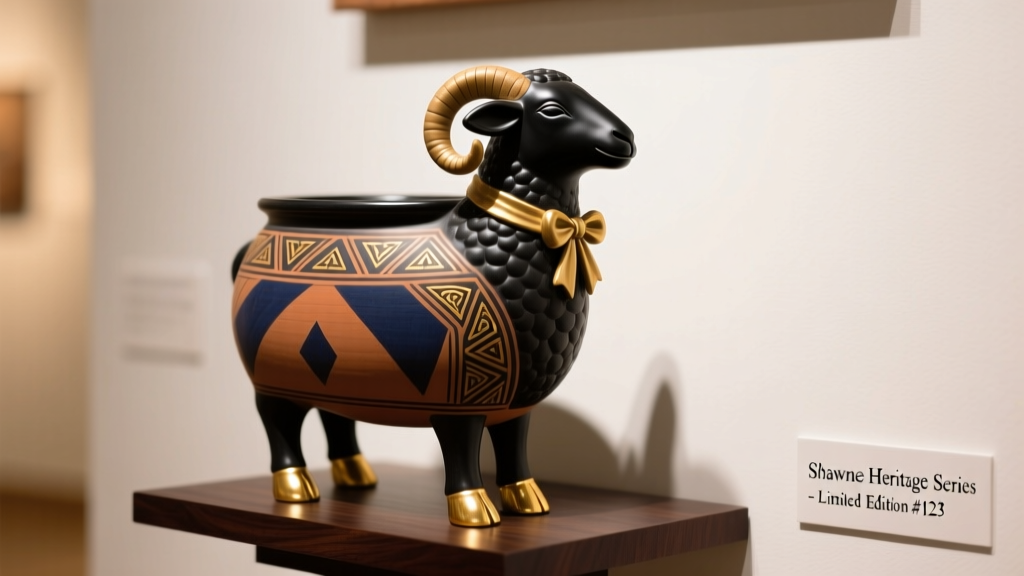
Shawnee Pottery Planter: The Black Lamb with Gold Feet and Bow — Authentication, Value, and Collectibility
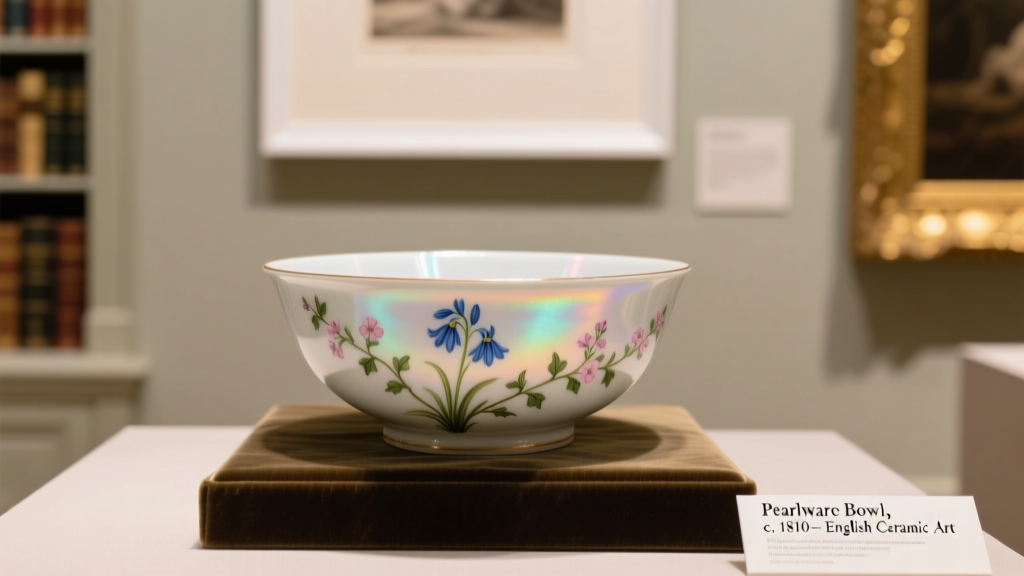
Pearlware Bowl with Flower Sprigs, Circa 1810: Authentication, Provenance, and Market Analysis of a 4½ × 9¼-Inch English Ceramic

Vallerysthal Compote 'Amber Plumes': Authentication, Provenance, and Market Analysis of the C. 1900 6-Inch Opaline Glass Centerpiece
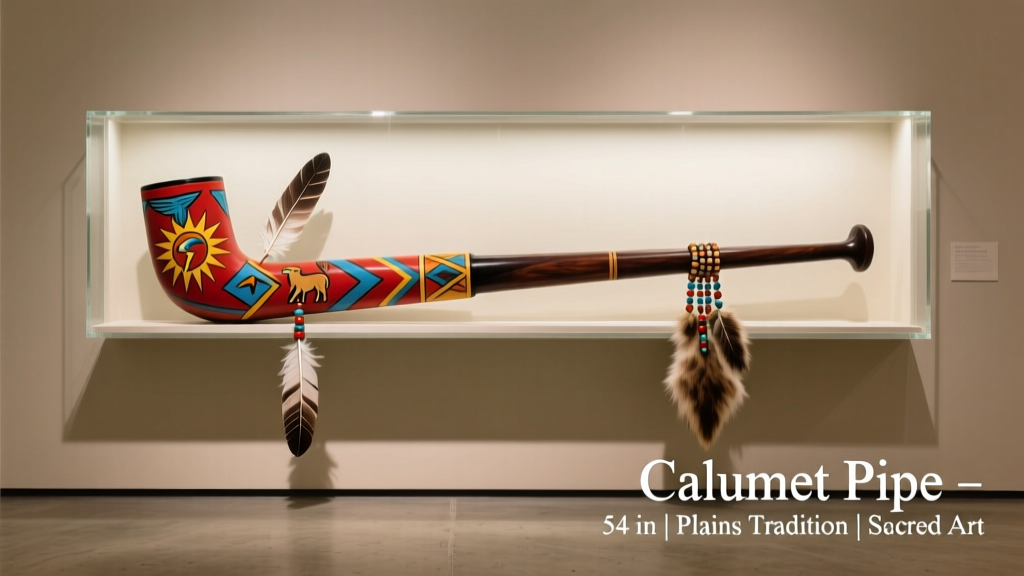
Indian Coat Plains Calumet Style Pipes Painted 54 In 2: Authentication, Provenance, and Market Analysis
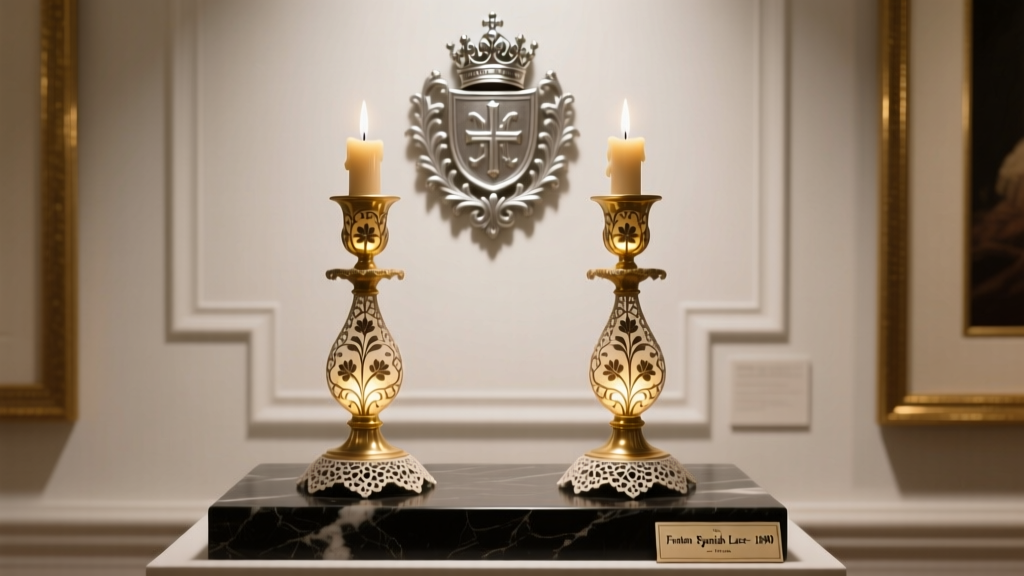
Fenton Spanish Lace Candlestick Silver Crest Pair: Authentication, Market Value, and Historical Context
Roseville Freesia Blue Bud Vase (7-Inch): Authentication, Market Value, and Production History