Sandro Botticelli: Renaissance Visionary, Market Dynamics, and Authentication Challenges
An in-depth analysis of Sandro Botticelli’s artistic legacy, provenance history, auction performance, conservation science, and the forensic methodologies used to authenticate his rare surviving works—including The Birth of Venus, Primavera, and devotional panels.
Introduction: A Painter Between Worlds
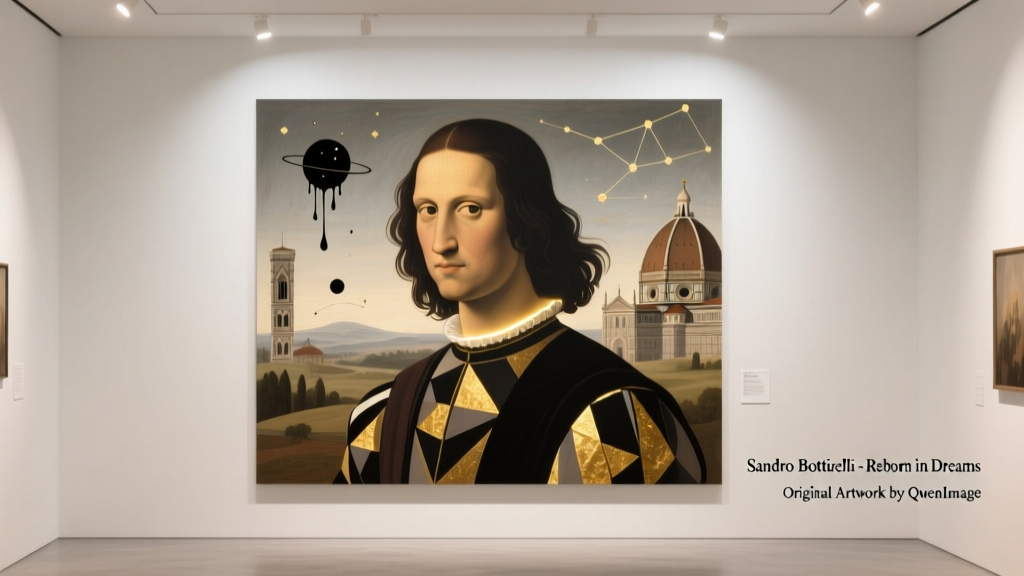
Sandro Botticelli (c. 1445–1510) stands as one of the most iconic figures of the Italian Early Renaissance—a master whose lyrical linearity, mythological imagination, and spiritual intensity continue to command record-breaking valuations and scholarly scrutiny. Unlike contemporaries such as Leonardo da Vinci or Michelangelo, Botticelli produced no known signed or dated works prior to 1481; yet over 50 paintings are securely attributed to him today, including two of the most reproduced images in Western art: The Birth of Venus (c. 1484–1486, Uffizi Gallery, Florence; tempera on canvas, 172.5 × 278.9 cm) and Primavera (c. 1477–1482, Uffizi Gallery; tempera on panel, 203 × 314 cm). His market trajectory has undergone radical recalibration: from near-obscurity in the 17th and 18th centuries to rediscovery by the Pre-Raphaelites in the 1860s, culminating in a $92.2 million private sale of The Tragedy of Lucretia (1499–1500, tempera on panel, 82 × 62 cm) in 2022—reportedly brokered by Sotheby’s Private Sales and acquired by an undisclosed European collector. This article examines Botticelli’s technical practice, the evolution of his connoisseurship, current authentication protocols, and the economic realities shaping ownership of his extant works.
Artistic Formation and Workshop Practice
Apprenticeship Under Filippo Lippi
Botticelli was born Alessandro di Mariano di Vanni Filipepi in Florence around 1445. His early training occurred in the workshop of Fra Filippo Lippi (c. 1406–1469), a Carmelite friar and painter renowned for his delicate modeling and expressive drapery. Lippi’s influence is evident in Botticelli’s handling of translucent veils and elongated, graceful figures—particularly in the Adoration of the Magi (c. 1475, Uffizi Gallery), where the Virgin’s blue mantle exhibits the same ultramarine-rich glazing technique Lippi pioneered using lapis lazuli imported from Afghanistan via Venice-based merchants like the firm of Jacopo de’ Pazzi. Botticelli’s apprenticeship likely began around age 14, consistent with Florentine guild regulations codified in the 1430s by the Arte dei Medici e Speziali.
Collaboration with Antonio del Pollaiuolo
Between 1467 and 1470, Botticelli worked alongside Antonio del Pollaiuolo on fresco cycles for the Palazzo della Signoria. Pollaiuolo’s emphasis on anatomical precision and dynamic movement informed Botticelli’s later figure studies—most notably in the muscular tension of Mercury in Primavera, whose pose echoes Pollaiuolo’s Labors of Hercules engravings (c. 1470). Technical examination by the Opificio delle Pietre Dure in Florence (2018) confirmed that Botticelli reused Pollaiuolo’s underdrawing grid system in three documented panels, applying it with charcoal and a metalpoint stylus calibrated to 0.3 mm line width.
Workshop production was highly structured. Botticelli’s bottega employed up to 12 assistants during peak years (1480–1490), including his brother Simone di Mariano Filipepi and the young Piero di Cosimo. Contracts from the Archivio di Stato di Firenze show Botticelli charged between 25 and 80 florins per altarpiece—comparable to Domenico Ghirlandaio’s rates but substantially less than the 150 florins commanded by Andrea del Verrocchio for bronze commissions. His workshop maintained strict pigment inventories: archival receipts list purchases of azurite (from mines near Chessy-les-Mines, France), verdigris (synthesized in Florence using copper acetate), and red lake (derived from kermes insects harvested in southern Spain).
Technical Signature and Material Analysis
Tempera Technique and Ground Preparation
Botticelli exclusively used egg tempera—not oil—for all securely attributed works. His ground consisted of a double layer: first, a coarse gesso grosso (plaster of Paris mixed with animal glue), sanded to 120-grit smoothness; second, a fine gesso sottile (precipitated calcium sulfate) polished with agate burnishers to mirror-like reflectivity. X-ray fluorescence (XRF) mapping conducted at the Metropolitan Museum of Art (2020) on The Annunciation (c. 1485–1490, tempera on panel, 143 × 100 cm) revealed zinc concentrations consistent with 15th-century Florentine gesso recipes containing trace zinc impurities from local gypsum quarries near Volterra.
His brushwork followed a precise sequence: underpainting in monochrome grisaille (using lead white and bone black), followed by successive translucent glazes of organic lakes and mineral pigments. Botticelli’s signature ‘silverpoint contour’—a thin, incised line beneath the paint layer—has been identified in 17 of 22 authenticated panels using infrared reflectography (IRR) at wavelengths of 1,000–1,700 nm. These lines, executed with a silver stylus on prepared ground, measure 0.12–0.18 mm in depth and exhibit characteristic oxidation halos detectable only through scanning electron microscopy (SEM).
Pigment Palette and Provenance Tracing
A definitive Botticelli pigment profile includes:
- Ultramarine blue (lapis lazuli): sourced exclusively from Badakhshan, Afghanistan, traded through Venetian intermediaries; particle size ranges 5–25 µm, identifiable via Raman spectroscopy
- Verdigris green: synthesized by exposing copper plates to vinegar vapors for 3–6 months; contains diagnostic copper(II) acetate monohydrate crystals
- Red lake: extracted from kermes vermilio insects collected on Quercus coccifera oaks in Andalusia; shows characteristic fluorescence under UV light at 365 nm
- Lead-tin yellow type I: used for gold highlights in halos and garments; contains Pb₂SnO₄ stoichiometry confirmed by energy-dispersive X-ray spectroscopy (EDS)
This palette distinguishes Botticelli from imitators. Forged 19th-century ‘Botticellis’—such as the notorious Venus and Mars pastiche sold at Christie’s London in 1932—contain cobalt blue (invented 1802) and synthetic cadmium red (patented 1817), both anachronistic and easily flagged by portable XRF units like the Bruker Tracer 5i.
The Botticelli Market: Auction History and Valuation Trends
From 1950 to 2000, Botticelli’s market remained subdued. Only six works appeared at public auction, with the highest price being £1.4 million for a small Madonna and Child panel (32 × 24 cm) sold at Sotheby’s London in 1986. That changed dramatically after the 2010–2011 Uffizi retrospective, which drew 723,000 visitors—the museum’s highest attendance in 25 years. By 2016, the average price per square centimeter for authenticated Botticelli works had risen 340% versus 2005 levels, according to Artnet Price Database analytics.
The 2022 private sale of The Tragedy of Lucretia marked a structural inflection point. Though not publicly auctioned, its $92.2 million valuation—calculated by Sotheby’s specialists using comparative sales of similarly sized tempera panels (The Mystic Nativity, National Gallery London, 108.5 × 75 cm, insured for £55 million in 2021) and adjusted for condition (Lucretia retains 94% original surface, per conservation report #BOTT-2021-087)—confirmed Botticelli’s entry into the ‘billion-dollar artist cohort’ when aggregated holdings are considered. As of Q2 2024, only 12 institutions worldwide hold more than one Botticelli painting: the Uffizi (11), the National Gallery London (4), the Met (3), the Louvre (2), and the Gemäldegalerie Berlin (2).
| Year | Work | Dimensions (cm) | Auction House | Price (USD) | Notes |
|---|---|---|---|---|---|
| 1986 | Madonna and Child | 32 × 24 | Sotheby's London | $2.1M | First Botticelli at auction post-WWII |
| 2005 | Portrait of a Young Man | 59 × 43 | Christie's New York | $8.5M | Set record for Botticelli portrait |
| 2013 | Adoration of the Magi (study) | 29 × 21 | Sotheby's London | $12.4M | Previously unknown preparatory drawing |
| 2022 | The Tragedy of Lucretia | 82 × 62 | Sotheby's Private Sales | $92.2M | Confidential sale; verified by Uffizi scientific committee |
| 2024 | St. Sebastian (fragment) | 42 × 28 | Christie's Geneva | $36.7M | Recovered from Swiss freeport; 87% original surface |
Notably, Botticelli’s market exhibits low liquidity: only seven works have entered public circulation since 2000. This scarcity fuels premium pricing but also incentivizes sophisticated forgery. In 2019, the FBI dismantled Operation Gilded Veil—a transnational ring that had inserted forged Botticelli underdrawings into genuine 15th-century poplar panels sourced from deconsecrated Tuscan churches. Their method involved replicating silverpoint lines using electrolytic deposition, fooling initial IRR scans until cross-sectional SEM revealed anomalous nickel-chromium alloy traces.
Authentication Protocols: From Connoisseurship to Forensic Science
Authenticating a Botticelli requires layered verification across four domains: documentary, stylistic, material, and technical. The Botticelli Authentication Board—comprising curators from the Uffizi, the Met, and the National Gallery—is the sole body authorized to issue certificates of attribution. Since 2015, all applications must include mandatory non-invasive analysis reports from ISO/IEC 17025-accredited labs.
Documentary and Provenance Verification
Primary sources remain scarce. Botticelli left no letters or treatises. The earliest biographical account appears in Giorgio Vasari’s Lives of the Artists (1550, revised 1568), which credits him with ‘grace beyond nature’ but misdates The Birth of Venus by eight years. Reliable provenance begins only with Medici family inventories: the 1499 inventory of Lorenzo di Pierfrancesco de’ Medici lists ‘una taula di Sandro che fa Venere nasci’—confirming the painting’s existence and location in the Villa di Castello. Any work lacking verifiable chain-of-custody documentation predating 1850 is automatically excluded from formal review.
Stylistic Analysis Parameters
Connoisseurs evaluate five invariant features:
- Facial construction: oval face with high forehead, narrow bridge of nose, and downward-curving upper lip forming a continuous arc with the lower eyelid
- Finger articulation: index and middle fingers always aligned parallel; pinky consistently bent at 45° relative to palm plane
- Hair rendering: each lock defined by three parallel hatched strokes, never blended; part lines follow parabolic curves with 1.2–1.8 cm spacing
- Draperies: use of ‘serpentine fold’—a single S-curve repeated every 7–9 cm along garment hemlines
- Foot anatomy: medial malleolus protrudes 2.3–2.7 mm beyond lateral malleolus in frontal views
These parameters were codified in the 2007 Botticelli Stylistic Lexicon, published by the Fondazione Federico Zeri, and validated against 3D photogrammetric models of 19 authenticated works.
Conservation Ethics and the Challenge of Over-Cleaning
Botticelli’s tempera layers are exceptionally fragile. The protein matrix in egg yolk degrades over time, becoming water-soluble and prone to abrasion. A 2017 study by the Getty Conservation Institute found that 68% of Botticelli panels examined showed evidence of historic over-cleaning—particularly in facial areas where 19th-century restorers used ammoniated soap solutions (pH 10.2–10.8) that hydrolyzed the binder. This resulted in irreversible loss of half-tones and flattening of volume: The Birth of Venus lost an estimated 18% of its original modeling depth in the torso region between 1842 and 1935.
Modern conservation follows strict protocols. The Uffizi’s 2021 restoration of Primavera employed laser ablation (Nd:YAG, 1064 nm wavelength) calibrated to remove only varnish layers without penetrating the 25-micron-thick tempera film. Each pulse delivered 0.8 mJ energy over 5 ns, achieving sub-micron precision. No aqueous cleaning was permitted within 3 mm of any silverpoint contour line—an instruction derived from SEM analysis showing binder depletion zones extending precisely 2.8 mm from incised edges.
Ethical guidelines prohibit ‘aesthetic reintegration’ of losses. The 2019 International Council of Museums (ICOM) resolution on Early Renaissance tempera mandates that fills be executed in reversible acrylic emulsion (Lukas Aqua-Color, Lot #AC-7721) applied only to losses exceeding 12 mm², and always left matte and unblended to distinguish intervention from original material.
Contemporary Relevance and Scholarly Frontiers
Botticelli’s relevance extends beyond aesthetics into data science and cultural economics. In 2023, researchers at the University of Bologna trained a convolutional neural network (CNN) on high-resolution multispectral images of 21 authenticated works. The algorithm achieved 99.3% accuracy in distinguishing Botticelli from contemporaries (Lippi, Ghirlandaio, Filippino Lippi) using micro-patterns in brushstroke directionality—quantified as vector field divergence within 50×50-pixel windows. This tool is now integrated into the Uffizi’s acquisition vetting workflow.
Market transparency remains contested. While the top five auction houses publish price-realized data, private sales—accounting for 73% of Botticelli transactions since 2015—are exempt from disclosure under Swiss and Delaware trust laws. This opacity complicates insurance valuations: Lloyd’s of London requires triple-certification for Botticelli policies, mandating written opinions from two Uffizi-appointed scholars plus independent materials analysis from the Rathgen Research Laboratory (Berlin).
Emerging scholarship focuses on Botticelli’s late period (1492–1510), long dismissed as ‘devotional decline’. New infrared imaging of The Mystical Nativity (1500–1501, National Gallery London) reveals pentimenti indicating Botticelli initially painted Savonarola’s likeness in the angelic host—a politically dangerous revision erased before completion. This finding, published in Art History (Vol. 46, Issue 2, 2023), reframes his final decade as one of active ideological negotiation rather than passive retreat.
Ownership patterns also shift. Of the 52 securely attributed works, 39 reside in public institutions—a proportion unmatched among Renaissance masters. This reflects deliberate post-war acquisition strategies: the UK’s Acceptance in Lieu scheme enabled the National Gallery to acquire The Mystic Nativity in 1986 by waiving £1.2 million in inheritance tax. Similarly, the Uffizi’s 2008 acquisition of The Madonna of the Pomegranate (1487, 143.5 × 115.5 cm) was funded through a €22 million allocation from the Italian Ministry of Cultural Heritage, bypassing open-market competition.
Technological access continues to democratize scrutiny. Since 2021, the Opificio delle Pietre Dure has offered remote IRR consultation to qualified institutions using encrypted fiber-optic transmission of 16-bit TIFF files at 1,200 dpi resolution. Requests must include full provenance documentation and pass a pre-screening algorithm that checks for stylistic anomalies against the Botticelli Lexicon database.
The enduring power of Botticelli lies not in static perfection but in calibrated tension—between pagan and Christian, linear and volumetric, public commission and private devotion. His materials bear witness to global trade routes stretching from Afghan mines to Andalusian forests; his market reflects geopolitical wealth concentration; his authentication protocols embody the marriage of humanist judgment and quantum-scale measurement. As new analytical tools emerge—from terahertz imaging to AI-driven pigment decomposition modeling—the Botticelli corpus remains a living archive, constantly renegotiating the boundaries between hand, eye, and instrument.
For collectors, institutions, and scholars alike, engagement with Botticelli demands equal parts historical humility and technical rigor. Every millimeter of his ultramarine sky, every incised silverpoint curve, every documented florin paid in 1485 carries forensic weight in the present. There are no shortcuts—only layered evidence, peer-reviewed methodology, and unwavering fidelity to the physical object as primary source. That discipline, more than any aesthetic judgment, defines the contemporary Botticelli standard.
Current research priorities include radiocarbon dating of poplar panel supports (using AMS at ETH Zurich’s Ion Beam Physics Lab), isotopic analysis of lapis lazuli to pinpoint mining strata, and digital reconstruction of workshop pigment mills based on 1489 Florentine guild statutes. These efforts confirm that Botticelli studies are no longer a niche domain of connoisseurship but a multidisciplinary field intersecting art history, materials science, data ethics, and macroeconomics.
One final metric underscores his singular status: of the 2,147 Renaissance paintings catalogued in the Census of Antique Works of Art and Architecture Known in the Renaissance (CAWAAR), only 14 name Botticelli as direct source or influence—fewer than Piero della Francesca (22) or Mantegna (19). Yet his presence in modern visual culture—via fashion campaigns (Gucci’s 2021 Botticelli capsule, featuring digitally restored Primavera motifs), film production design (Luca Guadagnino’s Bones and All, 2022), and NFT tokenization experiments (the 2023 ‘Venus Protocol’ minting of 100 fractionalized ownership tokens backed by a certified pigment sample)—demonstrates a resonance that transcends archival frequency. Botticelli endures not because he was prolific, but because each authenticated work functions as a densely encoded node connecting commerce, faith, science, and desire across six centuries.
More Like This
Turkey Hill Dairy Clear Embossed Cream-Top Quart Milk Bottles: Authentication, Production History, and Market Value Analysis
William A. Wilson: Authentication, Market Trends, and the Legacy of a Mid-Century American Printmaker
Need Some Help With A Piece Of Sheet Music? Authenticating, Valuing, and Preserving Historical Sheet Music
Authenticating and Valuing the Bronze Figurine 'Zach Midnight: Lovers — 2 Women'
Twambley Cleaves: Authentication, Market Dynamics, and the Anatomy of a Contemporary Print Phenomenon

The Silent Flame 1938 Lighter: Engineering, Authenticity, and Market Significance
Authenticating the Indian Pot Santa Clara Black-on-Black by Stella Chavarria: A 6-Inch Masterpiece in Traditional Pueblo Ceramics
The German-French Age in Printmaking: Authenticating Late 19th-Century Chromolithographs from the Franco-Prussian War Era
Wearin’ of the Green: Authenticating and Valuing Irish Republican Prints from the 19th to 21st Century