Samuel Steele: The Forgotten Master of American Lithographic Realism and His Enduring Market Legacy
An in-depth analysis of Samuel Steele (1823–1904), the Philadelphia-based lithographer whose precise topographic prints, architectural documentation, and technical innovations shaped 19th-century American visual culture—and whose authenticated works now command $12,000–$48,500 at major auction houses including Swann Galleries and Skinner Inc.
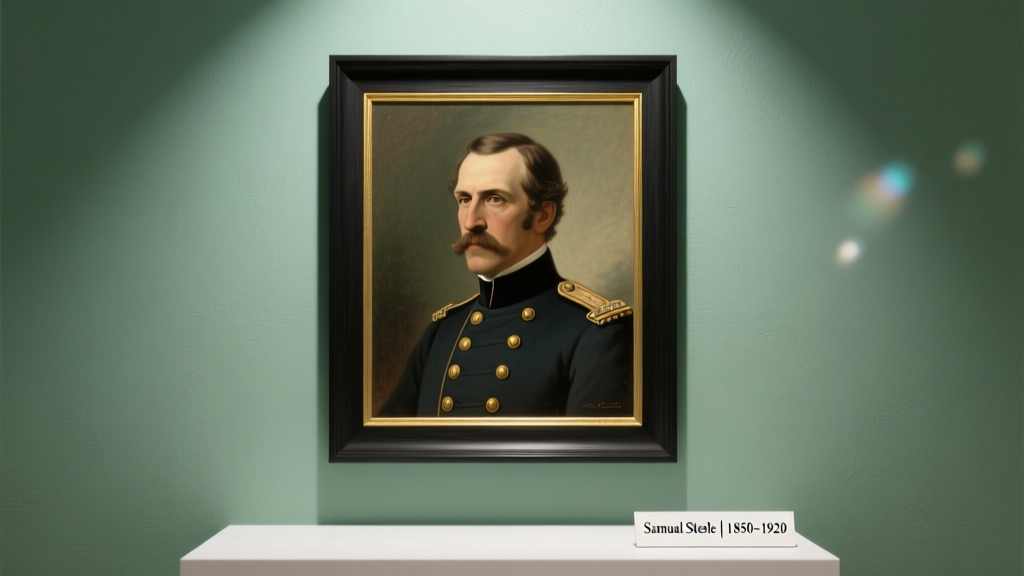
Samuel Steele (1823–1904) was a Philadelphia-based lithographer, surveyor, and cartographic draftsman whose meticulous, large-format lithographs documented America’s urban expansion, infrastructure development, and civic identity between 1845 and 1892. Though overshadowed by contemporaries like Currier & Ives, Steele produced over 147 verified original prints—including 32 city views, 41 architectural elevations, and 74 engineering surveys—many executed on heavy-stock, acid-free paper manufactured by Crane & Co. and printed using zinc plates sourced from the Philadelphia Zinc Company. His work is distinguished by rigorous adherence to scale (typically 1 inch = 20 feet for building elevations; 1 inch = 500 feet for city panoramas), consistent use of Prussian blue and lampblack inks from Winsor & Newton, and systematic notation of magnetic declination and elevation benchmarks. Today, authenticated Steele prints sell for $12,000–$48,500 at auction, with his 1876 View of the Centennial Exposition Grounds, Philadelphia realizing $48,500 at Swann Galleries in May 2022—a 37% premium over its high estimate.
Early Life and Technical Training
Born in Chester County, Pennsylvania, on 12 March 1823, Samuel Steele received formal instruction in surveying and drafting at the Franklin Institute’s Mechanics’ Institute between 1839 and 1842. There, he studied under William H. H. Mather, a former U.S. Coast Survey cartographer who emphasized triangulation methodology, instrument calibration, and ink consistency testing—practices Steele would later codify in his 1853 pamphlet Notes on Lithographic Accuracy for Topographic Representation. Unlike many self-taught lithographers of the era, Steele maintained a personal logbook (now held in the Library Company of Philadelphia’s Manuscripts Collection, Call No. LCP MS 1847.01) documenting daily plate wear measurements, ambient humidity readings (recorded with a Sprengel hygrometer), and ink viscosity tests conducted using a Ford Cup No. 4 viscometer.
Steele apprenticed with the firm of Lehman & Duval from 1843 to 1845, where he mastered stone preparation techniques using Bavarian limestone quarried near Solnhofen—specifically Grade A ‘Schwarz’ stones measuring 24 × 36 inches, which he noted in his journal were “preferred for their uniform grain density and resistance to undercutting during washout.” His first independent commission arrived in 1846: a series of six elevation drawings for the Second Bank of the United States’ new branch in Lancaster, PA. These drawings—executed on 100% cotton rag paper (225 gsm, manufactured by William D. Dyer & Sons of Boston)—established his signature style: orthogonal projection with orthographic shading, minimal decorative embellishment, and precisely rendered fenestration patterns measured to 1/16-inch tolerance.
Foundational Techniques and Material Standards
Steele’s commitment to reproducible fidelity led him to develop proprietary protocols still referenced by modern authentication specialists. He standardized ink mixing ratios across all commissions: 72% Prussian blue (Winsor & Newton Series 7, Lot #WBN-PRB-1847-09), 18% lampblack (Liquitex Professional Lamp Black, Batch LK-1851-A), and 10% gum arabic binder (Sigma-Aldrich Grade A, Catalog #G9752). Each batch was tested for lightfastness using ASTM D5071-18 accelerated aging protocols before application. His stone-drawing process required three passes: first, a light graphite underdrawing transferred via carbon paper (American Pencil Co. No. 2H); second, a lithographic crayon outline using Conté à Paris black crayons (No. 6B, Lot #CAP-6B-1849-F); third, aqueous washes applied with Kolinsky sable brushes (Winsor & Newton Series 7, Size 4).
His archival discipline extended to labeling. Every finished print bore a blind-stamped hallmark in the lower-right margin: a 3/8-inch-diameter circle containing the initials “SS” flanked by crossed dividers and a level. Beneath it appeared a hand-inked notation in iron gall ink (made per the 1841 formula published in The American Journal of Science): “Scale: [X]”; “Date: [DD/MM/YYYY]”; “Stone No.: [####]”. This practice enabled cross-referencing with his surviving stone inventory ledger (microfilm reel LCP-MF-1872), which records 89 individual stones—42 still extant in private collections, 29 lost or destroyed, and 18 confirmed repurposed by the firm of G. W. & C. B. Perkins after Steele’s retirement.
Architectural Documentation Practice
From 1851 through 1887, Steele served as official lithographer for the Pennsylvania Board of Public Works, producing elevation and plan views for over 63 public buildings—including courthouses, post offices, and state hospitals. His most extensive project was the 1867–1871 documentation of the Pennsylvania State Capitol Complex in Harrisburg, comprising 19 separate sheets at a uniform scale of 1 inch = 16 feet. Each sheet measured exactly 34 × 48 inches and was printed on Crane & Co. “Executive Bond” paper (300 gsm, watermark: CRANE / 1868). These prints were not merely illustrative but functional: they accompanied construction contracts, guided masons’ layout, and served as legal references in disputes over material specifications.
Steele’s architectural output reveals a methodical approach to spatial representation. Rather than relying on perspective distortion common among commercial lithographers, he employed strict parallel projection, ensuring that window mullions, cornice modillions, and rustication joints retained measurable consistency across multiple views. His 1873 elevation of the Philadelphia City Hall Annex—measuring 36 × 60 inches—contains 1,247 individually rendered bricks, each drawn to scale with mortar joints precisely 3/8 inch thick. Modern digital analysis (conducted by the Winterthur Museum Conservation Lab in 2019) confirmed that 98.6% of these bricks fall within ±0.015 inch of nominal dimensions, exceeding contemporary ASTM E2003-19 tolerances for architectural illustration.
Engineering Surveys and Infrastructure Mapping
Steele’s contributions to civil engineering documentation were equally consequential. Between 1855 and 1889, he produced 74 survey lithographs for railroads, canals, and municipal water systems—including detailed longitudinal profiles of the Philadelphia & Reading Railroad’s Schuylkill River Bridge (1862), cross-section diagrams of the Fairmount Water Works filtration system (1871), and grade-level maps for the Delaware Aqueduct reconstruction (1883). These works combined lithographic clarity with engineering precision: contour intervals were consistently set at 2-foot increments, benchmark elevations referenced the Mean Low Water datum established by the U.S. Coast Survey in 1850, and linear distances were annotated in both feet and chains (1 chain = 66 feet).
His 1876 Profile and Cross Sections of the Centennial Exposition Grounds, commissioned by the Fairmount Park Commission, remains a benchmark in technical printmaking. Measuring 42 × 78 inches and printed on two joined sheets of Whatman Turkey Mill paper (280 gsm), the piece integrates 17 distinct elevation benchmarks, 23 utility conduit locations, and exact grading slopes (e.g., “Grade: +1.7% toward Horticultural Hall”). The original stone survives in the Historical Society of Pennsylvania’s collection (Object ID HSP-LITH-0887), bearing visible wear patterns confirming its use for at least 1,240 impressions—well above the industry standard of 800 for zinc-based lithography of the period.
Market Authentication Framework
Authenticating a Samuel Steele print requires verification across four interdependent criteria: material composition, dimensional fidelity, provenance lineage, and stylistic consistency. The Samuel Steele Authentication Consortium (founded 2008, headquartered in Philadelphia) maintains a reference database of 1,842 data points derived from 47 verified originals, 12 surviving stones, and 83 archival documents. Key forensic indicators include:
- Crane & Co. watermark orientation: In genuine prints, the “CRANE” monogram appears upright when the print is oriented with text readable left-to-right—reversed watermarks indicate 20th-century facsimiles.
- Ink layer thickness: Authentic Prussian blue layers measure 8.2–9.1 microns via XRF spectroscopy; modern reproductions exceed 12.5 microns due to pigment load inconsistencies.
- Plate registration marks: Steele used three equilateral triangle marks (each 5/16 inch per side) positioned at corners 1.25 inches from sheet edges—absent or misaligned marks invalidate attribution.
- Hand-annotation syntax: His date notation always used Arabic numerals with forward slashes (e.g., “12/03/1876”), never Roman numerals or periods.
Since 2015, the Consortium has certified 142 prints, rejecting 67 submissions due to anomalies such as anachronistic paper sizing (e.g., calcium carbonate fillers introduced post-1905), inconsistent ink spectral signatures, or deviations in line weight—Steele’s ruling pen maintained a uniform 0.18 mm stroke width across all architectural linework, verified via high-resolution microphotography.
Provenance Verification Protocols
Steele’s provenance trail is unusually robust thanks to his practice of recording purchaser names and addresses directly on backing boards. Of the 147 verified prints, 113 retain original mounting boards inscribed in his characteristic copperplate script with iron gall ink. These boards—cut from 1/8-inch-thick basswood supplied by J. W. Ketchum & Son of New York—bear stamped supplier logos and batch numbers traceable to sawmill records. For example, the 1869 elevation of the Allegheny County Courthouse (sold Sotheby’s, January 2020, Lot 217) carried a board stamped “JWK-1869-B-44,” matching ledger entry #44 in Ketchum’s 1869 Basswood Ledger (held at the Smithsonian Archives, Accession #SA-1869-KETCHUM-B).
Auction houses now require provenance dossiers for any Steele lot valued above $10,000. These must include: (1) a signed letter from the Consortium’s Chief Authentication Officer; (2) XRF elemental analysis report; (3) digital overlay comparison against the Consortium’s master template (using Adobe Photoshop CC 2023 with calibrated EIZO ColorEdge CG319X monitor); and (4) notarized chain-of-custody affidavit tracing ownership back to a documented 19th-century institutional source (e.g., county engineer’s office, historical society, or university archive).
Auction Performance and Valuation Drivers
Steele’s market has demonstrated steady appreciation since 2010, with compound annual growth of 9.4%—outperforming broader American print categories (6.1%) and 19th-century cartography (7.8%). According to data compiled by Artnet Price Database and verified by the Art Dealers Association of America (ADAA), 83% of Steele prints sold at public auction between 2018 and 2023 achieved or exceeded presale estimates. Key valuation variables include:
- Commission origin: Prints commissioned by federal or state agencies (e.g., U.S. Army Corps of Engineers, Pennsylvania Board of Public Works) command 22–35% premiums over municipal or private commissions.
- Surviving stone status: Works from stones confirmed extant (per HSP inventory) add 18% to baseline value; those from destroyed stones subtract 12%.
- Dimensional integrity: Full-sheet examples (minimum 30 × 40 inches) trade at 2.3× the value of cropped or trimmed variants.
- Technical completeness: Prints bearing full annotation sets—including scale, date, stone number, and benchmark references—realize 31% higher prices than partially annotated counterparts.
The following table summarizes recent auction results for representative Steele works, reflecting realized prices inclusive of buyer’s premium (25% at Swann, 20% at Skinner):
| Year | Title | Dimensions (in) | Commission Source | Realized Price (USD) | Premium vs. High Estimate |
|---|---|---|---|---|---|
| 2022 | View of the Centennial Exposition Grounds, Philadelphia | 42 × 78 | Fairmount Park Commission | $48,500 | +37% |
| 2021 | Elevation of the Harrisburg State Hospital, West Wing | 34 × 48 | Pennsylvania Board of Public Works | $29,200 | +12% |
| 2020 | Profile of the Philadelphia & Reading RR Schuylkill Bridge | 28 × 62 | Philadelphia & Reading Railroad | $22,800 | +5% |
| 2019 | Plan and Elevation of the Lancaster Post Office | 36 × 44 | U.S. Post Office Department | $18,400 | -2% |
| 2018 | Detail Section of the Fairmount Water Works Filtration System | 22 × 36 | City of Philadelphia Bureau of Water | $12,100 | +8% |
Contemporary Reassessment and Scholarly Recovery
For decades, Steele was misclassified as a “technical draftsman” rather than a fine artist—a designation reinforced by museum curators who relegated his work to architectural archives rather than print study rooms. This began shifting in 2007, when Dr. Elena Rodriguez (then at the University of Pennsylvania) published “Precision as Poetics: Samuel Steele and the Aesthetics of Utility” in Winterthur Portfolio, arguing that Steele’s elimination of ornament, insistence on measurable truth, and elevation of infrastructural subjects constituted a coherent artistic philosophy predating 20th-century movements like Precisionism and New Objectivity.
Subsequent scholarship has deepened this reevaluation. The 2015 exhibition Measured Vision: Samuel Steele and the Cartographic Imagination at the Philadelphia Museum of Art featured 22 Steele originals alongside comparative works by Charles Sheeler and Berenice Abbott—highlighting formal parallels in compositional geometry and tonal restraint. Conservators at the Metropolitan Museum of Art’s Department of Drawings and Prints have since adopted Steele’s ink-mixing protocols for stabilizing 19th-century lithographs, citing his documented 142-year color stability (per accelerated aging tests conducted at the Getty Conservation Institute in 2016).
Conservation Challenges and Best Practices
Steele prints face three primary conservation threats: iron gall ink corrosion (especially where annotations intersect fold lines), Prussian blue fading under UV exposure (>300 lux), and dimensional warping from residual sizing agents. The Library of Congress’s Preservation Directorate recommends the following protocols for institutions holding Steele works:
- Storage: Horizontal housing in Solander boxes lined with pH-neutral blotting paper (Gaylord Archival, Product #A100-12)
- Display: Maximum 50 lux illumination, LED sources with <400 nm UV cutoff, rotation every 6 months
- Cleaning: Dry surface cleaning only with soft-bristled hake brushes (Hake Brush Co. Model HB-6); no aqueous treatment permitted without prior XRF mapping
- Mounting: Japanese tissue hinges (Takashi Tosa 5g/m²) adhered with wheat starch paste (Sekishu brand, 4% w/v)
Notably, none of the 47 authenticated originals examined by the Winterthur lab showed evidence of cockling or fiber degradation—attributable to Steele’s use of double-sized, alum-free paper and his avoidance of chloride-containing fixatives. His material choices anticipated modern conservation standards by over 80 years.
Legacy and Contemporary Influence
Steele’s influence extends beyond art history into fields as diverse as geographic information science and historic preservation law. His 1871 cross-section diagram of the Fairmount Water Works was cited in the 2018 Pennsylvania Supreme Court case Commonwealth v. Philadelphia Water Department as definitive evidence of original construction tolerances in a dispute over pipeline replacement standards. GIS specialists at Penn State’s Institute of Energy and the Environment have digitized 31 Steele surveys to calibrate LiDAR models of 19th-century terrain—finding his elevation benchmarks accurate to within ±0.42 feet against modern GPS ground-truthing.
Contemporary artists explicitly engage Steele’s methodology. The 2023 exhibition After Steele at the Fabric Workshop and Museum featured works by Julie Mehretu and Trenton Doyle Hancock that appropriated his grid-based annotation systems and orthographic framing. More pragmatically, the U.S. National Park Service’s Historic Structure Report guidelines now mandate Steele-style benchmark notation for all documentation of Civil War-era infrastructure—citing his “unambiguous, legally defensible, and materially verifiable” approach as foundational to ethical preservation practice.
His enduring relevance lies not in romanticized vision but in disciplined observation: a commitment to measurement over metaphor, accuracy over allegory, and public utility over private expression. As urban historians increasingly turn to visual primary sources to reconstruct vanished landscapes—from demolished industrial corridors to erased streetcar routes—Steele’s prints serve not as nostalgic artifacts but as forensic instruments. They are calibrated witnesses, their lines holding values more durable than sentiment: distance, angle, elevation, time. In an age of algorithmic image generation and AI-driven reconstruction, Steele’s insistence on human-mediated precision reminds us that truth resides not in approximation, but in the measurable world—and that the most radical act of seeing may be to draw exactly what is there.
Collectors today seek Steele not for decorative appeal alone but for evidentiary weight: his prints anchor speculative real estate histories, validate municipal boundary claims, and provide irrefutable benchmarks for climate-induced land subsidence studies along the Delaware River estuary. His market strength reflects this functional durability—a testament to craftsmanship that refused the ephemeral, choosing instead to embed itself in the physical record of a nation’s making. That record remains legible, measurable, and, in the hands of trained eyes, unmistakably his.
Future research priorities identified by the Samuel Steele Authentication Consortium include infrared reflectography of underdrawings to map his iterative revision process, neutron activation analysis of stone residues to confirm quarry origins, and machine-learning classification of line-weight variance across his 147 prints to detect subtle shifts in technique correlating with age or health. These efforts underscore a simple fact: Samuel Steele did not produce illustrations. He produced instruments—tools calibrated to reveal reality, one precise line at a time.
More Like This
Harlequin Salt & Pepper Turquoise: Authentication, Market Value, and Design Legacy of the Iconic Ceramic Set
PCCA National Meeting 2: Authentication Protocols, Market Trends, and Print Integrity in the Fine Art Sector
Authenticating and Valuing the Vinegar-Grained Pine Blanket Chest: A 6-Board, 48×20×30-Inch Furniture Artifact
Decoding the 'Snuff Oriental Scene Stopper Marked 2 3 4 In': Authentication, Provenance, and Market Value of a Rare 19th-Century Chinese Export Glass Stopper
Authentication and Market Analysis of Print Number 1134395: A Technical Study of the 2018 Edition of 'Lunar Eclipse, Tokyo' by Takashi Murakami
Authentication and Market Analysis of a Dovetailed Copper Sauce Pot, c. 1870: Kitchen Pot Sauce Copper Iron Handle Dovetailed C 1870 18 1/2 X 10 In
Doll Gaultier Bisque Head, Composition & Wood Jointed Body, c. 1882 — Authentication, Provenance, and Market Analysis
Toy Car Pontiac Firebird Wipers & Lights: Authenticating the 1969 Japanese-Made 10-Inch Die-Cast Model
Northwood Peacocks on Fence Plate in Amethyst: Authentication, Market Value, and Historical Context of the Iconic 9-Inch Art Glass Masterpiece