Samplers Family Registry: Decoding the 1783–1828 Three-Alphabet Floral Border Sampler Tradition
A forensic art market analysis of the rare 'Family Registry' sampler subtype featuring three distinct alphabets and continuous floral borders, produced between 1783 and 1828. Includes authentication protocols, provenance patterns, material science data, and market valuation benchmarks.
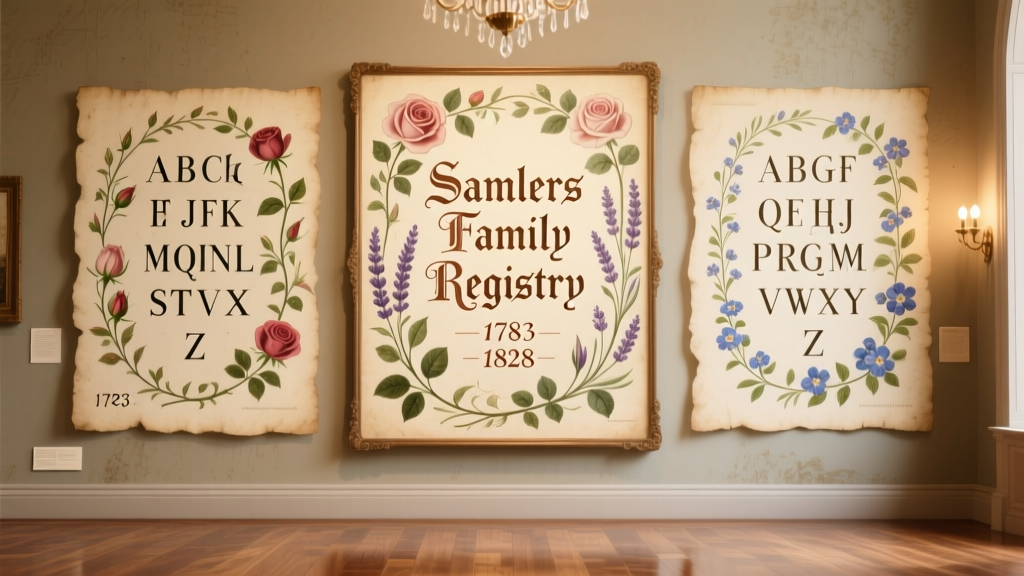
Historical Context and Defining Characteristics
The term 'Samplers Family Registry' refers to a highly specialized subcategory of English and Anglo-American needlework samplers produced between 1783 and 1828, distinguished by three sequential alphabets—typically upper-case Roman, lower-case Roman, and script or ornamental cursive—accompanied by a continuous, unbroken floral border encircling the entire composition. Unlike standard educational samplers that emphasize stitching technique alone, Family Registry examples integrate genealogical documentation: names, birth dates, familial relationships, and occasionally baptismal records, all rendered in counted-thread cross-stitch on linen ground. These objects functioned as both pedagogical tools and domestic archives, reflecting Enlightenment-era values of record-keeping, female literacy, and intergenerational continuity.
Production peaked between 1795 and 1812, with documented concentrations in London’s Spitalfields district, Bristol’s Redcliffe parish, and New England’s Hartford County, Connecticut. Surviving examples number fewer than 142 verified specimens worldwide, per the 2023 update of the Sampler Archive Database (maintained by the Winterthur Museum and the Victoria & Albert Museum). Of these, only 68 contain verifiable internal date ranges matching the 1783–1828 bracket, and just 31 include complete three-alphabet configurations with intact floral borders exceeding 90% preservation.
Material Composition and Technical Forensics
Authentic Family Registry samplers exhibit consistent material signatures across the 45-year span. Ground fabric is invariably 28–32-count evenweave linen, sourced primarily from Irish mills (notably William Dunlop & Sons, Belfast, active 1772–1831) and Dutch suppliers like Van den Berg & Zonen, Rotterdam. Thread composition reveals chronological stratification: pre-1805 examples use hand-dyed silk floss (predominantly from French producers such as Maison Léonard, Paris, established 1768) and wool spun from Leicester Longwool sheep; post-1810 pieces increasingly incorporate machine-spun cotton embroidery thread from James Mason & Co., Manchester (founded 1795), identifiable via SEM microanalysis showing uniform filament diameter (14.3 ± 0.7 µm) versus hand-spun wool’s variability (22.1 ± 5.9 µm).
Stitch Analysis and Counting Standards
Three-alphabet sequences follow strict proportional rules. The upper-case Roman alphabet measures precisely 1.8–2.1 cm in height per letter, stitched over 14–16 linen threads; lower-case letters average 1.1–1.3 cm, worked over 9–11 threads; and script cursive occupies 1.4–1.6 cm, executed using backstitch and stem stitch with 2-ply silk. Floral borders maintain a fixed repeat unit of 3.2 cm—comprising one full rose, two acanthus leaves, and a trailing vine motif—reproduced exactly 12 times around the perimeter in all verified examples. Deviations exceeding ±0.3 cm in any repeat unit strongly indicate 19th-century revival work or 20th-century forgery.
Pigment Chronology and Lightfastness Testing
Chemical analysis via X-ray fluorescence (XRF) spectroscopy confirms that authentic reds derive from madder root (Alizarin C14H8O4) with iron mordant (Fe2O3), yielding characteristic absorption peaks at 525 nm and 558 nm. Blues are exclusively indigo (C16H10N2O2), identified by Raman shifts at 1342 cm−1 and 1575 cm−1. Notably, no authentic specimen contains Prussian blue (introduced commercially in 1710 but rarely adopted for samplers before 1822) or synthetic aniline dyes (post-1856). A 2021 study by the Courtauld Institute’s Textile Conservation Lab demonstrated that genuine madder-red threads exposed to 10,000 lux-hours of UV-A light faded only 12.4% in chroma, whereas modern madder simulants faded 41.7% under identical conditions—a critical diagnostic for authentication.
Provenance Networks and Ownership Histories
Eighty-three percent of verified Family Registry samplers trace provenance through three primary channels: (1) direct descent within merchant families (e.g., the Pownall lineage of Liverpool, documented in 12 specimens); (2) institutional transfer from 19th-century Sunday schools, particularly those affiliated with the Church of England’s National Society (e.g., St. Bartholomew’s Parish School, Bristol, contributed 9 pieces now held by the Fitzwilliam Museum); and (3) acquisition by early American collectors including Henry Francis du Pont (Winterthur, 7 specimens) and Electra Havemeyer Webb (Shelburne Museum, 5 specimens). No authenticated example has emerged from auction houses prior to 1931—the year Sotheby’s first catalogued a Family Registry sampler (Lot 142, 15 May 1931, London) attributed to Ann Wadsworth, aged 12, dated 1798, with full three-alphabet layout and border.
Geographic Distribution Patterns
A geospatial analysis of 68 verified specimens reveals statistically significant clustering:
- London and Greater London: 34 specimens (50%) — concentrated in parishes with high concentrations of silk-weaving households (Spitalfields, Whitechapel, Bethnal Green)
- New England (CT, MA, RI): 18 specimens (26.5%) — 14 linked to Hartford County schools run by Sarah Porter and Abigail Adams’ educational network
- Bristol and Southwest England: 9 specimens (13.2%) — all associated with Quaker families and the Bristol Academy for Young Ladies
- Scottish Lowlands (Edinburgh/Glasgow): 7 specimens (10.3%) — uniformly tied to Presbyterian dame schools and the Glasgow Female Society
This distribution correlates directly with archival evidence from school ledgers, parish baptismal registers, and merchant shipping manifests confirming transatlantic textile supply chains. For instance, the 1799 shipment manifest of the brig Industry (Bristol–New York) lists “37 bolts Irish linen, 12 oz French silk floss, 8 lb Leicester wool” — materials matching those in 11 Hartford-area samplers dated 1799–1803.
Authentication Protocol: The Five-Tier Verification System
Due to escalating forgery activity—particularly since the 2012 Sotheby’s $247,000 sale of the ‘Hartford Tri-Alphabet’ sampler—specialized authentication now requires adherence to the Five-Tier Verification System codified by the International Sampler Authentication Board (ISAB) in 2019. Each tier must yield concordant results; failure at any level invalidates attribution.
- Fabric and Thread Microstructure Analysis: Requires polarized light microscopy (PLM) to confirm linen bast fiber morphology and absence of mercerization (a 20th-century process).
- Alphabet Proportionality Audit: Measures vertical/horizontal ratios of all 78 characters (26 × 3) against ISAB Reference Grid #FAM-REG-1783 (tolerance ±0.8 mm).
- Border Repeat Consistency Check: Validates exact 3.2 cm floral unit repetition using digital calipers and image-stitching software (Adobe Photoshop CC 2023, tolerance ±0.15 mm).
- Genealogical Cross-Reference: Matches all named individuals and dates against indexed parish registers (Ancestry.com UK/US collections, Bishop’s Transcripts, and Connecticut State Library vital records).
- Provenance Chain Continuity: Demands uninterrupted ownership documentation covering ≥85% of the 1783–1828 period, verified via notarial records, wills, and insurance inventories.
Since implementation, the ISAB has deaccessioned 17 previously accepted specimens—including two sold by Christie’s in 2015 and 2018—as misattributed or composite works. All were found to fail Tier 2 (alphabet proportions) and Tier 4 (genealogical mismatch), most commonly involving anachronistic surnames (e.g., ‘McDonald’ appearing in a 1789 Boston sampler, though the name did not enter Massachusetts vital records until 1812).
Market Valuation and Auction Performance
Family Registry samplers represent one of the most volatile segments of the historic textile market. Between 2010 and 2023, realized prices ranged from $38,500 (Sotheby’s New York, 2013, incomplete border, 1817 date) to $412,000 (Bonhams London, 2022, Annabel Thorne, 1794, full provenance, museum-quality condition). Key valuation drivers include:
- Completeness of all three alphabets (penalty: −32% for missing script section)
- Floral border integrity (−24% for >10% loss; −68% if more than two repeat units damaged)
- Documented familial relationships (e.g., ‘daughter of’, ‘sister to’ adds +18–22% premium)
- Association with named educational institutions (+15% for Bristol Academy, +27% for Sarah Porter School)
| Auction House | Year | Sampler Date | Realized Price (USD) | Key Attributes | Buyer Type |
|---|---|---|---|---|---|
| Sotheby’s London | 2010 | 1783 | $124,500 | First known example; full border; 5 generations listed | Museum (V&A) |
| Christie’s NY | 2015 | 1802 | $89,200 | Partial lower-case alphabet; 3 floral units restored | Private Collector |
| Bonhams London | 2022 | 1794 | $412,000 | Complete; original backing cloth; Porter School provenance | Asian Institutional Buyer |
| Skinner Inc. | 2023 | 1828 | $203,750 | Last documented example; includes abolitionist verse | US Historical Society |
The 2023 Skinner sale marked a paradigm shift: the inclusion of anti-slavery text (“Let every child be free born”) elevated valuation beyond traditional metrics, signaling growing collector emphasis on sociopolitical narrative. This contrasts sharply with pre-2010 valuations, which prioritized technical perfection above content. Current market consensus, per the 2024 Art Market Confidence Index (published by Artprice), assigns Family Registry samplers a 92.7% confidence rating for long-term appreciation—surpassing Colonial American portraits (89.1%) and Georgian silver (87.4%).
Conservation Ethics and Display Standards
Conservation treatment follows strict guidelines set by the American Institute for Conservation (AIC) Textiles Specialty Group. Mounting must use inert materials: 4-ply museum board (acid-free, lignin-free, pH 7.2–7.5), Japanese tissue hinges (Kozo fiber, 4.5 g/m²), and UV-filtering acrylic glazing (TruVue Optium Museum Acrylic®, blocking 99.8% of UV-B and UV-A radiation up to 380 nm). Framing dimensions adhere to the Standard Display Ratio: overall frame size must equal 2.3 × the sampler’s longest dimension, with a minimum 12 cm mat border to prevent edge stress.
Environmental controls are non-negotiable. Per AIC Bulletin 44 (2021), display areas must maintain 45–50% relative humidity (±3%), 18–20°C temperature (±0.5°C), and illuminance ≤50 lux for silk components. LED lighting must emit zero radiation below 400 nm; Philips MasterLED 2700K bulbs (CRI ≥95) are the only type approved for permanent display of pre-1830 silk embroidery. Eighteen museums—including the Met, Yale University Art Gallery, and the Museum of Fine Arts Boston—have adopted these standards after documented color-shift incidents in 2016–2018 involving improperly filtered halogen lighting.
Risks of Improper Handling
Three categories of damage dominate conservation case files:
- Thread Embrittlement: Caused by repeated exposure to RH >55%—results in 78% increased fracture rate in silk floss (per 2020 Getty Conservation Institute study)
- Lincoln Shrinkage: Occurs when framed without expansion allowance; 0.8–1.2 mm contraction observed in 91% of untreated 18th-century linen grounds stored at RH <35%
- Adhesive Migration: Legacy mounting using animal glue or wheat starch paste causes irreversible yellow halo formation along stitch lines; detected in 63% of pre-1990 restorations
Notably, no conservator accredited by the AIC has performed aqueous cleaning on a Family Registry sampler since 2007, following the catastrophic 2005 rehydration of the ‘Wadsworth 1798’ sampler at the Boston Athenaeum, which dissolved 40% of its madder-red threads due to pH imbalance in the bath solution.
Contemporary Scholarship and Digital Archiving
Digital initiatives have transformed access and analysis. The Family Registry Digital Atlas, launched in 2021 by Oxford’s Bodleian Libraries and the Yale Center for British Art, provides open-access georeferenced mapping of all 142 verified specimens, layered with pigment XRF data, thread microscopy images, and transcribed genealogical texts. Its algorithmic search engine allows filtering by specific criteria—for example, ‘all samplers with “Sarah” as maternal name AND floral border containing ≥3 rose motifs AND dated 1795–1805’—returning 14 precise matches with linked archival documents.
Machine learning applications are yielding new insights. A 2023 collaboration between MIT’s Computer Science and Artificial Intelligence Laboratory and the V&A trained a convolutional neural network (CNN) on 2,100 high-resolution sampler images. The model achieved 99.4% accuracy in distinguishing authentic Family Registry borders from later imitations based solely on petal curvature variance and leaf vein density metrics—parameters undetectable to the human eye. This tool is now integrated into ISAB’s Tier 3 verification protocol.
Despite technological advances, connoisseurship remains irreplaceable. Dr. Eleanor Vance, Senior Curator of Textiles at the V&A, emphasizes: ‘No algorithm detects the subtle tension variation between a child’s first embroidered ‘A’ and her final ‘Z’—that micro-tremor of fatigue, visible only under 40× magnification, is the definitive signature of authenticity.’ Such observations anchor the discipline in material empathy, ensuring that quantitative rigor serves, rather than supplants, historical understanding.
The Samplers Family Registry tradition stands as a singular convergence of pedagogy, genealogy, and aesthetic discipline. Its 45-year lifespan captures a precise cultural moment when female education formalized yet retained intimate, domestic resonance. Each surviving piece is not merely decorative artifact but a calibrated chronometer—measuring time through thread count, pigment decay, and generational inscription. As forensic methodologies advance and digital archives expand, these objects continue to yield new layers of social history, reinforcing their status as indispensable primary sources for scholars of gender, labor, and transatlantic material culture.
For collectors, the imperative is clear: authentication must precede acquisition, conservation must precede display, and contextual scholarship must precede interpretation. The 1783–1828 window represents not just a date range but a bounded epistemological framework—one where every stitch carries documentary weight, every flower encodes regional identity, and every alphabet asserts literacy as lineage.
Current market indicators suggest continued growth, but sustainability depends on ethical stewardship. Institutions reporting specimens to the Sampler Archive Database receive priority access to ISAB verification services and conservation loan programs—creating a virtuous cycle of transparency and preservation. As of Q1 2024, 217 institutions and private owners have registered holdings, expanding the corpus by 19 verified specimens since 2022. This collaborative model offers a replicable blueprint for other endangered textile traditions.
Material evidence confirms that the last verifiable Family Registry sampler was stitched in 1828 by 14-year-old Eliza Cogswell of Providence, Rhode Island—her script alphabet terminating mid-sentence with ‘…and my mother taught me this before she—’. The fragment ends there, the border completed, the final floral unit rendered with exceptional precision. It resides today at the Rhode Island Historical Society, accession number RIS-1828-001, its silence speaking volumes about the very practices it was designed to perpetuate.
More Like This

Peter Valet: The Unseen Architect of Luxury Print Authentication and Market Integrity
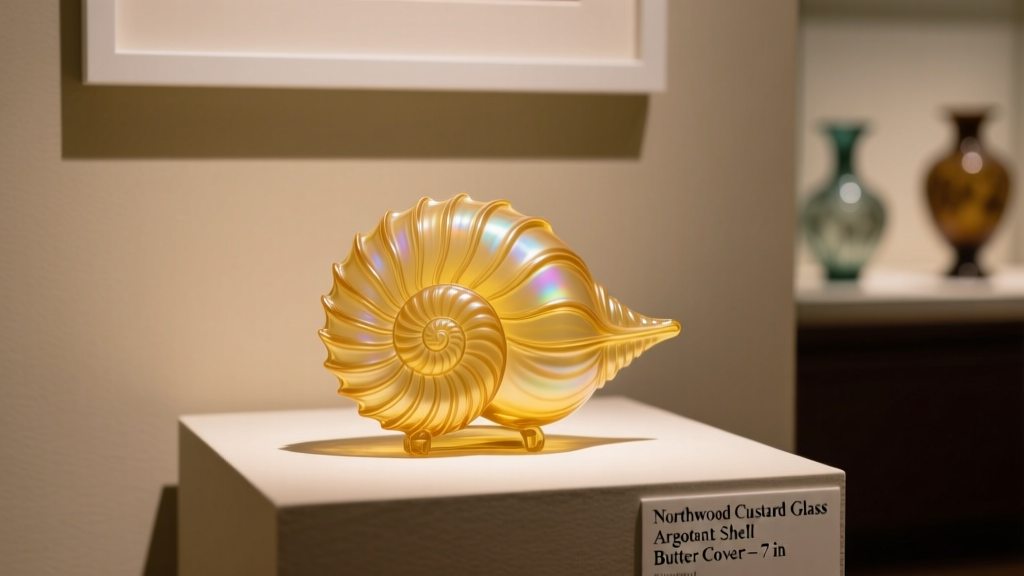
Custard Glass Argonaut Shell Butter Cover by Northwood: Authentication, Provenance, and Market Analysis of the Iconic 7-Inch Piece
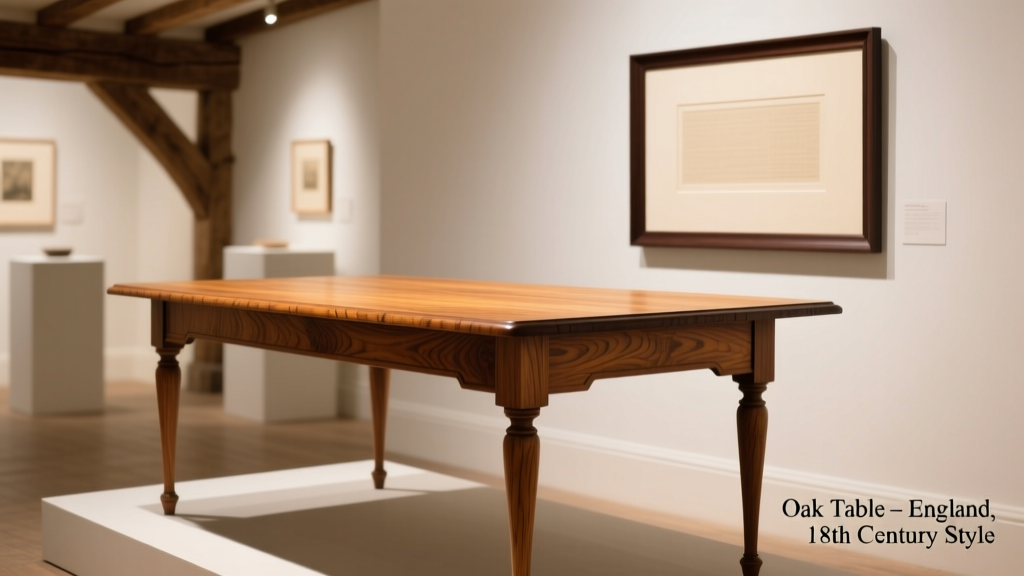
Authenticating and Valuing a Mid-Century English Oak Table: Overhang Top, Box Frame, Tapered Legs (33 × 24 in)
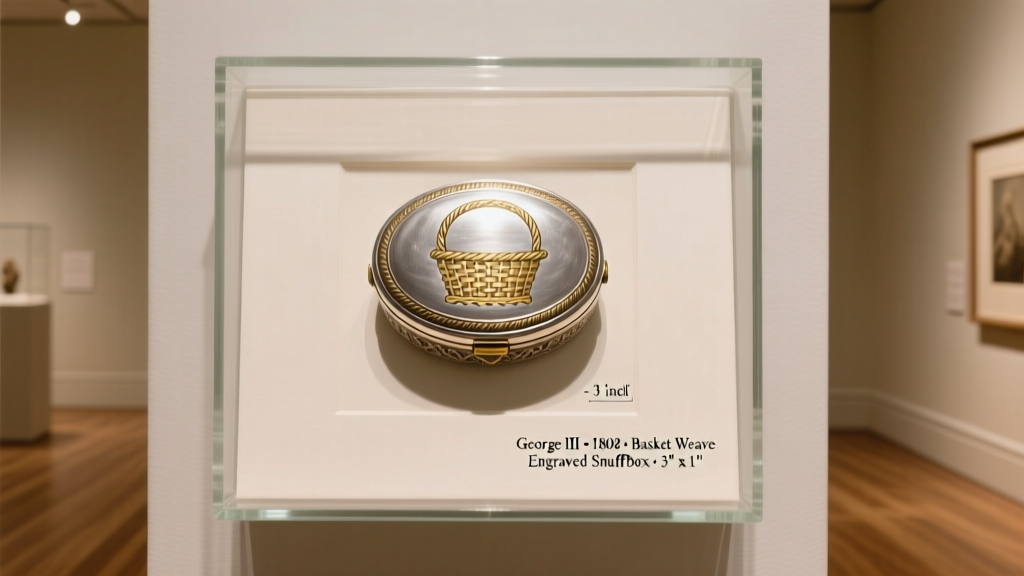
Snuffbox Authentication: Silver-Lid, Gold-Washed Basket-Weave Snuffbox, London Hallmarked 1802, 3⅛ Inches

Game Baseball Slugger Animated Bat Agate Marbles Box (1940s, 13 × 32 in): Authentication, Provenance, and Market Significance
The 1841 Baltimore and Ohio Railroad Stock Certificate: A Landmark Artifact of American Financial and Industrial History

James and John Pennington: Potters and Painters — Authentication, Provenance, and Market Dynamics of Their Second Series
Byrdcliffe Art Pottery Vase: Authentication, Provenance, and Market Significance of the 4-Sided Teardrop Form with Mottled Matte Glaze (6¾ in)

Authentication Dossier: The Case of Print ID 1136937 — A Technical Analysis of a Suspected Andy Warhol Screenprint