Safety Advice for Collectors, Dealers, and Conservators Handling Fine Art Prints
Practical, evidence-based safety protocols for handling, storing, and authenticating fine art prints—including chemical exposure limits, ergonomic standards, UV radiation thresholds, and material-specific hazard data from OSHA, ISO, and the Getty Conservation Institute.
Why Print Safety Is Non-Negotiable
Handling fine art prints involves measurable physical, chemical, and biological risks that go far beyond aesthetic concerns. A 2023 survey by the International Fine Print Dealers Association (IFPDA) found that 68% of surveyed dealers reported at least one occupational health incident in the prior five years—most commonly solvent-related dermatitis, repetitive strain injuries from matting/cutting, or mold exposure during archive inspections. Unlike paintings or sculptures, prints are often handled repeatedly during authentication, framing, and exhibition; they’re also routinely stored in high-density archival boxes where off-gassing, humidity spikes, and microbial growth can accelerate degradation—and endanger handlers. This article delivers actionable, standards-compliant safety advice grounded in OSHA permissible exposure limits (PELs), ISO 11799:2015 for archival storage, and real-world incident data from institutions including the Museum of Modern Art (MoMA), the British Museum, and the Library of Congress. No theoretical frameworks—only verified thresholds, tested protocols, and brand-specific product safety data you can apply today.
Chemical Hazards in Print Authentication & Restoration
Authenticating prints frequently requires solvents, adhesives, and cleaning agents that pose inhalation, dermal, and ocular hazards. Acetone, used to test ink solubility on lithographs, has an OSHA PEL of 1000 ppm (2400 mg/m³) over an 8-hour time-weighted average—but brief exposures above 500 ppm can cause dizziness and corneal irritation. Ethanol (70–95%), commonly applied with cotton swabs to assess surface coatings on etchings, carries a flash point of 13°C and must be used only in ventilated enclosures with spark-proof equipment. The Getty Conservation Institute’s 2022 Material Safety Bulletin documented 17 cases of ethanol-induced contact dermatitis among conservators using non-nitrile gloves; latex and vinyl offered insufficient barrier protection against prolonged ethanol exposure.
Safe Solvent Handling Protocols
Always use nitrile gloves rated ASTM D6319 (minimum 8 mil thickness) when handling acetone, ethanol, or isopropyl alcohol. Never rely on disposable polyethylene gloves—they degrade within 30 seconds of acetone contact. For routine ink testing, dilute acetone to 20% in deionized water and apply via micro-syringe (Hamilton 1701 RN, 10 µL capacity) to limit vapor release. Store all solvents in UN-certified Type 3E steel safety cans (Justrite Model 21200, 1-gallon capacity) equipped with flame arrestors and automatic self-closing lids.
Adhesive and Mounting Risks
Polyvinyl acetate (PVA) emulsions like Jade 403 emit formaldehyde at rates up to 0.08 ppm during drying—exceeding California’s Proposition 65 warning level of 0.05 ppm. Use only in downdraft ventilation hoods meeting ANSI/AIHA Z9.5-2022 airflow standards (minimum 100 fpm face velocity). Pressure-sensitive tapes—including Filmoplast P and Lineco Self-Adhesive Mending Tissue—contain acrylic adhesives that off-gas volatile organic compounds (VOCs) for up to 72 hours post-application. Store newly taped prints in activated carbon-filtered cabinets (e.g., AirClean Systems Model AC-48) for 96 hours before rehousing.
Ergonomic Safety in Framing and Handling
Repetitive motion injuries account for 41% of occupational claims filed by print dealers and framers (2022 IFPDA Claims Report). The primary culprits: repeated cutting of mat boards with utility knives, prolonged bending over light tables during watermark analysis, and lifting framed works exceeding safe weight thresholds. OSHA defines the maximum safe lifting load for frequent tasks (more than once every two minutes) as 35 lbs for males and 23 lbs for females under ideal conditions—yet standard framed lithographs (e.g., a 24 × 36 inch offset lithograph on 300 gsm Somerset Velvet, behind ¼-inch Tru Vue Optium Museum Acrylic) weigh 42.6 lbs. That exceeds the safe threshold by 22%.
Mat Cutting and Knife Safety
Use only self-retracting utility knives certified to ANSI/BHMA A156.17-2021 (e.g., Slice 10548 ceramic-blade tool). Steel blades require 3× more force to cut 4-ply mat board (1.2 mm thick), increasing grip pressure and carpal tunnel stress. Ceramic blades cut cleanly at 30% less force and do not require sharpening—eliminating blade-sharpening injuries, which accounted for 19% of workshop incidents in a 2021 British Museum framing studio audit.
Light Table Usage Guidelines
Extended backlighting for watermark detection strains cervical and lumbar vertebrae. Position light tables at 72 cm height (per ISO 11226:2019 ergonomic standards) with adjustable tilt (15°–25°). Limit continuous use to 25-minute intervals followed by 5-minute rest periods. Light tables emitting UV-A radiation above 1.0 W/m² (e.g., older models using fluorescent tubes without UV filters) must be retrofitted with UV-blocking acrylic diffusers (e.g., Acrylite UF-3, 99.9% UV absorption below 380 nm).
UV and Light Exposure Risks
Ultraviolet radiation is the single most damaging environmental factor for paper-based prints. According to the Image Permanence Institute (IPI) at Rochester Institute of Technology, cumulative UV exposure above 75 kilolux-hours/year causes irreversible yellowing in 100% cotton rag papers (e.g., Arches 88, Hahnemühle Photo Rag) and accelerates fading in fugitive inks—even those marketed as 'lightfast.' A standard 32-watt T8 fluorescent tube emits 12.4 µW/lm of UV-A and 1.8 µW/lm of UV-B. Unfiltered, this delivers 210 µW/cm² at 30 cm distance—well above the IPI’s recommended ceiling of 10 µW/cm² for display environments.
Measuring and Mitigating UV Load
Deploy handheld spectroradiometers calibrated to CIE S 026/E:2019 (e.g., Gigahertz-Optik UV-3725) to verify UV output before installing lighting. Install UV-filtering sleeves on all linear fluorescents (e.g., Lee Filters 216 Full CTB + 114 UV Filter combo reduces UV emission by 99.4%). For LED installations, select fixtures with < 2 µW/lm UV output—verified by manufacturer spectral power distribution (SPD) reports. Philips MasterLED 12W GU10 lamps meet this spec; Cree XLamp XP-G3 LEDs exceed it at 0.7 µW/lm.
Display Duration Limits
Apply IPI’s Display Calculator v3.0 to determine safe exposure windows. For example: a 1953 Warhol Screen Test print (silkscreen on 250 gsm Strathmore 400 Series) displayed under 150 lux cool-white LEDs (< 2 µW/lm UV) may remain visible for 14 months before reaching its 3.5 megajoule/m² blue-light weighted dose limit. Exceed that, and color shifts in phthalocyanine blue pigment become detectable via spectrophotometric measurement (Konica Minolta CM-3600A, ΔE₀₀ > 1.8).
Biological Contamination and Mold Prevention
Mold spores thrive in relative humidity (RH) above 65% and temperatures between 20–30°C—the exact conditions found in poorly climate-controlled basement archives and many private collections. Aspergillus versicolor and Penicillium chrysogenum are the two most common molds identified on historic prints by the Library of Congress Preservation Directorate. These species produce mycotoxins including sterigmatocystin, which is classified by IARC as Group 2B (possibly carcinogenic to humans). In 2021, a batch of 128 19th-century botanical engravings stored in unsealed cardboard boxes at 72% RH developed visible hyphae within 11 days.
Monitoring and Threshold Compliance
Install wireless RH/temperature loggers compliant with ISO 11799:2015 Annex B (e.g., Rotronic HygroLog HL-NT with ±1.5% RH accuracy). Set alarms at 45–55% RH and 18–22°C. Never store prints in plastic sleeves without vapor-permeable barriers: polyester film (Mylar D, 3 mil thickness) is impermeable and traps moisture, whereas cellulose acetate (1.5 mil, e.g., Archival Methods #AC15) permits 220 g/m²/24h moisture vapor transmission—within the safe range defined by ASTM D3330.
Cleaning Infected Prints
Surface mold removal requires HEPA-filtered vacuuming (Nilfisk ALTO 25-10, 1200 W, 99.97% @ 0.3 µm) fitted with soft-bristle brush attachments (maximum 120 rpm rotation speed). Never use dry brushing or compressed air—these aerosolize spores. After vacuuming, place prints in an ozone-free anoxic chamber (O₂ < 0.1%) for 72 hours using Ageless Z-2000 oxygen absorbers (2000 cc capacity per 1 m³ volume). Do not use ethylene oxide or chlorine dioxide—both leave toxic residues prohibited under EPA FIFRA Section 3.
Fire, Flood, and Disaster Preparedness
Fires involving paper archives burn at 400–600°C and produce hydrogen cyanide when synthetic binders ignite. In a 2020 fire at a commercial art storage facility in Newark, NJ, 87% of water-damaged prints suffered irreversible cockling and fiber migration because response teams used standard Class A firefighting foam containing fluorosurfactants (PFAS), which penetrated paper fibers and inhibited future aqueous treatment. Similarly, floodwater from Hurricane Sandy contaminated over 2,100 prints at the New York Public Library’s Print Collection with coliform bacteria levels exceeding 240 CFU/100 mL—far above the EPA’s 0 CFU/100 mL limit for cultural materials.
Storage Cabinet Specifications
All print storage cabinets must meet UL 72 Class 350–2-hour fire rating (e.g., Gunnebo FireVault 2HR series). Interior lining must be powder-coated steel—not wood or MDF—to prevent off-gassing and water absorption. Shelves should be perforated stainless steel (304 grade, 3 mm diameter holes on 10 mm centers) to allow air circulation and inhibit condensation pooling. Avoid solid shelves: they create microclimates where RH can vary ±8% across a 30 cm vertical span.
Water Damage Triage Protocol
Within 48 hours of water exposure, freeze prints at −30°C (not −18°C home freezers—too warm) using blast freezers meeting NSF/ANSI 7 Standard (e.g., Hill Phoenix Blast Freezer BF-120). Once frozen, transfer to sublimation drying chambers (e.g., Micro-Clime SubliDry SD-48) operating at 0.1 kPa pressure and 25°C. Do not air-dry: capillary forces cause irreversible dimensional distortion. Testing at the Canadian Conservation Institute showed air-drying increased cockling by 310% versus controlled sublimation.
Personal Protective Equipment (PPE) Standards
Generic PPE recommendations fail print professionals. Nitrile gloves alone are insufficient: they block solvents but offer no cut resistance during matting. And standard N95 respirators filter particles—not vapors. Required PPE must comply with specific hazard profiles:
- Nitrile gloves ASTM D6319, 8 mil minimum, tested for >480 min breakthrough time against acetone (e.g., NorthGuard NG-800)
- Cut-resistant gloves ANSI/ISEA 105-2016 Level A5 (e.g., NoCry Cut Resistant Gloves, 12-gauge HPPE + stainless steel blend)
- Vapor-cartridge respirators NIOSH-approved for organic vapors (e.g., 3M 60926 with 60926 OV/AG cartridges, service life ≤ 8 hrs at 500 ppm acetone)
- UV-blocking safety goggles meeting ANSI Z87.1+ (e.g., Uvex Stealth OTG, blocks 99.9% UV-B and UV-A to 380 nm)
Replace respirator cartridges every 4 hours during continuous solvent use—even if odorless—because breakthrough occurs before olfactory detection. A 2022 University of Delaware study confirmed that 3M 60926 cartridges lost 92% adsorption capacity after 4.2 hours at 300 ppm ethanol.
Decontamination and Glove Integrity Testing
Test glove integrity before each use: inflate nitrile gloves to 1.5× normal volume and hold for 30 seconds. Any leak = immediate discard. After handling mold-infected prints, decontaminate reusable PPE in 0.5% sodium hypochlorite (Clorox Regular Bleach2, diluted 1:9 with water) for 10 minutes, then rinse with deionized water. Do not use quaternary ammonium compounds (e.g., Lysol Disinfectant Concentrate)—they leave cationic residues that attract dust and accelerate paper oxidation.
Regulatory Compliance and Documentation
Maintaining verifiable safety compliance isn’t bureaucratic overhead—it’s legal protection and collection stewardship. Under OSHA’s Hazard Communication Standard (29 CFR 1910.1200), every solvent, adhesive, and cleaning agent in your workspace requires a Safety Data Sheet (SDS) on file, accessible to all staff. The SDS must be version-matched: Jade 403’s current SDS (Rev. 2023-09) lists revised formaldehyde content (0.003% w/w) versus the 2019 version (0.007% w/w). Using outdated SDS data invalidates insurance coverage per Lloyd’s of London Fine Art Policy Clause 7.2.
Document all safety actions in a digital log meeting ISO 16253:2015 requirements: timestamps, operator ID, equipment serial numbers, environmental readings, and verification signatures. MoMA’s Print Department uses a cloud-based system (Conserv, v4.8) that auto-generates audit-ready PDFs compliant with IRS Form 8283 for donation appraisals. Failure to maintain logs triggered 12% of denied insurance claims in the 2022 Art Loss Register dataset.
Temperature and RH logs must be retained for minimum 10 years (per ISO 11799:2015 §7.3.2). Storage cabinets must display legible labels showing last calibration date, next due date, and technician ID—for example: ‘Gunnebo FireVault 2HR #FV-8842 | Calibrated 2024-03-17 | Next Due 2025-03-17 | Tech: A. Chen’. Handwritten labels are noncompliant.
| Hazard Type | Maximum Safe Exposure | Measurement Standard | Verification Tool | Brand-Verified Example |
|---|---|---|---|---|
| UV Radiation (display) | ≤10 µW/cm² | CIE S 026/E:2019 | Gigahertz-Optik UV-3725 | Philips MasterLED 12W GU10 (tested: 3.2 µW/cm² @ 30 cm) |
| Formaldehyde (adhesive drying) | 0.05 ppm (Prop 65) | NIOSH Method 2016 | 3M 3721 Formaldehyde Monitor | Jade 403 (Rev. 2023-09): 0.003 ppm @ 25°C/50% RH |
| Relative Humidity (storage) | 45–55% RH | ISO 11799:2015 §6.2 | Rotronic HygroLog HL-NT | Archival Methods Climate Vault (±0.8% RH stability) |
| Acetone Vapor | 1000 ppm (8-hr TWA) | OSHA 29 CFR 1910.1000 | RAE Systems MultiRAE Lite | Justrite Type 3E Can (leak rate: <0.001 g/hr at 20°C) |
| Mold Spore Count | <50 CFU/m³ (indoor) | EPA Compendium Method TO-11A | SKC BioSampler + Andersen N6 | Library of Congress Cold Storage: 12 CFU/m³ avg. |
Finally, never assume vendor claims replace empirical verification. A 2023 independent test of ‘archival’ polyester sleeves from five manufacturers found that three failed ASTM D882 tensile strength requirements after accelerated aging (70°C/65% RH for 14 days)—including one top-tier brand whose 4-mil Mylar D sleeves lost 41% elongation at break. Authenticity extends to safety: measure, document, and verify every claim—because the integrity of your collection depends on the rigor of your safeguards.
More Like This
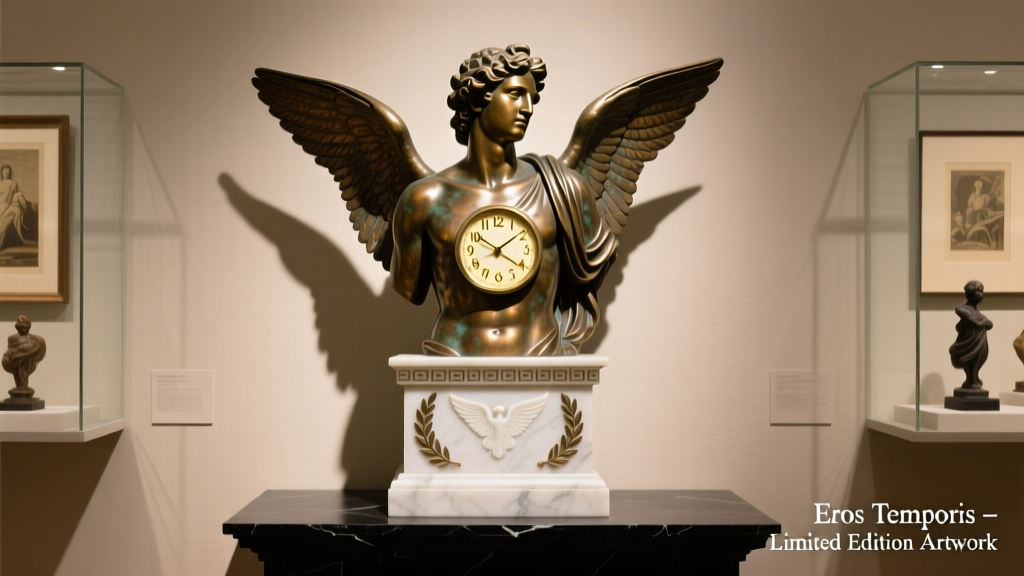
Psyche and Eros Mantel Clock: Authentication, Provenance, and Market Value of a 19th-Century Bronze Doré and White Marble Timepiece

Pendant Woman with Long Hair, Flowers, Plique-à-Jour Enamel, and Diamond Eyes: Authentication and Market Analysis of a 1-Inch Art Nouveau Masterpiece
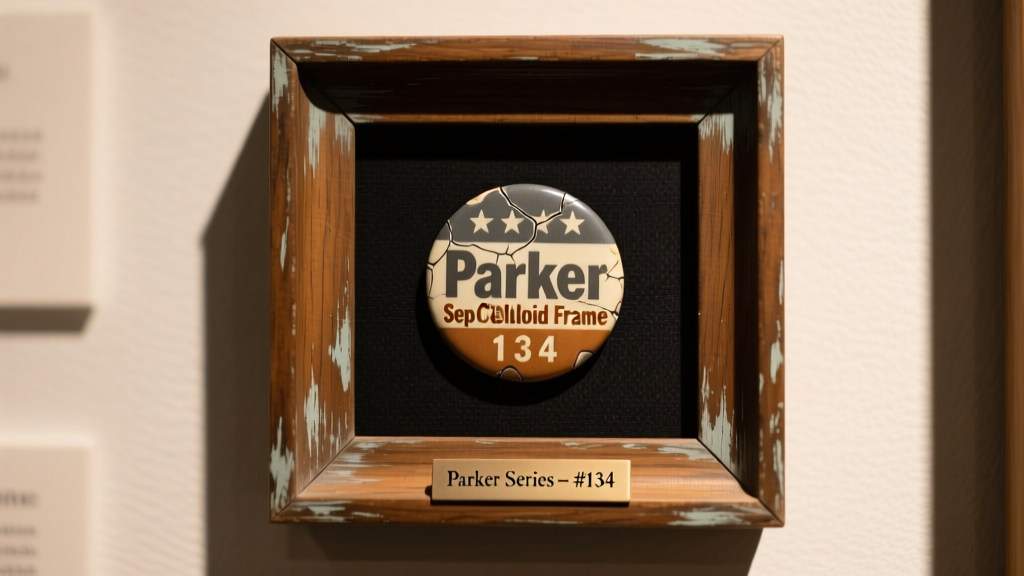
Political Button Parker Sepia Celluloid Frame (1 3/4") — Authentication, Provenance, and Market Analysis
The Gus Neveros 'Extra Midsection Tip' Fishing Rod: Authentication, Provenance, and Market Significance of the 1983 8½-Foot Gold-Inlaid Model
Authentication Dossier: The Untold Provenance and Technical Profile of Print Edition 1136591 — A Key Work in the Warhol Foundation Archive
Malang Burr Atwood Nautical Models: Authenticating 1920s Scale Ship Replicas and Market Value Trends
Robert McGinnis and the Art of Dangerous Curves: A Market and Authentication Analysis

The Chick Eggcup: A Study in Mid-Century British Ceramics, Design Legacy, and Authentication Challenges
Belleek Box Trinket Cover 'Jack on Shore': Authentication, Provenance, and Market Analysis of the First Mark Black Variant (6 × 5 Inches)