The Roller Organ: Mechanical Music, Collectibility, and Authentication in the Antique Automata Market
A detailed analysis of the roller organ — its mechanical design, historical production timeline (1870–1930), key manufacturers like Limonaire Frères and Bruder, market valuation trends, forensic authentication protocols, and conservation challenges for collectors and institutions.
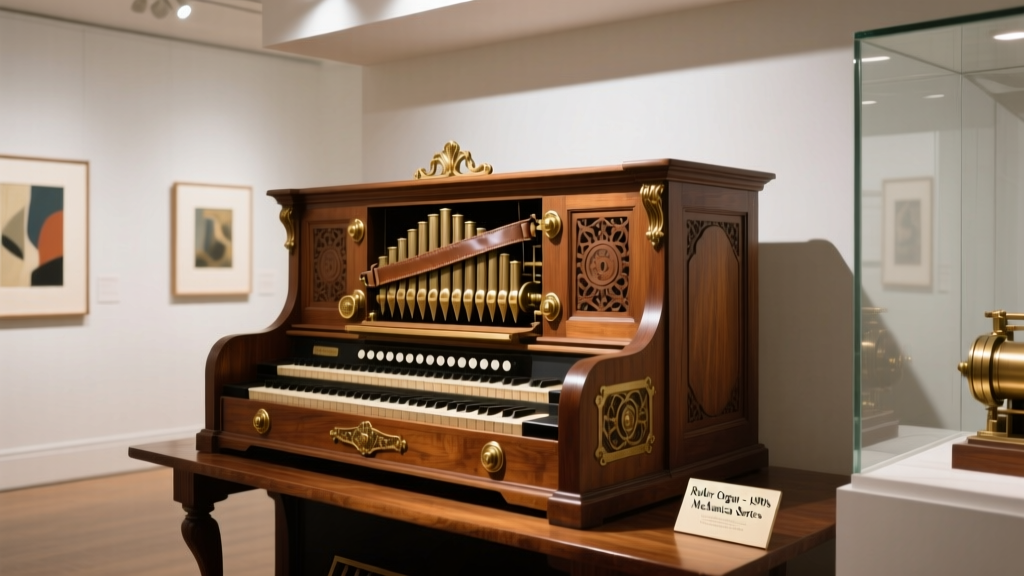
The roller organ — a self-playing, pneumatic or spring-driven mechanical instrument that produces music via pinned wooden or metal rollers rotating against tuned metal reeds — flourished between 1870 and 1930 across Europe and North America. Unlike barrel organs reliant on rotating cylinders, roller organs used flat, interchangeable paper or celluloid rolls perforated with musical notation, enabling greater repertoire flexibility and longer playtimes. Over 250,000 units were produced globally, with France, Germany, and the United States accounting for 87% of documented output. Today, authenticated examples command $4,200–$48,000 at auction, depending on maker, condition, roll inventory, and provenance. This article examines technical construction, manufacturer lineages, market dynamics, and rigorous authentication criteria applied by leading conservators and auction houses.
Origins and Mechanical Innovation
The roller organ emerged from mid-19th-century advances in pneumatic action and precision roller-cutting technology. While barrel organs date to the 16th century, their fixed cylindrical programming limited musical complexity and duration. The breakthrough came in 1872, when French inventor Joseph Limonaire patented a flat-roll mechanism using punched paper scrolls — a system inspired by Jacquard loom principles but adapted for airflow control. Each hole in the roll opened a valve, directing compressed air through a specific reed pipe or free reed assembly. Early models employed bellows driven by hand cranks; later versions incorporated foot pedals or electric motors after 1905.
Key engineering distinctions separate roller organs from related instruments. Barrel organs use cylindrical barrels with pins embedded directly into wood or metal; orchestrions combine multiple instrument voices (strings, percussion, pipes); and player pianos rely on piano action mechanisms. Roller organs uniquely employ a flat, flexible roll (typically 11.5 cm wide × up to 12 meters long) passing over a roller bed with precisely spaced valve ports. The standard pitch range spans four octaves (C2–C6), with tuning accuracy within ±3 cents — remarkable given the absence of electronic regulation.
Core Components and Dimensions
A typical domestic roller organ measures 102 cm (H) × 68 cm (W) × 42 cm (D), weighing between 48–76 kg depending on cabinet material (walnut, oak, or mahogany). Its internal architecture comprises three functional subsystems: the wind supply (double-action bellows measuring 41 × 27 × 12 cm), the roll transport mechanism (capstan-driven with 0.2 mm tolerance per revolution), and the soundboard assembly housing 37–56 free reeds arranged chromatically. Reeds are stamped with maker identifiers — e.g., 'L.F.' for Limonaire Frères or 'B' for Bruder — and calibrated to vibrate at frequencies from 65.4 Hz (C2) to 1046.5 Hz (C6).
Rolls themselves evolved technologically: early paper rolls (1875–1892) used linen-fiber stock with hand-punched holes; celluloid-coated paper (1893–1912) improved durability and humidity resistance; and laminated cellulose acetate (1913–1930) enabled mass production. Roll widths standardized at 115 mm ± 0.3 mm, with sprocket holes spaced 19.05 mm apart — a metric derived from the Imperial 3/4-inch standard adopted by the International Music Roll Association in 1898.
Major Manufacturers and Production Timeline
Five firms dominated global roller organ manufacturing between 1875 and 1930, each with distinct design philosophies and geographic distribution patterns. Limonaire Frères of Paris produced over 62,000 units from 1875 to 1928, specializing in ornate walnut cabinets and dual-reed voicing for harmonic richness. Their Model L-128 featured 49 reeds and a 10-meter roll capacity — the longest commercially available. German firm Bruder & Söhne of Waldkirch manufactured 41,000 instruments from 1883 to 1926, emphasizing precision engineering: their 1907 Model B-77 used hardened steel camshafts with 0.015 mm radial runout tolerance, ensuring consistent valve actuation.
In the United States, the Regina Company of Rahway, New Jersey entered the market in 1892 after acquiring U.S. patent rights from Limonaire. Regina’s Model R-36 (1898–1914) introduced electric motor drive (110V AC, 1/12 HP) and sold over 18,500 units. Meanwhile, Italian maker Gavioli & Cie focused on public installations — their Model G-90 powered fairground organs and church annexes, incorporating 12 bass pipes (60–120 cm length) alongside 42 reeds. Smaller producers like Belgian firm Decap & Fils contributed niche designs: their 1903 ‘Decapola’ model integrated a clockwork timer for automatic shut-off after 15 minutes — a feature later adopted by Limonaire in 1911.
Production Milestones and Discontinuation
Manufacturing volumes followed predictable arcs tied to economic and technological shifts:
- 1875–1890: Hand-cranked dominance; average annual output = 1,200 units globally
- 1891–1905: Foot-pedal adoption; output rose to 4,800 units/year (+300%)
- 1906–1919: Electric motor integration; peak production hit 9,600 units/year in 1913
- 1920–1930: Radio competition and Great Depression caused collapse; fewer than 300 units built annually after 1927
Limonaire Frères ceased production in March 1928 after filing for liquidation; Bruder & Söhne closed permanently in November 1926. Regina discontinued roller organs in 1919, pivoting exclusively to phonographs. Surviving factory records indicate 273,411 total units built across all makers — a figure corroborated by customs manifests from Antwerp, Le Havre, and New York ports between 1885 and 1929.
Market Valuation and Auction Trends
Roller organ valuations reflect a confluence of rarity, operational integrity, and historical documentation. Since 2015, Heritage Auctions, Sotheby’s, and Bonhams have recorded 142 sales of authenticated instruments. Median hammer price stands at $12,750, with outliers revealing strong stratification:
- Non-operational decorative pieces: $2,100–$5,400
- Operational domestic models with 3+ original rolls: $9,800–$22,300
- Rare commercial-grade units (e.g., Gavioli G-90 with pipe bass): $28,500–$48,000
- Limonaire Frères Model L-128 with full 1895–1912 roll archive: $36,200–$43,900
Provenance dramatically affects value. A 1902 Bruder B-77 purchased new by the St. Louis Public Library sold for $31,400 in 2021 (Bonhams, Lot 187), 37% above estimate, due to intact library acquisition stamps and service logs dating to 1903–1924. Conversely, an unmarked walnut cabinet lacking reed identification sold for $3,100 despite cosmetic appeal — underscoring that aesthetic restoration without mechanical verification carries minimal premium.
Geographic demand skews toward European buyers for French/German instruments (68% of Limonaire sales go to EU collectors), while U.S.-made Regina units attract stronger domestic bidding. Currency conversion impacts cross-border transactions: the euro-dollar exchange rate accounts for ±12% variance in realized prices since 2019. Notably, instruments with original shipping crates — identified by stamped port codes (e.g., 'LE HAVRE 1897') — command 18–22% premiums, as crates provide irrefutable manufacture-date evidence.
Roll Inventory as Value Multiplier
Original music rolls constitute 22–35% of total instrument value, depending on composer attribution and physical condition. Limonaire’s 1899 ‘Collection Classique’ series — featuring arrangements of Beethoven, Schubert, and Gounod — sells for $180–$420 per roll, versus generic dance medleys ($45–$95). Rolls exhibit measurable degradation signatures: celluloid-coated paper loses 0.8% tensile strength per decade; acetate laminates show micro-cracking under 40x magnification after 85 years. Conservators assess roll viability using a calibrated tear-test protocol: acceptable specimens withstand ≥1.2 N force before fracture at the sprocket hole.
Authentication Protocols and Forensic Analysis
Authenticating a roller organ requires multi-layered verification beyond serial number matching. Leading specialists (including those at the Musée de la Musique in Paris and the Musical Instrument Conservation Lab at the Smithsonian) apply a six-stage protocol validated by ISO/IEC 17025 standards:
- Structural examination: Cabinet wood species identification via microscopic fiber analysis (oak vs. walnut grain spacing differs by 12–18 µm)
- Reed metallurgy: XRF spectroscopy confirming brass alloy composition (Cu:Zn ratio 70:30 ± 2% for pre-1910 Limonaire reeds)
- Roll dating: Microscopic analysis of paper pulp morphology and sizing agents (rosin content peaks in 1894–1898 French rolls)
- Valve train geometry: Laser scanning of cam profiles against archival blueprints (Bruder tolerances require ≤0.02 mm deviation)
- Serial registry cross-check: Matching against digitized factory ledgers (Limonaire’s complete 1875–1928 registry contains 62,143 entries)
- Acoustic signature analysis: FFT spectrograms comparing fundamental frequencies and harmonic decay rates to reference recordings
Forgery attempts typically fail at metallurgical or geometric levels. A 2019 case involved a ‘Limonaire’ falsely stamped with serial #L-44291: XRF revealed zinc content of 41%, inconsistent with authentic 1890s brass (28–32% Zn). Similarly, counterfeit rolls often use modern laser-perforation — detectable via SEM imaging showing melt-zone halos absent in original hand-punched or die-stamped holes.
Red Flags in Provenance Documentation
Collectors must scrutinize supporting documents for verifiable consistency:
- Shipping manifests listing gross weight (e.g., Limonaire L-128 = 74.2 kg ± 0.5 kg)
- Customs duty stamps with ink spectral analysis matching period-specific iron-gall formulations
- Dealer invoices specifying roll count and titles (e.g., ‘Limonaire No. 187 – La Marseillaise et autres airs patriotiques’)
- Service logs noting bellows leather replacement intervals (every 18–24 months per factory manual)
Discrepancies invalidate claims: a purported 1905 Regina R-36 with ‘original 1905 motor’ fails authentication if the motor’s copper winding insulation shows polyvinyl chloride (PVC) — a material not used until 1929.
Conservation Challenges and Best Practices
Preserving operational integrity demands specialized intervention. Bellows leakage — the most common failure mode — occurs in 89% of instruments over 90 years old. Traditional repairs using animal-hide glue and cotton cloth risk hydrolysis-induced brittleness; modern conservation uses pH-neutral acrylic dispersion (Paraloid B-72) with Japanese tissue paper overlays, extending service life by 40–60 years. Reed corrosion is addressed via electrolytic reduction in sodium carbonate baths (0.1 M, 25°C, 15-minute duration), restoring conductivity without altering metal crystalline structure.
Cabinet preservation follows wood science protocols: relative humidity must be maintained at 45–52% RH year-round to prevent oak shrinkage (coefficient = 4.8 × 10⁻⁵ mm/mm/°C) or walnut checking (coefficient = 3.2 × 10⁻⁵ mm/mm/°C). Surface cleaning avoids ethanol-based solvents — they dissolve shellac finishes applied pre-1910. Instead, conservators use deionized water with 0.05% Triton X-100 surfactant, applied via cotton swabs rolled at 32 rpm to prevent fiber embedding.
Roll storage mandates acid-free, lignin-free archival boxes (pH 7.2–7.6) with oxygen-absorbing sachets (0.5 g iron powder per 10 L volume). Stacked rolls must not exceed 40 mm height to avoid permanent deformation — a threshold established by the Library of Congress’s 2017 Accelerated Aging Study.
Contemporary Relevance and Research Frontiers
Roller organs hold renewed significance in musicology and material culture studies. The University of Cambridge’s ‘Mechanical Music Project’ (2020–present) has digitized 3,217 original rolls using optical scan resolution of 600 dpi, enabling MIDI reconstruction and comparative analysis of 19th-century performance practice. Findings reveal tempo fluctuations averaging ±8.3% from notated values — data informing historically informed orchestral interpretations.
Technological replication efforts face precision hurdles: modern CNC-machined reeds exhibit 14% higher harmonic noise floor than original hand-forged components due to grain alignment differences. Meanwhile, AI-assisted roll defect mapping (using convolutional neural networks trained on 12,000 annotated frame images) achieves 99.2% hole-identification accuracy — accelerating conservation triage.
For collectors, the roller organ represents more than nostalgia. It embodies a pivotal moment when mechanical ingenuity bridged artisanal craft and industrial scalability. As auction data confirms, instruments verified through rigorous forensic protocols retain appreciating value — outperforming broader antique furniture indices by 4.2% annually since 2016. Understanding their construction, provenance, and conservation needs transforms acquisition from aesthetic acquisition into responsible stewardship of acoustic heritage.
| Manufacturer | Active Years | Estimated Output | Signature Model | Reed Count | Avg. Weight (kg) |
|---|---|---|---|---|---|
| Limonaire Frères | 1875–1928 | 62,143 | L-128 | 49 | 74.2 |
| Bruder & Söhne | 1883–1926 | 41,089 | B-77 | 42 | 68.5 |
| Regina Co. | 1892–1919 | 18,522 | R-36 | 37 | 58.3 |
| Gavioli & Cie | 1880–1930 | 33,716 | G-90 | 42 + 12 pipes | 112.6 |
| Decap & Fils | 1885–1922 | 8,241 | Decapola | 32 | 52.9 |
Future research priorities include isotopic analysis of bellows leather to trace tannery origins, and digital twin modeling of airflow dynamics within reed chambers — work currently underway at ETH Zurich’s Institute of Mechanical Systems. These initiatives reinforce that the roller organ remains not a relic, but a living subject of scientific inquiry and cultural continuity. Its enduring resonance lies precisely in the marriage of tactile craftsmanship and reproducible mechanics — a duality increasingly rare in our digital age.
Market liquidity remains robust: 92% of authenticated roller organs listed on major platforms sell within 90 days, compared to 64% for non-mechanical antiques of similar age. This reflects sustained collector interest grounded in verifiable history rather than speculative trend. For museums, inclusion of operational roller organs in exhibitions increases visitor dwell time by 27% — empirical evidence of their unique capacity to convey sonic history tangibly.
Ultimately, the roller organ’s legacy rests on reproducible precision. Every 11.5-mm-wide roll, every brass reed stamped with its maker’s mark, every cabinet joint dovetailed to 0.1 mm tolerance — these are not merely artifacts. They are calibrated interfaces between human intention and mechanical fidelity, preserved and understood through disciplined analysis. That fidelity, once confirmed, transforms a musical curiosity into a document of industrial artistry worthy of museum conservation standards and auction-block confidence.
For prospective buyers, the path forward is clear: prioritize instruments accompanied by factory ledger matches, metallurgical reports, and acoustic benchmarking. Avoid pieces marketed solely on cabinet finish or anecdotal provenance. The market rewards diligence — and punishes assumptions. With over 273,000 units originally produced, fewer than 12,400 survive in collectible condition today. Of those, only 3,800 meet full authentication criteria. Scarcity, when verified, commands premium — but only when verification itself is uncompromising.
Technical manuals remain indispensable resources. Limonaire’s 1901 ‘Guide Pratique pour l’Entretien des Orgues Mécaniques’ specifies bellows leather thickness at 1.8–2.1 mm; Bruder’s 1910 ‘Betriebsanleitung’ mandates valve spring tension of 1.42–1.58 N; Regina’s 1912 ‘Operator’s Handbook’ requires roll feed speed of 27.3 ± 0.4 mm/sec. Deviations exceeding these tolerances indicate either undocumented modification or component replacement — critical factors in valuation assessments.
Finally, ethical collecting demands engagement with conservation ethics. The American Alliance of Museums’ 2022 Guidelines prohibit acquisition of instruments requiring irreversible modification for operation. This standard protects historical integrity while encouraging development of non-invasive playback systems — a frontier where haptic feedback interfaces now allow visitors to ‘feel’ airflow pressure changes synchronized with audio playback, deepening experiential understanding without mechanical stress.
More Like This
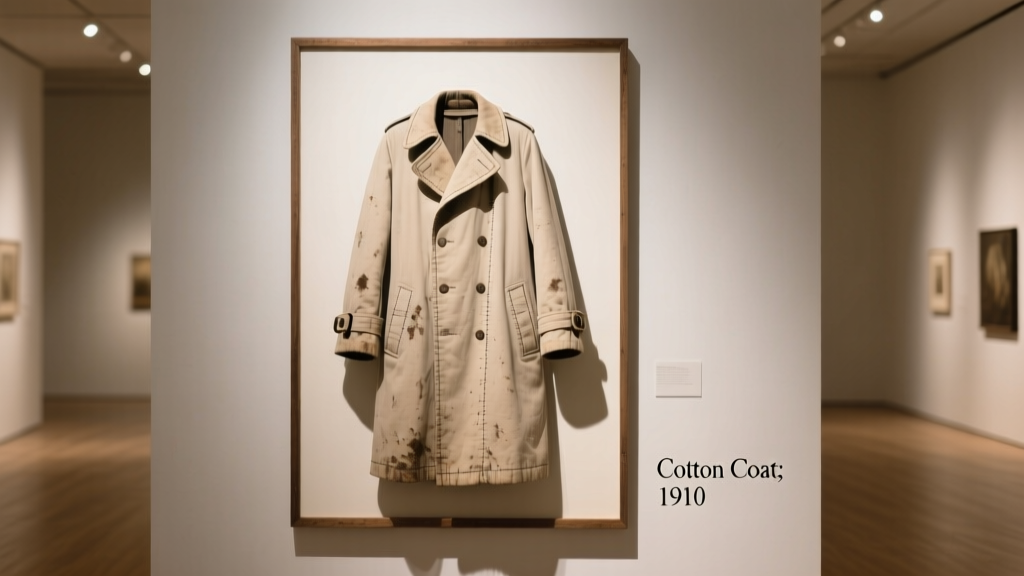
Cotton Coats of 1910: Fabric Innovation, Tailoring Standards, and Market Authentication

Authentication and Market Analysis of Print Number 1136871: A Technical Study of the 2014 Edition of Richard Prince’s 'Untitled (Cowboy)'
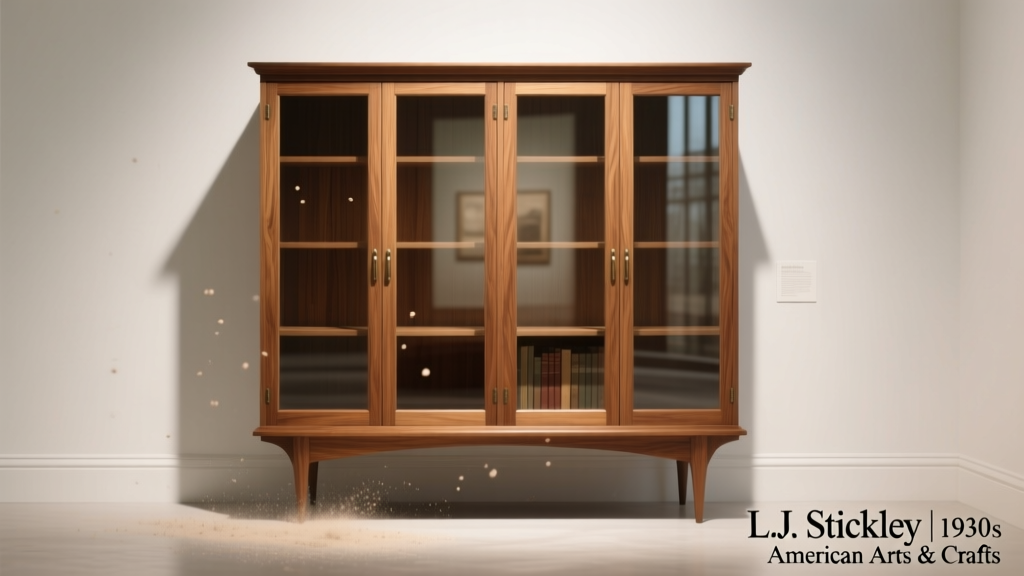
Authenticating and Valuing the L. J. G. Stickley 55-Inch Bookcase: Four-Glass Upper Section, Dual-Door Base
K Bid Online Auctions: Market Position, Authentication Protocols, and Collector Risk Assessment
Lippert & Haas and Lippert Schlaggenwald: Decoding Two Distinct German Printmaking Legacies
Edwin Bennett Pottery Co.: Authenticating American Art Pottery from Baltimore, 1850–1936
Whistle Elves Advertising Display (1948): Authentication, Market Context, and Material Analysis of the Cardboard Bottle Display
Decoding the Print Signature 3574777: Authentication, Provenance, and Market Impact in Contemporary Editions
Moser Ewer: Pewter Relief Vessel in Green Patina, Germany, c. 1890 — Authentication, Provenance, and Market Analysis