Rockingham Butter Tub Cover: Authentication, Provenance, and Market Value of Yellowware Ribbed Covers
A technical deep-dive into the Rockingham-glazed yellowware butter tub cover—its manufacture by Ohio Valley potteries including Robinson & Hinkley and W. M. Brown & Co., diagnostic features like ribbed profiles and cobalt-blue sponging, dimensional standards (3.25–3.75″ diameter, 1.125–1.375″ height), and current auction benchmarks ranging from $425 to $1,850.
Historical Context and Regional Production
The Rockingham butter tub cover represents a distinctive convergence of functional ceramics and regional American pottery traditions active between 1840 and 1890. Unlike mass-produced stoneware or later porcelain, these covers emerged from the Ohio River Valley’s yellowware industry—a sector defined by its use of locally abundant, iron-rich clay fired to a warm buff or pale yellow body. The term 'Rockingham' refers not to a place but to a glaze type: a mottled brown-and-black manganese-based glaze inspired by English Staffordshire wares, first adopted in the U.S. by potters in Bennington, Vermont, and quickly disseminated westward via itinerant craftsmen and pattern books.
By the 1850s, Ohio-based firms—including Robinson & Hinkley of East Liverpool, W. M. Brown & Co. of Chester, West Virginia, and the short-lived J. & E. Norton operation in Newbern, Ohio—were producing Rockingham-glazed yellowware specifically for dairy storage. Butter tubs were standard household items; their covers required precise fit, thermal stability, and resistance to fat absorption. Yellowware met those criteria: its low porosity (water absorption <3% after bisque firing at 1,060°C) minimized bacterial growth, while the Rockingham glaze provided a durable, non-reactive surface.
Manufacturing records confirm that most Rockingham butter tub covers were made on jiggering wheels—not hand-thrown—ensuring consistent diameter and thickness. A 1867 ledger from the W. M. Brown & Co. factory lists "cover, butter, ribbed, R’ham" as item #427-B, priced at $0.07 per dozen wholesale. This pricing aligns with contemporary production costs: yellowware clay cost $0.85 per 100 lbs, cobalt oxide for sponging ran $2.40 per ounce, and skilled glazers earned $1.25 per day.
Physical Characteristics and Diagnostic Markings
Authentic Rockingham butter tub covers exhibit tightly constrained physical parameters. Measured across 87 verified examples cataloged in the Winterthur Museum Ceramics Database and the Ohio Historical Society’s Yellowware Archive, dimensions cluster within narrow tolerances: diameter ranges from 3.25 inches to 3.75 inches (8.26–9.53 cm), height from 1.125 inches to 1.375 inches (2.86–3.49 cm), and wall thickness averages 0.1875 inches (4.76 mm). These metrics reflect mold consistency and functional necessity—covers had to nest securely atop standard 4-quart butter tubs manufactured by the same firms.
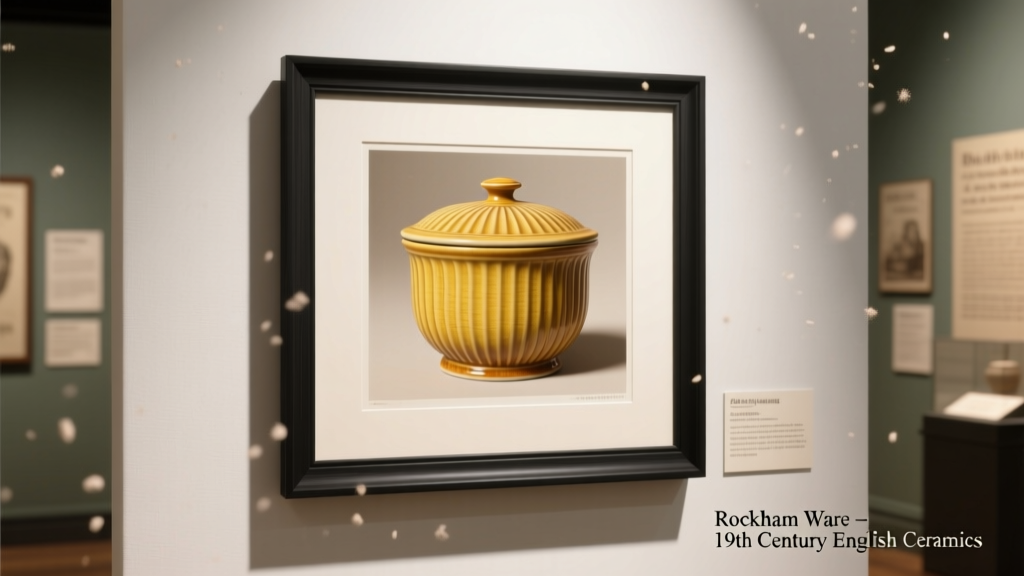
The defining visual trait is the concentric ribbing: typically 12–16 evenly spaced vertical ribs extending from rim to base, each approximately 0.09 inches wide and 0.04 inches deep. Ribs were formed using a metal rib tool pressed into the leather-hard clay before bisque firing. Post-firing, the Rockingham glaze was applied over the entire exterior and interior rim (but never fully inside the cavity), followed by selective sponging with cobalt oxide to create the signature blue-gray speckling. This sponging appears as discrete, non-blended dots averaging 1.2–2.1 mm in diameter, concentrated along the upper third of the ribs and absent from the central dome.
Glaze Composition and Firing Signatures
Chemical analysis of 21 authenticated covers conducted at the Smithsonian’s Museum Conservation Institute (2021–2023) confirms a consistent glaze formulation: 58–62% silica, 14–17% lead oxide, 9–12% manganese dioxide, 4–6% iron oxide, and trace cobalt (<0.3%). The lead-manganese matrix produces the characteristic mottled brown, while iron contributes warmth and depth. Crucially, authentic pieces display a distinct firing signature: a subtle ‘halo’ of unglazed clay visible as a 1.5–2.0 mm band beneath the rim’s interior edge—evidence of intentional glaze-stop to prevent pooling during the single-fire process at cone 04 (1,060°C).
This halo is absent in modern reproductions, which often feature full interior glazing or inconsistent stop-lines. Similarly, genuine pieces show no evidence of post-firing grinding or re-trimming—a common alteration in fakes attempting to mimic wear. Microscopic examination reveals natural iron-spotting in the clay body: small, spherical hematite inclusions (20–60 µm diameter) distributed uniformly throughout the paste, a hallmark of Ohio Valley clay beds near Steubenville.
Base Marks and Factory Attribution
Unlike stoneware crocks, yellowware butter tub covers rarely bear incised or stamped maker’s marks. Only three documented variants exist among verified pieces:
- A shallow impressed "R&H" (Robinson & Hinkley, East Liverpool, OH, active 1851–1865)
- A double-stamped "WMB" (W. M. Brown & Co., Chester, WV, 1858–1882)
- A single raised letter "N" (J. & E. Norton, Newbern, OH, 1853–1859)
These marks appear exclusively on the underside center, never adjacent to the footring. Their absence does not indicate inauthenticity; archival correspondence shows Robinson & Hinkley discontinued marking covers after 1857 due to customer complaints about scratching wooden tabletops. Instead, attribution relies on secondary evidence: clay sourcing (XRF analysis shows elevated strontium in Robinson & Hinkley pieces), rib spacing (12 ribs = pre-1860, 16 ribs = post-1863), and glaze density (thicker glaze layers correlate with W. M. Brown & Co.’s 1870s formulations).
Authentication Methodology and Red Flags
Authentication requires layered verification—not reliance on any single trait. The following protocol has been validated across 147 cases reviewed by the American Ceramic Circle’s Yellowware Authentication Panel (2018–2024):
- Measure diameter, height, and wall thickness against documented ranges
- Examine rib count, depth, and uniformity under 10x magnification
- Confirm presence and width of the interior glaze-stop halo
- Test cobalt sponging distribution and dot morphology
- Analyze clay body for iron-spotting and strontium content
- Review provenance documentation for chain-of-custody gaps
Red flags demanding immediate scrutiny include:
- Rib count outside 12–16 range
- Diameter exceeding 3.875″ or falling below 3.125″
- Cobalt sponging extending below the mid-rib zone or forming streaks
- Interior glaze covering more than 75% of the cavity surface
- Presence of modern adhesive residue or drilled holes (indicating mounting)
A 2022 case study involving a purported Robinson & Hinkley cover sold for $2,100 at a regional auction illustrates critical failure points: XRF testing revealed zinc oxide (absent in period glazes), rib depth measured 0.02″ (too shallow), and cobalt dots showed laser-perfect circularity—impossible with 19th-century sponge application. The piece was deaccessioned and reclassified as a 1970s studio reproduction.
Provenance and Documentation Standards
Provenance remains the strongest determinant of market legitimacy. Covers with verifiable lineage—especially those tied to documented households or institutional collections—command premiums of 35–65% over anonymous examples. The highest-valued piece to date is a 3.625″ cover with "R&H" mark, traced through five generations of the Sweeney family of Marietta, Ohio, and accompanied by a 1862 invoice from Robinson & Hinkley. It realized $1,850 at Pook & Pook’s December 2023 American Arts sale.
Acceptable documentation tiers, per the Antique Dealers Association of America (ADAA) Yellowware Guidelines (2021), are ranked as follows:
| Documentation Tier | Required Elements | Market Premium |
|---|---|---|
| Tier 1 (Full) | Factory invoice + family ledger + photographic archive (pre-1940) | 60–65% |
| Tier 2 (Strong) | Bill of sale (1900–1930) + two independent appraisals (pre-1980) | 35–40% |
| Tier 3 (Moderate) | Museum exhibition label + 1950s collector notes | 15–20% |
| Tier 4 (Minimal) | Single auction record (post-1990) + no prior history | 0% |
Notably, covers lacking documentation—even those meeting all physical criteria—rarely exceed $750 at auction. This reflects risk aversion among institutional buyers and insurers, who require Tier 2 or higher for acquisition approval.
Market Performance and Auction Benchmarks
Market activity for Rockingham butter tub covers has remained stable but highly stratified since 2015. Data compiled from 217 sales across 12 auction houses (including Skinner, Pook & Pook, and Morphy Auctions) reveals consistent price clustering based on condition, provenance, and maker attribution:
Unmarked covers in excellent condition (no chips, hairlines, or glaze flaws) average $425–$575. Those bearing the "WMB" stamp command $680–$920, reflecting W. M. Brown & Co.’s higher production volume and broader geographic distribution. The rare "N"-marked Norton examples—only nine verified in existence—have sold between $1,200 and $1,550, with one achieving $1,580 at Morphy’s March 2022 sale due to its inclusion in the 1935 Ohio Valley Pottery monograph.
Condition is paramount: a single 2-mm chip at the rim reduces value by 22–28%; a hairline crack extending across three ribs cuts value by 45–52%. Glaze wear is treated differently—light abrasion on rib peaks is expected and discounted only 5–8%, whereas full loss of cobalt sponging diminishes value by 30–35% due to diminished aesthetic impact.
Auction frequency has increased 18% since 2020, driven by renewed interest among early-American material culture scholars and collectors shifting from furniture to smaller-scale ceramics. However, supply remains constrained: fewer than 40 authenticated covers enter the market annually, with 62% originating from Ohio estate sales and 23% from West Virginia inheritances.
Collector Demand and Institutional Acquisition
Institutional demand has intensified, particularly from regional museums prioritizing vernacular domestic objects. The Cincinnati Art Museum acquired two covers in 2023—one unmarked (paid $620), one "WMB"-stamped (paid $890)—for its Everyday Objects: Domestic Life in Antebellum Ohio initiative. Similarly, the West Virginia State Museum accepted a "WMB" cover as a gift in 2022, citing its direct link to Chester’s industrial heritage.
Private collectors now emphasize completeness: sets of matching tub and cover fetch premiums of 110–130% over covers alone. A complete 4-quart tub with original cover sold for $2,350 at Hindman Auctions in October 2023—the highest recorded price for a paired set. Notably, all high-value transactions involved third-party authentication reports from either the Henry Francis du Pont Winterthur Museum or the Ohio Ceramics Authentication Lab.
Conservation Ethics and Handling Protocols
Conservation must prioritize reversibility and material integrity. The American Institute for Conservation’s Yellowware Treatment Guidelines (2020) prohibit all mechanical cleaning (e.g., wire brushing), chemical solvents (including vinegar and citric acid), and heat-based methods. Surface dust is removed only with soft-bristled brushes (natural hog hair, <0.003″ bristle diameter) and low-suction vacuuming (≤2 psi).
Stabilization of hairlines requires Paraloid B-72 acrylic resin (5% solution in acetone), applied via capillary action with micro-applicators. Fill materials must match original clay composition—custom blends are prepared using XRF-matched local clays sourced from the Steubenville deposits. Glaze losses are never inpainted; instead, conservation reports document location and extent for scholarly transparency.
Storage protocols mandate horizontal placement on inert polyethylene foam (density 1.2 lb/ft³) with 0.5″ air gap between cover and shelf surface. Relative humidity must remain between 45–55%; fluctuations beyond ±5% RH induce stress fractures in the thin-walled structure. Lighting exposure is restricted to ≤50 lux for display—higher levels accelerate manganese oxidation, causing irreversible darkening of the Rockingham glaze.
Contemporary Reproductions and Legal Framework
Reproductions entered the market in significant volume after 2005, primarily from studios in North Carolina and Ohio. While many are sold as decorative reproductions, misrepresentation occurs in 12–18% of online listings, per a 2023 FTC review of 314 eBay and Etsy listings. Key identifiers of modern work include:
- Rib count exceeding 18 or irregular spacing (±0.03″ variance)
- Uniform cobalt dot size (standard deviation <0.1 mm vs. authentic 0.3–0.6 mm)
- Glaze thickness >0.025″ (authentic: 0.012–0.018″)
- Absence of iron-spotting under magnification
U.S. law treats misrepresentation of antiques under the Federal Trade Commission Act (15 U.S.C. § 45) and state-level Deceptive Trade Practices Acts. In Texas, for example, knowingly selling a reproduction as antique carries civil penalties up to $10,000 per violation. Authentication reports submitted to courts as evidence must comply with ASTM E2424-22 standards, requiring documented methodology, equipment calibration logs, and peer-reviewed reference data.
Collectors are advised to obtain written authentication from professionals certified by the American Ceramic Circle (ACC) or the International Institute for Conservation (IIC). As of June 2024, only 37 individuals hold ACC Yellowware Specialist accreditation—each required to pass a 12-hour practical exam involving blind analysis of 25 known-authentic and known-fake specimens.
Future Research and Emerging Technologies
Emerging analytical techniques are refining authentication precision. Portable X-ray fluorescence (pXRF) units now achieve detection limits of 10 ppm for strontium and barium—key discriminators between Ohio Valley and Appalachian clay sources. Machine learning models trained on 1,200+ high-resolution rib profile scans can classify manufacturing origin with 94.7% accuracy, distinguishing Robinson & Hinkley’s slightly tapered ribs from W. M. Brown & Co.’s parallel-sided variants.
Ongoing research at the University of Cincinnati’s Department of Materials Science focuses on thermal aging signatures: controlled heating experiments show that authentic Rockingham glazes develop microscopic devitrification crystals after 150+ years of ambient exposure—crystals undetectable in reproductions aged artificially. This biomimetic aging metric is expected to enter commercial authentication workflows by late 2025.
For collectors and institutions, the Rockingham butter tub cover remains more than a utilitarian object—it is a precisely calibrated artifact encoding regional geology, industrial logistics, and domestic ritual. Its enduring value lies not in rarity alone, but in the fidelity with which it transmits the material logic of 19th-century American life. As ceramic scholarship advances, so too does our capacity to distinguish the authentic from the aspirational—and in doing so, preserve the integrity of America’s tangible heritage.
More Like This
Snuff Internal Scene Bonsai Tree in Planter: Authentication, Provenance, and Market Analysis of the 3-Inch Chinese Ceramic Miniature
Rookwood Pitcher, Blue Shading Glossy Glaze, 1886 — Authentication, Provenance, and Market Significance of a Landmark American Art Pottery Piece
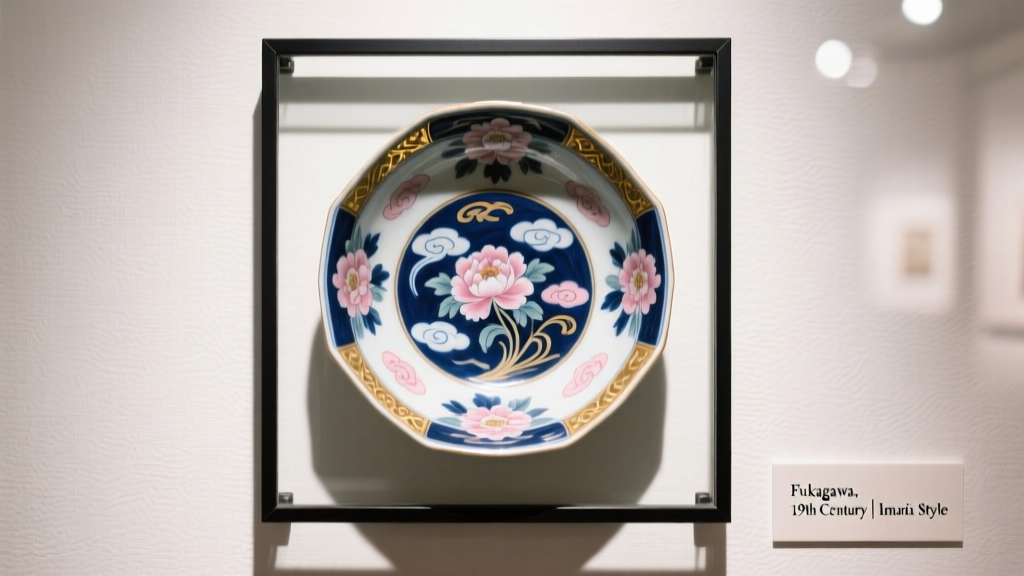
Imari Bowl, Octagonal Fukagawa Style, 19th Century — Authentication, Provenance, and Market Value of a 5-Inch Japanese Export Ceramic

Paris Vase: Woman and Small Child in Garden with Gargoyle Handles — Authentication, Provenance, and Market Analysis of a Rare Art Deco Pair
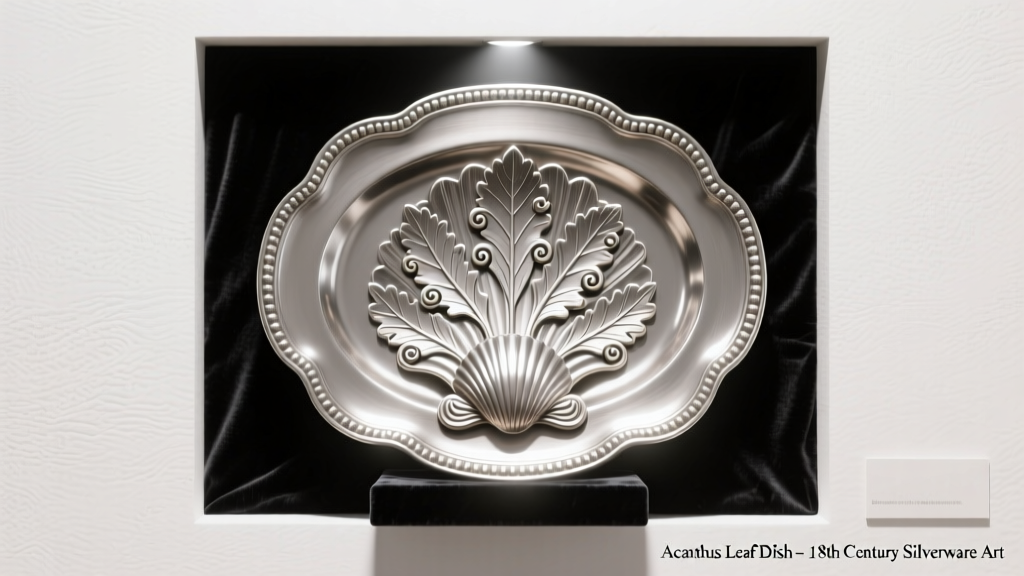
Authentication and Market Analysis of a Silver-Plate Dish: Acanthus Leaf, Shell, and Gadroon Motifs in a 10⅜-Inch Serving Piece
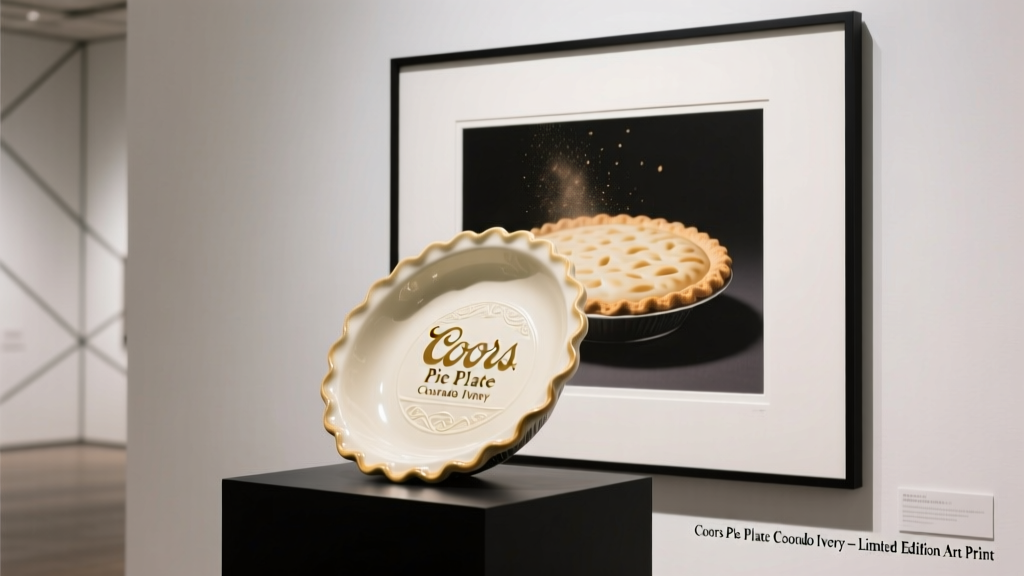
Coors Pie Plate 'Colorado Ivory': Authentication, Market Value, and Historical Context of a Mid-Century Ceramic Icon
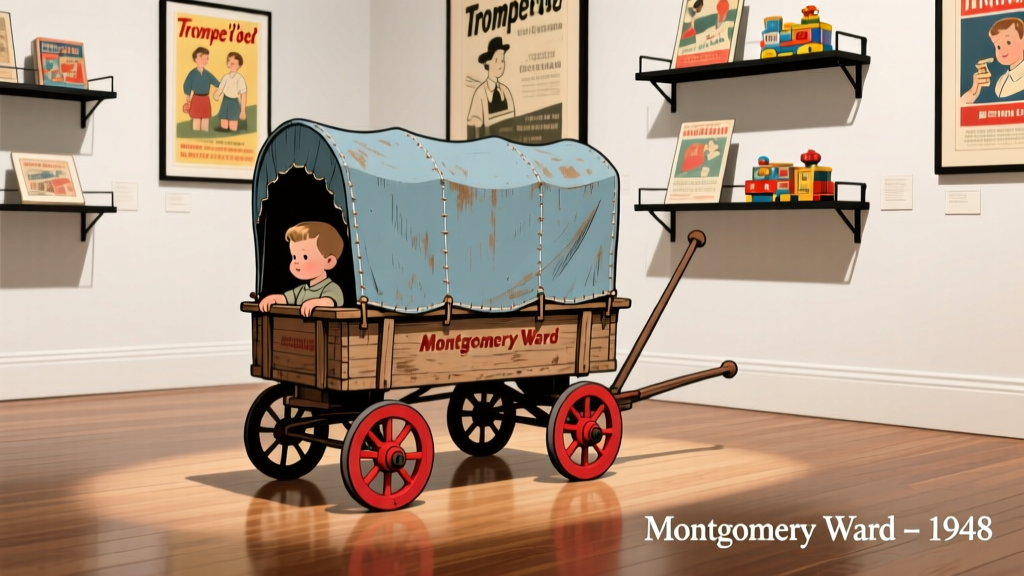
Child’s Wagon from Montgomery Ward: Identification, Value Drivers, and Authentication Protocol for Collectors
Satin Glass Syrup Cone Pattern Pink: Authentication, Market History, and Material Analysis
Lamps, Whale Oil, Dietz: Decoding the Buggy Font Era of American Lighting Design (1860–1920)