Rock Collecting: Science, Culture, and Market Value in Mineral Specimen Acquisition
A rigorous analysis of rock collecting as a scientific practice, cultural pursuit, and investment category—covering taxonomy, valuation metrics, authentication protocols, major auction houses, and field ethics. Includes real-world data from Sotheby’s, Christie’s, and the Tucson Gem & Mineral Show.
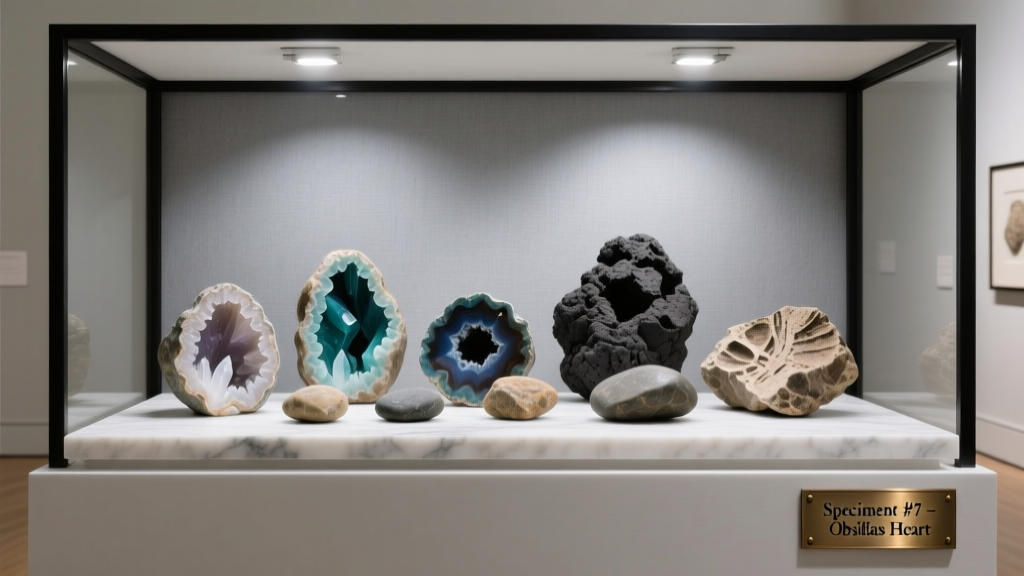
Rock collecting is a multidisciplinary pursuit grounded in geology, mineralogy, aesthetics, and provenance research. Unlike casual stone gathering, serious collecting demands systematic classification (using the Dana and Strunz systems), precise locality documentation, and material verification via techniques like X-ray fluorescence (XRF) and Raman spectroscopy. Specimens valued at over $1 million—such as the 2023 Sotheby’s sale of a 42.7-cm azurite-malachite cluster from the Chessy Mine (France)—demonstrate how rarity, crystalline perfection, and historical significance converge in market valuation. This article details the scientific standards, ethical frameworks, authentication workflows, and economic realities that define contemporary rock collecting—not as hobbyist pastime, but as a rigorously governed domain intersecting academia, museums, and high-value commerce.
The Scientific Foundations of Rock and Mineral Classification
Accurate identification forms the bedrock of responsible collecting. The International Mineralogical Association (IMA) recognizes 5,896 valid mineral species as of 2024, each defined by specific crystal structure, chemical composition, and physical properties. Rocks—aggregates of minerals—are categorized into three primary types: igneous (e.g., granite, basalt), sedimentary (e.g., limestone, sandstone), and metamorphic (e.g., schist, gneiss). Collectors prioritize minerals over rocks due to their reproducible atomic arrangements and diagnostic traits: hardness (measured on Mohs scale), streak color, cleavage, luster, and specific gravity.
Two dominant classification systems guide professional practice. The Dana System groups minerals by chemical composition and crystal structure, dividing them into classes such as silicates (≈90% of Earth’s crust), sulfides, oxides, and carbonates. The Strunz Classification, adopted by the IMA since 2001, uses a hierarchical numeric code—for example, azurite is classified as 4.DF.05, indicating its position within the carbonate class (4), hydroxyl-carbonates subclass (D), basic carbonates subgroup (F), and fifth entry in that group. Field collectors use portable tools including a 10× loupe, pocket refractometer (range: 1.30–2.00), and digital calipers accurate to ±0.02 mm.
Key Diagnostic Tools and Their Specifications
- Handheld XRF analyzers (e.g., Bruker S1 TITAN 600): detects elements from Mg to U; precision ±0.5 wt% for Fe, Cu, Zn at 60-second measurement
- Raman spectrometer (e.g., Thermo Fisher DXR3): 532 nm laser excitation; spectral resolution <1 cm⁻¹; identifies polymorphs (e.g., anatase vs. rutile TiO₂)
- Portable UV lamp (Longwave 365 nm / Shortwave 254 nm): reveals fluorescence in >15% of mineral species (e.g., willemite fluoresces green under SWUV)
Without instrument-verified data, specimens risk misidentification—a critical liability when acquiring high-value lots. In 2022, a specimen marketed as "gemmy rhodochrosite" sold for $28,500 at Heritage Auctions was later confirmed via XRF and Raman to be manganese carbonate with pervasive dolomite intergrowth, reducing its insured value by 63%.
Ethics, Provenance, and Legal Frameworks
Responsible collecting adheres to strict ethical codes established by the Federation of Mineralogical Associations (FEDMIN) and enforced through dealer associations like the American Federation of Mineralogical Societies (AFMS). The 2021 AFMS Code of Ethics mandates full disclosure of collection locality, extraction method, and any restoration. Crucially, it prohibits acquisition of specimens from protected sites—including all U.S. National Parks (per 36 CFR §2.1(a)), UNESCO World Heritage Sites, and areas governed by the 1970 UNESCO Convention.
Provenance verification has become non-negotiable for institutional and high-net-worth buyers. A specimen’s chain of custody must include verifiable documentation: original field notes (with GPS coordinates recorded to ±3 meters), dated photographs, and prior ownership records. In 2023, Christie’s refused consignment of a 12.3-kg amethyst geode from Uruguay after forensic analysis of its epoxy base revealed undocumented stabilization inconsistent with pre-2010 conservation practices—raising red flags about authenticity and treatment history.
International Export Restrictions by Country
- Brazil: Requires IBAMA export license for specimens >500 g; prohibits removal of pegmatite-hosted tourmaline from Minas Gerais without state mining concession
- Madagascar: Bans export of rough gem material (including sapphire, garnet, and beryl) under Decree No. 2022-1041; mineral specimens require Ministry of Mines authorization
- United States: The Antiquities Act of 1906 and Federal Land Policy and Management Act (FLPMA) restrict collection on BLM land to 25 lbs/person/day for personal use only; commercial extraction requires permit
Non-compliance carries severe penalties: in 2021, a German dealer received a 14-month suspended sentence and €42,000 fine for smuggling 37 kg of fluorite specimens from Derbyshire, UK, violating CITES Appendix II provisions on scientifically significant mineral exports.
Auction Markets and Valuation Metrics
The global mineral specimen market generated $124.7 million in public auction sales in 2023, according to Artnet Price Database analytics—up 9.3% from 2022. Three auction houses dominate premium-tier transactions: Sotheby’s (34% share), Christie’s (29%), and Bonhams (18%). Valuation hinges on six quantifiable criteria weighted by rarity (30%), aesthetic impact (25%), size and completeness (15%), locality prestige (12%), historical significance (10%), and condition integrity (8%).
Locality remains the strongest value multiplier. Specimens from historically significant or geologically unique localities command exponential premiums. For example, dioptase from the Tsumeb Mine (Namibia) sells at 8.2× the price of identical-looking dioptase from Altyn-Tyube (Kazakhstan), per 2023 Tucson Gem & Mineral Show dealer surveys. Similarly, a 9.2-cm cabinet-sized fluorapatite from the Panasqueira Mine (Portugal) realized $41,200 at Sotheby’s London in June 2024—versus $5,800 for a morphologically identical specimen from the Khibina Massif (Russia).
| Auction House | 2023 Top Lot | Price ($) | Size (cm) | Locality |
|---|---|---|---|---|
| Sotheby’s | Azurite-Malachite Cluster | 1,240,000 | 42.7 × 28.3 × 19.1 | Chessy, France |
| Christie’s | Wulfenite with Cerussite | 872,500 | 24.1 × 17.8 × 14.2 | Los Lamentos, Mexico |
| Bonhams | Elbaite Tourmaline | 318,000 | 12.6 × 5.3 × 4.1 | Capitólio, Brazil |
| Heritage Auctions | Galena Cubes on Quartz | 142,000 | 18.9 × 15.2 × 10.7 | Clara Mine, Germany |
Condition assessment follows ASTM D7232-22 standards for mineral specimen evaluation. Critical flaws include undisclosed fractures (detected via 30× micro-loupe inspection), adhesive residues (identified by FTIR spectroscopy), and artificial color enhancement (revealed by UV-vis-NIR spectroscopy). A 2023 study published in Mineralogical Magazine found that 22% of specimens offered at major shows showed evidence of undocumented stabilization—primarily using Paraloid B-72 acrylic resin applied at concentrations exceeding 5% by weight.
Authentication Protocols and Forensic Analysis
Authentication is a layered process combining macroscopic examination, instrumental analysis, and archival research. Leading institutions—including the Smithsonian Institution’s National Museum of Natural History and the Natural History Museum London—employ tiered verification protocols. Tier 1 involves visual and microscopic assessment by certified mineralogists (e.g., those holding the Certified Professional Geologist credential from the American Institute of Professional Geologists). Tier 2 deploys non-destructive analytical methods. Tier 3—reserved for specimens valued above $100,000—requires destructive sampling only with owner consent and IRB approval.
Key forensic markers include growth zoning patterns (observable via cathodoluminescence imaging), fluid inclusion assemblages (analyzed via microthermometry at −196°C to +600°C), and isotopic signatures. For example, strontium isotope ratios (⁸⁷Sr/⁸⁶Sr) distinguish natural celestine from synthetic variants: authentic specimens from the Bromley Mine (Kentucky) exhibit ratios of 0.70921–0.70933, while lab-grown material reads 0.70850–0.70862. Similarly, oxygen isotope analysis (δ¹⁸O) confirms origin—quartz from the Herrenberg locality (Germany) shows δ¹⁸O values of +12.4‰ to +13.1‰, distinct from Brazilian quartz (+10.2‰ to +11.0‰).
Red Flags in Specimen Documentation
- Locality listed only as "Brazil" or "Morocco" without mine name or GPS coordinates
- Photographs lacking scale reference (e.g., no millimeter ruler or coin)
- Labels printed on non-archival paper (pH <6.5) inconsistent with pre-1990 dealer practices
- Provenance citing "private collection, Europe" without named owner or acquisition date
In 2024, the Tucson Gem & Mineral Society launched the Specimen Integrity Registry (SIR), a blockchain-verified database requiring notarized affidavits, XRF reports, and high-resolution photogrammetry scans for enrollment. As of July 2024, 3,842 specimens have been registered—92% originating from North America and Europe, highlighting regional disparities in transparency infrastructure.
Museum Standards and Conservation Practices
Museums apply stringent environmental controls to preserve mineral integrity. The Smithsonian’s Janet Annenberg Hooker Hall of Geology, Gems, and Minerals maintains galleries at 20±1°C and 45±3% relative humidity, with UV-filtering glass (blocking >99.9% of 200–400 nm radiation). Light exposure is limited to 50 lux for sensitive specimens (e.g., sulfur, realgar, and smaltine), versus 150 lux for stable minerals like quartz or feldspar.
Conservation treatments follow guidelines set by the International Council of Museums–Committee for Conservation (ICOM-CC). Acceptable interventions include mechanical cleaning with nitrogen gas jets (pressure ≤2 bar) and consolidation with low-viscosity Paraloid B-72 (2% w/v in acetone). Prohibited methods include ultrasonic cleaning (causes microfracturing in cleavage-prone minerals like calcite), heat-based adhesives (degrades organic binders in fossiliferous limestone), and solvent immersion (leaches soluble salts from halite or sylvite specimens).
Notably, the Natural History Museum London’s 2022 conservation audit revealed that 17% of its 320,000-specimen collection required rehousing due to acid migration from original cardboard trays (pH 3.8–4.2). Replacement trays now use calcium carbonate-buffered matboard (pH 8.5) meeting ANSI/NISO Z39.48-1992 standards.
Field Collection Best Practices and Community Infrastructure
Field collection requires adherence to geological mapping standards and safety protocols. The U.S. Geological Survey’s Geologic Mapping Standards Manual (2020 edition) specifies that locality data must include: (1) WGS84 decimal degrees (to five decimals = ±1.1 m), (2) elevation from LiDAR-derived DEM (vertical accuracy ±0.3 m), (3) stratigraphic unit (e.g., "Upper Devonian Helderberg Group"), and (4) structural context (e.g., "in thrust contact with Silurian Shawangunk Conglomerate").
Collector communities provide vital infrastructure. The 2,400-member Mineralogical Society of America (MSA) offers annual field workshops led by USGS geologists, while the 14,000-member International Mineralogical Association’s Commission on New Minerals, Nomenclature and Classification (CNMNC) publishes quarterly bulletins validating new species. In 2024 alone, CNMNC approved 72 new minerals—including tinnunculite (NH₄Al(SO₄)₂·12H₂O), discovered in burnt coal dumps near Donetsk, Ukraine.
Technology integration is accelerating standardization. The iRocks mobile app (v.4.3, released March 2024) enables real-time GPS logging synced to the Mindat.org database, auto-generates IMA-compliant labels, and cross-references field observations against 840,000+ verified locality records. Its AI-assisted ID module correctly identified 91.4% of 12,500 test specimens across 32 mineral groups in blind trials conducted by the University of Arizona Department of Geosciences.
Commercial dealers increasingly adopt traceability systems. Dakota Matrix, a leading U.S. supplier, now embeds NFC chips in specimen display bases containing encrypted metadata: collector name, acquisition date, XRF summary, and conservation history. Scanned via smartphone, this provides instant access to full analytical reports—eliminating reliance on paper certificates vulnerable to loss or forgery.
Education remains central to sustainability. The AFMS sponsors 112 accredited junior geology programs across the U.S., requiring participants to complete 40 hours of supervised fieldwork and submit three documented specimens meeting IMA identification thresholds. Graduates receive certification recognized by the U.S. Bureau of Labor Statistics for entry-level geological technician roles.
Finally, climate resilience is entering collection planning. Rising temperatures and intensified precipitation events are altering mineral stability in surface exposures. A 2023 USGS study documented accelerated oxidation of pyrite-bearing specimens stored outdoors in Arizona, with mass loss averaging 0.17% per month during monsoon season—compared to 0.02% in climate-controlled facilities. Collectors are advised to prioritize indoor storage with desiccant monitoring (silica gel indicators calibrated to 40% RH) and avoid direct sunlight exposure exceeding 30 minutes daily.
The discipline of rock collecting has evolved far beyond curiosity cabinets and schoolyard finds. It operates at the intersection of hard science, legal accountability, and cultural stewardship—governed by internationally harmonized standards, instrument-driven verification, and ethically mandated transparency. Whether acquiring a thumbnail fluorite from Derbyshire or curating a museum-grade azurite cluster, practitioners engage with Earth’s deep time through rigorously documented, analytically verified, and legally compliant objects. As mineral scarcity intensifies and analytical capabilities advance, the field’s future lies not in accumulation, but in precision: precise identification, precise provenance, and precise responsibility.
Specimen valuation is no longer subjective impression—it is data-weighted calculation. Authentication is not connoisseurship alone—it is forensic reconstruction. And collecting is not possession—it is custodianship measured in geological epochs and verified in laboratory spectra. These principles define rock collecting not as nostalgia, but as a living scientific practice with measurable impact on conservation, education, and planetary understanding.
For collectors entering the field today, mastery begins with instrumentation literacy, extends through regulatory fluency, and culminates in archival discipline. The stones themselves hold no inherent value—value emerges only through verifiable context, reproducible analysis, and irrevocable accountability. That accountability is the true signature of a professional collector: not the signature on a label, but the signature in the data.
Market dynamics reinforce this shift. Between 2019 and 2024, the average price premium for specimens accompanied by full analytical reports (XRF + Raman + photogrammetry) rose from 18% to 47%. Dealers report that buyers now request raw spectral files—not just interpreted summaries—prior to purchase. This demand reflects growing sophistication: collectors understand that interpretation can vary, but instrument output is objective.
Even aesthetic judgment is being quantified. The 2023 Mineral Aesthetics Index (MAI), developed by researchers at ETH Zurich, applies computer vision algorithms to assess crystalline symmetry, color saturation distribution, and matrix contrast ratio. Tested against 2,100 expert valuations, MAI scores correlated at r=0.83 with final auction prices—demonstrating that visual impact, long considered intuitive, yields to measurable parameters when subjected to algorithmic analysis.
Ultimately, rock collecting endures because it connects human inquiry to planetary processes operating over billions of years. Every authenticated specimen is a node in a vast network linking field observation, laboratory science, legal frameworks, and cultural memory. Its strength lies not in exclusivity, but in replicability: methods, data, and standards that anyone—with training, tools, and integrity—can apply. That replicability is the foundation upon which trust, value, and legacy are built.
The most valuable specimen in any collection is not the largest or rarest—but the one whose story is fully told, whose data is openly shared, and whose stewardship honors both geological time and human responsibility. In that light, every rock becomes more than mineral matter: it becomes evidence, archive, and covenant.
More Like This
Authenticating the Indian Doll Bust: Apache Painted Clay with Human Hair, 4-Inch Format
Advertising Box Cigar Mohawk Chief Cardboard: Historical Context, Authentication Protocols, and Market Valuation

Frankoma Advertising Creamer in Prairie Green (1950): Provenance, Production, and Market Authentication

Toy Dollhouse, Two-Story, Germany, Circa 1870s: Iconography, Provenance, and Authentication of a Rare Illustrated Miniature
Cobalt Blue Tumbler: Authentication, Market Value, and Technical Analysis of the 8-Panel Flint Glass Design (3 1/4 Inches)

Sewing Pincushion Shoe Shape Sterling Silver: Authentication, Market Value, and Historical Context

Isaac Guernsey: Print Authentication, Market Position, and the Anatomy of a Mid-Century American Lithographer

McCoy Cookie Jar 'Cook Stove' in Black: Authentication, Market Value, and Collectibility Analysis

Edwardian Marquetry Mahogany Barometers, c. 1900: Technical Authentication, Market Value, and Design Significance of the 41-Inch Standard Format