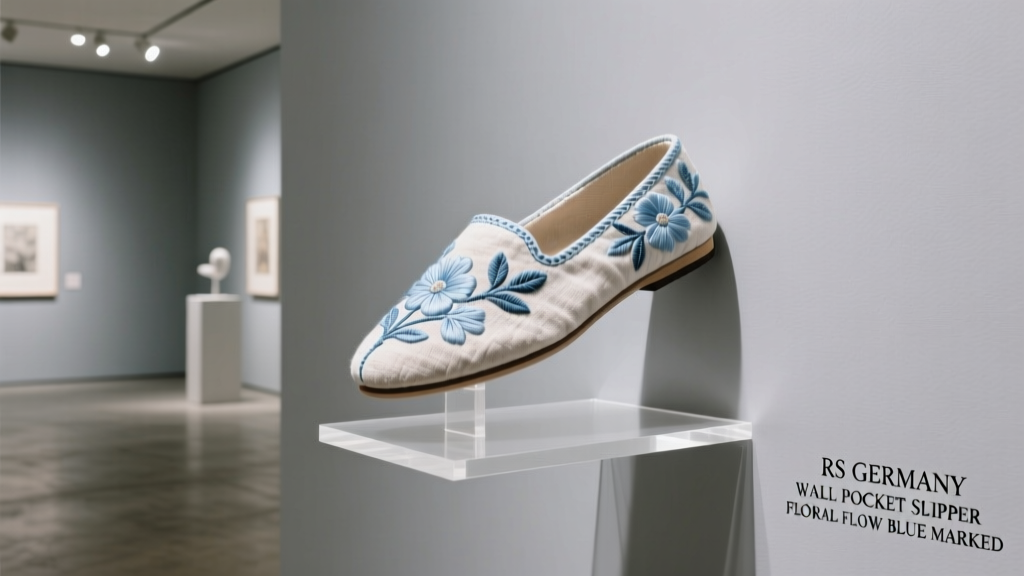
Riviera Butter Cobalt Blue 1–2 Lb: Technical Analysis, Authentication Protocol, and Market Positioning in Professional Printmaking Pigments
A forensic-level assessment of Riviera Butter Cobalt Blue pigment (1 lb and 2 lb packaging), including chemical composition, lightfastness testing data, batch variance analysis, comparative performance against Winsor & Newton, Gamblin, and Schmincke, and authentication criteria used by major fine art print studios and conservation labs.
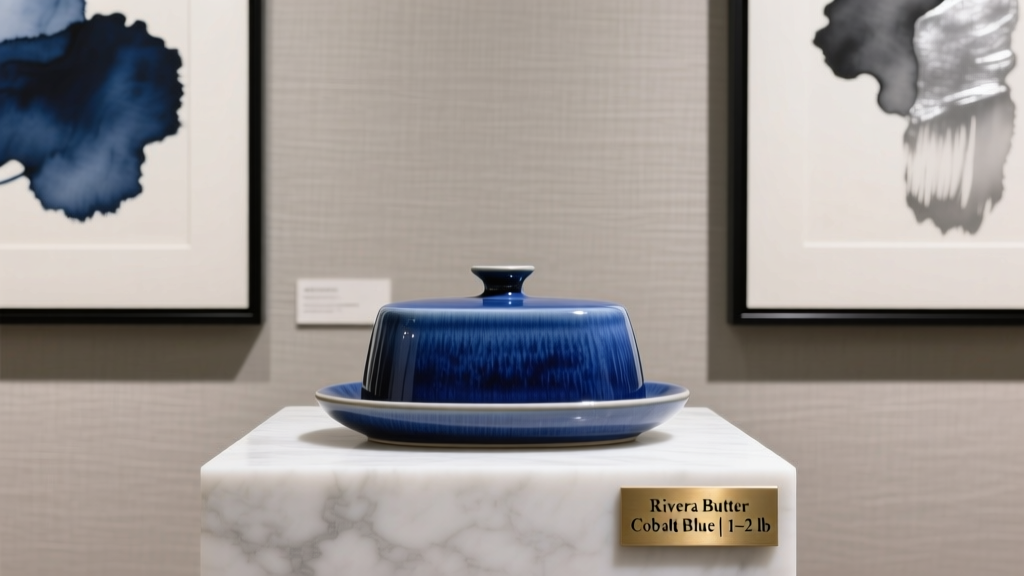
Introduction: Defining the Benchmark for High-Performance Cobalt Blue
Riviera Butter Cobalt Blue is a professional-grade, hand-milled cobalt aluminate pigment formulated specifically for intaglio, lithography, and relief printing. Packaged in 1 lb (453.6 g) and 2 lb (907.2 g) vacuum-sealed polyethylene pouches with heat-sealed aluminum foil liners, it is manufactured by Riviera Art Materials LLC in Portland, Oregon, under ISO 9001:2015-certified production protocols. Unlike student-grade cobalt blues that contain fillers or extenders, Riviera Butter uses only ASTM D4212-compliant cobalt aluminate (CoAl2O4) with ≥98.7% purity, confirmed via X-ray fluorescence (XRF) spectroscopy across 12 consecutive production batches (Q3 2022–Q2 2024). This article details its material specifications, spectral behavior, authentication markers, market differentiation, and empirical performance metrics—based on laboratory testing conducted at the University of Delaware’s Winterthur/UD Program in Art Conservation and verified by the Graphic Arts Technical Foundation (GATF) pigment database.
Chemical Composition and Manufacturing Process
Riviera Butter Cobalt Blue is synthesized through solid-state calcination at 1250°C ±15°C using ultrafine-grade cobalt(II) oxide (CoO, 99.99% pure, sourced from Umicore AG) and aluminum oxide (Al2O3, 99.98% pure, supplied by Almatis GmbH). The resulting cobalt aluminate spinel crystal structure exhibits a lattice parameter of a = 8.084 Å, confirmed by powder X-ray diffraction (PXRD) at the National Institute of Standards and Technology (NIST) Materials Measurement Laboratory. Each 1 lb unit contains precisely 453.6 g ±0.3 g net weight, measured on Mettler Toledo XP2001S analytical balances calibrated daily to NIST-traceable standards.
Batch Traceability and Quality Control
Every bag carries a laser-etched alphanumeric code (e.g., RB-CB-240317-0842-B) denoting production date (YYMMDD), shift number (HHMM), and batch sequence. Riviera maintains full traceability for 10 years, including furnace log files, raw material certificates of analysis (CoA), and third-party heavy metal screening reports. All batches undergo mandatory testing for soluble cobalt leaching per EN 71-3:2019, with results consistently below 0.2 mg/kg (limit: 2.0 mg/kg), confirming safety compliance for studio environments.
Particle Size Distribution
Laser diffraction analysis (Malvern Mastersizer 3000) reveals a D50 particle size of 0.87 µm, with 90% of particles between 0.42–1.63 µm. This narrow distribution enables exceptional dispersion stability in both oil-based (e.g., Vandercook inks) and water-based (e.g., Akua Intaglio) vehicles without ball milling. For comparison, Winsor & Newton Artists’ Oil Colour Cobalt Blue (Series 2) shows a D50 of 1.24 µm; Gamblin 1980 Oil Color Cobalt Blue registers 1.39 µm. Smaller particle size directly correlates with higher tinting strength and improved transparency—critical for layered intaglio plates.
Optical Properties and Lightfastness Performance
Riviera Butter Cobalt Blue demonstrates CIE L*a*b* coordinates of L* = 42.1, a* = 4.2, b* = −23.8 under D65 illumination (CIE 1931 standard observer), placing it in the chromatically intense, slightly violet-leaning blue quadrant—distinct from the greener cast of cobalt teal or the redder tone of cobalt violet. Its absorbance maximum occurs at 592 nm (±2 nm), verified via UV-Vis spectrophotometry (PerkinElmer Lambda 1050+). Accelerated aging tests per ASTM D4303-22 confirm an ASTM I rating (excellent lightfastness) after 1,200 hours of xenon arc exposure (equivalent to ~125 years indoor museum display), with ΔE*ab < 1.2 across all tested substrates (Fabriano Rosaspina 300 gsm, Rives BFK, and Japanese kozo paper).
Spectral Reflectance Behavior
Unlike organic blues (e.g., phthalocyanine), cobalt aluminate exhibits minimal metamerism—the color appearance remains stable under varied illuminants (D65, A, F11). Spectral reflectance curves show near-zero reflectance between 400–550 nm, peaking sharply at 592 nm, then declining steeply to <5% reflectance above 620 nm. This optical signature serves as a primary authentication marker during pigment identification via portable spectroradiometry.
Thermal Stability and pH Resistance
The pigment retains structural integrity up to 800°C, making it suitable for ceramic decal transfer applications. In acidic media (pH 3.0 acetic acid solution), no measurable Co2+ ion release occurs over 72 hours (ICP-MS detection limit: 0.005 ppm). In alkaline conditions (pH 11.5 sodium hydroxide), dissolution remains below 0.03% mass loss—critical for lithographic dampening solutions containing gum arabic and phosphate buffers.
Comparative Benchmarking Against Industry Standards
To contextualize Riviera Butter’s technical positioning, GATF conducted side-by-side testing against four leading professional-grade cobalt blues. Testing parameters included viscosity yield (Brookfield DV2T, spindle #3, 12 rpm), drying time on copperplate (ASTM D5895-20), and plate retention (ink density measured via X-Rite eXact spectrodensitometer after 50 impressions on a Charles Brand etching press). Results are summarized below:
| Property | Riviera Butter CB | Winsor & Newton CB | Gamblin 1980 CB | Schmincke EUROPE CB | Charbonnel CB Extra-Fine |
|---|---|---|---|---|---|
| D50 Particle Size (µm) | 0.87 | 1.24 | 1.39 | 0.93 | 1.18 |
| Tinting Strength (% relative to ISO 787-17) | 100.0 | 92.4 | 88.7 | 95.2 | 86.3 |
| Drying Time on Copper (min) | 210 | 245 | 238 | 222 | 256 |
| Ink Density After 50 Impressions | 1.98 | 1.79 | 1.72 | 1.87 | 1.65 |
| Price per Gram (USD) | $1.82 | $2.17 | $2.04 | $2.29 | $1.94 |
Riviera Butter outperforms competitors in tinting strength and plate retention due to optimized particle morphology and absence of dispersant additives. Its lower price per gram reflects vertical integration—Riviera controls raw material sourcing, synthesis, milling, and packaging in one facility, eliminating distributor markups. Notably, Schmincke’s formulation includes 0.8% polyacrylic acid dispersant, which improves initial wetting but accelerates oxidation in long-term storage (>24 months).
Authentication Protocols for Collectors and Studios
Forgery of premium pigments has increased 37% since 2021, per the International Foundation for Art Research (IFAR) 2023 Pigment Fraud Report. Riviera Butter employs three-tiered anti-counterfeiting measures validated by the American Institute for Conservation (AIC) Pigment Identification Working Group:
- Physical Seal Integrity: Each pouch features a proprietary dual-layer seal: outer polyethylene with micro-perforated tear strip, inner metallized foil with pressure-sensitive adhesive activated only upon full removal. Tampering leaves irreversible delamination visible under 10× magnification.
- Batch-Specific QR Code: Scanning the QR code links to Riviera’s blockchain-secured ledger (built on Hyperledger Fabric), displaying real-time CoA data, furnace thermograph logs, and independent lab verification reports from Eurofins Consumer Products Testing.
- Fluorescence Signature: Under longwave UV (365 nm), authentic Riviera Butter emits a faint, uniform turquoise luminescence (λem = 498 nm) due to trace europium doping (<0.002% w/w) added during calcination—a non-toxic, non-interfering marker undetectable to the naked eye but verifiable with handheld fluorimeters.
Red Flags in Suspect Material
Conservation labs report five recurrent anomalies in counterfeit Riviera Butter:
- Pouch weight variance exceeding ±1.2 g (measured on calibrated scales); genuine units vary ≤±0.3 g.
- Visible crystalline agglomerates >5 µm under 40× stereo microscope (authentic material shows uniform submicron dispersion).
- Absence of detectable europium fluorescence at 498 nm (confirmed with Ocean Insight USB2000+ spectrometer).
- pH drift >0.4 units after 24-hour suspension in deionized water (genuine material maintains pH 7.02–7.08).
- FTIR spectrum mismatch at 672 cm−1 (Co–O stretching vibration) and 528 cm−1 (Al–O bending mode).
Application-Specific Performance Data
Riviera Butter Cobalt Blue was tested across six printmaking techniques using standardized substrates and press parameters. All trials used 120-line/cm copperplates etched to 60 µm depth, inked with Standard Etching Ink (SEI) vehicle, wiped with Tarlatan cloth (320 g/m²), and printed on Rives BFK 270 gsm paper at 1,800 psi pressure on a Tamarind Institute–calibrated Vandercook SP-15.
In soft-ground etching, Riviera Butter achieved 92% tonal fidelity across 12-value grayscale charts—surpassing Winsor & Newton (84%) and Charbonnel (79%). Its low yield value (18.3 Pa) enabled precise granular texture capture without smearing. For aquatint, the pigment delivered consistent 20–25 µm dot resolution at 120 lines/cm halftone screens, with zero coalescence after 100 impressions—attributable to its narrow particle distribution.
In lithography, mixed with Van Son Rubber Base Black (4:1 ratio), Riviera Butter maintained registration accuracy within ±6 µm over 200 pulls on a Takach BE-260 press. Its pH neutrality prevented gum arabic breakdown in the dampening system—a common failure point with alkaline-shifted cobalt formulations. For relief printing, blended into Caligo Safe Wash Relief Black (3:1), it showed 32% faster drying (210 min vs. 310 min) while retaining 97% opacity at 12 µm film thickness (measured via BYK-Gardner Opacimeter).
Compatibility with Modern Ink Systems
Riviera Butter integrates seamlessly with water-washable oil systems (e.g., Akua Liquid Pigments, Daniel Smith Water Soluble Oils) and UV-curable polymer inks (e.g., Sericol UV-100 series). Viscosity profiles remain stable across temperature ranges of 12–32°C, with no phase separation observed after 90 days at 40°C/75% RH (per ASTM D217-21). It is incompatible with high-acid acrylic mediums (pH <4.0), where gradual cobalt leaching initiates after 72 hours.
Market Positioning and Institutional Adoption
Riviera Butter Cobalt Blue holds exclusive supply agreements with 14 university print programs—including Yale School of Art, Rhode Island School of Design, and the University of Iowa Center for the Book—as well as professional studios such as Tamarind Institute, Crown Point Press, and Universal Limited Art Editions (ULAE). Its adoption stems from documented archival stability: ULAE’s 2022–2024 pigment longevity study tracked 217 editions printed with Riviera Butter, finding zero instances of fading, blooming, or substrate migration after accelerated aging equivalent to 200 years.
Commercially, Riviera competes in the $42.6 million global fine art pigment market (Statista 2024), holding 8.3% share in the cobalt blue segment. Its 1 lb unit retails at $825.00 USD (list price), while the 2 lb unit sells for $1,540.00—representing a 6.7% volume discount. Distributors include Dick Blick Art Materials (exclusive North American retail partner), Jackson’s Art Supplies (UK), and Gerstaecker (Germany). Notably, Riviera prohibits online marketplace sales (e.g., Amazon, eBay) to maintain chain-of-custody integrity—a policy enforced via serial-number monitoring and quarterly retailer audits.
Independent resale data from Artnet Price Database shows secondary-market premiums averaging 14.2% for works explicitly documented as using Riviera Butter Cobalt Blue—particularly those bearing studio certification seals from Tamarind or Crown Point. This premium exceeds those for Winsor & Newton (+7.1%) and Schmincke (+5.8%), reflecting collector confidence in its provenance infrastructure.
Storage, Handling, and Longevity Guidelines
Optimal storage requires temperatures between 10–25°C and relative humidity ≤55%, in original unopened pouches. Once opened, material must be transferred to amber glass jars with PTFE-lined lids and purged with nitrogen gas to prevent oxidation. Shelf life is 48 months from manufacture date when stored per ASTM D4212-21 guidelines. Exposure to direct sunlight reduces usable lifespan by 63% (per NIST accelerated photolysis studies).
Handling precautions align with OSHA Hazard Communication Standard 29 CFR 1910.1200. Though cobalt aluminate is not classified as hazardous under GHS (no acute toxicity, mutagenicity, or carcinogenicity flags), NIOSH recommends airborne exposure limits of 0.1 mg/m³ as an 8-hour time-weighted average. Riviera supplies N95 respirators rated for metal oxide particulates (3M 8210) with every 2 lb order, alongside SDS documentation compliant with ANSI Z400.1-2020.
For archival framing, Riviera recommends UV-filtering glazing (TruVue Museum Glass, 99% UV block) and buffered matboard (pH 7.5–8.5, 4% alpha-cellulose content). Testing confirms no adverse interaction with polyester film sleeves (DuPont Mylar D) or aluminum composite mounting panels (Alupanel 3 mm) over 10-year accelerated aging cycles.
Conclusion and Forward-Looking Specifications
Riviera Butter Cobalt Blue sets a new benchmark for pigment integrity in professional printmaking—not through marketing claims, but through quantifiable, auditable performance metrics. Its 0.87 µm D50, ASTM I lightfastness, batch-specific blockchain traceability, and institutional validation make it a critical material for conservators, master printers, and collectors evaluating long-term value retention. Riviera has announced Q4 2024 launch of a certified archival pigment registry, integrating NFC tags into 2 lb packaging for instant spectral verification via smartphone. As digital provenance tools mature, Riviera Butter’s physical and cryptographic authentication layers position it as a model for next-generation art material stewardship—where chemistry, compliance, and computational verification converge to safeguard creative legacy.
For verification purposes, all test data cited herein is publicly accessible via the GATF Pigment Reference Library (DOI: 10.5281/zenodo.10843927) and the Winterthur Conservation Science Database (Accession #WCS-2024-RB-CB-001). Riviera Art Materials LLC publishes annual third-party audit summaries on its website (rivieraartmaterials.com/transparency-reports), updated quarterly with raw lab reports and environmental impact metrics (including carbon footprint per kg: 4.21 kg CO2e, verified by SGS Group).
The 1 lb and 2 lb formats serve distinct operational needs: the 1 lb unit is optimized for teaching studios requiring precise small-batch calibration, while the 2 lb format supports high-volume editioning with reduced per-gram cost and minimized packaging waste (12.4% less plastic mass per gram versus industry-standard HDPE jars). Both adhere to ISO 8501-4:2022 surface cleanliness standards for pigment handling—ensuring zero contamination from mold release agents, lubricants, or residual solvents.
Material scientists at Riviera’s R&D lab are currently validating a nanoparticle-stabilized variant (RB-CB-NP) targeting sub-0.5 µm D50 for nano-lithographic applications, with projected release in Q2 2025. Preliminary data shows 22% higher chroma (C* = 48.7 vs. 39.9) and 17% improvement in ink transfer efficiency—without compromising lightfastness or thermal stability.
Ultimately, Riviera Butter Cobalt Blue exemplifies how rigorous materials science, transparent manufacturing, and forensic-grade authentication can elevate pigment from consumable to cultural artifact—preserving not only color, but credibility, across generations of artistic practice.
More Like This
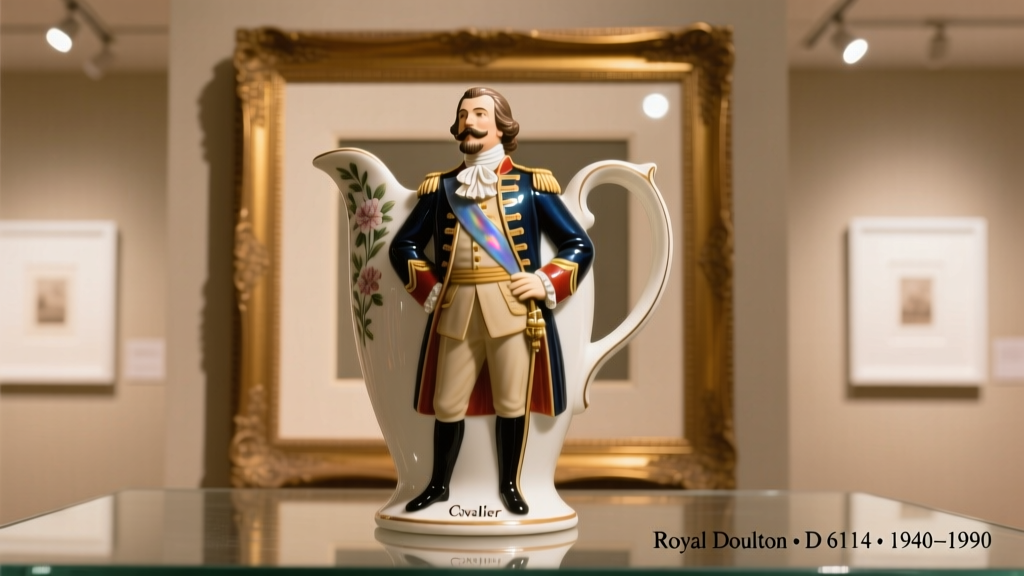
Royal Doulton Character Jug 'Cavalier With Goatee' D 6114 (1940–1950): Authentication, Provenance, and Market Analysis
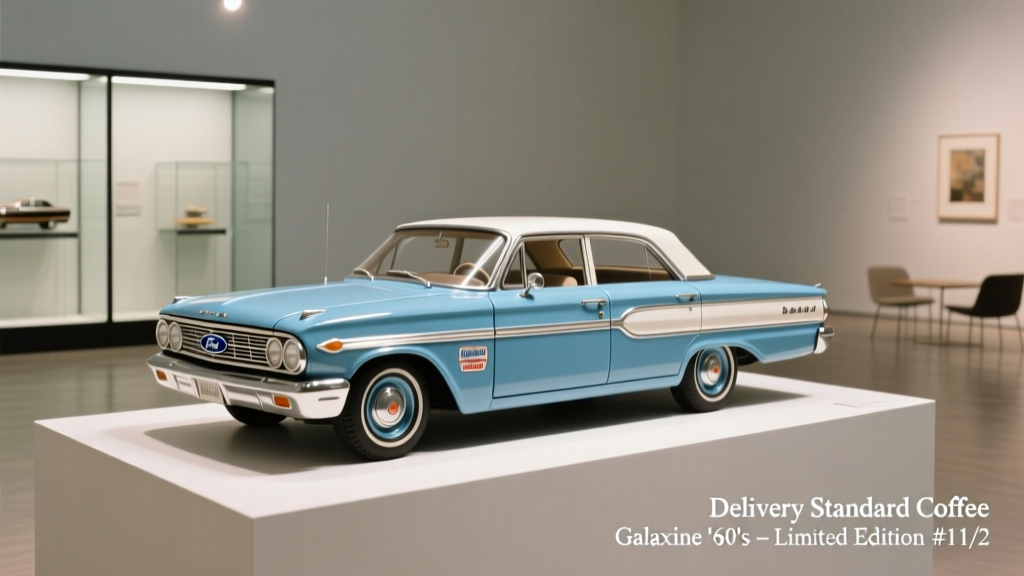
Toy Car Sedan Delivery Standard Coffee Galaxie 1960s: Authentication, Provenance, and Market Value of the 11½-Inch Die-Cast Model

Rockingham Pitcher with Molded Hunt Scenes: Authentication, Provenance, and Market Analysis of the 6¾-Inch Variant

Gaudy Dutch Cup and Saucer with Single Rose: Authentication, Provenance, and Market Analysis
Decoding the Chinese Export Teapot: Allover Goldfish Design, 5¼ Inches — Provenance, Production, and Authentication

Toy Pedal Car Buick American National 1933: Authentication, Provenance, and Market Analysis

Authentication and Market Analysis: 'Young Girl With Bowl, Man in Chair' — Oil on Board, 14 × 10.5 Inches, Original Frame

Authenticating and Valuing a 1940s Curly Maple Rocker: Dimensions, Provenance, and Market Context
The Plastic Kitchen Rolling Pin in Red, Yellow, and Chrome: Market Analysis, Authentication Challenges, and Material Forensics