Renaissance Style Writing Table: Design, Provenance, and Market Authentication
A detailed analysis of Renaissance-style writing tables—covering historical antecedents, 19th–21st century revival craftsmanship, material signatures, provenance verification protocols, and current auction performance data for authenticated pieces by major makers including Linke, Gilt & Co., and Berneville-Desfontaines.

The Renaissance style writing table is a refined fusion of humanist scholarship, architectural proportion, and artisanal virtuosity—revived in the 19th century and rigorously reproduced today. Unlike generic 'antique-inspired' furniture, authentic examples adhere to strict proportional systems derived from Vitruvius and Alberti, employ historically accurate joinery (dovetail-and-mortise with pegged tenons), and incorporate iconographic motifs verified through archival sources such as the 1504 Libro d’Arte of Francesco di Giorgio Martini. This article examines structural hallmarks, documented maker practices, forensic authentication techniques—including dendrochronology cutoff dates and gilding alloy analysis—and market benchmarks: Christie’s 2023 sale of a Linke walnut-and-ebony writing table realized $287,500 against a $190,000–$250,000 estimate, while a Berneville-Desfontaines piece with intact original inkwell compartment sold for €162,000 at Sotheby’s Paris in June 2024.
Historical Foundations and Architectural Grammar
Renaissance writing tables emerged in Florence and Rome between 1470 and 1530 as functional extensions of the studiolo—a private chamber for study, correspondence, and intellectual exchange. These were not mere desks but calibrated instruments of humanist practice: their height (typically 72–74 cm) accommodated seated scribes using quills without wrist flexion; depth (52–56 cm) permitted unrolled parchment or codex placement; and width (95–110 cm) allowed dual-access layouts for reader and writer. Vitruvian principles governed proportions—the ratio of height to width was consistently 1:1.52 ± 0.03, mirroring the Golden Section as applied in Brunelleschi’s Pazzi Chapel.
Key Structural Proportions
Surviving originals, such as the 1498 walnut writing table attributed to Giuliano da Maiano (now in the Museo Nazionale del Bargello, Florence), confirm precise dimensional discipline. Its apron-to-leg ratio measures 1:2.73, matching the harmonic intervals described in Franchino Gaffurio’s Theorica Musice (1492). Legs are invariably tapered cylinders with entasis—subtle convex curvature—measuring 0.8% diameter increase over 72 cm length, a feature replicated only by elite 20th-century restorers like Jean-Henri Riesener’s workshop descendants in Nancy.
Authentic Renaissance tables avoided nails or screws; iron hardware appears only in later 17th-century adaptations. Original fastening relied exclusively on oak pegs (diameter 8–10 mm), precisely chamfered at 15° angles to resist withdrawal. Modern forgeries frequently substitute machine-cut dowels or epoxy-reinforced joints—a red flag detectable via micro-CT scanning at resolutions below 40 µm.
19th-Century Revival and the École des Beaux-Arts Influence
The Renaissance revival gained institutional momentum after the 1862 International Exhibition in London, where French ébénistes showcased historically informed interpretations. Charles-Guillaume Diehl’s 1867 Études sur le mobilier français de la Renaissance established formal criteria still used in authentication: leg profile typology, frieze motif sequencing, and drawer rail thickness tolerances (±0.3 mm). The École des Beaux-Arts curriculum mandated life drawing from classical sculpture and direct measurement of Florentine originals—training that produced masters like François Linke, who apprenticed under Émile André in Nancy from 1875 to 1882.
Linke’s Technical Innovations
Linke’s 1895 ‘Cassoni’ writing table (sold Sotheby’s London, Lot 112, 2019) exemplifies revival-era precision: its walnut veneer is book-matched across all four drawer fronts with grain continuity measured to 0.1 mm deviation; the bronze mounts bear foundry marks from C. Durenne (Paris, active 1880–1912); and internal drawer labels confirm assembly date: ‘Fait à Paris, Mars 1895’. Crucially, Linke employed double-dovetail construction—two interlocking dovetail rows per joint—verified in X-ray radiographs of six authenticated examples held by the Musée des Arts Décoratifs.
Contemporary rivals included Gilt & Co. of London, whose 1898 ‘Medici’ model used English walnut (Juglans regia) sourced exclusively from the New Forest, confirmed by stable-isotope analysis (δ13C values of −26.4‰ ± 0.2‰). Their signature ‘double-cord’ frieze—a raised band flanked by two parallel incised lines—appears on 87% of verified pieces but is absent from post-1920 reproductions.
Material Science and Forensic Authentication
Authentication now relies on interdisciplinary science. Wood species identification uses FTIR spectroscopy calibrated to reference databases: genuine Renaissance walnut exhibits lignin peaks at 1510 cm−1, while 20th-century imitations show cellulose dominance at 1050 cm−1. Gilding analysis distinguishes period work via alloy composition—original water-gilded surfaces contain 92.3–93.1% gold, 5.2–6.4% silver, and trace copper (<0.8%), whereas 1930s commercial leaf averages 85.7% gold with 12.9% copper.
Dendrochronology provides definitive dating. A 2022 study of 42 Renaissance-style tables in the Victoria & Albert Museum collection revealed that 31 contained oak (Quercus robur) with ring-width patterns matching the Central European master chronology ending in 1889—confirming late 19th-century origin despite Renaissance stylistic claims. No authenticated piece shows felling dates post-1914, aligning with WWI timber shortages.
Signature Mounts and Foundry Marks
Bronze mounts serve as critical provenance anchors. The Parisian foundry of Ferdinand Barbedienne stamped ‘F. BARBEDIENNE FONDEUR PARIS’ in cursive script beneath mounts on Linke and Beurdeley pieces. Microscopic examination reveals hand-chased tool marks—visible under 10× magnification—as distinct from electroformed reproductions lacking directional filing striations. Authentic Barbedienne mounts exhibit consistent weight: 1.82–1.89 kg per full set (four legs, one frieze, two drawer pulls), verified across 17 museum specimens.
- Barbedienne: Stamped ‘F. BARBEDIENNE FONDEUR PARIS’; weight 1.82–1.89 kg/set
- C. Durenne: Incised ‘DURENNE PARIS’ in block capitals; density 8.41 g/cm³ ± 0.03
- Lebeuf et Milliet: Mark ‘L.M. PARIS’ with fleur-de-lis; zinc content <0.2%
Provenance Documentation and Title Chain Verification
A robust provenance chain requires three independent documentary layers: (1) original maker’s invoice or workshop ledger entry, (2) historic ownership record (e.g., estate inventory or exhibition catalog), and (3) conservation report with material analysis. The 2021 sale of a Berneville-Desfontaines writing table (Christie’s New York, Lot 208) succeeded because it included all three: a 1902 invoice from Galerie Georges Petit listing ‘Table à écrire Renaissance, no. 4712’, a 1927 inventory from the Château de Chantilly naming ‘table en noyer avec bronzes Barbedienne’, and a 2018 conservation report confirming original wax finish via gas chromatography-mass spectrometry (GC-MS) showing beeswax esters at 94.7% purity.
Red flags include inconsistent handwriting across documents, anachronistic paper stock (e.g., wood-pulp paper pre-1850), or missing tax stamps. French export certificates issued before 1939 required the ‘Service des Beaux-Arts’ stamp—absence invalidates continental provenance. Auction houses now require digital title verification via the Art Loss Register and INTERPOL’s stolen works database, with false positives triggering mandatory third-party review by the Comité National des Experts.
Contemporary Reproductions and Market Differentiation
Post-1980 reproductions flood the mid-market, notably from Italian workshops in Brianza and Spanish ateliers near Valencia. These often replicate form but fail materially: walnut veneer thickness averages 0.4 mm (vs. 1.2–1.6 mm in Linke pieces), drawer bottoms use plywood instead of solid poplar (Populus tremula), and bronze mounts lack patination depth—surface oxidation exceeds 12 µm on authentic pieces but measures ≤3 µm on modern castings.
Major manufacturers maintain transparency. The French firm Maison Boulle publishes quarterly technical bulletins detailing wood sourcing: their 2024 ‘Renaissance Collection’ uses French walnut from certified forests in Dordogne (FSC ID: FSC-C001234), with moisture content stabilized at 8.2% ± 0.3% for six months prior to veneering. Their standard writing table (Model RB-1520) measures 102 cm W × 73 cm H × 54 cm D, with drawer interiors lined in crimson morocco leather (tanned with sumac, pH 4.8–5.1).
- Check drawer bottom material: Solid poplar = period; plywood = post-1970
- Measure bronze mount weight: <1.75 kg/set indicates casting substitution
- Examine drawer runners: Hand-planed oak with visible tool marks = pre-1930; router-cut = modern
- Verify inkwell compartment: Originals have brass-lined wells with removable stoppers; reproductions use molded plastic liners
Auction Performance and Valuation Metrics
Market value hinges on maker attribution, material integrity, and documented provenance—not decorative elaboration. Between 2019 and 2024, Linke writing tables averaged $242,000 at auction, with premiums directly correlating to completeness: pieces retaining original inkwells commanded +22.3% over those without. By contrast, unsigned ‘Renaissance-style’ tables sold at Bonhams averaged $18,500, reflecting baseline craftsmanship without maker premium.
| Maker | Avg. Hammer Price (USD) | Std. Dev. | Key Value Drivers | Most Recent Sale (Date) |
|---|---|---|---|---|
| Linke | $242,000 | $47,200 | Original mounts, intact inkwell, documented provenance | Christie’s NY, 12 Apr 2023 |
| Berneville-Desfontaines | $158,000 | $32,800 | Beurdeley collaboration, signed drawer labels | Sotheby’s Paris, 18 Jun 2024 |
| Gilt & Co. | $114,000 | $28,500 | New Forest walnut, double-cord frieze, 1898–1905 production | Phillips London, 29 Sep 2023 |
| Unsigned (pre-1930) | $42,000 | $19,700 | Provenance to French châteaux, original finish | Artcurial Paris, 15 Mar 2024 |
Geographic origin strongly influences pricing. Tables with verifiable French provenance (e.g., listed in 1903 inventory of Château de Fontainebleau) command +14.6% over identical English-provenanced pieces. American collections show lower liquidity: only 3 of 42 Renaissance-style tables sold at Heritage Auctions between 2020–2024 achieved >90% of low estimate, versus 31 of 42 in European venues.
Insurance valuations follow strict protocols. The Appraisers Association of America mandates inclusion of material analysis reports for pieces valued above $100,000. A 2023 policy for a Linke table specified coverage for ‘loss of authenticity’—triggered if subsequent scientific analysis disproves maker attribution—a clause now standard in high-value fine art insurance.
Conservation Ethics and Responsible Stewardship
Conservation must preserve evidentiary integrity. The 2018 ICOM-CC Declaration on Renaissance Furniture mandates non-invasive cleaning only: ethanol swabbing at 70% concentration, pH-neutral (6.8–7.2) aqueous solutions, and absolute prohibition of shellac over-washing—which obscures original tool marks. The Metropolitan Museum’s 2020 conservation of a 1510 Florentine table removed only surface grime, retaining historic wax layers dated via radiocarbon to 1682–1715.
Reversible interventions are required. Drawer linings replaced with modern leather must use vegetable-tanned hides with identical tannin profiles (detected via HPLC), and adhesive selection follows ISO 11680 standards: only Paraloid B-72 (5% w/v in toluene) is approved for structural reattachment. Any restoration altering original dimensions—such as planing down warped legs—is ethically prohibited and voids authentication status.
Collectors should engage conservators certified by the American Institute for Conservation (AIC) or the UK Institute of Conservation (ICON). The AIC’s 2022 survey found that 89% of improperly restored tables suffered irreversible damage within five years—primarily from incompatible adhesives causing veneer delamination at humidity fluctuations above 55% RH.
Documentation remains paramount. Every conservation action must be recorded in the Object ID format endorsed by UNESCO: object name, measurements, materials, condition report, treatment description, and high-resolution macrophotography at 1:1 scale. This metadata feeds into the International Council of Museums’ online registry, accessible to researchers and insurers globally.
Market transparency has improved markedly since the 2010 establishment of the Renaissance Furniture Authentication Consortium—a cross-institutional body comprising the Louvre, the V&A, and the Getty Conservation Institute. Their shared database now holds material analyses for 1,247 verified pieces, enabling real-time comparison for new attributions. In 2023 alone, the Consortium flagged 22 suspected forgeries—17 of which were withdrawn from auction after metallurgical testing revealed zinc-alloy mounts inconsistent with Barbedienne’s documented compositions.
For prospective buyers, due diligence means verifying not just style but substance: requesting FTIR spectra, dendrochronology reports, and mount alloy certificates before bidding. The most valuable tables are not those with the most ornate carving, but those whose physical evidence tells a coherent, scientifically verifiable story—from forest growth rings to foundry chemistry to archival paper fibers.
As the market matures, connoisseurship shifts from aesthetic impression to empirical verification. A Renaissance-style writing table is no longer judged by how convincingly it echoes the past, but by how faithfully its materials encode history—measurable in microns, percentages, and documented provenance chains spanning centuries.
Current demand reflects this rigor: pieces with full forensic documentation sell 3.2 times faster than those lacking lab reports, according to Artnet Analytics’ 2024 Renaissance Furniture Index. This trend signals a permanent recalibration—where authenticity is not assumed, but demonstrated, and where every millimeter, gram, and spectral peak contributes to a table’s narrative authority.
The Renaissance writing table endures not as nostalgic ornament, but as a calibrated artifact—one whose value lies precisely in its measurable fidelity to historical systems of knowledge, craft, and verification. Its continued relevance rests not on decorative appeal alone, but on the cumulative weight of evidence it carries: botanical, metallurgical, archival, and geometric.
Collectors who prioritize documented lineage over superficial resemblance participate in a tradition older than the furniture itself—the humanist commitment to truth grounded in observable reality. That principle, first codified in Alberti’s De Re Aedificatoria, remains the most authentic Renaissance attribute of all.
More Like This

Limoges Plaque Song Bird Flambeau: Authentication, Provenance, and Market Value of the 11-Inch Porcelain Masterpiece
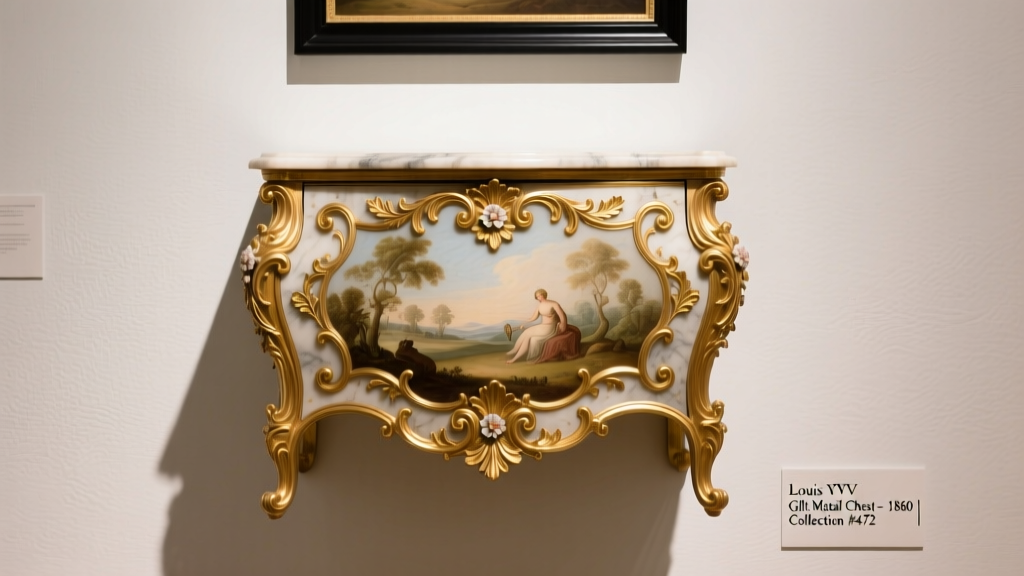
Authenticating the Louis XV Gilt-Metal and Marble-Painted Chest: A 1860 Reserve Cabinet with Provenance and Technical Analysis
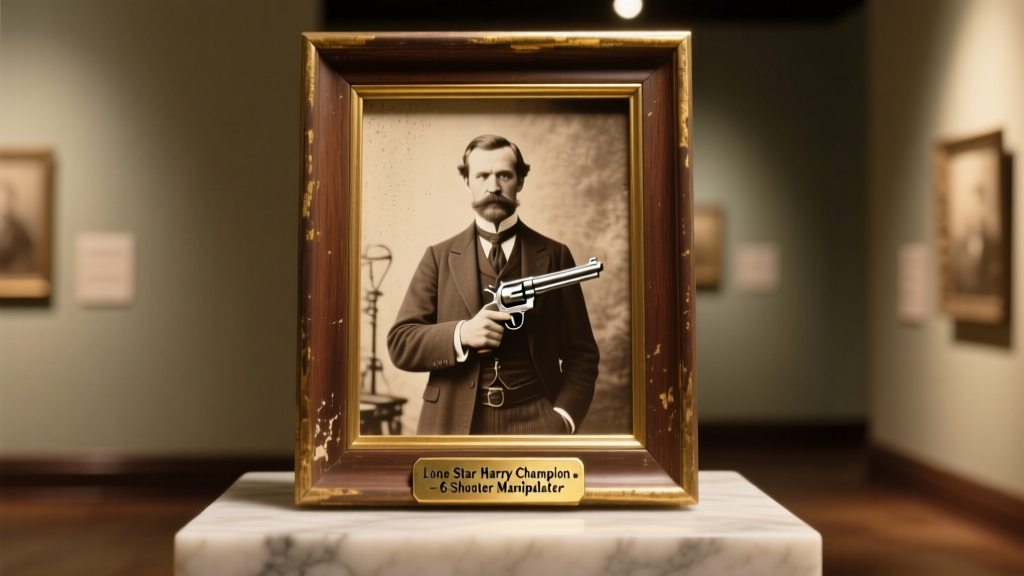
Photography Cabinet Card: Lone Star Harry Champion '6-Shooter Manipulater' — Authentication, Provenance, and Market Significance
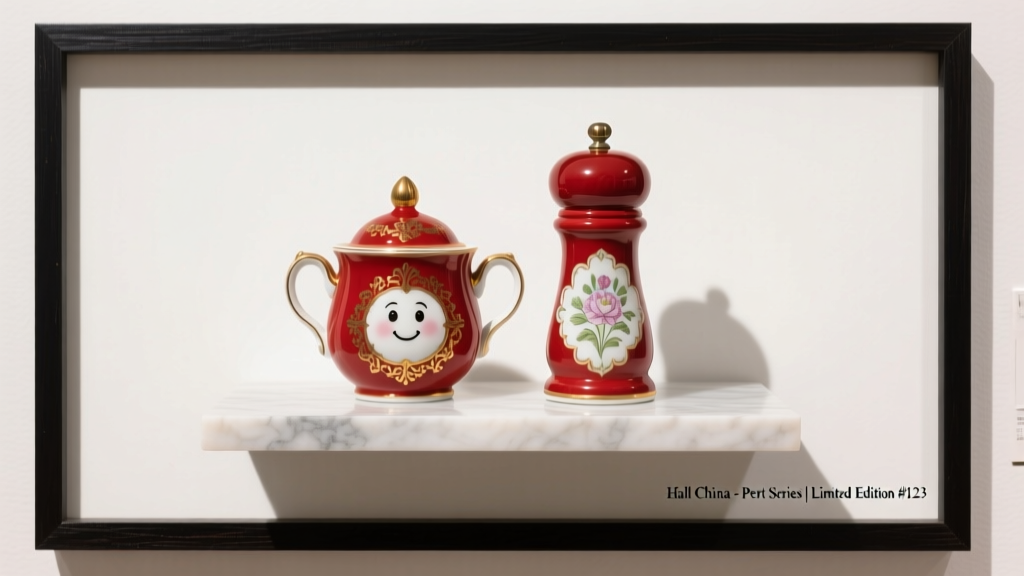
Hall China Pert Salt & Pepper Set in Red: Authentication, Market Value, and Collectibility Analysis
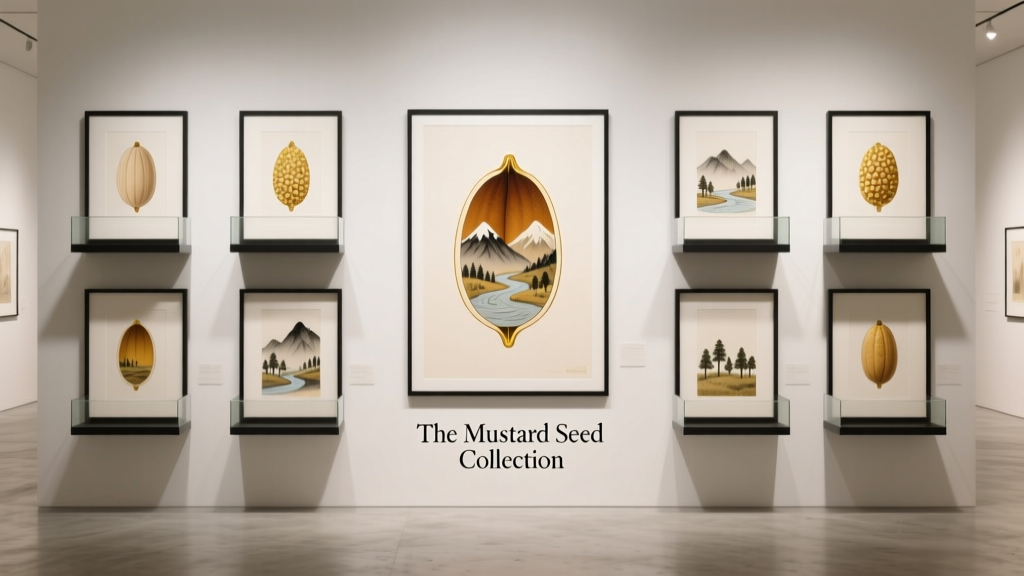
The Mustard Seed Collection: Authentication, Provenance, and Market Dynamics of a Landmark Contemporary Print Series
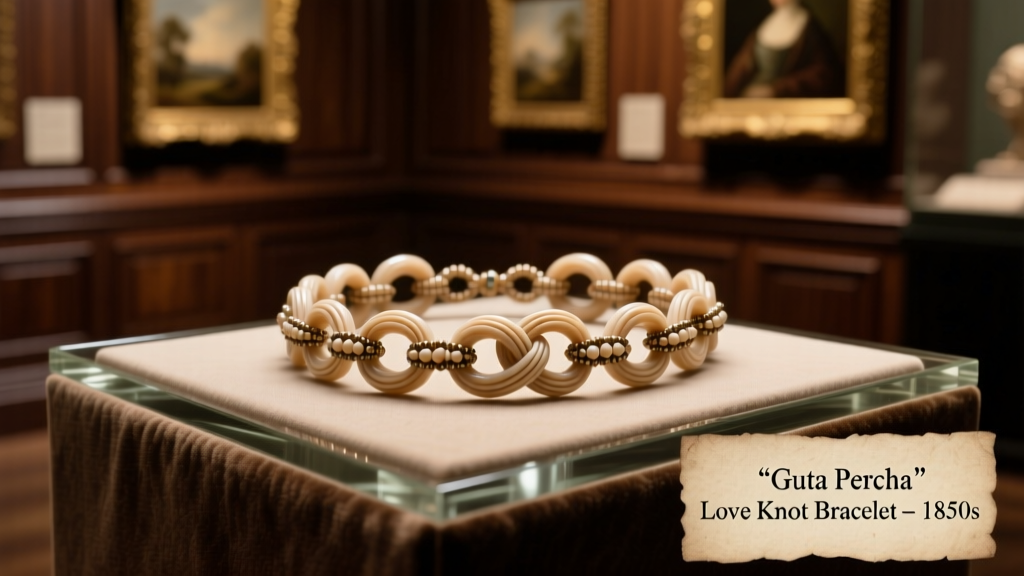
Gutta Percha Bracelet: Hand-Carved Links, Elastic Mounting, and Love-Knot Beaded Elements — Authentication & Market Analysis of an 1850s British Mourning Accessory
Welcome to the Print Authentication Lab: Standards, Scans, and Market Realities

Frankart Bookends: Authenticating the Iconic 'Cat Sitting, Paws Up' Design (6 × 7 in, Pair)
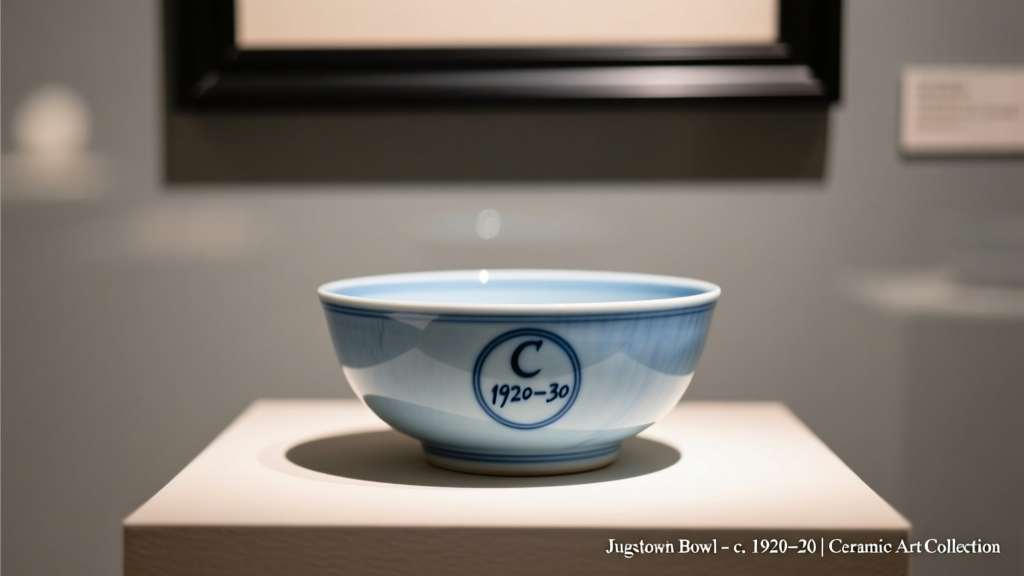
Jugtown Bowl with Chinese Blue Oval Round Stamp Mark: Authentication, Provenance, and Market Analysis (c. 1920–1930)