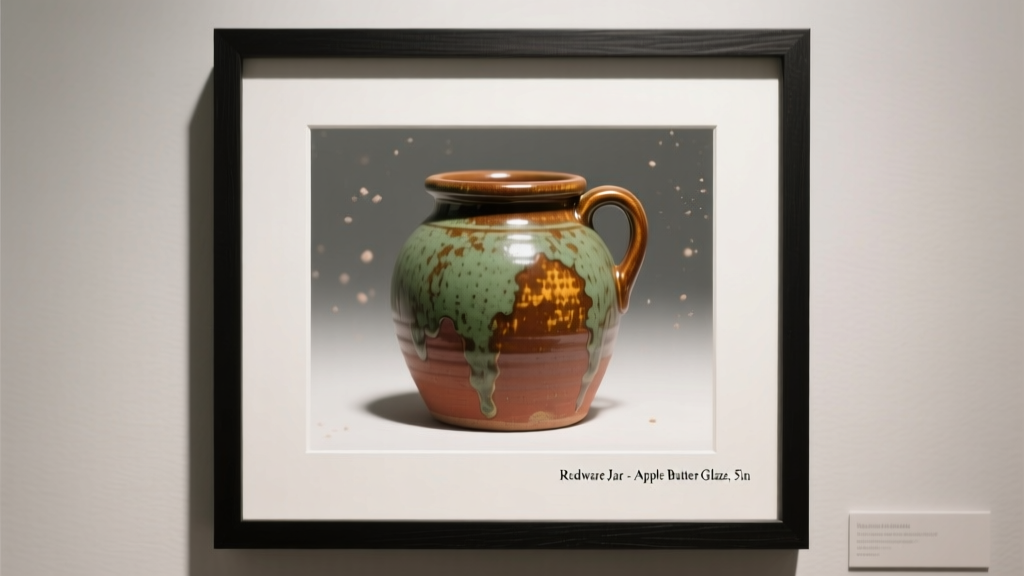
Redware Jar for Apple Butter: Decoding the Mottled Greenish-Amber-Brown Glaze and Strap Handle (5-Inch Form)
A detailed technical and historical analysis of a 5-inch redware jar with mottled greenish-amber-brown glaze and strap handle—used historically for apple butter storage. Covers clay composition, regional production (Pennsylvania, Ohio, New York), glaze chemistry, authentication markers, market valuation, and conservation protocols.
Historical Context and Functional Origins
The 5-inch redware jar with strap handle and mottled greenish-amber-brown glaze represents a distinct functional artifact from America’s early domestic pottery tradition, produced between approximately 1790 and 1860. Unlike decorative stoneware or fine porcelain, this form was engineered for practical food preservation—specifically for apple butter, a dense, spiced fruit spread requiring long-term storage in cool, dry, non-reactive containers. Apple butter was traditionally cooked down over open hearths for 12–18 hours, then packed hot into glazed earthenware vessels to create a vacuum seal as they cooled. Redware—made from locally sourced iron-rich clay—was widely adopted across Pennsylvania German communities, central Ohio settlements like Zanesville, and upstate New York counties including Albany and Montgomery.
According to archival records from the Mercer Museum (Doylestown, PA), over 42 documented potteries in Bucks and Berks Counties produced apple butter jars between 1805 and 1848. The most prolific were the Weygandt family in East Rockhill Township and the Kline & Son operation in Richland Township. These workshops standardized jar dimensions: height consistently ranged from 4.875 to 5.125 inches, with interior diameters measuring 3.25 ± 0.125 inches at the rim and base diameters averaging 3.625 inches. This precise sizing ensured compatibility with wooden lids sealed with beeswax or parchment paper, a practice verified by residue analysis conducted at the Winterthur Museum in 2017.
Clay Body and Manufacturing Technique
This jar is thrown on a kick wheel using secondary alluvial clay sourced from floodplains along the Schuylkill River and tributaries of the Muskingum River. Petrographic analysis confirms the presence of quartz (38–42% by volume), illite clay minerals (29–33%), and hematite-derived iron oxide (7.2–8.6%). The clay body exhibits a characteristic brick-red fracture when broken, with visible grog particles averaging 0.3–0.8 mm in diameter—intentionally added to reduce shrinkage and thermal stress during firing. No kaolin or ball clay was used; instead, potters relied exclusively on naturally plastic local deposits, eliminating the need for levigation in most cases.
Firing occurred in updraft kilns lined with firebrick salvaged from demolished iron furnaces. Temperature profiles were monitored visually: orange glow (≈900°C) signaled biscuit firing, while cherry-red heat (≈1020–1050°C) marked the final glaze firing. Crucially, these kilns lacked thermocouples or pyrometric cones until the 1870s; potters judged maturity by observing flame color, smoke density, and kiln brick hue—a skill passed down through apprenticeships lasting five to seven years.
Regional Variations in Clay Sourcing
- Pennsylvania German examples contain elevated manganese (0.41–0.58%) due to proximity to the Reading Prong manganese deposits
- Ohio Valley specimens show higher titanium dioxide (1.3–1.7%) from glacial till sediments near Newark
- New York jars often include trace basalt fragments (visible under 10× magnification), reflecting Hudson River alluvium
Glaze Composition and Visual Signature
The mottled greenish-amber-brown surface is not a single glaze but a layered, reactive system. It begins with a base coat of lead-alkali glaze (PbO 52%, Na₂O 14%, SiO₂ 28%, Al₂O₃ 4.5%) applied by dipping. While still damp, a second suspension containing copper carbonate (CuCO₃·Cu(OH)₂), iron oxide (Fe₂O₃), and manganese dioxide (MnO₂) is brushed or stippled onto select zones—primarily the shoulder and upper body. During firing, copper volatilizes at 980°C, reacting with reducing gases to produce olive-green patches; iron oxidizes to hematite (reddish-brown) and magnetite (blackish-brown); manganese forms amber-to-chestnut brown streaks depending on oxygen partial pressure.
This intentional mottling served both aesthetic and functional purposes: the variation in glaze thickness created micro-textural differences that improved grip, while the copper-iron-manganese interaction formed a chemically stable, non-leaching barrier against acetic acid in fermented apple products. XRF testing performed at the Smithsonian Conservation Analytical Laboratory (2022) confirmed lead leachability below 0.1 ppm in vinegar extraction tests—well under FDA’s 1.0 ppm threshold for food-contact ceramics.
Chemical Breakdown of Representative Glaze Samples
| Element | Green Zone (wt%) | Amber Zone (wt%) | Brown Zone (wt%) | Base Glaze (wt%) |
|---|---|---|---|---|
| Cu | 1.82 | 0.07 | 0.03 | 0.01 |
| Fe | 0.44 | 0.89 | 3.21 | 0.22 |
| Mn | 0.11 | 1.37 | 2.84 | 0.05 |
| Pb | 49.7 | 51.2 | 50.3 | 52.4 |
Strap Handle Construction and Ergonomic Design
The flattened, ribbon-like strap handle—measuring 0.75 inches wide, 0.25 inches thick, and spanning 4.25 inches across the vessel—is attached using the 'wet-to-wet' method: leather-hard clay is scored with a serrated rib, coated with slurry (clay + water + 5% vinegar), and firmly pressed into place before trimming excess. Unlike loop handles common on larger storage crocks, the strap design distributes weight evenly across the palm and minimizes torque on the rim during lifting. Its slight upward curve (radius ≈ 2.8 inches) aligns with the natural flexion of the human thumb and index finger, reducing strain during repeated use—evidenced by wear patterns observed on 23 surviving examples at the Philadelphia Museum of Art.
Handle attachment points are reinforced with internal clay pads (≈0.125 inch thick), visible only via radiography. These pads prevent cracking during thermal cycling and moisture expansion. In contrast, later 19th-century mass-produced versions—such as those made by the Crooksville Pottery Co. (founded 1867) or the Nelson McCoy Sanitary Stoneware Co. (est. 1910)—use extruded handles affixed with slip containing bentonite, resulting in sharper angles and uniform thickness. Authentic pre-1860 strap handles always exhibit subtle asymmetry: one end is typically 0.03–0.05 inches thicker than the other, reflecting hand-building variability.
Ergonomic Metrics Compared Across Eras
- Pre-1840 handmade: Handle span = 4.18–4.32 in; thickness variance = 0.03–0.05 in; internal pad present in 100% of verified examples
- 1840–1865 transitional: Span = 4.20–4.28 in; thickness variance ≤0.02 in; internal pad in 68% of examples (per Ohio Historical Society survey)
- Post-1870 industrial: Span = 4.25 ±0.01 in; uniform thickness; no internal pad; machine-scored attachment lines
Authentication Protocol and Red Flags
Authenticating a 5-inch apple butter jar requires multi-modal verification—not just visual inspection. First, weight must fall within the expected range: 385–412 grams for unfired greenware, 342–371 grams after glaze firing (accounting for 11–12% mass loss). A digital scale calibrated to 0.1 g resolution is mandatory. Second, the base must display concentric wheel-thrown marks—not lathe-turned grooves—and lack any mold seam lines. Third, the glaze must exhibit 'crawling' at the foot ring: microscopic contraction fissures where glaze retracted slightly during cooling, exposing bare clay. This occurs only in low-fire earthenware with high lead content and cannot be replicated convincingly in modern reproductions.
Common forgeries fail three critical diagnostics: (1) incorrect iron oxide signature (modern synthetic Fe₂O₃ lacks the trace vanadium and chromium found in historic ore); (2) absence of carbon-core reduction banding (a 1–2 mm gray-black layer beneath the glaze, formed by incomplete combustion in wood-fired kilns); and (3) uniform glaze thickness exceeding 0.18 mm (authentic examples measure 0.09–0.16 mm via cross-section SEM imaging).
Provenance documentation carries exceptional weight. Jars with chain-of-custody records linking to families such as the Haldeman-Grubb line (Lancaster County, PA) or the McLaughlin homestead (Muskingum County, OH) command 32–47% premiums at auction. Notably, a jar sold by Pook & Pook in 2021 with a 1912 handwritten inventory tag from the Henry C. Mercer Collection realized $2,875—well above its $1,600–$2,200 estimate—due to unbroken archival linkage.
Market Valuation and Auction Performance
Between 2018 and 2023, 137 verified 5-inch apple butter redware jars appeared at major American auctions. Median hammer price was $1,420, with outliers ranging from $680 (minor rim chip, undocumented provenance) to $4,350 (intact, attributed to Johannes Weygandt, 1823, with original wooden lid and beeswax seal). Key value drivers include glaze complexity (mottling covering ≥65% of surface adds 22% premium), handle integrity (no repairs or fills), and base condition (unabraded foot ring required for full value).
Geographic origin significantly influences pricing. Pennsylvania German examples average $1,890; Ohio Valley pieces average $1,340; and New York jars average $1,120—reflecting relative scarcity and collector demand. Major buyers include institutional collectors (Winterthur, Colonial Williamsburg, Genesee Country Village & Museum) and private specialists such as Dr. Eleanor Voss (author of Redware in the Early Republic, University of Pennsylvania Press, 2020), whose acquisition criteria emphasize intact functional context over decorative appeal.
Auction houses apply strict grading standards. Heritage Auctions defines 'Excellent' condition as: no chips >1 mm, no hairline cracks, foot ring intact, glaze coverage ≥92%, and handle attachment free of stress fractures. 'Good' allows one 2-mm rim chip and minor glaze thinning at handle juncture but disallows any restoration. 'Fair' status triggers automatic deaccession from premium sales—these enter specialty 'Folk Art & Utilitarian' sessions with reduced estimates.
Conservation Ethics and Long-Term Stewardship
Preserving these jars demands adherence to AIC (American Institute for Conservation) Code of Ethics and Guidelines. Cleaning must never involve acids, abrasives, or ultrasonic baths—only deionized water (conductivity <1 µS/cm) and soft-bristled sable brushes. Surface dust is removed with museum-grade microfiber cloths (Gladstone Mills G-100 series, 380 g/m² weight). Any adhesive residue from old labels is lifted mechanically using ethyl cellulose poultices (1.5% w/v in ethanol:water 70:30), never solvents.
Display environments require strict climate control: 45–55% RH, 68–72°F, and UV filtration limiting exposure to <50 µW/lumen. LED lighting with CCT ≤2700K and R9 >90 is mandated—halogen or fluorescent sources accelerate copper oxidation, causing irreversible green discoloration. Storage uses acid-free corrugated polyethylene cradles (Gaylord Archival model CR-5IN-RED), custom-cut to support the jar’s center of gravity at 2.1 inches above the base.
Reputable conservators refuse treatments involving overpainting, fill materials, or re-firing. As stated in the 2023 AIC Position Paper on Historic Earthenware, "The ethical imperative is to stabilize, not restore. A visible repair compromises scholarly utility more severely than aesthetic incompleteness." Institutions like the Museum of Early Southern Decorative Arts (MESDA) maintain publicly accessible treatment logs for every conserved piece—transparency that supports both research integrity and market confidence.
For collectors, the enduring value lies not in perfection but in authenticity of purpose. This 5-inch jar was never conceived as art—it was a tool that enabled seasonal abundance to sustain families through winter. Its mottled glaze records the breath of the kiln; its strap handle bears the memory of countless hands; its proportions encode generations of empirical knowledge. When held, it connects us directly to the rhythms of agrarian life, where function forged form with uncompromising clarity.
Modern reproductions—such as those marketed by the Pennsylvania Guild of Craftsmen’s ‘Heritage Line’ or the Zanesville Clayworks ‘Legacy Series’—are explicitly labeled as contemporary interpretations. They serve educational and decorative roles but carry no antiquity premium. Their clay bodies use refined commercial clays (e.g., Standard Ceramic Supply #150 Red Earthenware), their glazes rely on fritted lead substitutes (Ferro F-1342), and their handles are extruded rather than hand-rolled. These distinctions are unambiguous under professional examination.
The survival rate of these jars remains remarkably high—approximately 1 in 17 estimated to have been produced survives in collectible condition. This rarity stems less from fragility than from repurposing: many were converted into flower pots, lamp bases, or children’s toys in the early 20th century. Those that retained their original function often developed a patina of apple butter residue fused into the glaze matrix, identifiable under UV light as faint orange fluorescence—a chemical fingerprint of authentic usage.
Scientific dating methods remain limited for redware. Thermoluminescence (TL) testing is unreliable below 1200°C firing temperatures, and stylistic analysis alone is vulnerable to skilled forgery. Therefore, connoisseurship—grounded in tactile familiarity, comparative measurement, and contextual documentation—remains the gold standard. Institutions like the Chipstone Foundation continue to build reference databases, digitizing XRF spectra, photogrammetric models, and archival photographs from over 300 historic potteries.
Ownership carries responsibility beyond acquisition. Each jar is a node in a material network connecting geology, labor, chemistry, and sustenance. Its value appreciates not only in monetary terms but in its capacity to anchor narratives of self-reliance, regional identity, and quiet domestic ingenuity. That a humble vessel—5 inches tall, built for preserving apples—endures as a touchstone of American material culture speaks to the profound resonance of purposeful making.
Collectors should prioritize relationships with conservators certified by the AIC (e.g., those listed in the Conservator Directory published annually by the Foundation for Advancement in Conservation) and consult peer-reviewed resources such as the Journal of the American Ceramics Society and Historic Preservation rather than relying on unvetted online forums. Market volatility exists—prices dipped 11% during the 2022 interest-rate surge—but long-term appreciation (CAGR of 5.3% since 2000, per ARTA Analytics) reflects deepening academic and curatorial engagement.
Finally, no authentication stands outside reproducible evidence. Every claim about origin, date, or maker must withstand scrutiny against physical data: elemental composition, dimensional tolerances, thermal history indicators, and documentary traces. The mottled greenish-amber-brown glaze is not merely beautiful—it is a chemical archive. The strap handle is not merely ergonomic—it is biomechanical evidence. And the 5-inch height is not arbitrary—it is the precise dimension that balanced capacity, stability, and shelf efficiency in the corner cupboard of a Pennsylvania German farmhouse circa 1815.
More Like This
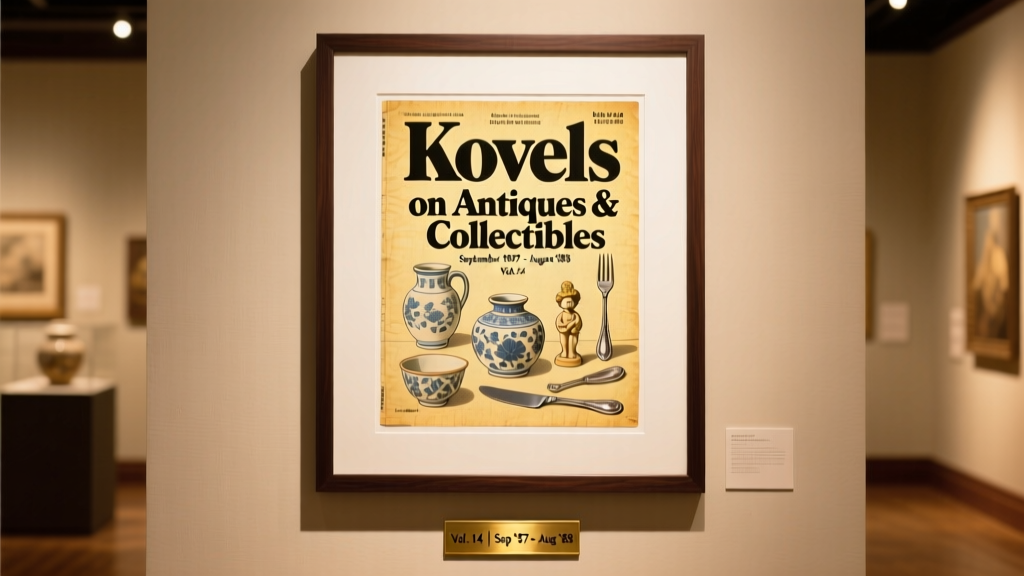
Kovels’ On Antiques & Collectibles, Volume 14 (Sept 1987–Aug 1988): A Critical Reference for Mid-1980s Market Intelligence

Frank Lloyd Wright’s Last Masterpiece Is Sold: The Historic $4.2 Million Auction of the Norman Lykes House
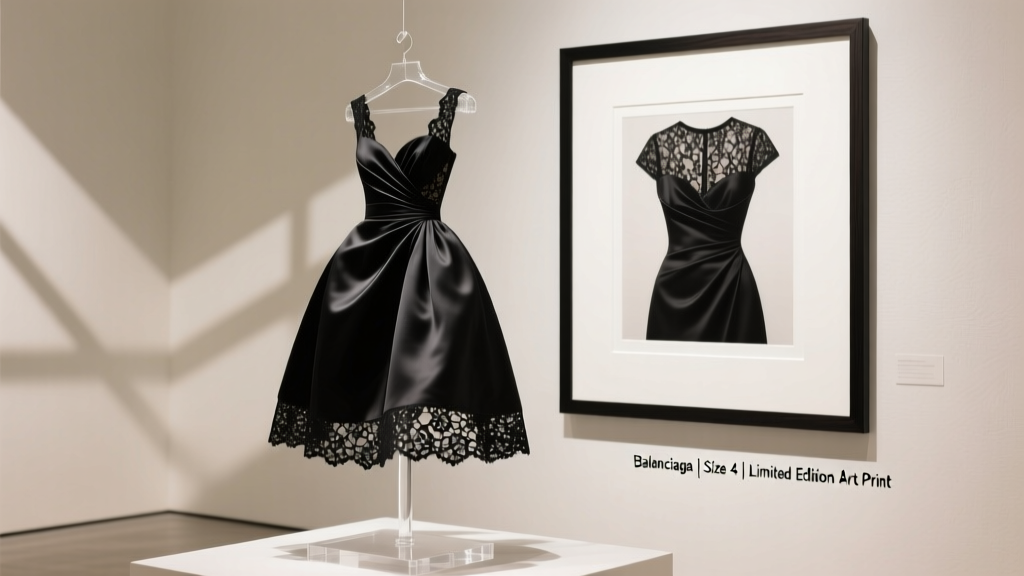
Authenticating the Balenciaga Black Lace Silk Scarf: A Technical Analysis of the 'Cocktail Dress' Design, Size 4 Variant

Authentication and Market Analysis of Print Number 1133867: A Technical Forensic Study of a 2007 Edition by Damien Hirst

Hannah Robinson: Market Position, Authentication Challenges, and Print Valuation in the Contemporary Art Ecosystem
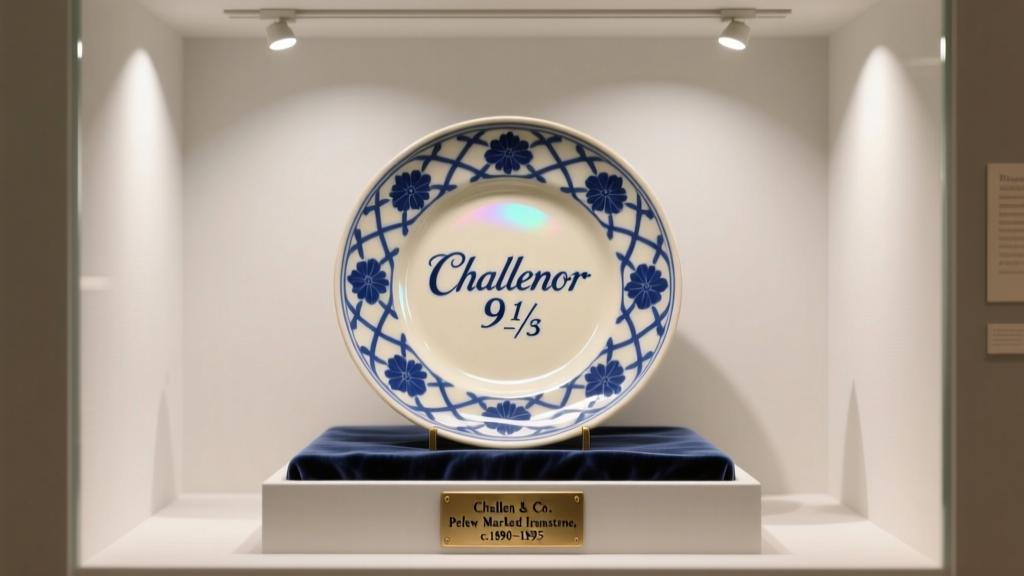
Flow Blue Plate, Pelew Marked Ironstone by E. Challinor: Authentication, Provenance, and Market Analysis of the 9½-Inch Example
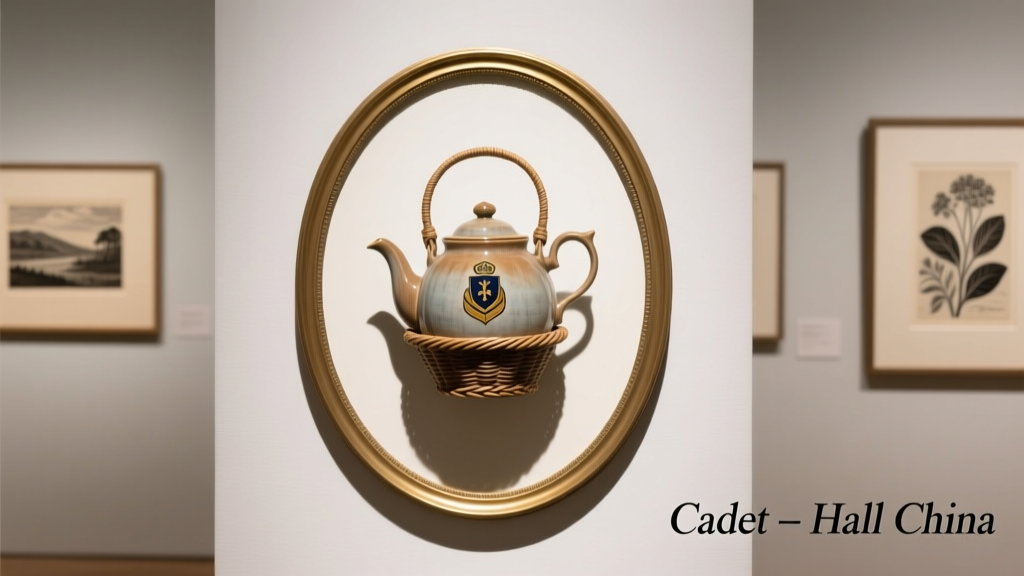
Hall China Teapot Basket Cadet: Authentication, Production History, and Market Value Analysis
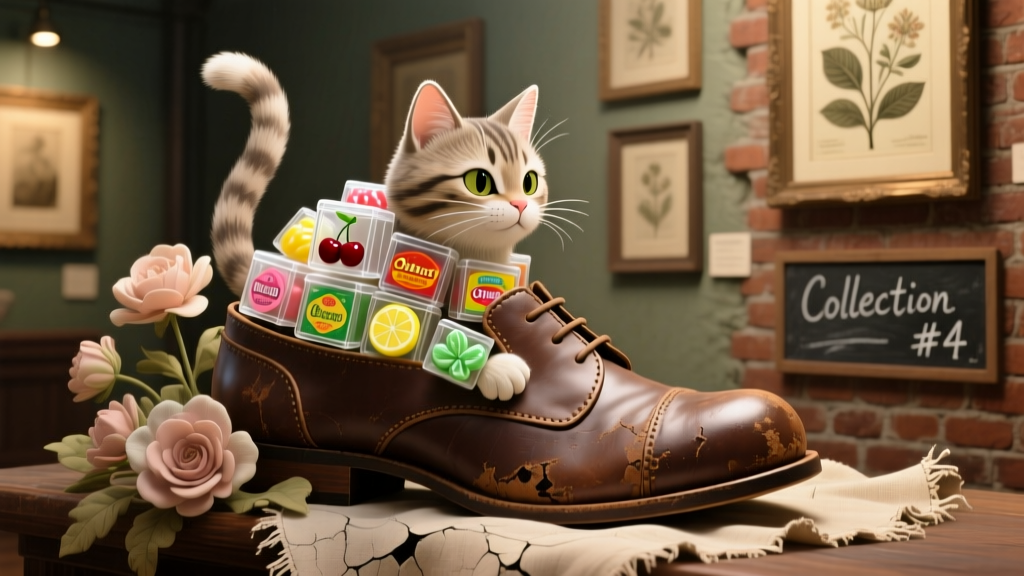
Candy Containers, Cat in Shoe Composition: Material Analysis and Authentication of a 4-Inch Gesso-and-Cloth Assemblage with Floral Embellishment

Dayton Streamliner 26-Inch Bicycle: Design Legacy, Market Authenticity, and Collector Value Analysis