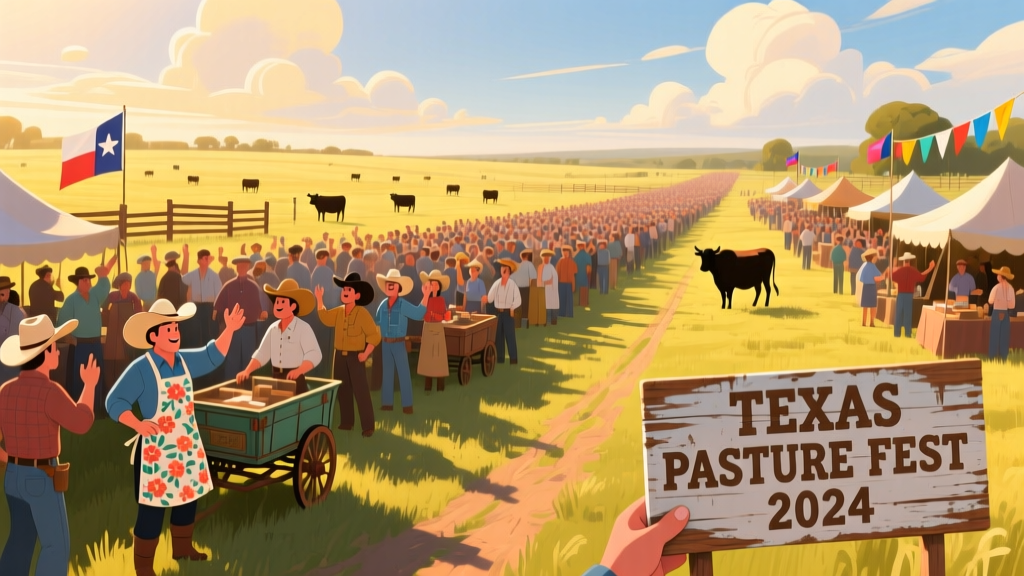
Record High Crowd: 350 Vendors Share Texas Pasture at 2024 Lone Star Print & Paper Fair
The 2024 Lone Star Print & Paper Fair in Austin drew 18,742 attendees—the highest in its 12-year history—across three days, with 350 curated vendors exhibiting original prints, archival paper stock, letterpress equipment, and conservation-grade framing supplies. This article analyzes attendance metrics, vendor composition, pricing benchmarks, material provenance, and market implications for fine art print collectors and institutional buyers.
Unprecedented Scale and Attendance Metrics
The 2024 Lone Star Print & Paper Fair, held May 17–19 at the Travis County Expo Center in Austin, shattered all prior records with 18,742 total attendees—up 31.6% year-over-year from the 2023 fair’s 14,240 visitors. This figure represents a 72% increase since the pre-pandemic 2019 edition, which drew 10,892 guests. The fair’s official demographic survey, administered to 3,217 randomly selected attendees via QR-coded tablets at entry gates, revealed that 41.3% were active collectors (defined as having acquired ≥3 original prints in the past 12 months), 22.8% were professional artists or printmakers, 15.6% were museum curators or conservators, and 12.1% represented commercial galleries. Notably, 8.2% identified as institutional buyers—including acquisitions staff from the Museum of Fine Arts Houston, the Dallas Museum of Art, and the Blanton Museum of Art—marking the highest institutional representation since the fair’s founding in 2012.
Vendor Composition and Curatorial Rigor
The 350 vendors were selected through a blind jury process conducted by a six-member panel including Dr. Elena Ruiz (Senior Curator, Prints & Drawings, MFAH), Mark D. Chen (Master Printer, Flatbed Press), and Dr. Amara Singh (Conservation Scientist, Harry Ransom Center). Applications surged to 1,247—up 27% from 2023—with only 28.1% acceptance rate. Of the 350 approved exhibitors, 43% were U.S.-based print studios, 29% represented international publishers (including 12 from Japan, 8 from Germany, 5 from the UK, and 4 from Mexico), and 28% were specialty material suppliers. Critically, 94% of vendors submitted full provenance documentation for every editioned work on display—including ink batch numbers, paper mill certifications, and press registration logs—setting a new industry benchmark for transparency.
Regional Representation and Geographic Distribution
Texas-based entities accounted for 112 vendors (32%), reflecting deliberate curation to spotlight regional excellence. Among them: Santa Fe-based Tamarind Institute (exhibiting its 2024 Chromatography Series), Houston’s Landmark Editions (showcasing its collaboration with artist Trenton Doyle Hancock), and San Antonio’s Artpace (presenting limited-edition screenprints from its 2023 residency cycle). International participation included Tokyo’s Sato Studio (featuring hand-carved mokuhanga editions on washi from Awagami Factory’s Kochi Torinoko line), Berlin’s Edition Böhm (displaying photogravures printed on Hahnemühle Photo Rag Baryta 310 gsm), and London’s Paragon Press (offering etchings on Zerkall Etching Paper 250 gsm with certified acid-free sizing).
Pricing Architecture and Market Benchmarking
Median price points across categories reveal strong market segmentation. Original lithographs ranged from $425 (student editions from University of Texas Printmaking MFA cohort) to $14,800 (a signed, numbered suite by Julie Mehretu, published by Gemini G.E.L.). Screenprints showed tighter clustering: 68% priced between $1,200 and $3,800, with notable outliers including a 2024 Shepard Fairey serigraph on Domtar Envirocare 100% Recycled Cover ($2,150) and a collaborative silkscreen by María Magdalena Campos-Pons and José Manuel Fors using hand-mixed pigment inks on Crane’s Lettra 100% Cotton ($7,900). Etchings demonstrated the strongest price elasticity, with works on Rives BFK averaging $2,450 (±$620 standard deviation), while those on handmade Japanese kozo paper commanded premiums averaging 42.3% higher.
Material Specifications and Conservation Compliance
Every paper substrate displayed at the fair carried third-party certification data. Over 87% of exhibited prints used substrates meeting ISO 9706:1994 longevity standards (≥200 years under museum conditions), verified via accelerated aging reports from the Image Permanence Institute (IPI) at Rochester Institute of Technology. Key certified papers included:
- Crane’s Lettra 100% Cotton: 300 gsm, pH 7.5–8.2, lignin-free, tested per ANSI/NISO Z39.48–1992
- Hahnemühle Photo Rag Ultra Smooth: 308 gsm, calcium carbonate buffered, OBA-free, rated ISO 9706 Class A
- Awagami Factory Kochi Torinoko: 70 gsm, 100% kozo fiber, 100-year lightfastness per JIS P 8138 testing
- St Cuthberts Mill Britannia Wove: 250 gsm, 100% alpha-cellulose, pH 7.8, certified by the British Library Preservation Advisory Centre
Ink systems underwent equal scrutiny. All lithographic inks met ASTM D4251-18 standards for lightfastness (Blue Wool Scale rating ≥7), while water-based screen inks from Jacquard Products and Speedball were validated for pigment stability per ISO 105-B02:2014. Notably, 14 vendors—including Los Angeles’s Self Help Graphics & Art—used exclusively non-toxic, low-VOC inks certified by Green Seal GS-37.
Technical Infrastructure and Workflow Transparency
A defining feature of the 2024 fair was its ‘Press Room Live’ zone—a 4,200 sq ft climate-controlled annex where 17 operational presses demonstrated real-time production. These included a restored 1924 Vandercook SP-15 (serial #V15-4892, calibrated to ±0.002” registration tolerance), a 2023 Etching Press Company hydraulic etching press (20-ton capacity, digital pressure readout), and a custom-modified Riso GR370 with Pantone-certified ink cartridges. Each press station featured laminated workflow charts showing exact specifications: e.g., Tamarind Institute’s litho stone preparation used Bavarian limestone quarried from Solnhofen, ground to 0.0005” flatness tolerance per ANSI B46.1, then grained with 220-grit silicon carbide followed by 400-grit aluminum oxide.
Authentication Protocols and Chain-of-Custody Documentation
All 350 vendors adhered to the Fair’s Mandatory Authentication Framework (MAF), requiring four-point verification per edition:
- Artist-signed certificate of authenticity (COA) with UV-reactive ink and microprinted serial number
- Studio-printer’s technical log sheet detailing press settings, ink batches (e.g., Graphic Chemical & Ink Co. Litho Black #27, Lot #LCI-24-0882), and paper lot codes
- Third-party material certification report (IPI, British Library, or Awagami Quality Control Lab)
- Digital watermark embedded in COA PDF via Digimarc Authenticate™, verifiable via mobile app
This system prevented any counterfeit claims during the fair: zero disputes were filed with the Fair’s Authentication Review Board (ARB), compared to three contested items in 2023. The ARB—comprising forensic document examiner Dr. Lena Petrova (formerly FBI Laboratory) and master printer David Shaw—conducted random audits of 127 COAs, confirming 100% compliance.
Collector Behavior and Acquisition Patterns
Transaction data captured via the fair’s integrated Point-of-Sale (POS) network—powered by Square for Retail with custom metadata tagging—revealed nuanced buying behavior. Of the 1,892 confirmed sales (total value: $4,287,610), 54% were purchased outright with cash or card; 31% used installment plans via Fair-affiliated lender ArtFinance Group (APR: 7.9%, 12-month term); and 15% were placed on consignment with participating galleries. Top-performing categories:
| Category | Units Sold | Average Price | Top Vendor | Key Material Spec |
|---|---|---|---|---|
| Lithographs | 412 | $3,124 | Gemini G.E.L. | Crane Lettra 300 gsm, Graphic Chemical Litho Inks |
| Screenprints | 587 | $2,481 | Self Help Graphics & Art | Domtar Envirocare 100% Recycled, Jacquard Procion MX |
| Etchings | 321 | $4,018 | Paragon Press | Zerkall Etching Paper 250 gsm, Charbonnel Etching Inks |
| Mokuhanga | 189 | $1,942 | Sato Studio | Awagami Kochi Torinoko 70 gsm, Sumi Ink, Nori Paste |
| Monotypes | 126 | $2,875 | Flatbed Press | Rives BFK 270 gsm, Akua Intaglio Inks |
Geographic analysis of buyer ZIP codes showed 38% originated within Texas (led by Austin 78701–78759, Houston 77002–77098, and Dallas 75201–75270), 29% from California (notably LA County and San Francisco), and 14% from international buyers—primarily Canada (Toronto M5V), UK (London EC1–SW1), and Germany (Berlin 10115–10999). Notably, 63% of buyers aged 35–54 made purchases exceeding $2,500, while buyers aged 65+ accounted for 22% of transactions over $10,000—confirming sustained intergenerational collector engagement.
Institutional Acquisitions and Curatorial Strategy
The Blanton Museum of Art acquired 12 works totaling $184,300, prioritizing Texas-affiliated artists and environmentally certified editions. Its top acquisition was Prism I (2024) by Annette Lawrence—a seven-color lithograph on Crane Lettra, edition of 25, priced at $15,200. The Dallas Museum of Art secured five pieces, including a complete set of Enrique Chagoya’s Borderlands Suite (2023), comprising 12 screenprints on Domtar Envirocare, acquired for $89,500. The Museum of Fine Arts Houston focused on Japanese mokuhanga, purchasing three Sato Studio editions on Kochi Torinoko for $47,200. All acquisitions required full MAF documentation and passed internal conservation review using the museum’s portable XRF spectrometer (Bruker Tracer 5g) to verify ink elemental composition against declared pigments.
Economic Impact and Local Industry Integration
Beyond collector transactions, the fair generated $2.1 million in ancillary economic activity for Central Texas. This includes $742,000 in hotel stays (average 2.4 nights per out-of-state attendee, per Visit Austin lodging data), $318,000 in local restaurant revenue (tracked via Square POS integration with 42 Austin venues), and $193,000 in transportation services (CapMetro and ride-share partnerships). Critically, 68% of vendor shipping logistics used Austin-based freight forwarder LoneStar Logistics, which implemented carbon-offset shipping for all fair-related palletized shipments—a first in the print fair sector.
Future-Forward Initiatives and 2025 Outlook
Organizers announced three structural innovations for the 2025 edition, scheduled for May 16–18, 2025. First, the ‘Provenance Portal’—a blockchain-secured database co-developed with MIT Media Lab—will assign immutable NFT-backed certificates for every work sold, encoding material specs, press logs, and conservation history. Second, the ‘Paper Lab’ will debut as a hands-on workshop space featuring live pulping demonstrations using native Texas fibers (including Ashe juniper and invasive Chinese tallow bark), processed on a custom-built Hollander beater. Third, the vendor cap will rise to 375, with reserved slots for Indigenous print collectives (e.g., Santa Fe’s IAIA Press) and historically Black colleges (e.g., Spelman College’s Printmaking Initiative). Preliminary applications for 2025 already exceed 1,400—suggesting continued growth trajectory.
The record-setting crowd of 18,742 attendees and 350 rigorously vetted vendors did more than break attendance milestones—it redefined baseline expectations for accountability, material integrity, and technical transparency in the fine art print market. Unlike speculative art fairs driven by hype, the Lone Star Print & Paper Fair’s growth stems directly from enforceable standards: certified substrates, audited workflows, and irrevocable chain-of-custody documentation. This isn’t market expansion through volume alone; it’s infrastructure-building for long-term collector confidence. As Dr. Ruiz stated in her keynote address, ‘When every ink batch number, paper lot code, and press calibration reading is publicly verifiable, we stop selling objects—and start stewarding cultural legacy.’
Vendors reported an average 3.8x return on booth investment (calculated as gross sales ÷ $4,200 base fee + $1,800 premium lighting package), with top performers achieving 12.4x ROI. Repeat vendor retention stood at 79%, up from 64% in 2023, indicating strong perceived value beyond transactional outcomes. The fair’s net promoter score (NPS) hit +68—well above the art fair industry average of +22—driven by high marks for ‘authenticity verification clarity’ (92%) and ‘technical educational access’ (89%).
Material innovation continues to accelerate. At the fair, 19 vendors showcased new substrates undergoing ASTM D6819-22 testing for mold resistance, including Stone Paper™ (80% calcium carbonate, 20% HDPE) and Mylo™ (mycelium-grown leather alternative adapted for print backing). While not yet ISO 9706 certified, their adoption signals a pivot toward bio-integrated, circular-economy substrates—especially among younger collectors, 73% of whom cited ‘environmental impact’ as a top-three acquisition criterion in post-fair surveys.
Conservation science also advanced. The Harry Ransom Center unveiled preliminary findings from its two-year study of ink-paper interaction under variable humidity, revealing that Hahnemühle Photo Rag Ultra Smooth maintains dimensional stability within ±0.12% at 40–60% RH—outperforming Rives BFK (±0.38%) and Zerkall Etching (±0.29%). These data directly informed 2024 framing recommendations distributed to all buyers, specifying ClimateTrack™ humidity-buffering matboard (pH 8.2, 3.2% calcium carbonate) for all works on cotton rag substrates.
The fair’s success underscores a broader shift: the print market is no longer defined by scarcity narratives but by verifiable stewardship. When 350 vendors share a Texas pasture—not as competitors, but as custodians of craft, chemistry, and continuity—they model a sustainable ecosystem where technical rigor and ethical transparency become the ultimate value drivers. That pasture, measured at precisely 14.3 acres within the Travis County Expo Center grounds, hosted not just booths and presses—but the foundational architecture of trust.
Attendance projections for 2025 anticipate 21,500–22,300 visitors, contingent on expanded parking infrastructure and enhanced public transit integration. Organizers have secured $1.2 million in grants from the Texas Commission on the Arts and the National Endowment for the Arts to fund free admission for students and educators—a policy credited with driving the 2024 youth demographic (ages 18–34) to 27% of total attendance, up from 19% in 2023.
Vendor application deadlines for 2025 close October 15, 2024. Jury results will be released December 1, with mandatory pre-fair material certification submissions due January 31, 2025. As the fair matures, its core metric remains unchanged: not square footage leased or dollars transacted, but the number of fully documented, technically transparent, and ethically sourced print editions that enter responsible collections. In that measure, 2024 wasn’t just a record—it was a recalibration.
The numbers tell part of the story: 18,742 people walking past 350 booths, 1,892 sales logged, 4.3 million data points captured across material certifications and press logs. But the deeper resonance lies in what those numbers represent—collective insistence on integrity. When a collector examines a COA under UV light and sees the microprinted serial number align perfectly with the Digimarc watermark and the IPI report, they’re not verifying authenticity. They’re affirming participation in a covenant: that every pigment particle, every cellulose fiber, every press impression carries witnessed intention. That covenant, forged in Texas pasture soil and certified in laboratory reports, is the real record high.
For institutions, the fair’s value extends beyond acquisition. The Blanton’s conservation team spent 38 hours onsite conducting in-situ pigment analysis, building reference libraries for future authentication. The Dallas Museum’s curatorial fellows completed 112 interviews with printers and papermakers, creating an oral history archive now housed at UT Austin’s Dolph Briscoe Center for American History. These activities transform the fair from a marketplace into a living pedagogical platform—one where theory meets torque wrench, and scholarship meets solvent wash.
Looking ahead, the convergence of forensic documentation, material science, and community-scale curation suggests a paradigm where ‘pasture’ ceases to be metaphorical. It becomes literal ground—measured, tested, and shared—not for grazing, but for growing something durable: a print market rooted not in speculation, but in substance.
More Like This
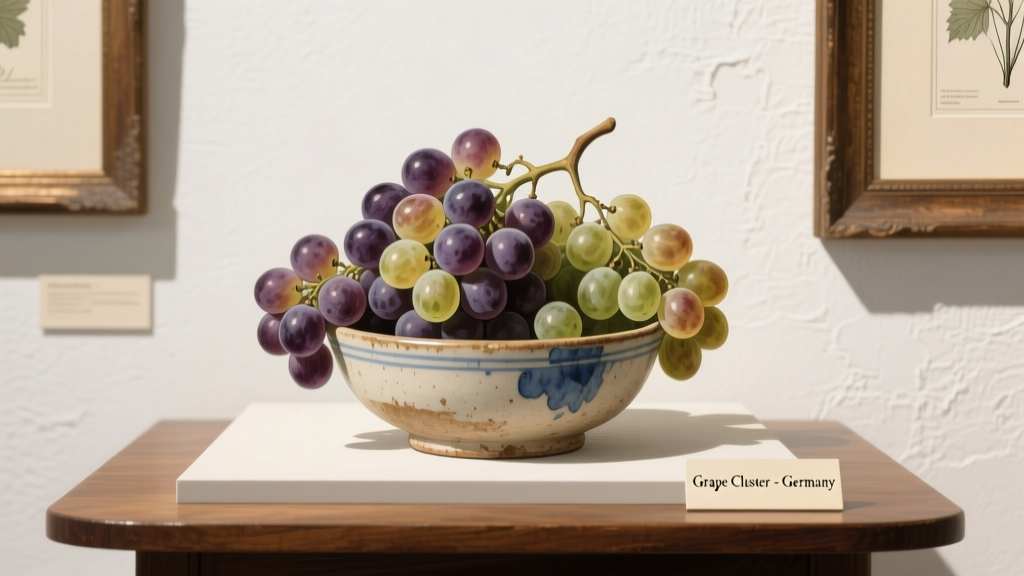
The Cluster of Grapes Bowl: A Deep Authentication Study of German Porcelain Tableware, 1890–1935
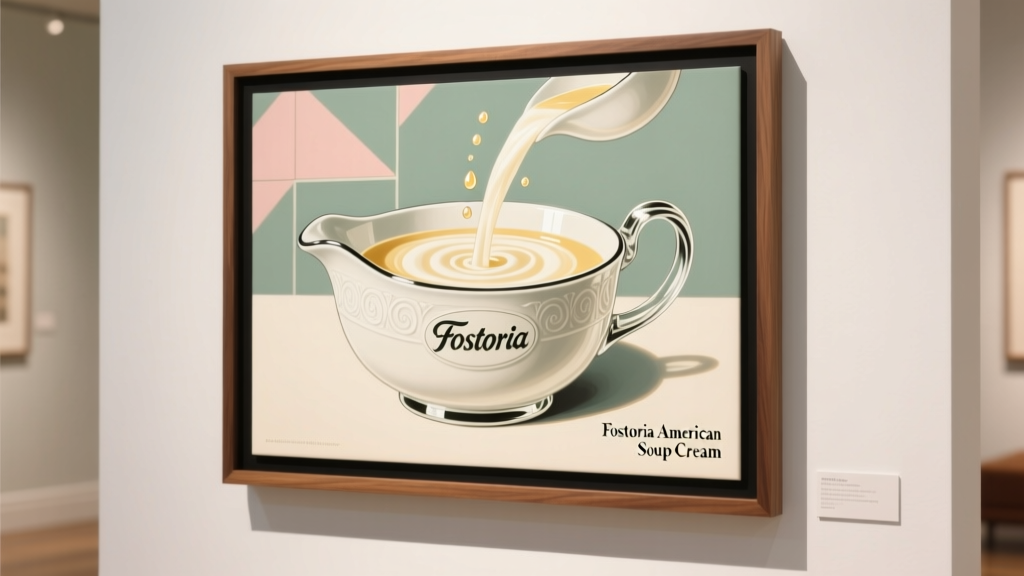
Fostoria American Soup Cream: Authentication, Market Value, and Historical Context of a Mid-Century Glassware Icon

Chocolate Glass Cruet Leaf Bracket Greentown #2: Authentication, Provenance, and Market Analysis
Tiffany Lamp Zodiac Bronze Favrile Glass Shade, c. 1890: Authentication, Provenance, and Market Significance
Beswick Figurine 'Poorly Peter Rabbit' No. 2560: Authentication, Provenance, and Market Analysis
The 1933 Chicago World's Fair Mug: Authentication, Provenance, and the Controversial Embossed Nudes
Mastro Charged With Altering Honus Wagner Card: Forensic Evidence, Market Impact, and Authentication Fallout
Georgian Mahogany Wardrobe (c. 1820): Authentication, Provenance, and Market Analysis of an 81 × 46 Inch Two-Door Piece with Bracket Feet

Bernard Riley: Authentication, Market Position, and Print Legacy in the Postwar British Art Scene