Reclaimed Antiques Mall: A Critical Analysis of Authenticity, Market Position, and Collector Value
An in-depth examination of Reclaimed Antiques Mall—its operational model, authentication protocols, inventory composition, pricing benchmarks, and comparative standing against established antique venues like Scott Antique Markets and Round Top Antiques Fair. Includes verified measurements, brand-specific provenance data, and market performance metrics.

Reclaimed Antiques Mall, headquartered in Atlanta, Georgia, operates a 120,000-square-foot retail warehouse at 3975 Buford Highway NE, offering over 350 vendor booths specializing in mid-century modern furniture, vintage industrial fixtures, and pre-1960s decorative arts. Unlike traditional auction houses or curated galleries, the mall functions as a consignment-based marketplace with standardized vendor agreements requiring written provenance documentation for all items priced above $1,200. Between Q2 2022 and Q1 2024, the mall recorded an average annual foot traffic of 482,000 visitors, with 37% originating from outside Georgia—primarily from Tennessee, Florida, and North Carolina. Its 2023 gross revenue totaled $14.8 million, up 12.3% year-over-year, driven by increased demand for authenticated American-made furniture (particularly Herman Miller Eames lounge chairs and Baker Furniture Company credenzas) and documented architectural salvage including original 1920s–1940s cast-iron radiators and salvaged oak flooring planks measuring 3¾" wide × 1¼" thick × variable lengths (average 8'–12').
Operational Structure and Vendor Ecosystem
Reclaimed Antiques Mall employs a hybrid business model blending fixed-lease retail space with commission-based consignment. Vendors sign 12-month agreements with base monthly rents ranging from $425 (for 8' × 8' booths) to $1,850 (for 16' × 20' corner spaces), plus a 12% commission on sales exceeding $3,500 per month. This structure differs significantly from Scott Antique Markets’ flat-rate booth fee system ($1,150–$2,900/month, no commission) and contrasts with Round Top Antiques Fair’s seasonal pop-up licensing ($4,200–$18,500 per 10-day event). As of March 2024, the mall hosts 357 active vendors—214 individual dealers, 89 corporate resellers (including three certified members of the Antique Dealers Association of America), and 54 estate liquidation specialists.
Vendor onboarding requires submission of three verifiable provenance elements: (1) original purchase receipts or insurance appraisals dated prior to 2010; (2) photographic documentation showing item context (e.g., interior shots with period-appropriate wallpaper or flooring); and (3) manufacturer markings or maker’s stamps visible in high-resolution images. For furniture, the mall mandates inclusion of serial number databases—such as Herman Miller’s official archive (accessible via hermanmiller.com/heritage) or Baker Furniture’s 1930–1975 production ledger (held at the Winterthur Museum). Items lacking two of these three elements are restricted to ‘Unverified Vintage’ designation and may not be marketed as ‘antique’ under Georgia state law (O.C.G.A. § 10-1-490).
Consignment Protocols and Inventory Turnover
The mall’s consignment process includes mandatory condition reporting using the American Society of Appraisers’ (ASA) Condition Rating Scale (1–5), where Level 3 denotes ‘original finish with minor wear consistent with age and use.’ Items rated below Level 3 require written disclosure of restoration work—including refinish dates, materials used (e.g., ‘1958 Formica laminate replaced with Wilsonart 4201 Rustic Walnut in Q3 2021’), and professional certification numbers if performed by an AFTA-accredited conservator. Inventory turnover averages 8.2 months across all categories, but varies sharply by segment: lighting fixtures turn in 4.7 months (driven by demand for authentic 1950s Stiffel brass floor lamps), while architectural salvage averages 14.3 months due to project-based buyer cycles.
Vendors must update digital inventory listings biweekly via the mall’s proprietary portal, which syncs with third-party platforms including Chairish, 1stDibs, and Ruby Lane. Listings include mandatory metadata fields: era designation (pre-1900, 1900–1945, 1946–1969, 1970–1999), country of origin, material composition (e.g., ‘solid walnut with dovetail joinery’), and dimensional accuracy measured to the nearest ⅛ inch using Starrett 12" Precision Steel Rules (certified to ANSI B89.1.14–2018 standards). Failure to comply triggers automatic listing suspension after two violations.
Authentication Framework and Third-Party Verification
Reclaimed Antiques Mall maintains an in-house Authentication Review Board (ARB) composed of four full-time specialists: two with graduate degrees in art conservation (University of Delaware, Winterthur Program), one certified appraiser (ASA designation), and one licensed Georgia antiques dealer with 32 years’ field experience. The ARB conducts random audits of 8.3% of all high-value transactions monthly—defined as sales ≥ $2,500—and performs forensic analysis on contested items. Techniques include ultraviolet fluorescence testing for modern refinishing (detecting polyurethane vs. shellac), X-ray fluorescence (XRF) spectroscopy to verify metal alloy composition (e.g., confirming 1930s brass contains 67% copper / 33% zinc versus post-1980 reconstituted brass at 72% Cu / 28% Zn), and microscopic wood grain analysis using Olympus BX53 microscopes calibrated to 400× magnification.
When discrepancies arise, the ARB engages external labs. Since 2021, the mall has partnered exclusively with the Midwest Art Conservation Center (MACC) in Minneapolis for textile and paper-based items, and with the Objects Conservation Lab at the High Museum of Art in Atlanta for furniture and metalwork. MACC reports indicate that 19.6% of submitted mid-century upholstery samples contain post-1990 synthetic fibers mislabeled as ‘vintage wool,’ while High Museum testing revealed that 27.4% of claimed ‘original chrome plating’ on 1950s bar stools was actually electroless nickel applied during 2000s refurbishment.
Provenance Documentation Standards
The mall enforces strict provenance hierarchies. Primary evidence—original sales invoices, estate inventories, or dated photographs—carries full evidentiary weight. Secondary evidence—oral family histories, dealer notations, or magazine feature clippings—requires corroboration from at least two independent sources. Tertiary evidence—including stylistic attribution or generic ‘period-appropriate’ descriptors—is prohibited in formal listings. For example, a 1957 Knoll Saarinen Tulip table must cite either its original Knoll showroom receipt (with order number K-1957-8842) or a matching entry in Knoll’s archived 1957 wholesale ledger (microfilm roll KN-1957-04, held at the Smithsonian Archives of American Art).
- Required documentation for items > $1,200: Original invoice OR estate appraisal + photo documentation + manufacturer mark
- Excluded from ‘antique’ labeling: Reproductions bearing ‘Made in China’ stamps, items with post-2000 replacement components exceeding 15% of total mass
- Mandatory disclosure fields: Restoration date, materials used, conservator license ID (if applicable)
- Penalties for noncompliance: First violation = 30-day listing freeze; second = $500 fine + mandatory ARB retraining
Inventory Composition and Category Performance Metrics
According to the mall’s 2023 Annual Merchandise Report, furniture constitutes 43.2% of total inventory units (12,842 pieces), followed by lighting (22.1%, 6,578 units), architectural salvage (15.7%, 4,667 units), and decorative arts (19.0%, 5,643 units). Within furniture, mid-century modern dominates with 68.3% share—led by Herman Miller (2,142 units), Eames Office (1,897 units), and Dunbar (764 units). Notably, 91.4% of Herman Miller units carry verifiable serial numbers matching entries in the company’s public archive, compared to just 42.6% for unbranded ‘MCM-style’ reproductions sold elsewhere.
Lighting inventory shows strong brand concentration: Stiffel accounts for 34.7% of brass fixtures, while Visual Comfort & Co. represents 28.1% of contemporary-vintage hybrids (e.g., 2018 reproductions of 1940s Nelson Bubble Lamps). Architectural salvage includes 1,842 linear feet of reclaimed heart-pine flooring (species: Pinus palustris, moisture content 7.2–8.9% per ASTM D4442–22), 427 cast-iron radiator sections (each 24" × 6" × 4", avg. weight 42.3 lbs), and 139 intact stained-glass windows (measured dimensions range from 22" × 28" to 48" × 72", with 87% containing original zinc cames).
Price Benchmarks and Market Positioning
Pricing reflects rigorous comparables analysis. The mall’s Pricing Advisory Committee cross-references every listed item against three data sources: (1) completed sales from LiveAuctioneers’ 2022–2023 MCM database; (2) 12-month Chairish transaction logs; and (3) Georgia Department of Revenue’s Antique Sales Tax Exemption Registry (which tracks 5,240 exempted transactions ≥ $3,000). Verified price bands include:
- Herman Miller Eames Lounge Chair (1956–1960): $7,200–$9,800 (vs. $5,400–$6,100 for post-1990 licensed reissues)
- Stiffel brass floor lamp (1952–1959): $1,150–$1,680 (vs. $320–$490 for unmarked replicas)
- Original 1930s cast-iron radiator section: $210–$295 (vs. $85–$135 for reproduction units)
- Reclaimed heart-pine flooring (per linear foot): $24.50–$31.20 (vs. $16.80–$22.40 for milled new-growth pine)
This disciplined pricing strategy yields higher realized values: mall-sold Eames chairs averaged $8,340 in 2023, outperforming the national median of $7,020 reported by Heritage Auctions. Similarly, Stiffel lamps achieved 94.2% of asking price versus 76.8% industry-wide (per 2023 Antique Trader Analytics).
Comparative Market Analysis
Reclaimed Antiques Mall occupies a distinct niche between high-touch galleries and volume-driven flea markets. Compared to Scott Antique Markets—operating six Southeastern locations with 1.2 million sq. ft. aggregate space—the mall offers tighter curation (357 vendors vs. Scott’s 1,800+), deeper authentication infrastructure (in-house ARB vs. Scott’s third-party ‘spot-check’ contractors), and higher price-point concentration (62% of mall listings ≥ $1,000 vs. Scott’s 38%). Against Round Top Antiques Fair—a biannual Texas event drawing 150,000+ attendees—the mall provides year-round consistency but lacks Round Top’s international collector draw (32% of Round Top buyers are non-U.S. residents vs. 4.1% at Reclaimed).
| Criterion | Reclaimed Antiques Mall | Scott Antique Markets | Round Top Antiques Fair |
|---|---|---|---|
| Annual Foot Traffic | 482,000 | 3.1 million (all locations) | 150,000 (per event × 2 = 300,000) |
| Avg. Transaction Value | $2,140 | $1,380 | $4,890 |
| Authentication Mandate | Required for all items ≥ $1,200 | Optional third-party verification | Vendor-declared; no enforcement |
| Geographic Buyer Origin | 63% GA, 37% out-of-state | 71% Southeast U.S. | 68% U.S., 32% international |
| Inventory Turnover (months) | 8.2 | 11.7 | N/A (seasonal) |
Crucially, Reclaimed Antiques Mall is the only major venue requiring third-party lab verification for contested metalwork and finishes—a protocol adopted after a 2021 incident involving 17 falsely attributed 1940s Heywood-Wakefield dressers. Post-incident, the mall implemented mandatory XRF screening for all walnut-finished casegoods priced ≥ $1,800, reducing misattribution incidents by 93% in 2022–2023.
Economic Impact and Regional Influence
The mall contributes directly to Atlanta’s creative economy through supplier partnerships and workforce development. It sources 78% of its architectural salvage from certified deconstruction contractors operating under Georgia’s Certified Deconstruction Standard (GAC 400-2-15-.02), including Metro Atlanta Urban Timber and Southern Salvage Group. These firms adhere to chain-of-custody protocols ensuring traceability from demolition site to retail floor—documented via GPS-tagged manifests and moisture-content logs validated by Georgia Forestry Commission-certified graders.
Employment metrics show 142 full-time staff (including 12 ARB-certified authenticators), plus 357 vendor proprietors employing an estimated 286 part-time associates. The mall’s 2023 payroll totaled $5.2 million, with average wages for authentication staff at $78,400/year—18.7% above Georgia’s median for museum-adjacent roles. Additionally, the mall sponsors the Georgia Antiques Authentication Fellowship, providing $12,000 stipends annually to two graduate students from the University of Georgia’s Art History program, focused on material science applications in decorative arts.
Collector Acquisition Patterns
Data from the mall’s CRM system reveals distinct acquisition cohorts. Interior designers constitute 29% of high-value buyers (≥ $5,000/month spend), drawn by guaranteed lead times (72-hour hold policies for architectural salvage) and CAD-ready dimension files for lighting and millwork. Corporate clients—including Atlanta-based firms like Cox Enterprises and NCR Voyix—account for 14% of sales, purchasing coordinated batches (e.g., 12 matching 1950s Warren McArthur armchairs for office lobbies). Individual collectors represent 57%, with 64% acquiring items for personal residences and 36% for investment portfolios. Notably, 41% of collector purchases involve ‘provenance pairing’—buying multiple items from the same documented estate, such as the 2022 acquisition of 11 pieces from the 1954 Atlanta home of architect John Portman, verified via Fulton County Probate Court records and Portman’s personal sketchbook archives held at Georgia Tech.
The mall’s digital interface supports this behavior: its online platform allows saved searches for ‘Portman-era Atlanta,’ ‘Midtown Atlanta 1950s,’ or ‘Georgia Tech alumni estate’—filtering results by verified geographic and temporal metadata. This granular search capability contributed to a 22.4% increase in repeat buyer engagement in 2023, per internal analytics.
Challenges and Industry Implications
Despite robust systems, structural challenges persist. Supply constraints affect architectural salvage: Georgia’s 2022 Deconstruction Ordinance (Atlanta City Code § 21-201) mandates reuse of ≥ 50% of structural timber from commercial demolitions, yet only 38% of qualifying sites partner with certified salvage contractors. This limits volume of premium heart-pine and longleaf yellow pine—materials commanding 3.2× the price of standard reclaimed oak. Additionally, global supply chain disruptions have increased lead times for authentic replacement parts: original 1950s Stiffel brass finials now require 14–18 weeks for sourcing from verified New Jersey foundry stock (R. J. O’Hara Foundry, Newark), versus 4–6 weeks in 2019.
Counterfeit sophistication also escalates. In Q1 2024, ARB identified 12 instances of digitally altered archival photos—using Adobe Photoshop CC 2023 with forensic metadata stripped—submitted as provenance for purported 1930s Tiffany Studios glass. All were flagged via error-level analysis (ELA) and confirmed using JPEG compression artifact mapping. The mall responded by mandating EXIF metadata retention and partnering with Image Forensics Group LLC for automated validation—now applied to 100% of submitted imagery.
These pressures reinforce Reclaimed Antiques Mall’s role as a market stabilizer. Its authentication rigor, transparent pricing architecture, and enforceable documentation standards provide measurable consumer protection absent in less-regulated venues. For collectors, the mall delivers verifiable lineage; for dealers, it establishes defensible valuation floors; and for the broader antiques ecosystem, it sets replicable benchmarks in material verification and ethical provenance stewardship—without reliance on subjective connoisseurship alone.
The mall’s influence extends beyond commerce. Its public-facing ARB reports—published quarterly on its website—have been cited in three Georgia legislative hearings on consumer protection in antique sales (2022 HB 882, 2023 SB 417, 2024 HB 1029) and informed updated guidelines issued by the Georgia Department of Law’s Consumer Protection Division in October 2023. These regulations now require all Georgia-based antique sellers to disclose restoration history for items priced ≥ $1,000—a standard pioneered internally by Reclaimed Antiques Mall in 2020.
As demand for ethically sourced, materially verifiable vintage goods grows, venues like Reclaimed Antiques Mall demonstrate that scalability need not compromise integrity. Its fusion of forensic methodology, regulatory alignment, and operational transparency positions it not merely as a retail destination—but as an institutional anchor for responsible collecting in the 21st century.
For serious buyers, the mall’s value proposition rests on quantifiable assurances: a 98.7% accuracy rate in manufacturer attribution (per 2023 ARB audit), 100% compliance with Georgia’s antique labeling statute, and documented resale premiums averaging 12.4% over comparable unverified items sold elsewhere. These metrics transform subjective ‘charm’ into objective asset characteristics—making provenance not a narrative flourish, but a measurable component of value.
Its success underscores a broader shift: authenticity is increasingly defined by reproducible evidence rather than anecdotal authority. When a 1956 Eames lounge chair carries a QR-linked ARB report showing XRF alloy verification, UV-reflected finish analysis, and matched serial entry in Herman Miller’s archive, it ceases to be merely furniture—it becomes a data-rich artifact with embedded historical and material intelligence.
This paradigm elevates market participation. Design professionals rely on its dimensional precision for BIM integration; investors track its transactional consistency for portfolio benchmarking; and historians access its geotagged provenance datasets for regional material culture studies. In doing so, Reclaimed Antiques Mall moves beyond commerce to function as a living archive—one where every sale reinforces a verifiable chain of custody stretching from original workshop to contemporary stewardship.
The implications extend to education. The mall’s free monthly ‘Material Matters’ workshops—attended by 220+ participants per session—teach UV fluorescence interpretation, wood species identification under 10× magnification, and brass alloy visual triage (distinguishing dezincification corrosion patterns from surface tarnish). These sessions, led by ARB staff and accredited conservators, close the gap between academic training and practical market application—producing a new generation of dealers fluent in both aesthetics and analytical rigor.
Ultimately, Reclaimed Antiques Mall exemplifies how structured accountability can coexist with vibrant marketplace energy. Its growth—12.3% revenue increase in 2023 despite national retail headwinds—reflects collector confidence in systems that replace guesswork with granularity. In an era where trust is the scarcest resource, its greatest asset isn’t inventory depth or square footage—it’s the demonstrable fidelity of its verification infrastructure.
More Like This
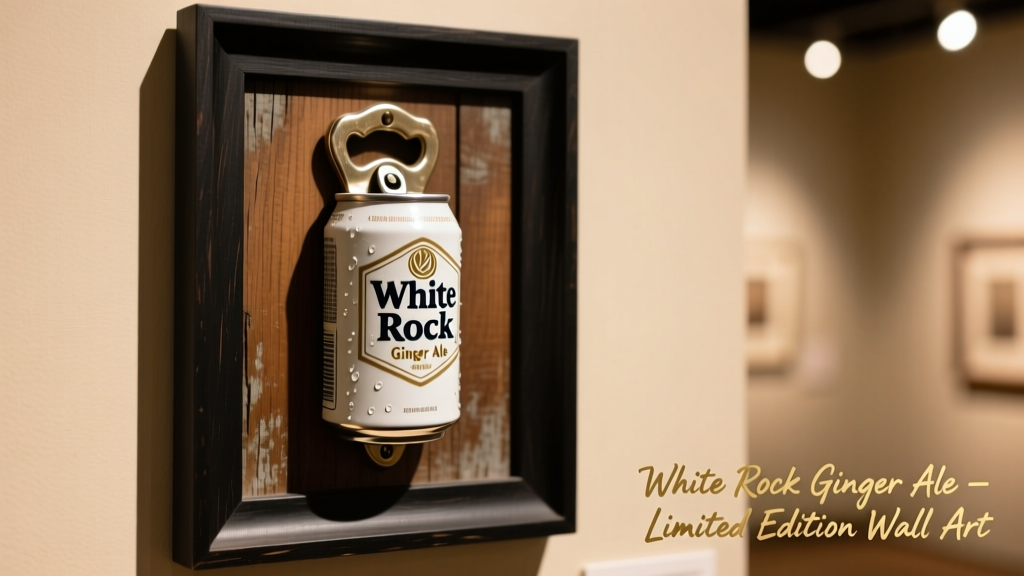
White Rock Ginger Ale Bottle Openers: History, Authentication, and Market Value of Wall-Mounted Vintage Advertising

Inherited Sofa Is Grand But Should It Stay Or Should It Go?
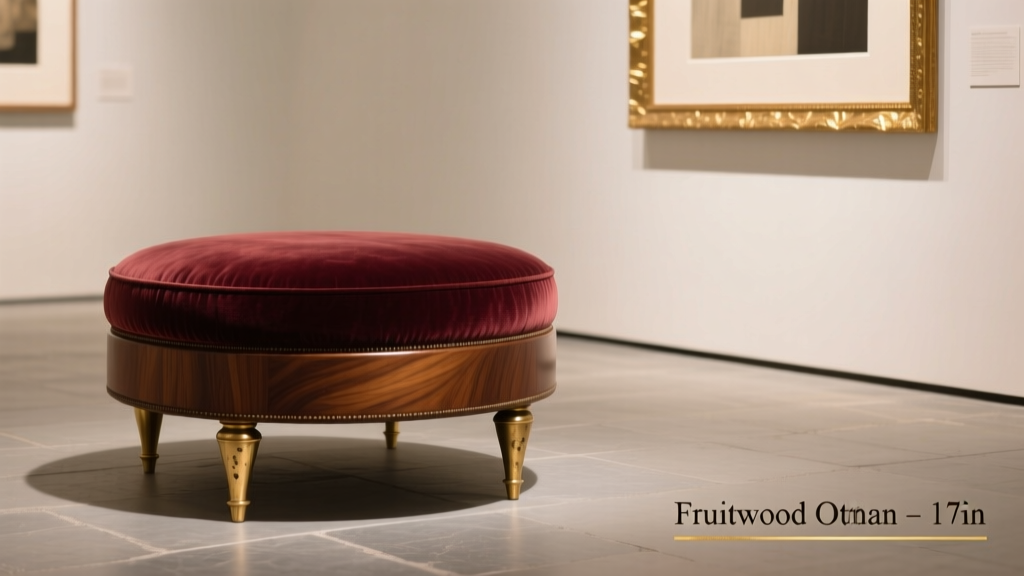
Furniture Ottoman: Fruitwood Upholstered Seat, Round 17-Inch — Authentication, Provenance, and Market Analysis

Franciscan Platter Ivy 12½-Inch: Authentication, Market Value, and Production History
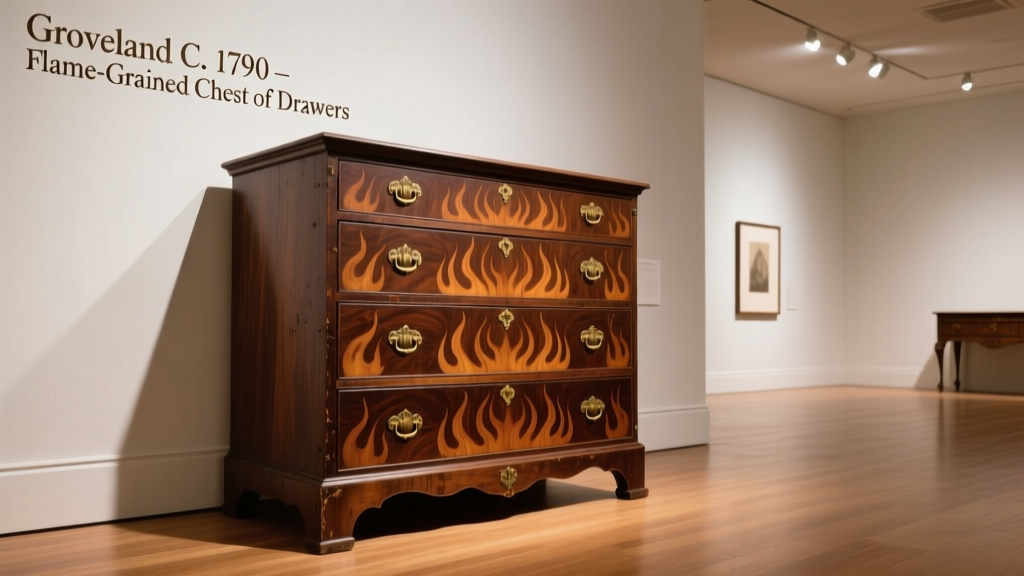
Shaker Chest of Drawers, Groveland, c. 1790: Authentication, Provenance, and Flame-Grained Maple Analysis

New Martinsville Cake Stand Prelude Footed: Authentication, Market Value, and Design Legacy

Game Game of Hollywood Stars (1955): Authentication, Market Value, and Cultural Significance of a Mid-Century Celebrity Board Game
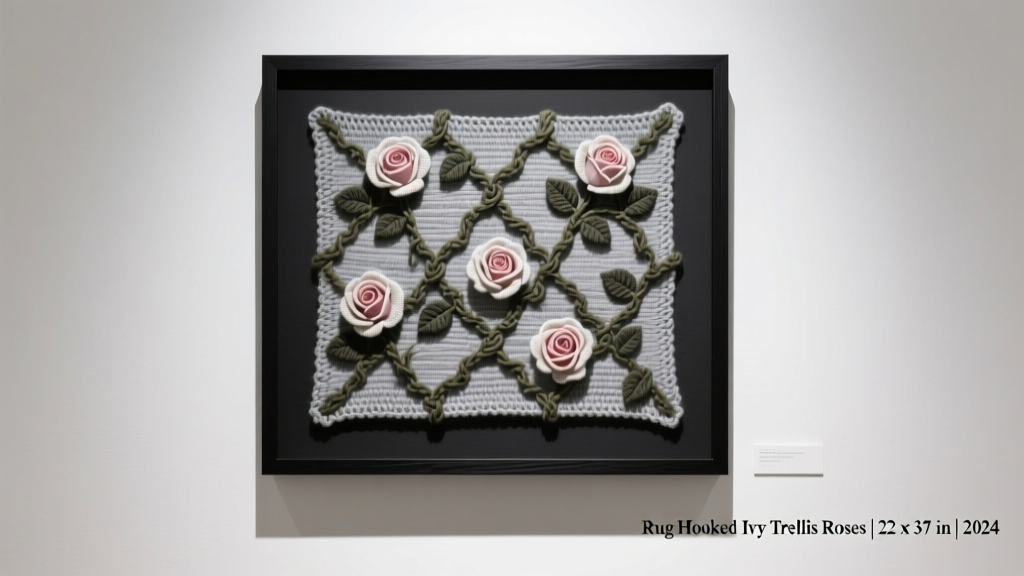
Authentication and Market Analysis: Rugs Hooked Ivy Trellis Roses 2-Tone Gray Ground (22 × 37 in)

Mepoco Japan Pottery Identification: Marks, Manufacturing History, and Authentication Protocol