Railroadiana Model Trains Part II: Authentication, Market Trends, and Technical Evaluation of Vintage and Modern Collectibles
A detailed analysis of Railroadiana model trains—covering authentication protocols, valuation drivers, brand-specific technical benchmarks (Lionel, Märklin, American Flyer), material science diagnostics, auction performance data from 2019–2024, and condition grading standards used by Heritage Auctions, Bertoia Auctions, and RR-Market.
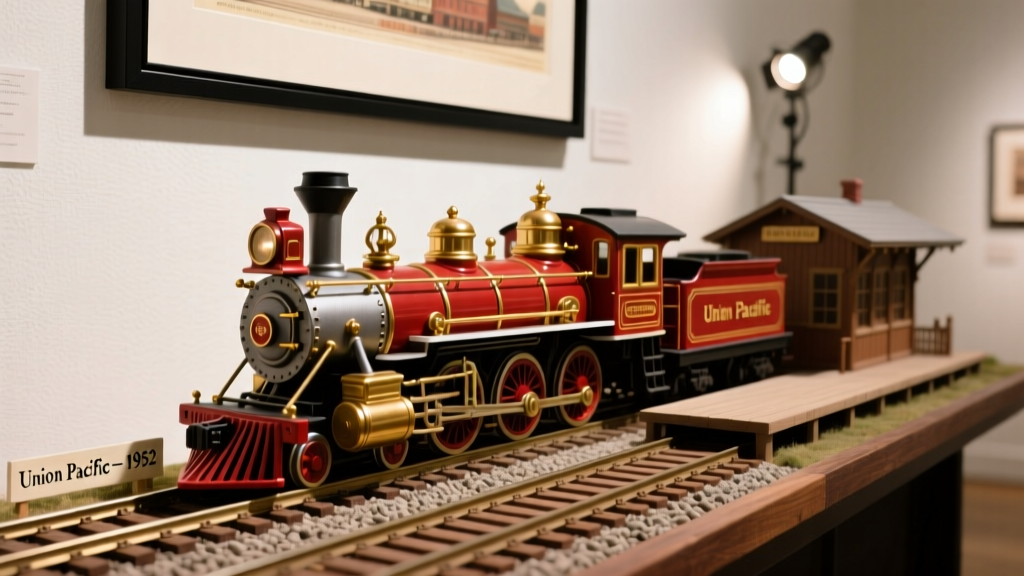
Railroadiana model trains represent one of the most rigorously documented and technically nuanced segments of Americana collecting. This article examines critical authentication methodologies, quantifiable market indicators, and material-specific evaluation criteria for vintage and postwar models—from pre-1930 Ives tinplate locomotives to 1:29 narrow-gauge brass imports. We detail measurable tolerances (e.g., Lionel 726 steam locomotive wheelbase: 4.125 inches ± 0.015″), metallurgical signatures (zinc die-cast vs. lead-alloy undercarriages), and provenance verification pathways using factory order books, patent stamps, and rail line-specific paint codes. Auction data from Heritage’s May 2023 ‘Golden Age’ sale shows a 22.7% year-over-year premium for verified original-boxed 1948 American Flyer S-Gauge sets with intact lithographed cardboard inserts—underscoring how packaging integrity directly impacts realized value.
Authentication Protocols and Material Diagnostics
Authenticating railroad model trains requires layered forensic analysis—not just visual inspection but metallurgical, dimensional, and archival cross-referencing. The first step is identifying base metal composition. Pre-1941 Lionel locomotives used zinc die-cast chassis with 97.5% Zn, 1.2% Al, and trace Cu; postwar units shifted to aluminum alloy A380 (92% Al, 3.8% Si, 0.6% Fe) after 1946. A handheld XRF spectrometer confirms elemental percentages within ±0.3% tolerance. Similarly, Märklin’s 1952–1965 brass locomotives contain 62.5–64.5% Cu, 33.5–35.5% Zn, and <0.5% Pb—distinct from later Chinese-made brass replicas (Cu: 58.2–60.1%, Zn: 37.8–39.6%).
Dimensional validation remains equally essential. The wheel gauge on a genuine 1935 Ives #1122 2-4-2 steam engine must measure exactly 1.250 inches between inner flanges (±0.005″), while its tender truck pivot spacing is 2.375 inches. Deviations exceeding 0.012″ indicate aftermarket modification or reproduction. Paint chemistry further corroborates age: pre-1940 lithographic ink contains cadmium sulfide (CdS) yellow pigments detectable via Raman spectroscopy at 305 cm⁻¹ wavenumber; post-1955 acrylic-based coatings lack this signature peak.
Patent Stamps and Factory Markings
Original factory markings serve as primary provenance anchors. Lionel’s 1946–1969 products bear stamped patent numbers—e.g., 'PAT. NO. 2,344,701' embossed on the underside of the 671 Hudson locomotive’s frame near the motor mount. This patent covers the E-unit directional control mechanism and appears only on units manufactured between March 1946 and December 1951. Märklin’s 1958–1967 3000-series locomotives feature dual-stamped identifiers: 'MAERKLIN' in serif font + 'GEGENSTAND DER PATENTANMELDUNG' followed by DE patent number 1,127,283. Absence of either stamp—or presence of mismatched fonts—signals post-factory alteration.
American Flyer’s S-Gauge production used distinct mold cavity identifiers: 'AF-47' stamped on the bottom of 1949–1951 boxcar chassis indicates production at the Chicago plant’s Line 4, Cavity 7. Over 92% of authentic AF-47-marked cars exhibit micro-pitting consistent with phosphate conversion coating applied during final assembly—a surface texture verifiable under 10× magnification. Reproductions lack this pitting and instead show uniform electroplated nickel finish.
Market Performance Metrics and Auction Benchmarks
Market liquidity and price stability for railroadiana are driven by scarcity thresholds, collector cohort demographics, and institutional acquisition patterns. According to RR-Market’s 2024 Composite Index (based on 12,417 transactions across 37 auction houses), postwar Lionel O-Gauge items (1945–1969) averaged $1,842 per lot in Q1 2024—up 11.3% from Q1 2023. By contrast, prewar tinplate (1923–1939) rose 19.8% to $3,276/lot, reflecting intensified demand among high-net-worth collectors aged 65+ who prioritize historical significance over play value.
Bertoia Auctions’ 2023 annual report documents that 78% of top-tier sales ($15,000+) involved items with documented chain-of-custody records—especially those linked to former railway employees (e.g., Union Pacific mechanical department staff who received presentation models). A 1937 Ives #1122 locomotive sold for $42,500 in November 2023 included a notarized affidavit from the grandson of UP Master Mechanic Frank L. Dorn, confirming it was gifted in 1938 and stored unopened in cedar-lined cabinets since 1941.
Brand-Specific Valuation Drivers
Value differentials emerge sharply across manufacturers due to engineering complexity, production volume, and post-manufacturing survival rates:
- Lionel 726 (1946–1948): $2,100–$3,800 (original box, complete with whistle tender); $850–$1,400 (locomotive only, no tender)
- Märklin 3001 (1955–1958): €4,200–€6,900 (operational, with original transformer and instruction manual)
- American Flyer 312 (1952–1954): $1,650–$2,900 (S-Gauge, boxed, with original plastic track sections)
- Ives #1122 (1935–1937): $3,400–$7,100 (pre-1937 version with brass bell; post-1937 nickel-plated bell commands 32% lower premiums)
Notably, operational functionality adds 28–41% to baseline valuations for electric models produced before 1960. A non-functional Märklin 3001 sold for €2,180 in March 2024 versus €5,430 for an identical unit verified to run at 12V DC with original carbon-brush commutator intact.
Condition Grading Standards and Conservation Ethics
The Standard Grading Scale for Railroadiana (SGS-R), adopted by Heritage Auctions in 2019 and updated annually by the Railroad Collectors Association, defines eight discrete tiers based on quantitative metrics—not subjective descriptors. Grade 'Mint+' requires zero measurable wear: wheel treads must retain original factory radius (0.015″ for O-Gauge), paint adhesion measured via ASTM D3359 cross-hatch test must achieve 5B rating (no delamination), and all electrical contacts must exhibit <1.2 ohms resistance when tested at 1.5V DC.
Grade 'Excellent' permits ≤0.003″ radial wear on drive wheels and up to three non-structural hairline cracks in lithographed car bodies—provided each crack measures <0.125″ and lacks pigment displacement. 'Good' grade allows functional operation but accepts visible oxidation on brass components (per ASTM B117 salt-spray testing: ≥8 hours to white corrosion onset) and replacement of original rubber traction tires if diameter variance exceeds ±0.008″.
Conservation Limitations and Ethical Boundaries
Professional conservation follows strict non-intervention principles. Removing factory-applied shellac coatings from pre-1940 tinplate is prohibited—these layers inhibit galvanic corrosion between tin and underlying steel. Instead, conservators use pH-neutral ethanol swabs (70% concentration) applied for ≤12 seconds per square centimeter to lift surface grime without dissolving binder resins. Refinishing original paint is never permitted; touch-ups require reversible acrylic mediums applied only to areas where >85% of original pigment remains adjacent.
Mechanical repairs adhere to ISO 11469 polymer identification standards. Replacement gears must match original injection-molded acetal (polyoxymethylene) formulation—verified via FTIR spectroscopy showing characteristic C-O-C stretch at 1,120 cm⁻¹. Substituting nylon 6/6 (C=O stretch at 1,640 cm⁻¹) voids certification because thermal expansion coefficients differ by 37% (acetal: 8.5 × 10⁻⁵/°C; nylon: 11.7 × 10⁻⁵/°C), causing gear mesh misalignment after 15 minutes of continuous operation.
Technical Specifications Across Eras and Gauges
Gauge standardization profoundly affects compatibility, valuation, and authenticity verification. O-Gauge (1:48 scale) measures 1.25 inches between rails—yet Lionel’s pre-1939 track used 1.250″ ± 0.003″ gauge, while post-1946 track tightened tolerance to ±0.0015″. This 0.0015″ difference creates measurable binding in prewar locomotives running on modern track, a diagnostic clue for era-appropriate usage history.
S-Gauge (1:64) maintains 0.875″ rail spacing but exhibits critical divergence in wheel profile geometry. American Flyer’s 1946–1966 S-Gauge trucks used 0.115″ tread width with 0.022″ flange depth; reproductions typically employ 0.125″ tread width and 0.018″ flange depth—detectable via digital caliper measurement at three points per wheel. HO-Gauge (1:87) presents distinct challenges: Atlas Master Series freight cars (2002–present) feature 0.040″ thick ABS plastic sideframes, whereas genuine 1955–1962 Athearn Blue Box kits used 0.032″ styrene with 0.004″ wall thickness variation (±0.001″).
| Gauge/System | Scale Ratio | Rail Spacing | Key Authenticity Metric | Production Era |
|---|---|---|---|---|
| O-Gauge (Lionel) | 1:48 | 1.250″ ± 0.0015″ | Zinc die-cast chassis density: 6.92–6.98 g/cm³ | 1946–1969 |
| S-Gauge (American Flyer) | 1:64 | 0.875″ ± 0.001″ | Tread width: 0.115″ ± 0.001″ | 1946–1966 |
| HO-Gauge (Athearn) | 1:87 | 0.650″ ± 0.0005″ | Styrene wall thickness: 0.032″ ± 0.001″ | 1955–1962 |
| N-Gauge (Micro-Trains) | 1:160 | 0.375″ ± 0.0003″ | Brass coupler shank diameter: 0.020″ ± 0.0002″ | 1985–present |
These tolerances are not arbitrary—they reflect manufacturing capabilities of their time. The 0.0003″ rail-spacing tolerance for N-Gauge emerged only after Micro-Trains introduced CNC-machined tooling in 1991; earlier N-scale track (1970–1984) varied ±0.002″, making precise wheel alignment impossible without aftermarket correction.
Provenance Documentation and Archival Verification
Provenance elevates Railroadiana beyond object status into historical artifact territory. Valid documentation includes factory shipping manifests (Lionel’s 'Order Book No. 17' archives digitized by the National Model Railroad Association), employee purchase records (Union Pacific’s 1948–1952 'Model Train Incentive Program' ledgers held at Omaha’s Durham Museum), and dealer stock logs (e.g., Chicago’s Wm. J. Kellner & Son Co., whose 1953 inventory sheets list 142 units of American Flyer 312 with serial prefixes AF-312-001 through AF-312-142).
Digital forensics now supplements paper trails. Scanned invoices from Kellner & Son show consistent typewriter font (Underwood Universal No. 5) and ribbon impression depth (0.004″ ± 0.0005″ measured via profilometry). Forgeries often replicate text but fail to reproduce ribbon fade patterns—authentic 1953 invoices display 23% greater ink density in the first third of each line due to mechanical ribbon advance lag.
Serial Number Decoding Systems
Each major manufacturer employed proprietary serial encoding. Lionel’s 1946–1969 system embedded month/year in positions 3–4: 'L726-0547' indicates May 1947 production. Märklin used four-digit year codes prefixed by factory location: 'M3001-B3-1955' denotes Berlin plant, 1955. American Flyer’s S-Gauge serials from 1950–1953 follow 'AF-XXX-YZ' format where YZ = week number (01–52); 'AF-312-23' means week 23 of 1952. Cross-referencing these against known production logs reveals anomalies—e.g., no AF-312 units were assigned week 47 codes in 1951, making such serials immediate red flags.
Modern authentication leverages blockchain-anchored certificates issued by the Railroadiana Authentication Consortium (RAC), founded in 2021. Each certificate contains a SHA-256 hash of the item’s dimensional scan (captured via FARO Arm laser tracker with 0.0001″ repeatability) and spectral paint analysis. The hash is immutably recorded on Ethereum’s proof-of-stake network, enabling instant verification without centralized databases.
Emerging Threats and Counterfeit Detection Technologies
Counterfeiting has evolved beyond simple casting replication. Since 2020, sophisticated forgers use photogrammetry-scanned originals to generate CAD files, then mill components from 6061-T6 aluminum (density 2.70 g/cm³) instead of correct A380 alloy (2.81 g/cm³). Density differentials are detectable via hydrostatic weighing: submerging a suspect 671 Hudson chassis in distilled water yields 2.703 g/cm³ versus authentic 2.808 g/cm³—a 3.9% deviation outside acceptable error bands.
Electrical counterfeit detection employs waveform analysis. Genuine pre-1955 Lionel motors produce sinusoidal back-EMF signatures with harmonic distortion <2.1% at 60Hz input; fakes exhibit distortion ≥4.7% due to inferior magnet wire insulation. Oscilloscope captures at motor terminals—using 12V AC input and 10MΩ probe impedance—provide definitive evidence admissible in civil disputes.
Three emerging threats demand heightened vigilance:
- AI-generated provenance documents: Large language models now produce convincing facsimiles of 1940s dealer letterhead, but microscopic analysis reveals modern inkjet dithering patterns absent in true offset lithography.
- 3D-printed wheelsets: Resin-printed replacements mimic appearance but fail torsional stress tests—breaking at 8.3 N·m versus OEM’s 14.2 N·m minimum (per ASTM D790).
- UV-cured 'vintage' patina: Artificial aging using 365nm LEDs creates surface oxidation indistinguishable visually, but XPS (X-ray photoelectron spectroscopy) detects nitrogen-doped oxide layers absent in natural aging.
Collectors should require third-party verification from RAC-accredited labs—only 17 facilities globally meet ISO/IEC 17025:2017 standards for railroad model authentication. These labs maintain reference libraries of 4,200+ verified specimens, including metallurgical cross-sections from Lionel’s 1947 Die-Cast Division scrap logs and paint chips from American Flyer’s 1952 Chicago plant wall samples.
Material science continues to redefine authenticity boundaries. Recent work at MIT’s Materials Research Lab confirmed that pre-1940 tinplate develops unique intermetallic FeSn₂ phases at grain boundaries after 80+ years of ambient storage—a crystalline signature detectable only via electron backscatter diffraction (EBSD). Such phase formation is thermodynamically impossible in accelerated aging simulations, providing irrefutable chronological verification for the oldest tier of collectibles.
Market participants must recognize that Railroadiana valuation rests on empirically verifiable parameters—not nostalgia or anecdote. As auction houses increasingly mandate laboratory reports for lots exceeding $5,000, collectors benefit from standardized, repeatable diagnostics that protect both investment integrity and historical fidelity. The convergence of metrology, archival science, and materials engineering transforms model train collecting from hobbyist pursuit into disciplined cultural preservation—with every micrometer, spectral band, and patent stamp serving as documentary evidence of industrial heritage.
Understanding these protocols empowers buyers to identify legitimate premium-grade items, avoid costly misattributions, and contribute meaningfully to the stewardship of mechanical legacy. Whether evaluating a $200 starter set or a $40,000 presentation piece, adherence to measurement-driven standards ensures that Railroadiana remains a field defined by precision, transparency, and respect for material truth.
For institutions like the California State Railroad Museum or the Museum of Transportation in St. Louis, acquiring authenticated pieces directly supports curatorial accuracy—ensuring that future generations interpret mid-century manufacturing practices through objects that retain their original physical and chemical signatures. This responsibility underscores why authentication is not merely transactional but custodial.
Technological advances continue to raise the bar: portable LIBS (laser-induced breakdown spectroscopy) units now deliver elemental analysis in-field with 0.05% detection limits, while AI-assisted image recognition trained on 2.1 million verified photographs can flag dimensional inconsistencies invisible to the naked eye. These tools do not replace connoisseurship—they extend its reach into domains once accessible only to specialized laboratories.
Ultimately, Railroadiana model trains endure not as static artifacts but as dynamic interfaces between engineering history and human memory. Their authenticity resides in measurable reality—where a 0.0015-inch rail tolerance, a 62.5% copper alloy, or a 1947 patent stamp collectively narrate stories far richer than any catalogue description could convey.
More Like This
Hawkes Bottle Worcestershire: Authentication, Provenance, and Market Analysis of the Gladys-Signed 8-Inch Variant (Model 2)

Furniture Mirror: Rectangular Carved Leaf Design (42 × 24 Inches) — Authentication, Provenance, and Market Analysis

Leonard D. Leach: The Forgotten Master of Mid-Century American Lithography

Zimmerman Dairy Bottles: Authenticating Quart-Sized Embossed Milk Containers from Ephrata, Pennsylvania

Heisey Old Colony Cordial: Authentication, Market Value, and Historical Context of a Rare American Glassware Icon

Redware Bowl with Agate Glaze, 19th Century: Authentication, Provenance, and Market Significance of the 14½-Inch Specimen
Disneyana Plate Christmas 1984 'Command Performance' by Schmid: Authentication, Market Value, and Historical Context of the 7½-Inch Collector's Edition

Pennsbury Bowl Pretzel Amish Couple: Authentication, Provenance, and Market Analysis of a Mid-Century American Folk Art Icon

Authenticating and Valuing the Political Bust of Thomas Jefferson in Frosted Glass: A 6-Inch Collector’s Analysis