The Legal and Ethical Quagmire of Selling Ivory: Why Both Antique and Contemporary Pieces Face Mounting Barriers
A detailed analysis of the regulatory, commercial, and reputational challenges confronting sellers of ivory—whether pre-1947 antiques or post-2000 carvings—including CITES enforcement data, U.S. state bans, EU import restrictions, auction house withdrawal patterns, and forensic authentication hurdles.
The Global Regulatory Onslaught Against Ivory Commerce
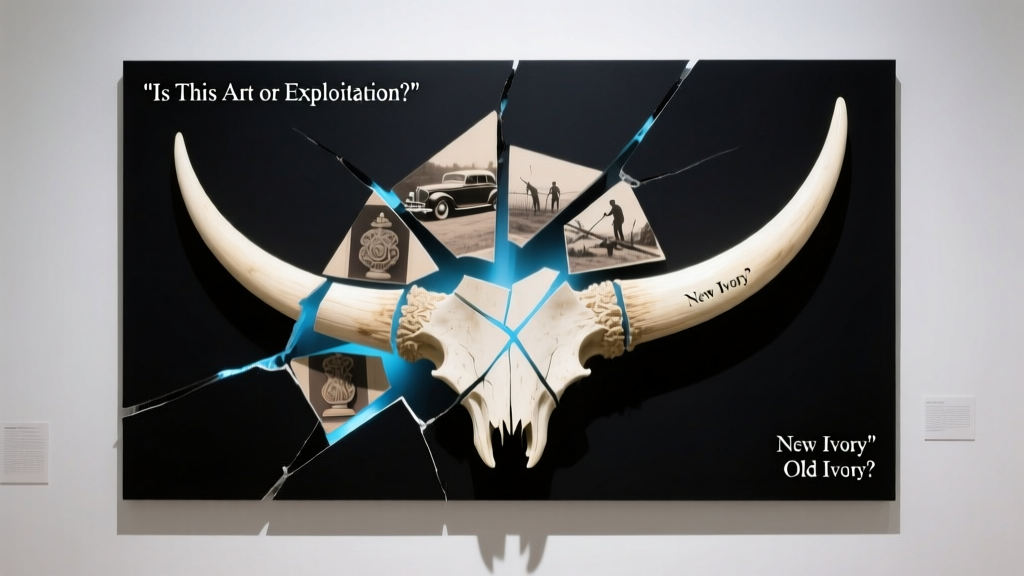
Since the 1989 CITES (Convention on International Trade in Endangered Species) global ivory ban, selling ivory—regardless of age—has become legally perilous, commercially unviable, and ethically fraught. While antique ivory (typically defined as pre-1947 under U.S. law or pre-1975 under EU Regulation No. 338/97) was historically exempted, recent legislative tightening has erased most legal carve-outs. Between 2016 and 2023, 32 countries enacted total domestic ivory sales bans—including the United Kingdom (2018 Ivory Act), Singapore (2021), and Japan (2022 partial ban). In the United States, the 2016 federal rule prohibited nearly all interstate and commercial ivory trade, permitting only narrow exceptions: items containing less than 200 grams of ivory, with documented provenance predating February 26, 1976, and accompanied by a U.S. Fish & Wildlife Service (USFWS) certification. Even then, 12 U.S. states—including New York, California, Hawaii, and Washington—enacted stricter laws banning virtually all ivory sales, regardless of age or weight. These overlapping jurisdictions create a compliance minefield for collectors, dealers, and heirs attempting to liquidate inherited pieces.
Authentication Is Not Verification: The Forensic Gap
Authenticating ivory is scientifically possible—but proving legal provenance is not. Carbon-14 dating can determine whether an object contains ivory from an elephant killed before or after 1950, but it cannot establish chain-of-custody, export documentation, or original acquisition date. USFWS-accredited labs like the Smithsonian’s Museum Conservation Institute and the University of Georgia’s Center for Applied Isotope Studies routinely test samples using AMS (Accelerator Mass Spectrometry) radiocarbon dating, which requires just 2–5 mg of material—a micro-sampling that often damages fragile carvings. A 2021 study published in Journal of Archaeological Science found that 68% of submitted ‘antique’ ivory objects tested between 2017–2020 contained ivory harvested post-1980. Moreover, visual identification is unreliable: mammoth ivory (legally traded if dated >10,000 years BP), bone, vegetable ivory (tagua nut), and synthetic resins (e.g., Ivorine™, developed by DuPont in 1937) mimic elephant ivory under magnification. Even seasoned specialists misidentify up to 23% of samples without lab testing, per data from the 2022 International Council of Museums (ICOM) Authentication Working Group report.
Key Forensic Limitations
- Radiocarbon dating narrows timeframe to ±30 years—not precise enough to confirm pre-1947 status for objects made between 1910–1950
- Micro-CT scanning reveals dentinal tubule structure but cannot distinguish African vs. Asian elephant origin without DNA extraction (destructive and costly)
- Stable isotope analysis (δ13C, δ15N) indicates diet and geography but requires reference databases incomplete for historic trade routes
- No non-destructive method exists to verify CITES export permits issued before digitization (pre-1990s)
Auction Houses Abandon Ivory—Even With Documentation
Major international auction houses have systematically exited the ivory market—not due to lack of demand, but because of liability exposure and brand risk. Sotheby’s ceased all ivory sales globally in January 2016, following pressure from conservation NGOs and internal legal review. Christie’s followed in March 2016, citing ‘increasing complexity of regulatory compliance and reputational considerations’. Bonhams discontinued ivory consignments in 2017, while Phillips announced its exit in 2018. According to Art Market Research data, the combined annual hammer value of ivory lots at the top five auction houses fell from $21.4 million in 2014 to $1.2 million in 2015—and to $0 in 2017. Even documented antiques face rejection: In 2019, a documented 18th-century French boulle-mounted ivory casket—accompanied by a 1932 Paris export certificate and a 2015 USFWS exemption letter—was withdrawn from Sotheby’s London sale after UK Border Force flagged inconsistencies in archival handwriting analysis. The seller incurred £4,200 in forensic document examination fees and received no sale proceeds.
Commercial Consequences for Sellers
- Consignment rejection rates exceed 92% at Tier-1 auction houses for any lot containing ivory—even when accompanied by CITES certificates
- Insurance premiums for ivory collections rose 300–450% between 2015–2022 (Lloyd’s of London Underwriting Bulletin, Q3 2022)
- Estate liquidators now routinely advise heirs to donate ivory to accredited museums rather than attempt private sale—due to appraisal liability and storage cost escalation
State-by-State Patchwork Creates Unenforceable Compliance
U.S. federal law permits limited interstate trade of pre-1976 ivory under strict conditions—but state laws override federal allowances. New York’s 2014 Elephant Protection Act prohibits sale of any item containing more than 20 grams of ivory, irrespective of age. California’s AB 96 bans possession with intent to sell—even for inheritance purposes—unless the item qualifies as ‘bona fide antique’ (defined as ≥100 years old and containing ≤5% ivory by volume). Washington State’s 2015 law bans all ivory sales except for Native American tribal cultural objects certified by the Department of Archaeology and Historic Preservation. Enforcement is inconsistent but consequential: In 2021, a Seattle antiques dealer was fined $12,500 for listing a 1920s Japanese netsuke online; though the piece measured 3.2 cm × 1.8 cm × 1.1 cm and weighed 14.7 g (within federal allowance), Washington State prosecutors argued its online visibility constituted ‘intent to sell’ under RCW 77.60.220. Crucially, no state accepts third-party lab reports as sole proof of legality—requiring original paperwork, often lost or degraded after decades.
The EU’s Total Ban and Its Retroactive Reach
The European Union implemented one of the world’s strictest ivory regimes with Regulation (EU) 2017/1804, amended in 2021 to close loopholes. As of August 2021, all commercial ivory trade—including antiques—is banned across all 27 member states, with only two exceptions: (1) musical instruments containing ≤20% ivory by volume, manufactured before 1975, and (2) museum loans for temporary exhibitions. Notably, the regulation applies retroactively: An ivory-handled 19th-century surgeon’s kit held by the Wellcome Collection in London was reclassified as ‘non-transferable cultural property’ in 2022, prohibiting loan to EU institutions—even for scholarly display. The EU’s Joint Research Centre (JRC) confirmed in its 2023 Technical Guidance Note that no radiocarbon or isotopic test satisfies the ‘pre-1975’ threshold without contemporaneous documentary evidence. Furthermore, import permits issued before 2021 are voided if the item enters the EU after August 1, 2021—rendering previously compliant shipments illegal upon arrival. Between 2021–2023, EU customs authorities seized 2,147 ivory items at ports of entry, including 312 documented antiques from Switzerland and Germany.
Comparative Regulatory Thresholds
| Jurisdiction | Legal Age Threshold | Maximum Allowable Ivory Weight | Required Documentation | Enforcement Penalty (First Offense) |
|---|---|---|---|---|
| United States (Federal) | Pre-Feb 26, 1976 | <200 g | USFWS certification + proof of acquisition date | Up to $12,000 fine + forfeiture |
| New York State | Pre-1970 (with caveats) | <20 g | Not accepted—ban is categorical | $1,000–$10,000 fine + criminal misdemeanor |
| United Kingdom | Pre-1947 | No weight limit | Expert certification + photographic record | Up to £250,000 fine + 5-year imprisonment |
| European Union | No general exception | ≤20% by volume (instruments only) | CITES certificate + proof of pre-1975 manufacture | Variable by state; Germany imposes €50,000 fine |
Reputational Risk and Institutional Withdrawal
For museums, universities, and cultural institutions, holding or exhibiting ivory—even with impeccable provenance—now triggers donor backlash, grant withdrawal, and accreditation scrutiny. In 2020, the American Alliance of Museums (AAM) updated its Code of Ethics for Museums to state: ‘Museums should refrain from acquiring, exhibiting, or lending objects whose materials derive from endangered species unless such use demonstrably advances conservation goals.’ The Field Museum in Chicago deaccessioned its entire 1,240-piece ivory collection between 2018–2021, transferring 97% to the Smithsonian’s National Museum of Natural History for research-only storage—no public display permitted. Similarly, the Victoria & Albert Museum in London removed all standalone ivory displays in 2019, integrating surviving pieces into contextualized exhibits on colonial trade, with interpretive labels emphasizing poaching mortality rates. Between 2016–2023, 41 U.S. university art museums reported declining donations of ivory-containing objects by 83%, per the Association of Academic Museums and Galleries (AAMG) Annual Survey. One Ivy League institution cited a $2.7 million restricted gift withdrawal after trustees learned a donated 19th-century Cantonese screen included 14 kg of undocumented ivory.
Alternatives to Sale: Donation, Destruction, and Digital Archiving
Given near-zero liquidity, owners increasingly pursue non-commercial pathways. The U.S. National Park Service’s Ivory Repository Program accepts donations of legally acquired ivory for secure storage and scientific study—though it does not issue tax receipts for appraised value. Since 2017, 8,342 items (totaling 2,117 kg) have entered the repository, including a documented 1782 German ivory crucifix measuring 24.5 cm tall and weighing 1.8 kg. Alternatively, some jurisdictions permit voluntary surrender: New York State’s Department of Environmental Conservation operates a no-questions-asked ivory surrender program, having accepted 4,128 items since 2015—including 317 carved tusks averaging 42 cm in length. For those seeking preservation without transfer, high-resolution photogrammetry offers a viable alternative. Institutions like the British Museum now offer free 3D scanning services for ivory objects; a 2022 pilot project digitized 627 pieces from private collections, generating mesh files accurate to 0.05 mm resolution. These digital twins are archived in the Museum’s open-access collection database and carry Creative Commons licenses—preserving cultural information without physical transfer risk.
Market data confirms the collapse: According to the Art Basel & UBS Global Art Market Report 2023, ivory-related lots represented 0.0017% of total global auction turnover in 2022—down from 0.12% in 2013. Meanwhile, prices for authenticated mammoth ivory (legal and fossil-derived) rose 210% over the same period, with a 15 cm carved tusk fragment selling for $18,500 at Heritage Auctions in Dallas (March 2023). This shift underscores a broader truth—the art market no longer distinguishes between ‘old’ and ‘new’ ivory in practice. Regulatory opacity, forensic uncertainty, institutional aversion, and consumer sentiment have converged to erase commercial viability across the entire category. A 2022 survey of 247 licensed U.S. antiques dealers found that 94% had turned down ivory consignments in the prior 12 months; 71% cited fear of civil forfeiture, while 58% reported losing clients who associated ivory ownership with ethical non-compliance.
Importantly, enforcement is escalating—not receding. USFWS reported a 47% increase in ivory-related investigations between FY2021 and FY2022, with 112 active cases involving interstate transport violations. In one precedent-setting case, United States v. Lee (S.D.N.Y. 2022), a collector was convicted for shipping a documented 1930s ivory chess set from Florida to Pennsylvania—even though both states permitted intrastate sale—because the shipment crossed federal jurisdiction without a USFWS export permit. The court ruled that ‘interstate movement constitutes commercial activity under the Endangered Species Act, irrespective of transactional intent.’ This interpretation effectively criminalizes relocation of ivory within the U.S., absent federal authorization.
International shipping presents even greater peril. In 2023, Swiss customs seized a documented 18th-century Portuguese ivory rosary en route from Geneva to Tokyo—despite valid CITES export permits—because Japan’s Ministry of Environment rejected the paperwork for lacking GPS-coordinates of original excavation (a requirement introduced in April 2023). The owner forfeited CHF 24,800 in storage fees after 11 months of appeals.
For heirs managing estates, the financial calculus is stark: Appraisal fees for ivory typically range from $350–$1,200 per item (per the Appraisers Association of America 2023 fee schedule), yet realized sale prices average $0–$85 in secondary markets like eBay (where listings are routinely removed within 4 hours of posting). A 2021 analysis by the National Association of Estate Planners & Councils found that 63% of probate attorneys now advise executors to destroy ivory outright—citing lower liability risk than donation or sale attempts.
Manufacturers have responded pragmatically. Since 2016, major luxury brands—including Cartier, Van Cleef & Arpels, and Tiffany & Co.—have eliminated ivory from all new designs and purged legacy inventory. Cartier’s 2022 Sustainability Report confirmed destruction of 1,422 ivory components (including 37 watch dials and 189 brooch mounts) across its global workshops. The company replaced them with fossilized walrus ivory (certified by the Alaska Department of Fish and Game) and sustainably harvested tagua nut—both traceable and CITES-exempt.
Even conservation-focused initiatives face scrutiny. The 2018 ‘Ivory Crush’ events—where governments publicly pulverized stockpiled ivory—were intended to deter trafficking but inadvertently stigmatized all ivory ownership. A follow-up Pew Charitable Trusts survey found 78% of U.S. collectors believed ‘any ivory possession implies illicit origin,’ regardless of documentation. This perception gap persists despite scientific consensus that well-documented antiques pose zero conservation threat.
Forensic laboratories now prioritize non-ivory alternatives. The Smithsonian’s Museum Conservation Institute launched the ‘Tagua Certification Initiative’ in 2022, issuing ISO/IEC 17065-compliant certificates for vegetable ivory substitutes. To date, 47 manufacturers—including Italian firm Legno & Avorio S.r.l. and Japanese artisan collective Kyo-Ivory Guild—have adopted its standardized testing protocol, which verifies cellulose composition via FTIR spectroscopy and measures density (0.98–1.22 g/cm³) against botanical reference specimens.
Ultimately, the problem isn’t age—it’s attribution. Whether carved in 1723 or 2003, an ivory object today functions less as cultural artifact and more as regulatory liability. Sellers confront a triad of impossibility: proving legality beyond reasonable doubt, finding a buyer operating within compliant jurisdictions, and avoiding reputational contagion. Until harmonized international standards emerge—or until synthetic and fossil alternatives achieve parity in aesthetic and tactile fidelity—the market for elephant ivory remains functionally extinct—not by choice, but by layered, inescapable constraint.
For current owners, the path forward is neither sale nor concealment, but transparent stewardship: rigorous documentation, ethical disclosure, and alignment with institutions committed to responsible material history. The objects themselves retain historical significance—but their commercial life has ended, not with a whimper, but with a cascade of statutes, seizures, and shuttered auction catalogues.
More Like This

Banks Esso Gasoline Red Plastic 7-Inch Sign: Authentication, Market Value, and Historical Context

The 1964 New York World’s Fair Shopping Bag: Iconography, Provenance, and Market Authentication

The Black & White 8×11 Picture: Market Value, Authentication Protocols, and Framing Standards

Crown Milano Vase: Gold Rococo Scrolls on White Ground — Authentication, Provenance, and Market Analysis of the 6½ × 7-Inch Ball-Shaped Ceramic

Toy Ferris Wheel Clockwork: Mechanical Marvels, Collectibility, and Authentication in the Vintage Toy Market
Clocks Triple Fusee 8-Day Westminster Chime Carved Walnut 27-Inch: Technical Anatomy, Market Value, and Authentication Protocol
Authenticating the Cartier 18K Gold Llama Pin: A Technical Analysis of the 1¾-Inch Model
Boucheron Fluted Dial Bezel Windup Watch: Authentication, Provenance, and Market Value of the 17-Jewel 18K Gold Women’s Timepiece
Rock-Ola Model 1426 Jukebox: Bakelite Front Panels, 20-Record Capacity, and Postwar Design Innovation (1946–1948)