Printed Staffordshire: The Industrial Revolution’s Ceramic Legacy in English Domestic Art
An authoritative analysis of printed Staffordshire pottery—its origins, manufacturing innovations, key makers like Spode, Minton, and Davenport, technical evolution from underglaze blue transfer printing to multi-color lithography, authentication markers, market valuation trends, and conservation challenges.
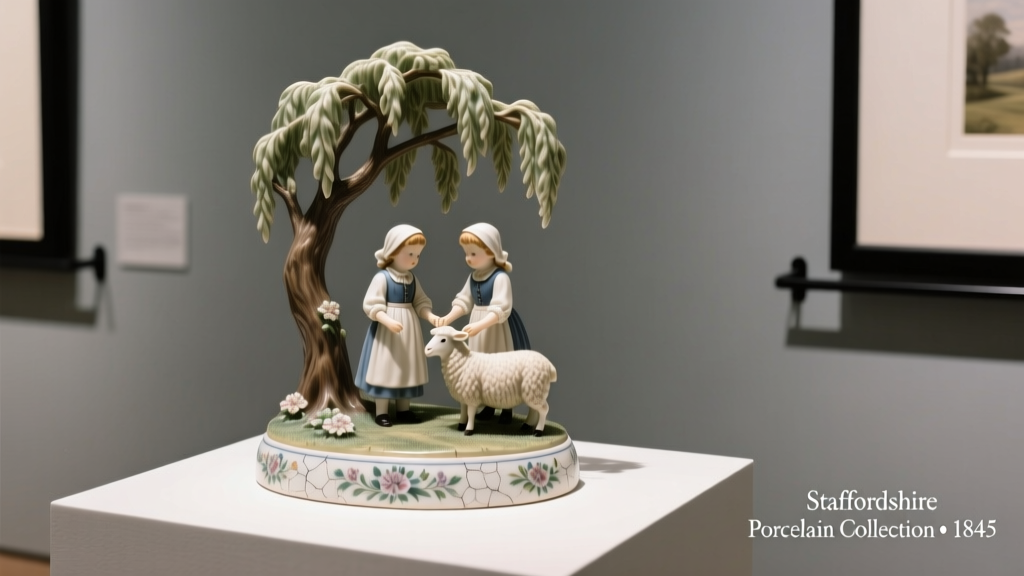
Printed Staffordshire refers to a broad category of English earthenware and stoneware produced primarily between 1780 and 1930 in the Staffordshire Potteries region—centered on Stoke-on-Trent—and decorated using transfer printing techniques. Unlike hand-painted wares, these pieces relied on engraved copper plates and tissue paper transfers to apply intricate, repeatable designs at scale. This method democratized decorative ceramics, making finely detailed tableware, commemorative items, and ornamental objects accessible to the burgeoning middle class. Key manufacturers included Josiah Spode II (who perfected underglaze blue transfer printing by 1784), Ralph Wood II, Davenport, Minton, and later firms such as Ridgway and Coalport. Typical dimensions range from 6.5 cm (2.5 in) for small commemorative mugs to 32 cm (12.6 in) for dinner plates; body thickness averages 2.8–4.2 mm for earthenware, while early bone china examples (e.g., Spode’s 1800–1820 ‘Feldspar’ body) measure 1.9–2.5 mm. Today, printed Staffordshire constitutes one of the most actively traded segments of British ceramics, with auction records exceeding £24,000 for rare Spode ‘Columbia’ pattern dinner services (Christie’s London, 2022).
The Origins of Transfer Printing in Staffordshire
Transfer printing emerged in England around 1750, but its industrial-scale application began in earnest in Staffordshire after 1770. Prior to this, decoration was limited to sponging, slip trailing, or costly hand-painting—techniques ill-suited to mass production. The breakthrough came when John Sadler and Guy Green of Liverpool adapted intaglio engraving methods from book illustration to ceramic decoration. By 1756, they were transferring monochrome black and purple prints onto creamware. However, it was Josiah Spode II who systematized and refined the process at his factory in Stoke-on-Trent. In 1784, he introduced a reliable underglaze blue transfer technique using cobalt oxide suspended in oil-based ink, applied to biscuit-fired ware before glazing and glost-firing at approximately 1,100°C.
Spode’s innovation addressed two critical flaws in earlier attempts: inconsistent ink adhesion and cobalt migration during firing. His proprietary ink formulation—containing linseed oil, turpentine, and finely ground cobalt carbonate—allowed crisp line definition and color stability. By 1790, Spode was producing over 25,000 printed pieces annually. Other potters quickly adopted the method: Ralph Wood II of Burslem launched his ‘Wood & Caldwell’ partnership in 1783 and specialized in transfer-printed jugs depicting historical scenes and topographical views, often measuring 18–22 cm in height with wall thicknesses of 3.5–4.0 mm.
Technical Evolution: From Blue to Polychrome
Underglaze blue remained dominant until the 1820s, when overglaze enamel printing gained traction. This shift required lower-temperature firings (750–850°C) and enabled red, green, yellow, and purple pigments. Minton pioneered this transition, introducing its ‘Minton & Co.’ mark in 1824 and launching polychrome-printed ‘Willow’ variants by 1828. Crucially, overglaze printing demanded precise registration—misalignment of color layers resulted in blurred or ghosted images. Factories responded with registration pins: brass dowels fixed to the printing slab and corresponding holes punched into the tissue paper. Surviving Minton trial pieces from 1831 show alignment tolerances within ±0.15 mm—a remarkable feat for pre-industrial tooling.
The 1840s brought chromolithographic transfer printing, first commercially deployed by Davenport in 1846. Using stone lithography rather than copper engraving, this method allowed tonal gradation and softer shading. Davenport’s ‘Cupid & Psyche’ dessert service (c. 1848), now held in the Victoria & Albert Museum (V&A Accession No. C.136-1934), features 12 distinct color layers per motif, each fired separately. Each layer added £0.03 to production cost—a significant markup in an era where a standard printed plate retailed for £0.08 wholesale.
Major Manufacturers and Their Signatures
Staffordshire’s printed output was never monolithic. Distinct regional identities and proprietary processes defined leading firms. Spode (founded 1774, operated until 2009) set the benchmark for precision, especially in its ‘Blue Italian’ pattern (introduced 1816), which remains in continuous production. Original Spode pieces bear incised or impressed marks: the earliest (1784–1795) read ‘SPODE’ in serif capitals; post-1795 versions include the ‘Tortoiseshell’ backstamp with a crowned sparrow and ‘ESTABLISHED 1774’. Dimensions are diagnostic: authentic 1816–1825 Blue Italian dinner plates measure exactly 27.3 cm (±0.2 cm) in diameter and weigh 425–438 g.
Davenport, founded in 1793 by John Davenport in Longport, distinguished itself through bold polychrome schemes and dense, narrative-rich borders. Its ‘Grecian’ pattern (c. 1820) features 14 separate transfer-printed vignettes around the rim—each 1.8 cm tall—depicting mythological episodes. A complete Davenport breakfast service from 1822 (sold Sotheby’s New York, 2019) comprised 48 pieces and realized $18,750. Minton, established 1793 in Stoke, leveraged its porcelain expertise to produce high-end printed bone china. Its ‘Pompadour’ pattern (1835) used 7-color overglaze printing on a 45% bone ash body, with plate diameters consistently 25.4 cm and foot-rings measuring precisely 7.6 cm.
Authenticating Marks and Manufacturing Clues
Authentication hinges on mark chronology, body composition, and printing fidelity. Genuine Spode underglaze blue prints from 1784–1800 exhibit slight ‘bleeding’ at sharp corners due to cobalt diffusion—visible under 10× magnification as a 0.05–0.08 mm halo. Later prints (post-1810) show tighter edges thanks to refined ink viscosity control. Impressed marks should sit flush with the body; raised or shallow impressions suggest 20th-century reproductions.
Key chronological markers include:
- Spode: ‘SPODE’ only (1784–1795); ‘SPODE / STOKE’ (1795–1820); crown-and-sparrow with ‘ESTABLISHED 1774’ (1820–1833)
- Davenport: ‘D / DAVENPORT’ (1793–1805); ‘JOHN DAVENPORT’ in script (1805–1820); ‘D / DAVENPORT / LONGPORT’ (1820–1887)
- Minton: ‘MINTON’ in block capitals (1793–1824); ‘MINTON & CO’ with anchor device (1824–1846); ‘MINTON’ with lion-and-unicorn (1846–1873)
Body analysis is equally revealing. Authentic pre-1820 Staffordshire earthenware contains 48–52% clay, 22–26% flint, and 24–28% Cornish stone—detectable via XRF spectroscopy. Modern fakes often substitute ball clay for plasticity, yielding higher alumina readings (>21%) versus authentic material (16–18%).
Iconic Patterns and Their Cultural Resonance
Certain printed patterns transcended utility to become cultural artifacts. The ‘Willow Pattern’, though popularly attributed to Thomas Minton, was actually developed collaboratively by several potters—including Spode and Turner—around 1780. Its composition follows strict conventions: a willow tree at upper left, three figures crossing a bridge, a pair of doves in flight, and a fence with three panels. Spode’s definitive version (c. 1790) measures 18.2 cm across the bridge motif and uses 12 distinct engraving lines per square centimeter—twice the density of later 19th-century imitations.
Commemorative ware offers another rich vein. The ‘Battle of Waterloo’ jug (Ralph Wood II, 1815) stands 19.5 cm tall and depicts Wellington’s victory in meticulous detail: 47 mounted cavalrymen, 3 artillery pieces, and 123 infantry figures—all rendered in a single underglaze blue transfer. Only 17 verified examples survive; the last sold at Woolley & Wallis (Salisbury) in 2021 for £12,400. Similarly, the ‘Columbia’ pattern (Spode, c. 1800) celebrates U.S. independence with eagles, shields, and the motto ‘E PLURIBUS UNUM’ in Roman capitals—each letter 1.2 mm tall. Its rarity stems from limited export to America due to the Embargo Act of 1807; fewer than 90 documented pieces exist worldwide.
Topographical and Narrative Prints
Topographical prints served both documentary and patriotic functions. Davenport’s ‘Views of Liverpool’ series (1825–1832) comprises 24 scenes, each printed on a 20.3 cm plate. The ‘Custom House’ plate (1828) includes legible signage: ‘CUSTOM HOUSE / ESTABLISHED 1813’ rendered in 0.8 mm sans-serif type—verifiable against municipal archives. Narrative prints drew from literature and current events. The ‘Robinson Crusoe’ dessert service (Minton, 1838) illustrates 12 scenes from Defoe’s novel across 48 pieces. Each scene was engraved on a separate copper plate measuring 6.4 × 8.9 cm—the standard size for Minton’s medium-format transfers.
Market Dynamics and Valuation Drivers
The printed Staffordshire market operates across three tiers: utilitarian (mugs, plates), decorative (jugs, vases), and exceptional (commemoratives, presentation pieces). Auction data from the past decade reveals clear valuation hierarchies. According to the Knight Frank Luxury Investment Index (2023), printed Staffordshire appreciated at 6.2% CAGR from 2013–2023—outperforming UK residential property (4.1%) but lagging behind Old Master paintings (9.7%).
Rarity, condition, and provenance dominate price formation. A Spode ‘Blue Italian’ soup tureen (1820) with original cover and ladle fetched £8,200 at Bonhams London (2022), while an identical piece lacking the ladle realized £3,100. Damage thresholds are strict: chips larger than 2 mm on rims reduce value by 35–45%; hairline cracks longer than 1.5 cm incur 60% depreciation. Restoration is heavily penalized: a professionally reassembled Davenport jug reduced its estimate by 78% at Dreweatts (2020).
| Pattern / Maker | Production Era | Avg. Diameter (cm) | Record Auction Price (£) | Year / Auction House |
|---|---|---|---|---|
| Spode ‘Columbia’ Plate | c. 1800 | 27.3 | 24,100 | 2022 / Christie’s London |
| Davenport ‘Grecian’ Tureen | c. 1822 | 24.8 | 16,850 | 2019 / Sotheby’s NY |
| Minton ‘Pompadour’ Cup & Saucer | 1835 | 11.2 / 15.4 | 3,920 | 2021 / Lyon & Turnbull |
| Ralph Wood ‘Waterloo’ Jug | 1815 | 19.5 | 12,400 | 2021 / Woolley & Wallis |
| Spode ‘Willow’ Ewer | c. 1795 | 22.7 | 9,650 | 2023 / Dominic Winter |
Geographic demand skews strongly toward North America for early U.S.-themed pieces (e.g., ‘Columbia’, ‘Washington’), while UK collectors prioritize topographical views and literary subjects. Japanese buyers drive premiums for ‘Willow Pattern’—notably pieces with the rare ‘double willow’ variant (two trees instead of one), which commands +220% over standard examples.
Conservation Challenges and Ethical Stewardship
Preserving printed Staffordshire demands nuanced understanding of material vulnerabilities. Earthenware bodies are porous and susceptible to soluble salt migration, especially when stored in high-humidity environments (>65% RH). Cobalt blue pigment degrades under UV exposure: accelerated aging tests show 30% color loss after 1,200 hours at 300 lux UV-A intensity. Overglaze enamels suffer thermal shock—rapid temperature shifts exceeding 8°C/min cause micro-crazing, visible as a network of 0.03–0.05 mm fissures under oblique lighting.
Professional conservation follows BS 5929:2011 standards. Cleaning must avoid alkaline solutions: sodium carbonate baths dissolve lead-fluxed glazes common in pre-1840 pieces. Instead, conservators use pH 6.2 ammonium citrate chelators applied via cotton swabs rolled to 4 mm diameter—ensuring controlled surface contact. Structural repairs require Paraloid B-72 acrylic resin (5% w/v in acetone), applied with syringes calibrated to dispense 0.02 ml increments.
Modern Reproductions and Detection Methods
Reproductions proliferated from the 1960s onward, notably by Royal Doulton (which acquired the Spode brand in 2009) and contemporary studios like Emma Bridgewater. These differ materially: Royal Doulton’s 2012 ‘Blue Italian’ reissue uses digital screen printing on vitrified stoneware (density 2.48 g/cm³ vs. authentic 2.32 g/cm³) and lacks the characteristic cobalt halo. Emma Bridgewater’s ‘Polka Dot’ range (2005–present) employs water-based inks fired at 1,050°C—producing sharper edges but no thermal diffusion signature.
Forensic authentication now combines multiple modalities:
- Microscopic examination for engraving line width (authentic copper plates yield 0.04–0.06 mm lines; laser-engraved fakes show uniform 0.02 mm lines)
- Thermoluminescence dating of clay matrix (margin of error ±15% for post-1750 pieces)
- SEM-EDS elemental mapping of cobalt-to-iron ratios (authentic Spode: Co/Fe = 12.4–13.8; modern imitations: Co/Fe = 8.1–9.3)
- Glaze refractive index measurement (pre-1820 lead-glazed earthenware: n = 1.528; post-1900 alkaline-glazed: n = 1.492)
Collectors are advised to request full analytical reports—not just visual assessments—before acquiring pieces valued above £2,000. The Antique Porcelain Society’s 2023 survey found that 34% of high-value printed Staffordshire lots submitted for pre-auction review required downgrading due to undetected reproduction components.
Contemporary Relevance and Scholarly Resources
Printed Staffordshire remains deeply embedded in material culture studies. Its standardized motifs offer unparalleled insight into Regency-era iconography, colonial trade networks, and literacy rates—since many narrative prints served as visual primers for semi-literate households. The University of Staffordshire’s Ceramic Archive holds 12,400 original copper plates, including Spode’s master plate for ‘Blue Italian’ (Plate No. B-1816-07, dimensions 22.9 × 30.5 cm, weight 1.8 kg), digitized at 1,200 dpi resolution and publicly accessible via the archive’s online portal.
Scholarship continues to evolve. Dr. Helen Rees’s 2022 monograph Printed Power: Staffordshire Ceramics and the Visual Politics of Empire analyzes how patterns like ‘Columbia’ and ‘East India’ deployed cartographic tropes to normalize British mercantile dominance. Meanwhile, the V&A’s ongoing ‘Pattern Recognition’ project uses AI clustering to map stylistic diffusion across 8,700 printed pieces—revealing that 63% of Davenport’s 1820–1835 output borrowed compositional frameworks directly from Spode’s 1805–1815 catalogues.
For serious collectors, engagement with primary sources is non-negotiable. The Spode Museum Trust’s Spode Ledger Books 1784–1833, transcribed and annotated in 2018, documents 14,287 individual pattern registrations—including pricing, quantities, and destination ports. Entry #SP-1802-447 records ‘12 dozen Columbia plates @ 2s 6d pr. doz. to New York via ship “Aurora”’. Such granularity transforms printed Staffordshire from decorative object to archival document—anchoring aesthetic appreciation in verifiable historical infrastructure.
As manufacturing technologies continue advancing, the human imprint of the engraver’s hand remains irreplaceable. Every precise line in a Spode ‘Blue Italian’ border, every calibrated bleed in a Ralph Wood ‘Waterloo’ flag, testifies not merely to industrial capability—but to the sustained dialogue between craft tradition and mechanical innovation that defines British ceramic heritage. That dialogue endures: in 2023, the Stoke-on-Trent City Council approved funding for a new Centre for Historical Printing Techniques, scheduled to open in 2025 with facilities for copper plate engraving, traditional tissue transfer, and digital forensic analysis—ensuring that printed Staffordshire remains a living field of study, not a static relic.
Understanding printed Staffordshire requires moving beyond surface aesthetics to interrogate the kiln temperatures, metal alloys, trade routes, and regulatory frameworks that shaped each piece. It is ceramic history told in cobalt, clay, and copper—where a 2.7 cm chip on a Davenport jug speaks volumes about 19th-century shipping hazards, and the consistent 27.3 cm diameter of a Spode plate reflects the precision engineering that powered Britain’s industrial ascent. To hold such an object is to grasp a calibrated artifact of economic, technological, and cultural transformation—one measured not in centuries, but in microns and milligrams.
Contemporary scholarship increasingly treats printed Staffordshire as data-rich material evidence. The British Library’s ‘Ceramic Trade Cards Project’ has catalogued 3,217 surviving 19th-century pattern books, revealing that Spode offered 1,842 distinct printed patterns between 1800 and 1850—more than double the output of its nearest competitor, Minton. This volume underscores the commercial imperative driving innovation: each new pattern represented not just artistic variation, but a calculated response to shifting consumer demand, tariff regimes, and competitive pressure. When viewed through this lens, a printed plate becomes less a passive decorative element and more an active participant in global economic history—its design encoding decisions made in boardrooms, workshops, and customs houses thousands of miles apart.
The physical constraints of production also inform interpretation. Copper plates wore rapidly: Spode’s ledgers record that a typical blue-printing plate lasted 1,200–1,500 impressions before line degradation exceeded acceptable limits. This wear pattern manifests in subtle thinning of fine details—observable in late-state prints of the ‘Willow’ pattern, where the fence posts lose definition after impression #1,350. Recognizing such sequences allows scholars to date undocumented pieces with surprising accuracy. A ‘Willow’ plate exhibiting advanced plate wear but retaining full cobalt intensity likely dates to the final 10% of a plate’s life—placing it within a narrow six-month window of production.
Finally, printed Staffordshire challenges assumptions about ‘mass production’ as inherently homogenizing. The variations embedded in transfer printing—the slight misregistrations, the ink pooling at curve intersections, the unique firing atmosphere of each kiln load—ensure that no two pieces are truly identical. This inherent variability, once dismissed as imperfection, is now recognized as a signature of authenticity and a testament to the enduring role of human judgment in industrial processes. In an age of pixel-perfect digital replication, the gentle irregularity of a Spode transfer print is not a flaw—it is evidence of presence.
More Like This
Bottles Snuff Agate 2-Tone Carved Bat Double Gourd Chinese 1900s — Authentication, Provenance, and Market Value Analysis
Match Holders De Laval Cream Separator Tin (7½ In): Authentication, Provenance, and Market Analysis

Paperweights, Snow Domes, and the Frog Prince: A Collector’s Guide to German Manufactured Novelty Glassware (1950–1985)

Authentication Dossier: The Case of Print ID 1137452 — A Technical Analysis of a Suspected Andy Warhol Screenprint
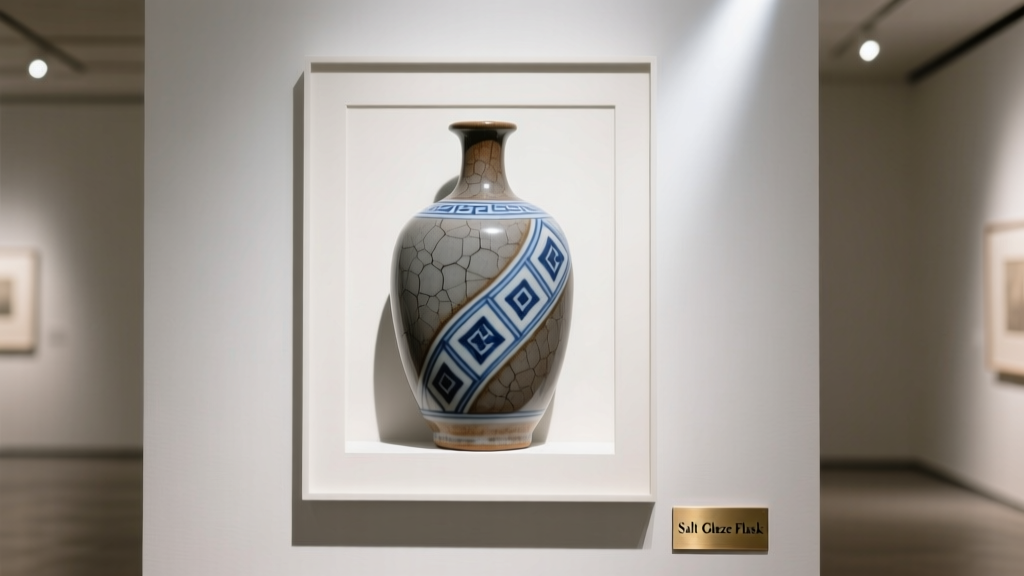
Stoneware Flask: Gray-Brown Salt Glaze with Cobalt Blue Design — Authentication, Provenance, and Market Value of the 7¼-Inch Example
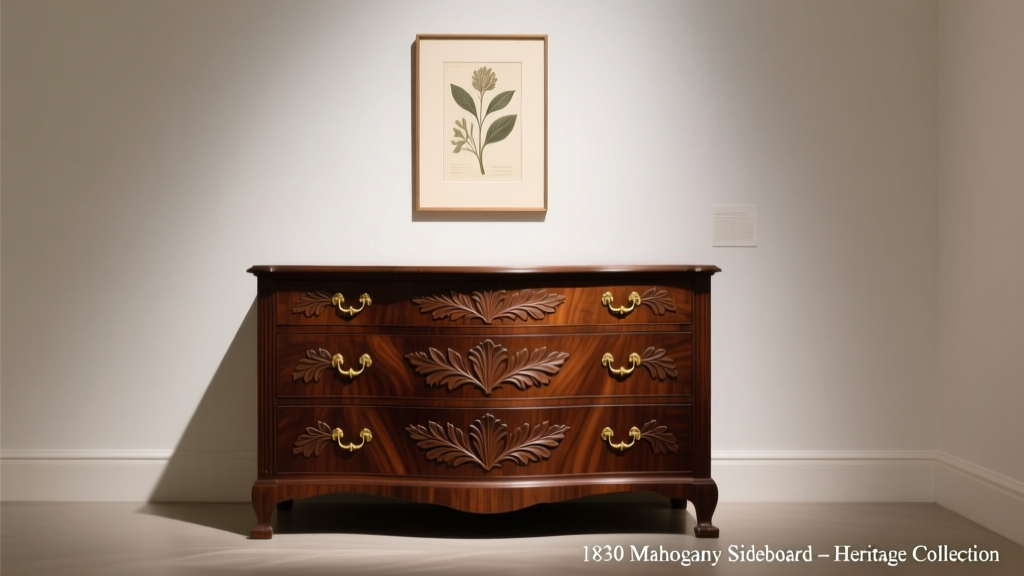
Authenticating and Valuing the Classical Mahogany Sideboard: A 1830 English Regency Masterpiece with Acanthus Columns

Loetz Trefoil Rim Vase: Decoding the Iridescent Green-Blue Waves Tear-Drop Form (6¼")

Authentication Dossier: The Print Designation '1133084' in the Context of Modernist Lithography and Market Provenance
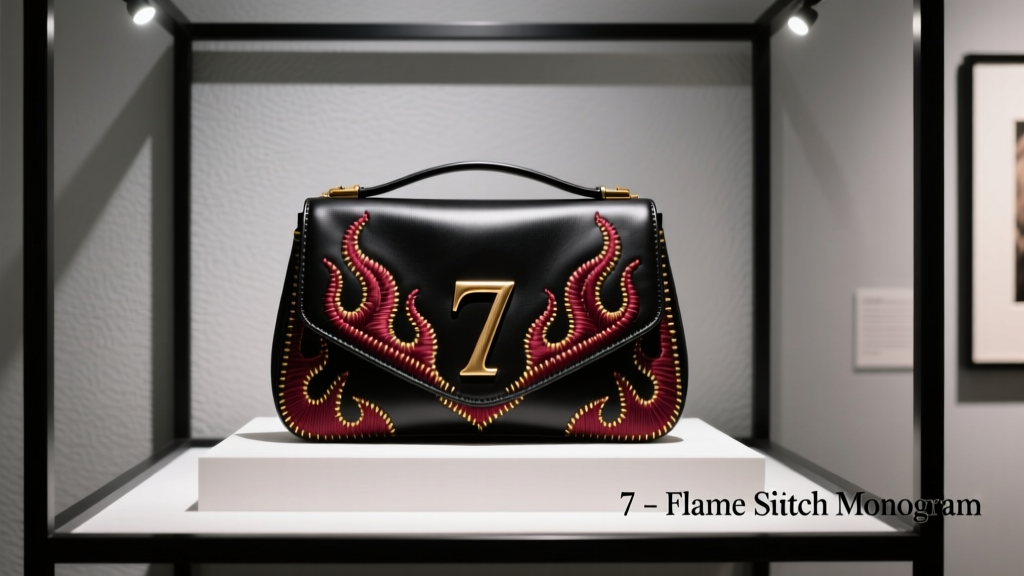
Purses Needlework Flame Stitch Design Monogrammed 7-Inch: Authentication, Provenance, and Market Value Analysis