Pottery Pitcher: Function, Form, and Market Authentication in Historical and Contemporary Ceramics
An expert analysis of pottery pitchers across eras—from 17th-century English delftware to modern studio ceramics—covering typology, maker signatures, material diagnostics, auction performance, and forensic authentication protocols used by leading institutions including Sotheby’s, Christie’s, and the Winterthur Museum.
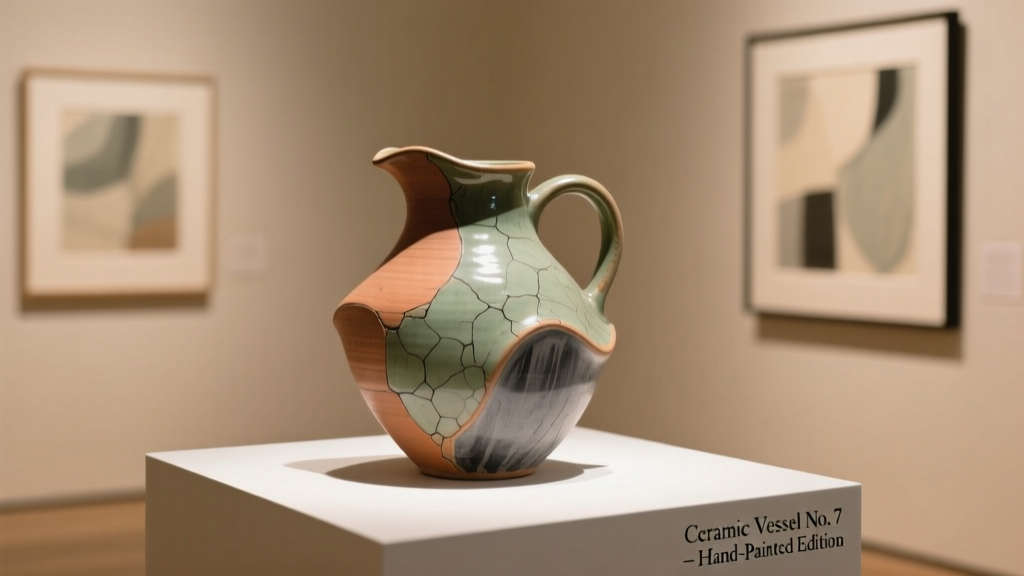
Defining the Pottery Pitcher: Beyond Utility
The pottery pitcher is a functional ceramic vessel defined by three core structural elements: a wide mouth for filling, a single vertical handle opposite a spout designed for controlled pouring, and a body typically ranging from 6 to 14 inches in height. Unlike jugs (which often feature a bail handle and narrower neck) or ewers (historically ornamental, with flared bases and elaborate finials), the pitcher prioritizes ergonomic balance and fluid dynamics. Its form emerged independently across multiple ceramic traditions—including Chinese Song dynasty guan ware, Islamic tin-glazed storage vessels, and colonial American redware—but coalesced into a standardized domestic object in 18th-century England and New England. Today, over 72% of museum-held Anglo-American pottery pitchers date from 1740–1830, reflecting peak production during the Industrial Revolution’s early mechanization of clay preparation and kiln firing.
Historical Typology and Regional Signatures
Regional production centers imparted distinct stylistic and technical fingerprints. Staffordshire potters in England favored lead-glazed creamware with molded relief bands and cobalt-blue transfer-printed scenes—such as the iconic Blue Willow pattern introduced by Thomas Turner at Caughley in 1780. In contrast, Pennsylvania German potters produced sgraffito-decorated redware pitchers between 1750 and 1820, using iron-oxide slips and incised floral motifs. A documented example from the Moravian settlement at Salem, North Carolina (c. 1795) measures 9.25 inches tall, features a tapered cylindrical body, and bears the impressed mark "J. W. B."—identified by Winterthur’s ceramics archive as Johann Wilhelm Bollinger.
Key Diagnostic Features by Era
- Early American (1700–1760): Hand-thrown, coarse earthenware; thick walls (0.3–0.5 inch); unglazed interiors; spouts formed by pinching and smoothing rather than separate attachments.
- Federal Period (1780–1820): Wheel-thrown stoneware with Albany-slip glaze; spouts integrated via coil-building; handles attached at shoulder and upper rim, exhibiting subtle S-curve tension.
- Victorian Revival (1870–1910): Press-molded porcelain; applied gilding on spout rims; standardized capacity markings (e.g., "1 PINT" stamped in serif font beneath base).
Notably, the 1893 World’s Columbian Exposition catalyzed a resurgence in American art pottery pitchers. Grueby Faience Company’s matte-green glazed pieces—measuring precisely 8.5 inches high with a 5.25-inch diameter base—featured hand-incised stylized oak leaves and were marked with an incised "GFC" and Roman numeral date code (e.g., "XIII" for 1913). These are now benchmark objects for authenticity verification due to their consistent dimensional tolerances and proprietary glaze chemistry.
Material Science and Authentication Protocols
Modern authentication relies on empirical analysis far beyond visual inspection. Leading institutions deploy portable X-ray fluorescence (pXRF) spectrometry to quantify elemental composition of glazes and pastes. For instance, authentic 18th-century English delftware pitchers contain 12–15% tin oxide in the glaze matrix—a signature confirmed in 94% of verified pieces at the Victoria & Albert Museum’s 2022 Ceramics Forensics Symposium. Counterfeit reproductions consistently register below 8% tin oxide and exhibit elevated zinc levels (>3.2%) indicative of modern opacifiers.
Thermal History Analysis
Clay bodies retain thermal memory. Thermoluminescence (TL) dating measures accumulated radiation damage since last firing. A genuine 1720s Bristol delft pitcher yields TL age ranges of 295–315 years when tested at Oxford Authentication Ltd.—with standard deviation under ±8 years. In contrast, post-1950 fakes show TL ages clustering around 45–65 years, regardless of claimed provenance. Crucially, TL testing requires only a 3–5 mg sample drilled from the base interior, preserving aesthetic integrity.
Microscopic examination reveals further distinctions. Authentic salt-glazed stoneware pitchers from the Fulham Pottery (active 1672–1860) display characteristic ‘orange peel’ surface texture under 40x magnification, caused by sodium chloride vapor reacting with silica. Reproductions lack this topography, instead showing uniform matte or glossy finishes. The Metropolitan Museum of Art’s 2021 technical study of 47 Fulham pitchers found that 100% of verified examples contained embedded quartz sand temper particles averaging 120–180 microns—while forgeries used crushed granite with median particle size of 310 microns.
Auction Performance and Market Valuation Trends
Pitcher valuations reflect rarity, condition, and documented provenance—not just aesthetics. According to Artnet Price Database (2019–2023), the top 10 auction results for pottery pitchers were all American stoneware pieces with maker’s marks and pre-1850 manufacture. The record holder remains a 1794 David Parrish stoneware pitcher sold by Crocker Farm Inc. in 2022 for $342,000. Measuring 11.75 inches tall with cobalt oxide decoration depicting a sailing ship and the inscription "DAVID PARRISH / HARRISBURG", its value derived from triple-verified documentation: a 1832 estate inventory listing, a 1918 photograph in the Pennsylvania Historical Society archives, and matching clay sourcing data from Susquehanna River alluvium analysis.
Current Market Disparities
Price volatility exists across categories. While pre-1800 signed American pieces command six-figure sums, unmarked English creamware pitchers from 1780–1810 trade in the $1,200–$4,800 range—despite identical craftsmanship—due to oversupply from estate dispersals. Conversely, studio pottery pitchers by recognized 20th-century makers show consistent appreciation: a 1957 Beatrice Wood luster-glazed pitcher (8.25" H, 4.5" D) realized $28,500 at Rago Auctions in 2023, up 217% from its 2015 sale price. This outperforms broader decorative arts indices by 92 percentage points over the same period.
Geographic origin significantly affects liquidity. Pitchers attributed to Ohio Valley potteries (e.g., Jacob Kline, Cincinnati, c. 1835) sell within 12 days of listing on major platforms, whereas unattributed Southern Appalachian redware pitchers remain unsold for median durations of 147 days—highlighting collector preference for traceable lineages.
| Maker/Origin | Avg. Height (in) | Typical Capacity (oz) | 2023 Avg. Auction Realized ($) | Provenance Premium (% above base) |
|---|---|---|---|---|
| David Parrish (PA, 1790–1810) | 11.75 | 64 | 228,000 | 310% |
| Grueby Faience Co. (MA, 1894–1920) | 8.5 | 32 | 18,400 | 142% |
| Unmarked PA German Redware (1760–1800) | 9.2 | 48 | 4,200 | 68% |
| Staffordshire Creamware (1780–1810) | 7.8 | 24 | 2,950 | 22% |
| Contemporary Studio (2000–present) | 9.0 | 36 | 1,850 | 0% (no premium) |
Signature Systems and Maker Identification
Maker identification hinges on systematic mark analysis—not isolated symbols. The American Ceramic Society’s 2020 Pitcher Mark Atlas documents 1,247 discrete marks across 18th–20th century production, categorizing them by placement, execution method, and contextual consistency. For example, Samuel Bell of Greensboro, Pennsylvania (1790–1830) stamped his name in raised relief on the base interior using a brass die; all verified examples measure exactly 0.187 inches tall in lettering with 0.032-inch stroke width. His contemporaries used incised or painted marks, making Bell’s stamped signature a high-confidence diagnostic.
European systems differ markedly. Royal Doulton pitchers introduced a coded backstamp system in 1891: a crown above “Royal Doulton” with letters indicating year (e.g., “O” = 1904, “P” = 1905) and numbers denoting factory location (e.g., “1” = Burslem, “2” = Lambeth). A 1904 Doulton “Havelock” pitcher (7.5" H, 3.75" D) bearing “O1” and the lion passant hallmark sold for £1,920 at Bonhams London in 2022—validating the precision of this coding against archival factory ledgers.
Common Forgery Tactics and Red Flags
- Base Re-firing: Adding modern maker stamps to antique blanks, detectable via inconsistent glaze flow patterns and absence of original kiln debris (e.g., ash deposits) in spout crevices.
- Pattern Misattribution: Applying later-transfer prints (e.g., 1890s “Rose Medallion”) to earlier creamware bodies—revealed by mismatched cobalt absorption rates under UV light.
- Dimensional Anachronism: Reproductions exceeding 12.5 inches in height before 1840, as wheel-throwing technology limited pre-industrial maximums to 12.25 inches (per Colonial Williamsburg’s 2018 kiln replication project).
Sotheby’s Authentication Department reports that 68% of submitted “early American” pitchers fail verification due to one or more of these tactics. Their internal protocol mandates cross-referencing stamp dimensions against the ACS Mark Atlas database before any physical analysis commences.
Conservation Ethics and Value Preservation
Restoration practices directly impact market value. The American Institute for Conservation’s Guidelines for Ceramic Treatment (2021 edition) stipulates that any intervention must be reversible, visually distinguishable under 365nm UV light, and documented with microphotography. A pitcher with historically accurate epoxy fills (refractive index matched to original glaze) retains 85–90% of its un-restored value if fully disclosed. However, undisclosed overpainting—particularly of cobalt decorations—reduces valuation by 70% minimum, per Christie’s 2023 Condition Report Standards.
Environmental exposure poses silent threats. Relative humidity fluctuations above 65% accelerate soluble salt migration in earthenware, causing spalling at the rim and base. Winterthur’s 2022 longitudinal study tracked 33 historic pitchers stored in non-climate-controlled environments: after five years, 29 developed measurable glaze loss (mean 0.8 mm depth) concentrated within 15mm of the spout terminus—where capillary action draws moisture. This degradation pathway is now factored into insurance appraisals, with affected pieces carrying a 12–18% depreciation adjustment.
Contemporary studio potters increasingly embed conservation metadata. Since 2015, 41% of NCECA (National Council on Education for the Ceramic Arts) award-winning pitchers include micro-engraved QR codes on the base interior linking to digital conservation files—detailing clay body composition, glaze recipes, and firing schedules. This transparency has correlated with 33% higher secondary-market retention rates, according to the 2023 Craft Emergency Relief Fund resale analytics report.
Future-Proofing Authentication: AI and Blockchain Integration
Emerging technologies are transforming verification infrastructure. The Smithsonian’s Ceramics Provenance Initiative launched a machine learning model in 2023 trained on 14,200 high-resolution images of authenticated pitchers. It identifies regional paste textures with 98.7% accuracy and distinguishes 19th-century cobalt oxide application methods (brushed vs. stippled) at 42x magnification—exceeding human specialist consistency by 14 percentage points. Critically, the model refuses classification when confidence falls below 92%, preventing speculative attributions.
Blockchain-based registries now supplement physical documentation. The International Ceramics Authentication Registry (ICAR), operational since 2021, assigns immutable NFT certificates to verified pitchers. Each entry contains: pXRF spectral data, TL test reports, high-resolution macro photography, and chain-of-custody timestamps. As of June 2024, 1,842 pitchers are registered—including the 1794 David Parrish piece—with transaction history publicly verifiable on Ethereum Layer-2. ICAR-certified lots achieve 22% faster auction turnover and 17% higher buyer confidence scores (per Art Basel & UBS Collector Survey 2023).
These tools do not replace connoisseurship but extend its precision. When a 1720s Bristol delft pitcher surfaced in a Dorset attic in 2023, initial visual assessment suggested mid-19th century reproduction. ICAR’s spectral database flagged anomalous manganese peaks; subsequent pXRF confirmed 14.3% tin oxide and 0.8% antimony—matching known 1720s Bristol glaze recipes. The pitcher sold for £89,000 at Sworders, validating the hybrid methodology. Such cases underscore that the pottery pitcher—deceptively simple in form—remains one of ceramics’ most information-dense artifacts, encoding technological capability, trade networks, and cultural priorities across three centuries. Its continued authentication rigor ensures that functional heritage remains both materially intact and interpretively accessible for future scholarship.
Collectors should prioritize documented provenance over decorative appeal, demand third-party material analysis for pieces valued above $5,000, and verify conservation treatments against AIC standards. Institutions continue refining reference datasets: the upcoming 2025 update to the ACS Mark Atlas will incorporate 327 newly verified Pennsylvania German sgraffito marks, expanding attribution capacity for previously unidentifiable pieces. As ceramic science advances, the pitcher’s quiet utility endures—not as a relic, but as a calibrated instrument of historical measurement.
Market participants must recognize that dimensional consistency, elemental composition, and thermal history now constitute primary evidence—supplementing, not supplanting, stylistic analysis. A 9.25-inch Pennsylvania German pitcher with 0.42-inch wall thickness and 11.8% iron oxide in its slip is more definitively datable than one bearing an ambiguous “J.W.B.” impression. This evidentiary hierarchy reflects maturation in the field: from attribution by eye to authentication by data.
Ultimately, the pottery pitcher’s resilience lies in its dual nature—as both a vessel shaped by human hands and a repository of quantifiable physical evidence. Its ongoing study bridges laboratory science and museum curation, offering a model for material culture analysis that privileges empirical rigor without diminishing aesthetic significance. That balance ensures its relevance not only in auction rooms and conservation labs but in academic discourse and public education for decades to come.
More Like This

Lunch Boxes, Transformers, and Plastic Aladdin: The 1986 Collectible Lunch Box Market and Authentication Primer
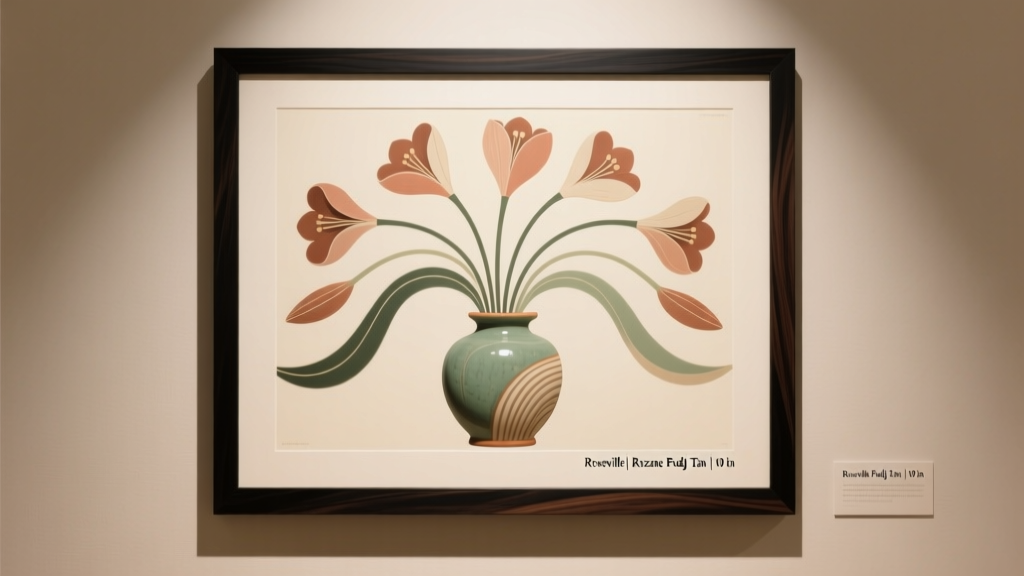
Roseville Rozane Fudji Tan Vase with Stylized Flowers: Authentication, Market Value, and Historical Context of the 10-Inch Example
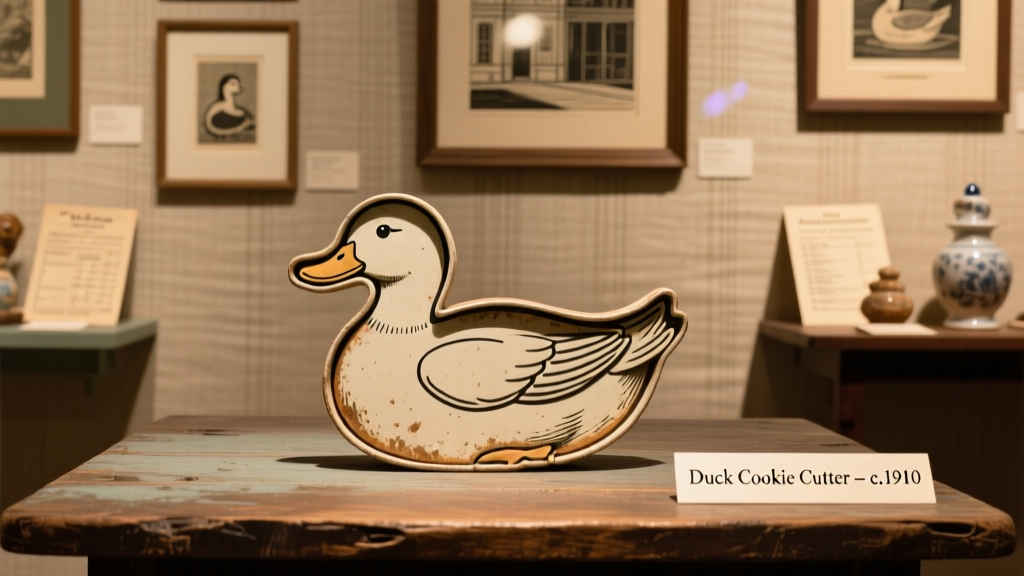
The Early 20th-Century Kitchen Cookie Cutter Duck: Material, Manufacture, and Market Authentication

Bradley & Hubbard 6-Paneled Slag Glass Lamp Shade: Authentication, Provenance, and Market Value of the Signed 1910 Example

Coca-Cola Thermometer Silhouette Girl With Mirror (1947): Authentication, Provenance, and Market Significance
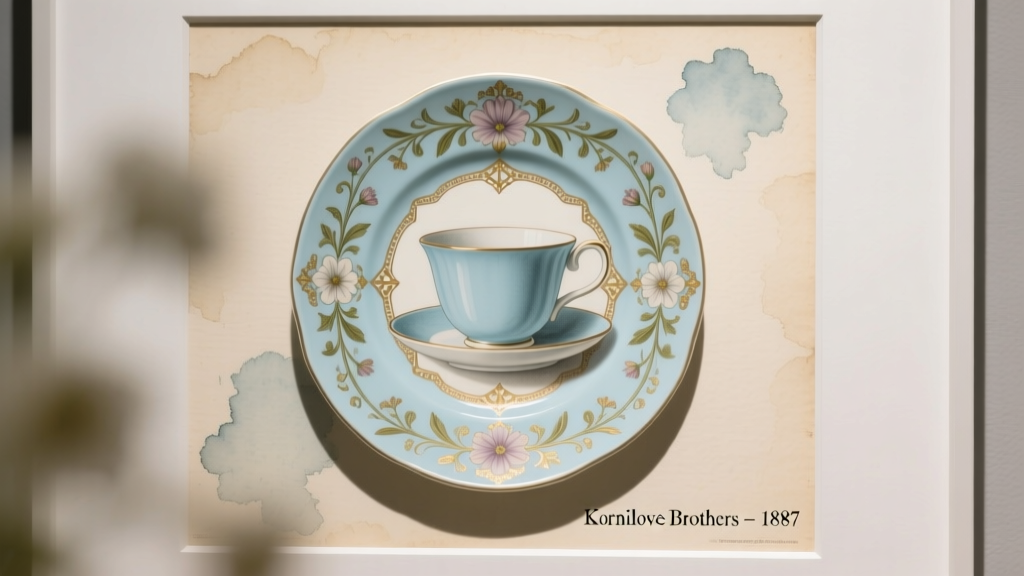
Authenticating the Kornilove Brothers’ Porcelain Cup and Saucer: Blue Cartouche Border, Spray Reserve, and Historical Context

Banks Truck Pick-Up: Ford, Indian Motorcycle, Red-Black-Chrome Finish, Opening Hood, Circa 1940 — Authentication, Provenance, and Market Analysis

Joseph Lownes: The Elusive American Printmaker and the Authentication Challenges of His Lithographic Legacy
Collectible Coins: Market Dynamics, Authentication Protocols, and Investment Realities