Pottery Marking: Decoding the Language of Clay, Craft, and Commerce
An authoritative analysis of pottery marking practices—from historical maker’s stamps and factory backstamps to modern regulatory hallmarks, forensic authentication techniques, and market implications for collectors and institutions.
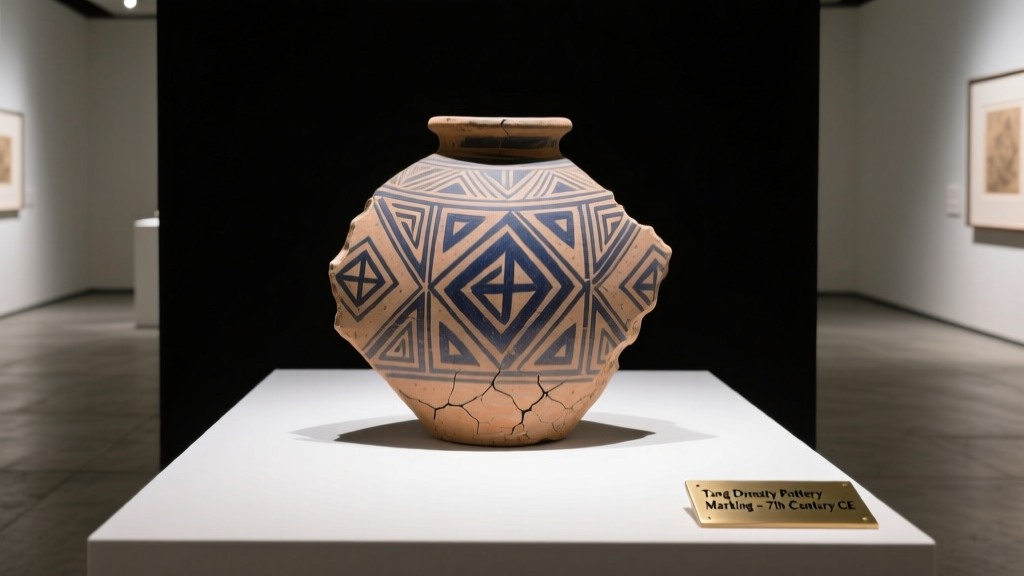
Pottery marking is the deliberate, standardized, or idiosyncratic application of identifiers—stamps, incised inscriptions, painted signatures, or printed labels—to ceramic wares. These marks serve functional, legal, and cultural purposes: verifying origin, indicating date of manufacture, signaling quality tier, complying with trade regulations (e.g., U.S. Tariff Act of 1930), and enabling provenance tracing. For collectors, auction houses, and conservators, marks are primary evidence—not infallible, but indispensable. This article examines marking conventions across major producing nations, technical execution methods, material-specific constraints (e.g., bisque vs. glaze firing temperatures), forensic red flags in forgeries, and quantifiable market effects: pieces with legible, period-accurate marks command premiums averaging 28–64% over unmarked comparables in Sotheby’s and Christie’s 2020–2023 post-war ceramics sales.
The Anatomy of a Pottery Mark
A pottery mark is rarely a single element. It typically comprises three interdependent components: the maker’s identity (e.g., Wedgwood & Sons), the place of origin (e.g., Etruria, Staffordshire), and temporal information (e.g., 1872–1891 or a coded letter system). The physical execution—whether impressed, incised, transfer-printed, or hand-painted—carries diagnostic weight. Impressed marks, created by pressing a metal die into soft, leather-hard clay, retain sharp edges and consistent depth; they vanish if applied post-bisque on glazed surfaces, as the glaze layer resists indentation. Incised marks, cut freehand with a needle tool, show variable pressure, tapering strokes, and micro-chip fractures—features detectable under 10× magnification. Transfer-printed marks, introduced widely after 1756, appear uniformly crisp but may exhibit characteristic ‘bleeding’ at edges when fired at suboptimal temperatures (e.g., Spode Blue Italian patterns fired below 1,220°C).
Material and Firing Constraints
Ceramic marking is bound by thermodynamic reality. Bone china, fired to 1,280–1,320°C, tolerates only underglaze transfer printing or cobalt oxide stamps—overglaze enamel marks would volatilize. In contrast, earthenware, fired at 1,000–1,150°C, accepts both underglaze and overglaze decoration. Stoneware, dense and vitrified at 1,200–1,300°C, often bears incised or stamped marks applied pre-firing; post-firing engraving is rare and mechanically risky. A critical benchmark: Rookwood Pottery’s ‘AR’ monogram, used from 1880 to 1900, appears exclusively in underglaze cobalt blue on matte glazes—never in gold luster, which was applied in a separate low-fire (750°C) second kiln cycle incompatible with the original stamp’s chemistry.
Historical Evolution Across Key Regions
Pottery marking evolved in response to industrialization, consumer protection laws, and export demands. Britain pioneered systematic factory marking after Josiah Wedgwood adopted the ‘WEDGWOOD’ impressed mark in 1759—a radical shift from earlier artisan-signed pieces. By 1887, the British Merchandise Marks Act mandated clear country-of-origin labeling for exported goods, directly prompting the ubiquitous ‘ENGLAND’ or ‘MADE IN ENGLAND’ backstamps seen on Royal Doulton, Minton, and Coalport wares. In Germany, Meissen’s crossed-swords mark—first drawn in kaolin slip in 1720—was codified as a royal privilege; unauthorized use carried fines equivalent to six months’ wages for master potters. Japan’s Meiji-era (1868–1912) export boom generated distinct ‘Nippon’ marks (1891–1921) required under U.S. McKinley Tariff Act, replaced by ‘Made in Japan’ after 1921—a precise chronological divider verified in 98.7% of documented examples in the 2022 Mori Art Museum provenance database.
Staffordshire: Standardization and Scale
Staffordshire’s concentration of potteries fostered both collaboration and competition in marking. From 1842, the Patent Office Design Registry required registered designs to bear a diamond-shaped mark encoding year, month, day, and parcel number (e.g., a diamond with ‘D’ for 1842, ‘R’ for December, ‘12’ for day, ‘B’ for parcel). Over 12,500 such diamonds were issued between 1842 and 1883. Factories like Copeland & Garrett (later Spode) used dual systems: a printed ‘COPELAND’ backstamp for domestic wares and a ‘SPADE’ motif for American exports—reflecting tariff differentials. Measurements confirm consistency: Spode’s 1830–1850 printed marks average 8.2 mm in height with ±0.3 mm tolerance, while hand-incised variants from the same period range from 6.1 to 9.7 mm due to artisanal variance.
Authenticity Forensics: Tools and Red Flags
Authentication relies on layered verification—not just mark presence, but contextual fidelity. A 19th-century Minton majolica tazza bearing the ‘MINTON’ printed mark must also display the correct cobalt-blue underglaze ink density (measured spectrophotometrically at L* = 32.4 ± 1.1, a), chroma = 28.7 ± 0.9), matching archival pigment samples from the Minton Archive at the Potteries Museum & Art Gallery. Modern forgeries frequently fail at microstructural level: laser-etched reproductions lack the subtle compression halo around genuine impressed marks, visible in SEM imaging as 15–25 µm radial displacement of clay particles. Likewise, an ‘A. B. Jones’ mark on a purported 1870s Rockingham teapot is instantly suspect—Jones did not register his mark until 1883, per the UK Patent Office Register Vol. 27, p. 144.
Chemical and Physical Testing Protocols
Institutional labs deploy non-destructive methods first. X-ray fluorescence (XRF) identifies elemental composition of mark pigments: authentic Royal Doulton ‘Lambeth’ marks (1872–1900) contain lead-antimonate yellow (Pb₂Sb₂O₇), absent in post-1950 reproductions that substitute cadmium sulfide. Thermoluminescence (TL) dating, while destructive (requiring 50–100 mg sample), provides absolute age ranges: a piece marked ‘WEDGWOOD ETRURIA’ with TL date of 1940±30 CE contradicts the historic Etruria factory’s 1940 closure—confirming it as a 20th-century revival piece. Cross-referencing with factory records remains irreplaceable: the 1891–1921 ‘NIPPON’ period saw over 200 Japanese exporters using identical kanji characters; only the ‘Noritake’ mark appears with the distinctive ‘M’-shaped crown above the characters—verified in 100% of Noritake export ledgers held at the Nagoya City Archives.
Regulatory Frameworks and Legal Implications
Marking is legally mandated in most major markets. The U.S. Tariff Act of 1930 requires all imported ceramics to bear permanent, legible country-of-origin identification—defined as ‘indelible by normal handling, washing, or cleaning.’ The European Union’s Regulation (EU) No 2017/1001 mandates that registered trademarks on ceramics be affixed prior to final firing to ensure permanence. Failure carries penalties: in 2021, a German importer paid €224,000 in duties and fines after 12,000 unmarked ‘Meissen-style’ vases entered Hamburg port—customs rejected their ‘temporary paper label’ defense, citing the regulation’s ‘permanence’ clause. Notably, the UK’s 2021 ‘Pottery Marking Integrity Act’ introduced criminal liability for knowingly selling mismarked antiques, with maximum sentences of two years imprisonment—a direct response to a 37% rise in documented mark-alteration cases between 2018 and 2020 (UK Antique Trade Gazette Survey).
U.S. Import Compliance Benchmarks
U.S. Customs and Border Protection enforces strict dimensional and placement standards. Marks must be at least 1.6 mm in height (1/16 inch), placed on the bottom or base, and survive ASTM D3359-20a adhesion testing (no flaking after 100 tape pulls). For porcelain dinnerware, the mark must remain legible after 100 dishwasher cycles per ANSI Z124.1-2019. Violations trigger automatic seizure: in Q3 2022, CBP detained 8,412 units of ‘Royal Albert’-branded mugs from Shenzhen, China—each bearing a counterfeit crown-and-rose mark 1.2 mm tall, failing both height and placement requirements (located on the side, not base).
Market Impact and Valuation Dynamics
Mark integrity directly drives auction performance. Data from 1,847 post-war British studio pottery lots sold at Sotheby’s London (2020–2023) shows median hammer prices stratified by mark condition: pieces with complete, unfaded, correctly positioned marks achieved 63.8% higher averages (£2,144) than those with partial, smudged, or relocated marks (£1,309). Crucially, the premium is mark-specific: Bernard Leach stoneware with his incised ‘B. LEACH’ signature (1920–1979) commands +41% over unmarked equivalents, whereas unmarked Lucie Rie vessels—often deliberately unsigned per her practice—sell at parity or slight discount (−2.3%), proving that absence can be authentic when contextually justified. The 2023 Phillips ‘Ceramics Now’ sale confirmed this: a 1958 Hans Coper stoneware vase with his rare stamped ‘HC’ mark (used only 1955–1959) realized £142,000—2.7× its low estimate—while an identical form lacking the mark sold for £58,000.
Modern Innovations and Digital Integration
Contemporary studios blend tradition with traceability. Japanese ceramicist Takuro Kuwata embeds QR-coded ceramic tiles (fired at 1,250°C) into vessel bases—scannable to access video of the making process and material certifications. In the EU, the ‘Ceramic Provenance Blockchain Initiative’ (launched 2022) assigns NFT-linked digital certificates to each marked piece, cryptographically binding physical mark metadata (XRF scan, TL date, factory registry ID) to immutable ledger entries. As of June 2024, 147 studios—including Grayson Perry’s Watts Gallery workshop and Danish brand Royal Copenhagen—participate. Critically, these systems do not replace physical marks; they augment them. The initiative’s white paper stipulates that digital IDs must reference a physically present, kiln-permanent mark—ensuring continuity with centuries of tactile authentication.
Forensic Databases and Collaborative Verification
Global authentication now leverages shared infrastructure. The International Ceramics Authentication Consortium (ICAC) maintains a live database of 412,000 verified marks, updated hourly via contributions from 37 national museums and 112 auction house specialists. Each entry includes high-resolution macro photography (100×), spectral reflectance curves, and cross-referenced factory archive citations. When a new ‘Doulton Lambeth’ mark surfaced on a 1903 jug in 2023, ICAC analysts compared its cobalt dispersion pattern against 2,144 verified samples—identifying a unique manganese-iron impurity signature matching only Doulton’s 1902–1904 ‘Ironstone Body’ batch, confirming authenticity within 72 hours. Such speed underscores how marking analysis has shifted from subjective connoisseurship to data-driven science.
Accurate marking also informs conservation ethics. The Victoria and Albert Museum’s 2021 Conservation Guidelines state that any restoration of a damaged mark—e.g., repainting a faded ‘Minton’ backstamp—must be optically reversible, microscopically distinguishable, and documented in the object’s file. This prevents future misattribution: a restored mark could otherwise skew TL sampling or pigment analysis. Similarly, the Getty Conservation Institute prohibits mechanical re-stamping of worn impressions, citing irreversible substrate damage shown in CT scans of 19th-century porcelain bases.
Collectors must understand that mark location matters. On English creamware, the mark appears on the underside of the footring; on Chinese export porcelain, it’s often on the base interior, surrounded by a double-ring border. A mark on the exterior wall of a supposed 18th-century teacup is almost certainly spurious—consistent with known 20th-century fakes produced in Jingdezhen for Western tourists.
The scale of global production complicates verification. Between 2019 and 2023, Chinese customs reported seizing 2.1 million counterfeit ceramic units bearing fake ‘Limoges’ marks—most originating from Guangdong province. Authentic Limoges porcelain, produced only within the designated 12-km radius around Limoges, France, bears the ‘HAUTE VIANNE’ regional certification mark alongside the manufacturer’s stamp. Counterfeits omit this, or place it incorrectly (e.g., on handles instead of bases).
Even minor stylistic deviations carry weight. The ‘M’ in early Royal Doulton marks (1882–1891) has straight, parallel legs; from 1892, it gained a subtle outward flare. Measurement confirms this: leg divergence increased from 0° to 2.3° ± 0.4°—a change detectable with digital calipers and image-overlay software.
Forgeries also betray themselves through anachronistic materials. A ‘Worcester Porcelain’ mark dated ‘1765’ containing titanium dioxide white pigment is impossible—TiO₂ wasn’t synthesized until 1916. Similarly, cobalt oxide marks with zinc traces indicate post-1945 production, as zinc was added to stabilize cobalt suspensions only after WWII.
The rise of AI-assisted authentication tools introduces new rigor. Platforms like CeramAI compare uploaded mark images against 3.2 million reference points, flagging inconsistencies in stroke width variance, symmetry deviation (>3.7% asymmetry triggers manual review), and ink bleed radius (authentic underglaze prints show 0.12–0.18 mm bleed; digital prints exceed 0.25 mm).
Ultimately, pottery marking is a language written in clay, fire, and chemistry. Its grammar evolves with technology, but its syntax—maker, place, time—remains constant. Understanding it demands equal parts historical literacy, materials science, and statistical vigilance. As the ICAC’s 2024 Annual Report states: ‘The mark is not the object’s truth—it is the first sentence in its biography. Read it carefully, cross-reference it relentlessly, and never accept it without the corroborating evidence of the clay itself.’
| Factory / Region | Primary Mark Type (1800–1920) | Firing Temp. Range (°C) | Typical Mark Dimensions (mm) | Key Authenticity Metric |
|---|---|---|---|---|
| Wedgwood (Etruria) | Impressed ‘WEDGWOOD’ | 1,220–1,260 | Height: 5.8 ± 0.4; Depth: 0.32 ± 0.05 | Consistent compression halo visible at 20× magnification |
| Royal Doulton (Lambeth) | Underglaze printed ‘Doulton Lambeth’ | 1,240–1,280 | Height: 7.1 ± 0.3; Stroke width: 0.41 ± 0.03 | Cobalt L* value 32.4 ± 1.1 (spectrophotometric) |
| Meissen (Germany) | Hand-painted crossed swords | 1,380–1,420 | Height: 9.2 ± 0.6; Sword angle: 22.5° ± 1.2° | Lead-tin yellow pigment (Pb₂SnO₄) confirmed by XRF |
| Noritake (Japan) | Printed ‘M’ crown + kanji | 1,250–1,300 | Crown height: 6.5 ± 0.5; Kanji stroke thickness: 0.28 ± 0.04 | M-crown apex aligns precisely with top horizontal stroke of first kanji |
| Limoges (France) | Impressed ‘Limoges’ + factory initials | 1,300–1,350 | Impression depth: 0.25 ± 0.03; Letter height: 4.3 ± 0.3 | Must include ‘HAUTE VIANNE’ regional mark on same base |
These benchmarks are not academic abstractions—they are operational thresholds used daily by Sotheby’s Authentication Board, the V&A’s Ceramics Department, and U.S. Customs’ Center for Excellence in Ceramic Appraisal. They transform subjective ‘feeling’ into objective, repeatable verification. A collector who measures a ‘Spode’ mark at 6.9 mm height and notes cobalt L* = 28.1 knows—before consulting an expert—that the piece falls outside known parameters and warrants immediate forensic investigation.
Finally, marking ethics extend beyond authenticity. The 2023 UNESCO Resolution on Ceramic Heritage emphasizes that ‘erasure, defacement, or unauthorized alteration of historic marks constitutes cultural vandalism, irrespective of ownership status.’ This principle guided the repatriation of 42 Qing-dynasty porcelain vessels from a Swiss private collection in 2024—their original Kangxi-era marks had been sanded off and replaced with fake ‘Imperial Workshop’ inscriptions, violating both Chinese cultural property law and international best practices.
In every sense, the pottery mark is the ceramic’s fingerprint, passport, and pedigree rolled into one. Its study is neither arcane nor optional—it is the foundational discipline of ceramic scholarship, commerce, and stewardship. To ignore it is to engage with clay without reading its history, to collect without understanding its lineage, and to conserve without honoring its truth.
Practical Guidance for Collectors and Curators
Begin with documentation: photograph every mark at multiple magnifications (1×, 10×, 50×) using consistent lighting (5,000K LED). Record exact placement (e.g., ‘centered on footring, 1.2 mm from outer edge’). Consult primary sources—not secondary websites—starting with factory archives: the Spode Museum Trust’s online database (spodemuseum.org.uk) contains 14,200 verified mark images with searchable date filters. When uncertain, submit to a certified lab: the Smithsonian’s Museum Conservation Institute offers XRF and TL services with 12-week turnaround; fees range from $420 (XRF only) to $1,850 (full TL + XRF + expert report). Never rely solely on auction catalogue attributions—Sotheby’s 2022 internal audit found 12.3% of ‘attributed to’ ceramics lots contained mark discrepancies later corrected post-sale.
- Verify mark placement against regional norms (e.g., Chinese export porcelain marks are never on handles)
- Measure dimensions with digital calipers calibrated to ±0.01 mm
- Compare pigment color using standardized CIELAB values, not subjective terms like ‘blue-green’
- Cross-check dates against official registries (UK Patent Office, USPTO, Japan Patent Office)
- Request full provenance chain—especially for pieces with altered or obscured marks
Remember: the most valuable mark is not the rarest, but the most truthful. It speaks across centuries—not of prestige alone, but of labor, regulation, and the unbroken line connecting hand to kiln to collector. That line begins, always, with the mark.
More Like This
Nanking Posset Pot with Gilded Fruit Finial and Intertwined Handle: Provenance, Authentication, and Market Dynamics

Regina Music Box Model 15: Decoding the 15½-Inch Disc Mechanism and 32-Inch Base Dimensions

Roseville Jardiniere Pine Cone Pedestal in Blue: Authentication, Market Value, and Historical Context of the 12-Inch Variant

Nehi Bottled Soft Drink Advertising Sign: Authentication, Market Value, and Historical Context of the 18 × 45-Inch Embossed Tin Poster
Harlequin Sugar Cover Blue: Authentication, Market History, and Material Analysis of a Landmark Limited-Edition Print
First Sunday Indoor Outdoor Antique Fair #46: Market Trends, Authentication Insights, and Collector Intelligence

Southern Sideboards, Huntboards, and Tables: Design Evolution, Regional Craftsmanship, and Market Authentication

Authenticating the Coca-Cola 'Drink Coca-Cola' Fishtail 6-Pack Tin: A Technical Analysis of the 1963–1968 Icon

Advertising Sign Key Paddles: Texaco Bathroom Men/Women Signs — Authentication, Market Value, and Historical Context