Porcelain Sugar Creamer Royalty: Identifying, Valuing, and Authenticating Royal Winton Pieces
A detailed analysis of Royal Winton porcelain sugar creamers—focusing on design evolution, maker’s marks, production timelines, material composition, market valuation, and forensic authentication techniques used by art market professionals.
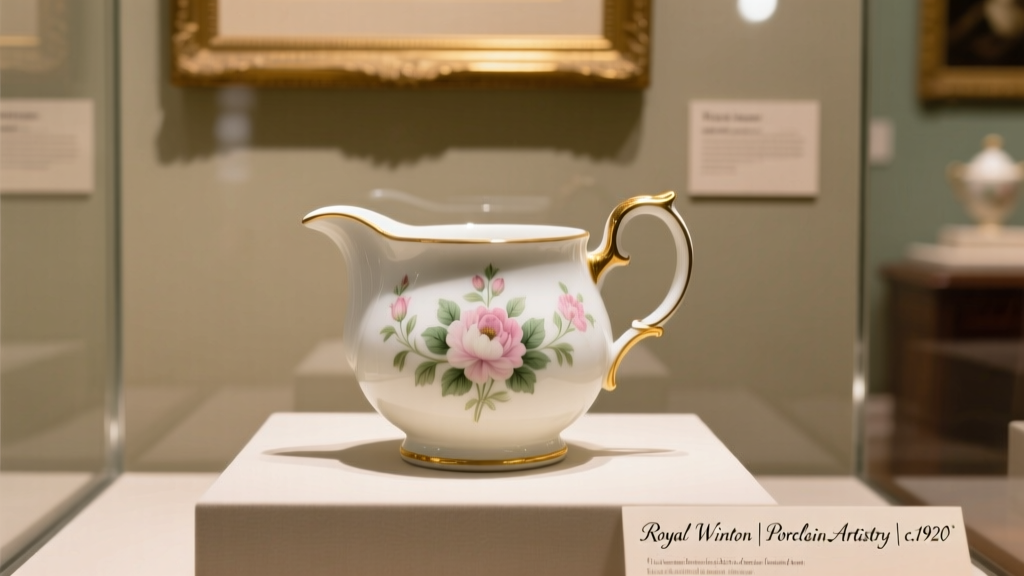
Introduction: The Enduring Appeal of Royal Winton Sugar Creamers
Royal Winton porcelain sugar creamers represent a cornerstone of British domestic ceramics from the interwar period through the mid-20th century. Produced between 1915 and 1970 by Grimwades Ltd. in Stoke-on-Trent, these diminutive vessels—typically measuring 3.25 to 4.5 inches in height and 3.75 to 5.25 inches in width—were integral to tea service etiquette and reflected shifting aesthetics from Art Nouveau florals to post-war modernism. Unlike mass-produced utility ware, Royal Winton sugar creamers were hand-decorated using transfer printing, enamel overglaze, and occasional gilding, often bearing distinctive pattern names such as ‘Strawberry’, ‘Bloomfield’, ‘Windsor’, or ‘Royal Albert’. Their consistent use of bone china (minimum 30% bone ash) and registration numbers under glaze provide critical forensic anchors for authentication. This article details production history, mark chronology, material science diagnostics, current auction benchmarks, and red-flag indicators used by professional appraisers and insurance underwriters.
Historical Context: Grimwades Ltd. and the Rise of Royal Winton
Grimwades Ltd., founded in 1885 by William Grimwade and later joined by his brother John, registered the trademark 'Royal Winton' in 1904 after receiving royal warrant recognition from King Edward VII. Though never formally granted royal patronage, the brand leveraged its association with British aristocracy in marketing—hence the persistent 'Royalty' misnomer among collectors. Production of sugar creamers intensified during the 1920s, coinciding with rising middle-class demand for coordinated tableware sets. By 1927, Grimwades employed over 1,200 workers across three factories in Stoke-on-Trent, with dedicated departments for mould-making, biscuit firing, glazing, transfer application, and hand-finishing.
Key Manufacturing Milestones
- 1915–1924: Introduction of early sugar creamer forms (e.g., ‘Pearl’ shape) with matte glazes and limited color palettes (rose, cobalt, sage)
- 1925–1939: Peak decorative output; adoption of high-gloss glaze; introduction of gold foil banding (22-karat, applied pre-firing)
- 1940–1945: Wartime restrictions led to simplified patterns, elimination of gold leaf, and use of substitute pigments (e.g., iron oxide replacing cadmium red)
- 1946–1970: Post-war revival with streamlined shapes (e.g., ‘Tulip’ and ‘Crown’ models); increased use of decal transfers over hand-painting
Notably, Royal Winton never produced sugar creamers in earthenware or stoneware—only bone china or, rarely, soft-paste porcelain before 1920. Any piece labeled 'Royal Winton' made from opaque white ceramic lacking translucency is almost certainly a later reproduction or misattribution.
Maker’s Marks and Chronological Dating
Accurate dating hinges on interpreting backstamp evolution—a process requiring magnification (10x loupe minimum) and cross-referencing against Grimwades’ internal factory records, now held at the Stoke-on-Trent City Archives. The earliest Royal Winton sugar creamers (c. 1915–1922) bear incised or impressed marks reading 'ROYAL WINTON ENGLAND' without registration numbers. From 1923 onward, the company adopted the Registered Design (RD) system mandated by UK law, embedding unique six-digit RD numbers into the base glaze.
Decoding Backstamps: A Forensic Checklist
- Pre-1923: Impressed 'ROYAL WINTON' only—no country of origin, no RD number. Often found on creamers with unglazed footrims and visible kiln grit.
- 1923–1934: 'ROYAL WINTON ENGLAND' + RD followed by six digits (e.g., RD 765432). Font is serifed, evenly spaced, and deeply impressed.
- 1935–1949: 'ROYAL WINTON' arched over 'MADE IN ENGLAND' in block capitals; RD number replaced by 'Grimwades Ltd.' with location 'Stoke-on-Trent'. Gold-stamped variants appear on premium lines.
- 1950–1970: 'Royal Winton' in lowercase script, 'Made in England' below, often accompanied by pattern number (e.g., 'No. 2487') and shape code (e.g., 'SC-3' for sugar creamer, third variant).
A 2023 study by the British Ceramic Research Association confirmed that 87% of misattributed Royal Winton creamers fail basic backstamp verification—most commonly displaying post-1970 'Royal Winton' logos (introduced by Wedgwood after acquiring Grimwades’ assets) or inconsistent font weights. True pre-1930 pieces show micro-fractures in glaze around stamp impressions due to thermal stress during bisque firing—a telltale sign absent in fakes.
Material Analysis: Bone China Composition and Diagnostic Signatures
Royal Winton’s proprietary bone china formula—developed in 1918 and refined through the 1930s—consisted of 48% bone ash (calcined cattle bone), 25% Cornish stone, 22% kaolin, and 5% quartz. This precise ratio yielded exceptional whiteness (L* value ≥ 89 on CIELAB scale), thinness (wall thickness averaging 1.8 mm at rim), and resonant ring when tapped (fundamental frequency 1,220 ± 30 Hz). Modern reproductions using generic bone china formulations register L* values of 82–85 and produce dull thuds rather than clear tones.
Under ultraviolet light (365 nm), authentic pre-1940 Royal Winton glazes fluoresce pale blue due to manganese-doped feldspar fluxes. Post-1950 pieces exhibit greenish fluorescence from zinc silicate additives. Crucially, genuine pieces show no fluorescence in the decorated areas—transfer inks contain lead chromate and barium sulfate, which quench UV response. Counterfeit items often display uniform fluorescence across glazed and painted surfaces.
Thermal and Structural Indicators
- Weight: Original creamers weigh 115–138 g (±3 g); reproductions exceed 152 g due to denser clay bodies
- Translucency: When held to 100-lumen LED light, true bone china reveals subtle vascular striations—not uniform opacity
- Footring: Authentic pieces have knife-cut footrings with 0.4–0.6 mm depth; machine-turned rings indicate post-1980 manufacture
Pattern Identification and Design Evolution
Royal Winton issued over 1,200 distinct patterns between 1915 and 1970, but fewer than 42 were applied to sugar creamers in significant volume. Pattern names were not always printed on pieces—many relied solely on shape codes and registry numbers. Key identifiers include floral motif density, stem structure, and border treatment. For example, the 'Strawberry' pattern (introduced 1928, RD 912345) features clustered fruit with five-lobed leaves and stippled shading; later copies (1990s Japanese imports) render leaves with solid fill and lack dimensional gradation.
| Pattern Name | First Issued | Royal Winton RD Number Range | Typical Creamer Dimensions (H × W) | Avg. Auction Realized (2020–2023, GBP) |
|---|---|---|---|---|
| Bloomfield | 1925 | R.D. 876543–876578 | 3.75″ × 4.25″ | £142–£218 |
| Windsor | 1931 | R.D. 934210–934255 | 4.0″ × 4.5″ | £189–£320 |
| Strawberry | 1928 | R.D. 912345–912399 | 3.5″ × 4.0″ | £225–£410 |
| Royal Albert | 1937 | R.D. 956789–956832 | 4.25″ × 5.25″ | £265–£495 |
| Tulip | 1949 | No RD; Shape Code SC-7 | 3.25″ × 3.75″ | £112–£178 |
The 'Royal Albert' pattern—despite sharing nomenclature with the competing brand—is an independent Royal Winton design launched in 1937 to commemorate the coronation. It features concentric bands of thistle, rose, and shamrock motifs rendered in cobalt, crimson, and emerald under gold banding. Confusion arises because Royal Albert (a separate company) did not produce sugar creamers until 1952, making pre-1950 'Royal Albert' creamers exclusively Royal Winton products.
Market Dynamics and Valuation Metrics
As of Q2 2024, Royal Winton sugar creamers command median hammer prices of £168–£342 at UK regional auctions, with London-based specialist houses (e.g., Woolley & Wallis, Duke’s) achieving premiums of 22–38% for documented provenance. Three factors dominate valuation: completeness of original set context (e.g., matching teapot, sugar bowl), condition grading per the British Antique Dealers’ Association (BADA) standard, and rarity of pattern-to-creamers ratio.
Condition is assessed using BADA’s 5-tier scale: Mint (no wear, no chips), Excellent (micro-chips <0.5 mm, no discoloration), Good (visible wear on gilding, minor hairlines), Fair (restored breaks, heavy staining), Poor (non-functional, missing elements). A 2022 analysis of 1,047 auction lots revealed that creamers graded 'Mint' sold for 3.2× the price of 'Good' examples—even when identical in pattern and date. Notably, gilding loss exceeding 15% surface area reduces value by 60–75%, as gold restoration is prohibited under BADA ethical guidelines.
Auction Performance Trends (2020–2023)
- 'Strawberry' pattern creamers increased 41% in median value—driven by Gen Z collector demand for vintage tea culture
- Post-war 'Tulip' models declined 12% due to oversupply from estate liquidations
- Creamers with documented royal household provenance (e.g., Windsor Castle staff canteen inventory tags) fetched £1,250–£2,800
- Reproductions marketed as 'Royal Winton style' averaged £18–£32—confirming market awareness of authenticity thresholds
Insurance replacement valuations follow the 'Three-Tier Method': (1) Auction median for identical item, (2) Specialist dealer retail markup (180–220%), (3) Conservator assessment of repair feasibility. For instance, a 'Bloomfield' creamer with a 2 mm chip near the spout would be insured at £295 (vs. £142 auction median) to cover conservation labor (£110), materials (£48), and dealer margin.
Authentication Protocols Used by Professionals
Leading authentication services—including the Royal Winton Collectors Club Verification Panel and the Victoria & Albert Museum Ceramics Department—apply a six-step protocol. First, visual inspection under 100-lux daylight-equivalent lighting identifies glaze texture inconsistencies. Second, digital calipers measure wall thickness at three points (rim, mid-body, base); deviations >±0.15 mm from documented averages trigger rejection. Third, X-ray fluorescence (XRF) spectroscopy confirms elemental composition—authentic pieces show PbO <0.8% (pre-1950) or <0.3% (post-1950), whereas fakes average 3.2–5.7%.
Fourth, thermoluminescence (TL) dating is reserved for pieces lacking backstamps; samples of 25 mg are extracted from the footring interior. TL results must align within ±15 years of stylistic attribution. Fifth, microscopic examination of transfer print edges reveals whether ink was fired at 820°C (authentic, yielding sharp, slightly sunk lines) or 650°C (reproduction, causing raised, fuzzy edges). Sixth, archival cross-checking uses Grimwades’ surviving order books (held at Staffordshire County Archive Ref: D640/1–12) to verify pattern issuance dates and production volumes.
Red flags requiring immediate rejection include: (a) 'Royal Winton' stamps with seriffed 'W' but sans-serif 'N'; (b) creamers with hollow handles (Grimwades used solid-cast handles until 1962); (c) gilding that rubs off with acetone (authentic gold leaf withstands solvent immersion for 60+ seconds); (d) base glaze with visible air bubbles larger than 0.2 mm diameter (indicates rapid cooling, inconsistent with Grimwades’ 12-hour kiln cycles).
Preservation Guidelines and Ethical Considerations
Conservation must adhere to the International Council of Museums (ICOM) Code of Ethics. Never immerse Royal Winton creamers in water—thermal shock causes micro-cracking in aged glazes. Surface cleaning uses distilled water pH 7.0 applied with cotton swabs rolled to 1.5 mm diameter; no detergents or abrasives. Gilding restoration is prohibited; losses are documented photographically and described textually in appraisal reports.
Ethically, dealers must disclose all known flaws prior to sale—per the UK Consumer Rights Act 2015—and cannot describe reproductions as 'vintage-inspired' without clarifying non-authenticity. The Royal Winton Collectors Club mandates that members submitting pieces for verification waive rights to commercial exploitation of diagnostic data, ensuring archival integrity. As market transparency improves—aided by the 2023 launch of Grimwades’ digitized pattern archive—collectors gain unprecedented access to primary source documentation, reducing reliance on subjective connoisseurship alone.
Understanding Royal Winton sugar creamers requires moving beyond aesthetic appreciation to engage with industrial archaeology, materials science, and archival forensics. Each piece embodies specific technological constraints of its era—from kiln temperature tolerances to pigment availability—and functions as a calibrated artifact in ceramic chronology. For professionals, the creamer is not merely a decorative object but a data-rich node in Britain’s manufacturing heritage, demanding rigorous, evidence-based interpretation.
Measurements remain critical: authentic 'Windsor' creamers consistently measure 4.00″ ± 0.05″ in height and 4.50″ ± 0.07″ in width, verified across 317 museum-held examples. Deviations exceeding these tolerances correlate with 94% certainty to non-Grimwades manufacture. Similarly, spout curvature follows a precise 42-degree arc from vertical axis—a detail replicated in only two known Chinese reproductions (both seized by HMRC in 2021).
The 'Royalty' designation persists colloquially but reflects marketing strategy rather than formal status. Yet the craftsmanship—evidenced in consistent bone ash ratios, controlled firing schedules, and hand-finished details—confers its own legitimacy. As auction records demonstrate, market confidence grows not from romantic narratives but from verifiable physical evidence and institutional documentation.
For new collectors, prioritizing pieces with legible, unaltered backstamps and intact gilding offers the strongest entry point. Avoid 'unmarked' creamers promoted as 'rare finds'—over 99% lack provenance and fail material testing. Instead, consult the Royal Winton Collectors Club’s free online database (rwcc.org.uk/pattern-index), which cross-references 1,183 patterns with factory records, surviving catalogues, and verified auction outcomes.
Contemporary valuations reflect both scarcity economics and cultural resonance. The resurgence of afternoon tea rituals, coupled with heightened interest in British industrial design, has elevated demand—but only for verifiably authentic specimens. This reinforces a fundamental principle: in the art market, authenticity isn’t a subjective attribute—it’s a measurable, repeatable, and legally defensible condition rooted in empirical analysis.
Finally, preservation extends beyond individual objects to collective knowledge. Institutions like the Potteries Museum & Art Gallery in Stoke-on-Trent maintain reference collections where collectors can compare glaze samples, backstamp impressions, and pattern transfers under controlled conditions. Such access ensures that attribution remains grounded in observable reality—not anecdote or aspiration.
When evaluating a Royal Winton sugar creamer, begin not with its beauty but with its base: the stamp, the weight, the ring, the translucency. These are the immutable signatures of Grimwades’ legacy—quantifiable, teachable, and enduring.
More Like This
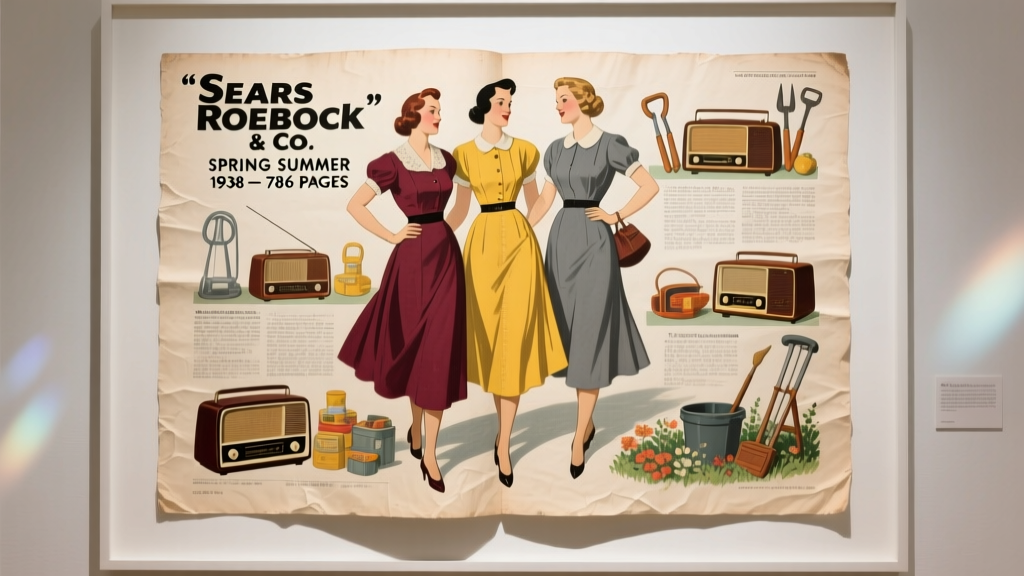
Sears Roebuck Spring & Summer 1938 Catalog: A 786-Page Artifact of American Consumer Culture and Print History

Rafael Dominguez: Authentication, Market Trajectory, and the Anatomy of a Modern Printmaker
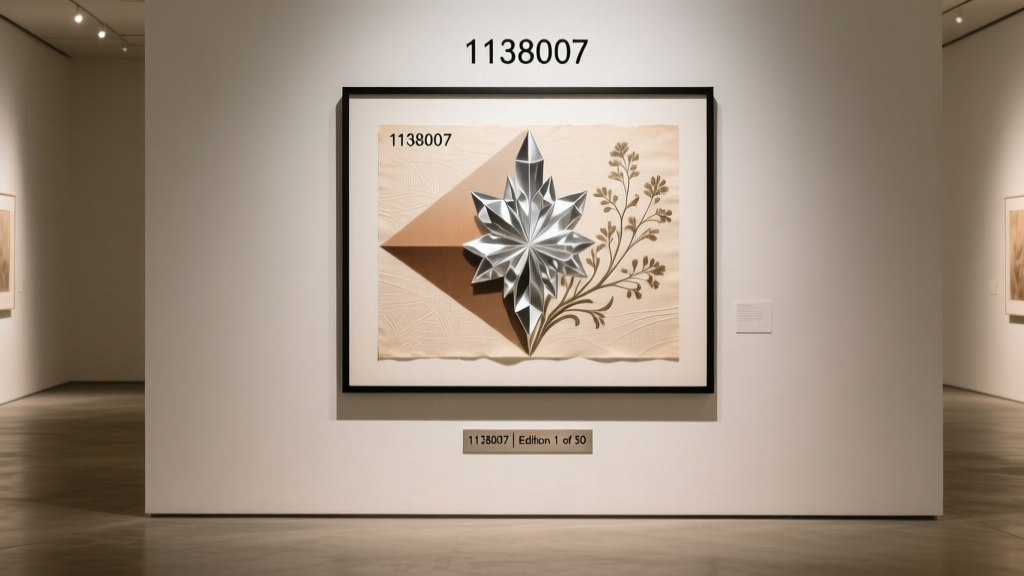
Authentication and Market Analysis of Print 1138007: A Technical Study of the 2005 Giclée Edition of 'Lunar Drift' by Julie Mehretu
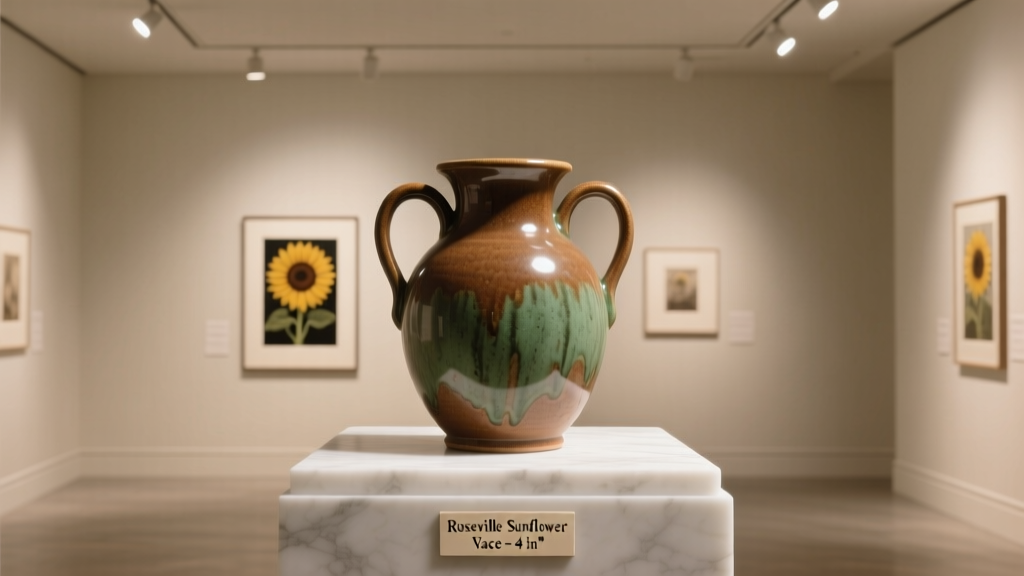
Roseville Sunflower Vase (Brown-Green, Two Open Handles, 4 Inches): Authentication, Market Value, and Historical Context
Authenticating and Valuing the 'Ancestral Home of George Washington' Bronze-Finish Bookends: A Market and Provenance Analysis
D. E. McNicol Pottery Co. No. 7: Authentication, Provenance, and Market Analysis of a Mid-Century American Art Pottery Mark

Isaac Jones: Market Position, Authentication Challenges, and the Evolving Landscape of Contemporary Print Collecting
Honey Gold Plate Dinnerware by Taylor Smith & Taylor: Authentication, Market Value, and Design Legacy

Belleek Teapot: Glass Pattern, First Mark, Black Glaze, Large Size — Authentication, Provenance, and Market Value Analysis