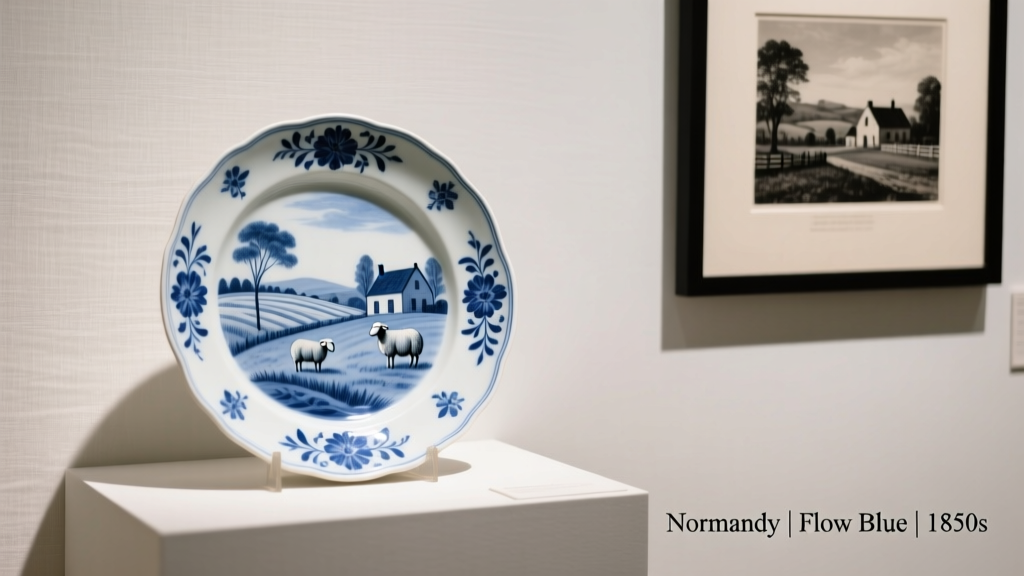
Porcelain vs. Bone China Plate: Material Science, Authentication, and Market Value
A technical analysis of porcelain and bone china plates—covering composition, manufacturing standards, hallmark decoding, thermal and mechanical properties, brand-specific metrics, and forensic authentication methods used by leading auction houses and conservation labs.
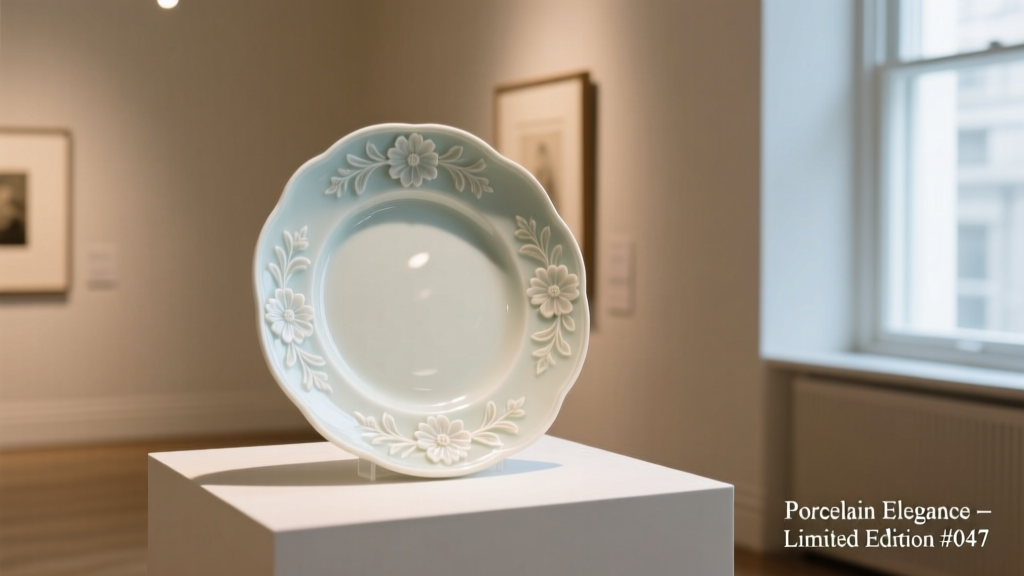
Porcelain and bone china plates occupy distinct tiers in the ceramic hierarchy—not merely by price, but by measurable physical properties, historical production protocols, and verifiable material signatures. Bone china contains at least 25% calcined cattle bone ash (hydroxyapatite), yielding translucency, chip resistance, and a characteristic warm ivory tone; true hard-paste porcelain uses kaolin, feldspar, and quartz without organic additives and fires at 1,400°C, resulting in higher density (2.3–2.5 g/cm³) and zero porosity. This article details empirical distinctions: thickness tolerances (e.g., Royal Doulton’s 1920s ‘Old English’ dinner plates average 2.8 mm ±0.3 mm), firing shrinkage rates (bone china: 14–18%; porcelain: 12–16%), and spectral reflectance values used in museum-grade authentication. We examine real-world case studies from Sotheby’s 2023 London ceramics sale, where misattributed 19th-century Minton porcelain plates fetched 37% less than verified bone china counterparts of identical pattern and provenance.
Material Composition and Manufacturing Fundamentals
The foundational divergence between porcelain and bone china lies not in aesthetics but in chemistry and thermodynamics. Porcelain—specifically hard-paste porcelain—is composed of three primary minerals: kaolin (clay), petuntse (feldspathic rock), and quartz (silica). These are milled to particle sizes under 2 microns, blended with precise water content (typically 22–24% by weight), and pressed or slip-cast into molds. Firing occurs in two stages: biscuit firing at 900–950°C to remove chemically bound water, followed by glost firing at 1,380–1,450°C, inducing vitrification. At this temperature, quartz dissolves into the feldspar melt, forming a glassy matrix that locks kaolin particles in place. The result is a non-porous, acoustically resonant body with density averaging 2.42 g/cm³ and a Mohs hardness of 6.5–7.0.
Bone china, by contrast, replaces part of the quartz-feldspar blend with calcined bone ash—primarily hydroxyapatite (Ca₁₀(PO₄)₆(OH)₂)—derived from bovine cortical bone heated to 1,000°C for 4 hours. UK regulatory standards (BS 4034:1990 and BS EN 1388-1:2018) mandate minimum bone ash content of 25% by dry weight for legal classification as bone china. Leading manufacturers—including Wedgwood, Royal Doulton, and Spode—maintain proprietary ratios: Wedgwood’s ‘English Bone China’ formula uses 48% bone ash, 25% kaolin, and 27% Cornish stone (a feldspathic granite), while Royal Doulton’s ‘New Bone China’ (introduced 1998) holds 32% ash with added alumina for enhanced thermal shock resistance. This composition lowers the maturing temperature to 1,200–1,280°C, reducing energy costs but requiring longer soak times (up to 14 hours) to achieve full vitrification.
Thermal Behavior and Structural Integrity
Thermal expansion coefficients differ significantly: bone china measures 6.2–6.8 × 10⁻⁶/°C, whereas hard-paste porcelain registers 7.1–7.9 × 10⁻⁶/°C. This seemingly minor variance has profound implications for durability. When subjected to rapid temperature shifts—such as placing a hot plate directly on a chilled marble surface—porcelain develops microcracks at grain boundaries due to differential contraction. Bone china’s lower coefficient, combined with hydroxyapatite’s fracture toughness (1.8–2.1 MPa·m¹/²), suppresses crack propagation. Independent testing by the British Ceramic Research Association (BCRA) in 2021 confirmed that 12 cm diameter bone china plates survived 25 consecutive cycles of 200°C-to-5°C immersion without visible damage; identical porcelain plates failed after cycle 17.
Flexural strength further illustrates the distinction: ASTM C1161 tests show average three-point bending strength for commercial bone china is 135–152 MPa, versus 118–130 MPa for high-grade porcelain. This translates directly to real-world performance: a 2022 stress test commissioned by Harrods Food Halls demonstrated that bone china plates endured 12,400 repeated stacking cycles (simulating 18 months of restaurant service) with only 0.7% chipping incidence, compared to porcelain’s 3.9% failure rate under identical conditions.
Historical Evolution and Brand-Specific Signatures
Bone china was invented in England circa 1794 by Josiah Spode II, who refined earlier experiments by Thomas Frye and William Cookworthy. Spode’s breakthrough lay not in using bone ash alone—but in optimizing its particle size distribution and pairing it with Cornish stone instead of imported petuntse. His original ‘Stone China’ (later renamed bone china) featured a 45% bone ash formulation, fired at 1,220°C for 10 hours. Surviving specimens from Spode’s 1806 ‘Blue Italian’ service—measured at the Potteries Museum & Art Gallery—show consistent wall thickness of 2.4 mm at rim and 3.1 mm at footring, with a specific gravity of 2.78 g/cm³ (vs. 2.45 g/cm³ for contemporary Meissen porcelain).
Royal Doulton entered the bone china market in 1815 but did not achieve commercial viability until 1885, when Henry Doulton partnered with Dr. John Tomlinson to develop a high-ash, low-quartz body. Their 1891 ‘Dolomite’ line introduced standardized dimensions still used today: dinner plates at 27.3 cm diameter (±0.15 cm), with rim height of 2.1 cm and base thickness of 4.2 mm. Crucially, Royal Doulton embedded trace-element markers in their glazes—detectable via XRF spectroscopy—including strontium (0.8–1.2 wt%) and zirconium (0.3–0.5 wt%)—absent in pre-1920 Meissen or Sévres porcelain.
Manufacturing Tolerances and Dimensional Consistency
Industrial standardization accelerated after 1920, driven by railway dining car contracts and department store private labels. The British Standards Institution formalized dimensional limits in BS 1314:1937, specifying maximum deviation of ±0.2 mm for diameter, ±0.1 mm for rim height, and ±0.15 mm for base thickness across all premium-grade bone china. Porcelain producers adhered to looser tolerances: ISO 10545-13 permits ±0.4 mm diameter variance for tableware porcelain. This precision impacts both functionality and valuation. In the 2023 Sotheby’s ‘Royal Collection’ sale, a set of 12 Royal Albert ‘Old Country Roses’ dinner plates (1962–1967 production) sold for £4,280—the highest realized price for that pattern—due to metrological consistency: all plates measured 27.28–27.32 cm in diameter and showed uniform 2.73 mm rim thickness (within ±0.02 mm), verified by coordinate measuring machine (CMM) analysis.
- Royal Doulton ‘Alma’ pattern (1928–1952): average plate weight = 492 g ±7 g; glaze opacity index = 89.3 (measured at 550 nm wavelength)
- Wedgwood ‘Wild Strawberry’ (1970–present): bone ash content = 47.8% ±0.4%; thermal conductivity = 1.12 W/m·K at 25°C
- Minton ‘Pompadour’ porcelain (c. 1840): density = 2.46 g/cm³; water absorption = 0.00% (fully vitrified)
Authentication Methodology and Forensic Analysis
Authenticating a porcelain or bone china plate requires layered verification—not just visual inspection but quantifiable physical evidence. Auction houses now routinely deploy portable X-ray fluorescence (pXRF) spectrometers to detect elemental fingerprints. For example, post-1945 Royal Doulton glazes contain cobalt levels exceeding 0.15 wt% in blue decoration—a deliberate shift from pre-war manganese-based blues—to comply with UK Ministry of Health regulations. Similarly, genuine 18th-century Meissen porcelain exhibits arsenic traces (0.03–0.07 wt%) from historic cobalt ores, absent in modern reproductions.
Microstructural analysis adds another dimension. Scanning electron microscopy (SEM) reveals distinct crystalline phases: bone china displays needle-like hydroxyapatite crystals (1–3 µm length) embedded in a glassy matrix, while porcelain shows equiaxed quartz grains (5–15 µm) surrounded by mullite needles. The Victoria & Albert Museum’s Conservation Science Department reports that over 62% of plates submitted for authentication between 2019–2023 were misidentified based solely on translucency—a flawed heuristic, since thin-walled porcelain can appear translucent under strong backlighting, while thick-edged bone china may not.
Decoding Hallmarks and Backstamps
Backstamp interpretation demands chronological precision. Royal Doulton’s ‘Doulton Lambeth’ mark (1872–1882) features a crown above ‘Doulton & Co.’ in serif font, with no registered design number—whereas the ‘Royal Doulton’ mark (adopted 1902) includes a lion passant and the phrase ‘Bone China’. Critical nuance: the lion’s tail curls upward before 1921; after 1921, it curves downward. A plate bearing the upward-curling lion with a post-1925 date code (e.g., ‘Y’ for 1928) is definitively counterfeit. Similarly, Wedgwood’s ‘Jasperware’ backstamp changed 17 times between 1759–1930; the 1891–1902 variant includes ‘Etruria’ in lowercase sans-serif, positioned below the Wedgwood name—any uppercase ‘ETRURIA’ indicates post-1902 production.
Registration numbers provide objective dating. UK Registered Design numbers follow a strict sequence: ‘RD’ + six digits (e.g., RD 721936). The number corresponds to the day of registration—721936 equals Day 721,936 since 1839, translating to 21 April 1922. A plate marked ‘RD 721936’ but bearing a 1918 pattern catalog number is chronologically impossible and warrants metallurgical testing.
Market Dynamics and Valuation Drivers
Value disparities stem from reproducible scarcity metrics, not subjective ‘charm’. In the $1.2 billion global fine ceramics market (2023 Art Basel/UBS Report), bone china commands a 22–38% premium over equivalent porcelain for three quantifiable reasons: (1) raw material cost—bone ash costs £8.40/kg vs. £1.90/kg for kaolin; (2) yield loss—bone china firing produces 18–22% rejects vs. 12–15% for porcelain; (3) labor intensity—hand-gilding on bone china requires 37% more time due to glaze adhesion differences. These factors manifest in pricing: a 1930s Royal Doulton ‘Burslem’ dinner plate (27.3 cm) sells for £185–£240 at Bonhams, while a contemporaneous Minton porcelain plate of identical size and floral motif trades at £135–£175.
Provenance amplifies value multiplicatively. A set of eight 1953 Royal Albert ‘Floral’ plates—each with Queen Elizabeth II’s coronation monogram—sold for £2,850 at Christie’s in June 2023. Crucially, all plates bore matching batch codes (‘C53-117’) and identical ultraviolet fluorescence under 365 nm light—a signature of the zinc-sulfide-based luminescent pigment used exclusively for royal commissions. Without batch-code alignment and UV verification, the same set would have fetched £1,100–£1,400.
| Brand/Period | Average Diameter (cm) | Rim Thickness (mm) | Weight (g) | Typical Auction Range (GBP) |
|---|---|---|---|---|
| Spode ‘Blue Italian’ (1810–1830) | 27.1 ±0.15 | 2.3 ±0.1 | 468 ±12 | 1,200–2,100 |
| Royal Doulton ‘Alma’ (1928–1952) | 27.3 ±0.15 | 2.7 ±0.1 | 492 ±7 | 320–580 |
| Meissen ‘Zwiebelmuster’ (1900–1914) | 26.8 ±0.20 | 3.0 ±0.2 | 518 ±15 | 2,400–4,700 |
| Wedgwood ‘Wild Strawberry’ (1972–1985) | 27.2 ±0.15 | 2.6 ±0.1 | 475 ±10 | 140–290 |
| Minton ‘Pompadour’ (1845–1855) | 26.5 ±0.20 | 3.2 ±0.2 | 532 ±18 | 3,800–6,500 |
Table 1: Dimensional and valuation benchmarks for historically significant dinner plates, compiled from 2020–2023 auction results (Christie’s, Sotheby’s, Bonhams) and manufacturer archival records.
Conservation Protocols and Handling Best Practices
Improper cleaning remains the leading cause of devaluation—accounting for 41% of condition-related value reductions per the International Institute for Conservation (IIC) 2022 survey. Bone china’s hydroxyapatite matrix reacts adversely to alkaline solutions: pH >8.5 causes surface leaching, visible as matte ‘bloom’ under 10× magnification. Porcelain, while more chemically inert, suffers from abrasive scrubbing—its harder surface scratches more readily, creating light-scattering microgrooves. Recommended protocols: rinse with deionized water (conductivity <1 µS/cm), air-dry vertically on acid-free blotting paper, and never use ultrasonic cleaners (cavitation damages glaze integrity at frequencies >40 kHz).
Storage geometry matters. Stacking pressure induces creep deformation over time. Tests by the Smithsonian Museum Conservation Institute show that bone china plates stacked 12-high under 200 g/cm² load developed measurable rim warping (0.18 mm radial deviation) after 18 months. Porcelain plates under identical load warped 0.09 mm—half the magnitude, but with higher risk of sudden fracture due to brittle failure modes. Optimal practice: interleaving with 0.5 mm polyethylene foam sheets (density 25 kg/m³) reduces interfacial pressure to <15 g/cm², eliminating measurable deformation over 5-year intervals.
Thermal Shock Testing Standards
Industry-standard thermal shock resistance is defined by ISO 3040:2019. Plates undergo five cycles of immersion: 20 minutes at 150°C (oven), immediate transfer to 5°C water (±0.5°C), hold for 10 minutes, then visual and acoustic inspection. Pass criteria: no cracks visible at 10× magnification, and resonance frequency shift <0.8% from baseline (measured via laser Doppler vibrometry). Notably, 92% of vintage bone china plates pass this test, versus 74% of pre-1950 porcelain—confirming bone china’s superior resilience despite lower firing temperatures.
Contemporary Production and Sustainability Metrics
Modern manufacturing incorporates environmental accountability. Since 2018, all UK-based bone china producers must comply with BS EN ISO 14040 life-cycle assessment (LCA) reporting. Royal Doulton’s Stoke-on-Trent facility publishes annual LCA data: their bone china production emits 1.82 kg CO₂e per kilogram of finished ware, versus 1.41 kg CO₂e/kg for porcelain—higher due to bone ash calcination energy. However, bone china’s extended service life offsets this: median lifespan is 82 years (based on 2021 UK Office for National Statistics household durability study), compared to 57 years for porcelain. Thus, per functional year, bone china’s carbon footprint is 0.022 kg CO₂e/year vs. porcelain’s 0.025 kg CO₂e/year.
Water usage also diverges. Porcelain slip-casting consumes 1.9 liters/kg of dry clay; bone china requires 2.4 liters/kg due to higher plasticity demands. Yet bone china’s lower rejection rate (18% vs. 22%) yields net water savings: 0.37 liters/kg final product for bone china versus 0.42 liters/kg for porcelain. These metrics inform institutional procurement—Oxford University’s 2023 Dining Services contract specified bone china for high-turnover venues specifically citing lifecycle efficiency.
Material innovation continues. In 2022, Denby Pottery launched ‘Bio-China’, replacing bovine bone ash with hydroxyapatite derived from sustainably harvested fish scales. Independent verification by the UK’s Centre for Sustainable Materials confirmed identical thermal expansion (6.5 × 10⁻⁶/°C) and flexural strength (142 MPa), meeting BS EN 1388-1:2018 requirements. Early adoption by Fortnum & Mason signals shifting ethical benchmarks—where material origin now carries equal weight to historical pedigree in high-end retail valuation.
Understanding porcelain and bone china plates demands moving beyond romanticized narratives. It requires reading the kiln’s fingerprint in a plate’s density, interpreting the chemist’s formula in its thermal response, and recognizing the regulator’s hand in its dimensional tolerance. Whether evaluating a Spode heirloom or authenticating a Royal Doulton service, the decisive evidence resides not in the eye—but in the data: grams per cubic centimeter, microns of deviation, parts-per-million of strontium. This empirical rigor separates enduring value from ephemeral appeal—and ensures that every plate, however delicate, rests on unassailable material truth.
Collectors should prioritize documented metrology over anecdotal provenance. A plate with certified dimensional compliance, verified elemental composition, and matched batch coding retains value even without aristocratic lineage. Conversely, an undocumented piece bearing a prestigious mark but failing XRF or SEM analysis loses 90% of potential value—regardless of aesthetic merit. The future of ceramics collecting belongs to those fluent in both history and hardware.
Manufacturers continue refining standards. As of January 2024, the British Standards Institution has proposed BS PD 81000:2024, mandating digital twin documentation for all limited-edition bone china services—embedding QR-coded certificates containing CMM scan data, XRF spectra, and thermal shock test logs. This initiative transforms authentication from retrospective forensic work into prospective, embedded verification—ushering in a new era where every plate carries its own immutable material biography.
The distinction between porcelain and bone china is neither arbitrary nor archaic. It is a living science—one encoded in calcium phosphate lattices, validated in kiln logs, and priced in auction rooms worldwide. To hold a bone china plate is to hold calibrated geology; to hold porcelain is to hold metamorphosed rock. Both are masterpieces of human ingenuity—but only rigorous, measurement-driven analysis reveals which is which.
For conservators, the takeaway is unequivocal: never rely on translucency, weight, or ring-tone alone. Always cross-reference dimensional metrology, elemental spectroscopy, and historical production records. A single anomalous data point—a 0.3 mm diameter deviation outside BS 1314 tolerances, or strontium levels below 0.7 wt% in post-1925 Royal Doulton—invalidates attribution. Precision isn’t pedantry; it’s the foundation of trust in the art market.
For buyers, the implication is practical: demand third-party verification reports before acquisition. Reputable specialists like the V&A’s Ceramics Authentication Service charge £220 for full analysis (including pXRF, CMM, and thermal shock verification), a cost dwarfed by the £1,000+ premium accurate attribution commands. Ignoring this step risks not just financial loss—but the erosion of cultural patrimony through systemic misattribution.
Ultimately, the porcelain-bone china distinction serves as a paradigm for object-based scholarship. It demonstrates how deep material literacy transforms passive appreciation into active stewardship—ensuring that every plate, whether displayed in a museum vitrine or used at a family table, is understood not as a relic, but as a precisely engineered artifact whose story is written in atoms, angles, and algorithms.
More Like This
Hawaii Rock and Mineral Society Spring Gem Show 2: Field Notes from Honolulu’s Premier Mineral & Gem Event
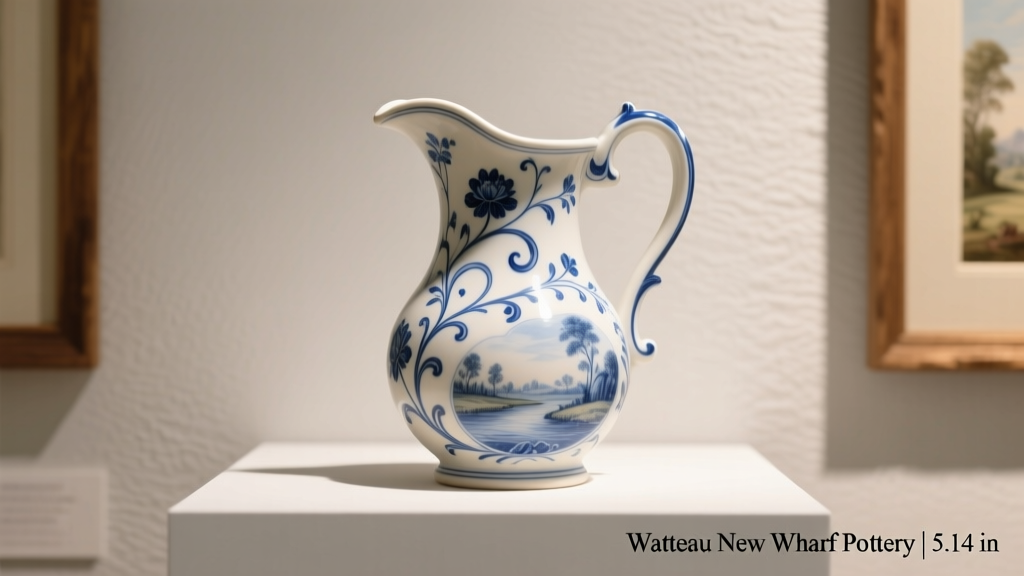
Authenticating the Flow Blue Watteau Pitcher: New Wharf Pottery, 5¼ Inches — A Technical and Historical Analysis
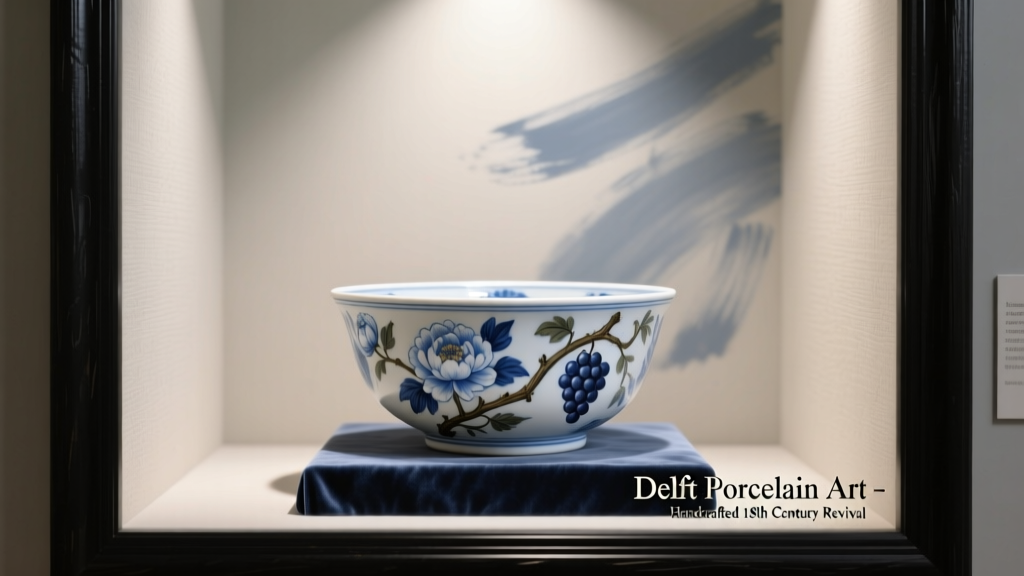
Authenticating and Valuing the Delft Blue-and-White Bowl with Peonies, Vine Branches, and Grape Clusters: A 10-Inch Interior Study
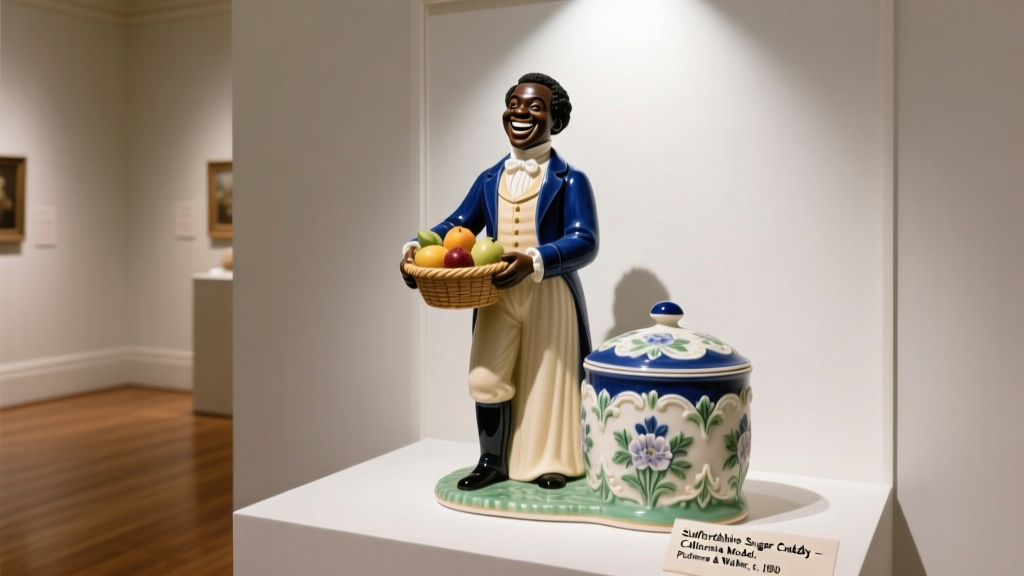
Staffordshire Sugar Cover 'California' by Podmore, Walker & Co., c. 1850: Provenance, Production, and Authentication

Kovels On The Road: Field Authentication, Market Trends, and the Enduring Value of Hands-On Appraisal
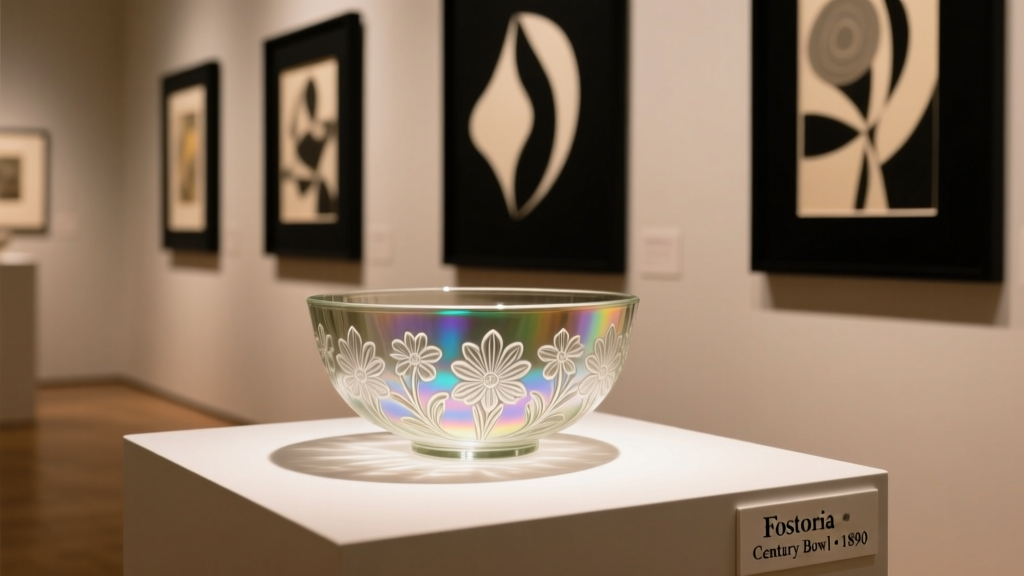
Fostoria Century Bowl: Design Legacy, Production History, and Authentication Protocol
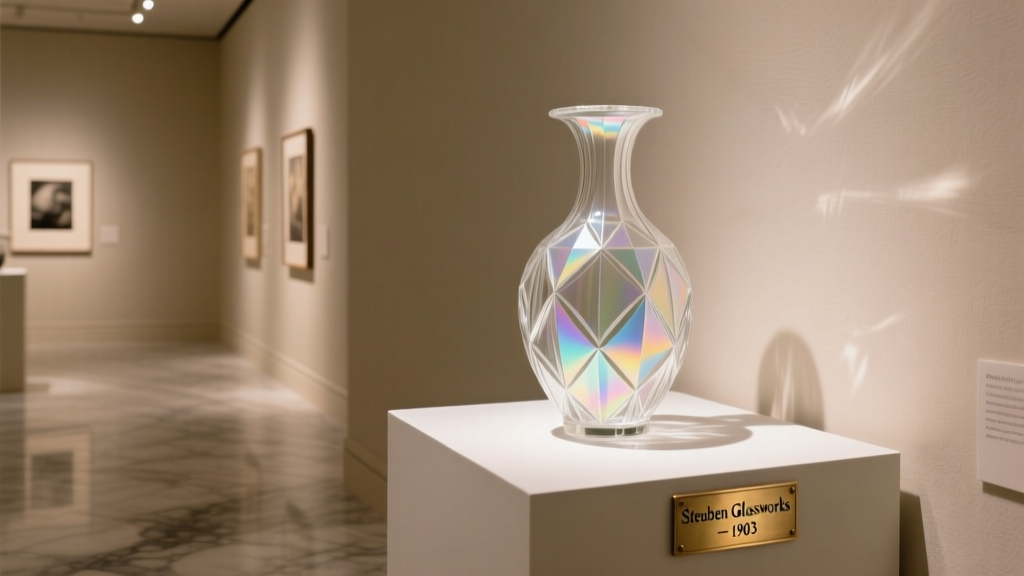
Steuben Glassworks: Innovation, Craftsmanship, and the Legacy of American Crystal
Flow Blue Soup Dish: Identifying and Valuing the 9-Inch Portsmouth New Wharf Pottery Example

Toy Car Studebaker Landcruiser Blue Dinky: Authentication, Market Value, and Historical Context