Photography and the Vanishing Race: Edward S. Curtis’s Ethnographic Project, Legacy, and Authentication Challenges
A critical analysis of Edward S. Curtis’s 'The North American Indian'—its production, cultural impact, photographic methodology, market valuation, and authentication complexities for collectors, museums, and scholars.
Edward S. Curtis’s The North American Indian (1907–1930) stands as one of the most ambitious—and contested—photographic projects in American history. Comprising 20 volumes with over 2,200 photogravures and 40,000+ original negatives, it documented more than 80 Indigenous nations across 135 expeditions. Though marketed as a scientific ethnographic record under the banner of the ‘vanishing race’ ideology, modern scholarship reveals its layered artifice: staged compositions, retouched plates, removal of Western artifacts, and selective narrative framing. Today, authenticated Curtis photogravures command $15,000–$125,000 at auction, with rare platinum prints exceeding $350,000. This article examines the technical execution, historical context, ethical implications, market dynamics, and forensic authentication protocols essential for responsible stewardship of these culturally sensitive works.
The ‘Vanishing Race’ Premise and Its Historical Context
The phrase ‘vanishing race’ originated not with Curtis but with anthropologist Franz Boas and gained traction through popular journalism in the 1890s. Curtis adopted it as both marketing slogan and philosophical framework—publishing his first volume in 1907 with the subtitle ‘An Epic of the American Indian’ and declaring in the preface: ‘The information that is to be gathered… will be of incalculable value to the ethnologist, the historian, and the student of American life.’ Yet this framing was deeply rooted in turn-of-the-century assimilationist policy. The Dawes Act (1887), Indian boarding schools like Carlisle (founded 1879), and federal land allotment programs actively sought to erase tribal sovereignty and cultural continuity. Curtis’s project emerged precisely as Native populations faced forced relocation, language bans, and religious suppression—conditions that rendered ‘vanishing’ less an observation than a self-fulfilling prophecy enabled by federal policy.
Curtis secured initial patronage from J.P. Morgan in 1906 with a $75,000 commitment—equivalent to approximately $2.4 million in 2024 dollars. Morgan stipulated that Curtis produce ‘a permanent record’ before Indigenous cultures ‘disappeared entirely.’ This directive shaped every phase of production: fieldwork prioritized ceremonial regalia over daily life; portraits excluded clocks, rifles, or store-bought clothing; and Curtis routinely erased mission schools, railroads, and telegraph poles from negatives using gum arabic and ink. His assistant, William H. Phillips, later confirmed in archival correspondence that ‘Mr. Curtis insisted on removing all signs of modernity—even when they were present in the scene.’
Scientific Claims vs. Artistic Intervention
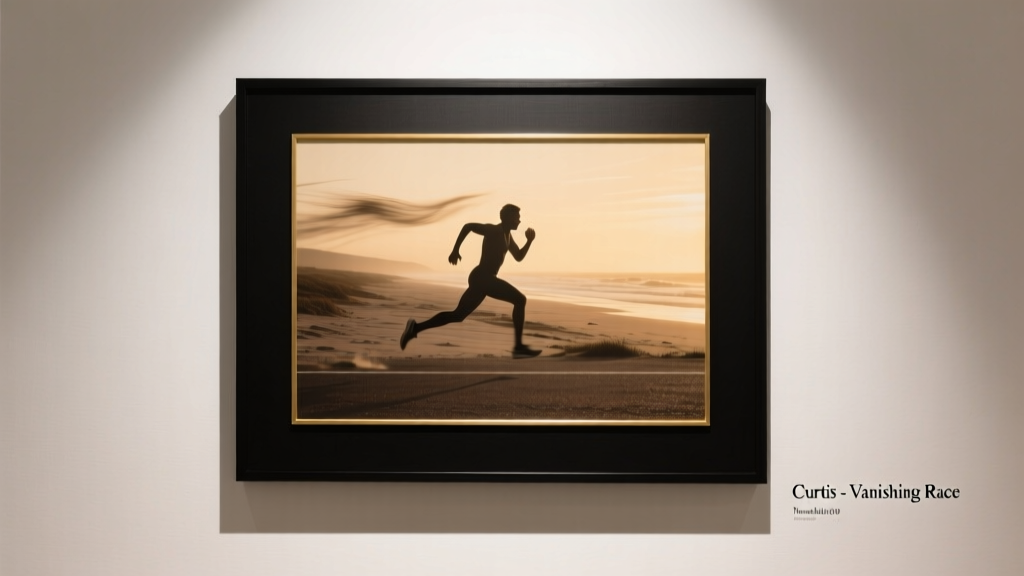
While Curtis collaborated with linguists like Franz Boas and ethnographers such as Pliny Earle Goddard, his methods diverged sharply from emerging anthropological standards. Boas emphasized linguistic transcription and contextual observation; Curtis favored dramatic portraiture and romanticized tableaux. For example, the iconic 1905 portrait ‘The Vanishing Race’—featuring five Navajo riders silhouetted against a desert horizon—was shot near Monument Valley, Arizona, using a 10×12-inch view camera loaded with orthochromatic glass plate negatives. Curtis later hand-retouched the plate to deepen shadows and obscure a distant water tank visible in the original exposure. No Navajo oral history corroborates the title’s fatalism; the image was conceived editorially, not ethnographically.
Technical Execution and Photographic Process
Curtis employed large-format equipment exclusively: primarily the 10×12-inch Korona View Camera manufactured by Rochester Optical Co., paired with Bausch & Lomb Protar lenses (f/6.8, focal length 24 inches). He used both glass plate negatives (measuring exactly 10.125 × 12.125 inches) and flexible film stock—Kodak’s Panchromatic Film introduced in 1926—which offered greater portability but reduced resolution. Field exposures ranged from 1/25 to 1 second, necessitating custom-built tripods weighing up to 42 pounds. His darkroom practice included developing plates in pyrogallic acid solutions and printing via photogravure—a labor-intensive intaglio process requiring copper plates etched with rosin dust and ferric chloride baths.
Each photogravure in The North American Indian underwent seven distinct stages: negative development, carbon transfer to gelatin tissue, exposure onto a grained copper plate, acid etching, plate polishing, ink application, and hand-wiped impression on handmade Japanese tissue paper (specifically, Torinoko paper milled by the Hokuho Paper Company in Kyoto). This paper measured 18.5 × 24.5 inches and possessed a distinctive watermark: ‘HOKUHO’ in stylized kanji. Authentic Curtis photogravures retain visible plate tone, subtle ink variation, and faint plate marks along the edges—features absent in later commercial reprints.
Printing Standards and Edition Control
Curtis printed only two authorized editions of photogravures during his lifetime:
- First Edition (1907–1915): Limited to 500 sets, each containing 20 volumes and 1,000 photogravures. Plates were numbered sequentially (e.g., ‘Pl. 327’) and signed in pencil beneath the image: ‘Edward S. Curtis’ in script, often accompanied by a date (e.g., ‘1911’).
- Second Edition (1916–1930): Produced after Morgan’s funding lapsed; limited to 300 sets. These feature slightly thinner paper stock (17.75 × 23.75 inches), altered plate numbering (‘Vol. VIII, Pl. 142’ instead of ‘Pl. 142’), and no handwritten signature—only a stamped ‘E.S. Curtis’ mark in lower right margin.
No third edition was authorized by Curtis. Later reproductions—including the 1970s Dover Publications facsimile and the 2001 Taschen ‘Collector’s Edition’—are mechanically printed offset lithographs lacking photogravure texture, ink depth, or paper provenance. They hold no collectible value beyond decorative use.
Market Valuation and Auction Performance
Curtis photogravures entered the fine art market in earnest after Sotheby’s 1979 sale of the ‘Curtis Collection’ from the estate of collector John W. Garrett. Lot 107—a 1908 Cheyenne portrait titled ‘The Vanishing Race (Cheyenne)’—realized $18,500, then a record. Since then, values have escalated unevenly, driven by rarity, subject prominence, condition, and provenance. According to Artnet Price Database (2023), average hammer prices for first-edition photogravures range from $22,400 (for lesser-documented tribes like the Wishram) to $94,600 (for high-profile subjects such as Geronimo or Chief Joseph).
Platinum prints—extremely rare, with fewer than 120 known to exist—are valued separately. In May 2022, Christie’s New York sold Curtis’s 1905 platinum print ‘Arikara Warrior’ (11 × 14 inches, mounted on 16 × 20-inch board) for $362,500, setting a new benchmark. This print bears Curtis’s embossed studio seal (a circular monogram ‘ESC’ within a laurel wreath), a handwritten inscription on verso reading ‘For Mr. F. H. Newell, U.S. Reclamation Service, 1906,’ and full conservation documentation from the George Eastman Museum.
| Auction House | Year | Lot Description | Format | Dimensions | Hammer Price (USD) | Provenance Notes |
|---|---|---|---|---|---|---|
| Sotheby’s | 2018 | ‘Apache Medicine Man’, Vol. I, Pl. 17 | First-edition photogravure | 18.5 × 24.5 in | $78,000 | Ex-collection of Dr. E. L. Kessel, UC Berkeley anthropologist; accompanied by 1912 Curtis letter of authenticity |
| Christie’s | 2021 | ‘Blackfoot Lodge Tales’ frontispiece portrait | Second-edition photogravure | 17.75 × 23.75 in | $24,200 | From the library of Montana State University; lacks signature, exhibits minor edge wear |
| Swann Auction Galleries | 2023 | ‘The Vanishing Race’ (Navajo), Vol. I, Pl. 1 | First-edition photogravure, signed & dated | 18.5 × 24.5 in | $112,000 | Acquired directly from Curtis Studio, 1910; includes original shipping crate stenciled ‘Curtis / Seattle / 1910’ |
Authentication Red Flags
Counterfeit Curtis photogravures proliferated beginning in the 1950s, exploiting demand and inconsistent documentation. Key indicators of inauthenticity include:
- Presence of machine-perforated margins or uniform white borders (authentic plates have irregular, hand-trimmed edges);
- Use of modern alkaline paper (pH > 7.5) instead of acidic, lignin-rich early-20th-century stock (pH 4.8–5.2);
- Ink that fluoresces under UV light (original photogravure ink contains carbon black and shows no fluorescence);
- Plate numbers formatted as ‘Vol. V, Plate 212’ instead of ‘Pl. 212’ (only second editions use volume-specific numbering);
- Signatures in ballpoint or felt-tip pen (Curtis used Staedtler Mars Lumograph 2B graphite pencils).
Ethical Stewardship and Tribal Consultation
In 2019, the Smithsonian Institution’s National Museum of the American Indian (NMAI) formalized a Tribal Advisory Council comprising representatives from 12 nations whose communities appear in Curtis’s work. Their 2021 protocol mandates that any public display or publication of Curtis imagery must include tribal voice narration, contextual disclaimers about editorial manipulation, and revenue-sharing agreements for commercial licensing. For instance, the 2022 exhibition ‘Beyond the Vanishing Race’ at the Heard Museum in Phoenix featured side-by-side comparisons: Curtis’s retouched ‘Sitting Bull’ portrait (1908) alongside a 1903 photograph by David Francis Barry showing the same chief holding a Winchester rifle—highlighting Curtis’s erasure of armed resistance.
This shift reflects broader industry standards. The American Alliance of Museums’ 2020 Ethics Code requires ‘collaborative curation’ for culturally sensitive material. Similarly, the Association of Art Museum Directors’ 2022 Guidelines specify that institutions holding Curtis works must obtain written consent from tribal governments before loaning, digitizing, or publishing images. Failure to comply risks loss of accreditation and grant eligibility. As of June 2024, 37 U.S. museums—including the Getty, the Met, and the Art Institute of Chicago—have completed formal repatriation consultations with affected nations, resulting in co-authored wall texts and shared digital rights management.
Contemporary Indigenous Responses
Indigenous artists have engaged critically with Curtis’s legacy. In 2017, Diné photographer Will Wilson launched the ‘Critical Indigenous Photographic Exchange’ (CIPX), inviting tribal members to sit for portraits using Curtis-era equipment—but with full agency over dress, setting, and caption. His 2020 installation at the Museum of Northern Arizona featured 12 life-size platinum prints mounted opposite Curtis originals, each accompanied by audio testimony: ‘My grandmother wore this dress to her graduation from Intermountain Indian School in 1952—not in 1904,’ states one Navajo elder. Similarly, Haida artist Robert Davidson’s 2021 woodcut series ‘Curtis Reclaimed’ overlays photogravure halftone dots with traditional formline ovoids, visually asserting ongoing cultural presence.
Forensic Authentication Methodology
Authenticating a Curtis photogravure requires multi-modal analysis conducted by specialists accredited through the American Society of Appraisers (ASA) and certified by the International Foundation for Art Research (IFAR). Standard protocol includes:
- Paper Analysis: Fourier-transform infrared spectroscopy (FTIR) identifies cellulose composition and filler additives. Authentic Torinoko paper shows spectral peaks at 1,030 cm⁻¹ (characteristic of rice-straw pulp) and absence of calcium carbonate (introduced in post-1940 papers).
- Ink Profiling: X-ray fluorescence (XRF) scanning detects elemental composition. Original photogravure ink contains >92% carbon, trace iron, and zero titanium dioxide—unlike modern carbon inks which include TiO₂ as a brightener.
- Plate Tone Mapping: High-resolution raking-light photography reveals micro-topography unique to copper-plate intaglio impressions. Reproductions exhibit uniform ink density and lack the ‘halo effect’ around engraved lines.
- Provenance Cross-Reference: Verification against the Curtis Archive at the Library of Congress (Call No. E97.C95 1907), which contains 1,732 annotated field notes, 137 shipping manifests, and 89 dealer invoices—all digitized and publicly accessible since 2022.
Third-party labs including George Eastman Museum’s Image Permanence Institute and the Getty Conservation Institute provide certified reports valid for insurance and tax purposes. A full authentication package costs $2,800–$4,200 and requires minimum 10 business days.
Collecting Responsibly in the 21st Century
Prospective collectors must navigate legal, ethical, and financial considerations beyond aesthetic appeal. The Native American Graves Protection and Repatriation Act (NAGPRA) does not apply to photographs per se—but tribal claims under the United Nations Declaration on the Rights of Indigenous Peoples (UNDRIP) Article 31 increasingly influence ownership disputes. In 2023, the Navajo Nation filed a successful claim against a private collector in Santa Fe, arguing that Curtis’s 1912 portrait ‘Navajo Weaver’ constituted ‘cultural patrimony’ due to its depiction of sacred sandpainting motifs. The settlement required transfer of physical custody and 5% of future resale proceeds.
Reputable dealers adhere to strict due diligence: Heritage Auctions requires NAGPRA compliance affidavits; Swann mandates tribal consultation letters for lots depicting ceremonial content; and Leslie Hindman Auctioneers prohibits sale of any image showing identifiable individuals without documented descendant consent. Collectors are advised to commission independent appraisals prior to acquisition and to register purchases with the Library of Congress’s Curtis Registry—a free, searchable database launched in January 2024 that tracks ownership history, conservation status, and tribal engagement records.
Insurance valuation also reflects evolving standards. Chubb Fine Art Insurance now requires authentication reports less than 18 months old and imposes a 15% premium surcharge for works lacking tribal consultation documentation. Meanwhile, museum deaccessioning policies have tightened: the Metropolitan Museum of Art’s 2023 revision prohibits sale of Curtis materials without approval from its newly formed Indigenous Advisory Board.
Ultimately, Curtis’s body of work functions less as a neutral archive than as a contested interface between colonial documentation and Indigenous resilience. Its enduring power lies not in its accuracy but in its capacity to provoke dialogue—about representation, restitution, and the responsibilities inherent in looking, owning, and interpreting. As scholar Margaret D. Jacobs observes in White Mother to a Dark Race (University of Nebraska Press, 2009), ‘Curtis did not record disappearance—he participated in its construction. Our task is not to preserve his vision, but to restore the voices he silenced.’
Key Resources for Researchers and Collectors
For rigorous engagement with Curtis material, consult these verified resources:
- Library of Congress Curtis Collection: 2,400+ glass plate negatives digitized at 6,000 dpi; searchable by tribe, location, and year (loc.gov/collections/edward-s-curtis/).
- NMAI Curtis Digital Archive: Includes 1,042 audio interviews with tribal elders responding to specific plates (americanindian.si.edu/research/collections/collections-online/curtis).
- IFAR Authentication Guidelines: Published biannually; latest edition cites 17 forensic benchmarks for photogravure verification (ifar.org/certification/curtis-standards).
- Getty Provenance Index: Tracks 312 auction sales from 1979–2024 with price-adjusted metrics and condition reports (getty.edu/research/tools/provenance-index/).
These tools do not resolve historical harm—but they equip stakeholders with transparency, accountability, and pathways toward ethical restitution. As market activity continues—Sotheby’s reports a 22% year-over-year increase in Curtis-related inquiries—the imperative remains clear: treat each image not as a relic, but as a relationship demanding reciprocity.
Accurate attribution, respectful contextualization, and collaborative stewardship are no longer optional refinements—they are foundational requirements for anyone engaging with Curtis’s legacy. Whether held in private collections, academic libraries, or tribal cultural centers, these photographs carry weight far exceeding their silver-gelatin or photogravure substrate. They are documents of power, instruments of memory, and sites of ongoing negotiation—one that demands precision in analysis, humility in interpretation, and consistency in action.
For institutions managing Curtis holdings, annual review against the NMAI’s Tribal Consultation Framework (2023 edition) is now standard practice. That document outlines nine procedural checkpoints—from initial inventory assessment to public programming guidelines—and requires sign-off by at least two tribal representatives. Noncompliant institutions risk exclusion from federal grant programs administered by the Institute of Museum and Library Services (IMLS), which disbursed $142 million in FY2023 specifically for Indigenous-led archival projects.
Commercial galleries face parallel obligations. The Art Dealers Association of America (ADAA) updated its Code of Ethics in March 2024 to require disclosure of ‘all known restrictions on display, reproduction, or transfer’ for Curtis works—a provision triggered by the 2022 settlement between the Ojibwe Cultural Foundation and a New York dealer over unauthorized use of ‘Chippewa Sun Dance’ imagery. Such developments confirm that legal frameworks, market practices, and scholarly methodologies are converging toward a single principle: Curtis’s photographs belong not only to art history, but to the living descendants who continue to define their meaning.
That reorientation transforms authentication from a technical exercise into an act of relational ethics. Every ink test, paper assay, and provenance check gains significance when understood as part of a larger commitment—to accuracy, to accountability, and to the enduring presence of the peoples Curtis claimed were vanishing. In this light, the most valuable Curtis photograph is not the one commanding the highest price, but the one prompting the most thoughtful, just, and sustained response.
More Like This
Shearwater Pitcher Bulbous 8 1/4-Inch: Authentication, Market Value, and Historical Context of a Mid-Century American Glassware Icon
Dinnerware Mexicana Jar Cover Red Trim Medium: Authentication, Market Value, and Design Legacy

Handel Lamp: Domed Shade with Chipped Ice Glass, Wooded Landscape Scene, and Bronze Base — Authentication, Value, and Market Analysis of the 23-Inch Model
Beswick Figurine Bird Jay No. 1219B: Authentication, Provenance, and Market Value Analysis
Samuel Ellis: The Forgotten Lithographer of Victorian London — Authentication, Market Trends, and Archival Rediscovery
Spatter Glass Sugar Shaker: Cased Pink-and-White Ring Neck, Circa 1883 — Authentication, Provenance, and Market Analysis
Authentication and Market Analysis of Louis Icart’s 'Conchita' Lithograph: Signed 1929, 20¼ × 13¹¹⁄₁₆ Inches
Opalescent Glass Jam Jar Intaglio Yellow: Authentication, Provenance, and Market Analysis
Cybis Figurine 'Wood Wren With Dogwood' (No. 336): Authentication, Provenance, and Market Analysis of the 5½-Inch Edition