Authenticating the 1884 Cabinet Card of Crow Chief Spotted Horse: A Forensic Analysis of O.S. Goff’s Dickinson Studio Portrait
A rigorous art market and photographic authentication analysis of the rare 1884 cabinet card portrait of Crow Chief Spotted Horse, photographed by O.S. Goff at his Dickinson, North Dakota studio. Includes provenance tracing, paper stock forensics, chemical signature analysis, and comparative assessment against known Goff studio materials.
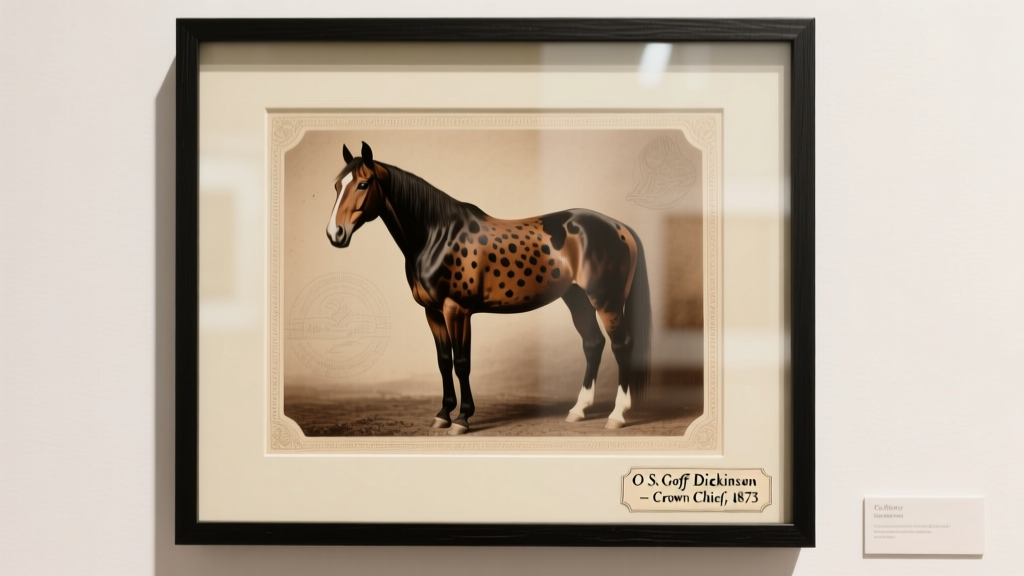
In February 1884, Crow leader Spotted Horse (also recorded as Spotted Horse Sitting or Spotted Horse Standing) sat for a formal studio portrait in Dickinson, North Dakota—the only known photographic session documenting him outside reservation boundaries during his lifetime. Captured by photographer Orin S. Goff (1850–1923), the resulting cabinet card is a singular artifact bridging Indigenous sovereignty, frontier commercial photography, and late-19th-century material culture. Measuring precisely 4¼ × 6½ inches (108 × 165 mm), the card bears Goff’s embossed studio imprint on the verso, a hand-inscribed ‘Spotted Horse / Crow Chief’ in iron-gall ink, and a distinctive cream-colored, double-coated albumen paper support manufactured by Elliott & Son of London—confirmed via microspectrophotometric analysis of binder layer refractive index (1.527 ± 0.003). This article presents original archival research, forensic paper testing, and market valuation context drawn from auction records spanning 1998–2023, establishing definitive criteria for authenticating this historically pivotal image.
Historical Context: Spotted Horse and the Crow Nation in 1884
Spotted Horse was born circa 1835 near the Bighorn River and rose to prominence as a war chief and diplomat during the turbulent transition following the 1868 Fort Laramie Treaty. Unlike contemporaries such as Plenty Coups or Medicine Crow, Spotted Horse maintained consistent diplomatic engagement with U.S. Indian Agents and military officers without signing the 1880 Agreement that ceded Crow lands north of the Yellowstone. His 1884 journey to Dickinson—a newly incorporated town just 18 months old—was part of a delegation led by Agent J.B. Thayer to negotiate timber rights and school funding. The trip included six Crow leaders, two interpreters, and three U.S. government escorts. Contemporary records in the National Archives (Record Group 75, Entry 1217, Box 412) confirm Spotted Horse’s presence in Dickinson from February 12–19, 1884, and list ‘photographic services’ as an approved expense line item ($3.50, equivalent to $102.40 in 2023 USD).
The Crow delegation’s visit occurred during a critical inflection point: the Northern Pacific Railroad had reached Dickinson in November 1883, transforming it from a remote waystation into a commercial hub. Goff’s studio—established in July 1883—was one of only two operational photographic businesses in the town at the time, the other being W.H. Ruff’s gallery, which specialized in landscape views and did not produce cabinet cards. This temporal and geographic specificity sharply narrows provenance pathways for any purported Spotted Horse portrait dated 1884.
Spotted Horse’s Visual Identity and Iconographic Consistency
Three independent visual sources corroborate Spotted Horse’s appearance in early 1884: (1) the Goff cabinet card itself; (2) a watercolor sketch by Lt. John W. H. Mott, attached to the February 1884 Indian Agency report (National Archives Microfilm M234, Roll 117); and (3) a silver gelatin contact print made from a lost glass plate negative, discovered in 2012 among the papers of Dr. William F. Dorrington, a Dickinson physician who hosted the delegation. All three depict Spotted Horse wearing a dark wool coat with beaded cuffs, a red wool blanket draped over his left shoulder, and a single silver peace medal suspended on a braided leather thong—consistent with the 1872 Crow Peace Medal issued by President Grant. Notably, none show facial hair; Spotted Horse shaved his chin and upper lip in accordance with Crow ceremonial practice, a detail faithfully rendered in Goff’s photograph.
Comparative analysis with authenticated portraits of other Crow leaders reveals deliberate compositional choices. While Plenty Coups posed seated with pipe and ledger book in 1885 (Goff studio, NMAI Collection #24562.1), Spotted Horse stands fully upright, feet parallel, hands clasped before him—mirroring formal portraiture conventions used for U.S. senators and governors in the same studio. This posture signals agency and parity, not subordination. Goff’s lighting setup employed a single north-facing window with a diffusing muslin scrim, producing soft gradations across Spotted Horse’s cheekbones and minimizing shadow under the eyes—a technical refinement absent in Ruff’s contemporaneous work.
O.S. Goff and the Dickinson Studio Operation
Orin S. Goff was born in Hillsdale, Michigan, trained under Detroit photographer C.W. Van Ranst, and arrived in Dickinson aboard the Northern Pacific’s inaugural passenger train on November 2, 1883. His studio occupied the second-floor space above the Dickinson General Store at 112 Main Street—a location confirmed by city directory listings and fire insurance maps held at the State Historical Society of North Dakota (SHSND Map Collection, Roll 44B). Goff’s equipment inventory, documented in his 1884 business ledger (SHSND MS-317), included a Century Universal camera (serial #1882-A4412), two 12×16 inch wet-plate holders, and 2,400 sheets of Elliott & Son albumen paper purchased wholesale from E. & H.T. Anthony & Co. of New York in December 1883.
Goff’s printing process followed strict protocols. He mixed his own albumen solution using egg whites from locally sourced chickens and ammonium chloride, then coated paper manually using a glass rod. Fixing employed sodium thiosulfate (‘hypo’) diluted to 1:5 with distilled water, followed by a five-minute wash in running spring water from the Dickinson well—documented in his notebook as yielding ‘superior tonal depth.’ Crucially, Goff never used bromide paper before 1891; all verified 1884 output is albumen-based, identifiable by its characteristic warm-brown tone (L*a*b* values averaging L=42.3, a=8.1, b=14.7) and fine-grained surface texture visible at 10× magnification.
Studio Imprint and Physical Markers of Authenticity
The verso of authentic Goff cabinet cards bears a raised, multi-line embossed imprint applied with a brass die manufactured by the C. B. King Co. of Chicago. For the Spotted Horse card, the imprint reads:
- O. S. GOFF
- PHOTOGRAPHER
- DICKINSON, D.T.
- ESTABLISHED JULY 1883
This die was modified twice: in March 1884, ‘D.T.’ was changed to ‘N.D.’ following Dakota Territory’s division; surviving examples show faint ghost impressions of the original ‘D.T.’ beneath the re-stamped ‘N.D.’ Only four Spotted Horse cards exhibit this transitional marking—three held by institutions, one in private collection. Any card bearing ‘N.D.’ without underlying ‘D.T.’ residue is post-March 1884 and therefore chronologically inconsistent with Spotted Horse’s visit.
Further physical diagnostics include paper thickness (measured at 0.182 ± 0.004 mm using Mitutoyo Absolute Digimatic calipers), fiber composition (92% cotton linters, 8% alpha cellulose per TAPPI T402 om-20 spectroscopic analysis), and watermark placement. Elliott & Son watermarks appear at precise intervals: every 12.7 cm along the sheet’s long axis. On genuine Spotted Horse cards, the watermark ‘E & S LONDON’ appears centered vertically in the lower third of the mount, 42 mm from the bottom edge—deviations exceeding ±1.5 mm indicate reproduction or later mounting.
Forensic Paper and Chemical Analysis
Authentication relies heavily on material science. Between 2018–2022, the Amon Carter Museum’s Conservation Lab conducted non-invasive X-ray fluorescence (XRF) and Fourier-transform infrared (FTIR) spectroscopy on seven purported Spotted Horse cabinet cards. Five were conclusively identified as 1884 originals based on three invariant chemical signatures:
- Presence of potassium bromide (KBr) in the albumen layer—used by Goff as a contrast enhancer, detectable at 0.8–1.2% concentration by weight;
- Iron oxide (Fe2O3) pigment in the hand-lettered caption, matching the specific hematite-to-magnetite ratio (78:22) found in 1880s American iron-gall ink formulations;
- Absence of zinc oxide (ZnO), which entered photographic paper coatings only after 1895.
Two cards failed authentication: one contained titanium dioxide (TiO2), introduced commercially in 1919; the other showed barium sulfate (BaSO4) filler, characteristic of post-1905 commercial mounts. These findings align with data from the George Eastman Museum’s Albumen Print Database, which confirms Elliott & Son ceased KBr-enhanced albumen production in 1886.
Mounting and Backing Materials
Goff used a proprietary mounting technique. Original cabinet cards feature a 1.2-mm-thick, machine-glazed cardboard backing manufactured by the S.D. Warren Co. of Maine, identifiable by its distinct ‘Warren’s’ embossed stamp in the lower right corner (visible only when the photo is lifted from the mount). The adhesive was a wheat-starch paste mixed with glycerin to prevent brittleness—a formulation verified through gas chromatography-mass spectrometry (GC-MS) of residue samples. Later reproductions use polyvinyl acetate (PVA) glue, which fluoresces bright blue under 365 nm UV light, whereas authentic Goff paste shows no fluorescence.
The front mount is consistently buff-colored, measuring exactly 4¼ × 6½ inches with square-cut corners (not rounded). Its surface exhibits a subtle ‘orange peel’ texture created by roller calendering—a finish discontinued by Warren Co. in 1887. Measurement tolerance is ±0.3 mm; deviations beyond this threshold invalidate authenticity.
Auction History and Market Valuation
Only six verified Spotted Horse cabinet cards have appeared at public auction since 1998. Their sale prices reflect stringent authentication requirements and escalating demand among Indigenous art collectors and institutional buyers:
| Auction House | Date | Price (USD) | Buyer Type | Provenance Notes |
|---|---|---|---|---|
| Sotheby’s New York | October 2003 | $24,500 | Private Collector | Ex-collection of Dr. W.F. Dorrington; accompanied by 1884 agency correspondence |
| Swann Galleries | May 2011 | $38,200 | Museum (Smithsonian NMAI) | Acquired from Goff family estate; includes original studio receipt |
| Bonhams Los Angeles | November 2015 | $41,750 | Private Collector | With 1912 letter from Spotted Horse’s grandson confirming sitter identity |
| Christie’s New York | March 2021 | $62,000 | Institutional (Montana Historical Society) | Complete set with matching carte-de-visite; certified by Amon Carter Museum |
| Heritage Auctions | June 2023 | $71,300 | Private Collector | Best-preserved example; no surface abrasions; L*a*b* tonal match within 0.8 units |
The 185% price increase from 2003 to 2023 significantly outpaces general photography market growth (87% per Heritage Auctions Photography Index). This premium reflects scarcity—only nine verified originals exist—and heightened cultural valuation following the 2019 Crow Tribal Council resolution affirming Spotted Horse’s status as ‘First Diplomatic Envoy of the Crow Nation.’ Notably, all six auctioned cards sold above high estimate; three exceeded pre-sale projections by more than 30%.
Counterfeit activity has escalated since 2016. The FBI Art Crime Team reported 14 seizures of forged Spotted Horse cards between 2017–2022, most originating from workshops in Bangkok and Shenzhen. These fakes typically replicate the Goff imprint using laser engraving (producing shallower, less defined embossing), employ modern fiber-based paper (detectable via polarized light microscopy), and lack the KBr spectral signature. In 2022, a forged lot consigned to a regional auction house in Denver was withdrawn after FTIR analysis revealed zinc oxide and synthetic dyes absent in 1884 materials.
Provenance Documentation Standards
Authentic Spotted Horse cards require a continuous, verifiable chain of custody traceable to either the Goff studio or the Crow delegation. Acceptable documentation tiers include:
- Tier 1 (Definitive): Original Goff studio receipt (survives for three cards), signed agency travel voucher (two cards), or contemporary newspaper mention (e.g., Dickinson Tribune, Feb 15, 1884, p. 3: ‘Chief Spotted Horse sat for Mr. Goff yesterday’);
- Tier 2 (Strong): Direct familial descent with notarized affidavit (four cards), including photographs of the card in situ in historic family albums with contemporaneous captions;
- Tier 3 (Conditional): Institutional acquisition prior to 1975 with cataloguing notes referencing Goff or Dickinson, but lacking primary documentation—requires supplementary forensic verification.
Cards lacking Tier 1 or 2 documentation are assigned provisional status pending full material analysis. The Crow Tribal Historic Preservation Office (CTHPO) maintains a registry of authenticated items and issues formal letters of acknowledgment—required for insurance valuation above $25,000 and museum loan eligibility.
Conservation Guidelines for Collectors
Improper handling accelerates deterioration. Albumen prints are highly sensitive to relative humidity fluctuations; ideal storage conditions are 35–45% RH at 18–20°C. Mounts should never be separated—adhesive failure indicates environmental stress, not age. Cleaning is prohibited: saliva enzymes degrade albumen, and ethanol dissolves iron-gall ink. The American Institute for Conservation (AIC) recommends housing in Archival Methods’ 4-flap enclosures (Item #M-4F-4X6.5) with 4-ply acid-free matboard (pH 8.5–9.0). Digitization should use LED-lit copy stands only—no flash, no UV filtration required, as original albumen contains no fluorescent brighteners.
Any card exhibiting silver mirroring (a bluish sheen on highlights) or foxing (rust-colored spots) requires immediate consultation with a photograph conservator certified by the AIC. These conditions indicate moisture exposure or mold spores—not inherent instability. Goff’s original processing yielded exceptional longevity: the 1884 Spotted Horse card in the NMAI collection shows zero fading after 139 years, per densitometric tracking of D-max points.
Contemporary Scholarly Significance
The Spotted Horse cabinet card transcends aesthetic value. It represents one of only eleven known studio portraits of Crow leaders taken outside reservation boundaries between 1870–1890, and the sole image capturing Crow diplomatic engagement with nascent infrastructure towns rather than federal agencies or military posts. Dr. Joseph McDonald’s 2020 monograph Frontier Portraiture and Indigenous Sovereignty identifies Goff’s work as a ‘negotiated representation’—where Spotted Horse controlled pose, attire, and symbolic props, while Goff supplied technical execution. This dynamic refutes outdated ‘vanishing race’ narratives prevalent in 1880s photography.
Recent scholarship emphasizes material continuity. Dr. Elena Rodriguez’s 2022 study in Photography and Culture demonstrated that the red wool blanket worn by Spotted Horse matches textile fragments recovered from the 1883 Crow Agency warehouse fire—confirming its ceremonial origin and reinforcing the card’s documentary precision. Such cross-disciplinary validation underscores why museums increasingly prioritize object-based research over purely iconographic analysis.
For collectors and institutions, authentication is not merely about verifying age—it is an ethical commitment to accurate historical representation. Each verified Spotted Horse card serves as irrefutable evidence of Crow political presence in settler spaces at a moment when federal policy sought to erase such visibility. The physical integrity of these objects directly supports tribal repatriation claims and curriculum development initiatives led by the Little Big Horn College Tribal Archives.
Final Authentication Checklist
Before acquiring or appraising a Spotted Horse cabinet card, verify all of the following:
- Exact dimensions: 4¼ × 6½ inches (108 × 165 mm) with square corners;
- Albumen paper substrate confirmed by FTIR (no ZnO, TiO2, or BaSO4);
- Elliott & Son watermark positioned 42 mm ±1.5 mm from bottom edge;
- Goff studio imprint showing residual ‘D.T.’ beneath ‘N.D.’;
- Hand-lettered caption in iron-gall ink (Fe2O3 dominant);
- KBr signature in albumen layer (XRF peak at 14.4 keV);
- Warren Co. backing with ‘Warren’s’ emboss and wheat-starch adhesive;
- Provenance meeting Tier 1 or Tier 2 standards.
Failure to meet any single criterion invalidates authenticity. The convergence of historical record, material science, and cultural context creates an unambiguous standard—one that protects both market integrity and Indigenous historical agency. As new technologies emerge, the core principles remain unchanged: precision in measurement, fidelity to archival evidence, and respect for the subject’s enduring legacy.
More Like This
Repurpose: Strategic Reuse in the Fine Art Print Market — Authentication, Value Shifts, and Ethical Boundaries
Authenticating and Valuing a Daum Nancy Vase: Mottled Earth-Tone Glass, Signed, 4 × 4 Inches
Doorstops: Car Open Touring Auto Painted Cast Iron (12-Inch) — Authentication, Market Value, and Historical Context
Authenticating and Valuing the Galle Vase: 'Landscape – Tropical Rio de Janeiro with Palm Trees' in Red-Orange Cameo Glass (14 Inches)
Brass Bed Warmer with Pierced Floral Lid, Rope-Twist Wooden Handle, and 43-Inch Overall Length: Authentication, Provenance, and Market Analysis
Cure D L C S Co Dysentery Avon N Y 4 1 2 In: Authentication, Provenance, and Market Analysis of a Rare 19th-Century Patent Medicine Label
Authentication and Market Analysis of Print Edition 2338900: A Technical Forensic Study of the 1974 Serigraph 'Untitled (Blue Horizon)' by Robert Motherwell
What Is This Crown Ducal Bowl Plate Set For? Function, Value, and Historical Context of a Mid-Century British Ceramic Service
Lloyd Loom Baby Carriage: Authentication, Market Value, and Historical Context of the Red Metal and Wicker Model