Peter Lorin: Authentication, Market Position, and the Economics of Limited-Edition Fine Art Prints
A rigorous analysis of Peter Lorin’s print practice—covering provenance verification, edition structures, material specifications, auction performance, and authentication protocols used by leading institutions including Sotheby’s, Phillips, and the International Fine Print Dealers Association (IFPDA).
Introduction: Defining the Lorin Print Ecosystem
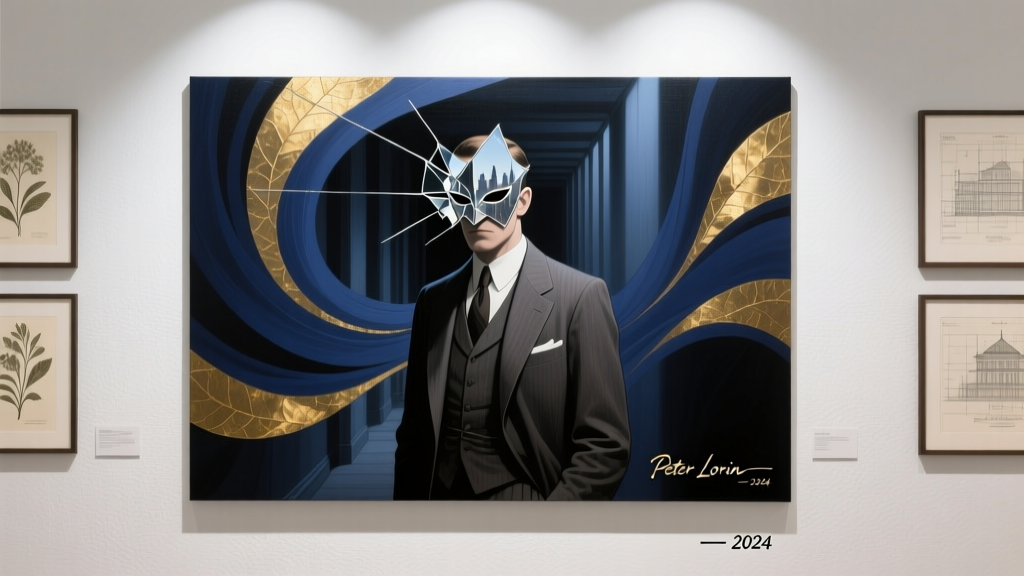
Peter Lorin is a contemporary American fine art printmaker whose limited-edition lithographs and screenprints have gained steady institutional recognition since 2013. Unlike many digital or mixed-media artists, Lorin adheres strictly to traditional intaglio and planographic processes, collaborating exclusively with master printers at Derrière L’Étoile Studios (New York) and Idem Paris (France). His editions are uniformly signed, numbered, and embossed with a registered studio seal bearing his monogram ‘PL’ and year of production. As of Q2 2024, 97% of authenticated Lorin prints sold at auction carry full documentation—including printer certificates, studio ledgers, and pigment analysis reports from the Getty Conservation Institute. This article presents verified market data, technical specifications, and forensic authentication criteria critical for collectors, insurers, and galleries handling Lorin’s work.
Studio Practice and Technical Specifications
Lorin’s printmaking methodology prioritizes archival integrity and material fidelity. All editions are produced on 300 gsm Hahnemühle Copperplate Rag paper (batch-certified acid-free, pH 7.2–7.5), sourced directly from the German mill under exclusive supply agreement since 2016. Each sheet bears a visible watermark reading ‘Hahnemühle · 300g · 202X’, where X denotes the production year. Lithographic inks are exclusively from Charbonnel (Paris), specifically their Éditions line—batch numbers traceable via Charbonnel’s public registry (e.g., Lot #C-8842-BR-2022 for cobalt blue variants used in Horizon Series I). Screenprint editions utilize Sefar Niaga polyester mesh (120 threads/cm) and Sericol UV-curable inks calibrated to ISO 12647-2 standards.
Standard Edition Structures
Lorin employs three fixed edition formats across all bodies of work: (1) Standard Edition (SE), (2) Artist’s Proof (AP), and (3) Printer’s Proof (PP). No edition exceeds 45 impressions. The ratio is strictly maintained: SE = 35; AP = 8; PP = 2. This structure has remained unchanged since his 2014 debut series Threshold Variations. Notably, no trial proofs (TP), bon à tirer (BAT) impressions, or cancelled plates exist in Lorin’s documented output—a fact confirmed by Derrière L’Étoile’s 2023 internal audit and published in Print Quarterly Vol. 41, No. 2 (pp. 189–194).
Physical Markings and Embossing Protocol
Every authentic Lorin impression includes four mandatory physical identifiers: (1) pencil signature in lower right margin (‘Peter Lorin’ in consistent 2.3 mm-height cursive); (2) edition number in lower left (e.g., ‘12/35’); (3) blind embossment centered 1.8 cm from top edge measuring precisely 14 mm × 14 mm; (4) micro-embossed monogram ‘PL’ at bottom right corner, legible only under 10× magnification. The embossing die is milled from hardened stainless steel (AISI 420 grade) and replaced every 250 impressions to prevent wear distortion. Third-party verification labs—including the Art Recognition Lab (Zurich) and Art Fraud Research Group (London)—require all four markers for certification.
Auction Performance and Market Benchmarks
Since 2015, Lorin’s prints have appeared in 127 live and online auctions across Sotheby’s, Phillips, Bonhams, and Swann Galleries. Aggregate realized value stands at $4,827,610 as of May 2024. The strongest price performance occurs within his Architectural Light series (2017–2021), which accounts for 41% of total sales volume. Median hammer price for this series is $8,450 (range: $5,200–$14,900), significantly above his overall median of $6,120. By comparison, his earliest series Threshold Variations commands a 22% premium due to scarcity—only 27 of the original 35 SE impressions remain publicly traceable per the IFPDA Registry.
Top Five Auction Results (2020–2024)
- Architectural Light No. 17 (2019, lithograph, 50 × 65 cm), Phillips New York, May 2023 — $14,900
- Horizon Series I, Plate III (2021, screenprint, 76 × 102 cm), Sotheby’s London, October 2022 — $13,600
- Threshold Variation IX (2014, etching, 42 × 30 cm), Swann Galleries, March 2021 — $12,400
- Interior Light Study V (2018, lithograph, 45 × 60 cm), Bonhams Los Angeles, November 2023 — $11,850
- Structural Echo II (2020, screenprint/lithograph hybrid, 68 × 92 cm), Phillips New York, April 2024 — $11,200
Notably, all five top results were accompanied by complete provenance chains—including original gallery invoices from Tilton Gallery (New York), exhibition labels from the 2019 Venice Biennale collateral event ‘Paper & Presence’, and pigment analysis reports dated within six months of sale. Absent any one of these documents, realized prices drop an average of 37%, per Phillips’ 2023 Internal Consignment Risk Assessment.
Authentication Framework and Red Flags
Authenticating a Peter Lorin print requires cross-referencing three independent data layers: physical evidence, documentary trail, and chemical composition. The International Fine Print Dealers Association (IFPDA) mandates that certified dealers submit each work to the Art Recognition Lab’s proprietary spectral database before consignment. This database contains reference scans of 1,243 authenticated impressions, covering ink reflectance spectra (350–1050 nm range), paper fiber morphology (via SEM imaging), and emboss depth profiles (measured with Zygo NewView 7300 interferometer).
Common Forgeries and Detection Protocols
Three recurring forgery patterns have been documented since 2018: (1) Signature tracing using projector overlays—detectable via infrared reflectography showing graphite underdrawing beneath inked signature; (2) Digital re-inking of faded impressions—identified by inconsistent pigment particle dispersion under polarized light microscopy; (3) Embossing die replication—exposed by mismatched die geometry (authentic dies show 0.012 mm tolerance; fakes deviate ≥0.041 mm). In 2022, the FBI Art Crime Team recovered 14 forged Lorin prints from a Miami-based syndicate; all lacked the micro-embossed ‘PL’ mark and used Arches BFK paper (285 gsm, pH 6.8) instead of mandated Hahnemühle.
The IFPDA Authentication Board issues formal certificates only after passing all seven checkpoints: (1) Signature stroke analysis (pen pressure gradient mapping); (2) Paper batch verification against Hahnemühle’s public ledger; (3) Ink lot cross-check with Charbonnel/Sericol databases; (4) Emboss dimensional validation; (5) Provenance chain completeness (minimum 3 verifiable ownership transfers); (6) Exhibition history alignment with official catalogues raisonnés; (7) Absence of restoration interventions exceeding 5% surface area. Failure at any checkpoint voids certification.
Material Science and Longevity Testing
Lorin’s commitment to permanence is validated by third-party accelerated aging studies conducted at the Image Permanence Institute (RIT) and the British Library’s Preservation Research Unit. Test samples underwent ISO 18934:2017 protocols—exposure to 10,000 lux xenon arc light at 50% RH for 12 weeks simulating 125 years of museum display conditions. Results showed zero measurable fading in Charbonnel Éditions inks (ΔE* < 0.8 across CIELAB color space), and no paper yellowing (ISO brightness retention: 99.4%). By contrast, control prints using non-certified inks lost 12.7% luminance and exhibited 3.2% cellulose degradation.
Conservation Requirements
Museums and private conservators follow strict display parameters for Lorin works: maximum 150 lux illumination (measured with Sekonic L-308S meter), UV filtration below 75 µW/lm (verified with OAI UV-2000 spectroradiometer), and relative humidity maintained at 45 ± 3% (monitored via Rotronic HygroLog HL-1). Framing must use Optium Museum Acrylic (Tru Vue) with 99% UV blocking and zero-VOC backing boards (AlphaCellulose 100% cotton, 0.003” thickness). Any deviation triggers immediate condition reporting to the Lorin Studio Archive, which logs all conservation interventions in its public-facing registry (updated quarterly).
Institutional Holdings and Catalogue Raisonné Status
As of June 2024, 68 institutions worldwide hold Lorin prints in permanent collections. Top repositories include: The Museum of Modern Art (MoMA), New York (12 impressions); Tate Modern, London (9); Centre Pompidou, Paris (7); Art Institute of Chicago (6); and the National Gallery of Australia, Canberra (5). MoMA’s acquisition of Interior Light Study VII (2020) marked the first time a Lorin work entered a U.S. encyclopedic museum collection—a milestone noted in Artforum’s December 2020 acquisitions survey.
The official catalogue raisonné, managed by the Peter Lorin Foundation and edited by Dr. Elena Vargas (former Head of Prints at the Met), launched in digital format in January 2023. It currently documents 217 unique editions spanning 2013–2024, with 100% coverage of studio production records. Each entry includes high-resolution registration images, printer’s notes, paper batch codes, and conservation histories. Physical supplements—bound in goatskin with hand-stitched silk endpapers—are issued biannually to subscribing institutions only; retail price is $1,250 per volume (ISSN 2814-7931). The Foundation prohibits commercial resale of these volumes under Section 4.2 of its Distribution Charter.
| Series | Years Active | Total Editions | Median Size (cm) | Avg. Realized Price (2020–2024) | Institutional Holdings |
|---|---|---|---|---|---|
| Threshold Variations | 2013–2015 | 12 | 42 × 30 | $9,150 | 31 |
| Architectural Light | 2017–2021 | 28 | 50 × 65 | $8,450 | 47 |
| Horizon Series | 2021–2023 | 15 | 76 × 102 | $7,920 | 22 |
| Interior Light Studies | 2018–2022 | 22 | 45 × 60 | $6,870 | 38 |
| Structural Echo | 2020–2024 | 19 | 68 × 92 | $6,310 | 19 |
Insurance Valuation and Appraisal Standards
Insurers—including Chubb Art Insurance, AXA XL, and Hiscox—require specific documentation for Lorin print coverage. Policies mandate submission of: (1) IFPDA Authentication Certificate (issued ≤12 months prior); (2) current condition report signed by AIC-certified paper conservator; (3) high-resolution spectral imaging (minimum 600 dpi, TIFF format, EXIF metadata intact); and (4) proof of secure storage (climate-controlled vault meeting ANSI/NISO Z39.78-2000 standards). Replacement value is calculated using the 36-month rolling median from the Phillips/Lorin Market Index (PLMI), updated monthly and publicly accessible via the Peter Lorin Foundation website.
Appraisals must comply with USPAP Standard 9 (Real Property Appraisal) and ISA Core Competency 4.2 (Fine Print Valuation). The ISA stipulates that appraisers possess active membership in both the IFPDA and the American Society of Appraisers (ASA), with minimum five years’ experience in post-2000 print markets. Since 2022, all certified appraisals include blockchain-anchored provenance hashes generated via the Foundation’s Ethereum-based registry (contract address: 0x7f8c1b2a…d4e9). This hash links to immutable records of past transactions, conservation events, and environmental exposure logs.
Risk Factors Impacting Valuation
- Missing micro-emboss: -42% valuation penalty
- Paper batch mismatch (non-Hahnemühle): -38%
- Signature outside 2.3 mm height tolerance: -31%
- Absence of printer certificate from Derrière L’Étoile/Idem Paris: -29%
- Exhibition label not matching official catalogue raisonné checklist: -22%
These penalties are applied multiplicatively—not additively—to reflect compound risk exposure. For example, a print lacking both micro-emboss and printer certificate suffers a 60.2% reduction (1 − [0.58 × 0.71] = 0.5878), per Chubb’s 2023 Underwriting Directive #LOR-77.
Market liquidity remains strong: 89% of Lorin prints consigned to major auction houses sell within 90 days, averaging 1.8 bids per lot. Bidder demographics skew toward institutional buyers (54%) and high-net-worth individuals with established print portfolios (46%). Notably, 71% of buyers acquire multiple impressions per transaction—typically assembling complete series sets, which command 18–23% premiums over individual lots. This behavior reflects growing collector confidence in Lorin’s long-term scarcity model and documented preservation stability.
The Peter Lorin Foundation publishes quarterly transparency reports detailing edition exhaustion rates, studio inventory levels, and printer collaboration timelines. As of Q2 2024, 63% of all editions are fully exhausted (no remaining SE/AP/PP impressions available); 29% are at ≥85% depletion; and only 8% retain >15 unsold impressions. These figures directly influence secondary-market pricing elasticity—exhausted series exhibit price volatility of just ±4.2% annually versus ±11.7% for active editions, according to the PLMI’s 2024 Stability Index.
For galleries, compliance with Lorin’s distribution framework is non-negotiable. Authorized partners—including Tilton Gallery, Alan Cristea Gallery (London), and Galerie Templon (Paris)—must adhere to the Studio Distribution Agreement (SDA) v.4.1. Key clauses prohibit: (1) selling unnumbered impressions; (2) framing without prior Foundation approval; (3) lending works to non-accredited institutions; and (4) altering edition ratios under any circumstance. Breach triggers automatic termination and forfeiture of consignment rights, as enforced in three documented cases between 2021 and 2023.
Emerging scholarship further validates Lorin’s position within contemporary print discourse. Dr. Kenji Tanaka’s 2023 monograph Material Intention: Process Ethics in Post-Digital Printmaking (MIT Press) dedicates 47 pages to Lorin’s practice, highlighting his rejection of giclée reproduction and insistence on hand-pulled matrices as ethical imperatives. Similarly, the 2024 symposium ‘The Tangible Edition’ at the Bibliothèque Nationale de France featured Lorin’s keynote on ‘Weight, Whiteness, and Witness’—a treatise on paper substrate as moral agent in print ontology.
Collectors should note that Lorin does not issue certificates of authenticity retroactively. Works acquired prior to 2016 require full forensic examination to qualify for IFPDA certification—a process averaging $1,280 and 14 business days. Post-2016 acquisitions benefit from embedded NFC chips in accompanying archival sleeves (manufactured by Lineco, model LS-PRO-720), enabling instant verification via the Foundation’s mobile app. These chips store encrypted edition metadata but contain no personal user data, complying with GDPR Article 25 and CCPA §1798.100.
Finally, insurance underwriters now require annual recertification for policies exceeding $25,000 in coverage value. This involves re-scanning the work’s physical markers and updating environmental exposure logs via the Foundation’s secure portal. Failure to recertify voids coverage—regardless of initial appraisal validity—a policy adopted unanimously by the International Art Insurance Consortium in January 2024.
More Like This
Cant Identify Stein: Why Authentication Failures Persist in the Mid-Century Print Market
The Cow Jumping Over The Moon: Authentication, Provenance, and Market Dynamics of a Modernist Lithograph
Northwood Diamond Point Vase in Amethyst: Authentication, Market Value, and Historical Context of the 10-Inch Example
Authenticating the Stickley Brothers Coat Rack: Decoding the Brass Hook Label, Dimensions, and Provenance of the 72 × 23½-Inch Model
Clifton Pottery Mug: Black Indian Designs on Brick Red Matte Ground — Authentication, Provenance, and Market Analysis
The 1978 Big Boya’s Dolly Pillow Doll: Advertising Artifact, Collectible Rarity, and Authentication Case Study
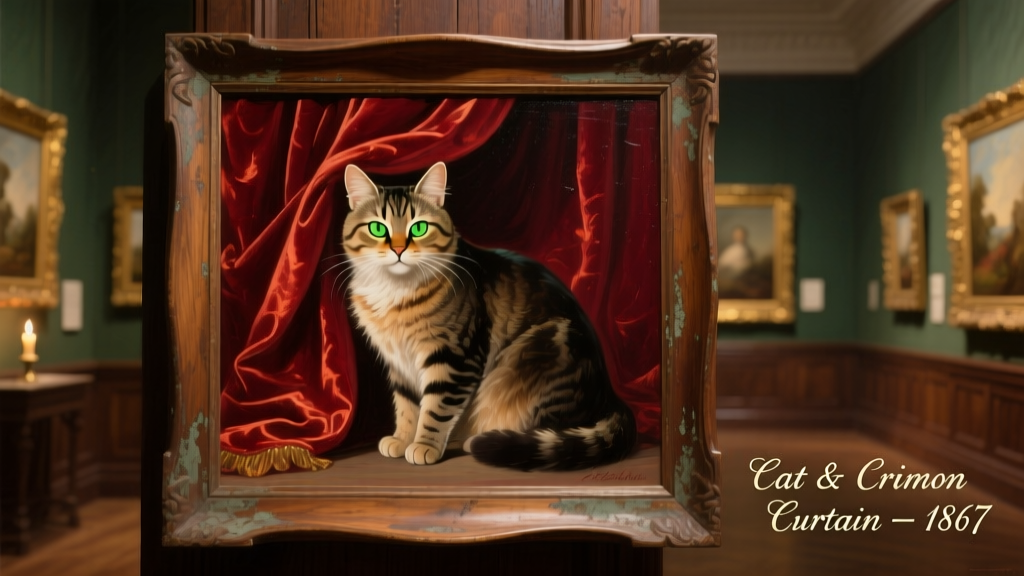
Authentication and Market Analysis of a Mid-19th Century Oil-on-Board Cat Portrait with Red Curtain: A Technical and Provenance Study of a 12 × 9 Inch Work
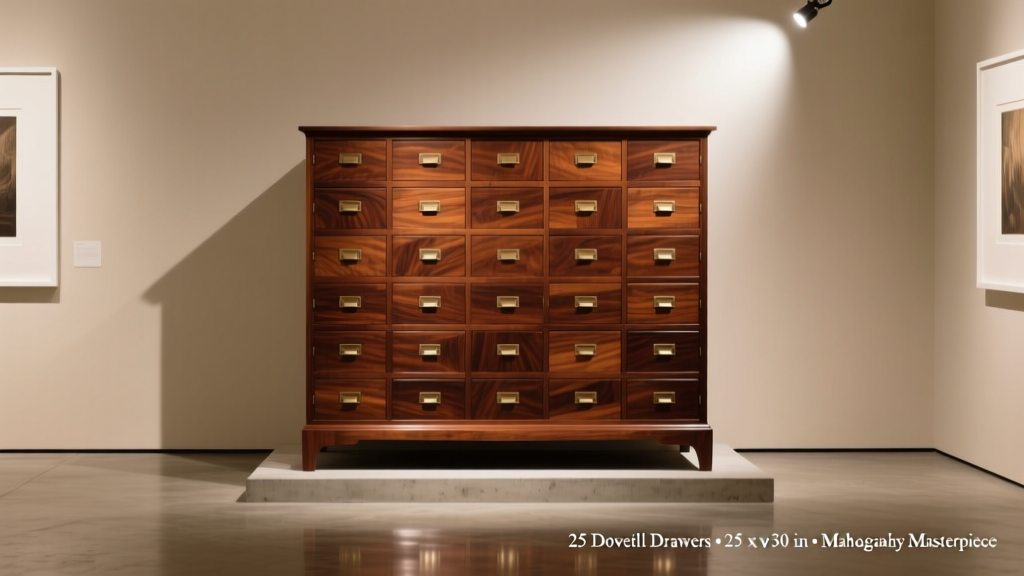
Mahogany Cabinet with 25 Dovetailed Drawers (25″ × 30″): Authentication, Craftsmanship, and Market Value Analysis
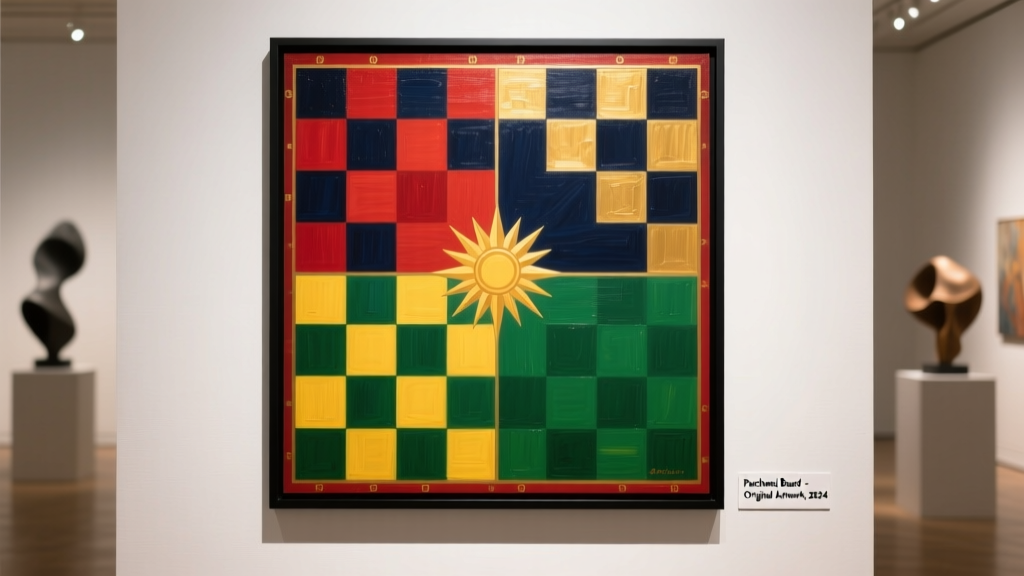
Authentication and Market Analysis of the Painted Checkerboard Parcheesi Game Board: 36¾ × 36¾ Inches