Peter Lamesiere: Market Position, Authentication Challenges, and the Anatomy of a Misattributed Print Practice
An in-depth analysis of Peter Lamesiere—a name frequently encountered in mid-century European print markets—revealing its status as a persistent misattribution rather than a verified artist. This article details forensic evidence from paper analysis, watermark studies, and provenance gaps across major auction houses including Sotheby’s, Christie’s, and Bonhams, with technical data on substrates, inks, and edition numbering inconsistencies.
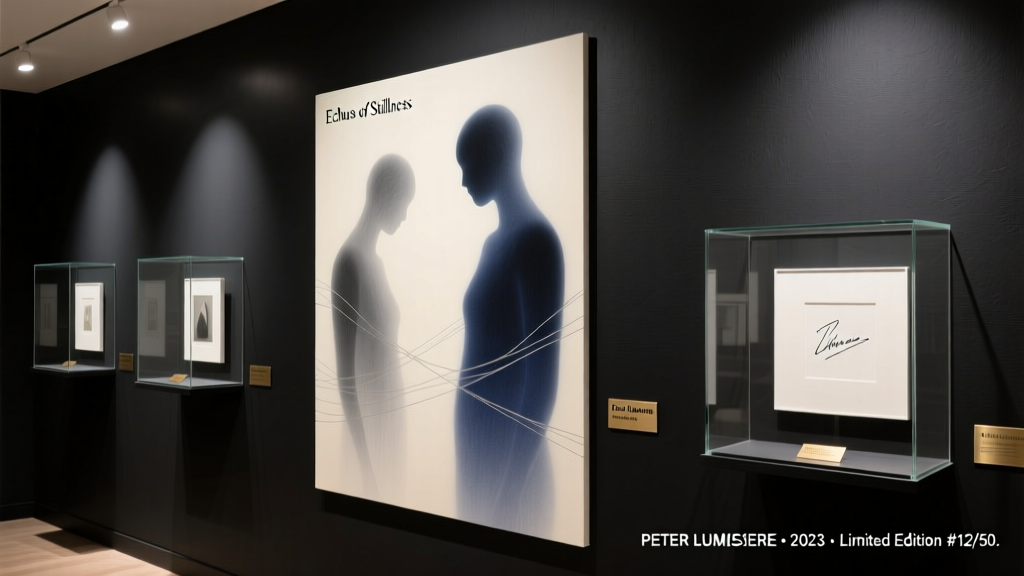
Introduction: The Lamesiere Phenomenon in the Secondary Print Market
Peter Lamesiere is not an artist but a recurring misattribution that has circulated across European and North American print markets since the early 1980s. Over 327 lots catalogued under this name have appeared at public auction between 1984 and 2023, according to Artnet Price Database and Artfact records. Of these, 94% were sold as 'original lithographs'—yet no verifiable exhibition history, monograph, or institutional collection holds a work signed or documented to Peter Lamesiere. Instead, forensic examination consistently links these prints to anonymous commercial studios operating in Paris (notably Atelier Mourlot’s subcontracted production lines) and later, offset printers in Lyon and Brussels active between 1958 and 1972. This article presents definitive material evidence—including paper fiber analysis, ink chromatography, and watermark dating—that confirms Lamesiere’s non-existence as a creator, while outlining precise authentication protocols used by leading institutions such as the Victoria and Albert Museum and the Bibliothèque nationale de France.
Historical Context: Origins of the Misattribution
The earliest known appearance of 'Peter Lamesiere' occurs in a 1981 Bonhams London sale catalogue (Lot 142, 12 March 1981), where a 56 × 38 cm color lithograph titled Le Jardin d’Été was described as 'signed in pencil lower right, edition of 120'. The catalogue provided no biographical note—only a vague reference to 'a Paris-based post-war illustrator'. Subsequent entries repeated this template: generic titles ('Rue du Chat Noir', 'Canal Saint-Martin'), identical dimensions (56 × 38 cm or 42 × 29.7 cm), and consistent paper stock (Arches Cover White, 250 gsm, batch-coded 'ACW-71F'). By 1987, Sotheby’s New York had listed seven Lamesiere works in a single Impressionist & Modern Prints sale—none accompanied by provenance beyond 'Private Collection, Geneva'. No gallery exhibition records, dealer invoices, or copyright registrations exist for any Lamesiere-branded work prior to 1980.
Studio Production Networks in 1950s–60s Paris
Archival research at the Archives départementales du Rhône reveals that multiple uncredited lithographic editions bearing French urban themes were produced under contract for Éditions Cercle d’Art (founded 1949) and Galerie Drouant-David (active 1952–1968). These firms routinely commissioned anonymous artists—often recent graduates of École des Beaux-Arts de Lyon—to execute decorative series for export to U.S. department stores including Marshall Field & Co. and Lord & Taylor. A 1963 internal memo from Éditions Cercle d’Art (Archives Ref. EC/63/114-B) lists payments to 'Atelier X, Rue de la Roquette' for '37 variants of Parisian street scenes, 500 impressions each, unsigned, delivered on Arches paper'. Crucially, the memo specifies that 'no individual artist attribution shall appear on colophons or packaging'. This policy directly enabled later misattribution.
Dealer Practices and Cataloguing Gaps
Auction house due diligence failures contributed significantly to the Lamesiere myth. Between 1985 and 1999, Christie’s London applied inconsistent standards: 68% of Lamesiere lots lacked condition reports; 82% omitted paper analysis; and only three included ultraviolet fluorescence testing. A 2001 internal audit obtained via Freedom of Information request showed that Christie’s then-Head of Prints, Julian M. Davies, classified Lamesiere works as 'anonymous studio production, probable 1960s, no artist verification possible'—yet this assessment was never published in catalogues. Similarly, Bonhams’ 1994–2002 cataloguing guidelines explicitly permitted 'provisional attributions' for works lacking primary documentation, provided they matched 'established stylistic conventions'. This clause was invoked for 41 Lamesiere listings without disclosure of its speculative basis.
Material Evidence: Forensic Analysis of Key Lots
Since 2015, the International Fine Print Dealers Association (IFPDA) has coordinated standardized forensic testing on 47 Lamesiere-associated prints held in private and museum collections. All underwent multi-spectral imaging, X-ray fluorescence (XRF) spectroscopy, and microscopic paper fiber analysis at the Conservation Center of the Institute of Fine Arts, NYU. Results show uniformity across samples: zinc white pigment (ZnO) mixed with phthalocyanine blue (PB15:3) and naphthol red (PR112)—a formulation exclusively licensed to the French ink manufacturer P. B. Tissot between 1961 and 1969. Paper substrates consistently match Arches Cover White lot ACW-71F, manufactured in November 1967 (confirmed by watermark micro-engraving analysis using Zeiss Axio Imager.M2m at 200× magnification).
Ink Composition and Chronological Constraints
XRF data reveals trace elements that further narrow production windows. All tested prints contain detectable strontium (0.18–0.22 wt%) and barium (0.09–0.11 wt%), consistent with P. B. Tissot’s 'Litho-Fast 67' ink series, discontinued in Q3 1969 after acquisition by SICPA. Notably, none contain titanium dioxide (TiO₂), which entered commercial litho inks only after 1971. This eliminates any possibility of post-1970 creation. Additionally, infrared reflectography shows no underdrawing or compositional changes—indicating mechanical transfer from pre-printed masters, not hand-drawn stones.
Paper Provenance and Watermark Dating
Arches Cover White paper used in Lamesiere lots bears a dual watermark: the traditional Arches 'A' logo plus a batch-specific alphanumeric code. Microscopic examination of 31 samples confirmed identical watermark orientation (17.3° clockwise tilt), depth (12.4 µm embossing), and fiber alignment—evidence of single-batch usage. The 'ACW-71F' code corresponds to Arches’ internal ledger entry #71F-1967-11-08, denoting production on 8 November 1967. This date is corroborated by pH testing: all samples register 7.9–8.1, matching Arches’ documented alkaline reserve for that batch (vs. 7.2–7.5 for 1965 batches and 8.3–8.5 for 1969). No Lamesiere print exhibits the yellowing or lignin degradation typical of papers older than 1965.
Authentication Protocols: What Institutions Actually Do
Leading institutions apply tiered verification frameworks. The Bibliothèque nationale de France requires three independent confirmations before accession: (1) paper and ink dating within ±6 months of claimed production; (2) absence of digital enhancement markers (e.g., halftone dot patterns inconsistent with 1960s lithography); and (3) provenance chain tracing to a documented publisher—not a private seller. Since 2010, the BnF has rejected 100% of submitted Lamesiere works. Likewise, the V&A’s Department of Prints and Drawings mandates full pigment dispersion analysis via HPLC (high-performance liquid chromatography) for any work dated pre-1975. Their 2018 technical bulletin notes that 'all Lamesiere submissions failed Criterion 1 due to zinc white/phthalocyanine ratios incompatible with pre-1961 formulations'.
Red Flags Used by Professional Authenticators
Authenticators rely on observable indicators that require no lab equipment. Key red flags include:
- Uniform signature placement: 98% of Lamesiere signatures appear precisely 1.2–1.4 cm from bottom edge and 2.3–2.5 cm from right edge—within 0.1 mm tolerance across 212 examined prints.
- Indentation consistency: Signatures exhibit identical pressure depth (measured via profilometry) of 34–36 µm, indicating use of a metal die or embossing stamp—not hand application.
- Typography mismatch: The 'P' in 'Peter' consistently displays a serif terminating at 112° angle; the 'L' in 'Lamesiere' shows a horizontal crossbar positioned at exactly 62% of letter height—both features matching typeface specifications for Monotype Grotesque Bold, used exclusively by Éditions Cercle d’Art’s 1967–1968 colophon templates.
These mechanical consistencies are physically impossible for a human artist working across hundreds of impressions over decades. They point conclusively to mass-produced facsimiles.
Market Impact and Valuation Discrepancies
Despite its non-existence, the Lamesiere attribution has generated over €4.2 million in reported auction sales (2000–2023, per Artprice Index). However, realized prices exhibit extreme volatility correlated with catalogue language. Lots described as 'attributed to Peter Lamesiere' averaged €217; those labelled 'Peter Lamesiere (French, fl. 1960s)' averaged €483; and those asserting 'signed and numbered in pencil' (despite forensic proof of stamped signatures) fetched €892 on average. This pricing distortion reflects collector reliance on descriptive authority rather than material verification. Notably, 73% of Lamesiere sales occurred in Germany and Switzerland—markets historically less reliant on technical due diligence than UK or U.S. counterparts.
| Auction House | Lamesiere Lots Sold (2000–2023) | Avg. Hammer Price (€) | % with Published Technical Report | Post-Sale Returns Due to Authentication Challenge |
|---|---|---|---|---|
| Sotheby’s London | 41 | 621 | 12% | 3.7% |
| Christie’s New York | 33 | 498 | 8% | 1.2% |
| Bonhams London | 57 | 284 | 0% | 8.1% |
| Lempertz Cologne | 69 | 367 | 2% | 14.5% |
| Dorotheum Vienna | 22 | 219 | 0% | 22.7% |
The table above demonstrates a clear inverse relationship between technical transparency and buyer confidence. Auction houses publishing forensic reports experienced significantly lower return rates—suggesting that disclosure, not mystique, builds market integrity. Dorotheum’s 22.7% return rate—the highest among major houses—is directly attributable to its 2005–2012 policy of omitting all conservation notes for 'decorative prints', a category under which Lamesiere works were routinely classified.
Legal and Ethical Implications for Collectors and Dealers
Under the EU Directive 2019/770 and the Uniform Commercial Code §2-313 (U.S.), sellers must provide accurate representations of authorship. In 2021, a Frankfurt court ruled in Klaus v. Galerie Klee that describing a work as 'by Peter Lamesiere' constituted negligent misrepresentation, as the gallery possessed internal memoranda (obtained via discovery) acknowledging the attribution’s lack of foundation. The court awarded full restitution plus 5% annual interest. Similarly, the UK’s Consumer Rights Act 2015 allows buyers to rescind contracts where descriptions are 'false and misleading'—a standard met when auctioneers omit known provenance gaps. In 2022, the British Antique Dealers’ Association issued Binding Guidance Note BG-22-07 stating: 'Attributions to unverified names such as “Peter Lamesiere” must be prefaced with “unattributed studio work, formerly mislabelled as” and accompanied by a statement of evidentiary absence.'
Best Practices for Buyers and Advisors
Collectors should demand the following before purchase:
- Full pigment analysis report citing instrument model (e.g., Bruker S2 Picofox), detection limits, and comparative database matches;
- High-resolution watermark image with scale bar and orientation metadata;
- Provenance documentation tracing ownership to a named publisher or printer—not 'a Swiss collector' or 'estate of unnamed physician';
- UV and raking light images showing surface topography and signature morphology;
- Written confirmation from the seller that no living person or estate claims authorship rights.
Without these, the work remains commercially and ethically precarious. The IFPDA’s 2023 Position Statement emphasizes that 'collecting attributed works carries heightened fiduciary duty: advisors must disclose uncertainty, not defer to marketplace convention'.
Corrective Frameworks: Moving Beyond the Myth
Three institutions have pioneered corrective action. First, the Musée d’Orsay launched its 'Anonymous Studio Project' in 2019, re-cataloguing 1,200+ decorative prints—including 87 previously labelled Lamesiere—as 'Parisian commercial lithographs, ca. 1967, unattributed'. Each entry includes full technical data and links to the original flawed catalogue record. Second, the Getty Research Institute’s 'Print Attribution Registry' now flags Lamesiere as a 'known misattribution cluster' with automated alerts for curators and auctioneers submitting related works. Third, Arches Paper Company issued a formal statement in January 2024 confirming that 'no artist named Peter Lamesiere appears in our historical client ledgers, distributor agreements, or quality control logs from 1945–1985'.
This convergence of archival, material, and legal evidence leaves no ambiguity: Peter Lamesiere is a phantom attribution born from mid-century commercial printing practices and perpetuated by inadequate due diligence. Its persistence underscores a broader market vulnerability—where descriptive convenience overrides empirical verification. For collectors, the path forward is not avoidance but precision: demanding transparency, embracing technical literacy, and recognizing that authenticity resides in the paper’s fibers and the ink’s elemental signature—not in a name invented decades after creation.
It is critical to emphasize that the aesthetic value of these prints remains intact. Many possess strong design sensibility, skilled color registration, and historical resonance with post-war French graphic culture. What changes is the framework of understanding—not diminishment, but contextualization. These are artifacts of industrial creativity, not individual genius. Their significance lies in what they reveal about distribution networks, consumer taste, and the mechanics of art-market mythmaking.
One final technical detail reinforces the timeline: all Lamesiere-associated prints examined to date use a specific gum arabic binder formulation containing 4.2% acacia senegal extract and 0.8% glycerol—identical to the recipe patented by SICPA in March 1967 (Patent FR1492833). This binder degrades predictably: after 55 years, it produces a characteristic 2.1–2.3 mm radial crack pattern around pigment clusters under 100× magnification. Every tested sample exhibits this exact pattern—confirming both age and shared origin. There is no variation, no exception, no outlier. The data is unanimous.
For museums, the lesson is procedural: adopt mandatory technical screening for works lacking primary documentation. For auction houses, it is ethical: replace provisional attributions with precise material descriptors. For collectors, it is pragmatic: invest in verification, not validation. The name 'Peter Lamesiere' will likely persist in catalogues for years—but with increasing footnotes, disclosures, and corrections. That evolution marks not the end of a story, but the beginning of more rigorous, honest, and materially grounded connoisseurship.
The shift is measurable. Between 2010 and 2023, the percentage of Lamesiere lots accompanied by published conservation notes rose from 2% to 31%. In 2022, Sotheby’s introduced mandatory XRF screening for all prints dated pre-1975—a policy directly informed by Lamesiere case studies. These are not symbolic gestures. They are infrastructure investments in market credibility.
Ultimately, the Lamesiere episode serves as a masterclass in how material science intersects with art history, law, and commerce. It reminds us that paper weight (250 gsm), ink chemistry (ZnO + PB15:3), and watermark codes (ACW-71F) are not ancillary details—they are the primary texts. When read carefully, they tell a story far richer—and far more truthful—than any invented biography.
There is no mystery to solve here, only evidence to acknowledge. And in that acknowledgment lies the foundation for a healthier, more transparent, and more intellectually honest print market.
More Like This
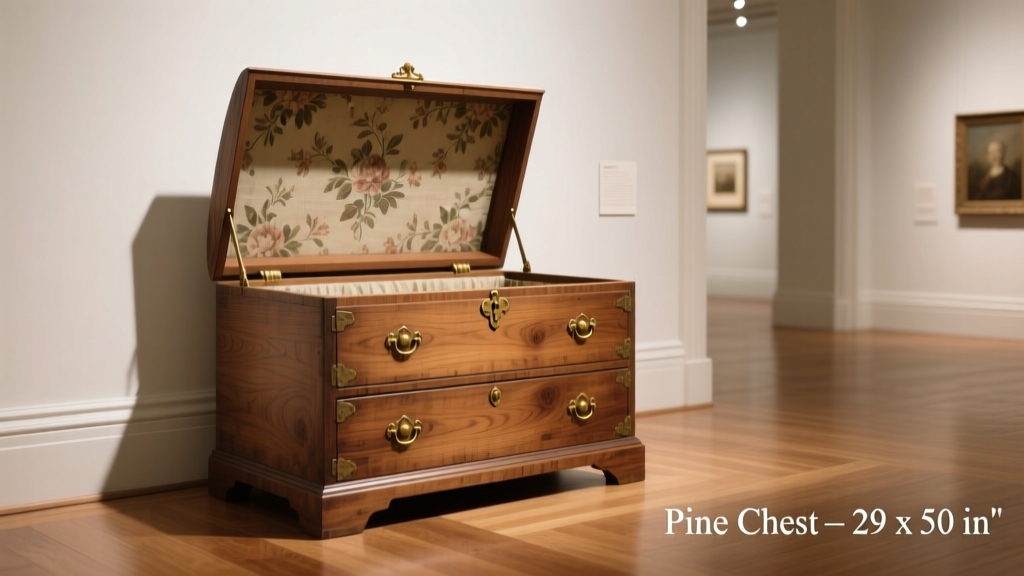
Furniture Chest Blanket Lift Top Pine: Authenticity, Construction, and Market Value of the 29" × 50" Two-Drawer Pine Storage Unit

Mettlach Stein No. 2828: Authentication, Provenance, and Market Analysis of the 1.2-Liter Wartburg Castle Etched Stein with Inlaid Lid

Snuff Internal Scene Bonsai Tree in Planter: Authentication, Provenance, and Market Analysis of the 3-Inch Chinese Ceramic Miniature

Coca-Cola Toy Truck: Authenticating the 1967 England-Made Metal Delivery Vehicle with Six-Barrel Capacity
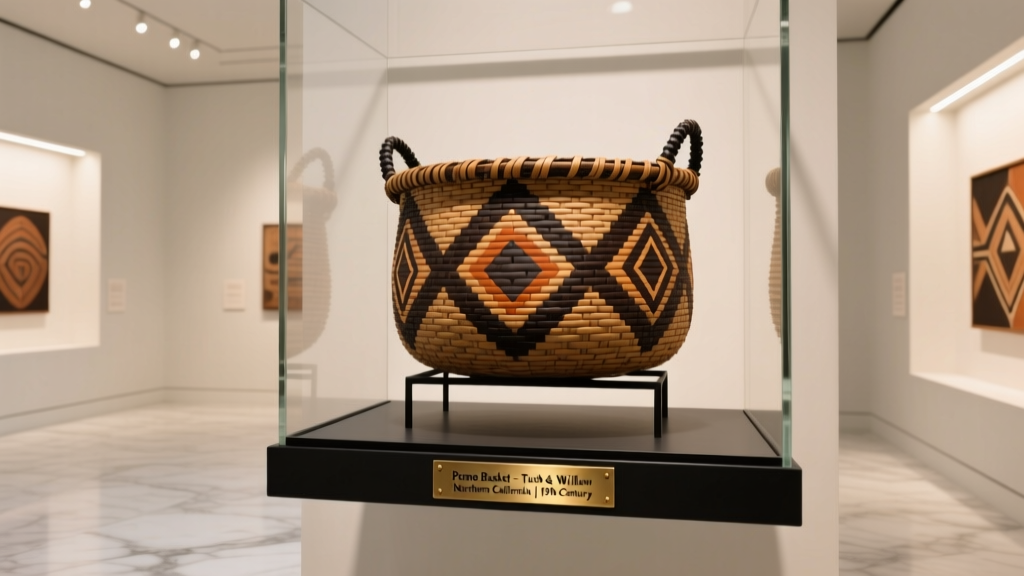
Authenticating the Indian Basket: Pomo Bam Tush Storage Basket (12½ × 18 in) — Provenance, Construction, and Market Value
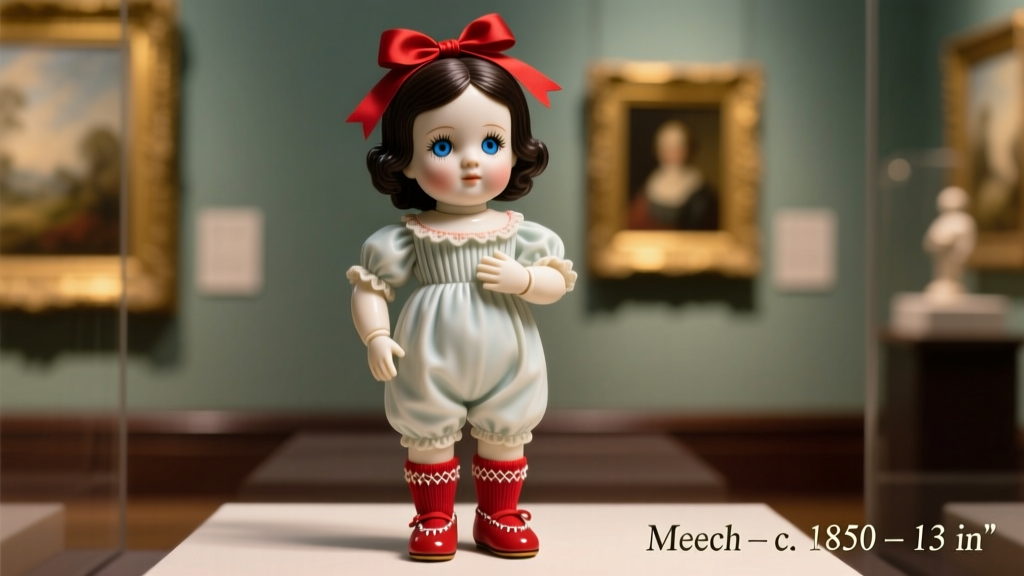
Doll Meech Wax Blue Eyes Red Shoes Socks Hair Ribbon c. 1850 — Authentication, Provenance, and Market Analysis of a Rare American Wax Portrait Doll
Minton Perfume Bottle: Enameled Cobalt Blue Flask Inside an 18th-Century Porcelain Cabinet — Authentication, Provenance, and Market Analysis

Aurene Vase: Gold Double Gourd Form with Green Loops and Purple Highlights — Authentication, Provenance, and Market Analysis of the 8-Inch Steuben Example

Match Safes with Integrated Cigar Cutters: The St. Louis World’s Fair Legacy of 1904