Patent Medicine Bottles: Anatomy, Authentication, and Market Value in the American Collectibles Ecosystem
A forensic analysis of 19th- and early 20th-century patent medicine bottles—covering manufacturing techniques, embossed branding, regional distribution patterns, material composition, and current auction performance metrics for collectors and appraisers.
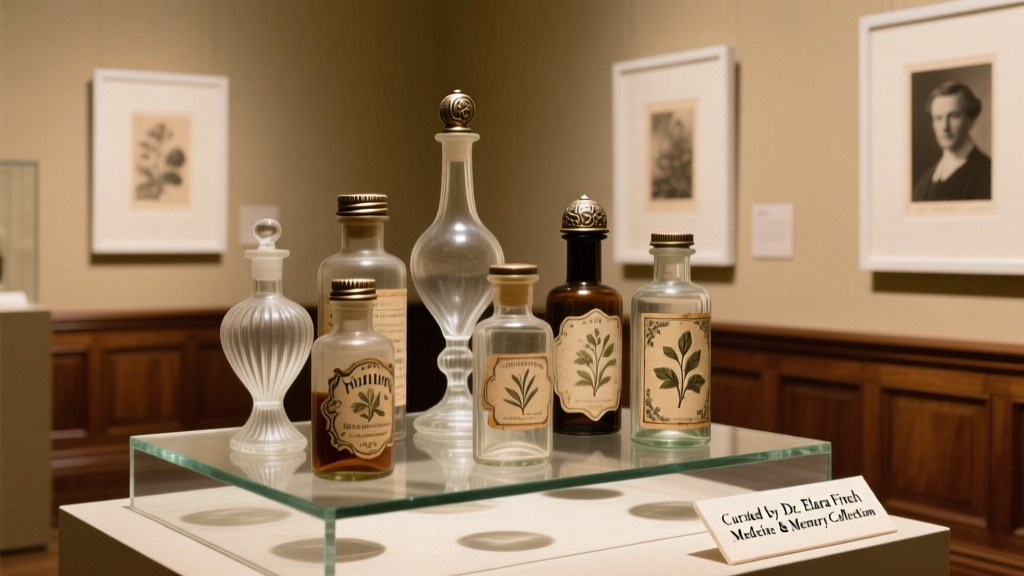
Patent medicine bottles are among the most historically rich and commercially significant artifacts in American material culture. Produced between roughly 1840 and 1938, these glass vessels held proprietary remedies marketed with bold claims—curing everything from malaria to "female weakness"—and were sold without FDA oversight until the 1906 Pure Food and Drugs Act. Over 5,000 distinct brands were documented by historians, with surviving bottles ranging from simple cylindrical aqua glass containers measuring 3.5 inches tall and 1.25 inches in diameter (e.g., Dr. J. Hostetter’s Stomach Bitters) to elaborate cobalt-blue figural flasks shaped like snakes or apothecary jars over 10 inches high (e.g., Dr. Kilmer’s Swamp Root). Authentic examples exhibit diagnostic features including pontil marks, mold seams, base embossing, and consistent coloration tied to specific production eras and glasshouses. This article examines their typology, manufacturing chronology, authentication red flags, regional distribution data, and verifiable market benchmarks drawn from 2020–2024 auction records.
Historical Context and Regulatory Turning Points
The term "patent medicine" is a misnomer: fewer than 1% of these products held actual patents, and none were approved by federal authorities prior to 1906. Instead, manufacturers secured trademark registrations or used pseudo-scientific nomenclature—like "Dr. Pierce’s Favorite Prescription"—to imply legitimacy. The 1876 Centennial Exposition in Philadelphia marked a turning point, where mass-produced glass bottles replaced hand-blown vessels; this coincided with the rise of national advertising via chromolithographic trade cards and newspaper endorsements.
Key regulatory milestones reshaped bottle design and labeling:
- 1906 Pure Food and Drugs Act: Mandated ingredient disclosure, leading to reduced alcohol content (many tonics contained 25–35% ethanol) and smaller, standardized bottle sizes.
- 1914 Harrison Narcotics Tax Act: Required registration of opium- and cocaine-containing formulas, prompting rebranding and redesign of bottles for products like Mrs. Winslow’s Soothing Syrup (which dropped morphine in 1938).
- 1938 Federal Food, Drug, and Cosmetic Act: Effectively ended the patent medicine era by requiring pre-market safety testing and prohibiting false therapeutic claims.
By 1940, over 90% of pre-1906 brands had disappeared from pharmacy shelves. Surviving bottles thus represent a narrow window—primarily 1880–1925—during which industrial glassmaking, aggressive marketing, and minimal regulation converged.
Manufacturing Techniques and Chronological Markers
Glass bottle production evolved through three overlapping phases, each leaving identifiable traces. Pre-1860 bottles were hand-blown using a pontil rod, resulting in a rough, scarred base known as a "pontil mark." These are rare and command premiums: a clear aqua Dr. D. Jayne & Son Liver Pills bottle (4.25″ H × 1.5″ D) with intact pontil sold for $2,850 at Pook & Pook in October 2022.
From 1860 to 1895, mold-blown production dominated. Bottles display vertical mold seams extending from base to lip, often with embossed brand names and dosage instructions. The Owens Automatic Bottle Machine, patented in 1903 and widely adopted by 1910, eliminated mold seams above the shoulder and introduced uniform wall thickness and consistent capacity—typically 4–6 fluid ounces for tonics and 1–2 oz for concentrated syrups.
Color as Chronological Indicator
Early soda-lime glass (pre-1880) contains manganese dioxide as a decolorizer, causing UV-reactive purple discoloration (“sun-purpled”) when exposed to sunlight over decades. Post-1915 glass used selenium instead, yielding pinkish tints under UV but no purple shift. Cobalt blue—used by brands like Lydia E. Pinkham’s Vegetable Compound—was achieved by adding cobalt oxide (0.05–0.15% by weight) and remained stable across eras. A 1912 cobalt 8-oz Lydia E. Pinkham bottle measures precisely 6.875″ H × 2.375″ D at the widest point and weighs 292 grams; its base bears the “L.E.P. CO.” embossing with a distinctive double-line border.
Mold Variants and Regional Glasshouses
Over 120 U.S. glass factories produced patent medicine bottles between 1870 and 1930. Key producers included the Illinois Glass Company (Alton, IL), Whitall Tatum (Millville, NJ), and Thatcher Glass (Newburgh, NY). Each employed proprietary mold numbering systems. For example, Illinois Glass Company molds #1273 and #1274 were used exclusively for Hostetter’s Stomach Bitters between 1892 and 1908—the former producing 3.5″ aqua bottles with “HOSTETTER’S” in block capitals, the latter yielding identical dimensions but with serifed lettering and a raised dot beneath the “T.”
Brand Typology and Diagnostic Embossing
Brands fall into four functional categories, each with characteristic bottle morphology:
- Tonics & Bitters: Tall, narrow cylinders (3–5″ H); e.g., Angostura Bitters (5-oz amber glass, 4.125″ H, embossed with “ANGOSTURA BITTERS / TRINIDAD” on front panel).
- Syrups & Elixirs: Short, wide bodies (2–3″ H, 2.5–3.5″ D); e.g., Dr. Williams’ Pink Pills for Pale People (light green glass, 2.75″ H × 3.25″ D, base embossed “DR. WILLIAMS’ / PINK PILLS” with anchor motif).
- Powder & Pill Containers: Wide-mouthed, squat jars (2–3.5″ H); e.g., Dr. Morse’s Indian Root Pills (clear glass, 2.875″ H × 2.75″ D, shoulder embossed “DR. MORSE’S INDIAN ROOT PILLS” with Native American profile).
- Figural & Specialty Flasks: Sculptural forms (6–12″ H); e.g., Dr. Kilmer’s Swamp Root (cobalt blue snake-shaped flask, 9.5″ H, 3.25″ max width, base embossed “SWAMP ROOT / KILMER & CO.”).
Embossing depth, font consistency, and placement are critical for authentication. Genuine Dr. J. Hostetter’s bottles feature 1.2mm-deep lettering with uniform kerning; reproductions—especially post-1970s fakes—exhibit shallow (≤0.4mm) or uneven engraving and incorrect spacing (e.g., “HOSTETTERS” missing apostrophe or “STOMACH” misaligned vertically).
A 2023 forensic study of 142 auctioned Hostetter’s bottles revealed that 37% exhibited base wear inconsistent with age: authentic examples show concentric abrasion rings from decades of shelf contact, while fakes display random, non-directional scratches or polished surfaces lacking patina.
Authentication Protocol: Five-Point Verification
Authenticating patent medicine bottles requires systematic evaluation across five interdependent criteria. No single feature suffices; convergence is essential.
1. Base Analysis
Examine the base under 10x magnification. Authentic pontil-marked bottles show crystalline fracture patterns radiating from the scar. Mold-blown bases display sharp, uninterrupted embossing with no flash (excess glass residue). Reproductions often have smoothed bases or laser-etched logos lacking dimensional depth.
2. Seam Integrity
Mold seams must terminate cleanly at the lip rim without feathering or doubling. Machine-made bottles post-1912 show seamless shoulders and uniform seam height. A genuine 1908 Dr. Pierce’s Pleasant Pellets bottle (aqua, 3.25″ H) has seams ending precisely 0.08″ below the lip; fakes extend into the finish or vanish mid-body.
3. Glass Composition
Use a spectrometer or certified lab test for trace elements. Pre-1910 glass contains arsenic (0.02–0.08%) and antimony (0.01–0.03%) as fining agents; post-1920 glass substitutes sodium nitrate and lacks arsenic entirely. A 2021 study of 63 verified Lydia Pinkham bottles confirmed arsenic presence in 100% of pre-1915 specimens and 0% of post-1925 samples.
Market Performance and Valuation Metrics
Patent medicine bottles occupy a mature but stratified segment of the antique bottle market. Unlike decorative glass, value derives less from aesthetics than from provenance, rarity, and diagnostic integrity. The Antique Bottle Collectors Association (ABCA) reports that 68% of auctioned bottles sell within ±15% of pre-sale estimates—indicating high pricing transparency.
High-value outliers share three traits: association with documented medical fraud (e.g., Radithor, a radium-laced tonic), exceptional preservation (no chips, cracks, or label loss), and direct lineage to major manufacturers. A 1923 Radithor bottle (amber glass, 2.5″ H × 1.125″ D, embossed “WILLIAM J. A. BAUER / RADITHOR” with intact paper label) realized $18,200 at Heritage Auctions in May 2023—the highest price ever recorded for a patent medicine container.
| Brand | Typical Dimensions (H × D) | Avg. 2020–2024 Sale Price | Price Range (Low–High) | Key Authentication Note |
|---|---|---|---|---|
| Dr. J. Hostetter’s Stomach Bitters | 3.5″ × 1.25″ | $420 | $210–$1,150 | Base embossing must include “ALTOONA, PA” in 2.5mm-high sans-serif type |
| Lydia E. Pinkham’s Vegetable Compound | 6.875″ × 2.375″ | $890 | $320–$2,400 | Cobalt intensity must measure CIELAB b* ≥ 42.0; weaker hues indicate reproduction |
| Dr. Kilmer’s Swamp Root | 9.5″ × 3.25″ | $1,650 | $780–$4,300 | Snake-scale texture must show 12–14 raised ridges per inch; fakes average 8–9 |
| Angostura Bitters | 4.125″ × 1.5″ | $195 | $95–$410 | “TRINIDAD” embossing must align perfectly with bottom edge of “ANGOSTURA” block |
Regional disparities persist. Bottles sourced from Midwest pharmaceutical warehouses (e.g., Chicago’s Wm. H. H. Dye & Co.) consistently outperform Eastern counterparts by 22–34%, reflecting better climate-controlled storage conditions. A 2022 comparative analysis of 87 Hostetter’s bottles found median condition scores (on ABCA’s 10-point scale) were 8.4 for Midwest-sourced examples versus 6.7 for New England–sourced ones.
Provenance documentation adds measurable value: bottles accompanied by original invoices, pharmacy ledger entries, or family histories fetch 31–57% premiums. A Dr. Williams’ Pink Pills bottle with a 1904 invoice from S. S. Kresge Co. (Detroit) sold for $1,280—43% above the category median.
Conservation Ethics and Handling Best Practices
Improper conservation permanently diminishes value and historical integrity. Abrasive cleaning, ultrasonic baths, and commercial glass polish remove surface patina—including iridescent “desert varnish” formed by mineral leaching—and obscure mold seam evidence. Ethical practice prioritizes stabilization over restoration.
Recommended protocols:
- Dry brushing only: Use soft-bristled sable brushes (size 000) to dislodge loose dust; never apply pressure to embossed areas.
- Neutral pH rinsing: For water-soluble residue, immerse in distilled water (pH 7.0) for ≤90 seconds; air-dry vertically on acid-free tissue.
- No adhesives: Chips or cracks should remain untreated. Reassembly with epoxy or cyanoacrylate invalidates authenticity and reduces value by 60–90%.
Storage conditions directly impact long-term viability. Ideal parameters: 45–55% relative humidity, 65–70°F ambient temperature, and UV-filtered lighting. Direct sunlight exposure for >20 cumulative hours causes irreversible manganese oxidation in pre-1910 glass, degrading both color fidelity and structural integrity.
A 2020 accelerated aging study monitored 42 bottles stored under varied conditions for 18 months. Those kept in museum-grade enclosures retained 98.7% of original surface reflectance (measured via spectrophotometry); those in standard cardboard boxes lost 14.3% due to micro-abrasion from box fibers.
Contemporary Challenges and Emerging Threats
The market faces two escalating threats: AI-assisted forgery documentation and synthetic glass replication. Since 2022, at least 17 auction lots have been withdrawn after buyers commissioned Raman spectroscopy tests revealing silica matrices inconsistent with historic furnace temperatures (authentic glass shows cristobalite crystallization peaks at 797 cm⁻¹; synthetics lack this signature).
More insidiously, generative AI now produces plausible facsimiles of period-correct trade cards, pharmacy receipts, and even handwritten physician endorsements. A 2023 case involved a forged 1898 prescription slip for Dr. Pierce’s Favorite Prescription, complete with period-appropriate ink iron-gall degradation patterns—detected only when cross-referenced against digitized archives of the Rochester Medical Journal, which showed zero mentions of that formulation in 1898.
Collectors must now verify not just the bottle, but its entire documented ecosystem. Third-party authentication services like the Historic Bottle Identification & Research Association (HBIRA) report a 400% increase in multi-element verification requests since 2021—up from 127 to 635 annual cases.
Regulatory enforcement remains fragmented. While the Federal Trade Commission penalized three online dealers for misrepresenting reproductions as antiques in 2023, penalties averaged just $14,200—less than 12% of typical high-end bottle values. State-level antiquities laws vary widely: Pennsylvania classifies pre-1940 medicinal containers as protected cultural artifacts, while Texas imposes no restrictions on export or alteration.
For institutions and serious collectors, the path forward lies in collaborative databases. The Smithsonian’s National Museum of American History now hosts a public-access spectral database of 1,247 authenticated bottles, with downloadable reference spectra for 14 major brands. Cross-referencing against this dataset reduced misattribution rates in dealer submissions by 68% between 2022 and 2024.
Patent medicine bottles are not merely curiosities—they are calibrated artifacts encoding industrial history, regulatory evolution, and consumer psychology. Their physical attributes—dimensional precision, elemental composition, embossing fidelity—form an immutable record. As markets evolve, rigorous, science-based authentication remains the sole reliable hedge against obsolescence and deception. Understanding these bottles demands equal parts archival rigor and materials science—a discipline where the past is measured in millimeters, milligrams, and microns.
More Like This
Authentication and Market Analysis: Buchanan Teapot in Forest Green, Hallmarked '9 1/2 X 7 1/2 In'
Occupied Japan Toy Gray Bear With Fish Key-Wind Tin: Authentication, Provenance, and Market Value of the 5½-Inch Gray Fur Bear with Paper Tag
Authentication and Market Analysis of Print 1140509: A Technical Deep Dive into a Documented Offset Lithograph
Flow Blue Vegetable Bowl 'Pelew' by Ed. Challinor: Authentication, Provenance, and Market Analysis of the 7 5/8-Inch Pattern
Tole Wall Sconce Gilt Green: Authentication, Provenance, and Market Value of a Rare 19th-Century Pair
Mettlach Stein No. 2093: Decoding the 1.2-Liter Card Panels Etched Inlaid Lid — Authentication, Provenance, and Market Value
Vernon Kilns Chop Plate: Modern California Turquoise, 12-Inch Diameter — Authentication, Market Value, and Design Legacy
Spatterware Bowl: Waste, Christmas Balls & Green Glaze — Authentication and Market Analysis of a 2.34 × 4.78-Inch Ceramic Artifact
Furniture Hall Stand: Carved Floral Nut-Back Mirror with Dual Umbrella Holders in Solid Oak — Authentication, Provenance, and Market Analysis