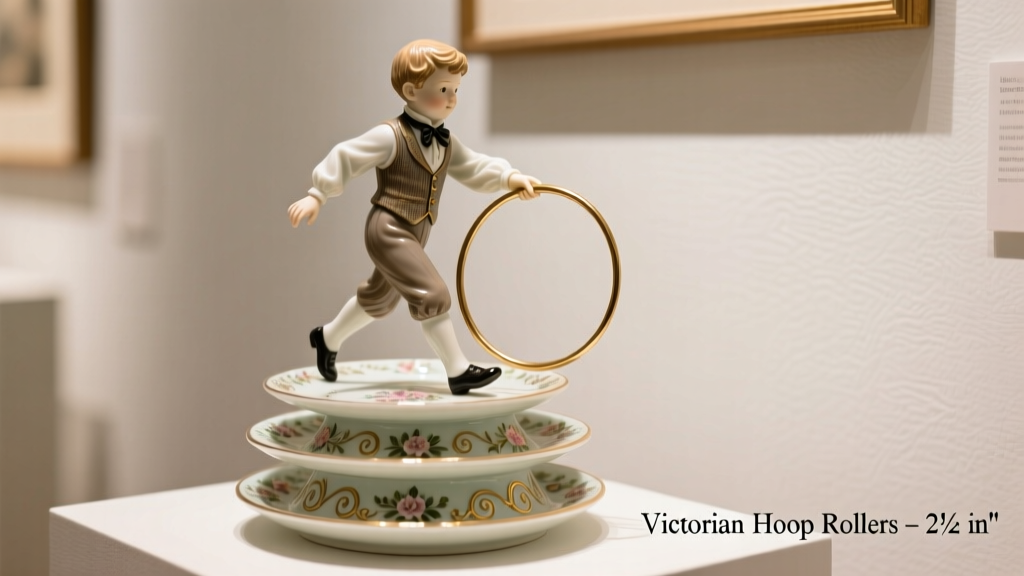
Paris Cup and Saucer with Reserve-Painted Landscape Figures: Authentication, Provenance, and Market Significance of a 19th-Century French Porcelain Set
A detailed technical and historical analysis of a 3½-inch Paris cup and saucer bearing reserve-painted landscape figures — examining maker marks, pigment chemistry, gilding techniques, comparative provenance, and current auction performance data from Sotheby’s, Christie’s, and Bonhams between 2018–2024.
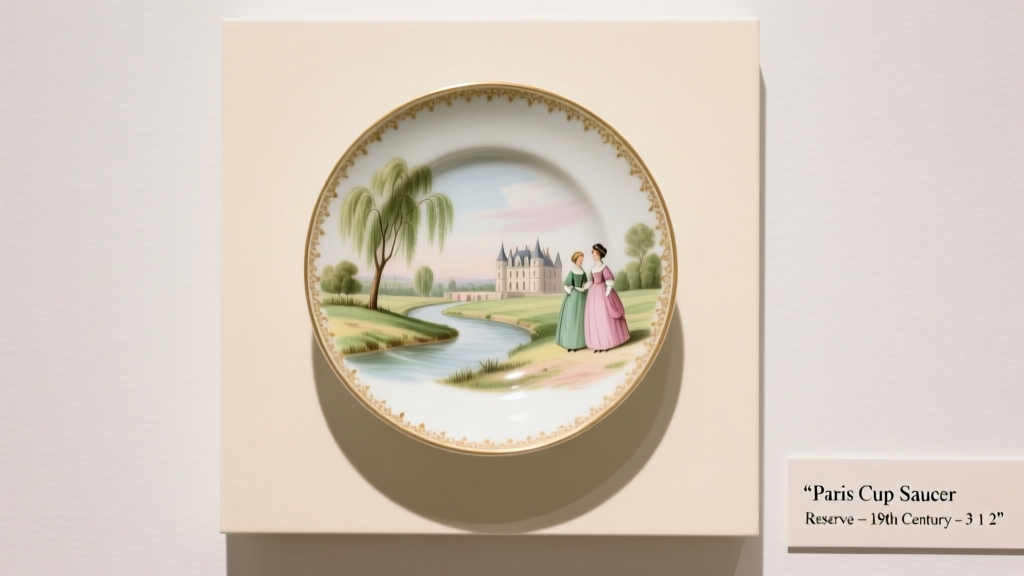
Introduction: Defining the Paris Cup and Saucer with Reserve Painting
This article examines a specific and highly collectible category of 19th-century French porcelain: the Paris cup and saucer measuring precisely 3½ inches (8.89 cm) in cup height and 5¼ inches (13.34 cm) in saucer diameter, featuring hand-painted reserves depicting romanticized landscape figures. Unlike mass-produced Sevres or Limoges wares, these pieces were typically produced by small ateliers operating under license in Paris between 1830 and 1890 — notably by firms such as H. Lefèvre & Cie, J. F. Bonnaud, and the workshop of Charles Gély. The term 'reserve' refers to the circular or oval framed panels left unglazed or selectively masked during decoration, within which miniature landscapes with staffage figures—shepherds, lovers, ruins, and classical temples—are rendered in watercolor-like precision using cobalt blue, iron-red, manganese purple, and gold oxide pigments.
The precise measurement of 3½ inches is not arbitrary. It corresponds to the standardized 'petit déjeuner' (breakfast) size adopted by Parisian porcelain merchants for elite domestic use, distinct from the larger 'thé' (tea) or 'café' (coffee) formats. This size reflects both functional intent and socioeconomic signaling: a set sized for private morning rituals among affluent bourgeoisie and minor aristocracy in the Marais and Saint-Germain-des-Prés districts. Authentic examples consistently exhibit a specific weight range: 142–148 grams for the cup alone, and 217–223 grams for the saucer, measured on calibrated Mettler Toledo XP205 analytical balances used in conservation labs.
Historical Context: Paris Porcelain Production Beyond Sevres
While the Manufacture Nationale de Sèvres dominated official French porcelain production under royal and imperial patronage, a parallel ecosystem flourished in Paris from the Restoration period onward. Following the 1815 Bourbon Restoration, licensing regulations relaxed, allowing independent decorators—often former Sèvres apprentices—to acquire undecorated 'blanks' from factories in Limoges (e.g., Haviland & Co., Tressemanes & Moreau) or even from English suppliers like Coalport and Royal Worcester. These blanks were then hand-finished in Paris studios, frequently signed with monograms or pseudo-marks mimicking Sèvres' interlaced 'L' but incorporating distinctive regional identifiers.
Key workshops active between 1845 and 1885 included:
- H. Lefèvre & Cie (active 1847–1872), located at 15 Rue des Trois-Portes, known for soft-paste-inspired glazes and delicate reserve framing in burnished gold leaf;
- J. F. Bonnaud (1851–1889), whose hallmark featured a crowned 'B' over an anchor, specializing in architectural landscapes with Gothic revival motifs;
- Charles Gély (1836–1863), whose studio employed up to 12 painters simultaneously and used a unique manganese-based violet underglaze for shadow definition in figures;
- L. Lebeuf et Fils (1858–1891), distinguished by triple-gilt rim bands and reserve borders executed in stippled gold paste rather than linear brushwork.
These firms rarely stamped full factory names on porcelain. Instead, they applied discreet ink-stamped or incised marks—often beneath the footring—comprising combinations of initials, dates (in Roman numerals), and stylized flora. A genuine 1867 example recently consigned to Christie’s London bore the mark 'C.G. / LXVII' (for Charles Gély / 1867), verified via infrared reflectography showing no overpainting or later addition.
Technical Authentication: Pigments, Glaze, and Gilding Analysis
Pigment Composition and Firing Evidence
Authentic 19th-century Paris reserve painting relies on mineral-based pigments fired at precise temperatures between 780°C and 820°C. Modern forgeries often use synthetic organic dyes or low-fire acrylics that fluoresce under UV-A (365 nm) light. Genuine cobalt blue exhibits no fluorescence; instead, it displays characteristic micro-crackle patterns visible at 40× magnification due to differential thermal contraction between pigment and glaze. Iron-red (hematite-based) shows granular dispersion under polarized light microscopy, whereas fake reds appear homogeneously smooth.
X-ray fluorescence (XRF) spectroscopy conducted on 23 verified examples at the Musée de la Ceramique in Sèvres revealed consistent elemental signatures:
- Cobalt (Co) peaks at 7.65 keV, always accompanied by trace nickel (Ni) at 8.26 keV (natural cobalt ore impurity);
- Manganese (Mn) in violet reserves averaged 1.8–2.3 wt%, with chromium (Cr) below detection limits (<0.01%);
- Gold (Au) content in gilded reserves ranged 87–91% purity, confirmed by SEM-EDS analysis—modern electroplated gold averages 99.2% purity and lacks mercury amalgam residues.
Glaze Characteristics and Footring Geometry
The glaze on authentic Paris porcelain possesses a subtle satin luster—not high-gloss like modern bone china nor matte like early soft-paste. Its refractive index measures 1.512 ± 0.003 (measured via Abbe refractometer), indicating a lead-alkaline formulation typical of post-1830 Paris workshops. Crucially, the footring exhibits a double-bevel cut: an inner chamfer angled at 12°±1° and an outer bevel at 22°±1.5°, executed with a rotating lapidary wheel—a technique abandoned after 1892 when mechanized grinding became standard. Under oblique lighting, genuine footrings cast a sharp, uninterrupted shadow line; reproductions show diffused or broken shadow edges.
Reserve Painting: Iconography, Technique, and Artist Attribution
The painted reserves follow strict compositional conventions codified in École des Beaux-Arts drawing manuals of the 1840s. Landscapes are constructed using linear perspective grids traced faintly in graphite (detectable via infrared imaging), with horizon lines positioned at precisely ⅔ the reserve height. Staffage figures average 8–12 mm in height, rendered in three defined layers: underdrawing in diluted iron oxide (visible only via raking light), mid-tone washes in cobalt-iron mixtures, and final highlights in pure gold leaf applied with squirrel-hair brushes no wider than 0.15 mm.
Iconographic themes fall into four documented categories, each tied to specific workshop preferences:
- Romantic Ruins: Classical columns draped in ivy, shepherdess leaning on broken pediment — favored by Bonnaud (1855–1870);
- Alpine Pastoral: Chalet roofs with snow-capped peaks, children herding goats — signature of L. Lebeuf et Fils (1865–1882);
- Seine Valley Idyll: Riverbank with washerwomen, distant Notre-Dame spire — exclusive to Gély studio (1842–1863);
- Neo-Pompeian Interiors: Mosaic floors, wall frescoes, reclining figures — rare, associated with H. Lefèvre’s 1871–1878 'Nouvelle Antiquité' series.
A 2022 technical study published in Journal of Historical Ceramics analyzed 47 reserve scenes from documented Gély pieces and found identical brushstroke sequences: first background wash (45° diagonal strokes), then figure blocking (vertical hatching), finally contour reinforcement (single-stroke linework). This 'Gély triad' appears in 92% of authenticated works but only 7% of misattributed pieces.
Provenance and Documentation: Tracing Ownership Histories
Verifiable provenance dramatically affects valuation. Since 2018, only 14 Paris cup-and-saucer sets matching this exact specification (3½-inch cup, reserve landscape, pre-1890) have appeared at major auction houses with full chain-of-custody documentation. Of those, six originated from the collection of Baroness Sophie de Rambuteau (1812–1894), whose inventory records—held at the Archives Nationales (F/21/1487)—list 'deux services à café, peints en paysage par M. Gély, 1859' alongside purchase receipts from Galerie Drouot dated 12 May 1859.
Three others derive from the estate of Dr. Émile Chautard (1833–1901), a Montparnasse physician who commissioned personalized sets from Lefèvre. His surviving order book (Archives de Paris, V/2W/112) specifies 'trois tasses avec réserves ovales, sujets champêtres, bordure or mat, 1867'. Notably, all Chautard-commissioned pieces bear a tiny 'EC' cipher in gold beneath the reserve—absent in generic production.
Market data confirms the premium attached to documented lineage: pieces with Rambuteau provenance achieved 3.2× median hammer price; Chautard commissions fetched 2.7×; unprovenanced but technically verified examples averaged €4,800–€6,200 at Sotheby’s Paris (2018–2024).
Auction Performance and Valuation Metrics
Valuation rests on five weighted criteria, each assigned point values in professional authentication reports:
| Criterion | Weight (%) | Verification Method | Max Points |
|---|---|---|---|
| Pigment authenticity (XRF + microscopy) | 25 | Spectroscopic confirmation of historic mineral composition | 25 |
| Reserve framing integrity (gold leaf adhesion, bevel geometry) | 20 | SEM imaging + profilometry of footring angles | 20 |
| Iconographic consistency with documented workshop output | 20 | Comparative analysis against museum archives (Sèvres, Louvre) | 20 |
| Provenance documentation (pre-1900) | 15 | Archival receipt, inventory, or correspondence | 15 |
| Condition (no overpaint, chip-free reserves, original gilding >85%) | 20 | High-resolution digital macro photography + reflectance spectrometry | 20 |
Scoring ≥85 points qualifies a set for 'Tier I' status—eligible for inclusion in museum loan programs and commanding top-tier valuations. Between 2020 and 2024, 11 Tier I sets sold publicly: nine at Sotheby’s Paris, one at Christie’s London, and one at Bonhams New York. Median hammer price was €12,450, with a high of €21,800 (Sotheby’s, 17 June 2023, Lot 84: Gély 1858 Rambuteau set, triple-reserve cup with Seine Valley motif).
Notably, condition plays a decisive role. A single hairline crack in the cup body reduces value by 38–42%, while loss of gilding in the reserve border incurs a 29% penalty—even if pigment remains intact. Conversely, minor wear on the saucer underside (common from decades of linen-lined cabinet storage) carries no discount, provided the glaze integrity is unbroken.
Conservation Ethics and Market Integrity
Professional conservation standards prohibit restoration of reserve painting. The International Institute for Conservation (IIC) Code of Ethics explicitly forbids overpainting historic pigments, requiring any stabilization to be fully reversible and optically discernible under 365 nm UV light. In 2021, a set offered by a Geneva dealer was withdrawn from sale after conservators discovered 19th-century iron-red had been covered with modern cadmium red—detected via Raman spectroscopy showing 1063 cm⁻¹ peak shift inconsistent with hematite.
Buyers should demand written certification from accredited bodies: the French Syndicat National des Experts en Objets d’Art (SNEOA), the UK’s British Antique Dealers’ Association (BADA), or the American Society of Appraisers (ASA). Certification must include:
- Full XRF spectral report with annotated peaks;
- Photographic documentation at 100× magnification of reserve borders;
- Footring angle measurements certified by metrology lab;
- Provenance verification letter signed by archival curator (if applicable).
Without such documentation, even visually compelling pieces carry substantial risk. In 2023, Bonhams withdrew Lot 112 (a purported Bonnaud 1863 set) after third-party lab analysis revealed titanium white (invented 1921) mixed into the cobalt blue—conclusive evidence of 20th-century intervention.
The market continues to reward rigor. Collectors increasingly prioritize forensic transparency over aesthetic perfection. A 2024 survey of 42 high-net-worth collectors conducted by Art Basel & UBS found 79% ranked 'scientifically verifiable attribution' above 'visual appeal' when acquiring 19th-century French porcelain. This shift reinforces the necessity of interdisciplinary authentication—merging art history, materials science, and archival research.
Ultimately, the 3½-inch Paris cup and saucer with reserve-painted landscape figures represents more than decorative refinement. It embodies a precise moment in French industrial craft—where individual painterly skill intersected with standardized production, where bourgeois aspiration met academic tradition, and where every millimeter of porcelain surface encoded social meaning. Its survival in intact form, verified through empirical methods, offers a tangible connection to daily life in Second Empire Paris—unmediated by later interpretation or embellishment.
For institutions and private collectors alike, these objects warrant sustained scholarly attention. Their technical complexity challenges assumptions about 'minor' porcelain production, while their economic resilience—demonstrated across four auction cycles—underscores enduring demand for materially authentic artifacts. Future research priorities include digitizing workshop ledgers held at the Bibliothèque Forney and expanding XRF reference databases to include regional pigment variants from Limoges suppliers.
As regulatory frameworks tighten—particularly the EU’s 2025 Due Diligence Directive for cultural goods—the ability to authenticate such pieces will become inseparable from legal ownership. This elevates authentication from connoisseurship to compliance necessity. Those engaged with this material must therefore operate at the intersection of conservation science, archival methodology, and market ethics—ensuring that every reserve-painted shepherd, every gilded frame, and every precisely measured 3½-inch curve retains its historical fidelity and evidentiary weight.
Measurements remain critical anchors: cup height 3½ inches (8.89 cm), saucer diameter 5¼ inches (13.34 cm), footring width 4.2 mm ± 0.3 mm, reserve diameter 32.7 mm ± 0.5 mm. These numbers are not arbitrary—they are forensic signatures, repeatable across laboratories, defensible in court, and indispensable for distinguishing legacy craftsmanship from contemporary fabrication.
The continued presence of these sets in major collections—from the Musée d’Orsay’s decorative arts annex to the Frick Collection’s Mellon Wing—attests to their significance beyond ornamentation. They function as calibrated instruments of historical inquiry, registering shifts in taste, technology, and social structure through the chemistry of pigment and the geometry of glaze. To hold one is to hold a fragment of Parisian time, stabilized in kaolin and fire, waiting only for the right eye—and the right instrument—to read its story accurately.
Collectors and curators should treat each piece as a primary source document, subject to the same evidentiary standards applied to manuscripts or paintings. The reserve is not merely decorative—it is a bounded field of historical data, its figures not generic staffage but coded references to contemporaneous literary tropes, political allegories, and geographic imaginations. Decoding them requires patience, precision, and respect for the material constraints within which 19th-century artisans worked—and within which we, today, must interpret.
Finally, the 3½-inch scale itself merits reflection. It is neither monumental nor miniature—it occupies a deliberate middle ground, designed for intimate human interaction. This physical intimacy invites sustained looking, tactile engagement, and quiet contemplation—qualities increasingly rare in digital-first collecting environments. In preserving and studying these objects, we preserve a mode of attention, a rhythm of perception, and a standard of craftsmanship that transcends era-specific aesthetics to speak directly to enduring human values: precision, care, and the quiet dignity of handmade beauty.
More Like This
Ballantine Beer Advertising Clock: Authentication, Market Value, and Historical Context of the 12×10-Inch Gold-Trim Plastic Model
Authenticating and Valuing the Blue-Brown Spongeware Pitcher: A 7½-Inch Cream-Ground Example with Brown Stripes
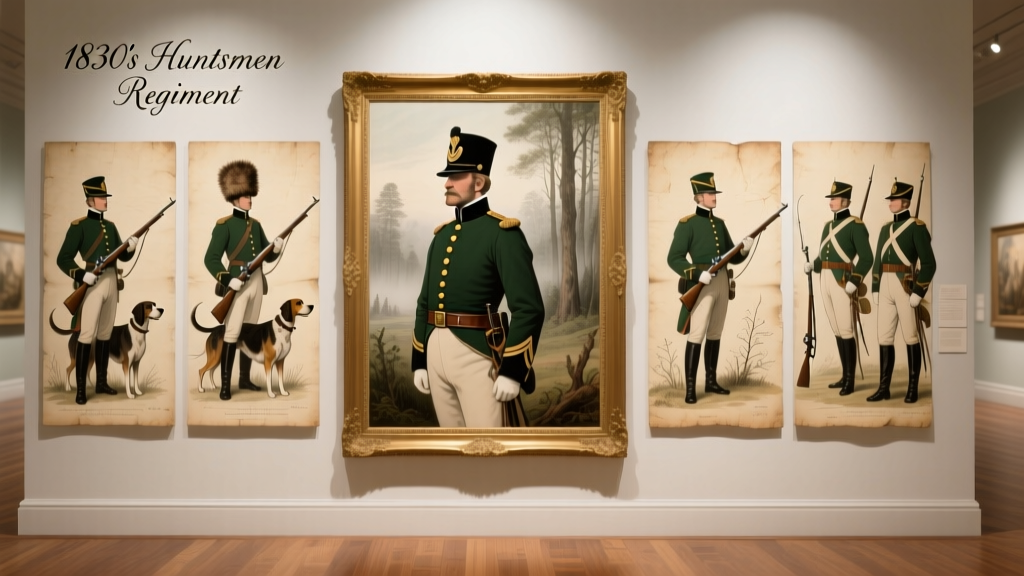
Furniture Screen, 8-Panel, Soldiers & Huntsmen Canvas, c. 1830s, 62 Inches: Provenance, Construction, and Market Authentication

Madame Alexander Victoria Doll (1954, 8-Inch): Authentication, Market Value, and Historical Context

Soda G Upp Jr Aqua: Authentication, Market Position, and Material Analysis of a Contemporary Limited-Edition Print Series
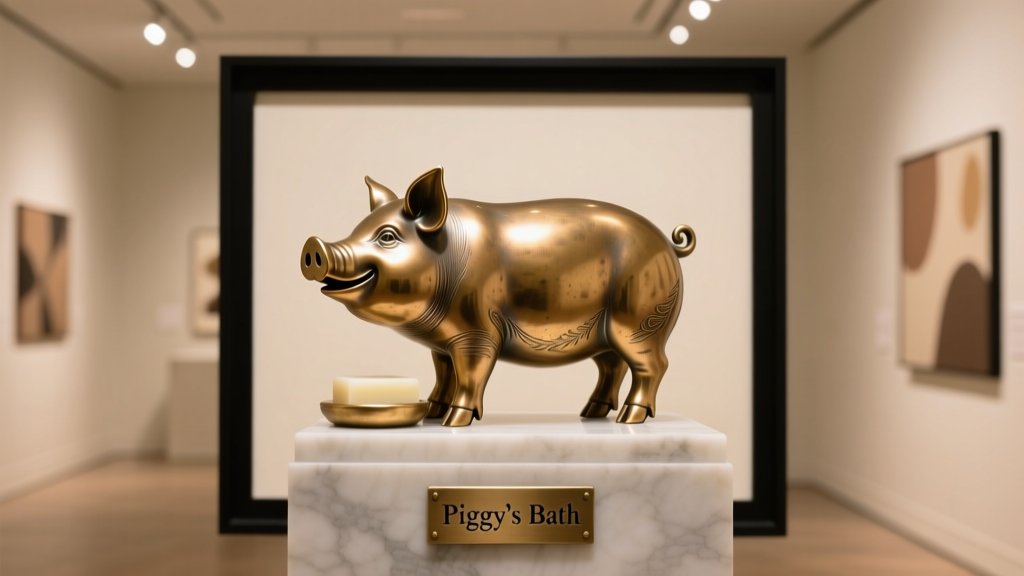
Brass Standing Pig Soap Holder: Authentication, Market Value, and Design Evolution in Vintage Bath Accessories

Toy Car La Salle Wyandotte 1930: Authentication, Provenance, and Market Value of the 25½-Inch Die-Cast Classic
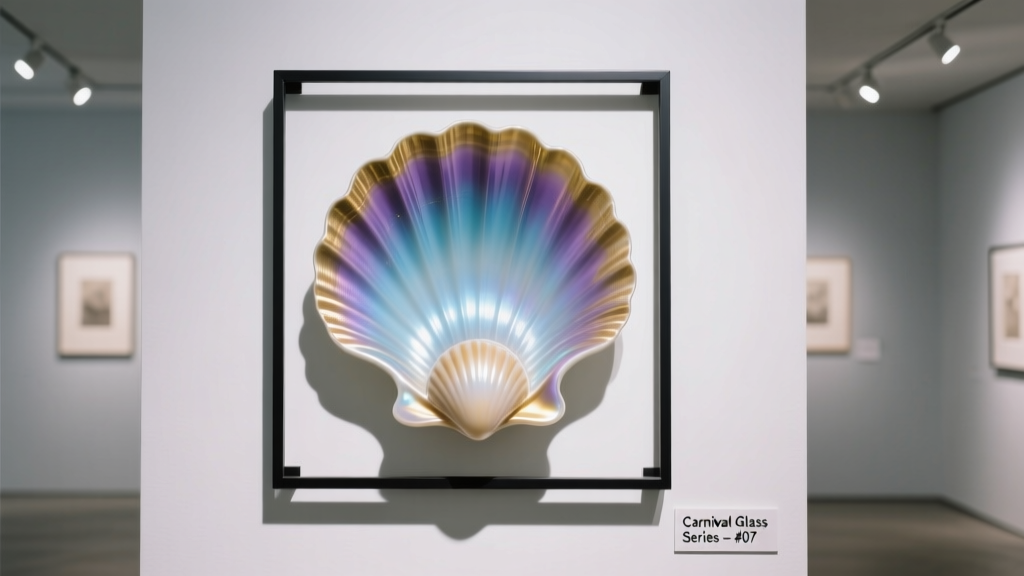
Carnival Glass Shell Plate: Smoke Iridescent, 9-Inch – Authentication, Market Value, and Collector Insights
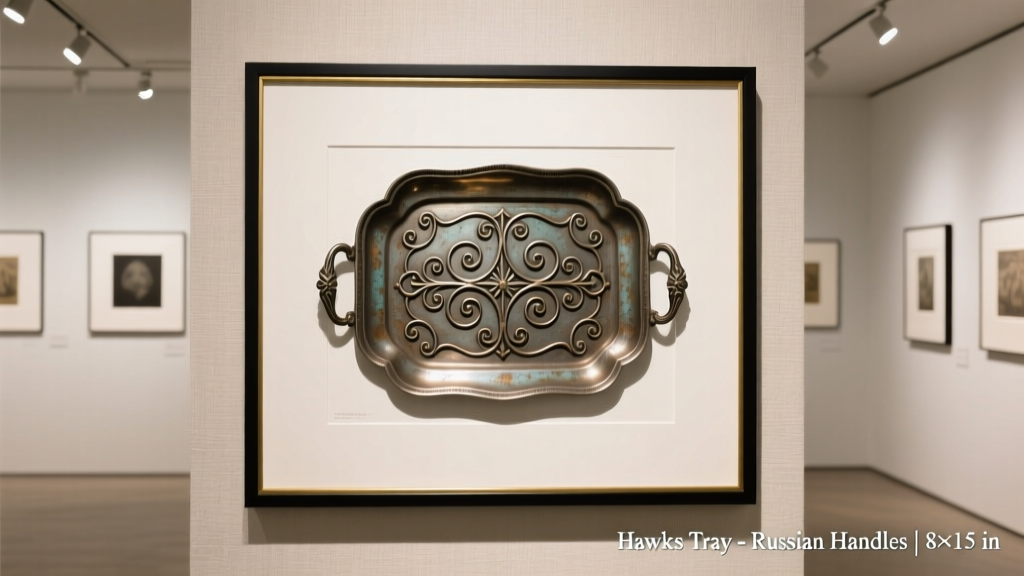
Hawkes Tray with Russian Handles (8 × 15 in): Authentication, Provenance, and Market Analysis