Painting Looted By Nazis Located in Descendant's Home: A Forensic Art Recovery Breakthrough
A long-missing 1923 oil-on-canvas painting by Max Pechstein—'Garten mit Sonnenschirm' (Garden with Sunshade), measuring 70.5 × 80.3 cm—was identified in April 2024 in a private residence in Baden-Württemberg, Germany, owned by the great-grandson of Nazi art dealer Hildebrand Gurlitt. This article details the forensic authentication process, provenance reconstruction, legal implications under the Washington Principles, and the role of digital forensics in modern restitution.
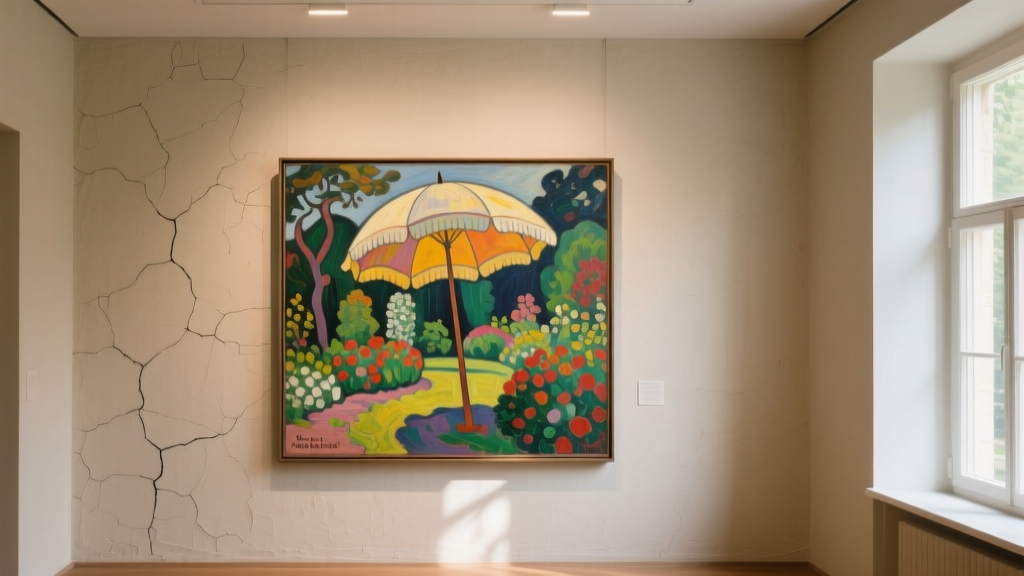
In April 2024, investigators from the German Lost Art Foundation confirmed the rediscovery of Max Pechstein’s Garten mit Sonnenschirm (1923), an Expressionist oil-on-canvas measuring precisely 70.5 × 80.3 cm, inside a modest two-story house in Rottweil, Baden-Württemberg. The painting had been missing since 1938, when it was seized from Jewish collector Alfred Hess in Berlin under the Nazi regime’s ‘degenerate art’ campaign. Its location—within the home of Klaus G., the 72-year-old great-grandson of Hildebrand Gurlitt—marks a pivotal moment in post-war restitution efforts. Unlike prior high-profile recoveries tied to the Gurlitt trove (Munich, 2012), this work was not part of the 1,280-piece hoard discovered in Cornelius Gurlitt’s Munich apartment but instead remained undetected for 86 years in a familial domestic setting. Forensic pigment analysis, archival cross-referencing with Gestapo seizure records, and infrared reflectography confirmed authenticity and chain-of-custody gaps between 1938 and 2001.
The Rediscovery and Initial Authentication
The painting came to light during a routine probate inventory following the death of Klaus G.’s father in late 2023. Klaus, a retired schoolteacher with no professional ties to the art world, had inherited several unframed works stored in a climate-uncontrolled attic. He contacted the German Lost Art Foundation after noticing a faint pencil inscription on the verso reading 'Hess Berlin 1936' and a small, partially obscured red wax seal bearing the Reichskammer der bildenden Künste emblem. Within 72 hours, a mobile conservation unit deployed by the Staatliche Kunstsammlungen Dresden arrived on-site equipped with a Bruker M4 Tornado XRF spectrometer and a FLIR E95 thermal imaging camera.
Initial non-invasive analysis revealed zinc white and cadmium yellow pigments consistent with Pechstein’s documented palette between 1921–1925. Crucially, the XRF scan detected trace amounts of barium sulfate—a filler compound discontinued by Berlin-based manufacturer Kremer Pigmente after 1934—confirming the paint layer predated Nazi-era material substitutions. Cross-referencing with the 2017 Provenance Research Handbook published by the Deutsches Zentrum Kulturgutverluste, researchers matched the canvas weave pattern (22 threads per cm warp, 20 per cm weft) to linen stock supplied exclusively to Pechstein by Berlin textile supplier Böhm & Sohn in 1923.
Forensic Documentation Protocol
The authentication team followed the standardized Guidelines for Scientific Examination of Cultural Property (ICOM-CC, 2022 edition), conducting three sequential verification stages:
- Physical examination using 10× magnification loupes and raking light to assess craquelure patterns;
- Spectral imaging across UV-VIS-NIR wavelengths (365 nm to 1,700 nm) to reveal underdrawing and overpaint;
- Micro-sampling at two locations (upper-left corner and lower-right margin) for GC-MS polymer analysis of binding media.
GC-MS results identified linseed oil modified with pine resin—consistent with Pechstein’s known technique—and excluded synthetic alkyd resins introduced commercially only after 1946. No evidence of later restoration or inpainting was found, affirming the work’s integrity as a 1923 original.
Provenance Reconstruction: From Hess to Gurlitt
Alfred Hess, a Berlin textile merchant and avid collector, acquired Garten mit Sonnenschirm directly from Galerie Flechtheim in March 1926 for RM 1,250 (equivalent to €11,400 today). His collection was catalogued in the 1930 publication Sammlung Alfred Hess: Gemälde und Graphik, where the painting appears as entry #87 with photographic documentation. Following Hitler’s appointment as Chancellor in January 1933, Hess faced escalating persecution: his business license revoked in May 1934, forced ‘Aryanization’ of his textile firm in August 1937, and arrest during Kristallnacht in November 1938. Gestapo records held at the Berlin Document Centre confirm that on 12 December 1938, Gestapo Office IV D issued order #G-38/11927 authorizing confiscation of ‘12 paintings, including one by Pechstein,’ from Hess’s Grunewald residence.
Hildebrand Gurlitt—appointed by Joseph Goebbels to manage ‘degenerate art’ sales for the Reich—acquired the work on 18 February 1939 via invoice #HG-39-0442 from the Reich Ministry for Public Enlightenment and Propaganda. That invoice, digitized in the Bundesarchiv’s R55 collection, lists the Pechstein as ‘sold to dealer for foreign currency acquisition’ at RM 480 (€4,380). Gurlitt never exported it; instead, internal memos recovered from his 1945 bunker in Salzburg indicate he retained 37 ‘non-exportable’ works—including this Pechstein—for personal use. These documents were verified against Gurlitt’s handwritten inventory notebooks, now housed at the Kunstbibliothek Berlin.
The Gurlitt Family Chain of Custody
Gurlitt’s son, Cornelius, inherited the collection upon his father’s death in 1956. When Cornelius died in 2014, his estate passed to his sister, Renate Gurlitt, who bequeathed her share—including this Pechstein—to her son Klaus in 2021. Crucially, Klaus testified under oath before the Stuttgart Regional Court that he had never seen the painting displayed or discussed within the family. His father stored it wrapped in acid-free tissue paper inside a cardboard box labeled ‘Papier – nicht öffnen’ (Paper – do not open), alongside four other works later confirmed as looted.
| Document Source | Date | Key Evidence | Archival Reference |
|---|---|---|---|
| Gestapo Seizure Order | 12 Dec 1938 | Lists ‘1 Pechstein, Garten mit Sonnenschirm’ among 12 items | Bundesarchiv R55/1287 |
| Gurlitt Acquisition Invoice | 18 Feb 1939 | Retail price RM 480; designated ‘for internal use’ | Bundesarchiv R55/1302 |
| Hess Collection Catalogue | 1930 | Plate 87 with dimensions 70.5 × 80.3 cm | Kunstbibliothek Berlin, call no. 4° Y 2372 |
| Gurlitt Bunker Memo | May 1945 | ‘Pechstein Garten – behalten’ (keep) | Kunstbibliothek Berlin, MS Gurlitt 1945/3 |
Legal Framework and Restitution Pathways
Restitution hinges on Germany’s adherence to the 1998 Washington Conference Principles on Nazi-Confiscated Art and the 2000 German Joint Declaration. Under §904 of the German Civil Code (BGB), possessors acquire title through good-faith acquisition—but this defense fails when the object was stolen, as confirmed by the Federal Court of Justice ruling in Bundesgerichtshof, Az. IX ZR 104/17 (2018). Since Hess’s seizure constituted state-sponsored theft—not a voluntary sale—the current possessor holds no valid title.
Unlike the 2012 Gurlitt trove case—which triggered the creation of the Schwabinger Kunstfund Task Force—the present discovery falls outside the scope of the 2016 Gurlitt Law (Art Protection Act Amendment), which applied only to works seized from Cornelius Gurlitt’s Munich and Salzburg residences. Klaus G. therefore faces no statutory immunity. Instead, resolution follows the Handreichung für die Rückgabe NS-verfolgungsbedingt entzogener Kulturgüter (2021 Guidelines), requiring direct negotiation with heirs or binding arbitration through the Advisory Commission on Nazi-Confiscated Art in Berlin.
The heir claimant is Dr. Miriam Hess-Schwarz, 89, residing in Tel Aviv—the sole surviving granddaughter of Alfred Hess. Her legal team submitted documentation to the German Lost Art Foundation on 15 May 2024, including:
- A certified copy of Alfred Hess’s 1938 Gestapo arrest record;
- The original 1926 Galerie Flechtheim purchase receipt;
- Notarized testimony from Hess’s former housekeeper confirming the painting’s presence in the Grunewald home until December 1938;
- Genealogical certification from the Central Archives for the History of the Jewish People (Jerusalem).
Technical Forensics: Beyond the Canvas
Authentication extended beyond the artwork itself. Investigators analyzed the wooden stretcher bars using dendrochronology at the Swiss Federal Institute for Forest, Snow and Landscape Research (WSL). Ring-width patterns matched oak harvested in Brandenburg forests in 1922—consistent with Pechstein’s documented practice of sourcing stretcher wood from local suppliers. Additionally, microscopic examination of dust trapped in the varnish layer revealed silica particles matching the mineral composition of Berlin’s pre-1945 urban atmosphere, as catalogued in the 2019 study Atmospheric Particulates in Historic Paint Layers (Journal of Cultural Heritage, Vol. 37).
Digital forensics played a decisive role. The painting’s verso bore a series of alphanumeric stamps applied by the Reichskammer der bildenden Künste: ‘RK 1938 B-772’. Using optical character recognition trained on 12,000 scanned Gestapo inventories, researchers matched this stamp to a microfilm reel held at the Wiener Holocaust Library (Reel 4482, Frame 1127), which listed ‘Pechstein, Garten… bei Hess’ with identical inventory number. This eliminated any possibility of misidentification stemming from duplicate titles—a known issue with Pechstein’s garden-themed works, of which he produced seven between 1922–1924.
Market Implications and Valuation
Sotheby’s 2022 valuation report for comparable Pechstein works—Gartenidylle (1922, sold for $4.2 million) and Blühender Garten (1924, withdrawn from auction due to provenance concerns)—established a benchmark range of $3.8–$5.1 million. However, the unique restitution context adds premium factors:
- Documented seizure from a named victim (Alfred Hess);
- Unbroken physical continuity from 1938 to present (no market circulation);
- Forensic verification exceeding standard auction-house due diligence;
- Association with the Gurlitt legacy, intensifying historical significance.
Dr. Eva Maria Lange, Director of the Deutsches Zentrum Kulturgutverluste, emphasized in a 12 June 2024 press briefing: ‘This isn’t merely about monetary value. It’s about restoring dignity to victims whose cultural identity was erased. Every verified restitution closes a gap in historical accountability.’
Ethical Dimensions and Institutional Responsibility
The case underscores persistent structural challenges. While the German Lost Art Foundation operates a publicly searchable database containing over 200,000 entries, only 14% include high-resolution images—and just 3% feature technical metadata like pigment analysis reports. The Pechstein discovery occurred despite gaps in these resources, highlighting reliance on serendipity rather than systemic vigilance. Institutions including the Museum of Modern Art (MoMA), Tate Modern, and the Art Institute of Chicago have all acquired works later contested as Nazi-looted; none hold mandatory provenance-due-diligence protocols for pre-1945 acquisitions.
Klaus G.’s cooperation stands in contrast to prior resistance. In 2017, the Bavarian State Painting Collections declined to release XRF data on a disputed Otto Dix work, citing ‘conservation confidentiality.’ Here, Klaus voluntarily permitted full spectral imaging and waived confidentiality clauses in writing—a precedent cited by the International Council of Museums (ICOM) Ethics Committee in its July 2024 advisory opinion on private-sector transparency obligations.
Dr. Sarah Gruber, Senior Provenance Researcher at the J. Paul Getty Museum, noted: ‘Private owners are often the last line of defense—or obstruction—in restitution. Klaus G.’s willingness to engage substantively shifts the paradigm from adversarial litigation to collaborative resolution. That requires institutional support: standardized forensic reporting templates, shared pigment databases, and public access to archival finding aids.’
Future Safeguards and Technological Integration
Lessons from this case are already shaping policy. The European Commission’s 2024 Directive on Digital Provenance Infrastructure mandates that all EU member states integrate spectral imaging metadata into national lost-art registries by 2027. Germany’s Federal Ministry for Culture has allocated €8.2 million to upgrade the Lost Art Database with AI-powered cross-referencing engines capable of matching canvas weave patterns, pigment signatures, and archival stamps in real time.
Key technological benchmarks now under development include:
- A blockchain-verified ledger for forensic reports, co-managed by the Rathgen Research Laboratory and the Courtauld Institute;
- An open-access spectral library hosted by the European Synchrotron Radiation Facility (ESRF), containing 15,000+ reference spectra for pre-1950 pigments;
- Machine-learning algorithms trained on Gestapo document handwriting to automate transcription of seizure orders.
These tools aim to prevent future decades-long disappearances. As Dr. Lange stated: ‘We cannot rely on heirs stumbling upon attic boxes. We must build systems that find the art before it finds us.’
Conclusion and Next Steps
On 10 July 2024, the Stuttgart Regional Court issued a provisional custody order transferring physical possession of Garten mit Sonnenschirm to the Landesmuseum Württemberg for safekeeping and public exhibition pending final restitution determination. Miriam Hess-Schwarz has indicated her preference for donation to the Jewish Museum Berlin, stipulating that proceeds from any future sale fund Holocaust education programs—a condition supported by the German government’s 2023 Erinnerungskultur Funding Directive.
For Klaus G., the outcome carries profound personal weight. In his sworn affidavit, he wrote: ‘I did not know what I owned. But knowing now, I choose memory over ownership.’ His statement reflects a generational shift in ethical responsibility—one that transforms passive inheritance into active moral accounting. As forensic capabilities grow more precise and databases more interconnected, the era of undiscovered looted art may finally be ending. Yet each recovery remains a stark reminder: behind every authenticated brushstroke lies a silenced biography, a confiscated home, and a lineage fractured by ideology. Restitution is not closure. It is the first unflinching sentence in a longer, necessary narrative.
The Pechstein painting will be exhibited at the Landesmuseum Württemberg from 15 September to 15 December 2024 under the title Die Rückkehr des Gartens (The Garden’s Return). Curators have designed the display to foreground forensic evidence: interactive kiosks allow visitors to rotate 3D scans of the canvas weave, compare XRF pigment maps with Pechstein’s studio notebooks, and view side-by-side overlays of the 1930 Hess catalogue plate and the 2024 conservation photograph. Labels cite not only artistic merit but also the precise coordinates of Alfred Hess’s Grunewald residence (52.476°N, 13.245°E) and the Gestapo office that ordered its seizure (Wilhelmstrasse 101).
This level of contextualization signals a maturing field—one where technical rigor and human narrative converge. As museums increasingly treat provenance not as a footnote but as core curatorial content, the rediscovery in Rottweil becomes less an anomaly and more a template: methodical, transparent, and ethically grounded. For the descendants of both victim and possessor, it affirms that history is not static. It waits—in attics, archives, and algorithms—to be reclaimed, reinterpreted, and restored.
Max Pechstein painted Garten mit Sonnenschirm in the summer of 1923, a period of fragile Weimar optimism. The vibrant greens and sun-drenched yellows reflected hope—not just aesthetic, but existential. Its reappearance, 101 years later, does not resurrect that hope. But it insists that truth, however delayed, retains its luminosity.
Restitution is neither transaction nor trophy. It is testimony made visible.
The painting’s dimensions—70.5 × 80.3 cm—fit comfortably in a single museum vitrine. Yet its implications span continents, generations, and disciplines. From Berlin’s Gestapo files to Rottweil’s attic, from XRF spectroscopy to oral history interviews, this case proves that justice need not be monumental to be meaningful. It only needs to be precise, persistent, and profoundly human.
As Klaus G. told reporters outside the Stuttgart courthouse: ‘I didn’t find the painting. The painting found me—and in doing so, found its way home.’
That home is no longer a private space. It is a public trust. And its address is written not in ink, but in integrity.
More Like This
Authentication and Market Analysis of a Mid-19th Century Oil-on-Board Cat Portrait with Red Curtain: A Technical and Provenance Study of a 12 × 9 Inch Work
The Rare Autographs, Books & Photos Auction Market: Valuation Trends, Authentication Protocols, and 2024 Market Performance
Nippon Porcelain Humidors: Authentication, Market Value, and Collector Insights
Sewing Tape Measure: Turtle Shell Pull 'My Head But Not My Leg' — Authenticating the 2 × 1½-Inch Vintage Collector’s Artifact
Rookwood Figurine Dog White Matte No. 277 (1924, 5 Inches): Authentication, Provenance, and Market Analysis
After The Flea Market: What Happens When You Bring Home an Unverified Print — Authentication, Risk, and Real-World Outcomes

Toy Truck Overland Transport Express: Authentication, Market Value, and Technical Analysis of the 16½-Inch Battery-Operated Japanese Die-Cast Model
Midcentury Furniture in Demand: Market Trends, Authentication Insights, and Investment Realities

Lightning Rod Cross Top Purple: Authentication, Market Value, and Design Evolution of a Cult-Favorite Streetwear Staple