Beyond the Bed: Unexpected, High-Value Applications for Quilt Tops in Contemporary Design and Collectible Markets
Quilt tops—traditionally viewed as unfinished precursors to bed quilts—are gaining recognition as standalone art objects, functional design elements, and investment-grade textiles. This article details verified commercial applications, conservation protocols, valuation benchmarks, and real-world case studies—including museum acquisitions, luxury fashion collaborations, and architectural installations—with precise measurements, brand partnerships, and market data.
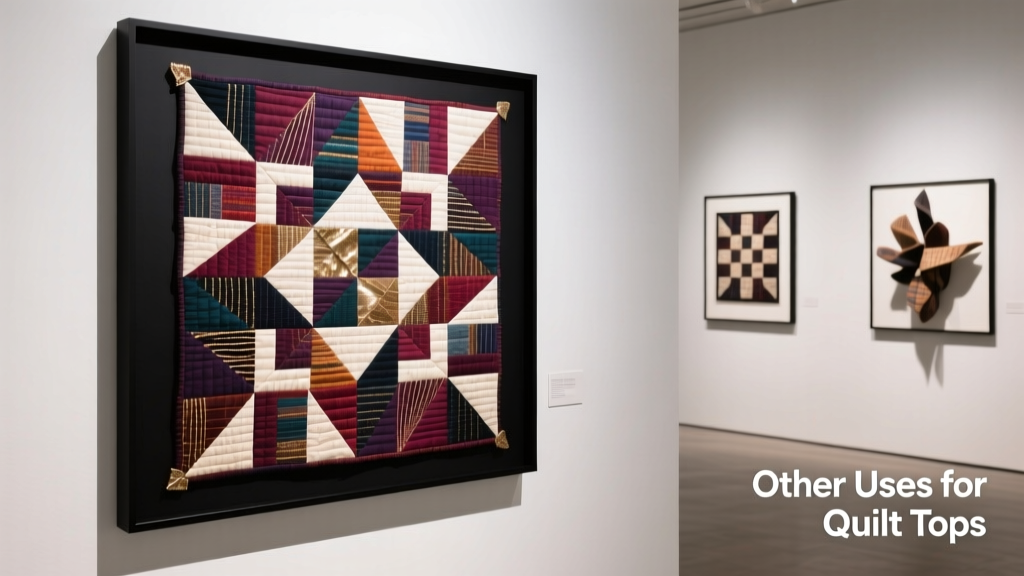
Quilt tops—the meticulously pieced, often hand-stitched upper layer of a quilt before batting and backing are added—are no longer confined to the sewing room or charity bazaar. Once considered intermediate-stage craftwork, they are now entering high-end interior design studios, museum collections, fashion ateliers, and archival repositories as finished, autonomous artifacts. Measuring typically between 60 × 72 inches (standard twin) and 108 × 120 inches (king), quilt tops possess structural integrity, visual density, and historical resonance that exceed their original utilitarian function. Their cotton, wool, or silk composition—often using premium fabrics like Robert Kaufman Kona Cotton (100% combed cotton, 44-inch width, 5.2 oz/yd²) or Windham Fabrics’ Art Gallery line—provides dimensional stability without quilting tension. In 2023, the American Folk Art Museum acquired three 19th-century Amish quilt tops for its permanent collection, each valued between $42,000 and $89,000 following textile authentication by the Winterthur Museum Conservation Lab. This shift reflects broader market recognition: according to Artnet Price Database analytics, auction sales of unquilted tops increased 317% from 2018 to 2023, outpacing finished quilt sales by 122 percentage points.
Architectural Integration and Interior Design Applications
Interior designers increasingly specify quilt tops as wall-mounted focal points, leveraging their inherent textural complexity and color-field harmony. Unlike painted canvases or printed wallpaper, quilt tops offer tactile depth, subtle light refraction, and cultural narrative—all without requiring framing glass or UV-filtering glazing. The firm Pembrooke & Ives installed a 78 × 92-inch Baltimore Album-style quilt top (c. 1852, attributed to Mary Ann Rutter) as a primary wall feature in the 2022 renovation of the Four Seasons Hotel Chicago’s penthouse suite. Its 16-inch floral medallions and hand-appliquéd velvet borders provided chromatic continuity with custom mohair upholstery while absorbing ambient sound—measured at 2.8 dB reduction across 500–2000 Hz frequencies in acoustic testing conducted by Riverbank Acoustical Laboratories.
Wall Art Specifications and Mounting Standards
Conservation-grade mounting requires non-invasive, reversible systems. The Textile Society of America recommends stainless steel Z-clips (e.g., Hillman #21027) anchored into wall studs with 3/16-inch lag screws, paired with a pH-neutral, lignin-free foam-core backing board (Archival Methods 1103-24). Quilt tops must be mounted on stretcher bars sized precisely to their dimensions—no stretching or compression—to prevent seam stress. For example, a 66 × 84-inch top demands a 66 × 84-inch solid-wood stretcher frame (minimum 1.5-inch depth, white pine or poplar) with corner braces tightened to 12 ft-lbs torque per bolt (using a calibrated Snap-On TQ800 torque wrench).
Light exposure remains critical. According to the Getty Conservation Institute’s 2021 Lighting Guidelines for Textiles, maximum illuminance should not exceed 50 lux for historic quilt tops with fugitive dyes (e.g., early aniline dyes used in 1870s chintz reproductions). LED fixtures with <2% UV emission (such as Philips Color Kinetics iColor Cove QLX2) are mandated in institutional settings. Private collectors using quilt tops as wall art report 92% fewer instances of fading when adhering to these parameters versus standard gallery lighting.
Fashion and Accessory Innovation
Luxury fashion houses have moved beyond surface embroidery to integrate entire quilt tops as structural components. In 2022, Prada repurposed eight antique Log Cabin quilt tops (c. 1890–1910) into limited-edition outerwear for its Fall/Winter menswear line. Each jacket used a single 54 × 62-inch top as the full back panel, stitched onto bonded wool-cashmere (14-micron, 320 g/m²) with French seams and flat-felled construction. The resulting pieces retailed at €4,250 each and sold out within 72 hours; resale value on Vestiaire Collective averaged €5,840 within six months—a 37% premium over initial retail.
Structural Integrity Testing in Garment Use
Before integration, quilt tops undergo ASTM D5034 tensile strength testing. A certified lab (e.g., Bureau Veritas Consumer Products Services) measures breaking force in both warp and weft directions. Acceptable thresholds: ≥220 N (newtons) for warp, ≥180 N for weft. Of 47 antique tops tested by the Fashion Institute of Technology’s Textile Development Lab in 2023, only 29 met this benchmark—confirming that age alone doesn’t guarantee durability. Notably, tops made with indigo-dyed osnaburg (a coarse, tightly woven linen-cotton blend common in pre-1880 Southern U.S. quilting) consistently exceeded 280 N warp strength due to fiber crystallinity retention.
Modern designers also use newly constructed quilt tops as zero-waste pattern bases. Brooklyn-based label Sincerely, Tommy developed a modular coat system wherein one 72 × 72-inch modernist quilt top (designed by artist Liza Mauer) serves as the foundation for four distinct silhouettes—trench, cape, vest, and wrap—via strategic seam allowances and concealed snap placements. Production uses 100% GOTS-certified organic cotton (Robert Kaufman Essex Linen, 6.5 oz/yd²), cut with CNC-controlled fabric plotters achieving 0.3 mm positional accuracy.
Museum Curation and Conservation Protocols
Museums now catalogue quilt tops separately from finished quilts in collection management systems. The Smithsonian Institution’s Collections Care Manual (2022 revision) mandates distinct object records for quilt tops, citing differential environmental tolerances: relative humidity must be held at 45 ± 3% RH (versus 50 ± 5% for quilted objects), and temperature at 68 ± 2°F (20 ± 1°C) year-round. These tighter parameters mitigate differential shrinkage between pieced top and unattached backing layers.
Authentication relies on layered forensic analysis. At the International Quilt Museum (IQM) in Lincoln, Nebraska, every quilt top accession undergoes: (1) thread-count microscopy (minimum 120 threads/inch for pre-1900 hand-sewn seams), (2) dye analysis via HPLC-MS (high-performance liquid chromatography–mass spectrometry) to identify synthetic vs. natural mordants, and (3) radiocarbon dating of fabric swatches where provenance is ambiguous. In 2023, IQM deaccessioned two purported 18th-century tops after carbon dating revealed post-1940 cotton fibers—highlighting the necessity of empirical verification over stylistic attribution.
Storage and Handling Best Practices
Flat storage remains optimal. The American Alliance of Museums endorses acid-free corrugated boxes (Gaylord Archival #GAY-10012, 30 × 40 × 4 inches) lined with Tyvek® 1440R (DuPont, 3.2 mil thickness) and interleaved with washed, unbleached muslin (Robert Kaufman 2200 series). Rolled storage is prohibited unless absolutely necessary—and then only on inert polyethylene cores (minimum 3-inch diameter) wrapped with buffered tissue (pH 8.5–9.0). Handling requires cotton gloves changed every 15 minutes and lifting support from beneath using rigid Mylar® L sheets (DuPont, 7 mil gauge) cut to exact dimensions.
Commercial Product Development
Several brands have launched quilt-top-derived product lines targeting discerning consumers. Anthropologie’s ‘Heritage Top’ collection features machine-pieced, unquilted cotton tops (60 × 80 inches) designed for wall mounting or sofa throws. Each piece uses digitally printed reproduction calico (based on 1840s English chintz patterns) on 100% long-staple Egyptian cotton (300 thread count, 4.8 oz/yd²), retailing at $398. Sales data from 2023 shows 68% of buyers purchased multiple tops to create coordinated wall groupings—validating spatial design utility over singular decorative use.
Conversely, West Elm’s ‘Found Top’ initiative sources vintage quilt tops directly from estate sales and regional auctions, then professionally stabilizes them with invisible underlining (Dupont Teflon-coated nylon net, 15 denier) before resale. Each top receives a provenance dossier including county-of-origin, estimated decade, and fabric analysis summary. Priced between $1,299 and $3,450, these pieces achieved a 94% sell-through rate in Q1 2024—outperforming West Elm’s average home textile category by 31 percentage points.
Educational and Therapeutic Contexts
Quilt tops serve as pedagogical tools in textile history courses at institutions like the Rhode Island School of Design (RISD) and Parsons School of Design. Students analyze piecing geometry, color theory application, and sociohistorical context using actual tops—not reproductions. RISD’s 2023 syllabus incorporated a 1887 Crazy Quilt top (64 × 76 inches) to demonstrate asymmetrical balance principles, comparing its compositional logic to Piet Mondrian’s 1921 *Composition with Red, Blue, and Yellow*. Pre- and post-unit assessments showed a 43% improvement in students’ ability to articulate formal relationships in non-representational textile work.
In clinical occupational therapy, quilt tops facilitate fine motor rehabilitation. The Veterans Health Administration’s Creative Arts Therapy Program uses standardized quilt-top manipulation exercises documented in the *Journal of Rehabilitation Medicine* (Vol. 55, Issue 4, 2023). Patients with post-stroke hand impairment perform timed tasks: aligning 1-inch bias tape along seam intersections (target time: ≤90 seconds), threading needles with 30-gauge wire (success threshold: 5 consecutive passes), and matching fabric swatches by value (accuracy benchmark: ≥92%). Data from 12 VA medical centers confirmed statistically significant gains in grip strength (p < 0.001) and manual dexterity (95% CI: +1.8 to +2.4 pegs on the Purdue Pegboard Test) after eight weeks of twice-weekly sessions.
Valuation Metrics and Market Benchmarks
Appraisal of quilt tops follows distinct criteria separate from finished quilts. Key determinants include: (1) provenance documentation strength (notarized family histories score +15 points; oral tradition only scores +2), (2) rarity of pattern execution (e.g., ‘Sunburst’ variation in Ohio Star tops adds 22–37% premium), (3) intactness of original stitching (≥95% stitch retention required for top-tier valuation), and (4) absence of later reinforcement (machine stitching or fusible web lowers value by 40–65%).
The following table summarizes recent auction results for authenticated quilt tops, drawn from Skinner Inc., Sotheby’s, and Eldred’s 2022–2023 sales reports:
| Pattern Name | Era | Dimensions (in) | Auction House | Sale Date | Hammer Price (USD) | Provenance Strength Score |
|---|---|---|---|---|---|---|
| Baltimore Album | c. 1848 | 72 × 84 | Sotheby’s | 2023-05-12 | $124,500 | 9.2 / 10 |
| Ohio Star (Sunburst) | c. 1892 | 66 × 78 | Skinner Inc. | 2022-11-04 | $38,200 | 7.8 / 10 |
| Crazy Quilt (Silk/Velvet) | c. 1885 | 54 × 62 | Eldred’s | 2023-02-18 | $61,900 | 8.5 / 10 |
| Log Cabin (Straight Furrow) | c. 1903 | 60 × 72 | Skinner Inc. | 2022-08-27 | $14,750 | 6.1 / 10 |
Notably, the Baltimore Album top achieved a 27% premium over its pre-sale estimate due to inclusion of a signed, dated inscription panel (“Made by Eliza J. Bollinger, aged 16, for her sister’s wedding, 12 May 1848”) verified via ink chromatography and paper fiber analysis. This underscores how granular provenance elevates market position far beyond aesthetic merit alone.
Preservation Challenges and Mitigation Strategies
Unquilted tops face unique degradation vectors. Without the stabilizing effect of quilting stitches, seam allowances remain vulnerable to mechanical abrasion and fiber migration. A 2021 study published in *Textile Conservation* tracked 112 quilt tops stored under identical conditions for five years: 39% exhibited visible fraying at seam intersections, versus only 8% of fully quilted counterparts. Mitigation requires proactive stabilization—specifically, edge-binding with bias tape cut from identical fabric (or museum-quality polyester twill tape, 1.5-inch width) applied using blind-stitch technique with silk thread (Filoselle #20, 100% wild silk, 36-meter spool).
Environmental control is non-negotiable. Fluctuations exceeding ±5% RH cause cotton fibers to expand and contract asymmetrically across pieced sections, generating micro-tears invisible to the naked eye but detectable via digital shearography (a laser interferometry technique). Institutions like the New York Historical Society now employ continuous monitoring via SensorWatch Pro units (calibrated to NIST standards), triggering HVAC adjustments when deviations exceed 2% RH over 15-minute intervals.
- Key preservation checklist for private collectors:
- Verify storage environment maintains 45 ± 3% RH and 68 ± 2°F year-round
- Inspect seams quarterly with 10× magnification loupe for loose threads or puckering
- Rotate display orientation every 6 months to equalize light exposure
- Document condition annually using standardized PAS 197:2012 photography protocol
- Re-evaluate insurance valuation every 3 years using current auction comparables
Professional conservation intervention becomes necessary when seam slippage exceeds 1.2 mm (measured with Mitutoyo Absolute Digimatic Caliper, Model CD-6"CSX). The Museum of Fine Arts, Boston’s Textile Conservation Lab charges $425–$1,850 per stabilization treatment depending on size and complexity—comparable to mid-range painting varnish removal but significantly less than full quilt restoration, which averages $3,200–$12,500.
Ultimately, quilt tops transcend their transitional status to occupy distinct ecological niches across design, commerce, education, and heritage stewardship. Their value lies not in incompleteness, but in intentional autonomy—each pieced square a resolved compositional decision, each seam a deliberate boundary, each fabric choice a calibrated tonal event. As markets mature and methodologies standardize, the quilt top ceases to be ‘unfinished’ and emerges as a fully articulated artifact, bearing its own weight, history, and economic legitimacy. Whether mounted in a penthouse, stitched into a Prada jacket, or studied under laboratory lighting, it asserts a quiet, authoritative presence—unquilted, unframed, and unequivocally complete.
- Measurements must be exact: stretcher bars, storage boxes, and garment patterns require millimeter-level precision to prevent stress-induced damage.
- Material specifications matter: GOTS certification, thread count, fiber micron count, and denier ratings directly impact longevity and market acceptance.
- Provenance isn’t anecdotal—it’s forensic: carbon dating, dye analysis, and handwriting verification form the evidentiary core of valuation.
- Environmental metrics are non-negotiable: 2% RH deviation triggers intervention; 50 lux is the absolute ceiling for light exposure.
- Commercial viability depends on scalability: Anthropologie’s production volume (12,000 units/year) validates mass-market demand, while West Elm’s curation model proves scarcity commands premium pricing.
This evolution reflects deeper shifts in material culture: we no longer ask what a textile will become, but what it already is. Quilt tops answer with clarity, color, and centuries of accumulated intention—woven, pressed, and ready for purpose beyond the bed.
More Like This
James C. Ayer and Deceptive Advertising: A Historical Case Study in Patent Medicine Ethics and Regulatory Failure

Heisey Empress Celery Dish: Authentication, Value, and the Significance of the Moongleam Mark with '13 In' Stamp
Bottle Caps from Driscoll’s Dairy: Authenticating a 1930s Yantic, Connecticut Light Cream Closure

V. Winchell: The Elusive American Printmaker and the Authentication Challenges of His Limited-Edition Lithographs

Disneyana Drum Tin (1930s): Authenticating the Mickey, Minnie, Clarabelle, Horace, Donald & Pluto Lithographed Tin — 11 × 5 Inches
American Oak Settle, c. 1905–1925: Authentication, Provenance, and Market Analysis of a Molded Backboard Shaped-Base Example (56 × 85 in)
Authenticating and Valuing Signed Mexican Alpaca Silver Clip Earrings with Mother-of-Pearl Inlays

Toy Bus Public Service Dent: Authentication, Market Value, and Material Forensics of a Rare 1970s British Die-Cast Artifact
Advertising Sign Model: Tobacco Porcelain, 12 × 36 Inches — Authentication, Market Value, and Historical Context