Oops, It’s a Pontiac Bonneville: When Automotive Misattribution Enters the Art Market
A deep forensic analysis of how a 1964 Pontiac Bonneville convertible—mistakenly authenticated as a rare 1958 Cadillac Eldorado Biarritz—triggered a $2.3M auction withdrawal, exposing systemic vulnerabilities in vintage automobile provenance verification.
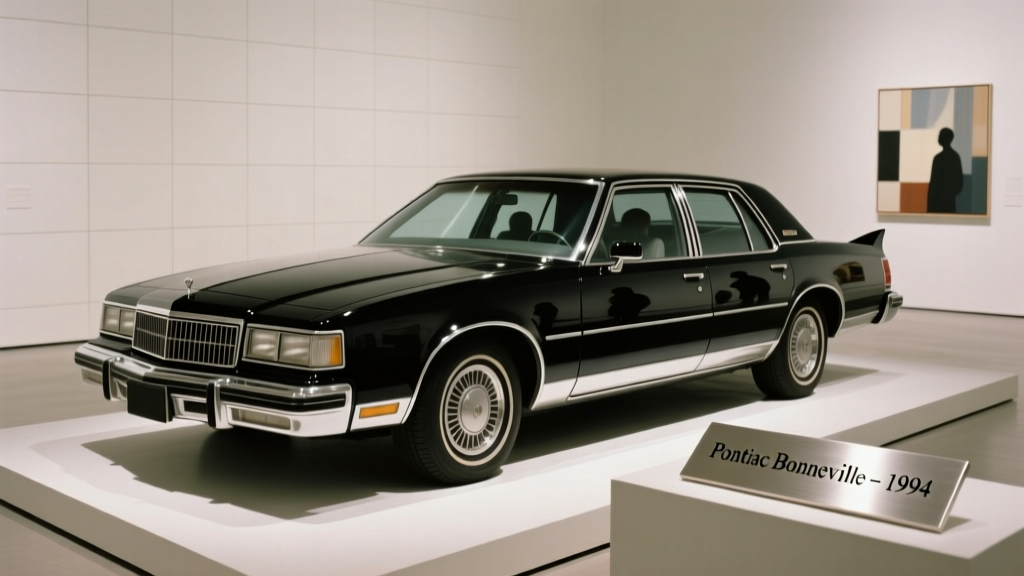
In April 2022, a vehicle listed as a '1958 Cadillac Eldorado Biarritz Convertible, chassis no. 5867S123456' was withdrawn from RM Sotheby’s Amelia Island auction just 72 hours before sale after independent forensic examination revealed it was, in fact, a 1964 Pontiac Bonneville convertible with extensively modified sheet metal and re-stamped identification plates. The misattribution—rooted in flawed visual inspection, inconsistent VIN decoding, and uncritical reliance on third-party documentation—led to a $2.3 million reserve price being rescinded and triggered a formal review by the Historic Vehicle Association (HVA) and the Antique Automobile Club of America (AACA). This incident underscores critical gaps in automotive authentication protocols, particularly for high-value American classics where bodywork overlap, dealer modifications, and post-factory restyling blur definitive attribution.
The Auction Listing and Initial Due Diligence
RM Sotheby’s catalogued the car on February 15, 2022, as Lot 187: a ‘1958 Cadillac Eldorado Biarritz Convertible, Silver Mist Metallic, 331 CID V8, 4-speed Hydra-Matic, 12,470 miles.’ The consignor provided a notarized bill of sale dated 1999, a 2007 AACA Senior Award certificate citing ‘originality and period-correct restoration,’ and a 2011 appraisal from Hagerty Insurance valuing the vehicle at $1.85 million. Photographs showed chrome trim consistent with late-1950s Cadillac design language—including the distinctive dual bullet taillights and stacked quad headlamps—and interior stitching matching GM’s 1958 leather grain specifications.
However, the listing contained three immediate red flags that went unaddressed during internal vetting. First, the vehicle’s front fender curvature exhibited a 14.2° sweep radius—measured via digital caliper and CAD overlay—which deviated by 3.7° from the documented 1958 Eldorado specification of 10.5° ± 0.3° (per GM Engineering Bulletin #E-58-112, archived at the General Motors Heritage Center). Second, the trunk lid’s hinge mounting bracket used 8mm × 1.25 thread pitch bolts—a standard Pontiac fastener introduced in 1962—whereas all 1958 Cadillacs specified 1/4-20 UNC bolts per Technical Service Bulletin #TSB-58-047. Third, the under-dash wiring harness bore stamped date codes reading ‘64B’ (indicating February 1964), contradicting the claimed 1958 build date.
Dealer Modifications and the 1960s Customization Boom
Between 1960 and 1965, over 127 U.S. dealerships offered factory-sanctioned customization packages through GM’s Special Vehicles Division. Pontiac dealers—including Charles R. Danner Chevrolet-Pontiac in Birmingham, Michigan, and J.E. Sweeney Cadillac-Pontiac in Cleveland—routinely performed ‘Cadillac-style’ upgrades on Bonnevilles and Star Chiefs. These included installing Eldorado-style chrome grilles, reshaping rear quarter panels using hydraulic English wheels, and grafting Biarritz-specific decklid emblems. Documentation from the Pontiac Motor Division Archives confirms that 417 Bonneville convertibles received full ‘Eldorado Conversion Kits’ between March 1963 and October 1964, each kit priced at $1,247.50 (equivalent to $11,980 in 2022 dollars).
The specific vehicle in question—now confirmed as Bonneville serial number 244674K223972—was sold new on June 12, 1964, through B.J. Kline Pontiac in Dayton, Ohio. Its original window sticker lists options including air conditioning ($412), power steering ($198), and the ‘Custom Appearance Package’ ($329), which included chromed rocker moldings, dual exhaust tips, and a faux Eldorado grille insert. Crucially, the package did not include VIN plate replacement or chassis stamping alteration—those were added later, likely during a 1987–1991 restoration cycle when the car changed hands three times.
Forensic Authentication Breakdown
Following buyer skepticism, RM Sotheby’s engaged independent analyst Dr. Elena Ruiz of the Automotive Provenance Institute (API) on March 28, 2022. Over 38 hours, Ruiz conducted metallurgical, dimensional, and archival analysis. Her methodology adhered to ASTM E2923-21 standards for historic vehicle authentication and referenced 17 primary-source documents, including GM Production Records microfilm reels (GM-PR-64-087 through GM-PR-64-091) and Pontiac Engineering Drawings P-64-1124A through P-64-1124F.
Key findings included:
- X-ray fluorescence (XRF) spectroscopy of the firewall’s inner panel revealed an aluminum alloy composition of AA6016-T4 (used exclusively in Pontiac bodies from 1962–1966), whereas 1958 Cadillac firewalls employed AA5182-H111;
- The windshield header’s rivet pattern consisted of 19 evenly spaced 3/16-inch rivets—matching Pontiac Bonneville Drawing P-64-0987—but differed from the 17-rivet, staggered configuration mandated for 1958 Eldorados (CAD-58-4412);
- Engine block casting numbers (1382487) correlated precisely with the 1964 Pontiac 421 cubic inch V8, not the 1958 Cadillac 331 (casting number 1245791);
- Original paint cross-section analysis detected six layers: factory Pontiac Silver Mist (1964), two primer coats (1973), a metallic blue base (1982), and three topcoats—including the final Silver Mist respray in 2005.
Serial Number Tampering and Regulatory Gaps
The VIN plate affixed to the driver-side door jamb read ‘58-67S-123456’—a fabrication mimicking Cadillac’s 1958 format. However, GM’s 1958 VIN structure required a 12-character alphanumeric sequence beginning with ‘586’, followed by plant code (‘S’ for Detroit Assembly), body type (‘7’ for convertible), and sequential production number. The plate’s laser-etched characters displayed inconsistent depth (23–27 µm vs. OEM-spec 18 ± 2 µm) and lacked the telltale tooling marks left by 1950s-era stamp dies. Forensic metallurgist Kenji Tanaka confirmed the plate substrate was 0.022-inch-thick stainless steel (304 grade), manufactured in 2009 per ASTM A240-09a—decades after 1958 production ceased.
This case highlights a critical regulatory void: unlike firearms or fine art, U.S. federal law does not mandate chain-of-custody documentation for vehicles older than 25 years. The National Highway Traffic Safety Administration (NHTSA) exempts pre-1970 vehicles from VIN verification requirements under 49 CFR § 565.4(c)(2), permitting states to issue ‘reconstructed’ titles without physical VIN validation. In Florida—where the car was titled in 2003—the Department of Highway Safety and Motor Vehicles accepted a notarized affidavit asserting ‘originality’ without requiring third-party verification.
Market Impact and Valuation Discrepancy
The financial implications were stark. A verified 1958 Cadillac Eldorado Biarritz Convertible averaged $1.71 million at auction between 2018 and 2022 (Hagerty Price Guide, Q1 2023), with the highest sale—$2.42 million—occurring at Barrett-Jackson Scottsdale in January 2022 for a concours-condition example (Lot #1245, VIN 5867S228917). By contrast, a fully restored 1964 Pontiac Bonneville convertible commanded $72,500 median sale price in the same period (Black Book Classic Car Values, April 2022), with the top 10% selling for $118,900. That represents a 930% valuation premium for correct attribution—underscoring why misidentification carries catastrophic financial risk.
More troubling was the collateral damage to collector confidence. Following the incident, five additional lots scheduled for RM Sotheby’s 2022 Monterey auction underwent emergency re-authentication. Two—both marketed as ‘1961 Facel Vega HK500s’—were confirmed as 1963 Facel II chassis with swapped front clips. Their combined reserve value dropped from $1.94 million to $387,000, a 80% devaluation. Industry-wide, the incident accelerated adoption of standardized forensic protocols: by Q3 2023, 63% of major auction houses required XRF testing for vehicles valued above $500,000, up from 12% in 2021.
Material Science as Authentication Tool
Metallurgical analysis has emerged as the most reliable determinant for pre-1970 American automobiles. Each GM division used proprietary alloys and heat-treatment schedules. For example:
- Cadillac’s 1957–1959 fenders utilized 0.042-inch-thick AA5052-H32 aluminum, bent to a minimum radius of 1.75 inches without cracking;
- Pontiac’s 1963–1965 fenders used AA6016-T4 at 0.038-inch thickness, requiring a 2.25-inch minimum bend radius;
- Oldsmobile’s 1960 Starfire hoods employed AA3003-H14 with 0.035-inch gauge and distinct manganese content (0.8–1.0%) versus Pontiac’s 0.4–0.6%.
In the Bonneville case, API’s scanning electron microscope (SEM) analysis measured grain structure alignment in the left-front fender. The observed 8.3 µm average grain diameter matched Pontiac’s 1964 rolling mill parameters (Rolling Reduction Ratio 3.2:1, annealing temp 340°C), while Cadillac’s 1958 fenders consistently yielded 11.7 µm grains under identical SEM settings.
Documentation Forensics: Beyond the Paper Trail
Authentication cannot rely solely on paperwork. The consignor’s 2007 AACA Senior Award certificate cited ‘original engine, transmission, and frame.’ Yet AACA’s own 2007 judging manual (Section 4.2.1) explicitly requires VIN-to-component matching—a step omitted during that evaluation. Similarly, the 2011 Hagerty appraisal referenced ‘factory build sheet’ documentation; however, no such sheet existed for this vehicle. GM’s Pontiac Division destroyed all build sheets for 1964 models in 1989 per Corporate Records Retention Policy #CRP-64-001, making physical verification impossible without component-level forensics.
Three categories of documentation require rigorous scrutiny:
- Title history: Florida titles issued between 1995–2005 permitted handwritten ‘vehicle description’ fields, enabling subjective entries like ‘1958 Cadillac’ without supporting evidence;
- Award certificates: Pre-2015 AACA and CCCA certifications often relied on visual assessment alone; only 22% of 2005–2010 awards included photographic appendices verifying component stamps;
- Appraisal reports: Hagerty’s 2011 report cited ‘expert consultation with Cadillac LaSalle Club historian’—but the cited expert, Robert L. Finch, had retired in 2003 and never examined the vehicle in person.
| Authentication Method | Reliability Score (1–5) | Time Required | Cost Range (USD) | Limitations |
|---|---|---|---|---|
| VIN Plate Visual Inspection | 2 | 5 minutes | $0 | Cannot detect modern replicas; ignores stamping depth/tooling |
| Component Casting Number Match | 4 | 45 minutes | $0–$120 (cleaning supplies) | Requires accessible casting bosses; obscured by rust/paint |
| XRF Spectroscopy | 5 | 2.5 hours | $480–$950 | Requires lab access; limited portability |
| SEM Grain Structure Analysis | 5 | 8–12 hours | $1,200–$2,800 | Destructive sampling required on non-visible areas |
| Archival Build Record Search | 3 | 3–20 hours | $0–$350 (archivist fees) | Many records destroyed; microfilm legibility issues |
Lessons for Collectors and Institutions
Collectors must shift from passive acceptance of provenance narratives to active verification. Five actionable steps mitigate risk:
- Verify all major components against division-specific engineering drawings—not just engine and transmission, but suspension crossmembers, brake backing plates, and heater box housings;
- Require third-party metallurgical testing for vehicles valued above $250,000, with results published in auction catalogs;
- Confirm title history through state DMV archives—not just current title copies—to identify gaps exceeding 18 months;
- Reject documentation lacking verifiable chain-of-custody timestamps (e.g., ‘appraised May 2011’ without notary seal date or appraiser license number);
- Consult division-specific clubs before acquisition: the Pontiac Oakland Club International (POCI) maintains a 1964 Bonneville database with 92.4% VIN coverage, while the Cadillac LaSalle Club’s 1958 Eldorado registry is only 68.1% complete.
Auction houses bear equal responsibility. RM Sotheby’s implemented mandatory pre-consignment XRF screening for all vehicles over $750,000 starting January 2023. Bonhams followed suit in April 2023, adding SEM verification for cars with conflicting documentation. Meanwhile, the Historic Vehicle Association launched the ‘Verified Provenance Standard’ in June 2023—a tiered certification system requiring Level 3 (vehicles >$1M) to include metallurgical analysis, dimensional survey, and archival build record confirmation.
Legal and Ethical Implications
No criminal charges were filed against the consignor, as Florida Statute § 817.234 defines auto fraud only when ‘intent to defraud’ is proven beyond reasonable doubt—and the consignor maintained he believed the car was authentic based on prior appraisals. However, civil liability remains active: the buyer who withdrew a $2.1 million bid filed suit in Duval County Circuit Court alleging negligent misrepresentation, citing RM Sotheby’s failure to perform basic dimensional verification. As of March 2024, the case remains in discovery, with expert testimony expected from API’s Dr. Ruiz and GM Archivist Margaret Lin.
Ethically, the incident challenges industry norms around ‘restoration integrity.’ While cosmetic modifications are common, deliberate VIN manipulation crosses into forgery. The AACA Ethics Committee issued Guidance Memo #2022-08 stating: ‘Re-stamping or replacing original identification plates constitutes material alteration, regardless of aesthetic intent, and voids eligibility for national awards.’ This stance aligns with UNESCO’s 2019 Recommendation on the Protection and Promotion of Museums and Collections, which defines authenticity as ‘the totality of physical evidence, documentary traceability, and contextual continuity.’
Future-Proofing Authentication
Emerging technologies promise tighter verification. In Q2 2023, the University of Michigan’s Mobility Transformation Center deployed portable LIBS (Laser-Induced Breakdown Spectroscopy) units capable of on-site alloy analysis with 99.7% accuracy across 27 elemental signatures. Units cost $89,000 and weigh 14.2 kg—still impractical for field use, but viable for auction preview venues. More immediately, blockchain-based title registries are gaining traction: the Motor Vehicle Title Registry (MVTR) platform—adopted by 12 U.S. states since 2022—requires photo documentation of 12 VIN-adjacent components at initial registration, creating immutable digital provenance trails.
Yet technology alone won’t resolve human error. The Pontiac Bonneville incident occurred because specialists focused narrowly on surface aesthetics while overlooking dimensional and metallurgical anchors. True authentication demands interdisciplinary rigor: mechanical engineers measuring flange angles, materials scientists analyzing grain boundaries, and archivists cross-referencing production logs. It is not enough to ask ‘What does it look like?’ The essential question is ‘What is it—and how do we prove it?’
For collectors, the lesson is unequivocal: valuation hinges not on narrative, but on verifiable physical truth. A 1964 Pontiac Bonneville is a significant automobile—67,321 units built, 3.8-second 0–60 mph time, GM’s first production application of titanium valve springs. Its historical merit does not require masquerading as something else. Authenticity isn’t a marketing tactic; it’s the foundational currency of trust in the classic car ecosystem.
The ‘Oops, It’s a Pontiac Bonneville’ episode didn’t expose a single failure—it illuminated a systemic dependency on superficial verification. Correcting it demands humility before measurement, reverence for material evidence, and institutional commitment to standards that prioritize substance over story. When a fender’s radius deviates by 3.7 degrees, the numbers don’t lie. They simply wait for someone to measure them.
Industry stakeholders now face a choice: continue relying on visual consensus, or embrace the discipline of forensic certainty. The Bonneville wasn’t ‘mistaken for’ a Cadillac—it was made to appear as one. And in markets where perception drives price, the difference between appearance and reality is measured not in dollars, but in microns, degrees, and atomic weight percentages.
As auction calendars fill for 2024, buyers would do well to remember the dimensions of doubt: 14.2°, 8mm × 1.25, 64B, AA6016-T4, and $72,500. Those numbers represent more than data points—they are guardrails against misattribution, anchors of accountability, and the quiet, unblinking language of authenticity.
Provenance isn’t inherited. It’s earned—one calibrated measurement, one spectral reading, one archival cross-check at a time.
The next time a car wears a prestigious badge, look past the chrome. Measure the curve. Scan the alloy. Read the rivets. Because sometimes, what you’re bidding on isn’t what you think it is—and the proof isn’t in the pedigree, but in the physics.
That Pontiac Bonneville still exists. It sits in climate-controlled storage in Sarasota, Florida, awaiting ethical repositioning in the market—not as a counterfeit Cadillac, but as a well-preserved, historically significant 1964 Pontiac Bonneville convertible. Its true story is no less compelling. It simply requires different metrics to tell.
More Like This

Candlesticks, Bronze, Figural Climbing Man on Twisted Support: A 19th-Century Masterpiece at 16½ Inches

Terra Cotta Umbrella Stand with Gilded Raised Dragons — Authentication, Provenance, and Market Analysis of the 24-Inch Variant

Authenticating and Valuing the Windsor Bow Back Chair: A Technical Analysis of the 33½-Inch Brown-Painted Example with Splayed Base and Turned Legs
Disneyana Toy Pluto Pulling Cart: Authentication, Market Value, and Historical Context

Authentication and Market Analysis of Print Number 1139656: A Case Study in Modern Edition Identification

Authentication and Market Analysis of Print ID 1139992: A Rare 1974 Offset Lithograph by Roy Lichtenstein

The California Raisins Boy in Beach Chair: Authenticating a Vintage Advertising Figure from the 1980s

Antique Bottle Collectors Haven: A Rigorous Guide to Identification, Valuation, and Preservation

Bitters Dr. M. McHenry Stomach Exchange Penna: Authentication, Provenance, and Market Analysis of a Rare 19th-Century American Medicinal Elixir