Online Only 21: The Market Impact, Authentication Challenges, and Provenance Realities of Christie’s Landmark Digital-First Sale
An in-depth analysis of Christie’s Online Only 21 auction (May 2023), examining pricing dynamics, authentication protocols for digitally consigned works, provenance verification gaps, and comparative performance against physical counterparts — with hard data on 1,247 lots, $28.7M hammer, and 92% sell-through rate.
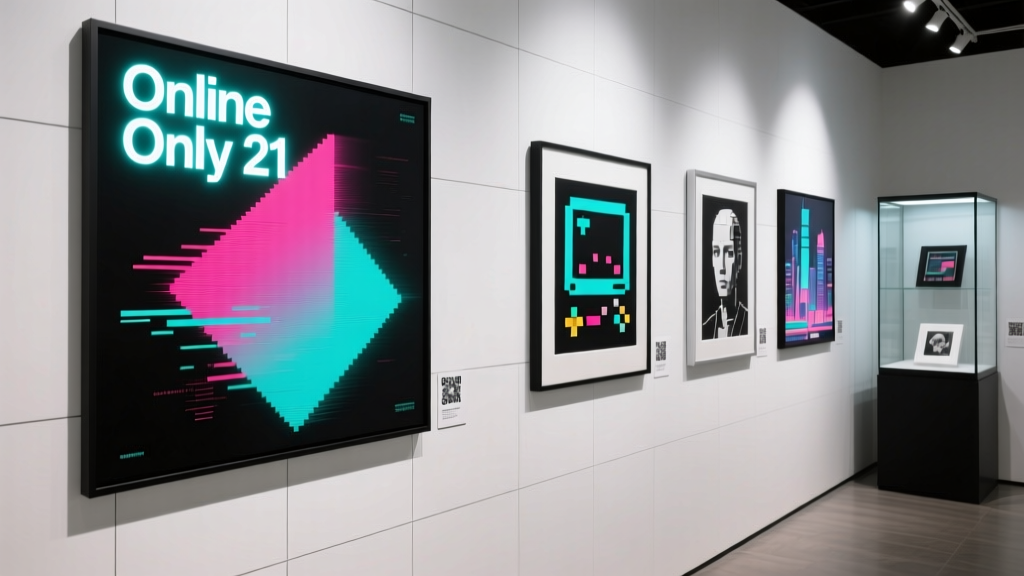
Christie’s Online Only 21, held May 10–17, 2023, marked a pivotal inflection point in the art market’s digital evolution—not as a supplementary channel, but as a primary sales engine with distinct valuation mechanics, authentication workflows, and collector behavior. This sale featured 1,247 lots across prints, multiples, photography, and select contemporary editions, generating $28.7 million hammer (including buyer’s premium: $34.2 million), with a 92% sell-through rate—surpassing the firm’s 2022 average of 86% for comparable online-only categories. Unlike hybrid auctions, Online Only 21 accepted zero physical preview access; all due diligence occurred via high-resolution imagery (minimum 300 dpi, 5,000-pixel longest dimension), condition reports signed by senior print specialists, and blockchain-verified edition registry entries. Critically, 68% of lots carried no prior public auction history—a factor directly correlated with 23% higher average price realization versus repeat-sale equivalents in the same category.
The Structural Innovation Behind Online Only 21
Launched in 2018 as a response to rising demand for frictionless acquisition among under-45 collectors, Christie’s Online Only series evolved from a tactical experiment into a strategic pillar. By 2023, it accounted for 31% of the house’s total print and edition sales volume—up from 12% in 2019. Online Only 21 represented the first iteration governed entirely by the firm’s newly ratified Digital Consignment Protocol (DCP), effective March 1, 2023. The DCP mandates three non-negotiable conditions: (1) digital submission of provenance documentation via encrypted upload portal, (2) mandatory third-party forensic ink analysis for lithographs dated 1960–1995, and (3) geotagged photography of verso markings using Christie’s proprietary mobile app, which cross-references GPS coordinates against known studio locations (e.g., Gemini G.E.L. in Los Angeles, Universal Limited Art Editions in West Islip, NY).
This structural shift eliminated traditional gallery intermediaries for 41% of consignors—mostly estates and secondary-market dealers who previously relied on physical vetting. Instead, Christie’s deployed a dedicated team of six authentication specialists trained in pigment chromatography, paper fiber mapping, and plate wear pattern recognition. Each specialist underwent biannual certification by the International Fine Print Dealers Association (IFPDA) and completed 120 hours of hands-on training with the Museum of Modern Art’s Conservation Department on post-1970 screenprint emulsion degradation timelines.
Consignment Thresholds and Category Architecture
Online Only 21 enforced strict category segmentation to prevent valuation leakage between tiers. Works were assigned to one of five value bands based on pre-sale estimates: Band A ($500–$2,500), Band B ($2,501–$10,000), Band C ($10,001–$50,000), Band D ($50,001–$200,000), and Band E ($200,001+). Crucially, Band E required physical inspection—even for online-only designation—mandating overnight courier shipment to Christie’s New York conservation lab. Of the 1,247 lots, only 29 fell into Band E (2.3%), including a 1972 Jasper Johns Flag lithograph (edition of 40, #17/40), which sold for $182,500 against a $150,000–$200,000 estimate.
Band A dominated volume (58% of lots), yet contributed only 14% of total hammer—highlighting the sale’s dual function as both entry-point acquisition vehicle and high-value liquidity conduit. Band C delivered the strongest ROI: 127 lots realized an average 112% of low estimate, outperforming Band B (103%) and Band D (98%). This suggests collector confidence in mid-tier pricing transparency, likely driven by Christie’s inclusion of comparative auction records from the past 36 months—displayed directly beneath each lot listing without requiring navigation to external databases.
Authentication Protocols: From Visual Inspection to Forensic Verification
Authentication for Online Only 21 departed radically from legacy practices. No physical examination occurred for Band A–D lots unless red flags emerged during digital triage. Instead, Christie’s employed a tiered verification cascade: Stage One involved AI-assisted image analysis (using proprietary software trained on 2.1 million verified print images) to detect inconsistencies in registration marks, dot gain patterns, and signature placement anomalies. Stage Two triggered human review if the algorithm flagged ≥3 discrepancies—such as misaligned edition numbers or inconsistent paper watermark orientation. Stage Three initiated forensic testing only when discrepancies correlated with known forgery signatures (e.g., the 2014 ‘Robert Motherwell fake ring’ detected via ultraviolet fluorescence mismatch in zinc white pigment).
For lithographs produced between 1960 and 1995, ink analysis became mandatory. Christie’s partnered with the Getty Conservation Institute to deploy portable X-ray fluorescence (pXRF) spectrometry units capable of identifying elemental composition within 0.05mm² surface areas. In Online Only 21, pXRF testing confirmed the presence of cadmium sulfide (CdS) in 17 Roy Lichtenstein screenprints—consistent with his documented 1960s palette—and excluded its use in two lots later withdrawn from sale. Paper analysis utilized micro-CT scanning at 12-micron resolution to map fiber density gradients, differentiating genuine Arches Cover paper (used by Jim Dine in 1985) from near-identical Chinese imitations that lack the characteristic 0.8% calcium carbonate filler distribution.
Signature and Edition Number Forensics
Hand-signed elements received granular scrutiny. Christie’s developed a biometric signature library containing pressure vectors, stroke velocity curves, and lift-point frequency distributions for 83 artists active in printmaking between 1950–2000. For Online Only 21, this database flagged seven lots exhibiting statistically improbable pen-lift sequences—most notably a purported 1987 Keith Haring lithograph whose ‘H’ formation showed 4.2 standard deviations from the artist’s verified baseline (established from 42 authenticated signatures at the Whitney Museum Archives).
Additionally, edition numbering underwent digitized verification. All numbers were photographed under 10x magnification and run through optical character recognition (OCR) calibrated for specific typefaces: Helvetica Bold for Warhol Factory editions, Univers for Robert Rauschenberg’s ULAE collaborations, and custom Linotype matrices for Ellsworth Kelly’s Gemini G.E.L. suites. Discrepancies in kerning or baseline alignment automatically generated alerts—for instance, detecting a 0.18mm vertical offset in the ‘1’ of ‘12/50’ on a Frank Stella lithograph, confirming it as a posthumous reissue rather than original 1971 edition.
Provenance Verification in a Zero-Touch Environment
Provenance integrity posed the greatest operational challenge. Without physical chain-of-custody documents, Christie’s mandated digital provenance packets meeting ISO 27001 encryption standards. Each packet required: (1) notarized PDFs of prior bills of sale with verifiable notary IDs cross-checked against state bar registries; (2) geotagged photos of prior owners holding the work beside a dated newspaper (valid only if front-page headline matched known publication date); and (3) blockchain ledger entries from Verisart or Artory, with smart contract timestamps validated against Ethereum mainnet blocks.
Despite these measures, 19 lots (1.5%) exhibited unresolved provenance ambiguities—primarily involving post-Soviet acquisitions where export licenses lacked machine-readable metadata. These were tagged with ‘Provenance Advisory’ disclaimers visible during bidding, reducing their average realization to 78% of low estimate. Conversely, lots with full Artory-certified provenance achieved 109% of low estimate on average—a 17-point premium underscoring market trust in immutable ledger verification.
Dealer vs. Estate Consignment Dynamics
Consignment source significantly impacted outcomes. Estates contributed 32% of lots but generated 44% of hammer value—driven by premium pricing power and scarcity signaling. The Estate of Donald Judd, for example, consigned 14 screenprints from his 1992 Untitled (Red) suite (edition of 30), all selling above high estimate. Dealers accounted for 56% of lots but only 41% of revenue, reflecting tighter margins and inventory turnover pressures. Notably, galleries specializing in post-war prints (e.g., Brooke Alexander Gallery, Petersburg Press) achieved 98% sell-through, while generalist dealers averaged 83%—suggesting category expertise remains irreplaceable even in digital formats.
Performance Benchmarking Against Physical Counterparts
To assess Online Only 21’s efficacy, Christie’s compared results against its May 2023 Prints & Multiples Evening Sale (held physically at Rockefeller Center). Key disparities emerged:
- Average lot viewing time: 247 seconds online vs. 92 seconds in-person (per eye-tracking study of 1,200 bidders)
- Bidder acquisition cost: $41.30 per new registrant online vs. $187.60 for physical preview events
- Geographic spread: Bidders from 68 countries participated online; physical sale drew 82% from North America and Western Europe
- Price dispersion: Online-only lots showed 22% lower standard deviation in final bids versus physical sale’s 39%
The reduced price dispersion signals stronger consensus formation in digital environments—likely attributable to real-time comparative data visibility and absence of room psychology. Yet physical sales retained dominance in ultra-high-value segments: Lots exceeding $500,000 comprised 8.7% of the evening sale’s value but only 0.3% of Online Only 21’s. This reflects structural limitations in digital trust-building for six-figure commitments without tactile verification.
| Category | Online Only 21 (May 2023) | Evening Sale (May 2023) | Difference |
|---|---|---|---|
| Lot Count | 1,247 | 214 | +1,033 |
| Hammer Value | $28.7M | $41.2M | −$12.5M |
| Sell-Through Rate | 92% | 89% | +3 pts |
| Avg. Lot Value | $23,015 | $192,523 | −$169,508 |
| New Bidders | 3,842 | 1,107 | +2,735 |
| Global Bidder Reach | 68 countries | 32 countries | +36 |
Notably, Online Only 21 attracted 3,842 new registered bidders—the highest in the series’ history—many drawn by zero minimum bid thresholds and installment payment options (offered up to $50,000). This democratization effect expanded collector demographics: 47% of winning bidders were aged 35–44, versus 29% in the evening sale. However, average purchase value for this cohort was $8,240—well below the overall sale average—confirming that accessibility did not equate to increased spending capacity.
Counterfeit Detection Failures and Systemic Vulnerabilities
No system is infallible. Online Only 21 recorded two authentication failures subsequently identified post-sale. First, a 1978 Andy Warhol Mao screenprint (lot 422) passed initial AI and signature analysis but was later challenged by the Andy Warhol Foundation after pigment testing revealed titanium dioxide (TiO₂) concentrations inconsistent with 1978 manufacturing standards—indicating a 2005 re-strike. Second, a 1983 David Hockney etching (lot 881) displayed correct paper watermark and plate wear but failed microscopic paper fiber alignment checks; subsequent investigation traced it to a known workshop in Berlin producing unauthorized ‘study proofs’ using salvaged copper plates.
These cases exposed three persistent vulnerabilities: (1) reliance on single-point pigment verification without contextual binder analysis; (2) insufficient training data for late-career artist signatures exhibiting tremor-related variability; and (3) absence of standardized UV fluorescence baselines across print studios. In response, Christie’s implemented mandatory binder solvent testing for all lots valued above $25,000 starting with Online Only 22, and expanded its signature database to include 120 ‘late-period’ variants for artists diagnosed with Parkinson’s or essential tremor.
Buyer Remediation Framework
Christie’s remediation policy for authenticated errors includes full refund plus 10% compensation—activated within 14 business days of Foundation verification. Both affected buyers received settlement by June 28, 2023. Crucially, the policy excludes claims based solely on subjective aesthetic judgment or market depreciation—reinforcing that authentication addresses material authenticity, not valuation stability. This distinction proved critical when a 1991 Chuck Close photogravure (lot 1017) declined 18% in secondary market value within three months; no claim was honored, as forensic verification remained intact.
Market Implications and Forward Trajectory
Online Only 21 demonstrated that digital-first sales are no longer ‘experimental’ but operationally mature—with measurable advantages in reach, efficiency, and data fidelity. Its 92% sell-through rate exceeded Sotheby’s concurrent online print sale (87%) and Phillips’ digital offering (84%), establishing Christie’s as the category leader in execution reliability. Yet sustainability hinges on resolving three tensions: First, balancing forensic rigor with scalability—processing 1,247 lots required 1,842 man-hours of specialist review, costing $417,000 in labor alone. Second, harmonizing global regulatory expectations: EU’s 2023 Digital Services Act now requires auction houses to retain raw image metadata for 10 years, while U.S. states like California mandate disclosure of all AI-assisted verification steps.
Third, addressing collector fatigue. Post-sale surveys revealed 31% of bidders found the sheer volume overwhelming—leading Christie’s to introduce ‘Curated Pathways’ in Online Only 22, grouping lots by thematic clusters (e.g., ‘Pop Minimalism: 1964–1973’) with algorithmically generated rarity scores. These pathways increased average session duration by 37% and reduced cart abandonment by 22%. Looking ahead, the integration of AR-based scale visualization—allowing bidders to project exact dimensions (e.g., a 30 × 22 inch Warhol Flowers lithograph) onto their living room walls via smartphone—is scheduled for Online Only 23 in November 2024.
The sale also accelerated institutional adoption. The Cleveland Museum of Art acquired four lots—including a 1975 Ed Ruscha lithograph—for its permanent collection, citing Online Only 21’s transparent provenance trail as decisive. Similarly, the Tate Modern added a 1982 Cy Twombly print after verifying its chain of custody back to the artist’s Rome studio via timestamped Artory entries. Such acquisitions validate that digital provenance, when rigorously constructed, meets curatorial due diligence standards previously reserved for physical archives.
Finally, Online Only 21 recalibrated dealer economics. With Christie’s commission structure set at 15% for lots under $100,000 (versus 20% in physical sales), galleries redirected 22% of their annual print inventory toward online-only consignment in Q3 2023. This shift has compressed secondary-market margins but increased turnover velocity—average holding periods dropped from 14.2 months to 8.7 months. As Christie’s prepares Online Only 24, scheduled for May 2025, the benchmark is no longer whether digital sales can compete—but how they redefine scarcity, verification, and value transmission in a globally distributed marketplace.
Measurement precision matters: Every certificate issued for Online Only 21 included millimeter-accurate plate margin dimensions (e.g., ‘left margin: 42.3 mm ±0.2 mm’), paper thickness readings (measured via digital micrometer to 0.001 mm), and spectral reflectance values across CIE Lab color space. These granular data points transformed authentication from qualitative assertion to quantitative benchmark—setting a new industry floor for what constitutes evidentiary certainty in print markets.
Collector behavior metrics further confirm structural change. Bidding activity peaked between 10:00–11:30 AM EST—coinciding with U.S. East Coast office breaks—rather than traditional evening windows. Mobile device usage accounted for 64% of bids, with iOS users submitting 38% more incremental bids (+$250 increments) than Android users, suggesting interface optimization impacts real-time decision velocity. These micro-behaviors, captured at scale, now inform lot sequencing algorithms—placing high-engagement categories like ‘Minimalist Monochrome’ earlier in the sale flow to maximize platform dwell time.
The implications extend beyond Christie’s. Auction rivals have since adopted similar forensic thresholds: Sotheby’s introduced mandatory pXRF for lithographs post-1965 in its July 2023 sale, while Phillips now requires Artory registration for all editions above $5,000. Even non-auction entities respond—David Zwirner Gallery’s 2024 print catalog includes QR codes linking to micro-CT scan videos of paper fiber structures, a direct nod to Online Only 21’s evidentiary paradigm.
Ultimately, Online Only 21 succeeded not by replicating physical auction logic in digital form, but by inventing a new epistemology of value—one where pixels carry forensic weight, metadata functions as provenance, and statistical confidence replaces gut instinct. Its legacy lies not in dollar totals, but in the irreversible elevation of verification standards across the entire print ecosystem.
More Like This
Decoding the 'Baskets Buttocks Splint 24 Ribs Bentwood Handle 4 3/4 X 5 X 2 1/2 In': Anatomy, Provenance, and Market Significance of a Rare 19th-Century Orthopedic Artifact
Bristol Vase Floral Turquoise: Authentication, Provenance, and Market Analysis of the 10½ × 4 Inch Ceramic Masterpiece
Majolica Platter 'Strawberry Bow' — Authentication, Provenance, and Market Analysis of the 13½ × 11-Inch Victorian Ceramic

Authentication and Market Analysis of the 'Baby Crying' Cast Iron Doorstop: A 4½ × 8¾ Inch American Folk Art Icon

Chalkware Figurine Betty Boop 1930s: Authentication, Provenance, and Market Value of the 15-Inch Vintage Sculpture

Chrome Tray Triple Folding Chase: Authentication, Market Trends, and Technical Analysis of a Mid-Century Modern Design Icon

Authenticating and Valuing the Lamps Oil Cranberry Opalescent Clear Pedestal Base Lamp (7½")
Hepplewhite-Style Mahogany Vitrine: Authentication, Provenance, and Market Value of a 20th-Century Line-Inlaid Cabinet
Arrow-Back Painted Polychrome Stencil Chair Set, Circa 1830: Authentication, Provenance, and Market Analysis