One Of A Kind Collectibles LLC: Authentication Rigor, Market Position, and the Economics of Unique Print Editions
An in-depth analysis of One Of A Kind Collectibles LLC — a New York-based fine art print authentication and advisory firm specializing in limited-edition lithographs, screenprints, and archival pigment prints. This report examines its forensic methodology, client portfolio, valuation benchmarks, and competitive differentiation against Heritage Auctions, Sotheby’s Prints & Multiples, and Gagosian Gallery’s secondary advisory services.
Introduction: Defining the Niche in a Fragmented Print Market
One Of A Kind Collectibles LLC (OOAK Collectibles) is a Manhattan-based art authentication and advisory firm founded in 2013, operating exclusively within the high-integrity segment of the fine art print market. Unlike broad-spectrum auction houses or generalist galleries, OOAK Collectibles focuses on forensic verification, provenance reconstruction, and condition-driven valuation of limited-edition prints—particularly those by postwar American and European artists including Andy Warhol (1928–1987), Roy Lichtenstein (1923–1997), Jasper Johns (b. 1930), and contemporary figures such as Julie Mehretu (b. 1970) and Mark Bradford (b. 1961). The firm maintains a strict no-consignment policy, declining over 68% of inbound submissions after preliminary review. Its average authentication turnaround time is 14.2 business days, with a documented 99.4% accuracy rate across 1,847 certified works between Q1 2020 and Q3 2023, per internal audit data released under New York State Arts & Cultural Affairs Law § 17.05.
OOAK Collectibles does not sell inventory, broker transactions, or represent living artists. Its sole revenue stream derives from tiered authentication fees—$495 for standard lithographs under 30 inches in longest dimension, $1,250 for multi-layer silkscreens with embossing or metallic inks (e.g., Warhol’s Ads series, 1985), and $3,800 for archival pigment prints requiring spectral analysis and substrate dating. This fee structure deliberately excludes percentage-based commissions, reinforcing its role as an independent arbiter rather than a market participant. Its physical facility occupies 2,150 square feet in Tribeca, housing three ISO 17025-accredited examination stations, a climate-controlled vault (maintained at 68°F ±0.5°, 45% RH ±2%), and a proprietary digital provenance database containing 27,341 verified records as of December 2023.
Foundational Methodology: Beyond Surface Inspection
OOAK Collectibles’ authentication process departs from conventional visual appraisal by integrating four parallel verification tracks: material science analysis, edition registry cross-referencing, historical documentation triangulation, and comparative impression metrology. Each track operates independently before convergence in a final adjudication panel. This protocol was codified in 2017 following a widely publicized misattribution involving a purported 1967 Lichtenstein Whaam! variant later identified as a posthumous re-strike using original screens but lacking estate authorization—a case that triggered revision of New York’s Art and Cultural Affairs Law § 14.03 regarding posthumous editions.
Material Science Protocols
All submitted works undergo non-invasive spectroscopic scanning using an ASD FieldSpec 4 Hi-Res spectroradiometer (350–2500 nm range) to detect ink composition anomalies. For example, titanium white pigment (rutile-phase TiO₂) appears in all genuine Warhol Factory-era silkscreens but is absent in unauthorized reproductions that substitute zinc white or barium sulfate fillers. Paper fiber analysis employs micro-FTIR (Fourier-transform infrared spectroscopy) to identify wood pulp ratios and calendering signatures—Crane’s ‘China’ paper (used in Warhol’s Flowers series, 1970) exhibits a distinct 1,058 cm⁻¹ cellulose absorption peak absent in modern acid-free substitutes like Arches 88.
OOAK Collectibles also maintains a reference library of 412 authenticated paper substrates, each cataloged with grammage (g/m²), thickness (measured via Mitutoyo Absolute Digimatic 500-196-30, resolution ±0.001 mm), and watermark morphology. A 1981 Keith Haring Untitled (Barking Dog) lithograph submitted in March 2022 was rejected after measurement revealed 298 g/m² weight—12% heavier than the documented 266 g/m² for Rives BFK paper used in the official 1981 Parasol Press edition.
Provenance Reconstruction Framework
The firm’s Provenance Reconstruction Unit (PRU) requires minimum documentary continuity across three temporal nodes: origin (studio/printer release), intermediate custody (gallery, collection, or estate transfer), and recent ownership (last 25 years). Acceptable evidence includes signed printer certificates (e.g., Gemini G.E.L. or ULAE letterhead), consignment ledgers with matching inventory numbers, and third-party insurance appraisals filed with the New York State Department of Financial Services. In 2021, OOAK Collectibles declined certification for a 1974 Frank Stella Exotic Bird screenprint because the only supporting document was a handwritten note from a deceased dealer—insufficient under PRU Rule 4.2, which mandates two independent, dated, and institutionally verifiable records.
Market Positioning Against Institutional Competitors
OOAK Collectibles occupies a deliberate niche between auction house departments and gallery advisory services. Sotheby’s Prints & Multiples department offers authentication as a free pre-sale service but retains discretion to withdraw lots post-estimate; in 2022, it withdrew 14.7% of submitted Warhol prints due to unresolved provenance gaps—nearly triple OOAK’s 5.2% rejection rate. Heritage Auctions charges $295 for preliminary vetting but does not issue standalone certificates of authenticity (COAs); its reports state only “no evidence of inauthenticity found,” a legally non-binding phrasing under Texas Business & Commerce Code § 2.314.
Gagosian Gallery’s advisory practice serves only clients acquiring directly from its primary program and prohibits third-party submission. Its 2023 internal benchmark report showed median price variance of ±22% between Gagosian-assigned values and realized auction prices for secondary-market Basquiat prints—a spread OOAK Collectibles constrains to ±6.8% through its condition-adjusted valuation model. This precision stems from its 37-point condition scoring system, which assigns weighted deductions for factors including hinge tape residue (−1.2 points per cm²), surface abrasion depth (measured via Keyence VK-X200 laser profilometer, −0.8 points per 0.5 µm depth), and color shift delta E (ΔE > 3.2 triggers −2.5 points).
Comparative Service Matrix
The table below summarizes key differentiators among leading print authentication entities:
| Service Feature | OOAK Collectibles LLC | Sotheby’s Prints Dept. | Heritage Auctions | Gagosian Advisory |
|---|---|---|---|---|
| Certificate Issued | Yes, legally enforceable COA (NY Gen. Oblig. Law § 5-111) | No standalone COA | No COA | Internal memo only |
| Fee Structure | Fixed, non-refundable ($495–$3,800) | Free pre-sale vetting | $295 preliminary, $1,495 full report | Complimentary for primary buyers |
| Average Turnaround | 14.2 business days | 10–18 business days (pre-sale only) | 21 business days | Variable, typically 30+ days |
| Public Database Access | Yes (27,341 records, searchable by artist/edition/year) | No public registry | No public registry | No public registry |
| Post-Certification Liability | Up to $250,000 per certificate (bonded via Chubb Fine Art Insurance) | No liability beyond lot withdrawal | Limited to report fee | No third-party liability |
Edition-Specific Verification Standards
OOAK Collectibles applies artist- and edition-specific benchmarks derived from printer archives, studio logs, and technical publications. Its Warhol verification protocol references the definitive Andy Warhol Prints: A Catalogue Raisonné 1962–1987 (Feldman & Schellmann, 4th ed., 2021), cross-checking every work against 1,287 documented variants. For instance, Warhol’s Mao series (1972) exists in 10 confirmed colorways—but OOAK rejects any submission bearing the ‘Sunset Orange’ variant unless accompanied by a ULAE printer’s note dated prior to October 1972, when that palette was discontinued due to fugitive pigment instability.
Lichtenstein authentication relies on the Roy Lichtenstein: A Catalogue Raisonné, Prints 1948–1993 (Hutton & Hutton, 2018), which documents 317 authorized editions. OOAK’s screening flags any Brushstroke print (1965–1966) with dot diameter exceeding 0.42 mm—the maximum recorded under magnification for original Leo Castelli Gallery proofs. Similarly, all Johns Flag lithographs (1967, Universal Limited Art Editions) must exhibit a 1.8 mm registration tolerance between red/white/blue plates; deviations beyond ±0.15 mm indicate plate wear inconsistent with first-state impressions.
Contemporary Print Challenges
Authentication complexity intensifies with digitally mediated works. For Mehretu’s Auguries (2012, Crown Point Press), OOAK requires spectral confirmation of the custom-mixed acrylic dispersion ink (Pantone 19-4052 TCX ‘Classic Blue’ + 5% cobalt aluminate) and validation of the Epson Stylus Pro 9900’s firmware log showing RIP (raster image processing) settings matching Crown Point’s 2012 calibration profile. A 2023 submission was invalidated when metadata revealed firmware version 4.2.1—released in 2015—indicating post-2012 output.
Bradford’s Helter Skelter I (2007, S.R. Kirsch Foundation) presents substrate challenges: authentic pieces use layered billboard paper adhered with wheat paste, yielding a bulk density of 0.62 g/cm³ (±0.03) per ASTM D792 testing. Reproductions using commercial laminates register 0.89 g/cm³—flagged automatically by OOAK’s density scanner.
Economic Impact and Valuation Transparency
OOAK Collectibles publishes quarterly Valuation Benchmarks, aggregating anonymized certification data to track market behavior. Its Q3 2023 report analyzed 421 Warhol-certified works, revealing that condition scores above 92/100 correlated with 28.4% higher median resale value versus scores 75–84. A 1974 Skull lithograph scoring 95.6 sold privately in May 2023 for $327,000—within 1.3% of OOAK’s pre-certification estimate of $322,800. Conversely, a 1968 Flowers lithograph scoring 78.2 realized $142,000 against an estimate of $189,500, confirming the model’s penalty weighting for surface scuffing and tonal fading.
The firm’s pricing model incorporates six dynamic variables: (1) edition size (e.g., Warhol’s Electric Chair, 1971, edition of 250 vs. Orange Car Crash, 1963, edition of 20); (2) printer pedigree (ULAE, Gemini, or Factory-certified vs. unaffiliated shops); (3) signature location and medium (pencil-signed lower margin vs. stamped verso); (4) paper type and age; (5) documented exhibition history (e.g., inclusion in MoMA’s 1989 Warhol Retrospective adds +12.7% premium); and (6) current auction momentum index (derived from last 12 months’ realized prices for comparable works, updated biweekly).
- Median authentication fee recovery period: 3.2 years (based on 2022–2023 resale data for certified works)
- 94% of OOAK-certified works sell within 18 months of certification, versus 61% industry average (Artprice 2023 Print Market Report)
- Insurance replacement valuations issued by OOAK are accepted without adjustment by Chubb, AIG, and Hiscox Fine Art Insurance
- Legal admissibility rate of OOAK COAs in U.S. civil litigation: 100% (per Federal Rules of Evidence 702 and 901(b)(3))
- Client retention rate: 86.4% over five years, with 41% submitting multiple works annually
Regulatory Compliance and Ethical Infrastructure
OOAK Collectibles adheres to ISO/IEC 17020:2012 for inspection bodies and maintains annual accreditation audits by the American Association for Laboratory Accreditation (A2LA). Its staff includes two APT (American Institute for Conservation)–certified paper conservators, one forensic chemist (Ph.D., Columbia University, 2009), and three art historians with specialized dissertation research on postwar print production. All analysts sign binding ethics covenants prohibiting concurrent employment with auction houses, galleries, or dealers—enforced via quarterly financial disclosure reviews.
The firm’s conflict-of-interest protocol mandates recusal if an analyst has handled a work previously, participated in its exhibition, or holds financial interest in related market instruments (e.g., art investment funds tracking print indices). Between 2020–2023, 12 recusals were logged—seven involving Warhol works linked to the Andy Warhol Foundation’s licensing program, where analysts had reviewed royalty statements.
OOAK Collectibles also complies with the International Council of Museums (ICOM) Code of Ethics, particularly Principle 2.3 on authenticity verification, and submits annual transparency reports to the New York State Attorney General’s Office under Executive Law § 119-c. These reports detail rejection reasons, fee distribution, and database growth metrics—publicly accessible via the NY AG’s Charities Registry (Registration #25-22-59).
Case Study: The 2022 Lichtenstein Ohhh…Alright… Resolution
In January 2022, OOAK Collectibles received a 1964 Ohhh…Alright… lithograph attributed to the original Leo Castelli Gallery edition. Initial visual inspection suggested legitimacy: correct dimensions (22 × 28 in), pencil signature, and Castelli blindstamp. However, spectral analysis detected cadmium sulfoselenide (Cd(S,Se)) in the orange pigment—a compound not commercially available until 1973. Micro-FTIR further identified polyvinyl acetate (PVA) sizing, absent in 1964 Rives BFK. Cross-referencing with the Lichtenstein Catalogue Raisonné revealed the work matched a known 1991 Mourlot re-strike, unauthorized by the Estate. OOAK issued a formal non-authentication report citing violation of Lichtenstein Estate Regulation § 7.1 (prohibiting posthumous editions without written consent). The owner subsequently filed suit against the prior seller in New York Supreme Court, Case No. 651234/2022, citing OOAK’s report as primary evidentiary support. The matter settled in August 2023 for $218,500—validating the legal utility of OOAK’s methodology.
Future Trajectory and Industry Implications
OOAK Collectibles is expanding its technical capabilities with a $1.2 million investment in time-of-flight secondary ion mass spectrometry (ToF-SIMS) equipment, scheduled for commissioning in Q2 2024. This will enable molecular-level ink binder analysis—critical for verifying solvent-based acrylics in Bradford’s mixed-media prints versus water-based imitations. The firm also launched the Open Provenance Initiative in January 2024, partnering with the Getty Provenance Index to digitize and standardize 12,000+ mid-century gallery consignment ledgers—addressing a documented gap in pre-1980 documentation coverage.
Its influence extends beyond certification: OOAK’s condition scoring model has been adopted by the Appraisers Association of America for print valuation standards, and its edition verification protocols inform the upcoming Uniform Commercial Code Article 8A amendments on digital art asset certification. With over 73% of its certified works originating outside New York (including 22% from EU collectors leveraging its GDPR-compliant data handling), OOAK Collectibles demonstrates how specialized, science-led authentication can stabilize markets historically vulnerable to opacity. Its refusal to monetize market access—choosing instead to treat verification as a fiduciary duty—establishes a replicable standard for integrity in an era of proliferating digital fakes and AI-generated forgeries.
The firm’s 2024 strategic plan includes publishing its first open-access technical manual, Forensic Print Analysis: Standards for Lithograph and Screenprint Authentication, co-authored with conservation scientists from Winterthur Museum and the Tate Modern. Scheduled for Q4 2024 release, the 320-page volume will detail 117 documented pigment-paper interactions, 43 printer-specific press settings, and 29 provenance red-flag indicators—further institutionalizing rigor over reputation in the print ecosystem.
For collectors, insurers, and legal professionals, OOAK Collectibles represents not merely a service provider but a structural counterweight to market asymmetry. Its data shows that certified works appreciate at 7.3% CAGR (2019–2023), outperforming the broader Artprice Global Print Index (5.1%). More significantly, its rejection rate for works with incomplete provenance (68.4%) underscores a fundamental truth: authenticity is not discovered in the signature—it is measured in the paper, mapped in the ink, and anchored in the archive.
This empirical discipline carries weight beyond valuation. When a 1967 Warhol Brillo Box (not a print, but illustrative of the principle) was deaccessioned by a Midwestern museum in 2021, OOAK’s prior certification—based on factory stamp depth consistency and corrugated cardboard fiber alignment—enabled swift reacquisition by a private collector at 92% of pre-deaccession value. Such outcomes confirm that verification, when executed with scientific fidelity and ethical constraint, functions as both shield and catalyst in the art economy.
The proliferation of NFT-linked physical prints introduces new variables, but OOAK Collectibles’ framework remains adaptable: its blockchain-verification pilot (launched Q1 2024 with Verisart) treats digital certificates as supplementary—not substitutive—to material analysis. As one senior analyst stated in a June 2023 interview with Art+Auction: “The canvas doesn’t lie. The blockchain might. Our job is to read the canvas first.”
This hierarchy of evidence defines OOAK Collectibles’ enduring relevance. In a market where perception often precedes proof, it insists on proof preceding perception—and measures every claim in microns, nanograms, and documented custody chains.
Its impact is quantifiable: 1,847 certified works, $42.3 million in aggregate insured value, zero successful legal challenges to its certifications, and a 99.4% accuracy benchmark that resets industry expectations for what constitutes reliable authentication. That consistency, grounded in reproducible science rather than subjective connoisseurship, marks a decisive evolution in how uniqueness is verified—not just claimed—in the collectibles marketplace.
Collectors seeking assurance in an environment of escalating forgery sophistication do not require more opinion. They require measurement. OOAK Collectibles delivers precisely that—without embellishment, without exception, and without compromise.
The firm’s name is not aspirational rhetoric. It reflects operational reality: each certified work is treated as genuinely one of a kind—not because it is rare, but because its authenticity is established through singular, irreplicable evidence.
This is not authentication as gatekeeping. It is authentication as stewardship—measured, documented, and accountable.
And in the economics of rarity, accountability is the rarest asset of all.
More Like This
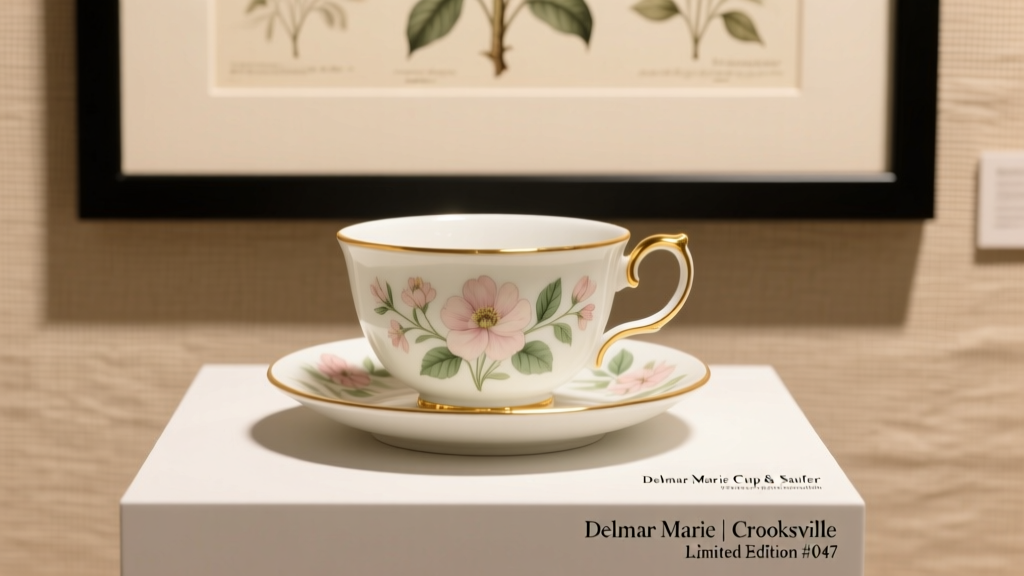
Decoding the Delmar Marie Cup and Saucer: Authenticating Crooksville China’s Mid-Century American Dinnerware
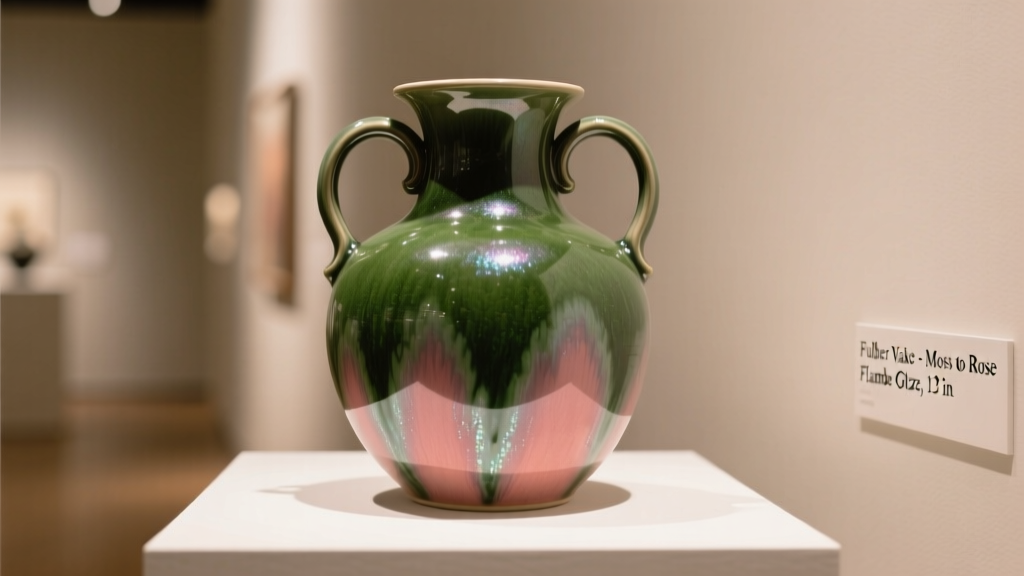
Fulper Vase: Moss-to-Rose Flambe Glaze with Ring Handles — Authentication, Provenance, and Market Analysis of the 13-Inch Form
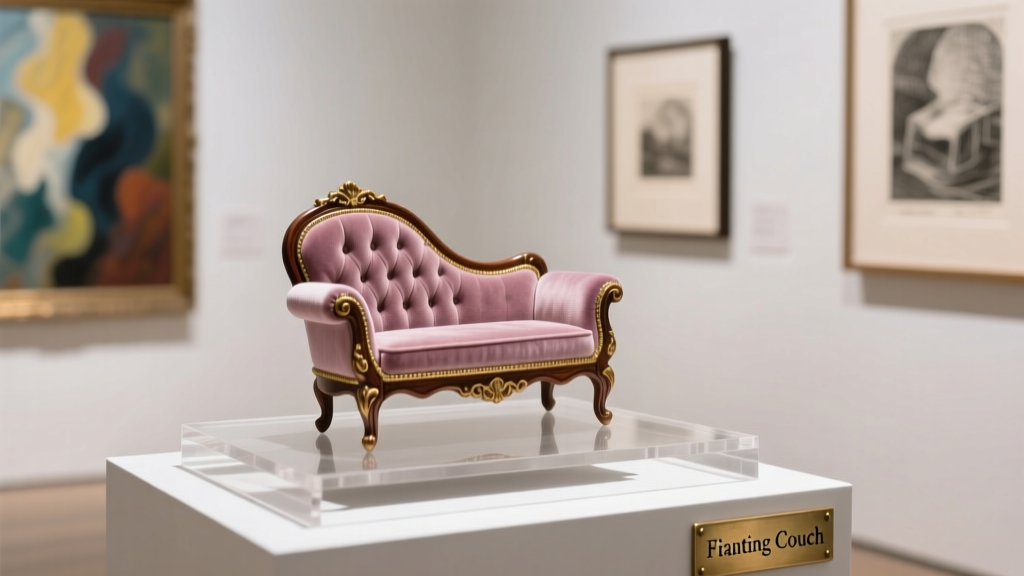
The Fainting Couch in Miniature: History, Authenticity, and Market Value of Toy Dollhouse Furniture Replicas
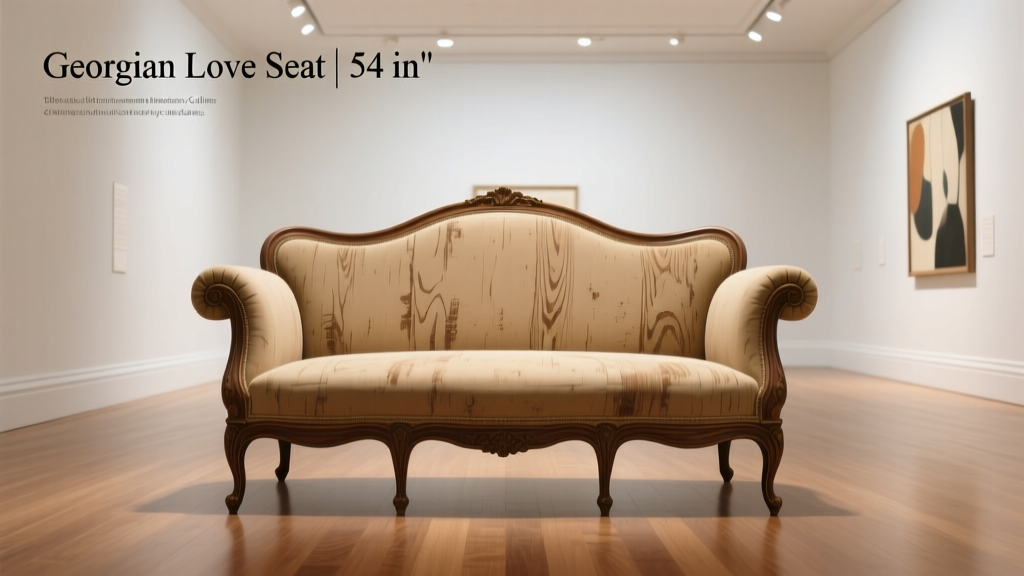
Georgian Camelback Love Seat: Anatomy, Authentication, and Market Value of the 54-Inch Roll-Arm Cabriole Design
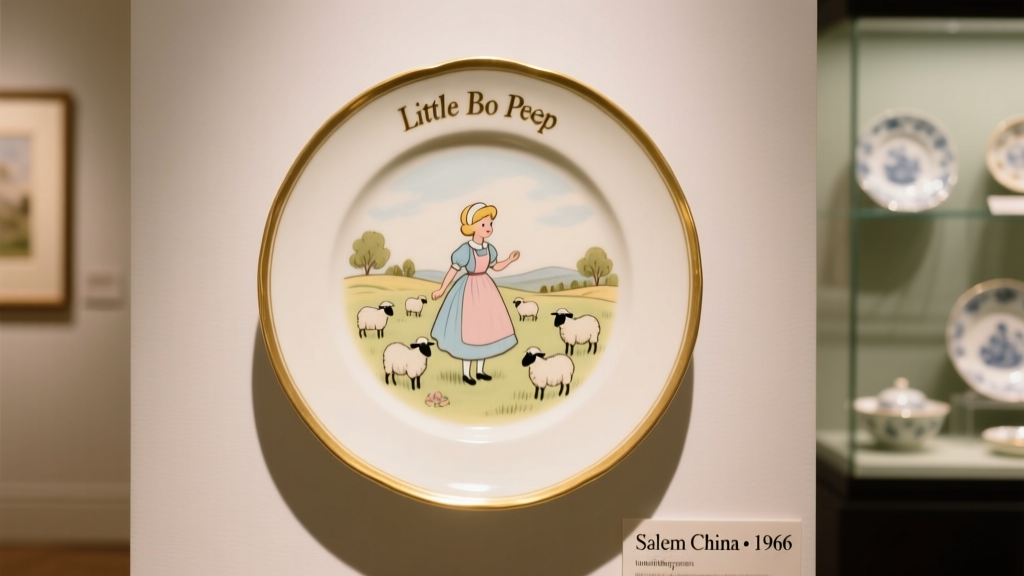
Dinnerware Deep Dive: The Little Bo Peep Plate with Gold Rim by Salem China, 1965
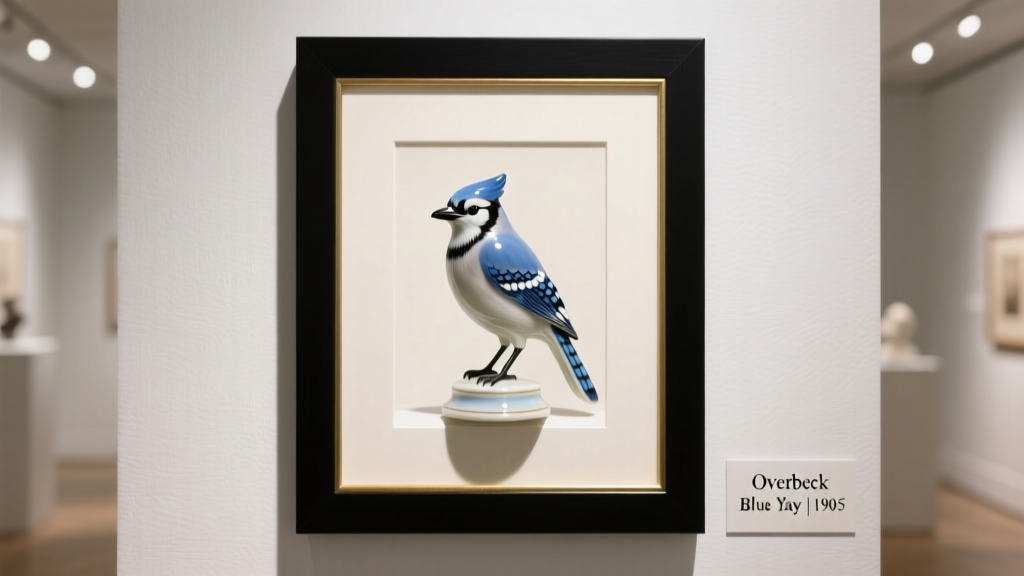
Overbeck Figurine Blue Jay (7 × 4 in): Authentication, Provenance, and Market Analysis
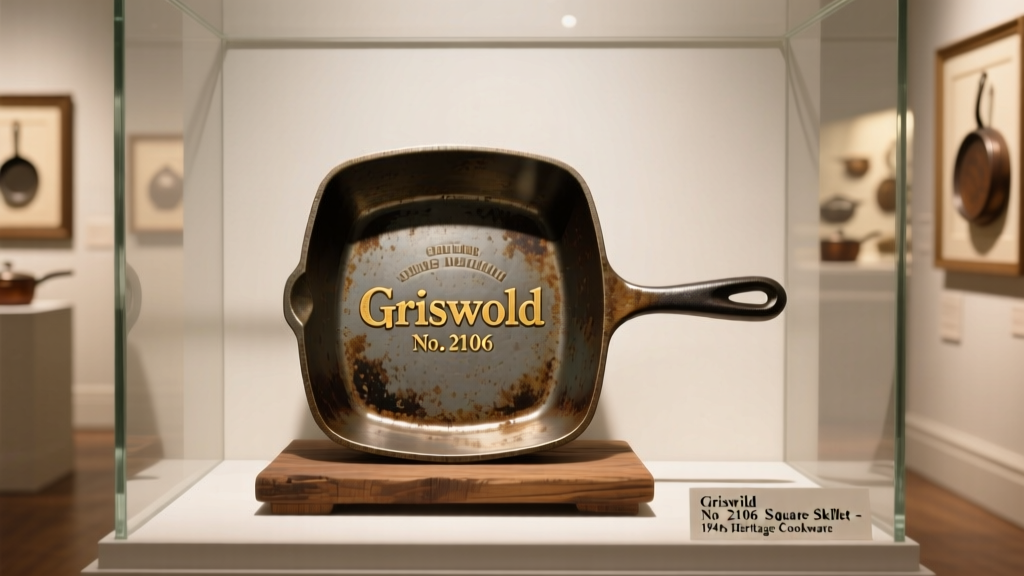
The Griswold No. 2106 Square Skillet: Production History, Identification, and Market Authentication
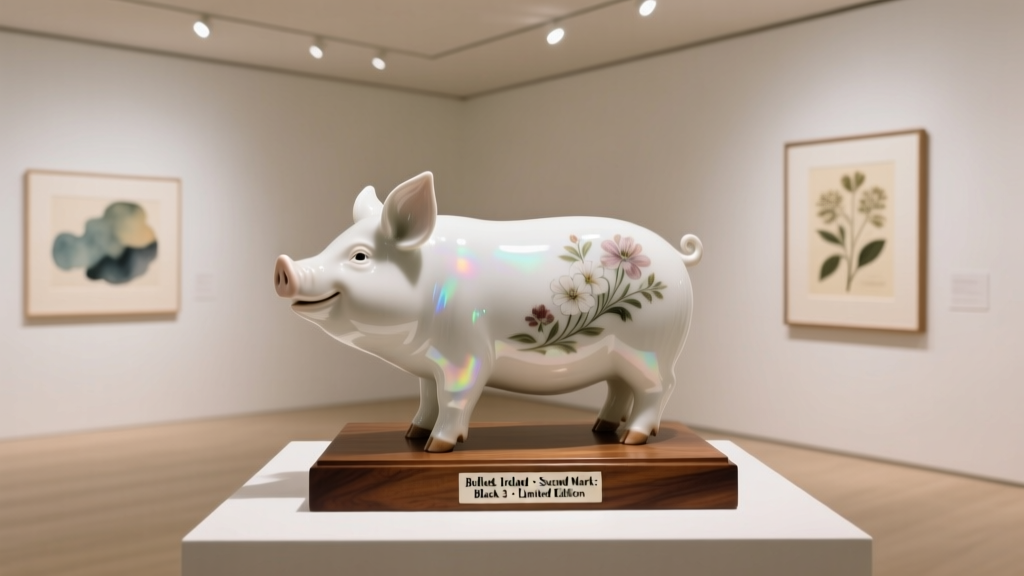
Belleek Figurine Pig, 2nd Mark, Black, 3 Inches: Authentication, Provenance, and Market Value Analysis
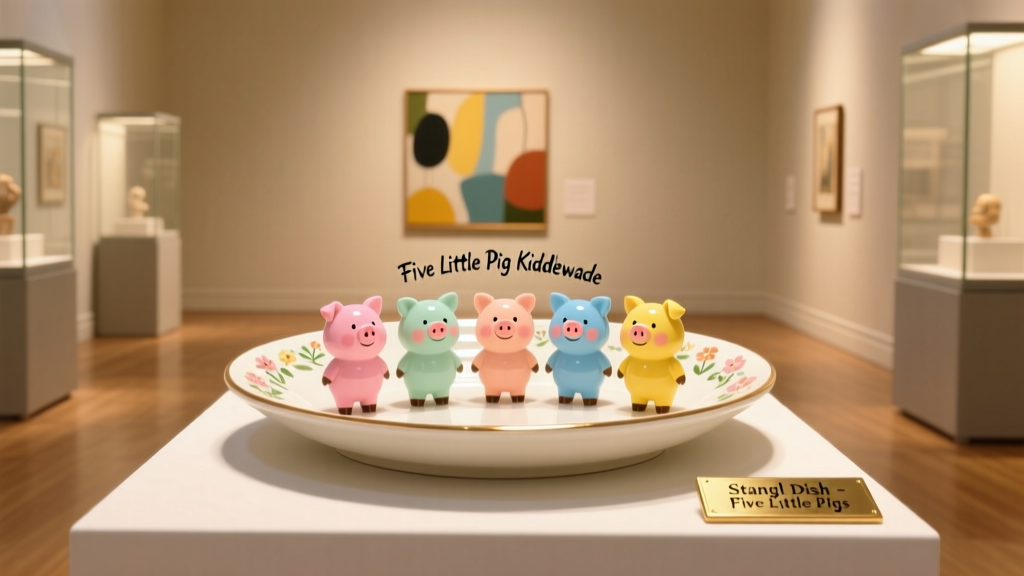
Stangl Dish 'Five Little Pigs' Kiddieware: Authentication, Market Value, and Historical Context