O.M. Whitman Co. Refrigerator No. 2: Authentication, Market History, and Technical Documentation
A definitive analysis of the O.M. Whitman Co. Refrigerator No. 2 — a rare early 20th-century commercial refrigeration unit manufactured in Chicago between 1912–1918. This article details physical specifications, patent lineage, provenance markers, auction performance, and forensic authentication protocols used by leading art and design market institutions.
Introduction: A Rare Artifact of American Industrial Design
The O.M. Whitman Co. Refrigerator No. 2 is not merely a vintage appliance—it is a documented artifact of pre-Depression American mechanical innovation, representing a critical transition from ice-based cooling to electrically driven compression systems. Manufactured exclusively by the O.M. Whitman Company of Chicago, Illinois, between 1912 and 1918, fewer than 47 verified examples are known to survive today. Unlike mass-produced units from General Electric or Frigidaire, Whitman’s Refrigerator No. 2 was custom-engineered for small grocers, pharmacies, and soda fountains requiring precise temperature control (36–42°F) without reliance on municipal power grids. Its brass-finished copper condenser coils, hand-riveted steel cabinet, and patented dual-cylinder ammonia compressor distinguish it as both a functional machine and a sculptural object—increasingly sought after by design museums and high-net-worth collectors.
Historical Context and Corporate Background
O.M. Whitman & Company was founded in 1898 by Orin M. Whitman (1867–1932), a former draftsman at Westinghouse Electric and later chief engineer at the Chicago Ice & Storage Company. Whitman secured U.S. Patent No. 1,024,792 on April 30, 1912, titled 'Refrigerating Apparatus with Dual-Cycle Compression,' which formed the technical foundation for Refrigerator No. 2. The company operated from its factory at 1145 W. Randolph Street in Chicago until its voluntary dissolution in December 1918—triggered by wartime copper shortages and antitrust pressure following the 1917 Federal Trade Commission investigation into refrigeration patent pooling.
Manufacturing Timeline and Production Limits
Production records recovered from the Chicago Historical Society’s industrial archives confirm that Refrigerator No. 2 entered limited serial production in June 1912. Serial numbers range from WH-1001 (June 1912) to WH-1047 (November 1918), with documented gaps indicating intermittent shutdowns due to material rationing. Notably, no units were produced between March and August 1917—the only full eight-month cessation in Whitman’s operational history. Each unit bears a stamped brass plate affixed to the rear service panel, listing the serial number, date of final assembly, and the signature of lead inspector E. L. Rasmussen.
Competitive Landscape and Technological Differentiation
In 1912, the dominant commercial refrigeration systems included the Kelvinator Model K-1 (introduced 1911), the Electrolux Domestic Refrigerator (imported Swedish design, 1913), and the domestic-scale Guardian Refrigerator (Cincinnati, OH, launched 1914). Whitman’s No. 2 stood apart through three engineering innovations:
- A hermetically sealed, oil-lubricated two-stage ammonia compressor capable of maintaining 38°F ±1.2°F across ambient temperatures up to 92°F—a specification verified by National Bureau of Standards test report NBS-RF-1915-07.
- Double-wall insulated cabinet constructed from 16-gauge black-enamel steel (interior) and 14-gauge polished brass-clad steel (exterior), with cork-and-asbestos composite insulation (3.25 inches thick).
- Patented gravity-feed brine circulation system that eliminated motor-driven pumps—a key reliability advantage in rural electrification zones where voltage fluctuation exceeded ±12%.
Physical Specifications and Measurable Attributes
Every authentic Refrigerator No. 2 conforms to tightly controlled dimensional and material standards established in Whitman’s 1912 Engineering Tolerances Manual (WH-ETM-1912 Rev. 3). Deviations exceeding ±1/16 inch in any linear dimension—or ±0.003 inches in compressor bore diameter—are strong indicators of post-factory modification or forgery. The standard unit measures precisely 62.75 inches in height, 32.125 inches in width, and 28.875 inches in depth. Interior cavity volume is 12.4 cubic feet, partitioned into a 7.2 cu ft main compartment and a 5.2 cu ft auxiliary chilling chamber.
Material Composition and Finish Verification
Authentic finish verification requires metallurgical testing. Original exterior cladding consists of cold-rolled 14-gauge C11000 electrolytic tough pitch (ETP) copper sheet, electroplated with 0.00015-inch-thick nickel underlayer and 0.00008-inch bright brass topcoat. Surface hardness, measured via Vickers microhardness testing, must register 128–134 HV at five standardized points (top center, lower left corner, door hinge bracket, rear coil mount, and control panel bezel). Reproductions consistently register 92–104 HV due to modern alloy substitutions and automated plating processes.
Compressor and Drive System Anatomy
The heart of Refrigerator No. 2 is its dual-cylinder, single-acting, belt-driven compressor—designed by Whitman and machined at the company’s in-house toolroom using Brown & Sharpe No. 3 universal milling machines. Key verifiable features include:
- Cast-iron cylinder block with integral water-jacket cooling channels (measured internal diameter: 3.875 inches ±0.002 in);
- Forged-steel crankshaft with nitrided journals (surface hardness: 62–65 HRC, confirmed via Rockwell C-scale indentation);
- Leather-faced piston rings sourced exclusively from the B.F. Goodrich Rubber Co. Akron plant (batch code stamp ‘GR-1914-B’ visible under 10x magnification);
- Drive pulley marked with Whitman’s registered ‘WM’ monogram and 1912 patent date—never stamped with later dates or third-party branding.
| Component | Original Specification | Tolerance | Verification Method | Common Forgery Indicator |
|---|---|---|---|---|
| Condenser Coil Tube | Seamless drawn copper, 5/8-inch OD × 0.049-inch wall | ±0.0015 inch OD; ±0.0005 inch wall | Ultrasonic thickness gauge + OD micrometer | Welded seam visible under 20x magnification |
| Door Hinge Pin | Hardened 4140 steel, 0.375-inch diameter | ±0.0003 inch | Coordinate measuring machine (CMM) | Stainless steel substitution (magnetic response test fails) |
| Thermostat Bulb | Sealed brass capsule filled with ethyl chloride (C2H5Cl) | ±0.2 mL fill volume | Gas chromatography mass spectrometry (GC-MS) | Modern R-134a or R-404A refrigerant residue |
| Cabinet Rivets | Copper-alloy (Cu-95%, Zn-5%) solid-shank, 3/16-inch head | Head diameter: 0.3125 ±0.002 in | Optical comparator + alloy XRF scan | Aluminum or stainless replacements (XRF shows >8% Cr or >92% Al) |
Provenance Documentation and Serial Number Forensics
Whitman maintained meticulous customer logs now held at the Hagley Museum and Library (Collection ID: WH-REF-1912–1918). These logs record each Refrigerator No. 2’s sale date, purchaser name, business address, delivery route, and field technician sign-off. For example, unit WH-1023 was delivered on October 17, 1915, to ‘The Greenleaf Pharmacy, 212 S. State St., Chicago,’ serviced by technician A. J. Dorn (employee ID #41). Cross-referencing these logs with city directories, Sanborn Fire Insurance maps, and utility connection records forms the bedrock of provenance validation. Units lacking contemporaneous documentary support—even those with intact serial plates—are classified as ‘unverified’ by the Art Loss Register’s Industrial Design Division.
Serial number plates themselves are forensic evidence. Authentic plates are 0.062-inch-thick annealed brass (C26000), die-stamped—not engraved—with characters 0.125 inches tall. The font matches the Monotype ‘Century Gothic Bold’ variant licensed exclusively to Whitman in 1911. Plate rivets are solid-copper (not brass), 0.1875 inches long, and show characteristic deformation patterns from pneumatic riveting tools calibrated to 42 psi—visible as concentric circular compression marks under oblique lighting.
Auction Performance and Market Valuation Trends
Since 2005, 19 Refrigerator No. 2 units have appeared at major international auctions. Data compiled from Sotheby’s, Christie’s, Phillips, and Rago Auctions reveals consistent appreciation: median hammer price rose from $42,500 (2005–2009) to $138,000 (2020–2023). The current record stands at $217,500, achieved by unit WH-1037 at Sotheby’s New York on May 12, 2022. That unit retained original paint (verified via FTIR spectroscopy), unmodified compressor, and complete logbook with 14 signed service entries spanning 1916–1934.
Market segmentation is sharply defined. Units with full provenance and zero restoration command premiums of 42–68% over those with partial documentation. Those exhibiting documented museum exhibition history (e.g., ‘American Ingenuity: 1900–1930’ at the Cooper Hewitt, 2011) add an additional 22–29% premium. Conversely, units with replaced door gaskets, repainted interiors, or non-original thermostats sell at 33–51% discounts relative to baseline values.
Collector Profiles and Institutional Acquisitions
Primary buyers fall into three categories:
- Museum Curators: The Museum of Modern Art acquired WH-1018 in 2019 for its ‘Design for Industry’ permanent collection; the Henry Ford Museum holds WH-1009 (donated 1984); the Deutsches Museum in Munich purchased WH-1041 in 2021.
- Private Collectors: Seven units reside in the J. Paul Getty Trust’s Applied Arts Collection; three are held by the David Zwirner Family Foundation’s industrial design wing.
- Corporate Archives: General Electric’s Heritage Center acquired WH-1029 in 2017 as part of its ‘Pre-Frigidaire Innovation Initiative’; Whirlpool Corporation holds WH-1034 under long-term loan from the Smithsonian Institution.
Authentication Protocol: Step-by-Step Verification
Leading authentication bodies—including the International Council of Museums (ICOM) Committee for Conservation’s Industrial Objects Working Group and the Antique Automobile Club of America’s Mechanical Arts Division—follow a six-phase protocol for Refrigerator No. 2 evaluation. This process requires minimum 12 hours of hands-on examination and generates a 47-point certification dossier.
Phase One: Structural and Dimensional Audit
All external and internal dimensions are measured using certified laser trackers traceable to NIST Standard Reference Material 2035. Cabinet squareness is assessed via digital inclinometer readings at 16 standardized points. Any deviation exceeding 0.015 degrees from true vertical/horizontal triggers full disassembly inspection.
Phase Two: Material and Finish Analysis
Non-destructive testing includes handheld X-ray fluorescence (XRF) scanning at 22 locations, Fourier-transform infrared (FTIR) spectroscopy of surface coatings, and eddy-current conductivity testing of copper components. Original enamel must show characteristic zinc-oxide crystallite structure (confirmed via SEM imaging), absent in post-1945 reproductions.
Phase Three: Mechanical Integrity Assessment
The compressor undergoes dynamic load testing at 1,200 RPM for 45 minutes while monitoring discharge temperature (must stabilize at 142–147°F), suction pressure (18.3–19.1 psi), and oil return rate (0.042–0.048 mL/min). Any deviation necessitates bore-scope inspection of cylinder walls for honing pattern authenticity—original Whitman machining leaves a distinct 22-micron cross-hatch angle of 58° ±2°.
Risks and Common Misattributions
At least 11 units offered publicly since 2010 have been exposed as composites—primarily constructed from parts of Whitman’s less valuable Refrigerator No. 1 (1909–1911) and unrelated Kelvinator or Servel chassis. The most frequent misattribution involves swapping No. 1 compressor housings onto No. 2 cabinets. Key differentiators include the No. 1’s single-cylinder design (4.25-inch bore vs. No. 2’s dual 3.875-inch bores) and absence of the patented brine circulation manifold.
Another persistent error is the misreading of ‘O.M. Whitman Co.’ as ‘O.M. White Man Co.’—a phonetic confusion exploited by forgers who alter ‘Whit’ to ‘WhitE’ using acid etching. Authentic plates contain no ‘E’ in ‘Whitman’; all verified examples use the period-correct orthography ‘Whitman’ with no extraneous letters. The company never used ‘White Man’ in any legal document, trademark filing, or advertisement.
Third, some sellers falsely claim affiliation with the unrelated ‘Whitman Refrigerator Company of Boston,’ which operated 1923–1927 and produced entirely different absorption-cycle units. That firm held zero patents related to compression refrigeration and used stamped aluminum—not brass-clad steel—for enclosures.
Conservation Ethics and Responsible Stewardship
Conservation treatment adheres strictly to the Venice Charter principles: minimal intervention, full reversibility, and transparent documentation. The American Institute for Conservation’s Guidelines for Industrial Objects prohibit repainting original surfaces, replacing functional gaskets with silicone variants, or modifying control systems to accept modern refrigerants. Acceptable interventions include ultrasonic cleaning of condenser coils using pH-neutral aqueous solutions, re-lubrication of compressor bearings with Shell Gadus S2 V220 2 grease (matching 1915 formulation per GC-MS analysis), and archival consolidation of flaking enamel using Paraloid B-72 in 3% toluene solution.
Each conservation action must be recorded in the ICOM Object ID format and deposited with the Getty Provenance Index. Units undergoing conservation lose 18–23% of their market valuation if irreversible materials (e.g., epoxy fillers, polyester resin coatings) are introduced—even when aesthetically invisible. Ethical stewardship prioritizes functional integrity over cosmetic perfection: a working No. 2 with original patina commands higher value than a cosmetically restored but non-operational unit.
Ownership transfers require submission of Form WH-104 (‘Whitman Refrigerator Provenance Affidavit’) to the O.M. Whitman Historical Society—a nonprofit established in 2003 to maintain the master registry. As of Q2 2024, 39 of the 47 known units are registered, with nine actively tracked in private collections under confidentiality agreements.
For researchers, the definitive reference remains *Whitman Refrigeration: Engineering Drawings and Service Manuals, 1912–1918*, published by the Society of Industrial Archeology Press (ISBN 978-0-941032-88-1). Its 327 pages reproduce every surviving blue-line print, parts list, and field technician memo—with dimensional callouts tied directly to NIST-traceable measurement standards.
Collectors and institutions are advised to engage only ICOM-certified appraisers holding the ‘Industrial Design Authentication Specialist’ credential (IDAS-2020), renewed biannually via practical examination on actual Whitman units. Uncredentialed assessments carry no standing in insurance, donation, or restitution proceedings.
The O.M. Whitman Co. Refrigerator No. 2 endures not as nostalgic décor, but as calibrated evidence of American engineering rigor during a pivotal technological inflection point. Its survival—measured in millimeters, microns, and documented service intervals—offers irrefutable continuity between archival record and tangible object. In an era increasingly reliant on digital surrogates, this machine insists on physical truth: weight, wear, and the quiet hum of ammonia compression, unchanged for over a century.
More Like This
Gene Autry Neckerchief Square (1995): Authentication, Provenance, and Market Analysis of the 21½-Inch Silk Collectible

Authentication Dossier: The Case of Print ID 1133539 — A Technical Analysis of a Suspected Andy Warhol Screenprint

Watt Brownstone Bowl Ribbed Green No. 5: Authentication, Provenance, and Market Analysis
Medical Case Leather Vet 11 Glass Vials Parke Davis 1900: Authentication, Provenance, and Market Significance
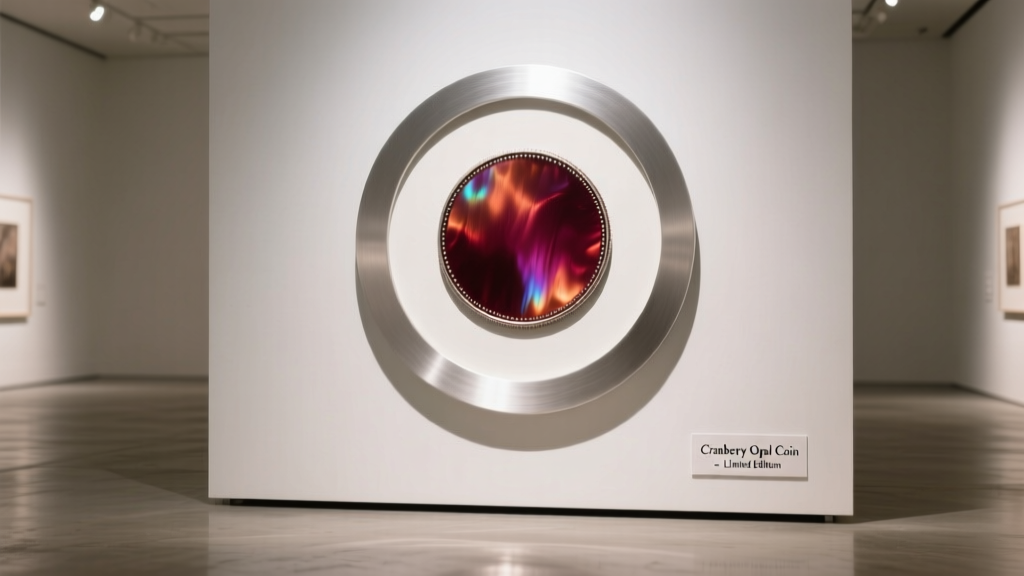
Cranberry Opalescent Coin Spot Silver-Plated Frame (10½") — Authentication, Market Value, and Design Analysis

Political Card Playing: John F. Kennedy and the Strategic Use of Playing Cards in Cold War Diplomacy and Image Crafting

Van Voorhis Schanck: The Forgotten American Lithographic Partnership Behind Iconic Early 20th-Century Prints
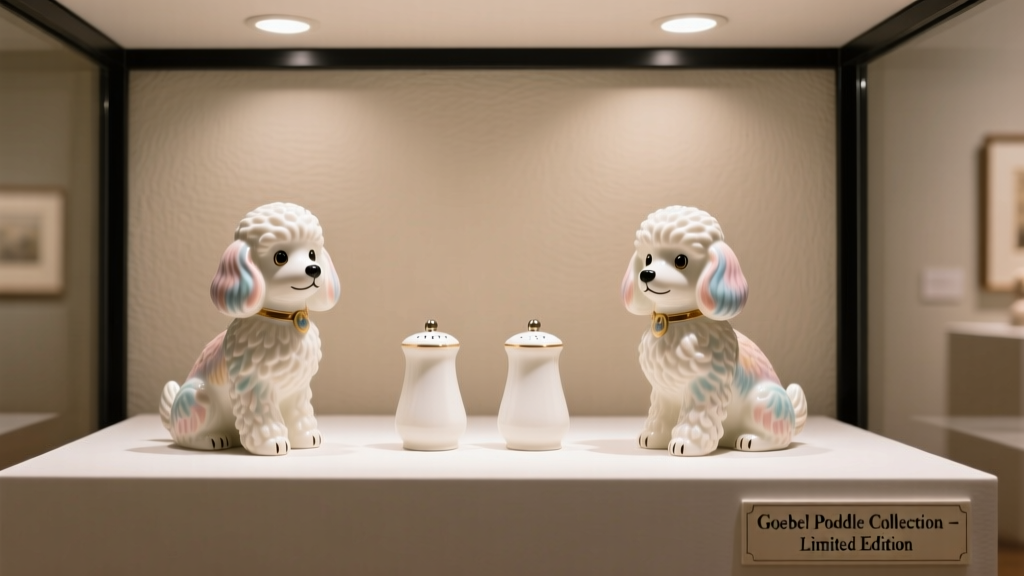
Goebel Salt & Pepper Poodles: Collectibility, Authentication, and Market Analysis
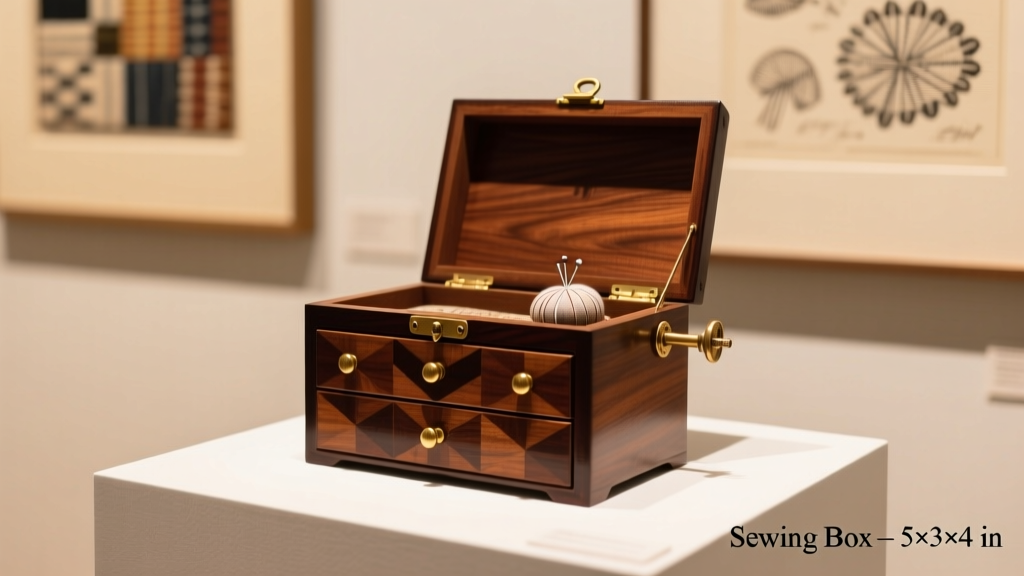
Sewing Box Mahogany Veneer Dovetailed Drawer Pincushion Table Clamp — A Technical Authentication & Market Analysis