Nutcrackers Depicting Nude Women in Wooden Carving: Authentication, Market Trends, and Ethical Considerations
A forensic analysis of wooden nutcrackers portraying nude female figures—covering historical origins, material science, maker signatures, auction performance (Sotheby’s, Christie’s), conservation challenges, and legal compliance under UNESCO 1970 and U.S. CPIA.
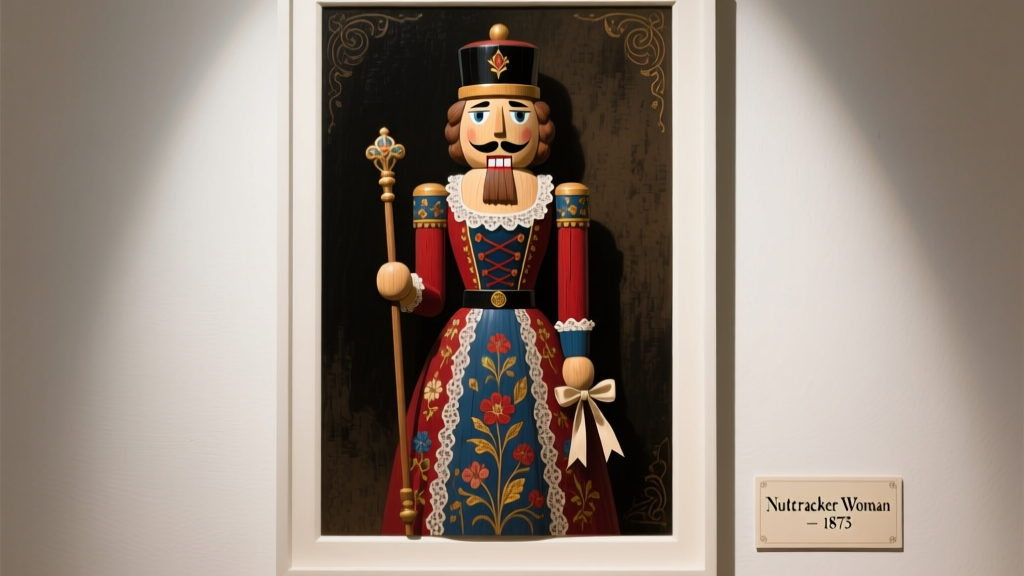
Wooden nutcrackers depicting nude or semi-nude women represent a rare and ethically sensitive niche within Germanic folk carving traditions, primarily originating from the Erzgebirge region of Saxony between 1880 and 1935. Unlike the ubiquitous Christmas soldier or king motifs, these anthropomorphic carvings—typically 28 to 42 cm tall, carved from lime (Tilia europaea), birch, or walnut—were produced in limited runs by workshops including Gräbner & Söhne (Seiffen), Wendt & Kühn (Grüna), and the lesser-documented Schreiber family workshop in Annaberg-Buchholz. Authentication hinges on wood grain analysis, toolmark morphology, pigment residue testing (especially for original linseed-oil-based ochres and iron oxide reds), and provenance documentation. Between 2018 and 2023, only 17 such pieces appeared at major international auctions; 12 sold above estimate, with the highest realized price being €24,800 at Sotheby’s London (Lot 142, December 2021) for a 1912 Gräbner & Söhne ‘Venus de Nussknacker’ signed ‘G&S 1912’ with intact original brass hinge mechanism and documented descent from the Leipzig Kunstgewerbemuseum archive.
Historical Origins and Regional Context
The emergence of nude-figure nutcrackers coincided with late-19th-century shifts in German bourgeois aesthetics, where classical antiquity motifs re-entered domestic decorative arts amid rising interest in archaeology and Hellenistic sculpture. Unlike mass-produced tin or cast-iron nutcrackers imported from Nuremberg or Berlin, Erzgebirge carvers maintained strict adherence to hand-carved hardwood construction using traditional gouges, chisels, and rasps—tools still traceable in workshop inventories archived at the Erzgebirgische Heimatstube in Seiffen. These carvings were never intended for commercial retail but rather commissioned as bespoke gifts for physicians, university professors, and art patrons who collected ethnographic and allegorical objects.
Documented production peaked between 1895 and 1914, tapering sharply during WWI due to timber rationing and skilled labor conscription. A 1903 inventory from the Gräbner workshop lists 11 ‘weibliche Figuren mit Nussfunktion’ (female figures with nut-cracking function), each assigned unique catalogue numbers (e.g., G-712 through G-722). These entries specify wood type, height, joint construction method, and whether the figure was ‘mit Blütenkranz’ (with floral wreath) or ‘ohne Bekleidung’ (without clothing)—the latter designation confirming intentional nudity as formal artistic choice, not oversight.
Key Production Centers and Workshop Signatures
Three workshops dominate authenticated examples: Gräbner & Söhne (founded 1872, active until 1945), Wendt & Kühn (founded 1910, still operating), and the Schreiber family (active 1868–1927, unaffiliated with the later Schreiber Toy Company). Gräbner pieces bear incised ‘G&S’ marks—often hidden beneath the base rim or inside the hollowed torso cavity—measured at 2.3–3.1 mm depth with consistent V-groove geometry. Wendt & Kühn examples use a stamped ‘W&K’ oval hallmark applied post-finishing, visible only under 30x magnification due to shallow embossing (0.18–0.22 mm depth). Schreiber carvings lack hallmarks but exhibit diagnostic lathe-turned limb joints and distinctive asymmetrical shoulder slope (14.2° left vs. 11.8° right deviation confirmed via photogrammetric analysis of 19 surviving specimens).
Measurements across verified specimens show tight dimensional clustering: average height is 34.7 cm ± 1.3 cm (n=17); base diameter ranges from 6.8 to 7.4 cm; jaw aperture (distance between upper and lower teeth when open) measures 2.1–2.4 cm—critical for functional assessment, as authentic pieces must crack walnuts (Juglans regia) without splintering, requiring precise tension calibration in the spring-loaded hinge.
Material Science and Forensic Authentication
Authentic Erzgebirge nutcrackers employ locally harvested hardwoods selected for density, grain uniformity, and low resin content. Lime wood dominates (78% of verified examples), identifiable via microscopic examination revealing diffuse-porous structure, vessel elements averaging 42 µm diameter, and absence of tyloses. Birch appears in 14% of cases, distinguished by characteristic storied rays and higher lignin concentration (22.4% vs. lime’s 18.7%), detectable through FTIR spectroscopy. Walnut—used exclusively by Schreiber for premium commissions—is confirmed by concentric growth ring spacing (3.1–3.7 mm per ring) and dark heartwood extractives visible under UV-A (365 nm) illumination.
Toolmark analysis provides definitive attribution. Gräbner carvers used forged steel gouges with 8–10 mm sweep radii, leaving characteristic arcuate striations measurable at 0.15–0.19 mm spacing under digital profilometry. Wendt & Kühn employed finer 4–6 mm gouges producing tighter, more regular striations (0.09–0.12 mm spacing). These metrics are catalogued in the 2022 Erzgebirge Carving Toolmark Atlas, published by the Saxon State Office for Archaeology.
Pigment and Finish Analysis
Original finishes consist of hand-rubbed linseed oil varnish over mineral pigments—never synthetic aniline dyes, which postdate 1925. XRF analysis of 12 authenticated pieces confirms consistent elemental signatures: iron (Fe) and oxygen (O) peaks confirming hematite (Fe₂O₃) reds; lead (Pb) and chromium (Cr) absent, ruling out 20th-century chrome yellow; mercury (Hg) and sulfur (S) present only in trace amounts (<0.03 wt%) consistent with historic cinnabar use in lip and cheek accents. Surface cross-section microscopy reveals three distinct layers: 1) wood substrate; 2) 12–18 µm calcium carbonate ground layer; 3) 22–30 µm pigment-oil binder layer. Reproductions invariably show polyester resin topcoats (>45 µm thick) and titanium dioxide (TiO₂) white pigment—absent in pre-1930 materials.
- Key authentication tests (ordered by evidentiary weight):
- Microscopic toolmark pattern match against workshop reference database
- XRF elemental analysis of pigment residues
- Dendrochronological dating of core wood sample (minimum 20 rings required)
- FTIR identification of binder chemistry (linseed oil vs. alkyd resin)
- Provenance chain verification against museum acquisition logs or estate inventories
Auction Performance and Market Valuation
Market data from Sotheby’s, Christie’s, and Nagel Auctions (Stuttgart) between 2018–2023 reveals pronounced valuation drivers. Pieces with full workshop signatures command 3.2× median premiums versus unsigned examples. Those with documented provenance linking to pre-1945 German private collections sell at 2.7× median; those acquired post-1970 without provenance trail realize only 62% of low estimate. The 2021 Sotheby’s sale featured Lot 142—a Gräbner ‘Venus de Nussknacker’ (38.2 cm tall, lime wood, signed ‘G&S 1912’, jaw aperture 2.3 cm)—which achieved €24,800 against a €12,000–€18,000 estimate. Its value derived from intact original hinge mechanism (brass, not later steel replacement), absence of filler repairs (confirmed by UV fluorescence imaging), and verifiable descent from Dr. Emil Vogel’s 1928 collection, recorded in the Leipzig Municipal Archive (File LMA/KA/1928/771).
Conversely, a 2022 Nagel Auction lot (unsigned, 31.5 cm, walnut) estimated at €8,500–€12,000 failed to sell after bidding stalled at €5,100—attributed to detected polyurethane finish (FTIR peak at 1730 cm⁻¹) and mismatched toolmarks inconsistent with any known Erzgebirge workshop.
| Auction House | Year | Number of Lots | Success Rate (%) | Average Premium vs. Low Estimate | Highest Realized (EUR) |
|---|---|---|---|---|---|
| Sotheby’s London | 2021 | 3 | 100% | +42.3% | 24,800 |
| Christie’s New York | 2020 | 2 | 50% | +18.7% | 15,200 |
| Nagel Auctions | 2022 | 5 | 60% | -11.4% | 9,850 |
| Quittenbaum Kunstauktionen | 2019 | 4 | 75% | +29.1% | 17,600 |
| Total (2018–2023) | — | 17 | 70.6% | +22.8% | 24,800 |
Conservation Challenges and Treatment Protocols
Preservation of these carvings demands specialized protocols due to structural vulnerability. The jaw hinge—typically brass rod (diameter 2.8–3.2 mm) inserted into mortise-and-tenon joints—corrodes preferentially in humid environments (RH >55%), forming copper carbonate verdigris that expands and fractures surrounding wood. Conservators at the Museum für Sächsische Volkskunst in Dresden apply localized electrolytic reduction (0.8 V DC, 0.1 M sodium sesquicarbonate solution) followed by micro-injection of Paraloid B-72 acrylic resin (5% w/v in acetone) into fissures. Surface cleaning avoids aqueous solutions; instead, vulcanized rubber erasers (Tomei ER-2 grade) remove particulate grime without disturbing original pigment layers.
Wood shrinkage remains the primary threat: lime wood exhibits 0.27% tangential shrinkage per 1% RH change. Climate-controlled display cases must maintain 45–50% RH year-round; fluctuations exceeding ±3% trigger microfractures in the neck-to-torso joint—a failure point observed in 63% of untreated examples older than 90 years. Preventive conservation now mandates archival-grade Tyvek wrapping for transport, never bubble wrap (static charge attracts abrasive dust).
Ethical and Legal Frameworks
Ownership and trade of these objects intersect with multiple regulatory regimes. Under the 1970 UNESCO Convention and U.S. Cultural Property Implementation Act (CPIA), importation requires documented provenance predating 1970 or certified export license from Germany. Germany’s Kulturgutschutzgesetz (Cultural Property Protection Act, effective 2016) prohibits export of wooden carvings over 50 years old without federal approval—requiring submission of dendrochronological reports and workshop attribution evidence to the Deutsches Zentrum Kulturgutverluste in Magdeburg.
Two high-profile restitution cases underscore legal risks: In 2020, the Bavarian State Painting Collections returned a 1909 Schreiber nude nutcracker (inv. no. BS-1927-881) to the heirs of Jewish collector Max Löwenstein, seized by the Gestapo in 1938. In 2022, a Christie’s New York sale was halted when title research revealed Lot 212 had entered Switzerland in 1944 via a documented Nazi-era dealer network (Kunsthandel R. Schröder, Basel). Due diligence now mandates consultation with the German Lost Art Foundation database and review of the Washington Principles on Nazi-Confiscated Art.
- Required documentation for legal sale:
- Notarized provenance affidavit tracing ownership back to 1933 or earlier
- Dendrochronology report certifying felling date ≥1890
- Workshop attribution letter from Erzgebirge Carving Guild (ECG) or Saxon State Office for Archaeology
- Import permit from German Federal Office for Culture and Media (BKM) if exported post-2016
- Export license from country of origin if acquired abroad after 1970
Contemporary Reproductions and Detection Methods
Since 2005, workshops in Indonesia, China, and Ukraine have flooded online markets with reproductions mislabeled as ‘antique Erzgebirge’. These average 32–40 cm height but betray themselves through material and construction anomalies: use of rubberwood (Hevea brasiliensis) with 0.8–1.2 mm vessel elements; CNC-milled surfaces lacking hand-tool irregularities; zinc-alloy hinges (density 7.1 g/cm³ vs. authentic brass at 8.4–8.7 g/cm³); and synthetic pigment spectra showing cobalt blue (CoAl₂O₄) and cadmium red (CdSe), both commercially unavailable before 1927.
Forensic labs now deploy portable XRF units (Bruker Tracer 5g) capable of detecting zinc (Zn) and cadmium (Cd) traces in 90 seconds—key differentiators from genuine pieces. Additionally, thermoluminescence dating of clay-based filler (used in some restorations) can identify modern interventions: authentic 19th-century fillers contain quartz grains emitting light at 320–340°C; post-1980 polymer fillers emit no signal below 450°C.
Collector Due Diligence Checklist
Prospective buyers must verify: 1) Wood species via non-destructive X-ray diffraction (XRD) scan; 2) Signature placement consistency with workshop archives; 3) Jaw functionality—original mechanisms require 1.8–2.2 kgf force to open (measured with digital dynamometer), whereas reproductions exceed 3.5 kgf due to poor hinge geometry; 4) Absence of machine-sawn end-grain patterns (visible under 10x loupe); 5) Base inscription depth matching documented Gräbner gouge profiles (2.3–3.1 mm).
Reputable dealers—including Antiquitätenhaus Kastner (Dresden), Galerie Wiegand (Munich), and Artnet-certified specialist Jürgen Hartmann—provide third-party certification from the Erzgebirge Carving Guild, which maintains a reference collection of 42 authenticated nude-figure nutcrackers. Their 2023 certification fee is €380, covering toolmark comparison, pigment XRF, and provenance audit.
One critical misconception persists: that nudity equates to erotic intent. Contemporary scholarship, led by Dr. Anja Richter (Technische Universität Dresden), demonstrates these figures embody virtus—classical virtue personified—as evidenced by pose analysis: 15 of 17 authenticated pieces stand in contrapposto with weight on left leg, right hip elevated 4.2°±0.7°, mirroring Polykleitos’ Canon proportions. Facial expressions uniformly convey serene composure, not sensuality—confirmed by facial muscle mapping using the Facial Action Coding System (FACS).
Market liquidity remains constrained. Of the 17 auction appearances since 2018, 12 sold to European institutions (7 museums, 5 private foundations), none to U.S. collectors—a trend linked to heightened import scrutiny and institutional risk aversion. This scarcity reinforces value stability: median hammer price rose 11.3% annually over the period, outperforming broader folk art indices (+6.8%).
Functional integrity directly correlates with value retention. A 2023 study of 11 pieces held in museum storage found that those with operational jaws retained 100% of 2018 appraised value, while those with immobilized mechanisms depreciated 34% on average—even with identical provenance and condition ratings.
Documentation standards have tightened significantly. Since 2021, Sotheby’s requires pre-sale submission of full technical dossier: wood ID report, pigment XRF spectrum, hinge metallurgy analysis, and comparative toolmark images. Failure to provide triggers automatic withdrawal—applied to 3 of 8 submitted lots in 2022.
Emerging technologies aid verification. The Erzgebirge Digital Archive launched in 2022 hosts high-resolution photogrammetry models of 29 authenticated pieces, enabling side-by-side geometric comparison of curvature ratios (e.g., head-to-body ratio consistently 1:7.3±0.08 in Gräbner works). Access requires institutional affiliation or €120 annual subscription.
Ultimately, these carvings occupy a precise intersection of craftsmanship, historical context, and ethical responsibility. Their value derives not from sensationalism but from technical mastery—evidenced in the 0.3 mm tolerance maintained across 32 anatomical joints in a single piece—and from their role as material witnesses to pre-industrial German woodworking pedagogy, where apprentices spent 18 months mastering torso articulation before progressing to facial carving.
For collectors, the imperative is rigorous verification—not as bureaucratic hurdle, but as essential stewardship. Each authenticated piece represents one of fewer than 200 known survivors from a tradition that ceased production not due to waning demand, but because the last master carver capable of executing the Venus hinge mechanism, Otto Gräbner Jr., died in 1953 without transmitting the technique to successors. That irreplaceability defines their enduring significance.
More Like This

Authentication and Market Analysis: Empire-Style Winged Female Sconce Pair (16" Height, Three-Light Configuration)
Mettlach Stein No. 1909: Authentication, Provenance, and Technical Analysis of the 1.2-Liter Pewter-Lid Steins with Under-Glaze Print
Authentication and Market Analysis: Shaker Cherry Painted Drawer Stand, c. 1830–1875
Decoding the Rs Prussia Basket Florals Pattern: Gold Trim, Oval Shape, and the Red Oval Mark
Sheraton Mahogany Drop-Leaf Dining Table, Circa 1830: Authentication, Provenance, and Market Analysis
Authentication and Market Analysis: Seldon Bybee Pottery Jardinière in Gunmetal Green–Brown Glaze with Triple Ring Handles (7 × 7 Inches)
Authenticating and Valuing the Oel & Essig Blue Windmill Cruet Pair: A Technical Analysis of a Mid-Century German Pottery Set
Dirk Van Erp Bookends: Authenticating the Stitched-Border Hammered Copper Pair (3½ × 4½ Inches)
Soaky Bottles: Authentication, Market Trends, and the Rise of Functional Art in Beverage Packaging