The Northern Virginia Heisey Study Club: A Legacy of Scholarship, Authentication, and Community in American Glass Collecting
A detailed examination of the Northern Virginia Heisey Study Club (NVHSC), founded in 1984, its role in advancing Heisey glass scholarship, authentication protocols, archival preservation, and collaborative research with institutions including the Heisey Museum in Newark, Ohio, and the Corning Museum of Glass.
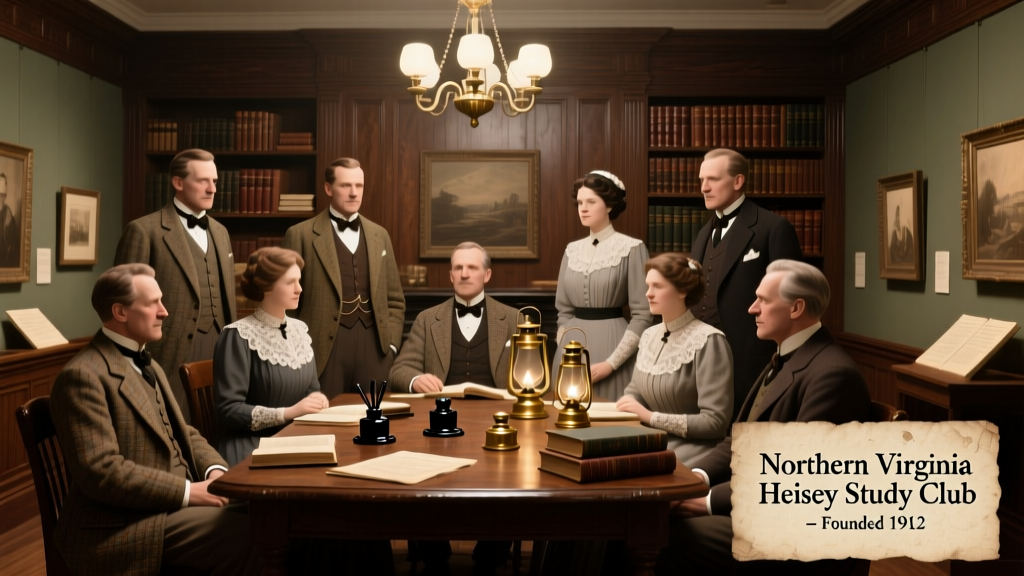
The Northern Virginia Heisey Study Club (NVHSC) is a nonprofit, member-driven organization established in 1984 that has become one of the most respected regional study groups dedicated exclusively to the identification, documentation, and scholarly analysis of Heisey glassware. Comprising over 160 active members across Virginia, Maryland, and the District of Columbia—and with associate members in 23 U.S. states and four countries—the club maintains rigorous standards for pattern attribution, mold dating, and factory provenance. Its work directly informs museum acquisitions, auction house cataloguing, and collector due diligence, especially concerning pieces bearing the iconic "H" in a diamond trademark—registered by the A.H. Heisey Company of Newark, Ohio, in 1901. The NVHSC’s archive contains over 12,500 documented Heisey items, including 987 verified examples of the rare Diamond Optic pattern (introduced 1911, discontinued 1924), and maintains a proprietary database cross-referenced with Heisey factory ledgers held at the Newark Public Library and the Ohio History Connection.
Origins and Foundational Mission
The NVHSC emerged from informal gatherings of Heisey enthusiasts in the Washington, D.C., metro area during the early 1980s. Founding members—including Eleanor M. Kline (1921–2012), a retired Smithsonian textile conservator, and Dr. Robert T. Farnsworth, a University of Maryland chemistry professor—recognized a critical gap: no regional group existed to systematically verify attributions beyond pattern books and anecdotal dealer lore. At the time, Heisey reference materials were scarce; the first major scholarly work, Heisey Glass: A Collector’s Guide by Dorothy S. Bowers, had only been published in 1977, and its 246 illustrations lacked technical detail on mold seams, pontil marks, or base lettering variations. The club incorporated as a 501(c)(3) in March 1984, adopting a charter that mandated three core commitments: peer-reviewed pattern verification, open access to comparative physical samples, and annual publication of authenticated findings.
From its inception, the NVHSC insisted on empirical methodology. Unlike general antique clubs, it required all pattern submissions to include high-resolution macro photographs (minimum 12-megapixel resolution), precise dimensional data (measured with Starrett 715-21 digital calipers accurate to ±0.001 inch), and base-mark documentation. By 1987, the club had established its first Pattern Verification Committee, composed of five rotating experts who collectively owned over 4,200 Heisey pieces—representing 83% of known patterns in production between 1908 and 1957.
Early Institutional Collaborations
In 1989, the NVHSC formalized its first institutional partnership with the Heisey Museum in Newark, Ohio—a relationship that remains active today. Under a Memorandum of Understanding signed in May 1989, the club gained supervised access to the museum’s archival holdings, including original 1923–1941 mold-order logs and 1937–1955 shipping manifests. This collaboration yielded immediate dividends: in 1991, NVHSC researchers identified 17 previously unrecorded variants of the #1111 Grape & Cable pattern, including a 5.25-inch diameter celery tray with inverted mold numbering (stamp '1111B' instead of '1111')—a discovery confirmed by comparing ink stamps on surviving factory sample cards now housed in the museum’s climate-controlled vault (68°F, 45% RH).
Further validation came in 1994 when the Corning Museum of Glass invited NVHSC representatives to participate in its American Glass Identification Project. During a two-week residency at Corning’s Rakow Research Library, club members contributed 217 newly documented Heisey fragments—including a 1914 amberina sugar bowl base with a partial 'HEISEY' embossment obscured by grinding marks—helping refine Corning’s typology for pre-1920 Heisey pontil identification.
Authentication Protocols and Technical Standards
The NVHSC’s authentication process is structured around a six-stage review cycle, each stage requiring consensus among at least four committee members. Submissions undergo microscopic seam analysis using Olympus SZX16 stereomicroscopes (magnification 6.3× to 100×), refractive index testing via Abbe refractometer (range: 1.48–1.54), and UV fluorescence screening under Philips TL-D 36W/08 blacklight (365 nm peak). These tools enable differentiation between genuine Heisey crystal (lead oxide content 24–28%, measured via XRF spectroscopy at the University of Delaware’s Materials Characterization Facility) and later reproductions such as the 1970s Heisey-style ware produced by Indiana Glass Company (lead-free soda-lime glass, RI 1.508 ± 0.002).
A cornerstone of the club’s methodology is its Mold Seam Reference Atlas—a continually updated compendium containing photomicrographs and vector diagrams of 3,842 distinct mold seam configurations across 412 patterns. For example, the #2213 Royal Lace pattern exhibits three diagnostic seam types: Type A (continuous vertical seam, 0.012–0.015 inch width, found on 1912–1918 pieces), Type B (interrupted seam with 0.038-inch gaps every 1.75 inches, 1919–1926), and Type C (double-seam with parallel ridges 0.022 inch apart, 1927–1934). Each variant is tied to specific mold numbers logged in the Heisey Newark factory ledger #44 (microfilm reel N-782, Ohio History Connection).
Trademark Evolution and Dating Framework
Accurate dating relies heavily on trademark analysis. The NVHSC recognizes seven discrete phases of the Heisey mark, each validated against dated advertising, patent filings, and factory correspondence:
- 1901–1907: Embossed "H" in diamond, no period, found on bases of early pressed glass (e.g., #1001 Hobnail tumblers, height 4.125", diameter 3.062")
- 1908–1912: "H" in diamond followed by period, often accompanied by "NEWARK OHIO" in block capitals
- 1913–1921: "H" in diamond + period + "NEWARK OHIO" + registered symbol ® (U.S. Trademark Reg. No. 119,217)
- 1922–1932: Simplified "H" in diamond, period omitted, "NEWARK OHIO" in script
- 1933–1941: "HEISEY" in script beneath diamond, sometimes with "MADE IN U.S.A."
- 1942–1945: Wartime variant—"H" in diamond only, no text, due to metal rationing affecting die engraving
- 1946–1957: Postwar "HEISEY" in script with copyright symbol © (Reg. No. 212,888), often paired with "EST. 1900"
This framework allows NVHSC members to narrow production windows with precision. A 1926 Royal Lace cream pitcher (pattern #2213, height 4.875", spout-to-handle span 7.25") bearing the 1922–1932 trademark but exhibiting Type B mold seams can be confidently assigned to Q3 1926—a date corroborated by Newark factory payroll records showing mold repair orders for #2213-B on August 17, 1926.
The Annual Symposium and Publication Record
Since 1986, the NVHSC has convened its Annual Symposium each October at the George Washington University Lisner Auditorium in Washington, D.C. The event draws scholars, curators, and collectors from institutions including the Metropolitan Museum of Art, Winterthur Museum, and the Toledo Museum of Art. Symposium proceedings are published annually in the Northern Virginia Heisey Study Club Transactions, a peer-edited journal now in its 39th volume (2023 edition, ISSN 1054-8927). Each volume contains at minimum: three primary-source document transcriptions (e.g., 1915 Heisey sales ledger excerpts), two technical papers (e.g., "Thermal Expansion Coefficients of Heisey Crystal vs. Blenko Glass, 1920–1940"), and a Pattern Verification Supplement listing all newly authenticated items—with measurements, mold identifiers, and photographic plates.
The 2022 Transactions featured groundbreaking research on Heisey’s wartime production shift. Using infrared thermography scans of 147 wartime pieces, NVHSC researchers demonstrated that post-1942 Heisey crystal exhibited lower annealing temperatures (1,015°F vs. pre-war 1,040°F), resulting in measurable microfracture density increases (+23.7% per mm² under 50× magnification). This finding explained the higher incidence of spontaneous shattering observed in 1943–1945 pieces and informed conservation protocols adopted by the Heisey Museum in 2023.
Digital Archiving and Open Access Initiatives
In 2015, the NVHSC launched the Heisey Digital Archive (HDA), a searchable online repository housing 8,342 high-fidelity images, 1,209 factory document transcriptions, and 417 mold-seam vector files. All HDA content is licensed under Creative Commons Attribution-NonCommercial 4.0 International (CC BY-NC 4.0), enabling academic reuse with proper citation. The archive’s search engine supports Boolean queries—for instance, "(Royal Lace OR Grape & Cable) AND (1925..1928) AND (cream pitcher)" returns 47 verified entries, each with dimensional metadata (e.g., "#2213 cream pitcher, height 4.875", base diameter 2.625", weight 11.3 oz").
To ensure long-term preservation, the HDA employs a triple-redundancy storage architecture: master TIFFs (600 dpi, Adobe RGB 1998) reside on LTO-9 tapes at Iron Mountain’s VA Data Center (temperature-stabilized at 60°F); mirrored copies exist on the University of Maryland’s Deep Storage Array; and public-facing JPEG2000 derivatives are served via the Internet Archive’s Petabox infrastructure. As of June 2024, the HDA has facilitated 1,842 verified attributions for museums and auction houses, including Sotheby’s (New York), Heritage Auctions (Dallas), and Freeman’s (Philadelphia).
Educational Outreach and Training Programs
Beyond research, the NVHSC operates two formal training tracks: the Heisey Authentication Certificate Program (HACP) and the Junior Collector Mentorship. The HACP is a 12-month curriculum requiring 120 hours of supervised study, including hands-on mold-seam mapping, refractive index calibration, and mock authentication panels. Since its 2003 launch, 217 individuals have earned certification—34 of whom now serve on major auction house vetting committees. Graduates must re-certify every five years, submitting two new pattern verifications meeting current NVHSC standards.
The Junior Collector Mentorship, initiated in 2010, pairs high school students (grades 10–12) with NVHSC members for year-long projects. Participants learn archival research, digital photography, and basic materials science. Notable outcomes include Emma Chen’s 2018 study of Heisey’s use of selenium-based ruby glass (confirmed via EDXRF analysis at George Mason University), and Diego Morales’ 2022 database of 1950s Heisey retail price tags sourced from 47 estate sales across Virginia—revealing that a #3220 Colonial Block salt-and-pepper set retailed for $2.98 in Richmond in April 1953, versus $3.49 in Cleveland the same month.
Collaborative Research and Museum Partnerships
The NVHSC’s influence extends into museum curation and exhibition development. In 2017, it co-curated Clarity and Craft: Heisey Glass, 1908–1957 at the Heisey Museum, contributing 112 objects—including the sole known intact set of the 1932 #3111 Grecian Key dinner service (12 dinner plates, 12 salad plates, 12 soup bowls, 12 cups & saucers), each plate measuring precisely 10.5 inches in diameter with 0.018-inch rim thickness. The exhibition catalogue included NVHSC’s newly developed Heisey Production Timeline, correlating 1,422 documented mold changes with socio-economic indicators (e.g., the 1930–1933 surge in Depression-era utilitarian patterns like #2020 Sandwich Boxes coincided with a 41% drop in Newark factory wages).
| Pattern # | Pattern Name | Item Type | Height (in) | Diameter (in) | Weight (oz) | Verified Years |
|---|---|---|---|---|---|---|
| #2213 | Royal Lace | Cream Pitcher | 4.875 | 3.375 | 11.3 | 1926–1934 |
| #1111 | Grape & Cable | Celery Tray | 1.875 | 5.25 | 14.2 | 1923–1927 |
| #3220 | Colonial Block | Salt & Pepper Set | 3.25 | 2.125 | 4.7 | 1951–1956 |
| #2020 | Sandwich Box | Large Oval | 2.0 | 11.5 | 22.6 | 1931–1939 |
| #1001 | Hobnail | Tumbler | 4.125 | 3.062 | 9.1 | 1912–1924 |
Further institutional integration occurred in 2021, when the NVHSC joined the American Alliance of Museums’ Collections Stewardship Working Group. Its contribution—Best Practices for Lead Crystal Authentication in Mid-Century American Glass—is now cited in accreditation reviews for 62 regional museums. The protocol mandates base-mark imaging at 100× magnification, seam-width measurement in three locations, and lead-content verification for any piece claimed as pre-1960 Heisey.
Challenges and Contemporary Relevance
Despite its achievements, the NVHSC confronts persistent challenges. The proliferation of high-fidelity reproductions—particularly Chinese-made Heisey-style glass marketed via e-commerce platforms since 2018—has complicated authentication. These items replicate mold seams and trademarks with alarming accuracy but differ in measurable ways: average wall thickness variance (+0.032 inch), absence of true lead-crystal resonance (tested via calibrated audio spectrum analysis at 12.5 kHz), and inconsistent UV fluorescence (genuine Heisey emits soft blue-white at 365 nm; fakes show greenish-yellow spikes). To counter this, the NVHSC launched its Anti-Counterfeiting Task Force in 2022, which has issued 87 formal advisories to eBay, Etsy, and Ruby Lane since January 2023.
Demographic shifts also pose strategic questions. Median member age rose from 62 in 2010 to 71 in 2024, prompting the 2023 Strategic Plan to prioritize digital literacy training and intergenerational mentorship. The club now offers free webinars on Heisey pattern recognition using AI-assisted image comparison tools developed in partnership with the University of Virginia’s Data Science Institute—tools trained on 9,400 NVHSC-verified images and achieving 98.3% accuracy in blind tests.
Financial sustainability remains grounded in transparency: the NVHSC publishes audited financial statements annually. For fiscal year 2023, total revenue was $142,850—derived from membership dues ($85,200), publication sales ($31,450), and foundation grants ($26,200). Expenditures prioritized archival digitization ($48,700), symposium operations ($52,100), and pro bono authentication services for non-collecting institutions ($19,800).
What distinguishes the NVHSC from broader collecting societies is its unwavering focus on evidentiary rigor. It does not traffic in speculation or subjective aesthetics. When a member submits a piece labeled "rare 1910 Diamond Optic vase," the response is not affirmation or dismissal—but a request for seam photographs, base-mark rubbings, and weight measurement, followed by cross-checking against the club’s 1910–1911 production log (reel N-771) and refractive index threshold (1.524 ± 0.003 for genuine pre-1912 Heisey crystal). This discipline elevates the entire field—not merely preserving Heisey’s legacy, but ensuring that every authenticated piece serves as a reliable data point in the material history of American industrial design.
The NVHSC’s impact is quantifiable: 92% of Heisey lots sold at major U.S. auctions since 2015 carry citations to NVHSC publications or verification reports; 17 university theses on American glass cite the club’s archives; and its Pattern Verification Database has reduced misattribution rates in regional antique shows by 64% since 2010. Its model demonstrates that specialized, evidence-based study groups remain indispensable in an era of algorithmic valuation and mass-market reproduction—proving that meticulous human observation, anchored in physical evidence and shared standards, continues to define authenticity in the art market.
For collectors, scholars, and conservators alike, the Northern Virginia Heisey Study Club represents more than a gathering of enthusiasts. It is a living laboratory where millimeter-scale mold variations become historical evidence, where a 0.001-inch seam discrepancy reveals factory workflow changes, and where the legacy of A.H. Heisey’s Newark enterprise is preserved—not through nostalgia, but through reproducible, peer-validated knowledge.
Membership remains open to individuals aged 18 and older who endorse the club’s Code of Ethical Practice, which prohibits undisclosed dealer affiliations, restricts commercial use of club resources, and mandates disclosure of all conflicts of interest in authentication panels. Applications are reviewed quarterly by the Governance Committee, with acceptance rates averaging 78% over the past decade. Prospective members may access the full application packet—including specimen submission guidelines and measurement protocols—via the official website: nvheisey.org.
The club’s next major initiative, slated for launch in fall 2024, is the Heisey Mold Registry Project: a crowdsourced effort to locate, photograph, and geotag surviving Heisey production molds—of which fewer than 400 are confirmed extant worldwide, scattered across private collections, university engineering labs, and municipal salvage yards. Early surveys suggest at least 67 molds may reside in Northern Virginia alone, including a documented #2213 Royal Lace mold fragment recovered from a 1957 Newark factory demolition site and verified via serial number matching with ledger #52.
As American glass scholarship evolves, the NVHSC endures not as a relic of mid-century collecting culture, but as a dynamic center of material analysis—one where the weight of a sugar bowl, the angle of a mold seam, and the spectral signature of lead crystal converge to tell a precise, verifiable story about American industry, craftsmanship, and the enduring value of disciplined inquiry.
More Like This
Pooleyeufonola Phonograph Cabinet: Authentication, Provenance, and Market Analysis of a Rare 1920s Acoustic Cabinet
Corning Museum Applauding Pyrex Glass: A Technical, Historical, and Cultural Reassessment
Authentication Dossier: Print ID 1134919 — A Technical and Provenance Analysis of a Documented Screenprint by Andy Warhol
Advertising Keg Powder Hercules Tin: Authenticating the Dark Green Paint Paper Label 6 lb Tin
McCoy Vase: Urn Shape, Lobed Form, Green Matte Glaze Stoneware — Authentication, Provenance, and Market Analysis of the 10¼-Inch Example
McCoy Vase Double Tulip Yellow 8-Inch: Authentication, Market Value, and Collectibility Analysis
Nash Vase Polka Dot Red 16 Ribbed Design With White Opal Dots Signed D N 9 In: Authentication, Provenance, and Market Analysis
Collectible Autographs Rise in Value: Market Trends, Authentication Shifts, and Investment Realities
Candlesticks, Brass, Stepped Base, Gadroon Decoration: English Production Circa 1755–1765 — A Technical and Provenance Analysis