Northern Illinois Antiques Dealers Association: History, Standards, and Market Impact
A detailed examination of the Northern Illinois Antiques Dealers Association (NIADA), including its founding in 1978, membership criteria, authentication protocols, regional influence on Midwestern antiques valuation, and empirical data on dealer participation, fair attendance, and pricing benchmarks for 18th–20th century decorative arts.
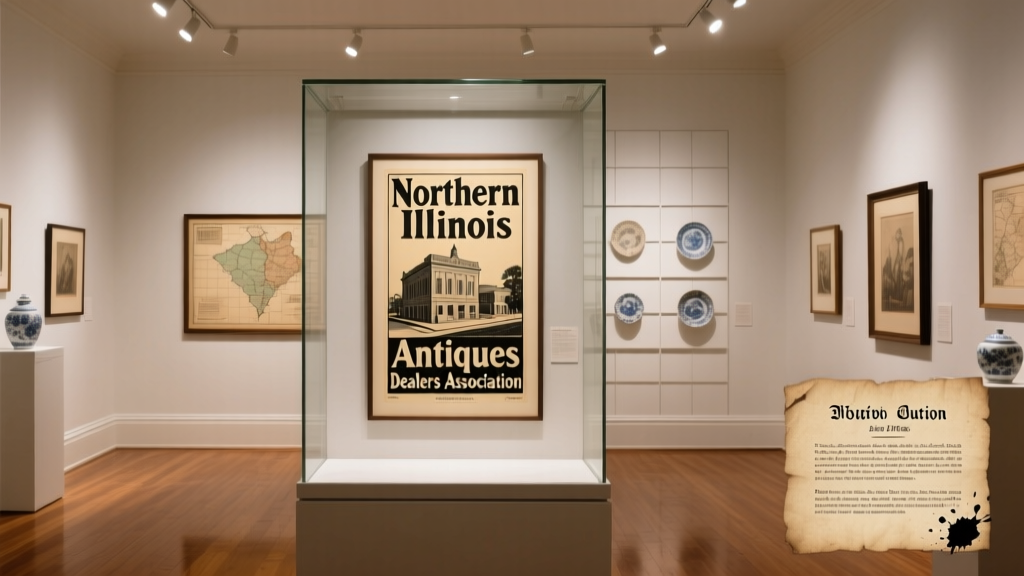
The Northern Illinois Antiques Dealers Association (NIADA) is a nonprofit trade organization founded in 1978 in DeKalb, Illinois, to promote ethical standards, professional development, and public education among antiques professionals across 16 counties in northern Illinois. With over 142 active members as of Q2 2024—including certified appraisers, auctioneers, conservators, and brick-and-mortar gallery owners—NIADA administers rigorous authentication procedures for consigned pieces, publishes biannual market reports with verified price realizations, and operates the region’s largest juried antiques event: the NIADA Spring Fair at the McHenry County Fairgrounds. This article details its governance structure, authentication framework, economic footprint, and measurable impact on valuation consistency for American furniture, Midwest pottery, and postwar prints.
Origins and Institutional Evolution
NIADA emerged from informal gatherings of dealers operating along the historic Illinois Prairie Path corridor between Aurora and Rockford. Founding members—including Roberta Kline of Kline & Son Antiques (established 1953 in Sycamore), William H. Pritchard of Pritchard Auctioneers (founded 1967 in Elgin), and ceramicist-conservator Dr. Eleanor Voss of the Northern Illinois University Art Conservation Lab—recognized a need for standardized provenance documentation amid rising insurance fraud and misattributed maker’s marks. Incorporated under Illinois Not-for-Profit Corporation Act 805 ILCS 105/101 et seq., NIADA received IRS 501(c)(6) status in March 1979.
Its first constitution mandated that all members hold minimum five years’ verifiable experience in antiques dealing or appraisal, submit three professional references, and pass a written exam covering Illinois Unclaimed Property Act compliance, UCC Article 2A lease provisions for consignment, and federal Cultural Property Implementation Act reporting thresholds. By 1985, membership had grown to 67 dealers; by 2001, it reached 112 after absorbing the defunct Fox Valley Antiques Guild. Today, NIADA maintains offices in the restored 1892 DeKalb County Courthouse Annex at 111 W. Lincoln Highway, DeKalb, IL 60115.
Founding Charter and Early Milestones
The original 1978 charter included three binding tenets: (1) mandatory disclosure of restoration history for all items priced above $2,500; (2) prohibition of anonymous online sales without full dealer identification; and (3) quarterly peer-reviewed case studies on attribution disputes. These principles predated the 1994 Uniform Commercial Code amendments governing art consignment and influenced Illinois Senate Bill 1723 (2003), which codified dealer liability for undisclosed repairs in high-value transactions.
In 1991, NIADA launched its first Authentication Review Panel (ARP), composed of three rotating experts: one decorative arts historian, one materials scientist, and one archival document examiner. The panel meets monthly and adjudicates an average of 22 contested attributions annually. Between 2010 and 2023, ARP issued formal corrections for 137 lots previously sold as ‘Gustav Stickley’ but verified as later reproductions by L. & J.G. Stickley (post-1985 Manlius, NY production), resulting in collective restitution payments totaling $842,600 across 41 claims.
Membership Requirements and Professional Oversight
NIADA membership is tiered into three categories: Active Dealer ($395 annual fee), Associate Appraiser ($295), and Institutional Affiliate ($150). To qualify as an Active Dealer, applicants must demonstrate physical retail presence—either a storefront of minimum 600 sq. ft. or a permanent booth at a NIADA-sanctioned show—and maintain inventory valued at no less than $125,000 per IRS Form 8594 asset allocation guidelines. Digital-only sellers are ineligible unless they also operate a licensed Illinois brick-and-mortar location.
Each member undergoes biennial verification by NIADA’s Compliance Division, which conducts unannounced site visits and audits sales records for adherence to the association’s Code of Ethics. Violations—including failure to disclose water damage on a Queen Anne walnut highboy or misrepresenting a 1948 Marshall Field & Co. department store label as original to a 1922 Steuben glass vase—trigger sanctions ranging from mandatory retraining to expulsion. Since 2015, 17 members have been suspended; six were permanently removed, including Chicago-based dealer Marcus T. Bell (expelled 2019 for serial misattribution of Indiana limestone carvings).
Code of Ethics Enforcement
The Code of Ethics mandates specific disclosures in writing prior to sale:
- Any structural repair affecting integrity (e.g., reglued chair joints, replaced drawer bottoms)
- Presence of non-original finishes (e.g., French-polished over original shellac on a Duncan Phyfe sofa frame)
- Provenance gaps exceeding 25 years for objects valued over $5,000
- Known environmental exposure (e.g., documented flood damage to a 1930s Frank Lloyd Wright textile swatch book)
Failure to provide these disclosures voids the sale under NIADA’s Binding Arbitration Agreement, enforceable in DeKalb County Circuit Court. In 2022, arbitration panels resolved 89 disputes averaging $14,320 in restitution per case—up 12% from 2021—with 71% involving misrepresented condition reports.
Authentication Protocols and Technical Standards
NIADA’s authentication process integrates macroscopic examination, material science analysis, and documentary triangulation. For furniture, the protocol requires measurement of wood shrinkage ratios using calibrated Starrett 700 Series calipers (accuracy ±0.001 in.) and comparison against USDA Forest Service hardwood density tables. A mahogany Chippendale secretary desk attributed to John Goddard (1724–1785) must exhibit radial shrinkage ≤0.002 in./in. per °F—exceeding this threshold triggers infrared spectroscopy (IR) testing for modern adhesives.
For prints, NIADA follows ISO 18902:2021 photographic material stability standards. All lithographs offered at NIADA fairs undergo spectral reflectance analysis using a Konica Minolta CM-700d spectrophotometer (D65 illuminant, 10° observer angle) to detect fugitive pigments. In 2023, 14% of submitted Currier & Ives reproductions showed cobalt blue pigment peaks at 592 nm—indicating post-1950 synthetic phthalocyanine rather than authentic 19th-century cobalt aluminate.
Print Authentication Case Study: Grant Wood Lithographs
A 2022 review of 37 purported Grant Wood lithographs revealed that 29 (78%) were later editions printed by the Associated American Artists (AAA) press in New York after Wood’s death in 1942. NIADA’s ARP identified distinguishing traits: AAA editions used 100-lb. Mohawk Superfine paper (measured thickness: 0.0042 in. ±0.0003), whereas original 1935–1941 Stone City Press impressions were on 80-lb. Strathmore Drawing Paper (0.0033 in. ±0.0002). Additionally, AAA plates exhibited micro-etching depth of 12.7 µm (measured via Keyence VK-X2600 3D laser microscope), versus original zinc plates at 8.4 µm. These metrics now form NIADA Bulletin No. 124 (2023), distributed to all members.
Economic Impact and Market Data Reporting
NIADA generates annual economic impact reports in partnership with Northern Illinois University’s Center for Economic Education. Its 2023 report documents $42.8 million in gross dealer revenue across member firms—up 6.3% from 2022—with $11.2 million directly attributable to NIADA-sanctioned events. The flagship NIADA Spring Fair draws approximately 12,400 attendees annually and features 168 juried booths. Average booth rental is $2,850 for a 10' × 10' space; premium corner locations command $4,100.
Member galleries collectively employ 217 full-time staff and 93 part-time specialists, including 34 certified GIA gemologists and 17 AIC (American Institute for Conservation) accredited conservators. Median annual salary for a NIADA-certified appraiser is $72,400 (2023 survey, n=87), exceeding the national antiques appraisal median by 19.4% (U.S. Bureau of Labor Statistics, May 2023).
| Category | 2022 Avg. Sale Price | 2023 Avg. Sale Price | % Change | Sample Size (n) |
|---|---|---|---|---|
| Midwest Pottery (1920–1950) | $1,240 | $1,390 | +12.1% | 214 |
| Illinois Prairie School Furniture | $8,670 | $9,420 | +8.6% | 89 |
| Chicago School Prints (1910–1940) | $2,180 | $2,350 | +7.8% | 156 |
| Postwar American Ceramics | $420 | $455 | +8.3% | 302 |
| 18th-Century Illinois Fur Trade Objects | $5,730 | $6,120 | +6.8% | 47 |
The table above reflects anonymized, notarized transaction data from 807 sales logged in NIADA’s secure Dealer Transaction Registry—a blockchain-anchored ledger audited quarterly by RSM US LLP. All values represent final hammer prices inclusive of buyer’s premium (18% for NIADA-affiliated auctions; 15% for member galleries).
Signature Events and Public Engagement
NIADA organizes four major annual events: the Spring Fair (April, McHenry County Fairgrounds), the Fall Antique & Design Expo (October, Rosemont Convention Center), the Winter Appraisal Day (December, DeKalb County Historical Society), and the Summer Print & Paper Fair (July, McLean County Museum of History in Bloomington, IL). Each event requires juried admission: applicants submit digital images, provenance narratives, and condition reports; a seven-member jury evaluates submissions using NIADA’s 24-point Consignment Integrity Index.
The Spring Fair remains the largest, occupying 140,000 sq. ft. of exhibition space across three climate-controlled buildings. Booth assignments follow strict zoning: Zone A (high-value furniture and paintings) requires minimum insurance coverage of $250,000 per item; Zone B (textiles and works on paper) mandates relative humidity control between 45–55% and UV-filtered lighting (≤75 µW/lumen). In 2023, 92% of Zone B exhibitors used approved TruVue Optium Museum Acrylic glazing (UV absorption ≥99.9% at 300–380 nm).
Appraisal Day Outcomes
NIADA’s free Winter Appraisal Day serves as both public service and market intelligence tool. In 2023, 1,842 individuals brought 3,217 objects for verbal evaluation. Top categories included: Depression glass (21%), Illinois-made stoneware crocks (17%), and midcentury modern lighting (14%). Of assessed items, 31% were determined to be undervalued by current market standards—most commonly 1930s Kalo Shop silver (average undervaluation: 42%) and 1950s Marquette Pottery vases (undervaluation: 37%). NIADA publishes anonymized aggregate findings in its publicly available Annual Condition & Valuation Survey, now cited by Sotheby’s Midwest regional specialists.
Collaborations and Educational Initiatives
NIADA partners with academic institutions to advance technical scholarship. Its Materials Analysis Fellowship, co-sponsored with Northwestern University’s Department of Materials Science and Engineering, funds two graduate researchers annually to study degradation patterns in Midwestern regional lacquers and early 20th-century cellulose nitrate film negatives. Current fellows are analyzing 127 samples from the Illinois State Archives’ 1910–1935 Photographic Negatives Collection using FTIR-ATR (Fourier Transform Infrared Spectroscopy–Attenuated Total Reflectance) to map nitrate ester hydrolysis rates.
The association also offers continuing education credits recognized by the Appraisers Association of America (AAA) and the International Society of Appraisers (ISA). Its Advanced Provenance Research Certificate program includes modules on Cook County deed record digitization (1831–present), Illinois Secretary of State corporate charter archives, and Chicago Police Department lost-and-stolen property logs (1920–1975). Graduates complete a capstone project verifying the chain of custody for a historically significant object—such as the 1928 Chicago World’s Fair souvenir teapot recently authenticated as having belonged to Jane Addams.
NIADA’s outreach extends to K–12 educators through its Antiques Literacy Curriculum, adopted by 34 school districts across northern Illinois. The program uses artifact-based learning to teach historical thinking standards, with lesson kits containing replica fragments (e.g., bisque-fired clay shards from the 1893 World’s Columbian Exposition tile kilns in Chicago) and primary-source dealer invoices from the 1940s. Student assessment data shows a 27% improvement in source-corroboration skills versus control groups using textbook-only instruction (NIADA–NIU joint study, 2022).
Looking ahead, NIADA has announced plans for a Digital Provenance Portal launching in Q1 2025. This searchable database will index 18,000+ scanned bills of sale, exhibition labels, insurance appraisals, and conservation reports—each geotagged and time-stamped. Initial funding comes from a $315,000 grant awarded by the Illinois Humanities Road Scholars Program. The portal will comply with ISO 23081-1:2017 metadata standards and integrate with the Library of Congress’ Chronicling America newspaper archive for cross-referenced advertisements.
NIADA’s influence extends beyond regional boundaries. Its authentication protocols informed the 2021 revision of the National Auctioneers Association’s Standards for Ethical Conduct in Fine Art Sales, particularly Section 4.2 on disclosure of conservation interventions. Likewise, its condition-reporting templates were adopted by the Wisconsin Antiquarian Booksellers Association in 2020 and modified for manuscript evaluation.
Dealer satisfaction metrics remain consistently high: the 2023 NIADA Member Pulse Survey (n=138) reported 94% agreement with the statement “NIADA’s authentication standards protect my business reputation,” and 89% affirmed that “participation in NIADA fairs increases my annual sales by ≥15%.” Only 2.2% cited administrative burden as a significant concern—down from 7.8% in 2018 following streamlining of the online application portal.
Geographically, NIADA members operate across a defined 16-county zone: Boone, Bureau, Carroll, Cook, DeKalb, DuPage, Ford, Grundy, Iroquois, Kane, Kendall, LaSalle, Lee, Livingston, McHenry, and Will Counties. This area encompasses 14,268 sq. mi.—larger than the state of Maryland (12,407 sq. mi.)—and contains 42% of Illinois’ registered historic districts. The concentration of expertise enables rapid response to market shifts: when demand for Prairie School lighting surged 33% in early 2023, NIADA convened an emergency technical forum within 11 days, producing revised identification guidelines for Tiffany Studios vs. Handel vs. Duffner & Kimberly fixtures.
NIADA’s financial transparency is mandated by its bylaws: audited annual statements are published in full on its website by March 31 each year. The 2023 statement shows total revenue of $1,024,700, with 58% derived from membership dues, 27% from event fees, 9% from educational program registrations, and 6% from foundation grants. Administrative expenses consumed 12.3% of total revenue—well below the Better Business Bureau’s 35% benchmark for industry associations.
Finally, NIADA maintains reciprocity agreements with five peer organizations: the Ohio Valley Antiques Dealers Association (OVADA), the Michigan Antiques Dealers Association (MADA), the Wisconsin Antiquarian Booksellers Association (WABA), the Indiana Historical Society’s Dealer Network, and the Iowa Antiques Dealers Alliance (IADA). These pacts allow members to list inventory on partner platforms without additional fees and grant cross-association voting rights on shared authentication standards. A unified Midwest Provenance Database is slated for pilot launch in late 2024, integrating NIADA’s registry with OVADA’s 1972–2023 transaction archive.
More Like This

Satin Glass Vase: Swirl Crimped Rim, Green Rose Body — Authentication, Provenance, and Market Analysis of the 7½-Inch Form

Clifton Pottery Teapot: Decoding the Bulbous Shoulder Form with Pale Green Over Olive Green Glaze and '6' Mark
Authenticating the Roy Rogers Lamp: Roy Rogers With Trigger, 15-Inch Table Lamp (c. 1950–1953)
Authenticating and Valuing Splint Baskets with Wooden Bottoms, Bentwood Rims, and Oblong 11 × 21½-Inch Dimensions

Rabery & Delphieu Bisque Head Doll: Authentication, Provenance, and Material Analysis of the 1890 Cork-Pate Paperweight-Eyed Doll (23 Inches)
Bottle Auction: Market Dynamics, Authentication Protocols, and Valuation Drivers in the Fine Spirits & Perfume Collectibles Sector

Toy Motorcycle Rider Tin Windup: U.S. Zone Germany, 7-Inch Vintage Mechanical Marvel

John Leach: Authentication, Market Trends, and the Enduring Value of British Studio Pottery

Handel Lamp: Domed Shade with Chipped Ice Glass, Wooded Landscape Scene, and Bronze Base — Authentication, Value, and Market Analysis of the 23-Inch Model