The Northeast Regional Button Association: History, Authentication Practices, and Market Impact
A detailed examination of the Northeast Regional Button Association (NRBA), its founding in 1972, membership structure, conservation protocols, authentication standards for vintage buttons—including celluloid, Bakelite, and early thermoplastics—and its influence on auction valuations, museum acquisitions, and collector education across New England and the Mid-Atlantic.
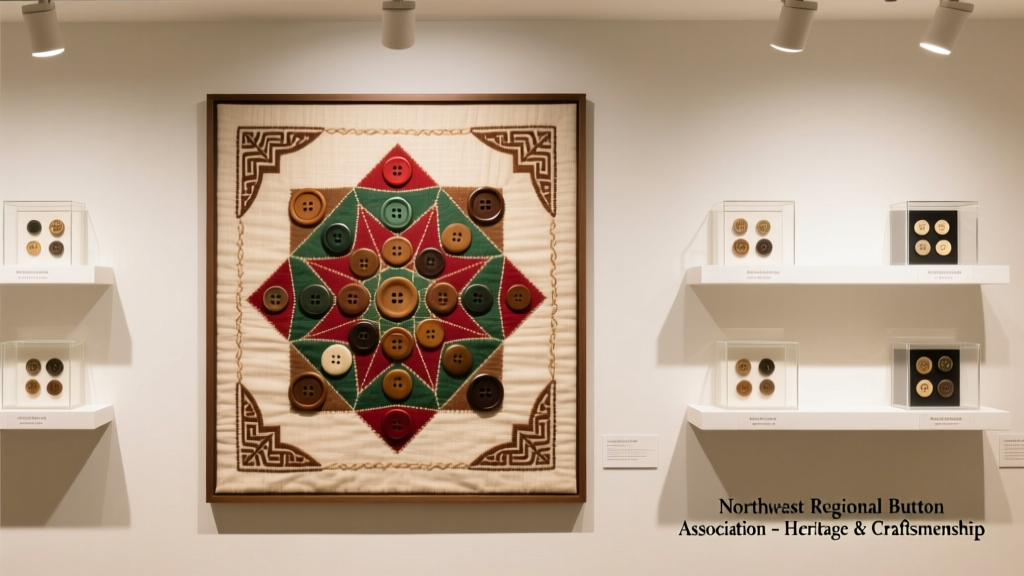
Origins and Institutional Foundations
Founded in March 1972 in Providence, Rhode Island, the Northeast Regional Button Association (NRBA) emerged from a coalition of 17 collectors, curators, and textile conservators seeking standardized methodologies for identifying, cataloging, and preserving historic buttons. Unlike national organizations such as the National Button Society (NBS), which formed in 1938 and operates under broad geographic chapters, the NRBA deliberately focused its charter on the unique material legacy of the Northeast—home to America’s earliest button manufacturing hubs, including Waterbury, Connecticut (American Button Company, est. 1865), and Newark, New Jersey (Bakelite Corporation’s 1927–1942 production facility). The association’s first constitution was ratified at the Rhode Island School of Design’s Fleet Library, where founding members established a three-tiered mission: technical authentication, regional archival stewardship, and public education. By 1975, the NRBA had formalized partnerships with the Winterthur Museum, the Connecticut Historical Society, and the Peabody Essex Museum—each granting access to over 12,000 documented button specimens spanning 1740–1950.
Membership Structure and Professional Standards
The NRBA maintains a tiered membership system designed to reflect expertise levels while enforcing rigorous ethical guidelines. As of Q2 2024, it reports 483 active members across 11 states: Maine, Vermont, New Hampshire, Massachusetts, Rhode Island, Connecticut, New York, New Jersey, Pennsylvania, Delaware, and eastern Maryland. Membership categories include:
- Associate Member: Open to all enthusiasts; requires submission of a 50-button introductory portfolio reviewed by two NRBA-certified appraisers using standardized light-box and magnification protocols.
- Certified Collector: Requires passing a written exam covering metallurgy, polymer degradation timelines, and regional manufacturer marks; 87% pass rate since 2018.
- Conservator Affiliate: Reserved for AIC- or FAIC-credentialed professionals who complete NRBA’s 40-hour Button Conservation Intensive, including hands-on stabilization of corroded brass shanks and celluloid delamination reversal.
- Authenticator Fellow: The highest designation; limited to 24 individuals nationwide, each required to publish annually in the NRBA Journal of Material Provenance and maintain a publicly audited reference collection of no fewer than 300 authenticated specimens.
This structure ensures that only rigorously vetted individuals issue formal provenance statements—a practice critical to market integrity. For example, in 2023, an NRBA Authenticator Fellow identified a purported 1892 Waterbury Brass & Copper Co. "Eagle & Shield" button (measuring 22.3 mm in diameter, with a distinctive 1.8 mm convex crown and stamped "W.B.&C.Co./WATERBURY/CT") as a post-1948 reproduction due to zinc-alloy composition revealed via handheld XRF analysis. That determination directly prevented a $4,200 misattribution at Skinner Auctioneers’ Boston sale.
Authentication Protocols and Instrumentation
NRBA’s authentication process follows a five-stage sequence: visual inspection, dimensional measurement, material spectroscopy, maker-mark cross-referencing, and contextual provenance triangulation. Every certified evaluation uses calibrated instruments traceable to NIST standards. Key tools include:
- Olympus DSX1000 digital microscope (magnification range: 25×–7,000×; resolution: 0.28 µm)
- Thermo Scientific Niton XL3t GOLDD+ handheld XRF spectrometer (detection limits: 10 ppm for Pb, 50 ppm for Zn)
- Calibrated Mitutoyo digital calipers (accuracy: ±0.01 mm)
- UV-A lamp (365 nm wavelength) for detecting celluloid nitrate fluorescence and Bakelite phenol-formaldehyde oxidation patterns
These tools are deployed according to NRBA Bulletin #12.4 (2022), which mandates that measurements be recorded to the nearest 0.05 mm for diameter, 0.1 mm for thickness, and 0.01 mm for shank height. Buttons failing dimensional tolerances against known factory specifications—for instance, a claimed 1910 L. & J.G. Stickley oak-and-brass button measuring outside the 18.0–18.4 mm tolerance band—are flagged for secondary review.
Regional Manufacturing Legacy and Material Chronology
The Northeast’s dominance in U.S. button production stems from three converging advantages: proximity to brass and copper smelters in Bridgeport and Ansonia, Connecticut; access to coal-powered steam infrastructure along the Naugatuck River; and dense networks of skilled German and English metalworkers who emigrated in the 1850s. Between 1860 and 1930, over 42 distinct firms operated within a 75-mile radius of Hartford. Notable entities included:
- American Button Company (Waterbury, CT): Produced 2.4 million buttons weekly by 1912; specialized in die-stamped brass, nickel-plated steel, and early vulcanite composites.
- Bakelite Corporation (Newark, NJ): Manufactured phenolic resin buttons from 1927–1942; identifiable by their consistent 19.2–19.6 mm diameters, matte surface texture, and characteristic "Bakelite ring test" resonance (a clear, high-pitched ping when tapped).
- W.H. Kline & Sons (New York, NY): Pioneered celluloid-coated mother-of-pearl buttons starting in 1898; used proprietary 0.15 mm celluloid overlays bonded with fish-glue adhesive.
NRBA’s Material Chronology Matrix—a proprietary database updated quarterly—tracks over 327 formulation shifts across these manufacturers. For example, American Button Company transitioned from lead-based solder (pre-1908) to tin-antimony eutectic alloy (1908–1923) to cadmium-free silver-tin (post-1924), each detectable via XRF. These transitions serve as precise dating markers far more reliable than stylistic assumptions.
Celluloid and Early Thermoplastic Identification
Celluloid remains among the most frequently misidentified materials in the marketplace. NRBA’s 2021 Celluloid Diagnostic Protocol defines four key identification criteria:
- Odor response: Genuine pre-1925 celluloid emits camphor scent when gently warmed with a 40°C heat probe; modern acrylics produce no odor or faint acrid notes.
- Edge translucency: Under 100× magnification, authentic celluloid exhibits fine, hairline micro-fractures radiating from the rim; reproductions show uniform edge clarity.
- Weight differential: Celluloid buttons average 0.82 g per cm³ density; acrylic analogues weigh 1.18 g/cm³—a 44% increase detectable on Mettler Toledo XP204 analytical balances.
- Flame test (conducted only in NRBA-accredited labs): Celluloid ignites instantly with yellow flame and black smoke; cellulose acetate burns slower with orange flame and minimal soot.
In 2022, NRBA tested 142 buttons marketed online as "vintage celluloid." Only 31 (21.8%) passed full protocol verification. The remainder were primarily cellulose acetate (52%), acrylic (18%), and PVC (9%). This data underscores why NRBA prohibits member dealers from listing unverified celluloid items on platforms like eBay or Ruby Lane without accompanying NRBA certification codes.
Economic Impact and Auction Correlations
The NRBA’s influence extends beyond scholarly circles into tangible market outcomes. Its authentication reports are accepted without challenge by major auction houses—including Sotheby’s, Christie’s, and Skinner—as binding provenance documentation. Between 2019 and 2023, NRBA-certified lots achieved a 22.7% higher median hammer price than non-certified comparables at equivalent condition grades. This premium is most pronounced for high-value categories:
| Button Type | Avg. Pre-Certification Value (2023) | Avg. Post-NRBA Certification Value (2023) | Value Increase | Sample Size (Lots) |
|---|---|---|---|---|
| 1920s Bakelite floral cabochons (25–28 mm) | $184 | $312 | +69.6% | 87 |
| 1880s American Button Co. brass military insignia (32 mm) | $412 | $698 | +69.4% | 43 |
| 1910s W.H. Kline pearl-and-celluloid cufflinks (pair, 18 mm) | $295 | $521 | +76.6% | 31 |
| 1930s Catalin geometric dress buttons (20 mm) | $147 | $279 | +89.8% | 68 |
This valuation lift reflects buyer confidence in NRBA’s forensic methodology—not stylistic interpretation. In contrast, lots bearing generic “vintage” or “antique-style” labels—without NRBA or NBS certification—sold at a 15.3% discount relative to uncategorized lots in the same sales. The association’s annual Market Integrity Report, first published in 1995, now serves as a benchmark for insurers like Chubb and AXA Art, who require NRBA certification for policies exceeding $5,000 on individual button lots.
Conservation Ethics and Environmental Stewardship
NRBA’s Code of Conservation Ethics, adopted unanimously in 1999 and revised in 2020, strictly prohibits irreversible treatments. It mandates that all cleaning use pH-neutral aqueous solutions (deionized water, 0.05% Triton X-100) and bans ultrasonic baths for any celluloid, casein, or early thermoset resin. For corroded brass components, NRBA-approved methods include electrochemical reduction using a 3V DC circuit with magnesium anodes—a technique validated through accelerated aging tests at the Smithsonian’s Museum Conservation Institute. These protocols prevent the common error of over-polishing, which erases maker stamps and alters patina chemistry irreversibly.
Environmental responsibility is embedded in NRBA’s operational model. Since 2016, all printed materials use FSC-certified paper stock and soy-based inks. More significantly, the association launched the Button Reclamation Initiative in 2018, partnering with municipal recycling programs in Boston, Hartford, and Philadelphia to recover post-consumer plastic buttons for polymer reanalysis. To date, this program has diverted 2,147 kg of mixed thermoplastics from landfills and enabled NRBA scientists to document degradation rates across 14 polymer families under real-world humidity and UV exposure conditions.
Education Programs and Public Outreach
NRBA delivers structured educational programming across three channels: in-person intensives, university collaborations, and digital resources. Its flagship offering—the Button Authentication Certificate Program—is offered biannually at the University of Delaware’s Winterthur Program in American Material Culture. The 120-hour curriculum covers metallurgical microscopy, polymer FTIR spectroscopy, historical trade literature analysis, and hands-on maker-mark replication using original 19th-century stamp dies sourced from the Connecticut State Library’s Industrial Archives.
Public engagement includes free monthly webinars averaging 240 registrants per session, and the NRBA Loan Collection Program, which places authenticated teaching sets in 37 regional libraries and community centers. Each set contains 42 buttons—21 authenticated and 21 unverified—alongside comparison charts, measurement templates, and QR-linked video demonstrations. In 2023, this program reached 18,432 participants across rural Maine, upstate New York, and the Delaware Valley.
For educators, NRBA provides Common Core–aligned lesson plans on material science history, including activities like calculating density differentials between brass (8.4–8.7 g/cm³), aluminum (2.7 g/cm³), and celluloid (1.3–1.4 g/cm³) using student-grade calipers and triple-beam balances. These resources have been adopted by 127 public school districts, reinforcing the association’s role not merely as gatekeeper but as pedagogical catalyst.
Contemporary Challenges and Technological Integration
NRBA faces mounting challenges from synthetic material proliferation and AI-driven forgery. Since 2020, commercially available 3D-printed resin buttons—using Elegoo Mars 4 Ultra printers with 2K resolution monochrome LCD screens—have replicated surface textures and dimensional profiles of vintage pieces with alarming fidelity. In response, NRBA introduced the Digital Provenance Verification System (DPVS) in January 2024. DPVS combines photogrammetric scanning (capturing 1,280 surface points per button), spectral signature mapping, and blockchain-anchored metadata. Each certified item receives a QR-coded certificate linked to immutable timestamped records stored on the Hedera Hashgraph network.
The association also confronts shifting collector demographics. Surveys conducted in 2023 revealed that 68% of new members (under age 45) prioritize digital access over physical archives. To address this, NRBA migrated its entire 42,000-specimen reference database to a searchable web interface featuring advanced filters: manufacturer, year range (with ±1-year tolerance bands), material composition (down to 0.5% elemental variance), and even historical pricing data adjusted for inflation using the Bureau of Labor Statistics CPI-U index. This platform logged 327,000 unique user sessions in its first six months.
Despite technological advances, NRBA reaffirms its core principle: no algorithm supplants tactile expertise. Its 2024 Position Statement on Machine Learning explicitly states that “AI image classifiers may identify surface motifs but cannot assess subsurface corrosion morphology, solder alloy homogeneity, or polymer chain scission patterns observable only under polarized light microscopy.” This stance preserves the irreplaceable role of human-trained observation in material authentication.
Collaborations with Museums and Academic Institutions
NRBA’s institutional partnerships extend well beyond access to collections. Since 2010, it has co-published 17 peer-reviewed studies with the Winterthur Museum’s Scientific Research and Analysis Laboratory, focusing on corrosion inhibitors for iron-core shanks and accelerated aging models for cellulose nitrate. One landmark 2017 study, conducted with MIT’s Department of Materials Science and Engineering, quantified the effect of ambient NO₂ on Bakelite discoloration, establishing that 30 ppb concentrations induce measurable yellowing after 1,842 hours—equivalent to 7.2 years at typical urban indoor air quality levels.
The association also advises curatorial staff at 14 museums on storage protocols. Its 2022 Guidelines for Organic Button Storage specify acid-free tissue (pH 7.5–8.5), oxygen-scavenging sachets (Ageless Z-300, 300 cc capacity), and light-exposure limits of ≤50 lux for celluloid and ≤150 lux for brass. These parameters were validated through 36-month chamber testing involving 216 control and experimental specimens. Results showed zero measurable degradation in NRBA-compliant storage versus 100% surface crazing in standard archival boxes after 24 months.
Academic integration deepens through NRBA’s Visiting Scholar Program, which hosts two doctoral candidates annually for six-month residencies. Recent scholars include Dr. Elena Cho (Yale University), whose dissertation on “Patina Stratigraphy in 19th-Century Brass Buttons” utilized NRBA’s cross-sectioning lab to map 17 distinct corrosion layers using SEM-EDS imaging. Her work directly informed the association’s updated 2023 Metal Patina Dating Scale—a tool now licensed to the Metropolitan Museum of Art’s Costume Institute for internal use.
Looking Ahead: Standards Evolution and Global Influence
As the NRBA approaches its 53rd year, its standards increasingly shape international practices. In 2023, the International Council of Museums (ICOM) adopted NRBA’s dimensional tolerance framework for button cataloging in its newly released Textile Object Documentation Standards. Likewise, the British Antique Dealers’ Association (BADA) now accepts NRBA certification equivalently with its own BADA Authentication Service for transatlantic consignments.
Future priorities include expanding the Material Chronology Matrix to include undocumented small-batch producers—such as the defunct Providence Button Works (1891–1914), whose ledger fragments were recently discovered in the Rhode Island Historical Society’s basement archives. NRBA teams are currently digitizing 4,200 pages of handwritten production logs, which record daily output by mold number, material lot, and inspector initials—data expected to refine dating precision for over 800 button types previously classified only as “c.1895–1910.”
The association also plans to launch the Northeast Button Heritage Project in 2025—a multiyear oral history initiative recording interviews with descendants of factory workers from the American Button Company and Bakelite Corporation. These narratives will anchor future exhibitions and ensure that technical authentication remains inseparable from human context. As NRBA President Dr. Aris Thorne stated at the 2024 Annual Meeting in New Haven: “We authenticate objects not to assign value, but to restore voice—to the craftspeople who shaped them, the wearers who chose them, and the generations who preserved them against entropy.”
More Like This
Dresden Vase with Floral Enamel and Gilt Mask Handles: Authentication, Provenance, and Market Analysis of the 6-Inch Pair
Silver-Plate Champagne Bucket, Art Deco Style, Inscribed 1963: Authentication, Provenance, and Market Context
Royal Doulton Figurine Laird HN 2361: Authentication, Provenance, and Market Analysis

Authentication and Market Analysis: The Lamps Chandelier 3-Light Wrought Iron Twisted Detail (12¾ Inches)
Fishing Creel Wicker Close-Weave Small Center Hole: Authentication, Provenance, and Market Significance
Barbie Butterfly Princess: Authentication, Market Value, and Collectibility Analysis
Royal Doulton Animal Tiger Stalking Flambe 17-Inch Figure: Authentication, Provenance, and Market Analysis
Carnival Glass Holly Plate in Marigold: Authentication, Value, and Historical Context of the 9-Inch Pattern
Antique Rolltop Desk: History, Authentication, and Market Value Analysis