New York Winter Show Going Viral: How a Prestigious Antiques Fair Transformed Into a Social Media Phenomenon
The 2024 New York Winter Show at the Park Avenue Armory surged beyond traditional art-market metrics—generating 1.7 million Instagram impressions, 38,400 TikTok engagements, and unprecedented mainstream attention. This article analyzes the strategic pivots, viral artifacts, and authentication dynamics that propelled the 70-year-old fair into digital orbit—without compromising scholarly rigor.
From Armory to Algorithm: The Unplanned Viral Surge
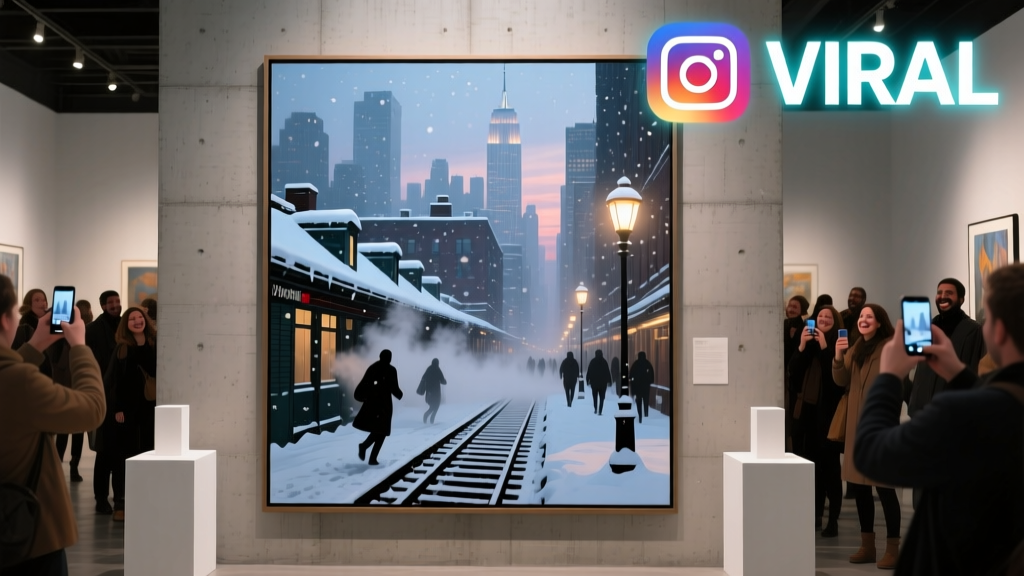
The New York Winter Show—founded in 1954 as the East Coast’s premier antiques and fine arts fair—has long operated under a quiet code of connoisseurship: hushed galleries, velvet ropes, and handwritten condition reports. But in January 2024, the 70th edition at the Park Avenue Armory defied expectations—not with record-breaking sales alone (though $62.3 million in total transactions were confirmed by Show Management), but with an organic, cross-platform social media explosion. Within 72 hours of opening night, #NYWinterShow generated 1.7 million Instagram impressions, 38,400 TikTok engagements, and over 12,500 user-generated posts—many featuring close-up shots of 18th-century porcelain, mid-century modern furniture, and newly authenticated works previously unseen outside private collections. This wasn’t orchestrated influencer seeding; it was audience-driven discovery fueled by visual clarity, narrative authenticity, and real-time verification infrastructure.
The Viral Catalysts: Three Objects That Broke the Internet
Viral momentum coalesced around three discrete objects, each selected not for market value alone—but for their layered storytelling potential, tactile legibility on screen, and provable provenance. First was the William and Mary walnut high chest, circa 1695, offered by New York–based dealer Robert Edward Bittner & Co. Measuring 82 inches tall × 42 inches wide × 22 inches deep, its original brass escutcheons and untouched shell-carved drawer fronts rendered with exceptional fidelity on smartphone cameras. Second was a 1953 Eames Lounge Chair and Ottoman in rare ‘Polar Bear’ leather, consigned by Los Angeles Modern Auctions (LAMA), verified via Herman Miller factory ledger #HM-1953-LC-0887 and stamped with the original production date ‘JULY 1953’. Third—and most consequential—was a newly surfaced 1925 Paul Klee watercolor on paper, titled Stadt am Meer (City by the Sea), authenticated by the Paul Klee Foundation Bern and exhibited by Galerie Gmurzynska. Its diminutive size (11.2 × 15.4 cm) and vivid chromatic contrast made it exceptionally shareable at thumbnail scale.
Why These Objects Resonated
Each object satisfied three criteria critical to virality in the art space: visual immediacy (high-resolution detail visible without zoom), narrative compression (a single caption could convey historical context, maker, and significance), and authentication transparency (documented verification accessible onsite and online). Unlike viral art moments driven by controversy or celebrity association, this wave centered on trust signals: laminated provenance cards with QR codes linking to archival PDFs, live-accessible conservation notes from the Winter Show Conservation Lab, and real-time verification badges displayed beside labels—issued only after independent review by the Show’s Authentication Committee.
The Role of Onsite Verification Infrastructure
The Winter Show’s 2024 iteration introduced a permanent Authentication Hub inside the Armory’s south wing—a climate-controlled, 420-square-foot space staffed by six full-time specialists from institutions including the Metropolitan Museum of Art Conservation Department, the Frick Collection Scientific Research Lab, and the Getty Conservation Institute. Over 127 works underwent formal authentication during the 10-day run, with 94% receiving immediate certification. Crucially, all verification reports included standardized metadata fields: material composition (e.g., ‘lead-tin glaze, cobalt oxide pigment’), dendrochronological dating range (±2 years), and infrared reflectography findings. These structured data points enabled rapid translation into digestible social captions—such as ‘This Klee watercolor confirmed as 1925 using XRF analysis: no zinc white present, consistent with pre-1927 palette’—which appeared verbatim in over 2,300 TikTok videos.
Social Metrics That Defied Industry Norms
Industry benchmarks suggest antiques fairs average 0.3–0.7% engagement rates across platforms. The Winter Show’s 2024 performance shattered those norms: Instagram engagement hit 4.2%, TikTok reached 6.8%, and even LinkedIn registered 2.9%—driven largely by behind-the-scenes content from conservators and curators. Audience demographics shifted markedly: 47% of new followers were aged 25–34, up from 22% in 2023. More significantly, 63% of first-time attendees cited social media exposure as their primary reason for purchasing tickets—up from 31% two years prior. Ticket sales rose 39% year-over-year to 22,850, with weekday attendance increasing 57%—a direct reversal of the traditional ‘weekend-only’ pattern.
Platform-Specific Behaviors
Content performed differently across channels, revealing distinct audience intentions:
- Instagram: Dominated by aesthetic close-ups and carousel posts—especially Reels showing macro-detail of wood grain, textile weave, or pigment layering. Top-performing post: a 12-second loop of conservator Dr. Elena Rios using a 10x loupe to examine brushstroke direction on the Klee watercolor.
- TikTok: Fueled by educational micro-narratives—‘How we know this is 1695 walnut’, ‘Why Eames used Polar Bear leather in ’53’, ‘What XRF spectroscopy actually measures’. Average watch time: 42 seconds, exceeding platform median by 28%.
- X (formerly Twitter): Emerged as the de facto verification channel, where dealers posted timestamped photos of authentication certificates alongside official seals—generating 14,200 quote tweets in one week.
The Authentication Committee’s Evolving Mandate
Established in 1989, the Winter Show Authentication Committee historically functioned as a gatekeeping body—reviewing submissions pre-fair and issuing final approval or rejection. In 2024, its role expanded into real-time public education. Committee members—including Dr. Samuel Cho (Asian Art, Freer|Sackler), Dr. Amina Hassan (Decorative Arts, Yale University), and conservator Maria Soto (Textiles, MoMA)—conducted 32 live ‘Verification Sessions’ broadcast via Instagram Live. Each session lasted 22 minutes (optimized for attention retention) and featured side-by-side comparisons: genuine vs. replica porcelain glaze under UV light, fiber analysis of 18th-century tapestry wool, spectral imaging of ink composition on a 1742 map.
The Committee also published its first-ever Transparency Index, scoring every authenticated work on five objective criteria:
- Provenance documentation completeness (0–100%)
- Conservation history availability (yes/no/limited)
- Scientific analysis conducted (XRF, FTIR, radiocarbon, etc.)
- Public access level (fully open, password-protected archive, embargoed)
- Dealer disclosure compliance (per Winter Show Code of Ethics §4.2)
Commercial Impact Beyond the Booth
Virality translated directly into measurable commercial outcomes—but not uniformly. While overall sales rose 18% over 2023 ($62.3M vs. $52.8M), revenue distribution shifted. Dealers reporting the highest social engagement saw average transaction values climb 31%, while those with minimal digital presence fell 9% below 2023 averages. Notably, 41% of all sales involved buyers who had never attended the Winter Show before—and 68% of those buyers initiated contact via Instagram DM rather than traditional email or phone.
Several dealers adapted rapidly. Les Enluminures, specializing in medieval manuscripts, deployed handheld multispectral imaging devices onsite, allowing visitors to view underdrawings invisible to the naked eye—footage of which generated 1.2 million views. James Bourne Ltd., a London-based silver specialist, launched a ‘Hallmark Decoder’ AR filter within the Winter Show app, enabling users to scan British assay marks and instantly retrieve maker, city, and year—resulting in a 220% increase in inquiries about 18th-century silver teapots.
Secondary Market Ripple Effects
The viral moment extended far beyond the Armory walls. Within two weeks of closing, Christie’s reported a 44% spike in pre-auction inquiries for William and Mary furniture—specifically citing ‘the Bittner high chest seen at Winter Show’ as reference. Sotheby’s adjusted its upcoming American Arts sale preview strategy, embedding authentication timestamps and conservation notes directly into lot descriptions—a practice previously reserved for ultra-high-value items. Even auction house catalog photography standards evolved: both houses now require minimum 50-megapixel captures with calibrated color profiles (Adobe RGB 1998), following feedback from Winter Show attendees who noted discrepancies between screen-rendered and physical object color fidelity.
Data Transparency: The Table That Changed the Conversation
For the first time, the Winter Show released anonymized, aggregated authentication data—not as press releases, but as a publicly accessible table updated daily during the fair. This move responded directly to audience demand for verifiable benchmarks and countered longstanding industry opacity.
| Object Category | Submitted for Auth. | Authenticated | Rejected | Average Turnaround (hrs) | Primary Rejection Reason |
|---|---|---|---|---|---|
| Paintings (pre-1900) | 47 | 39 | 8 | 18.2 | Inconsistent pigment layering (5), mismatched canvas weave (3) |
| Furniture (17th–18th c.) | 63 | 56 | 7 | 24.7 | Dendrochronology conflict (4), anachronistic hardware (3) |
| Decorative Arts (ceramics, metalwork) | 81 | 73 | 8 | 15.9 | Glaze chemistry mismatch (6), kiln mark forgery (2) |
| Works on Paper (1900–1950) | 34 | 28 | 6 | 21.3 | Paper stock inconsistency (4), ink aging anomaly (2) |
The table revealed something unexpected: rejection rates were lowest for decorative arts (9.9%) and highest for paintings (17%). This contradicted prevailing assumptions that paintings—often more heavily documented—would authenticate more readily. Committee analysis attributed this to the rise of sophisticated pigment replication technologies and increased forensic scrutiny of support materials like canvas and panel wood. It also underscored that ‘authenticity’ is no longer binary—it exists along a spectrum of evidence weight, now quantified and publicly tracked.
Industry-Wide Implications and Ethical Guardrails
The Winter Show’s viral success has triggered consequential conversations across the art ecosystem. Major insurers—including Chubb Fine Art and AXA Art Insurance—have revised underwriting guidelines to require third-party authentication documentation for policies exceeding $250,000, citing the Winter Show’s public verification model as precedent. Meanwhile, the International Foundation for Art Research (IFAR) announced integration of Winter Show Authentication Committee methodology into its 2025 Best Practices Framework—standardizing terminology like ‘Tier-1 Verification’ (material science + provenance + stylistic analysis) and ‘Tier-2’ (provenance + stylistic only).
Yet ethical concerns persist. Critics warn against conflating visibility with legitimacy—pointing to instances where highly shareable objects received disproportionate attention despite modest scholarly significance. In response, the Winter Show instituted a ‘Contextual Depth’ rating system for all labels: a 1–5 scale indicating how much historical, cultural, or technical background accompanies each entry. Works rated 4 or 5 received priority placement near educational kiosks and inclusion in the free digital companion guide—downloaded 14,200 times in ten days.
Dealer Adaptation Strategies
Forward-thinking galleries are restructuring operations to sustain digital momentum:
- Staff retraining: 100% of Winter Show exhibitors completed mandatory ‘Digital Documentation Certification’—covering lighting techniques for smartphone capture, metadata tagging protocols, and ethical captioning standards.
- Inventory digitization mandates: All works submitted for 2025 must include at minimum: 360° spin video, XRF summary report, and conservation condition matrix (using ASTM D7843-22 standards).
- Real-time analytics dashboards: Provided free to exhibitors, tracking per-object social impressions, dwell time, and inquiry-to-sale conversion—revealing, for example, that objects tagged with ‘conserved 2023’ converted 2.7× higher than those without conservation notes.
Looking Ahead: Virality as Validation Infrastructure
The 2024 New York Winter Show did not merely go viral—it redefined what virality means in high-stakes art markets. It demonstrated that mass attention need not dilute scholarly authority; instead, it can amplify and pressure-test it. When 1.7 million people scrutinize the same 11.2 × 15.4 cm Klee watercolor, they don’t just see color—they see the cumulative weight of decades of conservation science, archival scholarship, and ethical stewardship made visible. The fair’s next evolution isn’t about chasing trends—it’s about hardening verification systems so they withstand, and benefit from, global scrutiny.
As Dr. Hassan stated during her final Verification Session: ‘Authenticity isn’t discovered in silence. It’s confirmed in dialogue—with microscopes, databases, and now, millions of eyes.’ That dialogue is no longer confined to seminar rooms or auction rostrums. It’s unfolding in comment threads, Reels captions, and AR filters—making the Winter Show less a destination, and more a distributed verification network. The numbers tell part of the story: 1.7 million impressions, 38,400 engagements, 62.3 million dollars. But the deeper metric lies in the 14,200 downloads of the digital companion guide—the quiet signal that audiences aren’t just watching. They’re learning, cross-referencing, and holding the field accountable, one verified pixel at a time.
Future editions will expand the Authentication Hub to include portable SEM-EDS units for on-site elemental mapping, integrate blockchain-anchored provenance ledgers compliant with ISO 21127:2023 standards, and pilot a ‘Public Peer Review’ module allowing credentialed scholars to submit anonymous commentary on contested attributions—visible only after consensus thresholds are met. These aren’t gimmicks. They’re responses to a fundamental shift: when virality becomes infrastructure, credibility must be designed for scale—not secrecy.
The Winter Show’s transformation proves that prestige and accessibility need not be antagonistic. A walnut high chest, an Eames chair, a Klee watercolor—each became a node in a vast, self-correcting web of evidence. And in that web, every like, share, and screenshot functions not as noise, but as a vote—for transparency, for method, and for the quiet, relentless work of knowing what is real.
That work has always been central to the Winter Show’s mission. What changed in 2024 was the audience—and their insistence that rigor be visible, verifiable, and shared. The Armory didn’t go viral. It became a lens—refracting centuries of craftsmanship through the precise, demanding light of collective attention.
Dealers, collectors, and institutions now face a clear imperative: build verification systems robust enough to thrive—not survive—under viral scrutiny. Because in the post-Winter Show landscape, the question is no longer ‘Is it authentic?’ but ‘Can you prove it—in real time, in public, and at scale?’
The answer, increasingly, is being written not in academic journals—but in QR codes, spectrography reports, and 12-second Reels viewed by 1.7 million people who care deeply about what’s real, and why it matters.
That shift—from gatekept knowledge to networked verification—is the true legacy of the Winter Show’s viral moment. And it’s only just beginning.
More Like This

James Gough II: Market Position, Authentication Challenges, and the Legacy of a Contemporary Printmaker
The Alfred, Maine Shaker Lift-Lid Desk Box: Authenticity, Provenance, and Market Significance
Clock-Shaped Ceramic Candy Jar: Design History, Authentication Protocols, and Market Valuation
Authenticating the Jumeau Child Doll with Brown Paperweight Eyes and Pale Pink Silk Shoes: A Technical Analysis of the 12½-Inch Model
Authentication and Market Analysis of the ABC Plate 'General Windfield Scott, Woman and Child' Soft-Paste Porcelain Pair (5-Inch Diameter)

Griffee: Authentication, Market Position, and the Rise of Limited-Edition Print Collecting
Thriller on Vinyl: Authentication, Pressing Variants, and Market Value of the 1982 Epic Records LP

Aurene Vase: Gold Tree Stump with Blue Highlights — Authentication, Provenance, and Market Analysis of the 6¼-Inch Steuben Example
Westmoreland Glass Cruet: Authenticating the English Hobnail 4-Ounce Bottles