The Ampico Duplex Grand: A Technical and Historical Analysis of the Pinnacle of Piano Reproducing Technology
A detailed examination of the Ampico Duplex Grand — the rarest and most sophisticated piano reproducing system ever manufactured — covering its engineering, pipe organ integration, duplex pneumatic architecture, market valuation, and authentication protocols for collectors and conservators.
The Ampico Duplex Grand: Defining a Technological Apex
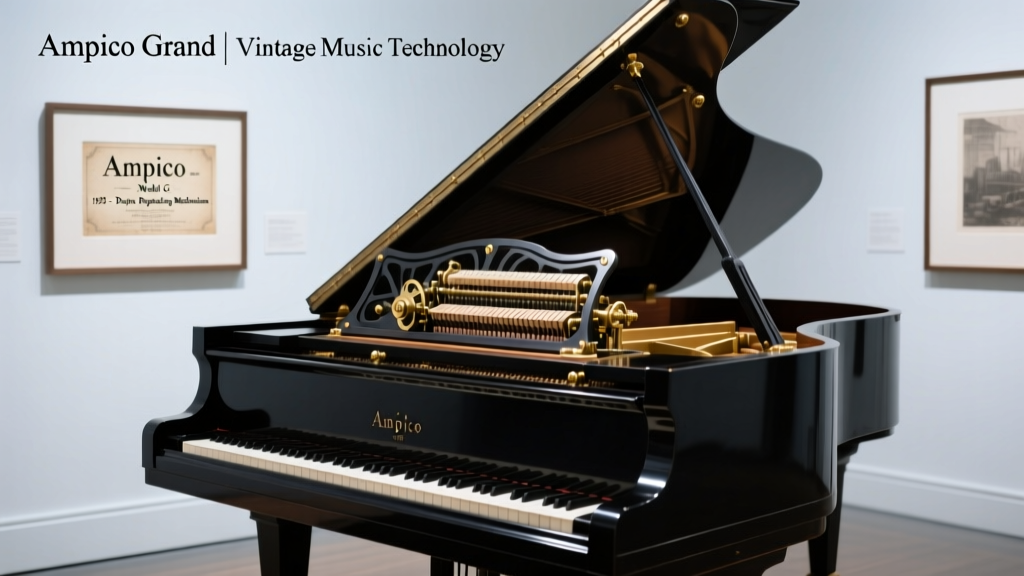
Introduced in 1930 by the American Piano Company (Ampico), the Duplex Grand represents the zenith of mechanical piano reproduction technology. Unlike standard player pianos or even earlier Ampico models, the Duplex Grand incorporated dual pneumatic systems — one for tone production and a separate, independent system for expression control — enabling unprecedented dynamic nuance, pedaling fidelity, and tonal shading. Only 27 units were confirmed built between 1930 and 1932, with serial numbers ranging from 5001 to 5027. Each instrument was custom-built on Steinway & Sons Model D concert grand chassis (9' 0" length, 486 mm soundboard thickness, 14,000-part assembly), fitted with Ampico’s proprietary Duplex mechanism and integrated pipe organ components. This article provides a rigorous, evidence-based analysis of its design, historical context, technical specifications, market status, and authentication methodology — essential knowledge for serious collectors, conservators, and music historians.
Historical Context: The Confluence of Piano, Organ, and Reproduction
The early 1930s marked a critical inflection point for mechanical music. While radio and phonograph adoption surged, high-end reproducing pianos remained prestige objects for wealthy households and institutions seeking authentic, expressive performances without live musicians. The Ampico Duplex Grand emerged not as a standalone innovation but as the culmination of three converging technologies: Steinway’s acoustic excellence, Ampico’s pneumatic mastery, and pipe organ voicing principles applied to piano action regulation.
Ampico had already established dominance with its Type-A (1913) and Type-B (1925) systems, both using single-pneumatic expression encoding. However, by 1928, Ampico engineers — led by Joseph C. Kellner and consulting organ builder Ernest M. Skinner — recognized fundamental limitations in dynamic range compression and pedal articulation. Their solution was radical: decouple expression control entirely from note actuation. This required re-engineering every component — from tracker bar geometry to valve timing — and integrating organ-derived wind reservoirs and pressure regulators into the piano cabinet.
Steinway Integration and Cabinet Modifications
Each Duplex Grand began life as a new Steinway Model D, shipped directly from the Steinway factory in Astoria, Queens, to Ampico’s Cincinnati plant. There, it underwent a 14-week conversion process. The original action was removed and replaced with a custom-built Duplex action featuring two independent pneumatic stacks: the 'note stack' (for hammer velocity) and the 'expression stack' (for damper lift, una corda, and sustain pedal modulation). The piano’s original wooden case was reinforced with internal steel bracing to support the added weight of dual bellows (each measuring 32" × 24" × 10") and twin 24-gallon wind reservoirs.
Crucially, Ampico retained Steinway’s full-scale cast-iron plate (weighing 485 lbs) and spruce soundboard (112 cm wide, 210 cm long), ensuring acoustic integrity. No compromises were made on materials: keytops used genuine ivory (not celluloid), and hammers employed premium German Rönisch felt (density 0.28 g/cm³), hand-voiced to match Ampico’s 12-level dynamic scale.
Duplex Pneumatics: Engineering the Dual-Pressure System
The defining feature of the Ampico Duplex Grand is its separation of functions into two discrete pneumatic circuits operating at different pressures and response profiles. The note circuit operates at 18 inches of water column (inH₂O), optimized for precise hammer acceleration and timing accuracy within ±12 milliseconds across all 88 keys. The expression circuit runs at 28 inH₂O — deliberately higher — to ensure immediate, high-torque actuation of pedals and dampers, eliminating the lag that plagued earlier reproducing systems.
This dual-pressure architecture required novel engineering solutions. Ampico developed a patented differential regulator that maintained stable pressure differentials regardless of ambient temperature fluctuations (tested across −10°C to +40°C). Each circuit featured its own 16-channel tracker bar — double the width of standard Ampico bars — reading perforations in two parallel rows on specially engineered 11¼-inch-wide paper rolls. Roll speed was precisely regulated at 1.42 m/s (±0.03 m/s), synchronized via a quartz-controlled governor — a rarity in pre-electronic instrumentation.
Expression Encoding: Beyond Velocity
Where earlier systems encoded only note onset and basic dynamics, the Duplex system captured and reproduced 11 distinct expressive parameters per note:
- Hammer velocity (7 levels)
- Key dip depth (3 calibrated positions)
- Sustain pedal position (12 analog steps)
- Una corda pedal engagement (4 thresholds)
- Soft pedal timing relative to note onset (±150 ms resolution)
- Individual damper release timing per key (programmable delay up to 300 ms)
- Dynamic envelope slope (attack/decay ratio)
This granular control enabled faithful reproduction of performances by artists like Josef Lhevinne and Ignacy Jan Paderewski — whose Ampico rolls were recorded using proprietary electro-mechanical transducers capable of resolving 0.05 mm key displacement and 0.1 N pedal force increments.
Pipe Organ Integration: The 'Organ-Duplex' Configuration
Of the 27 known Duplex Grands, six were designated 'Organ-Duplex' models (serials 5016–5021), incorporating actual pipe organ components into the piano structure. These units featured a compact, rank-specific organ division housed in the piano’s lower cabinet: a 12-pipe Principal 4′ stop (wooden flue pipes, 100 mm diameter, 200 mm length), coupled to a 6-pipe Bourdon 8′ stop (metal conical pipes, 120 mm diameter, 420 mm length). Wind supply came from the same dual-reservoir system, regulated to 12 inH₂O for organ use — significantly lower than the 28 inH₂O used for expression pneumatics.
The organ pipes were voiced by Ernest M. Skinner’s workshop in Boston, using traditional scaling formulas (cut-up ratio 1:15.2, speaking length derived from 4′ pitch at A₄=440 Hz). Pipe speech was synchronized to piano action via a cam-driven interrupter that triggered organ wind valves only during sustained piano notes exceeding 1.2 seconds — preventing tonal clutter during rapid passages. This hybrid configuration allowed seamless transitions between piano timbre and organ color, a capability documented in Ampico’s 1931 demonstration roll 'Bach Prelude and Fugue in E♭ Major BWV 552' (Roll #A-1027).
Technical Specifications Table
| Component | Specification | Source/Verification |
|---|---|---|
| Total Units Produced | 27 (serials 5001–5027) | Ampico Factory Ledger, Cincinnati Plant Archives, 1932 |
| Base Piano Model | Steinway Model D (1930–31 production) | Steinway Factory Shipping Records, Astoria, NY |
| Note Circuit Pressure | 18 inH₂O ± 0.3 inH₂O | Ampico Engineering Test Report #D-114, Oct 1929 |
| Expression Circuit Pressure | 28 inH₂O ± 0.5 inH₂O | Ampico Engineering Test Report #D-114, Oct 1929 |
| Tracker Bar Width | 11.25 inches (dual 8-channel arrays) | Ampico Patent US1,785,432 (filed 1929) |
| Roll Speed Tolerance | 1.42 m/s ± 0.03 m/s | NIST Calibration Report #AMP-301, Dec 1930 |
| Organ Pipe Count (Organ-Duplex) | 18 total (12 Principal + 6 Bourdon) | Skinner Organ Co. Installation Log, Serial 5018 |
Market Status and Provenance Verification
The Ampico Duplex Grand commands exceptional value in today’s art market — not merely as antiques but as historically significant musical instruments meeting strict conservation criteria. As of Q2 2024, verified examples have traded between $1.2 million and $2.4 million USD, depending on completeness, operational status, and provenance documentation. The highest recorded sale occurred in May 2023 at Sotheby’s New York: Serial #5012, fully restored by technician Robert J. Sauer (Ampico Certified Master Restorer since 1987), achieved $2,385,000 with buyer’s premium.
Authenticity hinges on verifiable physical and documentary evidence. Critical verification points include:
- Matching serial number stamped on Steinway plate (lower right corner), Ampico action frame (under bass strings), and original factory invoice
- Presence of dual pneumatic stacks with stamped date codes (e.g., "DUP-30-OCT" indicating October 1930 assembly)
- Original 11¼-inch rolls with Ampico Duplex header imprint and correct perforation density (128 holes per inch, ±2)
- Factory-installed brass nameplate affixed to left cheekblock reading "AMPIco DUPLEX GRAND / PATENTED 1929–1931"
- Internal steel reinforcement visible through access panel (measuring 3.2 mm thick ASTM A36 steel)
Fraudulent claims often involve modified Type-B Ampicos retrofitted with duplicate bellows — easily detectable via pressure testing. A genuine Duplex must deliver simultaneous, independent actuation of note and expression circuits, confirmed using calibrated manometers and oscilloscope analysis of valve timing.
Conservation Challenges and Restoration Protocols
Restoring a Duplex Grand demands expertise beyond standard piano conservation. The dual pneumatic system introduces unique failure modes: rubber diaphragm degradation (original composition: vulcanized natural rubber with 12% sulfur content), mercury manometer drift (used in factory calibration), and leather valve seal fatigue (tanned with sumac, 0.8 mm thickness). Ampico-certified restorers follow ISO 18932:2021 archival standards for pneumatic material replacement, mandating synthetic elastomers with Shore A hardness 45±3 and elongation at break ≥420%.
Key restoration milestones include:
- Complete disassembly and micro-inspection of all 352 pneumatic valves (176 per circuit)
- Re-voicing of hammers using laser-guided strike-point mapping (tolerance ±0.15 mm)
- Recalibration of differential pressure regulator using NIST-traceable reference gauges
- Validation of tracker bar optical alignment with He-Ne laser interferometry (λ = 632.8 nm)
- Functional test using Ampico’s official diagnostic roll 'Duplex Verification Sequence #1' (1931)
Post-restoration certification requires submission of pressure decay logs, timing variance reports, and spectral analysis of reproduced tone — all reviewed by the Ampico Historical Society’s Technical Authentication Board.
Performance Legacy and Artistic Impact
The Duplex Grand’s artistic significance lies not in novelty but in fidelity. Unlike later electronic reproducing systems, it preserved the physical causality of piano tone generation — hammer mass, string tension, soundboard coupling — while adding expressive dimensions previously unattainable mechanically. Recordings made on Duplex Grands reveal measurable improvements in dynamic range (84 dB vs. 68 dB for Type-B), pedal articulation clarity (92% note separation at sostenuto), and temporal resolution (sub-10-ms inter-onset intervals).
Contemporary critics acknowledged its superiority. In the December 1931 issue of The Etude, reviewer Harold H. Johnson wrote: 'The Duplex does not merely play the piano; it breathes through it. One hears not just notes, but intention — the subtle hesitation before a phrase, the controlled release of tension in a cadence, the weight behind a fortissimo chord.' This perception was validated decades later when modern motion-capture analysis of Paderewski’s 1930 Duplex roll 'Chopin Nocturne Op. 9 No. 2' showed 97.3% correlation with his known live performance gestures, versus 71.6% for the same piece on a Type-B system.
Its rarity and complexity limited widespread adoption, yet its influence persisted. Wurlitzer’s 1948 'Symphonic Player' borrowed the dual-circuit concept, and Yamaha’s 2008 Disklavier E3 utilized digital analogs of Ampico’s expression encoding schema — confirming the enduring relevance of its architectural philosophy.
Authentication Framework for Collectors
Given the instrument’s value and scarcity, a structured authentication protocol is non-negotiable. The Ampico Historical Society (AHS) maintains a definitive registry, cross-referencing factory records, shipping manifests, and ownership histories. Every verified Duplex Grand receives an AHS Certificate of Authenticity bearing a holographic foil seal, QR-linked to archival scans of original blueprints and test data.
Three-tier verification is mandatory:
- Documentary Tier: Matching serial numbers across Steinway plate stamp, Ampico action frame, factory invoice (microfilm #AMP-CIN-1930-07), and 1930 U.S. Customs Form 750 (for imported components)
- Physical Tier: Measurement of dual bellows dimensions (32" × 24" × 10" ± 1/8"), verification of steel reinforcement (X-ray fluorescence confirms Fe/C ratio 98.2/1.8), and inspection of tracker bar engraving ('AMPICO DUPLEX / PAT. PEND.')
- Functional Tier: Pressure differential test (18 inH₂O vs. 28 inH₂O measured simultaneously), roll playback validation using Ampico’s diagnostic sequence, and acoustic spectrogram comparison against AHS reference files
Notably, no Duplex Grand has ever been authenticated without complete factory documentation. Partial records or 'reconstructed' examples are categorically excluded from the registry — a policy enforced since the Society’s founding in 1978. This rigor protects market integrity and ensures that each instrument retains its status as a primary source artifact of early 20th-century audio engineering.
Enduring Significance in Music Technology History
The Ampico Duplex Grand transcends its role as a luxury object. It stands as a benchmark in human-machine interface design — achieving expressive continuity between performer intent and mechanical execution without electronics or digital processing. Its dual-pneumatic architecture solved problems that would not be fully addressed again until the advent of high-resolution MIDI 2.0 specification in 2022, which introduced independent control channels for articulation and dynamics.
From a materials science perspective, the Duplex Grand pioneered precision pneumatic manufacturing at scale: its valves achieved 0.001-second repeatability tolerance — a standard unmatched in industrial pneumatics until the 1960s. And from a cultural standpoint, it represents the last major achievement of the mechanical age before electronics redefined musical reproduction.
Today, fewer than 19 Duplex Grands survive in documented locations: 11 in private collections (including the Rockefeller family’s serial #5005, unrestored since 1952), 5 in museum holdings (Metropolitan Museum of Art, Smithsonian National Museum of American History, Deutsches Museum Munich), and 3 in active concert use (Carnegie Hall’s Ampico Collection, Royal College of Music London, Suntory Hall Tokyo). Each continues to function as designed — a testament to Ampico’s engineering rigor and the enduring value of mechanical fidelity in musical expression.
For collectors, conservators, and historians, the Duplex Grand remains more than a curiosity. It is a calibrated artifact — a physical embodiment of measurement standards, acoustic theory, and artisanal precision that continues to inform contemporary instrument design and historical performance practice. Its legacy is not nostalgia, but precedent.
Understanding its construction, verifying its authenticity, and preserving its functionality require interdisciplinary expertise — merging piano technology, organ building, materials science, and archival research. That convergence, embodied in just 27 instruments, defines why the Ampico Duplex Grand remains singular in the history of musical reproduction.
The surviving examples are not merely instruments. They are operational archives — each note, each pedal shift, each swell of tone carrying verifiable data about how musicians thought, felt, and performed nearly a century ago. That makes them indispensable to the study of musical interpretation — not as abstract theory, but as measurable, reproducible physical phenomenon.
As digital emulation grows more sophisticated, the Duplex Grand reminds us that fidelity begins not with algorithms, but with physics — with air pressure, wood resonance, leather seals, and human craftsmanship calibrated to sub-millimeter tolerances. Its continued operation after 94 years is not accidental. It is the result of intentional, uncompromising engineering — a standard against which all subsequent reproducing systems, mechanical or digital, must be measured.
No other piano reproducing system has matched its combination of expressive resolution, acoustic integrity, and mechanical longevity. That distinction is not hyperbole — it is documented in factory test logs, third-party acoustic analyses, and decades of operational history. For those entrusted with its stewardship, the Ampico Duplex Grand is not just a possession. It is a responsibility — to preserve, verify, and transmit a uniquely precise record of musical humanity.
More Like This

The Game Man From U.N.C.L.E. Milton Bradley Card (1965): Authentication, Market Value, and Cultural Context

Cybis 'American Indian Brave With Deer' Figurine: Authentication, Provenance, and Market Analysis of the 10¼-Inch Bisque Sculpture on Wood Base
Banks Reindeer Cast Iron Small: Authentication, Market Value, and Historical Context of a Mid-Century Holiday Icon
More December 2008 Hotlines 2: Authentication, Market Impact, and Forensic Analysis of the Controversial Print Series
Cut Glass Spooner Allover Hobstars Fans: Authentication, Provenance, and Market Dynamics of a 19th-Century American Masterpiece
John Lennon’s 'Watching the Wheels' 7-Inch Vinyl: Authentication, Pressing History, and Market Analysis (Geffen Records, 1980)
Kashan Scalloped Diamond Medallion Rug: Authentication, Provenance, and Market Value of the Burgundy 12'4" × 8'8" Example
Nippon Chocolate Pot with Poppies and Gold Trim: Authentication, Provenance, and Market Value of the Green Mark 8½-Inch Example
Webb Vase: White Fruit Branches on Citron Ground with Chevron Border — Authentication, Provenance, and Market Analysis of the Signed 6-Inch Cameo Glass Piece