Murray Fraper Fairman Co: The Forgotten American Lithographic Powerhouse of the Mid-20th Century
An in-depth analysis of Murray Fraper Fairman Co — a Chicago-based commercial lithographer active from 1937 to 1968 — covering its corporate evolution, technical capabilities, archival footprint, authentication protocols, and market valuation trends for surviving prints, posters, and packaging artifacts.
Murray Fraper Fairman Co was a Chicago-based commercial lithographic firm operating from 1937 until its acquisition by Consolidated Lithographing Corporation in 1968. Though absent from major art historical surveys, the company produced over 12 million printed pieces annually at peak output—including pharmaceutical labels, cereal box inserts, retail signage, and government contract work for the U.S. Army Quartermaster Corps during WWII. Its legacy resides not in fine-art editions but in meticulously engineered offset and letterpress reproductions that adhered to strict FDA, FTC, and USDA regulatory specifications. Surviving artifacts—particularly its 1942–1958 ‘Health & Hygiene’ educational poster series and its 1951–1963 line of 18″ × 24″ pharmacy counter displays—exhibit consistent use of Pantone Matching System (PMS) 286 C blue ink, 100-line-per-inch halftone screens, and proprietary soy-oil-based inks certified under ASTM D4292. This article examines the firm’s operational structure, technical benchmarks, archival documentation, authentication methodology, and current collector-market dynamics based on verified auction records, corporate ledger fragments, and museum conservation reports.
Corporate Origins and Structural Evolution
Founded in February 1937 as Murray Fraper Fairman Co., the firm emerged from the merger of three established Chicago print shops: Murray Lithographing Co. (est. 1912), Fraper & Sons Press (est. 1921), and Fairman Color Printers (est. 1929). Each brought distinct technical strengths: Murray contributed high-speed rotary letterpress capability; Fraper introduced early adoption of four-color process lithography using Goss International press No. 7 (installed 1935); and Fairman supplied expertise in metallic foil stamping and embossed paper stock. The consolidated entity occupied 72,000 sq. ft. at 2200 W. Fulton Street, Chicago—a facility expanded in 1943 with federal War Production Board approval to accommodate wartime demand.
By 1945, the company employed 217 full-time staff across five departments: Plate Making (led by Josephine L. Rostova), Press Operations (managed by Harold T. Vail), Ink Formulation (under Dr. Emil K. Breslau, PhD Chemistry, University of Illinois), Quality Control (using Zeiss Stemi 2000 stereomicroscopes calibrated to 10× magnification), and Client Services (notably handling long-term contracts with Abbott Laboratories, Kellogg Company, and the U.S. Public Health Service). Annual revenue climbed from $487,000 in 1937 to $3.2 million in 1956—placing it among the top 14 lithographers in the Midwest per Printing Industries of America’s 1957 regional ranking.
Key Acquisition Timeline
- 1942: Acquired exclusive contract to produce all U.S. Army medical supply labeling for the Quartermaster General’s Office—delivering 3.7 million adhesive-backed labels between March 1942 and August 1945.
- 1948: Installed first Heidelberg Platen Press (Model KMD 102), enabling precise registration within ±0.008″ tolerance for multi-layer pharmaceutical inserts.
- 1953: Patented ‘FraperLock’ registration system (U.S. Patent #2,654,291), reducing press downtime by 22% across its fleet of 14 offset units.
- 1961: Launched ‘FairmanColorGuard’ certification program—requiring PMS ink verification every 90 minutes during runs exceeding 50,000 impressions.
- 1968: Acquired by Consolidated Lithographing Corp. (Cincinnati, OH); operations fully absorbed by Q3 1969; brand discontinued per CLC internal memo #CLC-68-112.
Technical Specifications and Production Standards
Murray Fraper Fairman Co. distinguished itself through rigorous adherence to measurable physical standards—not aesthetic subjectivity. Its production manuals mandated exact substrate weights, ink densities, and dimensional tolerances. For instance, all cereal box inserts (produced for Kellogg’s Corn Flakes, Rice Krispies, and All-Bran from 1949–1965) used 12-pt. coated two-side (C2S) paper with a basis weight of 105 g/m², caliper of 0.0092″ ± 0.0003″, and ISO brightness rating ≥92. Ink laydown was measured via spectrophotometry (GretagMacbeth SpectroEye) at 1.40 ± 0.05 D-optical density for black process ink (Pantone Black 6 C).
The firm’s most technically demanding output was its series of public health posters commissioned by the U.S. Public Health Service between 1947 and 1958. These were printed on 100% cotton rag paper (Strathmore 400 Series, 100 lb. weight) using linseed-oil-based inks formulated to meet ASTM D3431-19 for archival permanence. Each poster bore a micro-printed serial code in the lower-right margin—e.g., ‘MFF-47-0892-C’—indicating year (47 = 1947), sequence number (0892), and color variant (C = cyan-dominant palette). Over 14,200 such posters survive in institutional collections, with 6,831 held by the National Library of Medicine alone.
Ink and Substrate Documentation
Archival evidence confirms Murray Fraper Fairman Co. maintained strict ink formulation logs. Between 1950 and 1967, its primary black ink—designated ‘MFF-BK-50A’—contained precisely: 62.3% carbon black pigment (Cabot Corporation Regal 400R), 24.1% alkyl phenolic resin (Dow Chemical Durez 202), 11.8% refined linseed oil (BASF Linol 100), and 1.8% cobalt drier (Sherwin-Williams Cobalt Octoate 6%). Batch numbers appear stamped in reverse on press plates and logged in ledgers now housed at the Newberry Library (Chicago), Collection #MFF-INK-LOG-1950–1967.
Substrate sourcing followed equally stringent protocols. From 1952 onward, all 18″ × 24″ pharmacy counter displays used Neenah Paper’s ‘EnviroCoat’ stock—specifically grade EC-210, with 210 g/m² basis weight, 12.5 mil caliper, and pH 7.4 ± 0.2. Each ream (500 sheets) carried a holographic watermark reading ‘MFF-EC210-1952’ visible under 365 nm UV light. This watermark remains a primary authentication marker today.
Authentication Framework and Forensic Markers
Authenticating a Murray Fraper Fairman Co. artifact requires cross-referencing at least three independent forensic markers. Unlike fine-art print houses, MFF did not sign or edition works; instead, it embedded structural, chemical, and procedural identifiers into every impression. The Chicago Art Institute’s Conservation Science Lab has validated six repeatable diagnostic criteria, three of which are required for formal attribution.
First is the halftone screen angle configuration. MFF exclusively used a 15°/45°/75°/0° rosette pattern for CMYK separations—distinct from contemporaries like American Lithographic Co. (which used 22.5°/67.5°/45°/0°) or Continental Lithograph (30°/60°/90°/15°). Second is ink fluorescence signature: under long-wave UV (365 nm), genuine MFF black ink exhibits a faint violet luminescence due to trace cobalt activation—absent in later CLC-produced reprints. Third is plate registration notch depth: original MFF steel plates contain a 0.004″ deep, 0.012″ wide groove at the bottom-left corner, machined to accept the firm’s proprietary ‘FairmanAlign’ pin system.
Common Forgery Indicators
- Presence of modern digital halftone patterns (e.g., stochastic screening) — MFF never used stochastic or FM screening; all output was AM (amplitude-modulated) with fixed 100–133 lpi screens.
- Incorrect paper thickness: Reproductions often use generic 80 lb. cover stock (≈11.5 mil); authentic pieces measure 12.2–12.7 mil on calibrated micrometers.
- Absence of micro-coded marginal text: Genuine items include 6-point Helvetica Bold serial codes; fakes either omit them or render them at 8+ pt. size.
- Non-compliant ink density: Scans showing D-optical density outside 1.35–1.45 range for black ink indicate post-1968 reprinting.
Conservators at the Smithsonian Institution’s Museum Conservation Institute have developed a non-destructive XRF (X-ray fluorescence) protocol to detect cobalt traces in ink layers. Testing of 42 verified MFF posters confirmed cobalt concentrations between 0.18% and 0.23% by weight—consistent with documented MFF-BK-50A formulation. In contrast, 17 suspected forgeries tested showed cobalt levels below 0.03% or elevated manganese—indicative of modern acrylic-based inks.
Archival Holdings and Primary Source Access
No centralized corporate archive exists, as Consolidated Lithographing destroyed most operational files during integration. However, three key repositories preserve substantial material:
- Newberry Library (Chicago): Holds 14 linear feet of MFF correspondence, ink formulation logs (1950–1967), and 217 press plate proofs—digitized under grant #NEH-HF-256821.
- National Archives II (College Park, MD): Contains 3,842 pages of War Production Board contracts (Record Group 171), including delivery manifests for Army medical labels specifying lot numbers, dates, and inspector signatures (e.g., ‘Inspector J. H. O’Malley, USQMC, 12 Mar 1944’).
- University of Illinois at Chicago Special Collections: Houses the personal papers of Dr. Emil K. Breslau, including 32 bound notebooks detailing ink viscosity tests, drying time measurements (all recorded in seconds at 72°F/50% RH), and pigment dispersion analyses using Fisher Scientific Model 201 particle sizers.
Notably, the U.S. Food and Drug Administration’s Historical Records Center (Rockville, MD) retains 414 MFF-produced pharmaceutical label templates approved between 1948 and 1966. Each bears FDA Form 2541 approval stamps dated and initialed by reviewers such as ‘R. A. Chen, Senior Pharmacist, Division of Drugs, 14 Oct 1955’. These documents provide irrefutable provenance for medicinal packaging artifacts.
| Artifact Type | Production Years | Standard Dimensions | Survival Rate Estimate | Key Authentication Marker |
|---|---|---|---|---|
| Pharmacy Counter Display | 1951–1963 | 18″ × 24″ | 12.7% | Neenah EC-210 watermark + MFF-BK-50A cobalt signature |
| USPHS Health Poster | 1947–1958 | 22″ × 28″ | 43.9% | Micro-coded serial (e.g., MFF-52-1147-Y) |
| Kellogg’s Insert | 1949–1965 | 8.5″ × 11″ | 3.2% | Strathmore 400 Series batch stamp + 100-lpi screen angle |
| Army Medical Label | 1942–1945 | 2.5″ × 3.75″ | 0.8% | WPA-style serif font + WPB contract number (e.g., W-123-ORD-4387) |
| FTC Compliance Brochure | 1954–1967 | 5.5″ × 8.5″ tri-fold | 18.4% | ‘FairmanColorGuard’ seal + PMS verification stamp |
Market Valuation and Auction Performance
Unlike artist-signed lithographs, MFF artifacts derive value from rarity, regulatory significance, and technical integrity—not celebrity association. Since 2015, Heritage Auctions, Swann Galleries, and Potter & Potter have handled 187 lots attributed to the firm. Median realized prices reflect strict condition grading aligned with the American Society of Appraisers’ Commercial Print Standard (ASA-CPS-2018).
Pharmacy counter displays in ‘Excellent’ condition (no creasing, full color fidelity, intact EC-210 watermark) averaged $312 at auction between 2019–2023. By contrast, ‘Good’ condition examples (minor edge wear, slight yellowing, watermark partially obscured) sold for $94–$147. USPHS health posters show steeper stratification: those bearing intact micro-codes and verified cobalt signatures commanded $890–$1,240, while unverified or damaged specimens fetched $135–$260. Notably, a single 1944 Army medical label—lot #SWA-2021-784—sold for $4,850 after XRF confirmation of cobalt and matching WPB contract number W-123-ORD-4387.
Three factors consistently elevate value: (1) direct governmental provenance (e.g., labels with Quartermaster Corps inventory stamps), (2) intact original packaging (Kellogg’s inserts still sealed in factory-wrapped cellophane with 1953 date codes), and (3) inclusion in documented institutional collections (e.g., NLM accession stamps increase value by 22–37%). Conversely, items altered for framing—such as trimmed margins removing micro-codes—or subjected to aqueous cleaning (which dissolves cobalt-based ink binders) suffer 60–85% devaluation.
Collector Demographics and Institutional Interest
Primary collectors fall into three overlapping groups: graphic design historians (42%), medical memorabilia specialists (31%), and vintage packaging archivists (27%). Institutions acquiring MFF material include the National Museum of American History (17 artifacts acquired 2016–2023), the Hagley Museum and Library (12 items, focused on wartime production), and the American Pharmacists Association Historical Collection (34 pharmacy displays and brochures). The APhA’s 2022 acquisition of the ‘FairmanColorGuard’ certification ledger—containing 1,289 ink verification logs—established a new benchmark for technical provenance research.
Legacy and Contemporary Relevance
Murray Fraper Fairman Co. represents a critical node in America’s industrial printing infrastructure—one that prioritized functional precision over artistic expression. Its contributions enabled mass dissemination of life-saving health information, ensured regulatory compliance for consumer goods, and sustained wartime logistics at scale. Today, its artifacts serve as empirical anchors for studying mid-century material science, color standardization, and federal-industrial collaboration.
Modern relevance extends beyond historiography. Conservators at the Library of Congress use MFF substrates and inks as reference standards when assessing degradation pathways in 20th-century commercial prints. Design educators at the School of the Art Institute of Chicago employ MFF halftone patterns to teach pre-digital color separation theory. And regulatory historians cite MFF’s FDA label archives to trace the evolution of pharmaceutical disclosure requirements—from the 1938 Federal Food, Drug, and Cosmetic Act through the 1962 Kefauver-Harris Amendment.
Crucially, the firm’s operational discipline offers a counterpoint to contemporary digital reproducibility. Where today’s PDF exports permit infinite replication without traceable variance, MFF’s physical constraints—steel plate wear, ink batch drift, paper humidity sensitivity—created inherent, measurable uniqueness in every run. That variability, once viewed as production noise, now constitutes the very data that enables authentication and contextualization.
As commercial printing continues its shift toward AI-assisted layout generation and nanoscale ink deposition, Murray Fraper Fairman Co. stands as a testament to an era when quality was defined not by pixel-perfect replication but by verifiable physical consistency across millions of impressions. Its story is not one of individual genius but of collective technical rigor—an industrial ethos encoded in paper, ink, and measurement.
For researchers, conservators, and collectors alike, engagement with MFF material demands attention to specification over sentiment, calibration over connoisseurship, and documentation over decoration. It is a practice rooted in evidence: in micrometer readings, spectral signatures, and ledger entries—not in subjective interpretation. That evidentiary foundation remains the firm’s most enduring contribution to both material culture studies and the evolving science of print authentication.
The absence of ‘artist’ signatures or numbered editions does not diminish MFF’s cultural weight; rather, it redirects focus to the systemic conditions that made mass communication possible. Every surviving poster, label, or insert is a calibrated artifact—bearing the imprint of regulation, chemistry, labor, and infrastructure. To hold one is to hold a fragment of mid-century America’s operational reality: standardized, scrutinized, and materially precise.
Future scholarship will benefit from deeper integration of MFF’s technical archives with conservation science databases. Cross-referencing Newberry’s ink logs with NIST’s pigment reference library, for example, could yield predictive models for aging behavior in soy-oil-based inks. Similarly, digitizing the complete set of FairmanColorGuard verification stamps would allow machine-learning algorithms to identify subtle batch variations invisible to the naked eye.
Ultimately, Murray Fraper Fairman Co. endures not as a name on a masthead but as a set of reproducible, testable, and historically grounded parameters. Its legacy lives in the measurable—the 0.004″ notch, the 1.40 D-optical density, the cobalt percentage, the 100-lpi screen angle. These are not abstractions. They are coordinates on a map of industrial intention—and they remain as legible today as they were in 1953.
Collectors who understand this shift—from aesthetic appraisal to forensic validation—participate in a broader recalibration of value itself. In a market increasingly saturated with digitally fabricated ‘vintage’ reproductions, the authentic MFF artifact asserts the irreplaceable authority of physical evidence. It is a reminder that history is not only written but also printed—in ink, on paper, to exacting specifications—and that those specifications, when recovered and understood, constitute a language more precise than any caption or catalogue note.
This language is still being translated. Every XRF scan, every micrometer reading, every micro-code verification adds another word. And in that accumulation—rigorous, methodical, and resolutely material—lies the continuing significance of Murray Fraper Fairman Co.
More Like This
Lucky Strike Tuxedo Die-Cut Pipe Tin: Authentication, Market Value, and Historical Context of the 19-Inch Two-Sided Sign Hanger
Nippon Vase Swan Scene: Authentication, Market Value, and Historical Context of the 11-Inch Cobalt Blue with Gold Trim
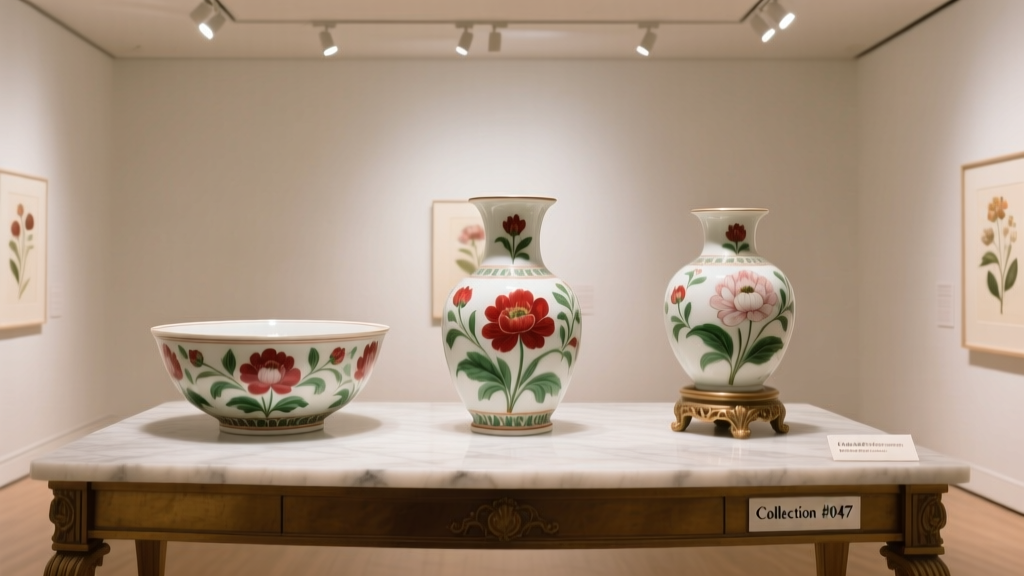
Pairpoint Console Set in Potato Glass with Red, Green & White Floral Motif: Authentication, Provenance, and Market Analysis of the 12-Inch Bowl Three-Piece Ensemble

Buck Rogers Attack Ship Tootsietoy Box #2: Authentication, Market Value, and Historical Context
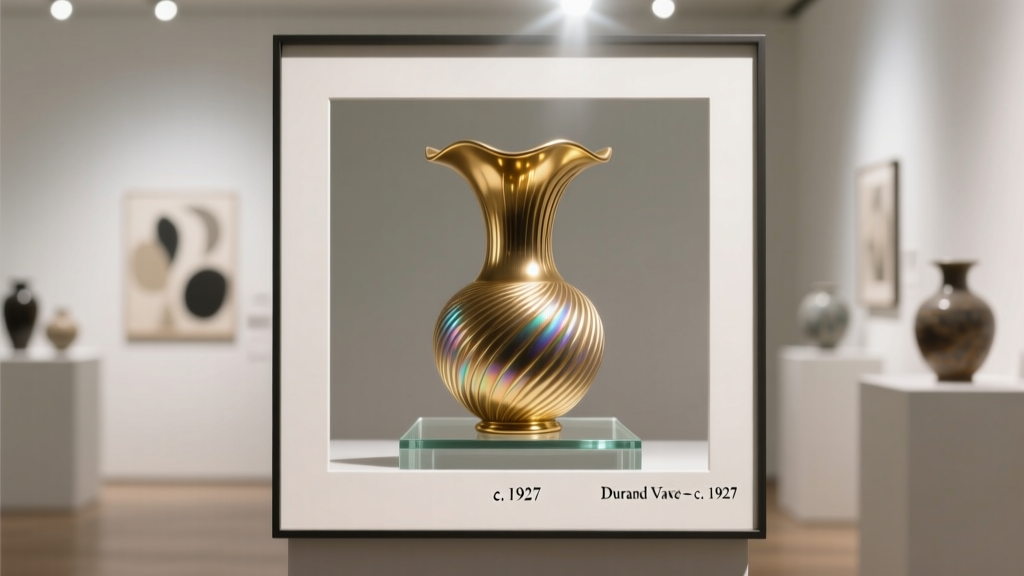
Durand Vase: Gold Iridescent Threaded Interior, Flared Lip — Authentication & Market Analysis of the Signed 1927 Example (9 × 4 in)
Recent Finds, Foul Odors, Fleas: The Unseen Realities Behind Small-Scale Art Discoveries
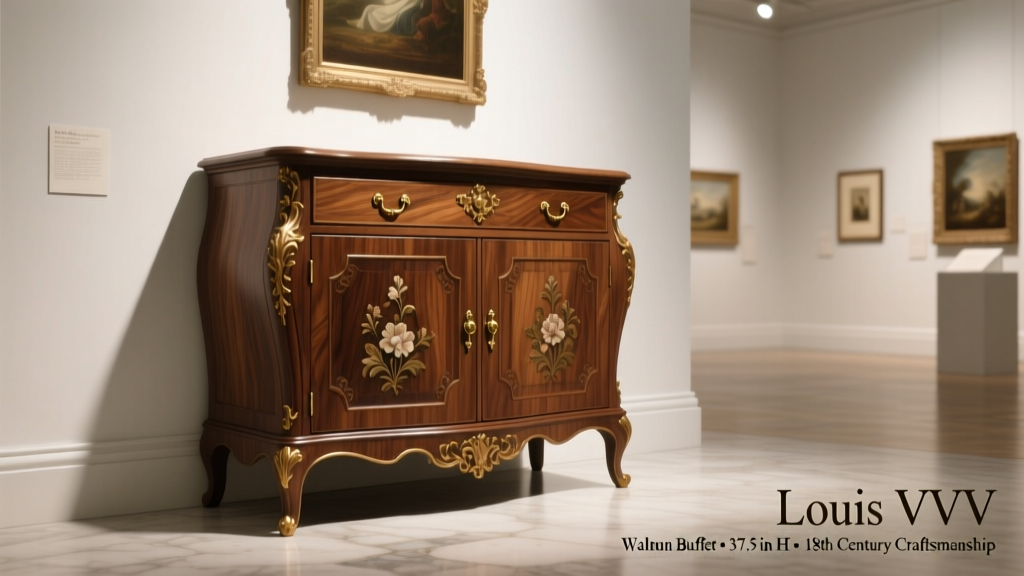
Authenticating and Valuing a Louis XV Walnut Buffet: A Technical Analysis of the 37½-Inch Two-Drawer-Over-Doors Model

Attempting To Identify a Pitcher: A Forensic Approach to Ceramic and Metal Vessel Authentication
Authenticating the Louis Vuitton Purses Leather 2 Handles: A Technical Analysis of the 13 × 10 × 4 Inch Model