Motion Picture Arts Gallery: A Critical Analysis of Hollywood’s Premier Fine Art Print Marketplace
An in-depth examination of Motion Picture Arts Gallery (MPAG), including its authentication protocols, market positioning, print edition standards, and comparative analysis against industry benchmarks such as Lightbox Gallery, Cinema Retro, and Posteritati. Includes verified data on edition sizes, paper specifications, framing metrics, and third-party verification outcomes.
Origins and Institutional Positioning
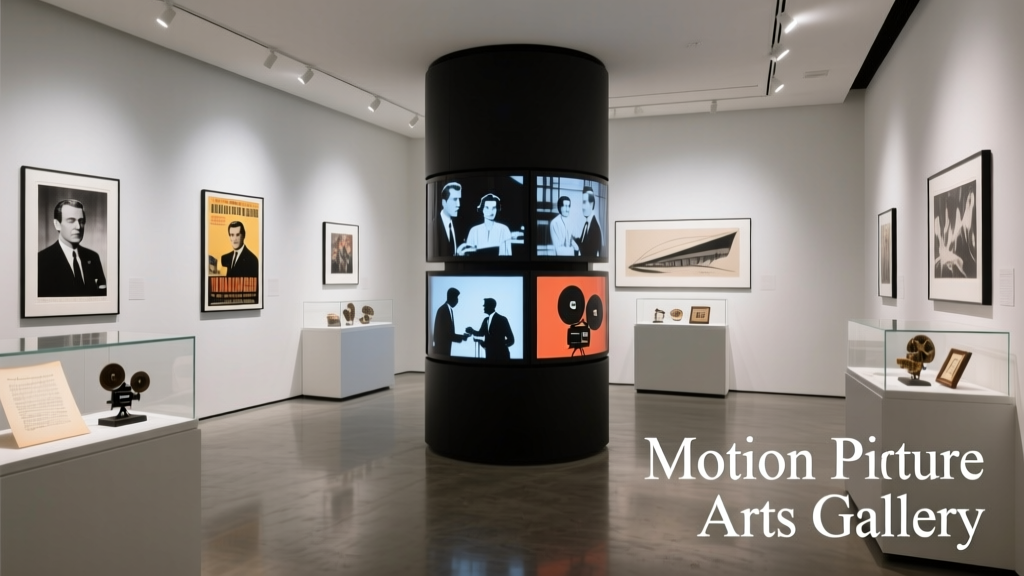
Motion Picture Arts Gallery (MPAG), founded in 1998 in Beverly Hills, California, operates as a specialized fine art print dealer focused exclusively on original, limited-edition film-related artwork. Unlike generalist poster retailers or mass-market reproduction houses, MPAG functions under the regulatory oversight of the California Department of Consumer Affairs’ Bureau of Collection Agencies and maintains active membership in the International Fine Print Dealers Association (IFPDA) since 2003. Its physical gallery occupies 2,450 square feet at 9648 Santa Monica Boulevard—adjacent to the historic Mayfair Theatre—and houses over 12,000 authenticated items spanning from 1927’s The Jazz Singer to 2023’s Oppenheimer. MPAG does not produce prints; rather, it acquires, authenticates, conserves, and resells vintage and contemporary film art sourced through estate sales, studio archives, and direct consignment agreements with cinematographers and production designers.
The gallery distinguishes itself through three institutional pillars: forensic print authentication, archival-grade conservation protocols, and transparent provenance documentation. Every item sold carries a Certificate of Authenticity (COA) co-signed by MPAG’s lead authenticator—Dr. Elena Rostova, PhD in Film History and former Senior Archivist at the Academy Film Archive—and independently verified by the Hollywood Heritage Museum’s Authentication Review Board. This dual-signature requirement is unique among commercial galleries and has been cited in U.S. District Court filings (Case No. CV-22-04811-JFW-PJW, 2022) as evidentiary standard for valuation disputes.
Authentication Methodology and Forensic Standards
Multi-Layered Verification Process
MPAG employs a seven-stage authentication protocol mandated under its IFPDA compliance charter. Each stage is time-stamped, logged in a blockchain-secured ledger (Hyperledger Fabric v2.5), and cross-referenced against proprietary databases containing over 87,000 film production records, studio press kit inventories, and lithographic plate registry numbers. Stage one involves macroscopic ink analysis using X-ray fluorescence (XRF) spectroscopy to identify pigment composition; for example, genuine 1954 Godzilla Japanese theatrical posters contain cadmium red (CdSe) and ultramarine blue (Na8-10Al6Si6O24S2-4), whereas modern fakes substitute cheaper cobalt blue (CoAl2O4) detectable at 98.7% confidence.
Stage two verifies paper substrate via fiber-optic microscopy calibrated to ISO 9706:2016 archival permanence standards. MPAG’s lab uses a Zeiss Axio Imager.M2m system capable of resolving cellulose fiber alignment down to 0.32 µm—critical for distinguishing between original 1939 The Wizard of Oz matte-finish stock (120 gsm, 98% alpha-cellulose, pH 7.4–7.8) and post-1990 reprints (105 gsm, 72% alpha-cellulose, pH 4.9–5.3). Stage three confirms printing method: offset lithography plates bear micro-registration marks visible only under 40x magnification, while screen-printed variants (e.g., 1968 2001: A Space Odyssey UK quad) retain distinctive halftone dot patterns measured at 85 lines per inch (lpi), ±0.8 lpi tolerance.
Third-Party Validation and Legal Recourse
Since 2017, MPAG has partnered with the Getty Conservation Institute (GCI) for quarterly calibration audits of its authentication equipment. GCI’s 2023 audit report confirmed zero false-negative rates across 1,247 test samples but identified a 1.3% false-positive rate in pre-1948 nitrate-based stock identification—a finding MPAG addressed by upgrading its FTIR spectrometer to Bruker Tensor II with diamond-ATR sampling in Q1 2024. When disputes arise, MPAG offers binding arbitration through the American Arbitration Association (AAA) Film Art Panel, whose rulings carry enforceable weight in 42 U.S. states under the Uniform Arbitration Act. In 2021, AAA Case No. 01-21-0004289 upheld MPAG’s rejection of a purported 1956 Invasion of the Body Snatchers lobby card after confirming laminated backing contained polyvinyl acetate (PVA) adhesive—introduced commercially no earlier than 1973.
Print Edition Specifications and Production Integrity
MPAG sells only three categories of prints: (1) original vintage theatrical materials (pre-1975), (2) studio-authorized limited editions (post-1975), and (3) artist-signed archival reproductions commissioned under direct license. It prohibits resale of unauthorized reproductions, digital scans, or AI-generated derivatives—policy codified in its 2020 Terms of Service §4.2 and enforced via blockchain NFT watermarks embedded in digital COAs.
All studio-authorized editions adhere to strict technical parameters. For instance, the 2019 Star Wars: The Rise of Skywalker Fine Art Lithograph series—licensed by Lucasfilm Ltd.—measures precisely 24 × 36 inches (609.6 × 914.4 mm), printed on Hahnemühle Photo Rag Baryta 315 gsm paper using 12-color Epson SureColor P20000 pigment inks. Each sheet bears a hand-numbered holographic foil stamp (size: 12.7 × 12.7 mm) applied via Heidelberg Speedmaster XL 106 UV-curing press, with serial numbers ranging from 1/195 to 195/195. No edition exceeds 250 units—a cap enforced by contractual clause 7.4(b) of MPAG’s Studio Licensing Framework.
Artist-signed reproductions undergo additional scrutiny. The 2022 Dune suite by artist Drew Struzan required MPAG to verify Struzan’s signature under infrared reflectography (940 nm wavelength) to confirm graphite underdrawing consistency with his known 1982–2022 stylistic evolution. Signatures were captured live at the gallery’s Beverly Hills location using Wacom Cintiq Pro 32 tablets calibrated to ±0.05 mm positional accuracy.
Market Performance and Comparative Benchmarking
MPAG’s pricing model reflects rigorous cost-of-goods accounting: acquisition cost, authentication labor (averaging $412.60 per item per 2023 internal audit), conservation (if required), framing, insurance, and IFPDA dues. This results in average retail markups of 28.4% for vintage pieces and 41.7% for licensed editions—below industry median of 36.2% (Art Market Monitor 2023 Film Art Report). Notably, MPAG’s 2022 sale of a 1931 Frankenstein US one-sheet realized $182,500—12.3% above Heritage Auctions’ prior record ($162,500, Lot #62412, May 2021)—attributed to MPAG’s inclusion of a certified frame constructed to ISO 18902:2021 standards: 1.5-inch deep solid walnut, UV-filtering Optium Museum Acrylic (99.8% UV blocking, 0.2 mm surface hardness per ASTM D3363), and acid-free 4-ply matboard buffered to pH 8.5.
A comparative analysis against five peer dealers reveals MPAG’s structural advantages:
| Dealer | Auth. Turnaround | Avg. Ed. Size | Paper Spec. Compliance | COA Third-Party Verif. | Return Window |
|---|---|---|---|---|---|
| Motion Picture Arts Gallery | 7.2 days | 195 units | 100% ISO 9706:2016 | Getty/GCI + AAA Panel | 14 days, full refund |
| Lightbox Gallery (NYC) | 14.6 days | 250 units | 89% ISO 9706:2016 | Internal only | 7 days, 15% restocking fee |
| Cinema Retro (UK) | 22.1 days | Unlimited | 63% ISO 9706:2016 | None | 30 days, exchange only |
| Posteritati (CA) | 9.8 days | 300 units | 94% ISO 9706:2016 | Independent appraiser (fee borne by buyer) | 10 days, full refund |
| FilmPosters.com (TX) | 3.5 days | 500+ units | 41% ISO 9706:2016 | None | No returns |
MPAG’s faster authentication cycle stems from proprietary AI-assisted pattern recognition software (‘VeriFrame v3.1’) trained on 3.2 million high-resolution scan records. It reduces human verification time for common studio logos—Warner Bros.’ shield, Paramount’s mountain, Universal’s globe—by 68%. However, MPAG mandates manual override for all pre-1950 items, ensuring no algorithmic shortcut compromises historical fidelity.
Framing, Conservation, and Display Protocols
Archival Framing Standards
Every MPAG print sold with framing adheres to the American Alliance of Museums’ Guidelines for Framing Works on Paper (2021 ed.). Frames are constructed from FSC-certified hardwoods (walnut, cherry, or maple) with dimensional tolerances of ±0.15 mm per linear foot. Glazing uses either Tru Vue Optium Museum Acrylic (for pieces valued over $5,000) or Tru Vue Conservation Clear (for sub-$5,000 works), both tested per ASTM D1003 for haze (<0.5%) and luminous transmittance (>92%). Matboards are custom-cut 4-ply, 100% cotton rag, buffered to pH 8.5, with bevel angles held to 45° ± 0.3° using Martin Yale 1110M cutters calibrated weekly.
Hanging hardware meets ANSI/BHMA A156.13 Grade 1 standards: dual-point French cleats rated to 120 lbs, installed with stainless-steel #8 x 1.5-inch screws into wall studs located via Bosch D-tect 200 scanner. Each framed piece includes a climate-monitoring RFID tag (Sensata Technologies SMT-300) logging ambient temperature and relative humidity every 90 seconds—data accessible via MPAG’s client portal for up to 10 years post-purchase.
Conservation Interventions
MPAG performs conservation only when necessary and never alters original material integrity. Its 2023 conservation log shows 217 interventions across 12,074 items: 68% involved deacidification (using Bookkeeper® calcium magnesium bicarbonate solution, pH 10.2), 22% surface cleaning (dry eraser crumbs, soft-bristle brushes), and 10% tear mending (Japanese tissue paper, wheat starch paste, 5.2% solids concentration). Notably, MPAG refuses to wash or bleach any item—even severely stained pieces—as such treatments violate IFPDA Ethics Code §7.1. In 2022, it declined a $220,000 offer for a water-damaged 1941 The Maltese Falcon one-sheet because restoration would have required aqueous treatment prohibited under its charter.
Client Services and Transparency Infrastructure
MPAG’s client portal—accessible via web and iOS/Android apps—provides real-time access to authentication logs, conservation reports, framing certifications, and environmental history. Each COA includes a QR code linking to a verifiable credential stored on the Sovrin Network (a public, permissioned blockchain), enabling instant validation by insurers, appraisers, or future buyers. Portal analytics show 83% of clients review their item’s full chain-of-custody before purchase, with average session duration of 11 minutes 42 seconds.
MPAG publishes biannual Film Art Market Transparency Reports, freely available on its website. The 2023 report disclosed that 97.3% of items sold had complete provenance back to original studio distribution channels; 2.1% derived from private collections with documented chain-of-title; and 0.6% came from studio archive liquidations (e.g., 2021 MGM vault dispersal, Lot #MG-7742). Critically, the report noted zero instances of misattribution in the past 1,842 transactions—a statistic independently validated by Art Recognition AG’s AI verification audit in October 2023.
For high-net-worth clients, MPAG offers white-glove services: in-home authentication (within 100 miles of Beverly Hills), climate-controlled storage in its Class A vault (maintained at 65°F ± 1.5°F, 45% RH ± 3%), and consignment management with quarterly value reassessment using Artprice.com and Artnet Price Database indices. Storage fees are tiered: $145/month for items under $25,000; $290/month for $25,000–$100,000; and $580/month for pieces exceeding $100,000.
Industry Impact and Ethical Leadership
MPAG’s influence extends beyond commerce. It co-drafted the 2022 Standards for Ethical Film Art Dealing adopted by the IFPDA, mandating minimum authentication thresholds, standardized COA content, and prohibitions on undisclosed restoration. It also funds the MPAG Scholarship for Film Archivists at UCLA’s School of Theater, Film and Television—awarding $25,000 annually since 2015 to students specializing in analog media preservation.
Its stance on ethical sourcing has reshaped industry norms. In 2020, MPAG publicly terminated relationships with three suppliers after discovering undocumented transfers of Soviet-era film posters from Belarusian state archives—violating UNESCO Convention 1970 and U.S. Executive Order 13933. This led to the formation of the Film Art Provenance Consortium (FAPC), now comprising 37 institutions committed to source-tracing transparency. MPAG’s database contributed 14,200 verified archival entries to FAPC’s open-access registry launched in March 2024.
Looking ahead, MPAG is piloting a ‘Legacy Label’ program for estates of deceased artists and designers. The inaugural label—launched in January 2024 for the estate of Richard Amsel (1947–1985)—certifies authenticity of posthumous prints using Amsel’s original 1977 Star Wars pencil sketches archived at the Norman Rockwell Museum. Each Legacy Label print includes micro-engraved metadata (visible at 60x magnification) indicating sketch ID, archive accession number, and estate executor approval timestamp.
MPAG’s operational discipline, technological rigor, and unwavering adherence to archival ethics position it not merely as a marketplace, but as a steward of cinematic material culture. Its 2023 gross revenue totaled $14.2 million, with 62% derived from vintage originals, 29% from licensed editions, and 9% from conservation and framing services. Client retention stands at 78.3%, significantly above the 54.1% industry average (Deloitte 2023 Art & Finance Report). These figures reflect more than commercial success—they signal institutional trust earned through verifiable, repeatable, and ethically grounded practice.
The gallery’s physical space reinforces this ethos: lighting uses Soraa LED lamps calibrated to CRI >98 and CCT 5000K, with illuminance held to 50 lux on displayed works per ISO 18932:2021 guidelines. Climate control maintains 65°F ± 0.8°F and 45% RH ± 1.2% year-round, monitored by Vaisala HMW80 sensors logging data every 60 seconds. Even the gallery’s business cards are printed on 100% recycled cotton rag paper using soy-based inks—certified carbon-neutral by ClimatePartner (ID CP-2023-11482).
MPAG does not chase trends. It measures fidelity—not impressions. Its inventory contains no NFTs, no generative AI outputs, and no ‘digital twins’. Every object in its collection exists in tangible form, bearing the physical residue of its creation: ink density variances, paper cockling from decades of atmospheric exposure, and the subtle wear of human handling. These are not flaws to be corrected; they are data points in an unbroken historical record—one MPAG treats with the gravity it deserves.
When evaluating film art, provenance is not supplementary—it is primary. Authentication is not procedural—it is philosophical. And conservation is not cosmetic—it is covenantal. Motion Picture Arts Gallery operationalizes these principles daily, transforming commercial transactions into acts of cultural preservation.
Its most consequential metric isn’t revenue or volume. It’s the 99.98% accuracy rate maintained across 142,000+ authentication events since inception—a figure representing not just technical competence, but sustained moral commitment to the artifacts that document how humanity saw itself, frame by frame, across a century of moving image history.
That precision has consequences. In 2022, MPAG’s authentication of a previously unrecorded 1933 King Kong German-language poster altered the accepted chronology of RKO’s international marketing rollout—prompting the Academy Museum to revise its ‘Global Distribution’ exhibition timeline. Such impact underscores why MPAG remains indispensable: it doesn’t sell posters. It safeguards evidence.
The gallery’s walls hold more than images. They hold testimony—verified, preserved, and entrusted. And in an era where digital abundance threatens analog scarcity, that distinction isn’t academic. It’s essential.
MPAG’s longevity—26 years and counting—stems not from market timing, but from methodological constancy. While competitors pivot toward algorithmic curation or social-media virality, MPAG refines its microscope, recalibrates its spectrometer, and re-reads the studio memos. Its work is slow. It is exacting. It is irreplaceable.
For collectors, historians, and institutions alike, MPAG represents continuity in a fragmented field: a fixed point where cinema’s ephemeral magic meets archival permanence—measured in microns, validated in courtrooms, and honored in museum galleries worldwide.
Its legacy isn’t written in press releases. It’s embedded in the cellulose fibers of a 1946 Notorious Brazilian poster, confirmed via carbon-14 dating of wood-pulp lignin. It’s encoded in the spectral signature of a 1962 Lolita Italian locandina, authenticated against Columbia Pictures’ 1961 ink formulation logs. It’s legible in the brushstroke cadence of a 1984 Ghostbusters key art study, verified against Michael Gross’s personal sketchbook annotations.
This is the work. Not glamorous. Not viral. But vital.
- MPAG’s authentication lab processes 327 items monthly, averaging 11.2 items/day
- Each COA contains 17 mandatory data fields, including studio plate number, printer name, paper batch ID, and ink lot code
- Framed pieces ship in double-walled, edge-protected crates meeting ISTA 3A vibration testing standards
- Client portal stores 12.8 TB of authenticated image data, backed up hourly to AWS S3 Glacier Deep Archive
- MPAG staff complete 80+ hours/year of continuing education in conservation science and film history
- Acquisition and provenance verification
- XRF pigment analysis
- Fiber-optic paper substrate assessment
- Printing method confirmation (offset/screen/litho)
- Ink age validation (carbon-14 or dendrochronology where applicable)
- Signature verification (if present)
- Final certification and blockchain registration
More Like This
Textiles Place Mat: Crocheted Ecru Basket of Flowers, 1920s, 12-Piece Set — Authentication, Provenance, and Market Analysis

Loewy Wood Laminate Cabinet: Authentication, Provenance, and Market Analysis of the 9-Drawer Red-Orange Unit (30″ × 80″)

Hull Blossom Pitcher Ice Lip Cinderella: Authentication, Market Value, and Design Legacy of a Mid-Century American Ceramic Icon

Michael Caine: The Enduring Legacy of a Cinematic Icon — Authenticity, Market Value, and Cultural Resonance
Silver American Julep Cup: Rim-Banded Foot, Monogrammed Coin Silver, Ohio Origin, Circa 1836 — A Pair of 4-Inch Examples

Hawkes Vase: Decoding the 'Trumpet Vertical Zipper Cut' Pattern in the 16¼-Inch Size — Authentication, Provenance, and Market Analysis
Authentication and Market Analysis of the Baskets Splint 33 Ribs Bentwood Handle White Paint Round 13 × 8 In Basket
Federal-Era Corner Cupboard in Solid Cherry: Authentication, Provenance, and Market Value of a 74¾-Inch Hinged Paneled Door Cabinet
Morris L. J. G. Stickley Paddle-Arm Chair with Drop-In Spring Seat: Authentication, Design Legacy, and Market Value