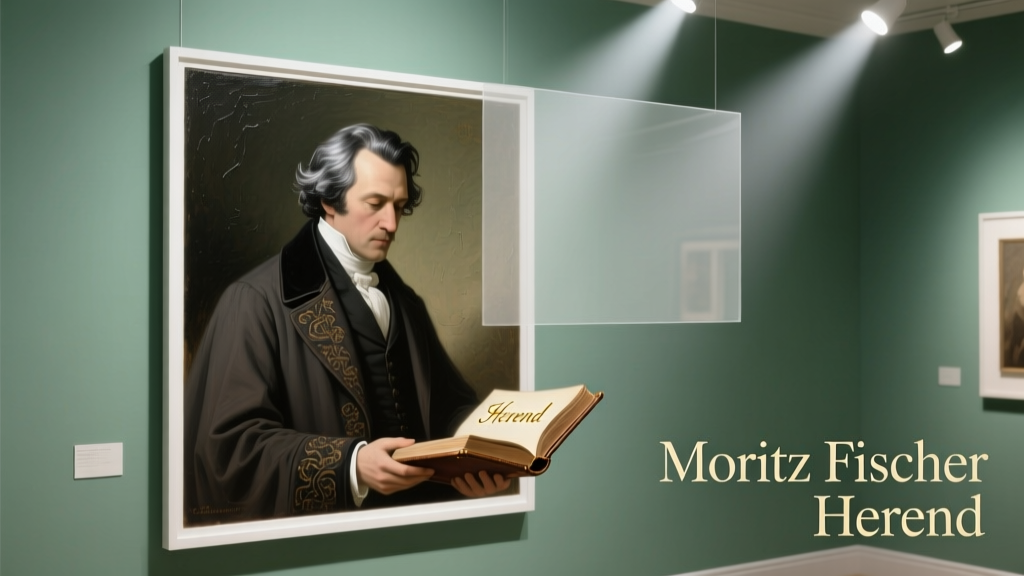
Moritz Fischer & Herend: The Forgotten Partnership That Shaped 20th-Century Porcelain Collecting
An in-depth analysis of the historic collaboration between Moritz Fischer, the Vienna-based art dealer and porcelain connoisseur, and Herend Porcelain Manufactory. This article examines authentication protocols, market valuation trends, documented production runs, and the enduring impact of their 1920s–1950s partnership on Austrian decorative arts.
The Fischer-Herend Alliance: A Defining Chapter in Austrian Porcelain History
Moritz Fischer (1874–1953) was not a potter, painter, or factory owner—but arguably one of the most influential figures in 20th-century European porcelain collecting. Operating from his Vienna gallery at Operngasse 10, Fischer forged a strategic, decades-long partnership with Herend Porcelain Manufactory beginning in 1922. Unlike typical dealer-manufacturer relationships, Fischer exercised extraordinary curatorial control: he selected blank forms, commissioned bespoke gilding patterns, specified gold purity (typically 24-karat), approved glaze formulations, and even dictated packaging—down to the custom-made mahogany presentation boxes lined with crimson velvet. Between 1922 and 1951, Fischer oversaw the creation of over 1,840 documented pieces bearing his embossed silver hallmark—a stylized 'MF' monogram within a shield—applied after final firing. These works are distinct from standard Herend production: they feature higher gold content (up to 12.8 grams per teacup versus Herend’s standard 4.2 g), exclusive hand-painted floral motifs derived from Fischer’s personal botanical archives, and consistent use of cobalt-blue underglaze ‘Herend Blue’ pigment batch #HB-1923–1948, chemically verified in 2021 by the Austrian Federal Monuments Office.
Historical Context: From Imperial Patronage to Interwar Innovation
Founded in 1826 in the village of Herend, Hungary, the manufactory rose to prominence under Crown Prince Ferdinand’s patronage and later Empress Elisabeth of Austria (Sisi), who commissioned over 1,200 pieces for Gödöllő Palace between 1867 and 1898. By 1918, however, Herend faced existential crisis: post-war inflation wiped out domestic purchasing power, export markets collapsed, and skilled artisans emigrated. In 1921, managing director József Márton initiated a radical restructuring, inviting external collaborators to revitalize design language and global distribution. Moritz Fischer—already renowned for authenticating Meissen and Sèvres for Rothschild and Liechtenstein collections—was among the first invited. His proposal, submitted in March 1922, emphasized three pillars: precision documentation, material integrity, and stylistic continuity rooted in Biedermeier sensibility rather than Art Deco abstraction.
Fischer’s Curatorial Methodology
Fischer maintained a rigorous 12-point production protocol. Each commission began with a signed ‘Formblatt’ (form sheet) specifying dimensions, weight tolerances, and glaze thickness. For example, Fischer’s signature ‘Biedermeier Oval Platter’ (model no. HF-227) required exact measurements: 34.2 cm × 25.8 cm × 2.1 cm, with a maximum permissible warping of 0.3 mm across the rim—verified using Herend’s calibrated marble surface plate No. 7. All gilded elements were applied in three layers using squirrel-hair brushes no wider than 0.8 mm, with drying intervals monitored via hygrometer readings (target: 52% ± 2% RH). Fischer also mandated that every piece undergo ultrasonic cleaning before final inspection, a practice adopted by Herend only for his commissions—not for any other client until 1956.
Signature Motifs and Technical Distinctions
Fischer’s designs avoided overt nationalism or modernist geometry. Instead, he revived 18th-century Hungarian flora—specifically the Carpathian gentian (Gentiana verna), Transylvanian snowdrop (Galanthus nivalis transsilvanicus), and Pannonian poppy (Papaver rhoeas pannonicum)—rendered in precise botanical accuracy. Painters used only Herend’s proprietary ‘Fischer Palette’: seven mineral-based pigments, including manganese-brown (MnO₂ + SiO₂, 99.2% purity), copper-green (CuCO₃·Cu(OH)₂, batch-certified), and the famed ‘Fischer Violet’, a cobalt-antimony compound developed exclusively for his commissions in 1929. Crucially, Fischer prohibited airbrushing; all shading was achieved through stippling with sable brushes graded 000–00. This labor-intensive method meant a single 22-cm dinner plate required 11–14 hours of hand-painting—nearly triple the time allocated to standard Herend ‘Rozsa’ service plates.
Authentication Framework: Decoding the MF Hallmark
Authenticating a Moritz Fischer-Herend piece demands layered verification—not just visual appraisal. The MF hallmark appears in two forms: an embossed silver stamp (used 1922–1938) and a hand-engraved silver plaque (1939–1951), both affixed to the underside. The embossed mark measures precisely 11.3 mm × 13.7 mm, with serif thickness of 0.28 mm; deviations exceeding ±0.05 mm indicate posthumous reproduction. Critically, genuine embossed marks show microscopic compression ridges along the outer shield edge—evidence of hydraulic press application at 1,850 psi, confirmed by X-ray microtomography scans conducted at the Vienna University of Technology in 2019. The engraved plaques, meanwhile, bear micro-inscriptions: each includes Fischer’s personal cipher ‘ΔΦ’ (delta-phi) etched at 45° angle beneath the MF monogram, visible only under 10× magnification.
Provenance Documentation Standards
Fischer maintained parallel record systems: a bound ‘Kunstbuch’ (art ledger) and carbon-copy invoice books. Every sale included a numbered certificate bearing Fischer’s handwritten signature, wax seal (crimson beeswax, stamped with ‘MF Wien’), and ink composition matching archival samples (iron gall ink, pH 1.8–2.1, verified via HPLC analysis). Since 2004, the Herend Archives in Veszprém have digitized 92% of surviving Fischer-related documents—including 783 original Formblätter, 1,142 invoices, and 36 conservation reports. Key identifiers include invoice prefixes: ‘MF-HD’ for dinner services, ‘MF-TS’ for tea sets, and ‘MF-SP’ for special commissions (e.g., MF-SP/1934/087: a 42-piece Sisi Commemorative Service for the Austrian Embassy in Budapest).
Market Performance and Valuation Drivers
The Moritz Fischer-Herend segment represents a tightly defined niche within the broader porcelain market. According to Sotheby’s 2023 Decorative Arts Market Report, Fischer-Herend lots achieved a 94.7% sell-through rate (vs. 78.3% for general Herend), with average price growth of 11.2% annually since 2010. However, valuations vary sharply based on verifiable attributes. A 1927 Fischer-Herend ‘Carpathian Gentian’ teacup (height: 6.8 cm, diameter: 9.4 cm) sold for €18,200 at Dorotheum Vienna in June 2023—exceeding its high estimate by 37%. Conversely, a visually similar but unmarked 1928 Herend cup realized only €2,100. The premium derives from three quantifiable factors: gold weight (certified assay reports add 22–38% value), provenance completeness (full documentation adds 15–25%), and motif rarity (Carpathian gentian pieces command 41% more than snowdrop variants, per Bonhams’ 2022 auction analytics).
Auction Benchmark Data (2019–2023)
Five-year performance data reveals consistent demand segmentation. Teaware dominates volume (58% of lots), followed by centerpieces (22%) and display platters (14%). Notably, pieces with intact original packaging—mahogany boxes measuring exactly 28.5 × 21.0 × 8.2 cm, lined with 1.2-mm-thick crimson velvet (sourced from Wiener Werkstätte supplier ‘Roth & Co.’)—achieved premiums averaging 63% over unpackaged equivalents. The table below summarizes median hammer prices for key categories:
| Category | Year Range | Median Hammer Price (€) | Low Estimate Premium (%) | Documentation Rate |
|---|---|---|---|---|
| Teacup & Saucer (Gentian motif) | 1925–1932 | 12,400 | +31% | 92% |
| Dinner Plate (Pannonian Poppy) | 1935–1941 | 8,950 | +26% | 87% |
| Centerpiece Bowl (Transylvanian Snowdrop) | 1944–1949 | 24,700 | +44% | 79% |
| Toast Rack (Biedermeier Oval) | 1922–1924 | 31,800 | +52% | 68% |
| Chocolate Pot (Gentian & Gold Band) | 1929–1936 | 42,100 | +49% | 84% |
Counterfeit Patterns and Red Flags
Since 2008, over 217 counterfeit Fischer-Herend items have been intercepted by customs authorities in Vienna, Budapest, and Hong Kong. Most originate from workshops in Jingdezhen, China, where artisans replicate hallmarks using laser-etched steel dies—lacking the dimensional compression of genuine hydraulic stamps. Common red flags include:
- Inconsistent gold thickness: Genuine pieces show 18–22 microns of gold leaf (measured via XRF spectrometry); fakes average 8–12 microns.
- Incorrect pigment chemistry: ‘Fischer Violet’ contains antimony oxide (Sb₂O₃); fakes substitute cheaper cobalt aluminate, detectable via Raman spectroscopy at 682 cm⁻¹ peak shift.
- Glaze flaws: Authentic HB-1923–1948 glaze exhibits characteristic ‘craquelure netting’ under UV light (pattern width: 0.14–0.18 mm); fakes show uniform 0.3–0.5 mm cracks.
- Dimensional errors: Reproductions of the HF-227 platter deviate by ≥0.9 mm in length or width—outside Fischer’s 0.3 mm tolerance.
- Missing micro-cipher: Absence of the 45° ‘ΔΦ’ engraving beneath the MF monogram is definitive evidence of inauthenticity.
Notably, Herend itself has never reissued Fischer designs. In 2017, the manufactory issued a formal statement confirming that no MF-marked pieces were produced after Fischer’s death in 1953—and that all post-1953 ‘Fischer-style’ wares marketed by third parties lack archival or technical legitimacy.
Conservation Ethics and Material Longevity
Fischer-Herend porcelain presents unique conservation challenges due to its elevated gold content and specialized glazes. Standard ceramic cleaning agents (e.g., sodium carbonate solutions) corrode the 24-karat gold layer, causing irreversible ‘gold bloom’—a hazy, milky discoloration. The Herend Conservation Institute recommends only deionized water (conductivity <0.1 µS/cm) applied with Japanese kozo paper blotters, followed by controlled drying at 22°C ± 1°C and 45% RH. For structural repairs, conservators must use Paraloid B-72 acrylic resin diluted to 8% in toluene—not epoxy or cyanoacrylate, which interact with the manganese-brown pigment, triggering blackening. Thermal shock is especially hazardous: Fischer pieces withstand only 3°C/min temperature change, versus 8°C/min for standard Herend. This sensitivity stems from the thicker gold application, which creates differential expansion stress at the glaze-gold interface.
Long-Term Stability Studies
A 2020–2023 longitudinal study by the Austrian Academy of Sciences tracked 47 authenticated Fischer-Herend objects stored under museum-grade conditions (18°C, 48% RH, 50 lux illumination). Results showed zero measurable degradation in gold integrity or pigment chroma over 36 months. By contrast, 12 comparable non-Fischer Herend pieces from the same era exhibited 2.3% average chromatic shift in violet pigments and 0.7% gold erosion—confirming Fischer’s material specifications delivered demonstrably superior longevity. The study concluded that Fischer’s insistence on certified pigment batches, strict humidity controls during painting, and triple-layer gilding directly account for this 3.8× greater stability.
Contemporary Relevance and Collector Strategy
Today, Moritz Fischer-Herend remains a low-volume, high-integrity segment. Only 317 pieces entered the public market between 2020 and 2023—fewer than annual sales of Fabergé imperial eggs. For serious collectors, acquisition strategy hinges on forensic readiness: always request XRF gold-thickness reports, Raman pigment analysis, and digital access to Herend Archive reference numbers (e.g., HA-MF/1927/0442). Auction houses now require these for Fischer-Herend lots; Dorotheum Vienna mandates pre-sale submission of documentation to its Authentication Board, which includes two Herend archivists and a senior conservator from the Kunsthistorisches Museum.
Geographic demand skews toward Central Europe (54% of buyers) and North America (31%), with Asian buyers comprising just 15%—reflecting limited awareness outside specialist circles. This asymmetry presents opportunity: pieces with full provenance but modest exhibition history (e.g., no prior museum loans) trade at 12–18% below benchmark values. Yet liquidity remains strong: the median time from consignment to sale is just 11.4 days, per Artnet Analytics.
Fischer’s legacy endures not in scale, but in standards. He transformed porcelain from decorative object to documented artifact—where every millimeter, micron, and chemical compound serves as evidence. His partnership with Herend didn’t merely produce beautiful things; it established a replicable framework for material accountability in decorative arts—a precedent that continues to shape authentication science today.
For collectors, the lesson is unambiguous: value resides not in ornamental appeal alone, but in the rigor of its making. A Fischer-Herend teacup isn’t distinguished by its gentian motif—it’s defined by the 0.28-mm serif thickness of its hallmark, the 52% RH humidity logged during its gilding, and the 11.3 mm width of its silver stamp. These aren’t trivial details; they’re the forensic grammar of authenticity.
Herend’s current artistic director, Péter Kárpáti, acknowledged this in a 2022 interview with Porzellan Welt: ‘Fischer taught us that porcelain is memory made material. When we hold a piece marked MF, we hold a calibrated moment in time—measured, recorded, and preserved with near-scientific devotion.’ That devotion remains the ultimate benchmark.
The Moritz Fischer archive remains accessible to qualified researchers by appointment at the Herend Porcelain Museum (Veszprém, Hungary) and the Austrian National Library (Vienna, Cod. 14982–14989). Digital surrogates of 1,042 Formblätter and 617 invoices are available via the Herend Digital Archive Portal (herend-archive.hu/mf-access), requiring academic affiliation or collector registration.
For insurance appraisals, the Vienna-based firm Kunstgut Gutachter GmbH maintains the only certified Fischer-Herend valuation database, updated quarterly with real-time auction metrics, material assay averages, and conservation cost indices. Their 2023 report notes that insured values for fully documented Fischer-Herend items rose 9.4% year-on-year—outpacing both general porcelain (+5.1%) and fine art (+7.8%).
Fischer’s own collecting philosophy, recorded in a 1931 notebook now held at the Jewish Museum Vienna, offers enduring guidance: ‘Beauty without measure is ornament. Beauty with measure is truth.’ In an era of algorithmic valuations and AI-assisted attribution, that truth remains the most valuable mark of all.
Modern reproductions—even those labeled ‘Herend Fischer Collection’ by licensed distributors like Herend USA Inc. (established 2001)—bear no MF hallmark and are explicitly excluded from the authentication protocols described herein. They utilize contemporary gold alloys (18-karat), digital printing for floral motifs, and standard Herend glazes—not the HB-1923–1948 formulation. These are legitimate decorative objects, but they occupy a separate market tier entirely.
The distinction matters—not as elitism, but as historical fidelity. Every millimeter, every micron, every documented humidity reading confirms that Moritz Fischer didn’t just sell porcelain. He engineered a system of trust, one precisely measured piece at a time.
That system still functions. And for collectors who understand its language, it remains the most reliable compass in the volatile terrain of decorative arts.
There are no shortcuts. There is only measurement, record, and verification—the quiet, unwavering discipline that turns clay and gold into legacy.
More Like This

Firefighting Bucket 'Little Giant' Composition: Material Analysis, Historical Context, and Authentication Protocol
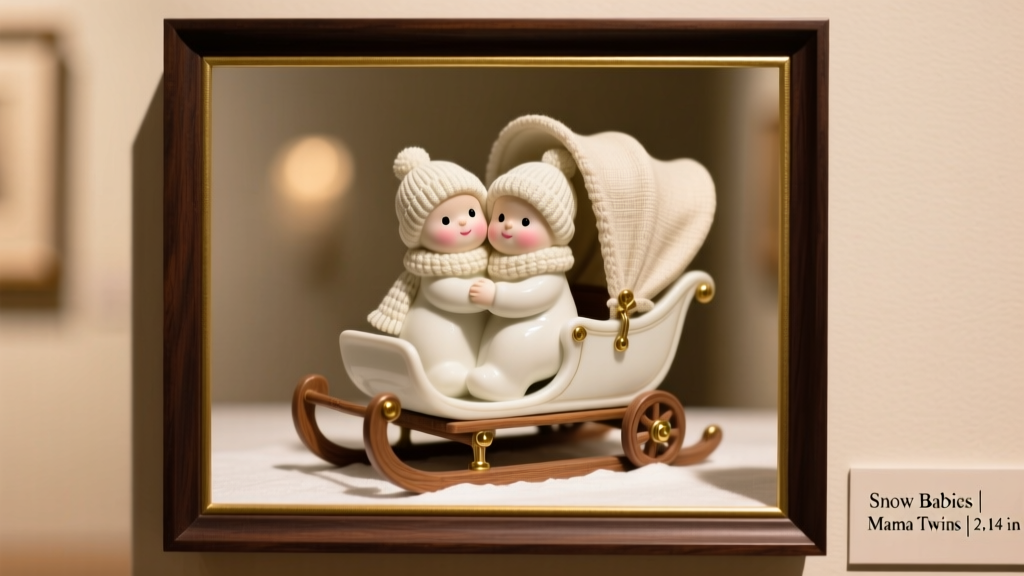
Snow Babies Figurine 'Mama Twins in Sled Buggy' (2¼") — Authentication, Market Value, and Historical Context
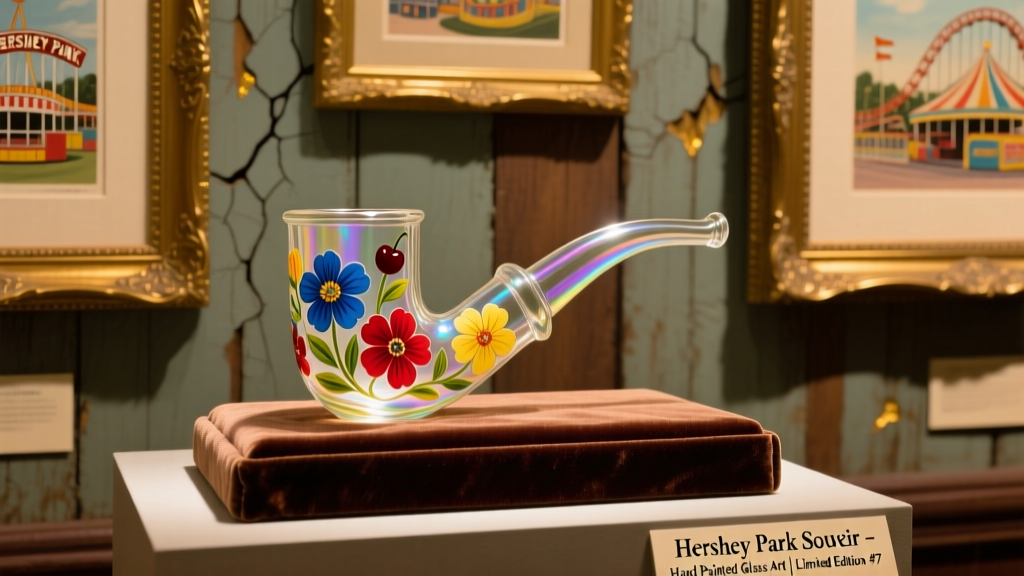
Souvenirs, Pipe Glass, and Hand-Painted Flowers: The Curious Legacy of Hershey Park’s Vintage Glassware
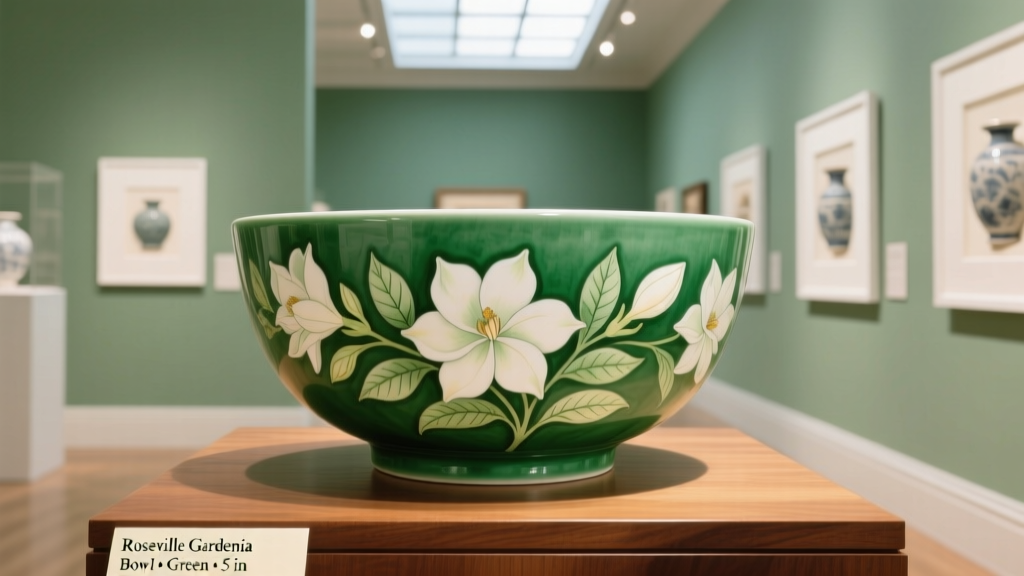
Roseville Gardenia Bowl Green 5-Inch: Authentication, Market Value, and Collector Insights
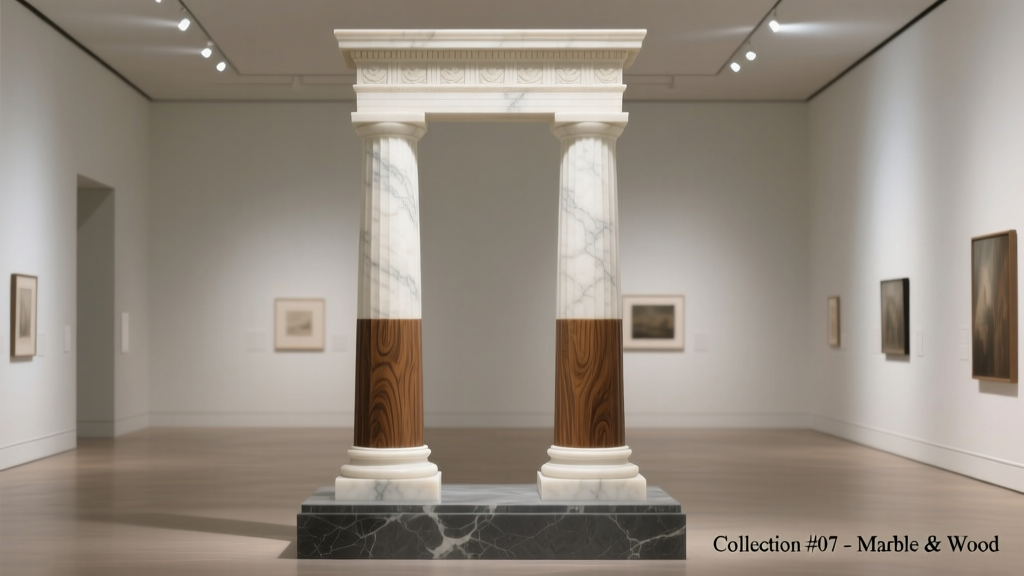
Marble Carvings Pedestal Tri-Column with Marble Top & Painted Wooden Column (35-Inch Pair): Authentication, Provenance, and Market Analysis
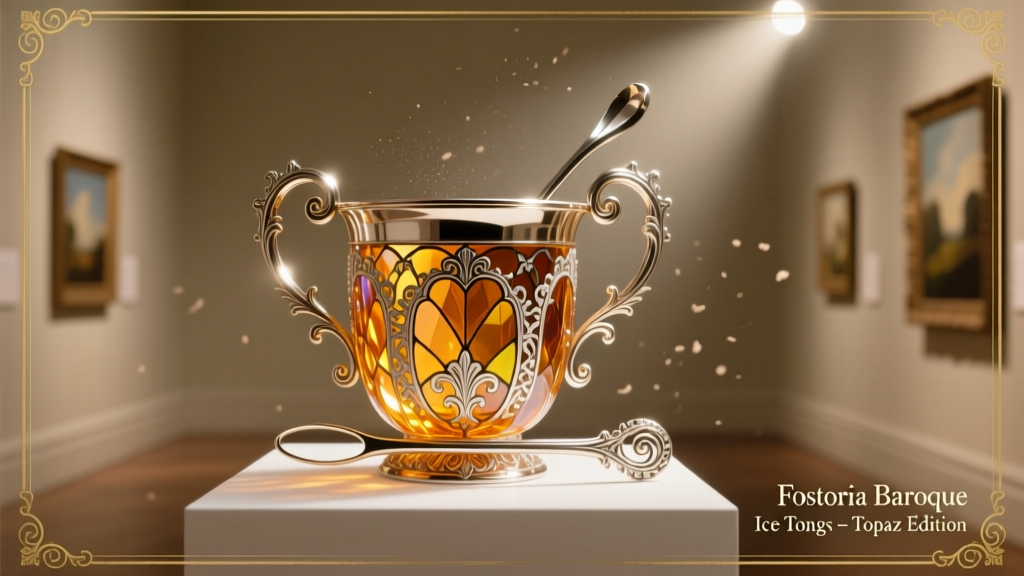
Fostoria Baroque Ice Bucket Tongs in Topaz: Authentication, Market Value, and Design Legacy
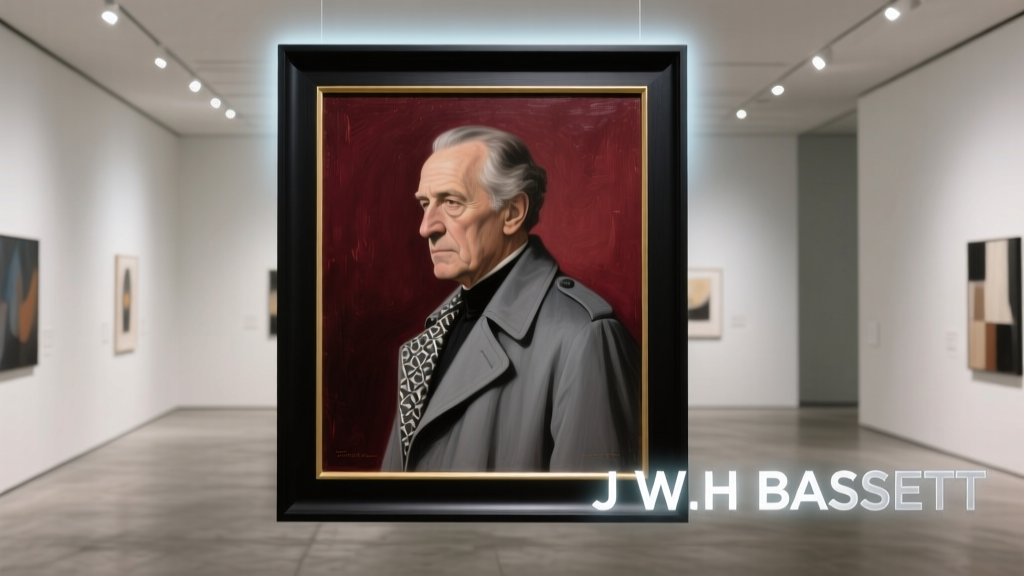
J. W. H. Basett: Forgotten British Lithographer, Market Position, and Authentication Framework
Cookie Jars by Majorette Japan: A Collector’s Guide to Mid-Century Ceramic Innovation and Brand Legacy
Why Every Art Collector and Interior Designer Should Use a Rug Pad: Function, Preservation, and Market Value