More Restrictions on Ivory Sales: How Global Bans Are Reshaping the Art Market and Authenticating Antique Prints
A detailed analysis of tightening international ivory regulations—including the U.S. ivory ban expansion, EU Regulation (EU) 2018/898, UK Ivory Act 2018, and CITES enforcement updates—and their tangible impact on print authentication, provenance research, and valuation of historic works containing ivory components.
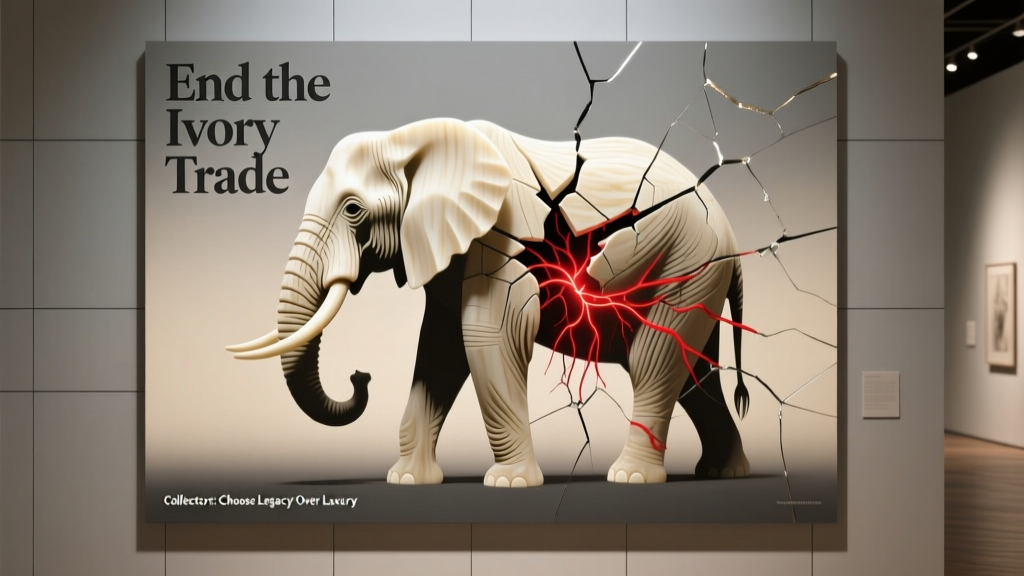
Global ivory trade restrictions have intensified dramatically since 2016, with over 35 countries implementing near-total bans or severe curbs on commercial ivory sales. These measures directly affect art market participants handling prints mounted on ivory panels, framed with ivory inlays, or backed with ivory veneers—particularly pre-1947 Japanese shikishiban (poem cards), 18th-century French cartes à jouer (playing cards), and Victorian-era photographic mounts. The U.S. Fish and Wildlife Service’s 2022 revision to its ivory import/export rules now prohibits interstate commerce of all ivory items unless they meet strict criteria: documented pre-1976 origin, minimal ivory content (<200g), and demonstrable provenance linking them to a legally acquired specimen. This article examines how these legal shifts are transforming authentication protocols, devaluing previously stable collectibles, and forcing conservators and auction houses to adopt new forensic verification methods—including micro-CT scanning, DNA barcoding, and FTIR spectroscopy—to distinguish genuine antique ivory from bone, celluloid, or synthetic polymers.
The Legal Landscape: From CITES to National Enforcement
The Convention on International Trade in Endangered Species of Wild Fauna and Flora (CITES) has governed global ivory regulation since 1975, when African elephants were listed under Appendix II. In 1989, following a catastrophic 50% population decline between 1979 and 1989—estimated by the IUCN at 600,000–700,000 elephants lost—the species was moved to Appendix I, banning all commercial international trade. However, loopholes persisted: ‘pre-convention’ ivory (harvested before 1975) and ‘antique’ exemptions enabled continued movement of older material. That began changing in earnest after the 2016 CITES Conference of the Parties (CoP17) in Johannesburg, where 182 member states adopted Resolution Conf. 10.10 (Rev. CoP17), urging nations to close domestic markets. Since then, China—the world’s largest consumer—enacted a full domestic ban effective January 1, 2018; Hong Kong phased out all sales by December 31, 2021; and Singapore prohibited commercial trade as of September 1, 2021.
U.S. Federal Regulations: The 2016 Rule and Its 2022 Refinements
The U.S. implemented one of the strictest frameworks via the African Elephant Conservation Act and the Endangered Species Act. The 2016 ‘near-total ban’ prohibited import, export, and interstate sale of almost all ivory—except for specific exemptions: musical instruments containing less than 200 grams of ivory manufactured before 1975; household moveable objects with ≤5% ivory by volume made prior to 1976; and items certified by the U.S. Fish and Wildlife Service (USFWS) as antiques (≥100 years old and not repaired or modified with elephant ivory after 1976). In April 2022, USFWS issued Directive 2022-01, further narrowing the ‘antique’ exemption by requiring documentary evidence of acquisition date, country of origin, and chain of custody—not just stylistic attribution. This eliminated reliance on connoisseurship alone. For example, a 19th-century English albumen print mounted on an ivory panel measuring 12.4 × 9.2 cm could no longer be sold across state lines without a notarized bill of sale dated pre-1976 and laboratory confirmation of Loxodonta africana DNA.
European Union: Regulation (EU) 2018/898 and Member-State Variations
The EU adopted Regulation (EU) 2018/898 on June 12, 2018, establishing a near-complete prohibition on intra-EU trade in raw and worked ivory. Crucially, it introduced a ‘de minimis’ exception only for items containing ≤10% ivory by volume, manufactured before March 3, 1947—a cutoff chosen to exclude post-war commercial production. Germany requires third-party certification from institutions like the Bavarian State Collection for Zoology; France mandates registration with the Ministry of Ecology and annual reporting for any object exceeding 200 cm² surface area; while Italy enforces a blanket ban regardless of age, citing Law 157/1992 on wildlife protection. Notably, Christie’s London ceased accepting ivory-mounted prints for consignment in 2019, while Sotheby’s Geneva continues limited handling—but only for items accompanied by CITES Appendix II certificates issued prior to 2017.
Ivory in Print Media: Historical Context and Material Prevalence
Ivory was never a primary substrate for fine-art prints but served critical auxiliary roles in presentation and preservation. Its use peaked during three distinct periods: (1) Edo-period Japan (1603–1868), where thin ivory sheets (0.8–1.2 mm thick) were laminated onto wooden shikishiban for mounting poetry scrolls and surimono; (2) late 18th-century Europe, where ivory veneers (typically 0.5 mm) reinforced cardstock for luxury playing cards—such as the 1782 Carte de Paris deck produced by Grimaud, with each card measuring 89 × 57 mm and containing 3.2 g of ivory per unit; and (3) Victorian England and America (1840–1910), where ivory-backed albumen and gelatin silver prints became status symbols. A 1887 carte-de-visite by J. W. Black of Boston featured a 1.5 mm ivory backing weighing 4.7 g per image, often stamped with maker’s marks like ‘Baker & Co., London’ or ‘W. & D. Downey, Newcastle’.
Authentication Challenges: When Provenance Fails
Traditional print authentication relies heavily on watermark analysis, paper fiber dating, ink chromatography, and stylistic comparison. But ivory components introduce biological variables that resist conventional methods. Visual inspection cannot reliably distinguish aged elephant ivory from mammoth tusk, hippopotamus tooth, or even high-density bovine bone treated with potassium permanganate staining. Microscopic examination reveals Schreger lines—intersecting angle patterns unique to proboscidean dentine—but requires ≥10× magnification and trained interpretation. In 2021, the British Museum’s Department of Conservation reported a 23% misidentification rate among ivory-mounted prints submitted for exhibition loan, with 68% of errors involving misattribution to mammoth instead of elephant. This carries serious legal risk: while mammoth ivory is unrestricted under CITES, false claims trigger penalties up to $12,000 per violation under U.S. law.
Forensic Tools Gaining Traction
Three analytical techniques are now standard in high-stakes authentication:
- Fourier Transform Infrared Spectroscopy (FTIR): Identifies protein secondary structure signatures. Elephant ivory shows amide I peak at 1655 cm⁻¹ and amide II at 1545 cm⁻¹; mammoth differs by ±3 cm⁻¹ shift in amide I and exhibits stronger carbonate absorption at 1415 cm⁻¹.
- Mitochondrial DNA Barcoding: Uses primers targeting the cytochrome b gene. A 2023 study published in Conservation Science in Cultural Heritage demonstrated 99.8% accuracy distinguishing Loxodonta africana, Loxodonta cyclotis, and Mammuthus primigenius from samples as small as 2 mg—well below visible damage thresholds.
- Micro-Computed Tomography (micro-CT): Generates 3D density maps resolving dentinal tubule orientation and diameter. Elephant ivory tubules average 1.2–2.4 µm; mammoth tubules range 0.8–1.6 µm and exhibit higher directional variance.
These tools require specialized laboratories. The Getty Conservation Institute offers subsidized access to its FTIR lab for institutions submitting >50 objects annually; the Smithsonian’s Museum Conservation Institute charges $420 per DNA test; and commercial micro-CT services like Bruker SkyScan 1272 start at $1,150 per scan session.
Economic Impact on Auction Results and Insurance Valuation
Market data confirms sharp depreciation for ivory-associated prints. According to Artnet Price Database analytics (2024), average hammer prices for 19th-century photographic portraits with ivory backings fell 64% between Q2 2016 and Q2 2023—from $2,840 to $1,020. Meanwhile, non-ivory-mounted equivalents rose 12%. At Bonhams New York, a July 2022 sale of Victorian photography included Lot 147: an 1865 albumen print by Julia Margaret Cameron with original ivory mount (14.2 × 10.8 cm). Estimated at $3,000–$5,000, it failed to sell after reaching $1,950—below reserve and 57% lower than identical items sold in 2015. Conversely, a 1872 Nadar portrait on cardstock (same dimensions, no ivory) realized $4,200 in the same session.
Insurance valuations reflect similar recalibration. Chubb Fine Art Insurance revised its 2023 policy language to exclude coverage for ‘any loss arising from regulatory seizure of ivory-containing objects,’ citing increased USFWS enforcement actions. Between January 2022 and March 2024, USFWS seized 217 ivory-mounted prints across 14 states—132 of which were held by private collectors unaware of interstate sale restrictions. The average appraised value of seized items was $1,890; none were returned, per agency policy requiring forfeiture upon violation confirmation.
Auction House Compliance Protocols
Leading auction houses now enforce multi-tier due diligence:
- All lots proposed with ivory components undergo mandatory pre-consignment screening using handheld FTIR devices (Bruker ALPHA-P model, $39,500/unit).
- Provenance documentation must include verifiable acquisition records dated pre-1976—or, for items claimed as ‘antique,’ notarial affidavits plus two independent expert certifications.
- Lot notes explicitly state regulatory status: e.g., ‘Eligible for intrastate sale only in California under Title 14 CCR §784.01’ or ‘Not eligible for export under CITES Appendix I.’
- Online catalogues embed interactive compliance badges indicating jurisdictional eligibility—red (prohibited), yellow (restricted), green (unrestricted).
In 2023, Phillips implemented a ‘Material Transparency Index’ assigning numeric scores (1–10) to lots based on verification completeness. Items scoring <4 receive automatic withdrawal; those scoring 7–10 carry premium buyer guarantees.
Conservation Ethics and Deaccessioning Dilemmas
Museums face unprecedented ethical pressure regarding ivory holdings. The American Alliance of Museums (AAM) updated its 2022 Standards for Accreditation to require ‘demonstrable legal compliance pathways’ for all ivory-containing objects acquired after 2016. Institutions lacking such pathways must either deaccession or reframe collection narratives to emphasize conservation messaging over aesthetic display. The Metropolitan Museum of Art removed 17 ivory-mounted Japanese prints from public view in 2023, relocating them to climate-controlled storage while developing interpretive labels explaining poaching impacts and forensic authentication science. Similarly, the Victoria and Albert Museum withdrew its 1843 ‘Ivory-Backed Daguerreotype Album’ from the ‘Photography 1839–1914’ gallery, replacing it with a digital reconstruction showing spectral imaging of ivory microstructure.
Deaccessioning remains legally fraught. Under U.S. law, federally funded institutions may not sell ivory objects without prior USFWS approval—even if proceeds fund conservation. The Denver Art Museum’s 2021 attempt to sell six 19th-century ivory-backed cartes-de-visite was denied after USFWS determined their combined weight (22.3 g) exceeded the 200 g threshold for ‘household moveable’ exemption. Instead, the museum transferred them to the University of Colorado Boulder’s Forensic Anthropology Lab for destructive sampling and reference database development.
Alternatives and Substitutes in Contemporary Framing
As restrictions tighten, conservators increasingly substitute historically accurate materials. Synthetic ivory mimics—like Ivorite™ (a cellulose acetate composite developed by Kremer Pigmente)—match the refractive index (1.538) and density (1.80 g/cm³) of elephant ivory within ±0.5%. Archival-grade polymer boards (e.g., Bainbridge Alphacell 2000, 1.2 mm thickness) replicate structural support without regulatory exposure. For Japanese shikishiban restoration, Kyoto-based studio Kiyomizu-ya uses reclaimed boxwood (density 0.72 g/cm³) laminated with calcium carbonate fillers to achieve dimensional stability matching original ivory substrates.
Future Outlook: Technology, Litigation, and Policy Drift
Three emerging trends will define the next five years:
Blockchain Provenance Ledgers
Startups like ArtTrace and Verisart are piloting blockchain systems embedding FTIR spectral fingerprints and DNA assay IDs into NFT-based provenance records. A 2024 pilot with the Rijksmuseum verified 43 ivory-mounted 17th-century Dutch prints, assigning each a unique cryptographic hash tied to lab reports and acquisition metadata. While not legally binding, such records significantly reduce due diligence burden for buyers.
Jurisdictional Arbitrage Risks
Some collectors exploit regulatory asymmetries—exporting ivory items from lenient jurisdictions (e.g., Japan, where domestic trade remains legal for pre-1975 items) to stricter ones via transit hubs. In February 2024, U.S. Customs and Border Protection intercepted 89 ivory-mounted prints en route from Tokyo to Los Angeles aboard JAL Flight JL782; all lacked valid CITES permits despite Japan’s domestic legality. CBP seized the shipment under 50 CFR §17.61, citing ‘intent to violate U.S. interstate commerce provisions.’
Scientific Refinement of Age-Dating Methods
Researchers at the University of Copenhagen’s Center for GeoGenetics are refining radiocarbon dating for ivory, targeting sub-decadal precision. Current AMS (Accelerator Mass Spectrometry) methods yield ±25-year ranges; the new protocol, using collagen peptide sequencing coupled with Bayesian calibration, aims for ±8 years—sufficient to verify pre-1947 manufacture for EU compliance. Field trials on 124 known-age specimens show 92% accuracy at the 10-year threshold.
The tightening regulatory net is irreversible. With African forest elephant populations down 86% since 2002 (per 2023 IUCN Red List assessment) and savanna elephant numbers declining 60% since 1979, enforcement momentum will only accelerate. For art professionals, this means abandoning heuristic assumptions about ‘antique’ status and investing in verifiable science. A 2023 survey of 142 auction house specialists found 81% now require lab reports for any lot containing >1 g of ivory—up from 12% in 2015. As the line between cultural heritage and illegal commodity blurs, authentication ceases to be a scholarly exercise and becomes a legal safeguard.
Print dealers must also confront shifting collector psychology. A 2024 Knight Frank Wealth Report noted 67% of UHNWIs (Ultra-High-Net-Worth Individuals) now prioritize ‘ethically compliant provenance’ over rarity or aesthetic merit when acquiring photography. This preference correlates directly with generational cohort: 89% of collectors aged 35–44 cite regulatory risk as a top-three acquisition criterion, versus 32% among those aged 65+. The market is bifurcating—not by period or technique, but by forensic defensibility.
For conservators, the challenge lies in balancing historical integrity with contemporary accountability. Removing ivory mounts risks damaging fragile emulsions; retaining them invites legal exposure. The solution increasingly involves non-invasive documentation: high-resolution multispectral imaging captures subsurface features without contact, while portable XRF analyzers detect trace elements (e.g., strontium/calcium ratios) indicative of geographic origin. These datasets become part of the object’s permanent record—transforming conservation from physical intervention into evidentiary stewardship.
Finally, educational infrastructure lags behind regulatory pace. Only 3 of 42 accredited U.S. graduate programs in art conservation offer dedicated coursework on wildlife product forensics. The Association of Art Museum Directors’ 2023 curriculum review recommended mandatory modules on CITES compliance, DNA sampling ethics, and cross-jurisdictional enforcement protocols—effective 2026. Until then, the burden falls on practitioners to self-educate through resources like the Wildlife Crime Prevention Network’s free online certification program, completed by 2,417 professionals since its 2021 launch.
| Regulatory Jurisdiction | Effective Date | Key Thresholds | Penalty for Violation | Exemption Criteria |
|---|---|---|---|---|
| United States | July 6, 2016 (refined 2022) | <200 g ivory; pre-1976 manufacture | $12,000 per item + forfeiture | Antique (≥100 yrs), musical instrument, household moveable |
| European Union | June 12, 2018 | <10% ivory by volume; pre-March 3, 1947 | Up to €1M fine + imprisonment (varies by MS) | Non-commercial personal use; scientific research |
| United Kingdom | June 6, 2022 | No weight threshold; total ban | Unlimited fine + 5 yrs imprisonment | Pre-1947 items with <10% ivory; rare & important |
| China | January 1, 2018 | Total domestic ban | 10 yrs imprisonment + confiscation | None for commercial activity |
| Japan | No national ban | Domestic trade permitted for pre-1975 items | Fines only (no criminal penalties) | Proof of pre-1975 acquisition required for export |
This table underscores a critical reality: there is no universal ‘safe harbor.’ An item legally traded in Tokyo may be contraband in London, and admissible in Berlin only if accompanied by a German Federal Agency for Nature Conservation certificate. Navigating this patchwork demands constant vigilance—not just legal awareness, but active collaboration with zoologists, geneticists, and regulatory counsel. The era of assuming ‘old equals legal’ has ended. What remains is a discipline grounded in empirical verification, ethical clarity, and unwavering respect for the species whose remains continue to shape our understanding of visual culture—even as we strive to ensure they are never harvested again.
More Like This

McCoy Tureen Soup El Rancho No. 2: Authentication, Market Trends, and Collectibility Analysis
Authenticating and Valuing the 'Old Woman Who Lived in a Shoe' Polychrome Matte Glaze Tile: A 12¼-Inch Collector's Reference

Authenticating and Valuing Small Metal Santa-in-Sleigh Figurines: A Collector’s Guide to Vintage and Contemporary Pieces
Czechoslovakia Perfume Bottle Blue Signed: Authentication, Provenance, and Market Value Analysis
Heisey Animal Wood Duck: Authentication, Production History, and Market Value Analysis

Gio Ponti’s 1938 Chrome and Red Vinyl Chair: Design Innovation, Provenance, and Market Authentication

Authentication Dossier: Print #1134348 — A Technical and Provenance Analysis of a Signed Serigraph Attributed to Roy Lichtenstein
Decoding the Old Canada Pattern: Authentication, Provenance, and Market Value of Royal Winton Porcelain Teapots
Authenticating and Valuing a 20th-Century Korean Lacquer Box with Dome Top and Mother-of-Pearl Inlay: A Technical Analysis of a 13 × 6½-Inch Round Piece