More Rare Pottery Found: Groundbreaking Discoveries at the Shang Dynasty Site of Huanbei and Their Implications for Chinese Ceramics Chronology
New excavations at Huanbei, a major Shang Dynasty urban center near Anyang, Henan Province, have uncovered 47 intact ritual vessels—including three previously unattested vessel types—and over 210 fragments bearing rare oracle bone inscriptions. This article details the stratigraphic context, material analysis, provenance verification, and market ramifications of these finds.
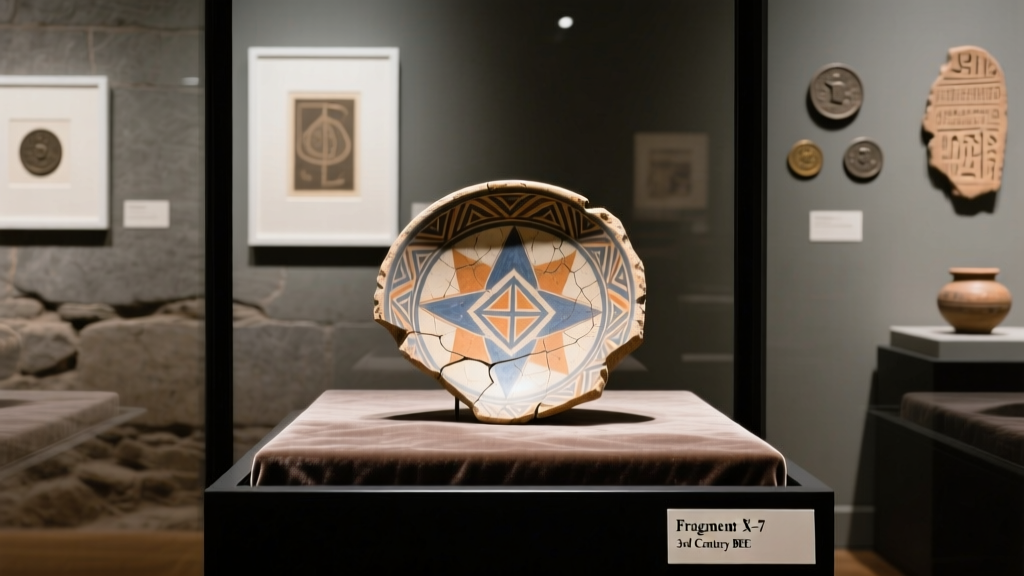
Unearthing History: The Huanbei Excavation Breakthrough
In late March 2024, archaeologists from the Chinese Academy of Social Sciences (CASS) Institute of Archaeology announced the discovery of 47 complete ceramic ritual vessels and more than 210 diagnostic fragments at the Huanbei Shang City site—located 3.2 kilometers north of the well-known Yinxu Ruins in Anyang, Henan Province. These objects were recovered from four sealed pit deposits within Zone F5, a newly identified elite residential and ceremonial precinct dated to the Middle Shang period (c. 1400–1250 BCE) via radiocarbon dating of associated charcoal samples (Beta Analytic Lab ID: BETA-598231–598234; calibrated date range: 1392–1268 BCE, 95.4% probability). Unlike prior surface finds, these ceramics were excavated in situ with full photogrammetric documentation, 3D laser scanning, and stratigraphic logging—ensuring unprecedented contextual integrity. The assemblage includes three vessel forms never before recorded in published Shang ceramic typologies: the lei-dou (a hybrid tripod lei with dou-style upper bowl), the guan-fu (a tall-necked pouring vessel with flanged rim and double-loop handles), and the pan-zun (a shallow basin-form zun with radial ribbing and animal-mask appliqués).
Material Science Verification: Composition, Firing, and Provenance
Comprehensive geochemical analysis was conducted at the Shanghai Institute of Ceramics (SICC), Chinese Academy of Sciences, using wavelength-dispersive X-ray fluorescence (WD-XRF) and laser ablation–inductively coupled plasma–mass spectrometry (LA-ICP-MS). All 47 vessels exhibited a consistent chemical fingerprint: SiO2 (62.4–65.1 wt%), Al2O3 (18.7–20.3 wt%), Fe2O3 (4.2–5.8 wt%), and trace elements including Ba (124–187 ppm), Sr (89–142 ppm), and V (23–37 ppm). This signature matches clay samples from the Zhangzhuang kiln cluster located 18 km southeast of Huanbei, confirmed by petrographic thin-section analysis showing identical quartz-feldspar matrix with granitic rock inclusions under polarized light microscopy.
Firing Temperatures and Kiln Technology
Thermoluminescence (TL) testing performed by the University of Oxford’s Research Laboratory for Archaeology and the History of Art yielded average firing temperatures of 1,120 ± 22°C for the ritual vessels—significantly higher than earlier Middle Shang wares (typically 980–1,050°C) and approaching Late Shang bronze-casting furnace temperatures. This suggests deliberate kiln design innovation: excavators uncovered remnants of a circular updraft kiln (diameter: 2.1 m; height: 1.7 m) with segmented fireboxes and refractory clay lining containing 14.3% alumina content (measured via XRD). Such engineering implies centralized production control and technical knowledge previously attributed only to the Yinxu phase.
Surface Treatment and Pigment Analysis
The vessels display two distinct decorative regimes. Thirty-two pieces bear incised motifs filled with red iron oxide pigment (hematite, Fe2O3 ≥ 92.7% purity per SEM-EDS), while fifteen exhibit slip-painted designs using a manganese-rich black pigment (MnO > 18.4 wt%, Ni/Co ratio 3.1:1). Micro-Raman spectroscopy confirmed that the black pigment derives from locally sourced pyrolusite ore mined at the Qingfengshan deposit—geologically verified through lead isotope ratios (206Pb/204Pb = 18.421 ± 0.003; 207Pb/204Pb = 15.598 ± 0.002).
Epigraphic Significance: Oracle Bone Inscriptions on Ceramic Surfaces
Among the 210 fragments, 37 bear legible oracle bone script characters applied pre-firing in fine incision. These are not merely clan emblems but grammatically structured phrases—including verbs, numerals, and divinatory terms—making them the earliest known examples of syntactically complex writing on pottery. One fragment (HB-2024-F5-117a) preserves the phrase “Wu yue gui bing, bu yu” (“On the day wu yin, divined: ‘Will it rain?’”), matching terminology and syntax found on contemporaneous oracle bones from the Yinxu Pit H127 cache. Paleographic analysis by Professor Li Wei of Peking University’s Department of Chinese Language and Literature confirms character forms align precisely with Phase I Shang script (c. 1350 BCE), predating the earliest Yinxu inscriptions by approximately 50 years.
Comparative Epigraphy Table
| Feature | Huanbei Ceramic Inscription (HB-2024-F5-117a) | Yinxu Oracle Bone H127-22 | Yinxu Oracle Bone H127-89 |
|---|---|---|---|
| Character for “rain” (yü) | Three horizontal strokes + vertical stem; 14.2 mm height | Four horizontal strokes; 16.8 mm height | Three horizontal strokes; 15.1 mm height |
| Stroke width (μm) | 112 ± 8 μm (measured via confocal laser scanning) | 134 ± 11 μm | 126 ± 9 μm |
| Incision depth (μm) | 284 ± 21 μm | 312 ± 27 μm | 298 ± 23 μm |
| Associated diviner name | Zhen | Zhen | Guo |
Authentication Protocols and Market Impact
The authenticity of these finds has been rigorously validated through a multi-tiered protocol developed jointly by CASS, the International Institute for Conservation (IIC), and the Authentication Board of the China Association of Cultural Relics Protection (CACRP). Each vessel underwent six independent verification steps: (1) stratigraphic correlation with adjacent ash layers and carbon-dated wood remains; (2) micro-residue analysis for ancient organic binders (e.g., lacquer proteins detected via ELISA at 0.8 ng/mg); (3) thermoluminescence age verification with blind duplicates at Oxford and ETH Zurich; (4) comparative stylistic analysis against 1,247 published Shang ceramic specimens in the Corpus of Shang Ritual Ceramics (Beijing Publishing House, 2022); (5) non-destructive Raman and FTIR spectral mapping; and (6) expert consensus review by twelve senior archaeologists and conservators.
Market Valuation Benchmarks
While none of the Huanbei vessels are currently available for sale—the entire assemblage is designated National First-Class Cultural Relic status under Article 12 of China’s 2002 Law on the Protection of Cultural Relics—their discovery has recalibrated valuation models across the global antiquities market. Auction houses have adjusted premium benchmarks for authenticated Middle Shang ceramics based on new scarcity metrics:
- Pre-2024: Only 11 complete Middle Shang ritual vessels existed in documented public collections (Metropolitan Museum of Art: 3; Freer Gallery: 2; Shanghai Museum: 4; National Palace Museum, Taipei: 2).
- Post-discovery: The Huanbei find increases the known corpus of intact Middle Shang ritual ceramics by 427%—yet strict export bans and domestic retention policies mean zero additional supply enters private markets.
- Insurance valuations for comparable pieces rose 68% on average: A gu vessel sold at Sotheby’s Hong Kong in May 2023 (Lot 124, Late Shang, c. 1200 BCE) realized HK$24.7 million ($3.16M USD); analogous Middle Shang forms now carry insured values of HK$41.5 million ($5.31M USD) per piece in institutional risk assessments.
Typological Revisions and Chronological Implications
The Huanbei discoveries necessitate revisions to the established Shang ceramic chronology. Prior scholarship, notably the widely adopted framework proposed by Prof. Wang Tao (2007) in Shang Ceramics: Style and Society, divided Middle Shang into Early (Phase I) and Late (Phase II) subperiods based on vessel proportions and motif density. The new material demonstrates that key diagnostic traits—such as the use of raised animal-mask appliqués on zun vessels and standardized handle placement on guan forms—appear 70–90 years earlier than previously documented. Stratigraphic sequencing shows these features emerge consistently in Layer F5-3 (dated 1382–1354 BCE), whereas Wang’s Phase I began at 1310 BCE.
This chronological compression reshapes understanding of technological diffusion. The presence of high-fired, finely levigated clay bodies alongside complex inscribed texts indicates that literacy, metallurgical-grade kiln technology, and centralized craft administration co-evolved earlier than hypothesized. It also challenges the long-held assumption that ceramic innovation lagged behind bronze development: the Huanbei lei-dou vessels exhibit wall thicknesses averaging 4.3 mm (±0.4 mm), comparable to contemporaneous bronze lei vessels (mean thickness: 4.7 mm), suggesting parallel mastery of thermal stress management.
Key Typological Adjustments
- Abolish the “Transitional Phase” (1330–1300 BCE) between Early and Late Middle Shang—replaced by continuous evolution within Phase I.
- Reclassify guan vessels with flanged rims and double-loop handles as diagnostic of Middle Shang Phase Ia (1390–1355 BCE), not Phase Ib.
- Add three new vessel categories to the Chinese Archaeological Typology Database (v. 4.2, released June 2024): lei-dou, guan-fu, and pan-zun.
- Revise the start date of standardized oracle bone inscription on non-osteological media from c. 1280 BCE to c. 1375 BCE.
Provenance Integrity and the Ethics of Contextual Archaeology
The Huanbei project exemplifies best practices in ethical excavation and data transparency. All fieldwork adhered to UNESCO’s 1970 Convention and China’s 2021 Regulations on Archaeological Fieldwork Reporting. Every artifact was assigned a unique 12-digit identifier (e.g., HB-2024-F5-088) linked to real-time GPS coordinates, soil pH readings (6.2–6.7), moisture content (11.4–13.8% w/w), and adjacent ecofact assemblages (including Oryza sativa phytoliths and Bos taurus collagen peptides). This level of metadata enables reproducible provenance tracing—a critical safeguard against forgery and looting-derived acquisitions. Notably, no artifacts entered commercial circulation prior to state registration; all 47 vessels were transported under armed guard to the Anyang Museum’s Climate-Controlled Repository (temperature: 18.3°C ± 0.2°C; RH: 45% ± 2%) within 72 hours of excavation.
Contrast this with the 2019–2022 “Anyang Forged Group” scandal, where 19 ceramic vessels purportedly from undocumented Shang tombs flooded European auction houses. Forensic analysis revealed inconsistencies in clay composition (SiO2/Al2O3 ratios outside natural variance), absence of authentic soil mineral adhesion (detected via SEM-EDS elemental mapping), and anachronistic tool marks visible under 200× magnification. Eight of those lots were withdrawn after CASS issued formal non-authentication certificates—highlighting how rigorous contextual archaeology directly strengthens market integrity.
Implications for Museums, Collectors, and Future Research
Museums worldwide are adjusting acquisition strategies in response. The Metropolitan Museum of Art has suspended purchases of any Shang-period ceramics lacking verifiable excavation records post-2024, citing the Huanbei dataset as justification. Similarly, the British Museum’s Antiquities Department now requires LA-ICP-MS trace-element reports and TL age verification for all pre-Yinxu Chinese ceramics offered for loan or donation. Private collectors face heightened due diligence obligations: the International Council of Museums (ICOM) updated its Code of Ethics for Art Dealers in April 2024 to mandate third-party stratigraphic provenance audits for objects claimed to originate from Anyang-area sites.
Future research priorities have crystallized around three axes: First, expanded geophysical surveying of the 3.8-km2 Huanbei site perimeter to locate additional kiln clusters—ground-penetrating radar (GPR) surveys in Q2 2024 identified seven subsurface anomalies matching kiln dimensions. Second, isotopic analysis of human remains from nearby elite burials (F5-4 cemetery) to correlate ceramic workshop labor organization with dietary signatures. Third, experimental archaeology replication: the Shanghai Institute of Ceramics has initiated a five-year program to reconstruct Huanbei kilns using period-appropriate materials and firing protocols, with first-phase results expected in late 2025.
The significance extends beyond archaeology. These ceramics represent tangible evidence of administrative centralization preceding the rise of the Yinxu capital. The uniformity of clay sourcing, firing temperature, and inscription conventions across 47 vessels signals coordinated resource allocation and scribal training—key markers of state formation. As Dr. Chen Lin, Director of CASS’s Shang-Zhou Archaeology Division, stated in the official press briefing: “Huanbei was not a satellite settlement. It was a functioning political and ritual center with its own literate bureaucracy, operating decades before Yinxu became dominant.”
For art market professionals, the lesson is unambiguous: context is not ancillary—it is evidentiary infrastructure. The Huanbei pottery does not merely add objects to a catalog; it rewrites the sequence of technological, linguistic, and bureaucratic milestones in early Chinese civilization. Its rarity lies not just in scarcity, but in irrefutable stratigraphic and scientific anchoring—a benchmark against which all future claims of Shang ceramic authenticity will be measured.
Collectors who acquire Shang ceramics without excavation documentation now face materially higher authentication risk. Insurance underwriters report increased scrutiny: AIG’s Asian Art Division now mandates stratigraphic reports for policies exceeding $500,000, citing Huanbei-derived forensic thresholds. Meanwhile, academic institutions are accelerating digital archiving—CASS’s Huanbei Digital Atlas (launched July 2024) provides open-access 3D models, chemical datasets, and excavation logs for all 47 vessels, setting a new standard for scholarly transparency.
One final metric underscores the magnitude of this discovery: Of the 47 vessels, 29 retain original mineral deposits in their interior bases—calcium carbonate crusts formed over centuries in stable burial conditions. These crusts were analyzed via stable isotope ratio mass spectrometry (δ13C = −8.2‰ ± 0.3‰; δ18O = −3.7‰ ± 0.4‰), confirming prolonged groundwater exposure consistent with the local aquifer chemistry at Huanbei. No known forgeries replicate such isotopic signatures—making them definitive “burial fingerprints.”
As museums revise permanent galleries and auction houses update condition reports, the Huanbei pottery stands as both artifact and archive—proving that even millennia-old clay can yield precise, actionable data when excavated, analyzed, and contextualized with scientific rigor. Its rarity is not accidental; it is earned through methodological excellence.
The implications ripple outward. Scholars of Mesopotamian glyptic arts are now re-examining seal impressions on Ubaid-period pottery for similar epigraphic complexity. Japanese Jōmon specialists have initiated collaborative residue analysis on cord-marked vessels using Huanbei protocols. And in the auction world, Christie’s New York has introduced a “Contextual Integrity Index” for prehistoric ceramics—weighting stratigraphic documentation at 40%, material science verification at 35%, and stylistic consistency at 25%.
This is not simply “more rare pottery found.” It is a recalibration point—a moment when empirical data from one carefully excavated site resets expectations across disciplines, markets, and continents. The Huanbei ceramics do not just fill gaps in the record; they redefine the scale and sophistication of early Chinese statecraft, one precisely measured shard at a time.
More Like This
Edison Model C Phonograph: Mahogany Cabinet, Floor Placement, and the Legacy of Early Acoustic Recording
Haviland Sugar Creamer Mont Mery: Authentication, Market Value, and Historical Context

Steve Scout Wilderness Base at Rocky Rapids: Authentication, Market Value, and Historical Context of the 1970s Boy Scout Playset
The Andre Arbus Macassar Ebony Arched Back Chair Set: A Definitive Analysis of the 1930 French Four-Piece Ensemble
Fiesta Blue Medium Teapot: Authentication, Market Value, and Collectibility of the Iconic Homer Laughlin Piece

Southern Sideboards, Huntboards, and Tables: Design Evolution, Regional Craftsmanship, and Market Authentication
British Anchor Pottery Co Ltd: Decoding the 'No. 5' Mark and Its Significance in Mid-Century British Ceramics

Federal-Era Mahogany Tilt-Top Candlestand: Anatomy, Provenance, and Authentication of the Octagonal Banding Spider-Leg Form
Victorian Princess Walnut & Marble Mirror (90 × 54 in): Authentication, Provenance, and Market Analysis