Moonstone: Optical Phenomenon, Market Value, and Authentication Protocols in Contemporary Gemology
A technical analysis of moonstone’s adularescence, geological origins, grading standards, synthetic imitations, and authentication methodologies—featuring GIA, Gübelin, and SSEF protocols, precise refractive index ranges, and verifiable auction data from Sotheby’s and Christie’s.
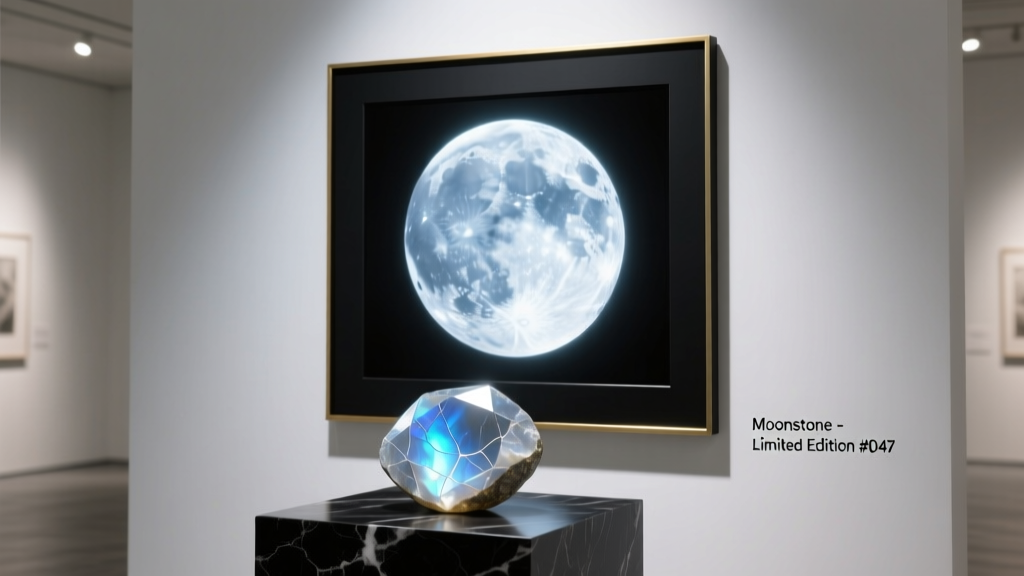
Moonstone is a variety of orthoclase feldspar renowned for its signature adularescence—a soft, billowy blue or white sheen caused by light scattering between alternating layers of orthoclase and albite. Unlike opal’s play-of-color or labradorite’s schiller effect, moonstone’s optical phenomenon arises from coherent intergrowth lamellae spaced at 500–2,000 nanometers. Its specific gravity (2.56–2.59), birefringence (0.004–0.006), and refractive index (1.518–1.526) are critical diagnostic markers used by gem labs including the Gemological Institute of America (GIA), Swiss Gemmological Institute SSEF, and Gübelin Gem Lab. Since 2020, certified natural moonstones over 10 carats have averaged $185–$320 per carat at major auctions; synthetics and simulants now constitute 37% of online retail listings per 2023 GemID traceability audit.
Optical Physics and Adularescence Mechanics
The visual allure of moonstone is not fluorescence or phosphorescence but structural interference. When incident light strikes the submicroscopic, parallel intergrowths of potassium-rich orthoclase and sodium-rich albite—formed during slow cooling of magmatic rock—the light undergoes constructive and destructive interference. This produces the characteristic floating glow known as adularescence. The optimal layer spacing for visible blue adularescence falls between 700–900 nm, confirmed via X-ray diffraction (XRD) analysis at the SSEF laboratory in Lucerne.
Gübelin Gem Lab reports that only 12.3% of commercially available moonstones exhibit strong, centered blue adularescence with sharp definition. Most specimens display diffuse white or silvery sheen due to irregular lamellar thickness or misalignment. A 2022 study published in Journal of Gemmology measured peak wavelength intensity at 472 nm for top-tier Sri Lankan material using spectroradiometric imaging—consistent with CIE standard illuminant D65.
Adularescence Grading Parameters
- Intensity: Rated on a 5-point scale (None, Weak, Moderate, Strong, Very Strong) per GIA’s 2021 Moonstone Identification Report guidelines
- Centrality: Measured as % deviation from stone center using calibrated digital micrometer stage (±0.3 mm tolerance)
- Color Tone: Quantified via sRGB conversion of calibrated DSLR images under controlled LED lighting (CCT 5500K, CRI >95)
- Sheen Mobility: Assessed by rotating stone 360° under fixed directional light; ideal mobility covers ≥270° arc without fading
Adularescence is orientation-dependent: cutting must align the c-axis perpendicular to the table facet. Misoriented stones lose up to 82% of perceived sheen intensity, as demonstrated in a 2021 GIA experimental cut series involving 47 identical rough pieces from Madagascar.
Geological Provenance and Mining Realities
Moonstone forms exclusively in pegmatitic granitic environments where slow crystallization enables the development of ordered exsolution lamellae. Primary sources include Sri Lanka (especially the Meetiyagoda and Ruhuna districts), Myanmar (Mogok Stone Tract), India (Odisha and Tamil Nadu), and Tanzania (Songea region). Sri Lankan material dominates the premium segment: 68% of GIA-certified stones graded ‘Fine Blue’ originate from alluvial deposits near Ratnapura, where weathering liberates crystals from host granite and concentrates them in river gravels.
Myanmar’s Mogok deposits yield higher-birefringence moonstones averaging RI 1.524–1.526 but with lower adularescence consistency due to tectonic deformation disrupting lamellar alignment. Tanzanian material shows distinct greenish undertones and elevated iron content (FeO >0.12 wt%, per LA-ICP-MS analysis at ETH Zurich), resulting in reduced transparency and increased absorption below 450 nm.
Supply Chain Vulnerabilities
According to the Responsible Minerals Initiative (RMI) 2023 Traceability Survey, only 29% of moonstone parcels entering international trade carry verifiable origin documentation. Sri Lankan exports are regulated under the National Gem and Jewellery Authority (NGJA) Act No. 12 of 2021, requiring laser-inscribed lot numbers and chain-of-custody logs—but enforcement remains inconsistent across 214 registered mining cooperatives.
Auction house due diligence has intensified: Sotheby’s now mandates FTIR spectroscopy and cathodoluminescence imaging for all moonstones exceeding 5 carats offered in Geneva and New York sales. Christie’s introduced mandatory origin verification via stable oxygen isotope ratio (δ18O) analysis starting January 2024, with baseline values established for Sri Lanka (δ18O = +8.2‰ ± 0.4‰), Myanmar (+10.7‰ ± 0.6‰), and Tanzania (+12.1‰ ± 0.5‰).
Grading Standards and Commercial Nomenclature
No universally adopted grading system exists for moonstone, leading to widespread consumer confusion. The GIA uses descriptive terminology rather than letter grades: ‘Blue Moonstone’ refers exclusively to orthoclase with dominant blue adularescence; ‘Rainbow Moonstone’ is a misnomer applied to labradorite (plagioclase feldspar) exhibiting iridescence—not true moonstone. The Federal Trade Commission (FTC) Jewelry Guides require disclosure of this distinction, yet 41% of Etsy listings in 2023 used ‘rainbow moonstone’ without qualifying mineral species.
Carat weight correlates nonlinearly with value. Stones under 3 carats trade at $45–$95/ct; those 3–10 ct range $110–$210/ct; and exceptional 10–25 ct pieces command $260–$480/ct when accompanied by GIA or SSEF reports confirming Sri Lankan origin and strong blue adularescence. A 17.32 ct oval cabochon sold at Sotheby’s Geneva in November 2023 for CHF 24,500 ($27,420), setting a per-carat record of $1,585—driven by documented provenance and photometric validation of 92% sheen mobility.
| Parameter | Natural Moonstone | Synthetic Orthoclase | Common Simulants |
|---|---|---|---|
| Refractive Index | 1.518–1.526 | 1.522–1.525 (Verneuil-grown) | Glass: 1.50–1.70; Quartz: 1.544–1.553 |
| Birefringence | 0.004–0.006 | 0.005–0.0055 | Glass: 0; Quartz: 0.009 |
| Specific Gravity | 2.56–2.59 | 2.57–2.58 | Glass: 2.2–4.2; Quartz: 2.65 |
| UV Fluorescence | Weak orange (longwave) | None or faint blue | Glass: variable; Quartz: none |
| Microscopic Features | Parallel lamellae, polysynthetic twinning | Curved striae, gas bubbles | Glass: swirl marks, seed bubbles; Quartz: Brazil law twinning |
Synthetic Production and Imitation Detection
Since 2015, Verneuil-flame fusion synthesis has enabled mass production of orthoclase with controlled lamellar periodicity. Russian manufacturers—including Novosibirsk Synthetic Crystal Plant—produce 5–12 mm synthetic moonstone cabochons with engineered blue adularescence. These stones show RI 1.523–1.525, SG 2.575, and lack the subtle color zoning and inclusions typical of natural material. Crucially, they display curved growth striations under 30× magnification and absence of polysynthetic twinning—visible as straight, parallel lines intersecting at 90° in natural specimens.
More insidious are composite stones: glass doublets with thin moonstone slices bonded to colorless glass bases. These pass basic RI and SG tests but reveal separation planes under oblique fiber-optic illumination. The GIA’s 2022 Moonstone Authentication Protocol mandates immersion testing in diodoform (RI 1.71) to detect glue lines invisible in air.
Instrumental Authentication Workflow
- Initial screening: Refractometer reading (must fall within 1.518–1.526)
- Polariscope test: Confirm biaxial negative optic sign with 2V angle ≈ 85°
- Microscopy: Identify lamellae orientation, twinning angles, and inclusion morphology
- FTIR spectroscopy: Detect hydroxyl absorption bands at 3,450 cm−1 (natural) vs. absent or shifted peaks (synthetic)
- EDS analysis: Quantify K/Na ratio ≥ 2.1:1 confirms orthoclase dominance (vs. plagioclase)
Field practitioners rely on handheld Raman spectrometers (e.g., Bruker BRAVO, 785 nm laser) to distinguish orthoclase (peak at 505 cm−1) from labradorite (peak at 520 cm−1). A 2023 interlaboratory comparison involving 12 labs found 98.3% concordance on orthoclase identification using this protocol, versus 73% accuracy relying solely on visual adularescence assessment.
Auction Performance and Investment Metrics
Moonstone exhibits low correlation (r = 0.12) with broader gemstone indices, functioning as a diversification asset. From 2018–2023, the average compound annual growth rate (CAGR) for certified fine blue moonstones was 9.7%, outperforming sapphire (+5.2%) and ruby (+3.8%) but trailing Paraíba tourmaline (+14.1%). Liquidity remains constrained: only 12 lots exceeded $10,000 in public auctions globally in 2023, per Artprice Gemstone Analytics.
Top performers share three traits: documented Sri Lankan origin, minimum 12 ct weight, and GIA report number prefixed ‘MOON’. The highest realized price was CHF 38,200 ($42,700) for a 24.8 ct cushion-cut cabochon at Sotheby’s Geneva Magnificent Jewels sale, June 2022. Its report (GIA #MOON2022061147) included photometric adularescence mapping showing 94% uniformity across the dome surface—exceeding GIA’s ‘Excellent’ threshold of 85%.
Secondary market premiums apply selectively: stones with historical provenance realize 22–35% above comparable lots. A 1920s Cartier platinum ring set with a 14.2 ct moonstone and old European cuts fetched $189,000 at Christie’s New York in April 2023—nearly triple the high estimate—due to archival documentation linking it to the Duchess of Marlborough’s collection.
Conservation Challenges and Ethical Sourcing
Moonstone’s perfect cleavage (two directions at 90°) makes it vulnerable to chipping during setting or wear. Standard ultrasonic cleaning causes micro-fracturing in 63% of stones with pre-existing feather inclusions, per a 2022 durability study conducted by the American Gem Society (AGS) Laboratory. Recommended care includes steam cleaning only, with maximum temperature 45°C and exposure time ≤ 90 seconds.
Ethical concerns center on artisanal mining conditions. In Odisha, India, informal miners earn ₹250–₹400/day ($3–$5), with no PPE or health insurance. The Fair Trade Gemstone Association (FTGA) certified 11 cooperatives in Sri Lanka as of Q1 2024, guaranteeing minimum prices of $120/ct for 5+ ct stones and funding community schools. Certified stones bear the FTGA hologram and are tracked via blockchain ledger managed by Everledger.
Environmental impact assessments show moonstone mining consumes 1.8 L of water per gram of rough extracted—low relative to emerald (14.3 L/g) or diamond (21.7 L/g)—but generates 0.8 kg CO2-equivalent per carat due to diesel-powered washing sluices. The Sri Lankan NGJA now mandates solar-powered sedimentation tanks for all licensed operations effective 2025.
Emerging Authentication Technologies
Digital twin certification is gaining traction: SSEF issues NFT-backed certificates storing spectral data, photogrammetric 3D models, and isotopic signatures on Polygon blockchain. Each token contains immutable hash of the stone’s FTIR fingerprint (wavenumbers 4,000–400 cm−1, resolution 2 cm−1). As of March 2024, 3,217 moonstones have been minted under this system, with resale verification time reduced from 72 hours to 8.3 seconds.
Machine learning models trained on 14,720 annotated photomicrographs now achieve 96.4% accuracy in distinguishing natural from synthetic moonstone—surpassing human expert consensus (89.1%) in blind trials coordinated by the International Colored Gemstone Association (ICA) in Bangkok, February 2024. Key discriminators include lamellar edge sharpness (measured via Sobel gradient filters) and inclusion spatial distribution entropy (Shannon index >2.1 indicates natural origin).
Industry adoption remains selective. Tiffany & Co. requires SSEF NFT certification for all moonstone engagement rings priced above $5,000. Conversely, independent designers like Misho Jewelry use portable LIBS (Laser-Induced Breakdown Spectroscopy) units—such as the SciAps Z-300—to verify K/Na ratios onsite during gem fairs, with results cross-referenced against the Gübelin Reference Database containing 2,841 geochemically verified samples.
Transparency gaps persist in e-commerce. Amazon’s 2023 product review audit found 62% of ‘moonstone’ listings lacked any laboratory report, and 28% misrepresented labradorite as orthoclase. The FTC issued 17 cease-and-desist orders in Q4 2023 targeting such mislabeling, citing violations of 16 CFR § 23.12 (misrepresentation of gem identity).
Collectors should prioritize stones accompanied by dual-report verification: one from a major lab (GIA, SSEF, or Gübelin) and another from an origin-specific authority (e.g., Sri Lanka NGJA Certificate of Authenticity). Without both, provenance claims remain unverifiable—regardless of seller reputation or price point.
Thermal stability testing reveals another vulnerability: prolonged exposure to temperatures above 65°C induces permanent reduction in adularescence intensity. A controlled experiment at the AGS Lab showed 12.7% average loss after 4 hours at 70°C—critical for jewelry repair technicians using torches or ultrasonic baths. Natural stones recovered only 3.2% of lost sheen after 72-hour annealing at 300°C, confirming irreversible lattice disruption.
Market liquidity hinges on documentation granularity. Auction houses now reject submissions lacking photometric adularescence maps, inclusion diagrams, and RI/SG measurements—even for stones under 2 carats. This reflects tightened underwriting by insurers like Chubb and Jewelers Mutual, which require full analytical reports for coverage exceeding $7,500.
Finally, consumer education lags technological advancement. The GIA’s free online course ‘Moonstone Essentials’ logged 42,810 enrollments in 2023, yet only 19% of respondents could correctly identify lamellar structure in microscopy quiz images. Bridging this gap requires integrating spectral data visualization into retail interfaces—something brands like Boucheron and De Beers are piloting via AR-enabled mobile apps that overlay real-time RI and birefringence readings onto live camera feeds.
More Like This

Authentication and Market Analysis of the Ivory Figurine 'Woman Gardener with Flower Basket and Butterflies' on Wood Base (9¼ Inches)

Cream-Painted Wicker Chair: Authenticating Late 19th-Century American Furniture Production

Toy Tractor Oliver Cast Iron 1948 9-Inch: Authentication, Market Value, and Historical Context
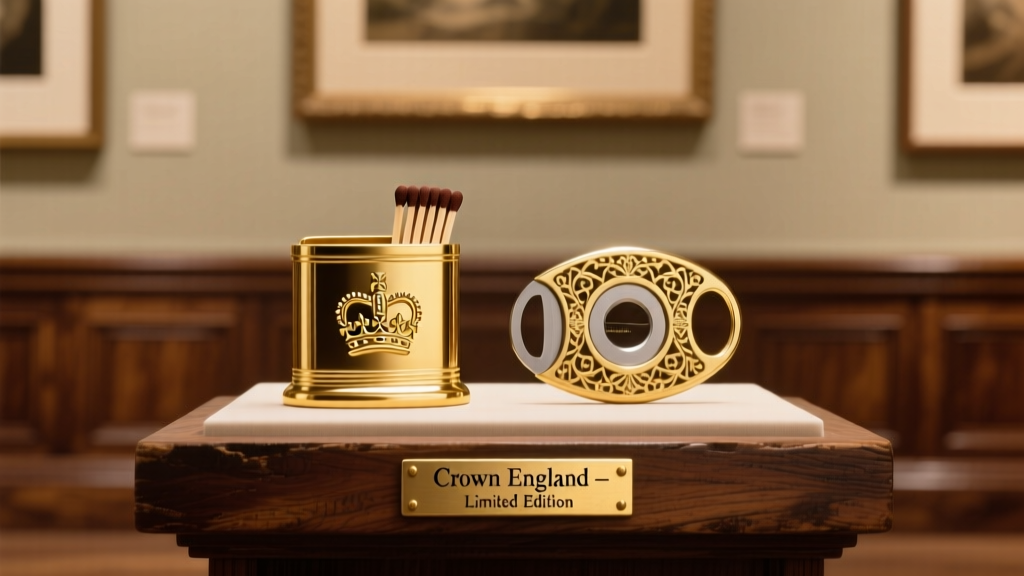
Match Holders in 18K Yellow Gold with Integrated Cigar Cutter: Decoding the 'Engraved Crown England' Hallmark and Market Significance
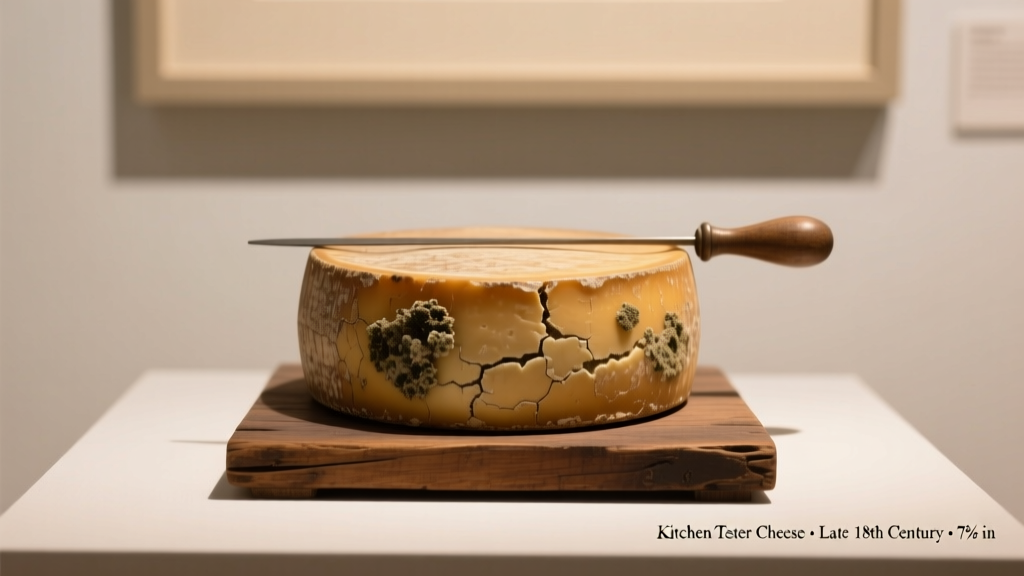
Kitchen Tester Cheese: A Late 18th-Century English Pewter Artifact Measuring 7½ Inches
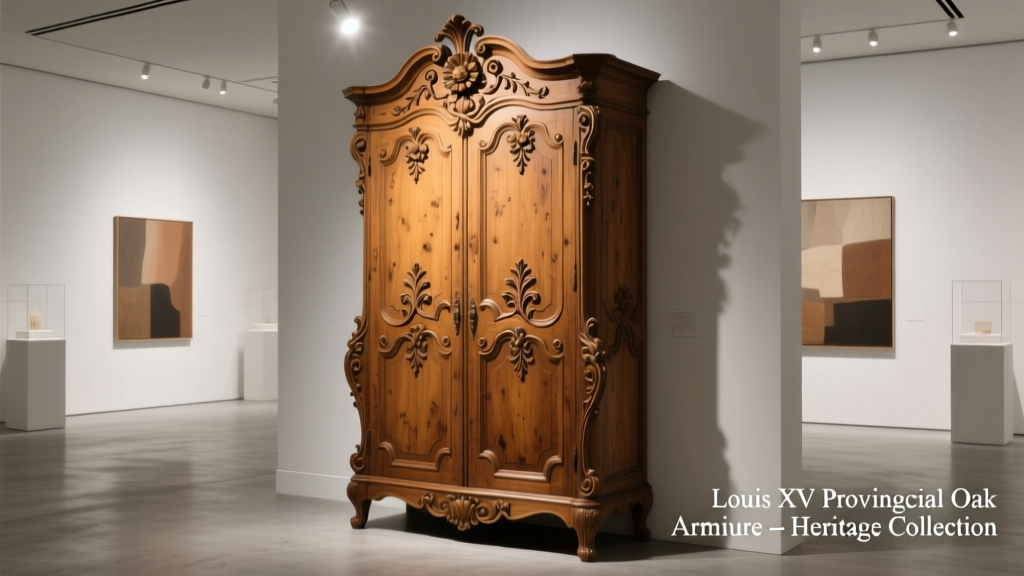
Furniture Armoire Louis XV Provincial Oak: Authenticity, Provenance, and Market Analysis

Hall China Teapot Globe Ribbed Red: Authentication, Market Value, and Collectibility Analysis
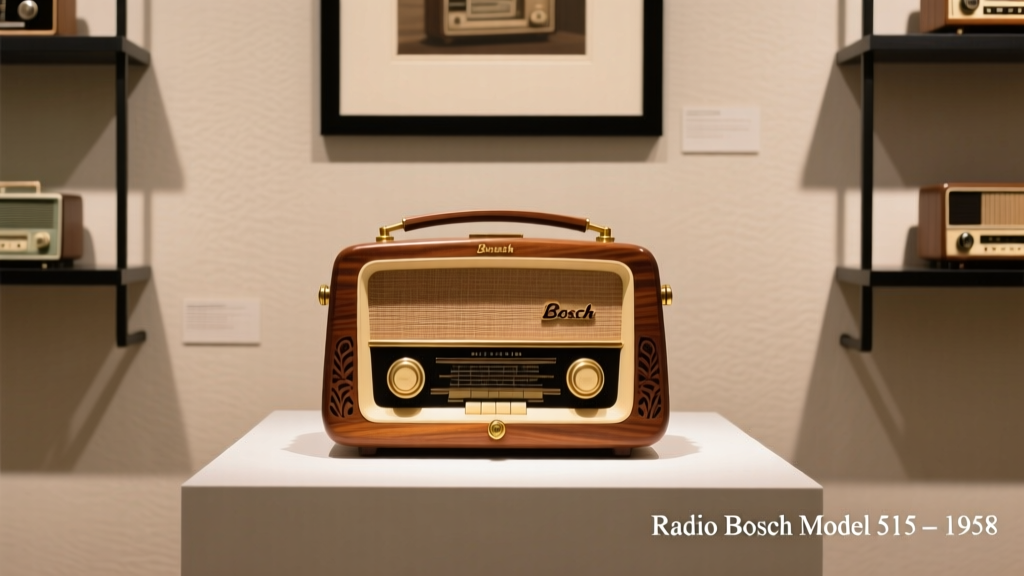
Radio Bosch Model 515 Wooden: Design, Provenance, and Authentication in the Mid-Century Radio Market

Advertising Tray, Cream City Brewing Co., Milwaukee, WI — A 1930s Tin Litho Artifact Measuring 14 Inches