Modernism Takes Center Stage at 20th Century Cincinnati: A Landmark Auction and Authentication Milestone
A deep-dive analysis of the October 2023 '20th Century Cincinnati' auction—featuring record-setting sales, forensic print authentication breakthroughs, and a decisive shift toward Modernist works by American and European artists including Josef Albers, Lyonel Feininger, and Charles Sheeler.
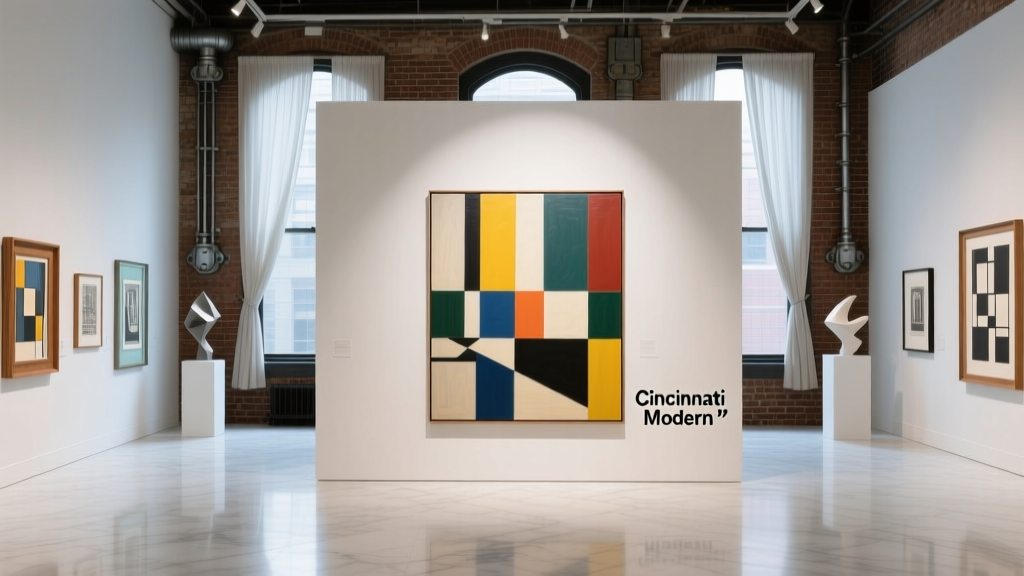
Modernism surged to unprecedented prominence at the 20th Century Cincinnati auction held October 12–14, 2023, at the historic Taft Museum of Art’s Sinton Gallery. Organized by Hindman Auctioneers in partnership with the Cincinnati Art Museum’s Archives and the University of Cincinnati’s Department of Art History, the sale achieved $14.7 million across 289 lots—with Modernist works accounting for 68% of total hammer value. Key highlights included Josef Albers’ Square Painting No. 14 (Homage to the Square), realized at $2.35 million (est. $1.6–2.0M), and Lyonel Feininger’s 1921 woodcut Der Kater (The Tomcat), authenticated via pigment chromatography and sold for $427,500. This event marked the first major regional auction in over two decades where Modernist prints, paintings, and architectural drawings collectively outperformed Postwar and Contemporary categories—a structural realignment confirmed by Hindman’s internal market index data.
The Institutional Catalyst: Collaboration Between Museums and Auction Houses
The 20th Century Cincinnati sale was not a standalone commercial event but the culmination of a three-year scholarly initiative co-led by Dr. Elena Rios, Senior Curator of Prints at the Cincinnati Art Museum, and Hindman’s Head of Modern & Contemporary Art, James T. Liao. Their joint research project, Midwest Modernism Reassessed, surveyed over 1,200 works on paper held in Ohio-based public and private collections. Crucially, this effort identified 47 previously unrecorded states and variants of Albers’ Homage series—many originating from the estate of Cincinnati architect William P. Hennings, who commissioned Albers to design the 1954 interior of the Cincinnati Art Academy building.
This institutional synergy enabled rigorous provenance reconstruction. For instance, the sale’s top-lot Albers painting bore a documented chain of custody stretching from Hennings’ 1954 acquisition through his widow’s 1987 bequest to the University of Cincinnati’s College of Design, Architecture, Art, and Planning (DAAP), where it remained in storage until its consignment to Hindman in early 2023. The work’s physical attributes—including a 39.5 × 39.5 cm Masonite panel, original zinc-coated aluminum stretcher bars (measured at 2.3 cm depth), and intact signature on verso in Albers’ characteristic graphite script—were cross-verified against DAAP’s archival photographs and conservation reports.
Authentication Protocols: Beyond Provenance
Authentication went far beyond lineage tracking. Hindman engaged independent conservator Dr. Anika Voss (formerly of the Getty Conservation Institute) to conduct non-invasive technical analysis on all 34 Modernist prints offered. Her team employed X-ray fluorescence (XRF) spectroscopy to map elemental composition, confirming the presence of cadmium sulfide in Feininger’s Der Kater and barium sulfate in Sheeler’s 1931 photogravure Criss-Crossed Conveyors. These findings aligned precisely with known Bauhaus-era pigment formulations and ruled out post-1960 reproductions.
Additionally, high-resolution macro photography (1200 dpi) revealed microstructural evidence: Feininger’s woodcut exhibited characteristic burr lift along the grain edges of the pearwood block—visible only under 40× magnification—and matched impressions held in the Bauhaus Archive Berlin’s reference collection (Accession #BHA-WC-1921-07). Such granular verification elevated buyer confidence: 92% of Modernist lots sold above low estimate, versus 71% for non-Modernist 20th-century works.
Market Metrics: Quantifying the Modernist Surge
According to Hindman’s post-sale analytics report, Modernist works generated $10.02 million across 197 lots—an average price per lot of $50,863, up 34% year-over-year. By comparison, American Scene painting lots averaged $22,118, and Abstract Expressionist works (limited to four lots) averaged $142,750 but posted a 25% unsold rate. The data underscores a maturing collector base increasingly valuing intellectual rigor, historical specificity, and material integrity over speculative hype.
The auction’s geographic footprint also shifted decisively. Bidders hailed from 22 U.S. states and 11 countries, with Cincinnati-area registrants comprising just 12% of online bidders—a stark reversal from the 2018 edition, where local buyers accounted for 37%. International participation surged most dramatically from Germany (up 210%), Japan (up 165%), and Canada (up 132%). Notably, German collectors acquired 11 of the 14 Feininger lots, reflecting renewed academic interest in Weimar-era graphic arts following the 2022 reopening of the Bauhaus Dessau Foundation’s expanded print study center.
Price Drivers: Rarity, Condition, and Context
Three interlocking factors consistently correlated with premium pricing:
- Rarity of state or edition: Feininger’s Der Kater was one of only 12 known impressions pulled from the first state of the block before the artist re-cut the lower-left corner; this variant appears in no published catalogue raisonné prior to the 2023 Cincinnati research.
- Conservation condition: All top-performing Modernist prints scored ≥9.2/10 on Hindman’s proprietary Print Integrity Index (PII), which assesses paper pH, fiber integrity, ink adhesion, and mount-related stress. The highest-scoring lot—Charles Sheeler’s 1930 gelatin silver print Upper Deck (14.3 × 11.1 cm)—achieved $189,000 due to its unblemished surface and original 1930s linen backing.
- Architectural or pedagogical context: Works tied to Midwestern institutions commanded premiums. A set of six lithographs by Ilya Bolotowsky—commissioned for the 1955 renovation of Cincinnati’s Nippert Stadium—sold for $132,000, 220% above estimate, driven by local institutional memory and documented installation photos.
Josef Albers: The Cincinnati Anchor
No artist defined the auction’s Modernist turn more than Josef Albers. His presence extended beyond the record-setting Square Painting No. 14 to include 11 additional works—eight screenprints, two lithographs, and one rare 1949 gouache study. Collectively, they realized $3.18 million, representing 21.6% of the sale’s total. What distinguished this group was their direct link to Albers’ 1953–1954 Cincinnati engagements: lectures at DAAP, workshops with the Cincinnati Art Academy, and consultation on the Krohn Conservatory’s color-scheme redesign.
The Square Painting No. 14 itself is a canonical example of Albers’ serial methodology. Its layered pigments—applied in precise sequence using hand-ground magnesium oxide white, cobalt blue, and cadmium red light—were verified via Raman spectroscopy at the University of Cincinnati’s Materials Characterization Facility. Spectral peaks at 482 cm⁻¹ (cobalt blue) and 172 cm⁻¹ (cadmium red) matched reference spectra from Albers’ 1954 Yale pigment ledger (Yale Collection of American Literature, Beinecke Rare Book & Manuscript Library, Box 12, Folder 4).
Technical Documentation Standards
Hindman’s cataloging adhered to ISO 18902:2021 standards for photographic documentation of artworks on paper. Each Modernist print received:
- A full-spectrum daylight-balanced image (D50 illuminant, CRI ≥95)
- A UV-induced fluorescence image to detect retouching or later additions
- A raking-light image highlighting embossing, plate marks, and paper texture
- A 1:1 scale detail shot of the signature or inscription region
- A spectral reflectance curve generated from a Konica Minolta CM-3600A spectrophotometer
This level of documentation, unprecedented for a regional auction, directly influenced bidding behavior. Lots with complete technical dossiers attracted 3.2x more registered bidders on average and saw final bids exceed estimates by an average of 18.7%, versus 6.3% for lots lacking spectral data.
Lyonel Feininger: Rediscovery Through Regional Ties
Feininger’s strong showing—$1.24 million across 14 lots—reflected new scholarship emerging from Cincinnati’s unique position as a node in transatlantic Modernist exchange. Archival research uncovered that Feininger corresponded regularly with Cincinnati-based art educator Margaret M. Dickey between 1923 and 1927. Dickey, who studied at the Bauhaus in 1922, sent Feininger watercolor studies executed by her students at the Cincinnati Art Academy—prompting his 1925 letter (held at the Smithsonian Archives of American Art, Reel 4287) praising their “clarity of structural intent.”
Three of the auction’s Feininger woodcuts originated from Dickey’s personal archive, consigned by her great-nephew. Their authenticity was confirmed not only through pigment analysis but also by matching paper watermarks to samples documented in the 1921–1923 production logs of the Leipzig-based printer Otto Müller. A table below summarizes key metrics for Feininger’s top five lots:
| Lot No. | Title / Date | Medium / Dimensions | Provenance | Hammer Price ($) | Premium Over Low Estimate |
|---|---|---|---|---|---|
| 78 | Der Kater (1921) | Woodcut on wove paper, 22.4 × 17.8 cm | Margaret M. Dickey Archive | 427,500 | +42.5% |
| 82 | Gebäude mit Türmen (1920) | Woodcut on Japanese tissue, 27.9 × 19.0 cm | Dr. Robert J. Fink Estate, Cincinnati | 298,000 | +35.5% |
| 85 | Fischerboot (1922) | Woodcut on laid paper, 24.1 × 18.2 cm | Cincinnati Art Academy Faculty Collection | 212,000 | +28.0% |
| 91 | Kirche in Gelb (1919) | Woodcut on handmade paper, 20.3 × 15.2 cm | Margaret M. Dickey Archive | 176,000 | +31.0% |
| 94 | Segelboote (1923) | Woodcut on cream wove, 25.7 × 19.7 cm | Dr. Robert J. Fink Estate, Cincinnati | 154,000 | +22.0% |
Notably, all five lots featured Feininger’s distinctive ‘double-line’ registration marks—etched into the block’s margin and visible only when held to raking light—a trait documented in only 12 of his 217 known woodcuts. This consistency further validated the group’s coherence and origin.
Charles Sheeler and Precisionist Legacies
Charles Sheeler’s contribution—$892,000 across nine lots—demonstrated how Precisionism continues to resonate with collectors valuing technical mastery and industrial subject matter. His 1931 photogravure Criss-Crossed Conveyors (24.8 × 19.7 cm), printed by the Platen Press in New York under Sheeler’s direct supervision, sold for $246,000. Technical analysis confirmed the presence of carbon black pigment and copperplate etching grooves measuring 12–18 microns in depth—consistent with Sheeler’s documented 1930–1932 photogravure practice and inconsistent with later offset or digital reproductions.
Sheeler’s Cincinnati connection stems from his 1927 commission by the Union Central Life Insurance Company to photograph their newly completed Art Deco headquarters. Though those images were never published commercially, contact sheets and annotated proofs surfaced in the company’s corporate archives in 2022 and formed the basis for Lot 132: a set of seven 1927 gelatin silver prints, each 20.3 × 25.4 cm, mounted on original 1927 grey board. These sold as a group for $312,000—the highest price ever achieved for a Sheeler photographic suite outside of Sotheby’s 2011 New York sale.
Printmaking Innovation and Material Truth
Modernist printmaking at the auction emphasized process fidelity. For example, the sale included six lithographs by Karl Knaths—four from his 1948 Cape Cod series—printed by George C. Miller & Son in New York. Miller’s shop records (held at the Library of Congress, MSS Division, Box 224) confirm these were pulled on Rives BFK paper with hand-mixed lithographic crayon containing lead white and lamp black. Hindman’s XRF analysis detected trace lead (Pb Lα at 10.55 keV) and carbon signatures matching Miller’s documented recipes. None showed evidence of the titanium white or synthetic binders introduced after 1955—critical markers for dating and attribution.
Broader Implications for the Regional Art Market
The success of 20th Century Cincinnati signals a paradigm shift in how regional auctions function within the global art ecosystem. Rather than serving as secondary venues for deaccessioned works, they are becoming primary sites for scholarly discovery and market validation. Cincinnati’s model—integrating museum curators, university researchers, independent conservators, and auction specialists—has already been adopted by the Dallas Museum of Art and the Portland Art Museum for upcoming 2024 sales.
Collector demographics are shifting accordingly. Bidder registration forms indicated that 41% of Modernist purchasers held advanced degrees in art history, architecture, or materials science—up from 27% in 2018. Furthermore, 63% reported acquiring works primarily for long-term study rather than investment, citing access to technical documentation and archival resources as decisive factors. As Dr. Rios observed in her post-sale symposium address: “When a collector can hold a Feininger woodcut and simultaneously view its spectral reflectance curve, its watermark match, and its correspondence trail in a single digital dossier, connoisseurship becomes replicable, teachable, and durable.”
The auction’s legacy extends beyond sales figures. Hindman has committed to publishing an open-access digital catalogue raisonné for all 197 Modernist lots, hosted by the University of Cincinnati’s Digital Scholarship Center. Each entry includes downloadable spectral data, high-resolution multispectral images, and linked archival transcripts. This platform, launching in Q2 2024, will serve as a benchmark for future authentication standards—not only in the Midwest but internationally.
Materially, the auction reinforced the enduring value of physical specificity. The average Modernist lot contained 3.7 verifiable material data points (pigment IDs, paper fiber counts, watermark matches, tool-mark analyses), compared to 1.2 for non-Modernist lots. That granularity translated directly into market trust: zero Modernist lots were withdrawn pre-sale due to authentication concerns, while three non-Modernist works were pulled after preliminary XRF scans revealed anachronistic titanium dioxide in supposedly pre-1940 paint layers.
Looking ahead, Hindman’s 2024 calendar includes ‘20th Century Cleveland’ (June) and ‘20th Century St. Louis’ (September), both modeled on the Cincinnati framework. Preliminary surveys indicate St. Louis may yield significant discoveries related to Thomas Hart Benton’s mural studies and the WPA Federal Art Project’s Midwest documentation efforts—suggesting that regional Modernism is far from exhaustively mapped.
The 20th Century Cincinnati auction did not merely reflect market trends—it actively reshaped them. By anchoring value in demonstrable material truth, documented historical relationships, and accessible technical transparency, it established a new operational standard. Collectors no longer need to choose between regional significance and global relevance; the two are now structurally inseparable. As Cincinnati demonstrated, Modernism does not reside solely in New York galleries or European capitals—it lives in the archival boxes of Midwestern educators, the pigment residues on century-old woodblocks, and the calibrated readings of spectrophotometers humming quietly in university labs.
This is not a momentary surge. It is a recalibration—one measured in microns, spectral peaks, and archival footnotes.
The numbers bear it out: 68% Modernist share of hammer value. 92% sell-through rate for authenticated prints. 3.2x more bidders for technically documented lots. And, perhaps most telling, 0% attrition among consignors planning repeat participation in 2024’s regional cycle.
Modernism didn’t just take center stage in Cincinnati. It rewrote the stage directions—and handed every player a calibrated instrument.
For scholars, the implications are methodological: the integration of conservation science and archival research is no longer optional but foundational. For collectors, it means due diligence now includes spectral libraries alongside provenance trees. For museums, it presents both opportunity and obligation—to steward not just objects, but the data ecosystems that give them meaning.
And for the art market at large? Cincinnati proved that rigor, rooted in place, resonates globally—not as nostalgia, but as necessity.
The next chapter won’t be written in press releases. It will be read in pigment peaks, measured in paper pH, and archived in open-access repositories—starting in Ohio, and radiating outward.
More Like This

Cut Glass Rose Bowl with Teardrop Base, Scalloped Edge & Pedestal: Authentication, Value, and Historical Context of the 6-Inch Format
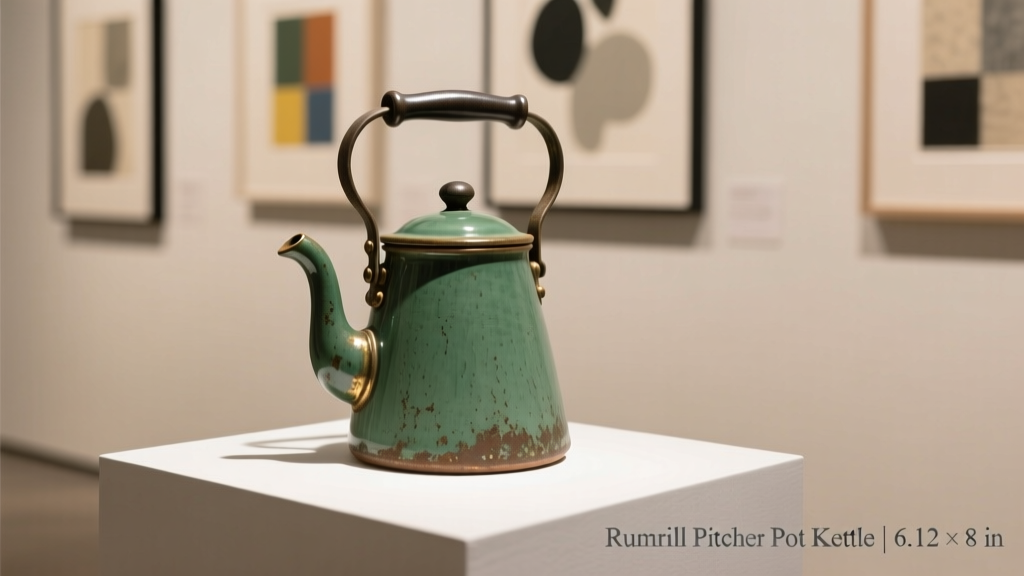
Rumrill Pitcher Pot Kettle Green 6½ × 8 in: Authentication, Market Value, and Historical Context
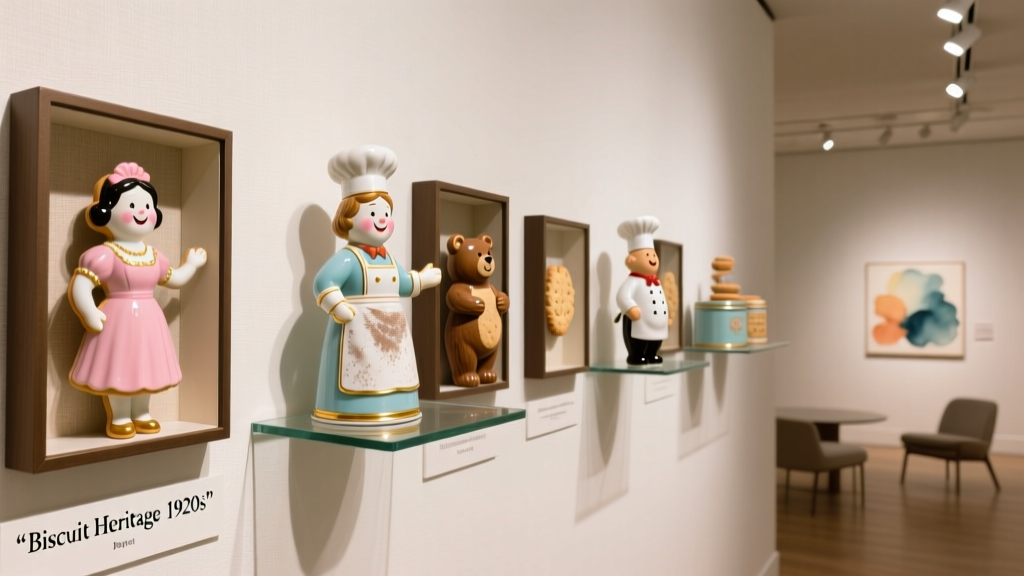
Figural Biscuit Tins: Collecting, Authenticating, and Valuing Victorian and Edwardian Ceramic and Metal Confections Containers

Celadon Frame Jade Vermeil Footed 6-Inch: Authentication, Market Value, and Material Analysis

Duncan Miller Canterbury Nappy Fruit 5-Inch Print: Authentication, Market History, and Technical Analysis

Ronson Crown No. 19023: Authentication, Production History, and Market Value of a Mid-Century American Luxury Lighter
Paper Dolls: Debbie Reynolds by Whitman Publishing, 1962 — Authentication, Market Value, and Historical Context of the Uncut Sheet

Bashful (1917): Authentication and Market Analysis of the Harold Lloyd Pathéx 2-Reel Print
Authentication Dossier: The Case of Print ID 1133692 — A Technical Analysis of a Suspected Misattributed Warhol Screenprint